
Curated recipes from 193 countries  •  New seasonal Mediterranean issue out now

Overview

Sri Lankan Hoppers

Egg Hoppers, Appa, Appam

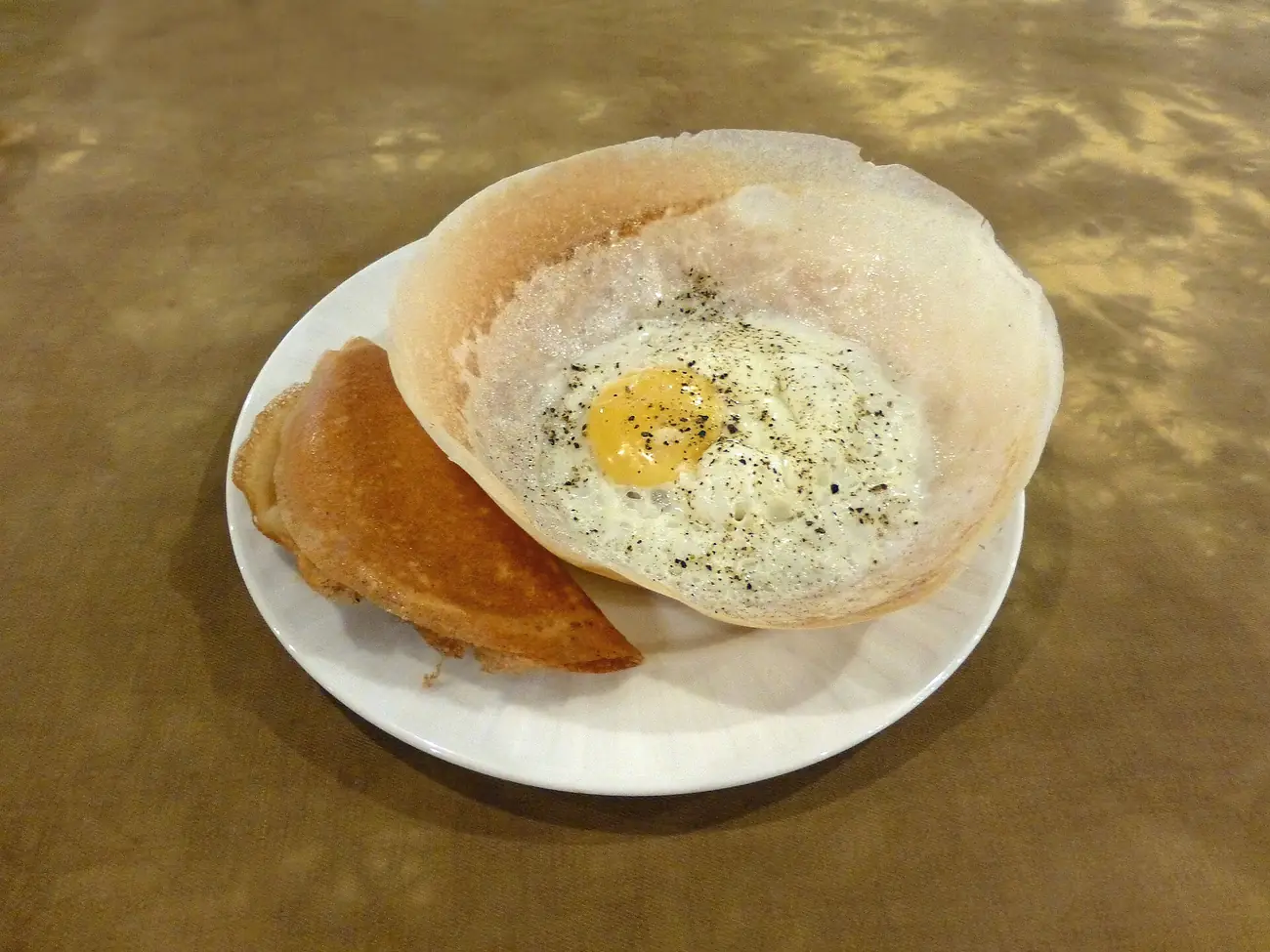
Bowl-shaped pancakes with lacy, crisp edges and a soft, spongy centre, made from fermented rice flour and coconut milk and cooked in a small wok-like appa pan. This Sri Lankan hoppers recipe makes the classic egg hopper — an appa with a whole egg gently steamed in its centre — the breakfast Sri Lanka is famous for. One serving is about 269 g (2 hoppers, one with egg).

Hoppers, known as appa in Sinhala and appam in Tamil, are bowl-shaped pancakes of fermented rice batter and coconut milk, cooked in a small wok-like pan called a thachchiya or appachatti. The same pancake is loved across the Palk Strait in Kerala and Tamil Nadu, and the name is often traced to the Tamil appam, itself linked to the Sanskrit apupa, meaning a cake of flour. In Sri Lanka the hopper became a breakfast and evening icon, cooked to order at roadside stalls where the egg version — a whole egg cracked into the centre — is the most loved of all.

Pairs well with: Lunu miris and pol sambol

Provenance

Sri Lanka flag Sri Lanka

Sri Lankan Heritage

East & South Asia

Time Dedication

45m

20m prep • 25m cook

Batch Yield

4 Servings

495 kcal per serving

1 serving ≈ 269 g

Technical Skill

Intermediate

Intermediate (Hopper Pan)

Meal Timing & Digestive Fit

Breakfast

Prime Morning Fit

Lunch

Inappropriate

Dinner

Inappropriate

Snack & Tea

Inappropriate

Fermented / Gut Health Occasions: Weekend breakfasts, brunch, Sri Lankan breakfast spreads, family mornings Cost: Low — about $1–2 per serving at home
A Sri Lankan egg hopper, a bowl-shaped rice pancake with an egg in the centre

Sri Lankan Heritage

Photo: Ji-Elle, CC BY-SA 3.0, via Wikimedia Commons

The Heritage Formulary

Measured Ingredients

Estimated cost: Low — about $1–2 per serving at home (USD)

A good hopper is judged by its contrast: lacy and crisp at the rim, soft and spongy in the centre.

Execution Methodology & Culinary Technique

Step-by-Step Cooking Guide

Active 45m
P

Prep Stage: Mix & Ferment the Batter

20 Mins + 8–12 Hours Fermenting • Mixing

Whisk the rice flour, lukewarm water, coconut milk, sugar and foamy yeast into a smooth, thin batter — it should pour like single cream. Cover and leave in a warm spot for 8–12 hours, or overnight, until bubbly and faintly sour. Stir in the salt just before cooking. The fermenting time is not counted in the 45 minutes of active time above.

Maestro Tip: The batter is ready when it smells gently sour and bubbles when stirred — if your kitchen is cold, leave it near (not on) a warm oven.

  1. 1

    Mix the Batter

    10 Mins Lukewarm water, ~35°C / 95°F

    Sprinkle the yeast over 100ml of the lukewarm water and leave 5 minutes until foamy. Whisk the rice flour, remaining water, coconut milk and sugar into a smooth batter, then stir in the foamy yeast. Cover and leave in a warm spot for 8–12 hours, or overnight.

    Lumps now mean lumpy hoppers later — whisk until the batter is completely smooth.

    Done when: Batter is smooth and pours like single cream; after fermenting it is bubbly and smells faintly sour.

  2. 2

    Heat the Appa Pan

    5 Mins Medium-high heat, ~180°C / 350°F

    Set a small wok-like appa pan (thachchiya) over medium-high heat. Brush it very lightly with oil — a thin film is enough — and let it get hot. A drop of water flicked in should sizzle and vanish at once.

    Too much oil makes the edges greasy and stops them crisping; wipe out any pool with paper towel.

    Done when: Pan is hot and lightly oiled, with no pooling oil.

  3. 3

    Swirl the First Hopper

    2 Mins Medium-high heat, ~180°C / 350°F

    Stir the batter, then ladle about 80ml into the centre of the pan. Immediately lift the pan and swirl it in a circle so the batter coats the sides thinly and pools thickly in the middle. Put it back on the heat.

    One confident swirl does it — a second pass makes the edges thick and chewy instead of crisp.

    Done when: Batter coats the pan in a thin lace up the sides with a thicker pool in the centre.

  4. 4

    Add the Egg

    1 Min Medium-high heat, ~180°C / 350°F

    For an egg hopper, pour one cracked egg gently into the centre of the batter pool, keeping the yolk whole. Season with a pinch of salt and pepper if you like. For a plain hopper, skip this step.

    Pour the egg from low down so the yolk stays whole and the batter does not splash up the sides.

    Done when: Egg sits in the centre of the batter pool, yolk unbroken.

  5. 5

    Lid On & Steam

    3 Mins Medium heat, ~160°C / 320°F

    Cover with a lid and cook for 2–3 minutes. The edges turn crisp and golden, the centre sets spongy, and the egg white turns fully opaque while the yolk stays soft. Egg dishes should reach 71°C (160°F); the white must be completely set.

    Resist lifting the lid — the trapped steam is what cooks the egg and the spongy centre.

    Done when: Edges are crisp and golden, centre is spongy, egg white is fully set and opaque.

  6. 6

    Lift Out & Serve

    1 Min Off the heat

    Slide a thin spatula around the edge and lift the hopper out in one piece. Serve at once — hoppers go soft within minutes. Repeat with the remaining batter, alternating egg and plain hoppers, brushing the pan with a drop of oil each time.

    Work fast and serve each hopper the moment it leaves the pan; a hopper that waits is a hopper wasted.

    Done when: Hopper holds its bowl shape, crisp at the rim and soft in the middle.

Finishing Touches & Plating

Serve the hoppers at once on a warm plate with lunu miris and pol sambol on the side. Eat them with your hands, tearing from the crisp edge towards the soft centre and dipping into the sambol — and break the yolk over the last bite.

Nutritional Physiology & Benefits

Nutrition

Energy

495

kcal / serving

Protein

12g

Complete AA

Carbs

66g

Complex

Fats

20g

Healthy

Per serving (4 servings · 1 serving ≈ 269 g)
Energy495 kcal
Protein12 g
Carbohydrates66 g
Fat20 g
Fibre3.1 g
Sugar4.4 g
Sodium466 mg
Per 100g
Energy184 kcal
Protein4.5 g
Carbohydrates24.5 g
Fat7.5 g
Fibre1.2 g
Sugar1.6 g
Sodium173 mg

Nutrition values are estimated — calculated from USDA FoodData Central values for the listed ingredients.

Vitamins & minerals: Vitamin B12 and vitamin D (egg), B vitamins from the fermented batter, vitamin E (egg yolk), calcium and potassium (coconut milk).

Naturally Gluten-Free

The batter is rice flour and coconut milk, so hoppers contain no wheat or gluten — a naturally gluten-free breakfast.

Egg Protein to Start the Day

Each egg hopper carries a whole egg, supplying complete protein that helps a breakfast keep you full until lunch.

Light and Easy to Digest

Fermentation gives the batter a gentle tang, and the finished hopper is light and mostly steamed rather than fried, so it sits easily in the morning.

Food Pairings

What to Eat With

To optimize nutrient absorption and elevate the sensory depth, pair with these authentic accompaniments:

Sauces

Lunu Miris

The fiery chilli-onion relish is the classic partner — its heat and salt wake up the mild, slightly sweet hopper.

Sides

Pol Sambol

Fresh coconut with chilli and lime adds cool crunch and acidity, balancing the soft, warm centre of the hopper.

Parippu (Red Lentil Dal)

Creamy coconut-milk dal spooned over a torn hopper turns breakfast into a fuller meal and adds plant protein and fibre.

Drinks

Plain Ceylon Tea

Hot, unsweetened tea is the usual Sri Lankan breakfast drink and clears the palate between hoppers.

Complete menu

Serve two hoppers per person — one egg, one plain — with lunu miris, pol sambol and a bowl of parippu dal, and finish with plain Ceylon tea.

Digestive Guardrails

What NOT to Combine

To prevent digestive distress, sluggishness, or palate clash, avoid pairing the dish with these elements:

Undercooked Egg Hoppers

An egg white that is still runny can carry salmonella, so always cook egg hoppers until the white is fully set and opaque, even if you like the yolk soft. This is general food-safety information, not medical advice.

Large Amounts of Lunu Miris on an Empty Stomach

Lunu miris is very hot, and a big spoonful of chilli relish first thing can trigger heartburn or stomach discomfort in sensitive people. Start with a little and add more once you know how your stomach reacts. This is general information, not medical advice.

General information only, not medical advice — consult a doctor for personal dietary decisions.

Who Should Eat It

Who Should Eat

  • General adultsA light, satisfying breakfast — two hoppers with sambol make a complete morning meal.
  • ChildrenSuitable from age 2+ as plain hoppers with a well-cooked egg; skip the lunu miris and serve with mild dal instead.
  • ElderlyExcellent — soft, warm and easy to chew; the fermented batter is gentle on digestion.
  • Pregnant womenGenerally suitable when the egg is fully cooked through — whites and yolk set, not runny. Skip the chilli relish if it triggers heartburn.
  • Breastfeeding womenGenerally suitable; the egg and coconut milk provide energy and protein for the morning.
  • AthletesA good pre-training breakfast with two egg hoppers and dal; add a banana for extra carbohydrate before a long session.
  • Weight gainA good choice — eat three or four hoppers with dal and an extra egg hopper.
  • Weight lossStick to two hoppers, one with egg, load up on sambol and dal, and skip extra coconut milk on the side.

Health Conditions — Adjust or Avoid

Conditions

  • DiabetesHoppers are mostly rice-flour carbohydrate, so keep to two per serving and pair them with dal and vegetables rather than sweet accompaniments. Ask your clinician about your usual portion.
  • High blood pressureThe hoppers themselves are low in sodium; the salt sits mainly in the sambol, so keep relish portions small.
  • Kidney diseaseCoconut milk and egg are moderately high in potassium and phosphorus; eat a modest portion and ask your clinician whether this fits your plan.
  • GoutEggs are low in purines, so egg hoppers are a reasonable choice; keep portions moderate and favour dal over meat curries alongside.
  • Stomach issuesThe fermented batter is usually gentle, but chilli relish can trigger reflux — use pol sambol and plain dal instead of lunu miris.
  • Cardiovascular diseaseThe batter is low in fat; keep the egg to one per serving and favour vegetables and dal as accompaniments.
  • Fatty liverKeep the portion to two hoppers and favour the plain version with dal; the coconut milk adds saturated fat, so skip extra coconut on the side.
  • Food allergiesContains egg and coconut. Naturally gluten-free and dairy-free. Check that your rice flour is certified gluten-free if you have coeliac disease.
  • Special therapeutic dietsIf you follow a prescribed low-potassium or low-phosphorus diet, eat a smaller portion and check with your clinician.

If you have a medical condition, consult your doctor before changing your diet.

Storage & Use

Storage & Use

How to store
Hoppers are best eaten fresh; if you must keep them, cool completely and store in an airtight container, unstacked, with paper between layers.
In the fridge
Batter 2 days in the fridge; cooked hoppers 1 day.
In the freezer
Batter does not freeze well; cooked hoppers 1 month (texture suffers).
How to reheat
Warm hoppers in a dry pan over medium heat for 1–2 minutes until the edges crisp again; do not microwave them or they turn rubbery.
Freezing recommended
No — hoppers lose their crisp edges and soft centre when frozen; make the batter fresh instead.
Signs it has spoiled
Sour smell stronger than the gentle ferment tang, slimy batter, or mould on stored hoppers.

More recipes to explore

A bowl of dark Sri Lankan chicken curry in coconut milk sauce Sri Lanka flag Sri Lanka 1h 5m
Dinner •Sri Lankan Heritage

Sri Lankan Chicken Curry

Dark, roasted-spice chicken curry in rich coconut milk, soured gently with goraka and scented with curry leaves and lemongrass. This Sri Lankan chicken curry recipe is the everyday kukul mas of Sri Lankan homes: deeply savoury, warmly hot and spooned over rice. One serving is about 466 g.

Hearty & Comforting

Bone-in chicken simmered in coconut milk with dark roasted curry powder, goraka and curry leaves.

Pairs Well With
Steamed red rice and pol sambol
High Protein
A plate of chicken kottu roti, chopped roti stir-fried with chicken and vegetables Sri Lanka flag Sri Lanka 45m
Dinner •Sri Lankan Heritage

Kottu Roti

Sri Lanka's famous late-night street food: godamba roti chopped and stir-fried on a hot griddle with chicken curry, egg, onion, carrot and cabbage, mixed with two steel blades in the rhythmic clanging every Sri Lankan knows. This kottu roti recipe makes chicken kottu at home — crisp-edged roti ribbons, saucy chicken and vegetables in every bite. One serving is about 394 g.

Hearty Street Food

Godamba roti chopped on a hot griddle with chicken curry, egg and vegetables.

Pairs Well With
Extra chicken curry gravy and pol sambol
Quick Prep (<30m)
A bowl of Vietnamese phở bò with rare beef, rice noodles and fresh herbs Vietnam flag Vietnam 3h 30m
Breakfast •Hanoi Heritage

Phở Bò Tái Nạm

Slow-simmered star anise and cinnamon bone broth with hand-cut rice noodles, supplying clean restorative warmth and collagen. One serving is about 775 g.

Immunity & Warming

Slow-simmered bone broth with rice noodles, rare beef and fresh herbs.

Pairs Well With
Crispy quẩy, fresh lime & sawtooth coriander
Soups & Broths • High Protein
Golden butter croissants on a wooden board France flag France 20m
Breakfast •Parisian Boulangerie

Croissant au Beurre & Café

Laminated cultured butter pastry paired with washed Arabica, for a slow, pleasurable Parisian morning — best with a little protein alongside. One serving is about 390 g.

Sustained Focus

Flaky all-butter croissant with café au lait, Comté and green apple.

Pairs Well With
Comté cheese wedge & Green apple slices
Quick Prep (<30m)

The Dinner Gazette

Never wonder what’s for dinner again

One email a week with easy dinner ideas from around the world — ingredients, steps and nutrition, tested in our kitchen first.

Delivered every Thursday morning. Unsubscribe anytime.