Curated recipes from 193 countries  •  New seasonal Mediterranean issue out now

Overview

Ifisashi

Visashi (Chinyanja)

This ifisashi recipe simmers spinach, pumpkin leaves and sweet potato in a creamy sauce of ground peanuts, tomato and onion until everything turns soft and nutty. The greens are the heart of the dish, not a garnish — they wilt down into the peanut sauce and carry its flavour. Serve it with nshima for a proper Zambian dinner. One serving is about 375 g.

Ifisashi takes its name from the Bemba language, and in Chinyanja it is called visashi. It is one of the most eaten dishes in Zambia, cooked from whatever leafy greens the garden or market offers — spinach, pumpkin leaves, cassava leaves or cabbage — simmered in groundnut sauce and always served with nshima. The dish has a thrifty nickname among Zambian cooks: nothing gets lost, everything should be consumed.

Pairs well with: Nshima & roasted peanuts

Provenance

Zambia flag Zambia

Zambian Home Table

African Heritage

Time Dedication

1h

20m prep • 40m cook

Batch Yield

4 Servings

625 kcal per serving

1 serving ≈ 375 g

Technical Skill

Easy

Easy (One Pot)

Meal Timing & Digestive Fit

Breakfast

Not Advised

Lunch

Hearty Midday Main

Dinner

Ideal Hearty Main

Snack & Tea

Inappropriate

Occasions: Family dinner, meat-free Monday, harvest cooking Cost: Low — about $2–3 per serving at home
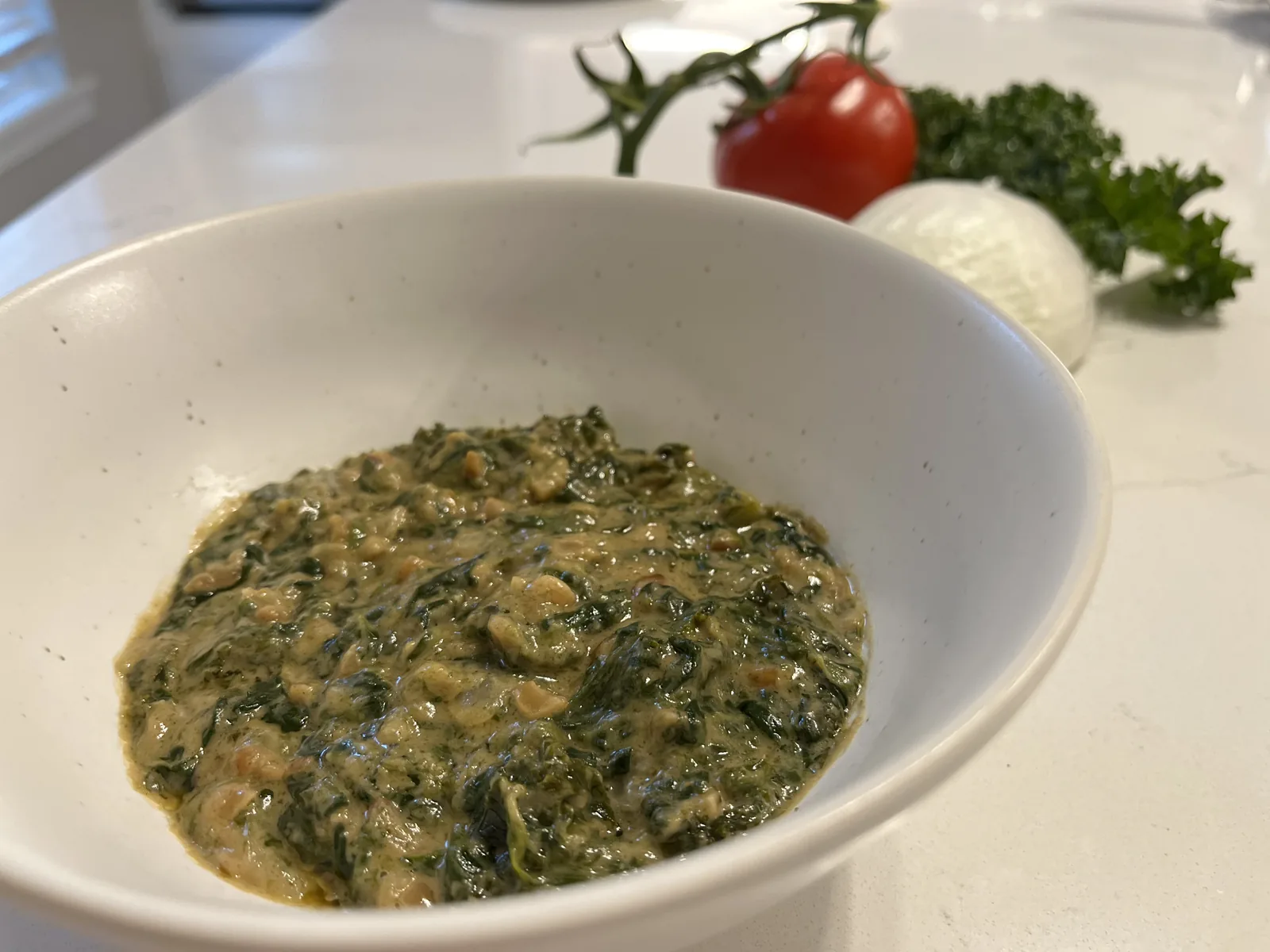
A bowl of ifisashi — leafy greens in a creamy peanut sauce

Zambian Home Table

Photo: LittleT889, CC BY 4.0, via Wikimedia Commons

The Heritage Formulary

Measured Ingredients

Estimated cost: Low — about $2–3 per serving at home (USD)

Good ifisashi is thick and creamy, with the greens soft and the peanut sauce coating every leaf, never watery.

Execution Methodology & Culinary Technique

Step-by-Step Cooking Guide

Active 1h
P

Prep Stage: Wash the Greens, Grind the Peanuts

20 Mins • Wash & Chop

Wash the spinach and pumpkin leaves in two changes of water — grit hides in the folds — then strip the tough stems and chop everything roughly. Grind the roasted peanuts to a coarse powder and stir in a little warm water until it loosens into a thick cream. Dice the sweet potato, cabbage, tomatoes and onion so the pot comes together quickly.

Maestro Tip: Grinding the peanuts yourself keeps a little crunch in the sauce, which is how Zambian cooks like it.

  1. 1

    Fry the Onion and Tomato

    8 Mins Medium heat, ~160°C (320°F)

    Heat the peanut oil in a large pot, fry the onion for 3 minutes until soft, then add the tomatoes and cook 5 minutes more until they collapse and the oil turns orange at the edges.

    Cooking the tomatoes down first takes away their raw edge.

    Done when: The base is soft, red and fragrant.

  2. 2

    Add the Vegetables and Water

    5 Mins High heat, ~200°C (390°F)

    Add the sweet potato, cabbage, spinach and pumpkin leaves with the water, pushing the greens down into the pot — they look like far too much at first, then wilt down. Bring to the boil, then turn the heat down.

    Do not add more water: the leaves give off plenty of their own.

    Done when: The greens have wilted to half their volume and the sweet potato is starting to soften.

  3. 3

    Simmer Until Tender

    12 Mins Medium-low heat, ~120°C (250°F)

    Cover loosely and simmer for 12 minutes, stirring every few minutes so nothing sticks, until the sweet potato is tender and the leaves are soft and dark green.

    Stir from the bottom — the base can catch while the leaves sit on top.

    Done when: Sweet potato crushes easily with a spoon; the greens are soft, not stringy.

  4. 4

    Stir in the Peanut Sauce

    10 Mins Gentle simmer, ~95°C (203°F)

    Stir the ground peanuts into the pot a little at a time, then simmer gently for 8 minutes more, stirring often, until the sauce turns thick, creamy and pale brown. Season with salt, a little at a time, tasting as you go.

    Peanut sauce scorches quietly underneath — keep the heat low and keep stirring.

    Done when: The sauce coats the greens and holds its shape on a spoon.

  5. 5

    Rest and Serve with Nshima

    5 Mins Serve hot, ~70°C (158°F)

    Rest the pot off the heat for 5 minutes so the sauce settles, then ladle the ifisashi beside mounds of nshima and serve at once.

    Serve the ifisashi beside the nshima, not mixed in — everyone takes as much sauce as they like.

    Done when: The plate is steaming, the sauce glossy, the greens soft.

Finishing Touches & Plating

Let the pot rest for 5 minutes off the heat before serving — the peanut sauce thickens slightly and the flavours settle. A handful of roughly chopped roasted peanuts scattered over the top adds the crunch Zambian cooks love.
Nutritional Physiology & Benefits

Nutrition

Energy

625

kcal / serving

Protein

25g

Complete AA

Carbs

42g

Complex

Fats

45g

Healthy

Per serving (4 servings · 1 serving ≈ 375 g)
Energy625 kcal
Protein25 g
Carbohydrates42 g
Fat45 g
Fibre14.5 g
Sugar11.2 g
Sodium536 mg
Per 100g
Energy167 kcal
Protein6.7 g
Carbohydrates11.2 g
Fat12.1 g
Fibre3.9 g
Sugar3 g
Sodium143 mg

Nutrition values are estimated — calculated from USDA FoodData Central values for the listed ingredients.

Vitamins & minerals: Vitamin K and folate (leafy greens), vitamin E and niacin (peanuts), vitamin C (tomato), vitamin A (sweet potato and pumpkin leaves).

Greens in Every Spoonful

Spinach, pumpkin leaves and cabbage bring fibre, folate and vitamin K, so this is a vegetable dish that eats like a proper meal.

Peanuts That Fill You Up

About 25 g of protein per serving comes mostly from the peanuts, which is why ifisashi keeps you going long after a plain plate of greens would not.

Healthy Fats, No Meat

Peanuts and peanut oil are rich in monounsaturated fats, the same kind of fats that make olive oil a healthy choice.

Food Pairings

What to Eat With

To optimize nutrient absorption and elevate the sensory depth, pair with these authentic accompaniments:

Sides

Nshima

Nshima is the classic partner: its mild starch balances the rich peanut sauce and gives you something to scoop the greens with.

Vegetables

Roasted Sweet Potato

Sweet, soft roasted sweet potato on the side echoes the sweet potato already in the pot and adds a caramelised note against the nutty sauce.

Drinks

Chibwantu (Maize Drink)

A cool, lightly sour maize drink cuts through the richness of the peanut sauce and refreshes the palate.

Full Menus

As a Family Dinner

Put the pot in the middle of the table with the nshima alongside, so everyone ladles their own greens — this is a sharing dish, not a plated one.

Complete menu

Start with ifisashi and nshima, add roasted sweet potato on the side, and finish with a cool maize drink.

Digestive Guardrails

What NOT to Combine

To prevent digestive distress, sluggishness, or palate clash, avoid pairing the dish with these elements:

Sweetened Peanut Butter

Sweetened peanut butter turns the sauce cloying and makes the sugar hard to balance — use unsweetened peanuts or natural peanut butter, and let the sweet potato supply the sweetness. This is general guidance, not medical advice.

A Second Rich Sauce

Ifisashi is already rich from the peanuts, so a creamy or oily second dish would double the heaviness. Keep the rest of the plate simple — nshima and plain vegetables.

General information only, not medical advice — consult a doctor for personal dietary decisions.

Who Should Eat It

Who Should Eat

  • General adultsA complete, satisfying meat-free dinner — greens, peanuts and nshima in one plate.
  • ChildrenSuitable from age 3+; chop the greens small and keep the sauce mild — children usually love the nutty flavour.
  • ElderlyVery suitable — the greens are soft and the sauce is easy to eat; cook the leaves until fully tender.
  • Pregnant womenGenerally suitable; the folate from the leafy greens is welcome, and the dish is cooked right through.
  • Breastfeeding womenGenerally suitable; the protein and energy support recovery — keep portions satisfying.
  • AthletesA good post-training meal: about 25 g of protein with nshima for glycogen, eaten within a couple of hours of exercise.
  • Weight gainA good choice — take a generous second ladle and an extra mound of nshima.
  • Weight lossEnjoy in a smaller portion: mostly greens and sauce, with a modest mound of nshima and no extra oil.

Health Conditions — Adjust or Avoid

Conditions

  • DiabetesThe sweet potato is the main source of carbs — keep it to a modest portion and load the plate with the greens. Ask your clinician about portion size.
  • High blood pressureMost of the sodium comes from the added salt; season lightly and skip any salty stock. Ask your clinician about a suitable portion.
  • Kidney diseasePeanuts add potassium and phosphorus; keep the portion modest and ask your clinician about frequency.
  • GoutEat occasionally and in smaller portions — peanuts are moderately high in purines. Ask your clinician if you have frequent flares.
  • Stomach issuesThe dish is usually gentle, but the fibre in the leaves can bother a very sensitive stomach — cook the greens until fully soft.
  • Cardiovascular diseaseA rich dish — keep the portion modest and balance the rest of the day with lighter food. Ask your clinician about a suitable portion.
  • Fatty liverKeep the portion modest and favour the greens over extra sauce; the peanuts add a lot of fat. Ask your clinician about a suitable portion.
  • Food allergiesContains peanuts — the main allergen in this dish. Do not serve to anyone with a peanut allergy; there is no safe substitute that keeps the dish the same.
  • Special therapeutic dietsIf you follow a prescribed low-sodium or low-fat diet, use less salt and oil, and check with your clinician.

If you have a medical condition, consult your doctor before changing your diet.

Storage & Use

Storage & Use

How to store
Cool quickly and store in an airtight container.
In the fridge
3 days.
In the freezer
2 months.
How to reheat
Reheat gently, stirring, until it bubbles and reaches 74°C (165°F); loosen with a splash of water if it has thickened.
Freezing recommended
Yes — it freezes well for up to 2 months; stir well after thawing.
Signs it has spoiled
Sour smell, a grey film on the surface, or slimy greens.

More recipes to explore

A plate of stewed kapenta fish in tomato sauce served beside a mound of nshima Zambia flag Zambia 50m
Dinner •Lake Kariba Table

Zambian Kapenta

This kapenta recipe stews tiny dried fish from Lake Kariba with tomato, onion and garlic, with a spoonful of groundnut powder to round out the sauce. The little fish soften in the pan and soak up the tomato, turning rich and savoury. Serve it beside a mound of nshima and eat it the Zambian way, with your fingers. One serving is about 390 g.

Comfort & Warmth

Tiny lake fish stewed in a tomato-onion sauce, served with nshima for a filling family dinner.

Pairs Well With
Nshima & a side of greens
High Protein
Cubed chikanda cake garnished with cherry tomatoes and herbs on a dark green plate Zambia flag Zambia 1h 5m
Snack & Tea •Bemba Heritage Snack

Chikanda

This chikanda recipe boils orchid-tuber meal and groundnut meal into a thick slurry, sets it with a little baking soda, and lets it cool into a firm, sliceable cake. It looks like bologna and slices like it, but it contains no meat at all — just tubers, peanuts and spice. One serving is about 158 g.

Snack & Sharing

A sliceable cake of orchid-tuber meal and groundnuts — Zambia's meat-free 'African polony'.

Pairs Well With
Chilli sauce & tomato relish
High Protein
Bœuf bourguignon — French beef braised in red wine France flag France 4h
Dinner •Burgundy Terroir

Bœuf Bourguignon

Beef braised gently in red wine until the connective tissue melts into a velvet, gelatin-rich sauce — the classic Burgundy Sunday dinner.

Cellular Repair

Beef braised in red wine until spoon-tender, with mushrooms and pearl onions.

Pairs Well With
Parsnip Purée & Steamed French Haricots Verts
High Protein
Vietnamese braised pork belly with golden eggs in caramel sauce Vietnam flag Vietnam 1h 45m
Dinner •One Pot

Vietnamese Braised Pork and Eggs

Pork belly slowly braised in coconut water and caramel until meltingly tender, with golden eggs that soak up the sweet-savoury sauce — the Vietnamese family dish that tastes better the next day.

Comfort & Sustained Energy

Slow-braised pork belly and eggs in coconut water and caramel.

Pairs Well With
Steamed rice & pickled mustard greens
High Protein

The Dinner Gazette

Never wonder what’s for dinner again

One email a week with easy dinner ideas from around the world — ingredients, steps and nutrition, tested in our kitchen first.

Delivered every Thursday morning. Unsubscribe anytime.