
Curated recipes from 193 countries  •  New seasonal Mediterranean issue out now

Overview

Jalea Mixta

Jalea de Mariscos, Peruvian Fried Seafood

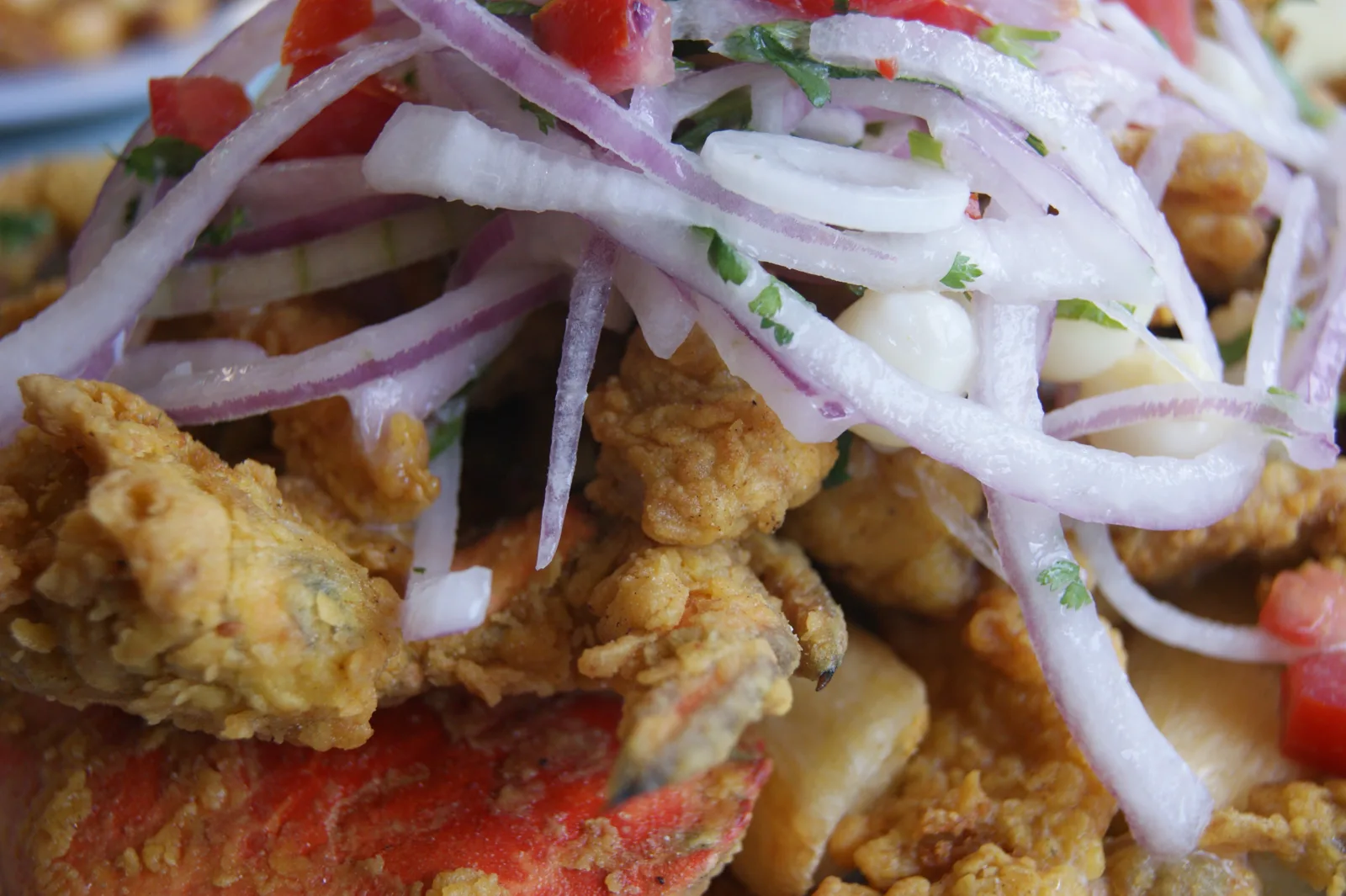
This jalea mixta recipe fries a mix of white fish, shrimp, calamari and mussels in a light flour-and-cornstarch crust until shatteringly crisp, then piles them high with salsa criolla — red onion, tomato, lime and ají — and fried yuca. Where ceviche cures the seafood in lime juice, jalea fries it: same sea, opposite technique. One serving is about 446 g.

Jalea belongs to the northern coast of Peru, around Chiclayo and Lambayeque, where the fishing boats come in with the day's catch and the town's restaurants fry it the same afternoon. It is ceviche's fried twin: where ceviche cures raw fish in lime juice, jalea coats the mixed catch in flour and drops it in hot oil, then tops the golden pile with the same red-onion salsa criolla. The name is said to come from the way the crisp seafood is heaped up like a jelly, or jalea — a tall, glistening mound that a whole table eats with its hands.

Pairs well with: Fried yuca, salsa criolla and an ice-cold beer or chicha morada

Provenance

Peru flag Peru

Northern Coast Classic

Latin America & Caribbean

Time Dedication

45m

25m prep • 20m cook

Batch Yield

4 Servings

614 kcal per serving

1 serving ≈ 446 g

Technical Skill

Intermediate

Medium (Frying)

Meal Timing & Digestive Fit

Breakfast

Not Advised

Lunch

Prime Metabolic Fit

Dinner

Ideal Hearty Main

Snack & Tea

Inappropriate

Occasions: Weekend family lunch, seaside meals, celebrations with friends, a shared platter Cost: Medium — about $5–6 per serving at home
A close-up of golden fried jalea mixta seafood topped with red onion salsa criolla, tomato and cilantro

Northern Coast Classic

Photo: Dtarazona, CC BY-SA 4.0, via Wikimedia Commons

The Heritage Formulary

Measured Ingredients

Estimated cost: Medium — about $5–6 per serving at home (USD)

Real jalea is fried in small batches so the crust shatters, and the salsa goes on at the last second — a soggy jalea is not a jalea.

Execution Methodology & Culinary Technique

Step-by-Step Cooking Guide

Active 45m
P

Prep Stage: Seafood, Coating and Salsa

25 Mins • Seafood, Coating and Salsa

Cut the fish into chunks and pat every piece of seafood — fish, shrimp, calamari, mussels — very dry with paper towels; wet seafood will not crisp. Mix the flour, cornstarch and half the salt in a wide bowl, beat the egg in another, and make the salsa criolla by tossing the red onion, tomato, lime juice, cilantro, ají and remaining salt together. Cut the yuca into thick chips.

Maestro Tip: Dry seafood is the whole secret of jalea — water in the coating turns to steam and blows the crust off.

  1. 1

    Make the Salsa Criolla

    10 Mins Room temperature

    Toss the sliced red onion, diced tomato, lime juice, chopped cilantro, ají and half the salt in a bowl, and leave it to sit for 10 minutes so the onion softens slightly and the lime takes the raw edge off it. It should taste sharp, salty and fresh.

    Soak the onion in cold water for 5 minutes first if you find raw onion too strong.

    Done when: Onion softened, salsa sharp and juicy.

  2. 2

    Coat the Seafood

    10 Mins Room temperature

    Dip each piece of seafood in the beaten egg, then roll it in the flour and cornstarch mix, pressing lightly so the coating sticks, and set the pieces on a tray in a single layer. Do not stack them or the coating rubs off.

    A thin, even coat fries crisp; a thick coat turns doughy and heavy.

    Done when: Every piece evenly coated, no bare patches, no clumps.

  3. 3

    Fry the Yuca

    8 Mins Oil at 180°C (350°F)

    Heat the oil in a deep pan to 180°C (350°F) and fry the yuca chips in batches for 6–8 minutes until golden and tender inside. Lift out with a slotted spoon, drain on paper towels and salt lightly while hot.

    Fry in batches — a crowded pan drops the oil temperature and the yuca goes soggy.

    Done when: Golden outside, soft and fluffy inside.

  4. 4

    Fry the Seafood Crisp

    8 Mins Oil at 180°C (350°F); fish cooked to at least 63°C (145°F)

    Return the oil to 180°C (350°F) and fry the seafood in small batches for 2–3 minutes per batch, turning once, until deep golden and crisp. The fish must reach at least 63°C (145°F) inside and the shrimp should be pink and opaque. Drain on a wire rack, not paper, so the crust stays crisp.

    A wire rack keeps the crust crisp; paper towels trap steam underneath and soften it.

    Done when: Deep golden crust, fish opaque and flaky, shrimp pink.

  5. 5

    Pile Up and Serve

    4 Mins Serve hot, above 74°C (165°F) for the yuca; seafood at least 63°C (145°F)

    Pile the fried seafood high in the centre of a platter, tuck the yuca chips around it, and spoon the salsa criolla generously over the top. Serve at once, with lime wedges and extra salsa on the side — jalea waits for no one.

    Serve the salsa on top, not underneath, so the crust meets the plate dry and stays crisp.

    Done when: A tall, golden pile with bright salsa on top, served steaming.

Finishing Touches & Plating

Jalea is a dish to eat the moment it lands on the table: the contrast between the hot, shattering crust and the cold, sharp salsa is the whole pleasure, and it fades within minutes.

Nutritional Physiology & Benefits

Nutrition

Energy

614

kcal / serving

Protein

49g

Complete AA

Carbs

71g

Complex

Fats

14g

Healthy

Per serving (4 servings · 1 serving ≈ 446 g)
Energy614 kcal
Protein49 g
Carbohydrates71 g
Fat14 g
Fibre3.4 g
Sugar4.3 g
Sodium706 mg
Per 100g
Energy137 kcal
Protein10.9 g
Carbohydrates15.8 g
Fat3.2 g
Fibre0.8 g
Sugar1 g
Sodium158 mg

Nutrition values are estimated — calculated from USDA FoodData Central values for the listed ingredients.

Vitamins & minerals: Vitamin B12 and selenium (mussels, fish), iodine (seafood), vitamin C (lime, tomato, onion) and potassium (yuca).

Very High in Lean Protein

About 48 g of protein per serving from fish, shrimp, calamari and mussels — one of the highest-protein lunches on the site.

Real Seafood, Nothing Processed

Four kinds of fresh seafood, a flour crust and a raw vegetable salsa — no processed fish, no bottled sauce, nothing hidden.

Omega-3s and Minerals from the Sea

The mix brings iodine, selenium and vitamin B12 that landlocked meals rarely offer, plus vitamin C from the salsa.

Food Pairings

What to Eat With

To optimize nutrient absorption and elevate the sensory depth, pair with these authentic accompaniments:

Sides

Fried Yuca Chips

Yuca fries are the traditional partner: starchy, slightly sweet and sturdy enough to scoop up the salsa and the crumbs.

Vegetables

Extra Salsa Criolla

More salsa on the side keeps the sharp, limey contrast going as you eat through the pile — the acid cuts the frying fat.

Drinks

Ice-Cold Beer or Chicha Morada

A cold lager or a glass of purple-corn chicha morada cools the chilli heat and refreshes the palate between handfuls.

More Pairings

Lime Wedges on the Side

A last squeeze of lime over the hot seafood brightens the crust and echoes the salsa — never serve jalea without them.

Complete menu

Start with a small ceviche or a cold beer, serve the jalea as a shared centrepiece with yuca and salsa, and finish with fresh mango or pineapple.

Digestive Guardrails

What NOT to Combine

To prevent digestive distress, sluggishness, or palate clash, avoid pairing the dish with these elements:

Do Not Crowd the Pan

Too much seafood at once drops the oil temperature, and the coating absorbs oil instead of crisping — the result is greasy and heavy. Fry in small batches. This is general guidance, not medical advice.

Do Not Let It Sit Before Serving

Fried jalea softens fast under its own steam and the salsa; serve within minutes of frying or the crisp crust is lost. This is general guidance, not medical advice.

General information only, not medical advice — consult a doctor for personal dietary decisions.

Who Should Eat It

Who Should Eat

  • General adultsA big, festive seafood lunch — rich and filling, best shared at the table with plenty of salsa.
  • ChildrenChildren usually love the crisp coating, but pick out the chilli from their salsa and check for small bones in the fish.
  • ElderlySoft seafood is easy to chew, but the fried coating and the raw onion salsa can be heavy — a small portion with extra yuca suits most older appetites.
  • Pregnant womenThe seafood must be very fresh and fully cooked; skip the raw-onion salsa if it troubles you, and keep the portion moderate because of the salt.
  • Breastfeeding womenA filling, protein-rich lunch; the frying adds fat, so balance it with plenty of salsa and a salad rather than a second helping.
  • AthletesAbout 48 g of protein per serving is excellent after training, though the fried coating adds fat — a good post-workout lunch, not a daily one.
  • Weight gainRoughly 614 kcal per plate with high protein — a useful weight-gain lunch, especially with extra yuca.
  • Weight lossFried and calorie-dense; a smaller portion with mostly fish and extra salsa, and fewer yuca chips, keeps it enjoyable.

Health Conditions — Adjust or Avoid

Conditions

  • DiabetesAbout 70 g of carbohydrate per serving, mostly from the yuca and coating — keep the yuca to a small handful and take more seafood and salsa. Ask your clinician about a suitable portion.
  • High blood pressureShellfish and the salt in the coating push sodium up; eat it occasionally and skip extra salt that day. Ask your clinician about a suitable portion.
  • Kidney diseaseShellfish are high in potassium and phosphorus, and the dish is salty; not an everyday choice for kidney diets. Ask your clinician about a suitable portion.
  • GoutShellfish and fish are moderate in purines, and mussels in particular are higher; one occasional portion is usually manageable. Ask your clinician if gout is active.
  • Stomach issuesFried food and raw onion are both common triggers; if your stomach is sensitive, eat a small portion and ask for the salsa with less onion. Ask your clinician if you are unsure.
  • Cardiovascular diseaseThe frying oil adds fat, but the seafood itself is lean and rich in omega-3s; keep portions moderate and load up on the salsa. Ask your clinician about a suitable portion.
  • Fatty liverFried food is the main concern for fatty liver — enjoy jalea as an occasional celebration dish, not a weekly lunch. Ask your clinician about a suitable portion.
  • Food allergiesContains fish, crustaceans (shrimp), molluscs (calamari, mussels), gluten (flour coating) and egg — check every guest for seafood allergy before serving.
  • Special therapeutic dietsNot suitable for low-sodium or low-fat therapeutic diets as written; a clinician can advise on a grilled version, but it will not be jalea. Ask your clinician before adapting it.

If you have a medical condition, consult your doctor before changing your diet.

Storage & Use

Storage & Use

How to store
Jalea is best eaten at once. If you must store it, cool quickly and refrigerate the seafood and yuca separately from the salsa, in airtight containers.
In the fridge
Fried seafood 1 day; salsa criolla 1 day; yuca 1–2 days.
In the freezer
Do not freeze fried jalea — the crust turns soggy and the seafood goes rubbery.
How to reheat
Reheat the seafood in a hot oven at 200°C (400°F) for 5–6 minutes until crisp, to at least 74°C (165°F). Do not microwave.
Freezing recommended
No — jalea does not freeze well; cook only what you will eat.
Signs it has spoiled
Sour or ammonia smell from the seafood, slimy coating, or salsa that has turned dull and watery.

More recipes to explore

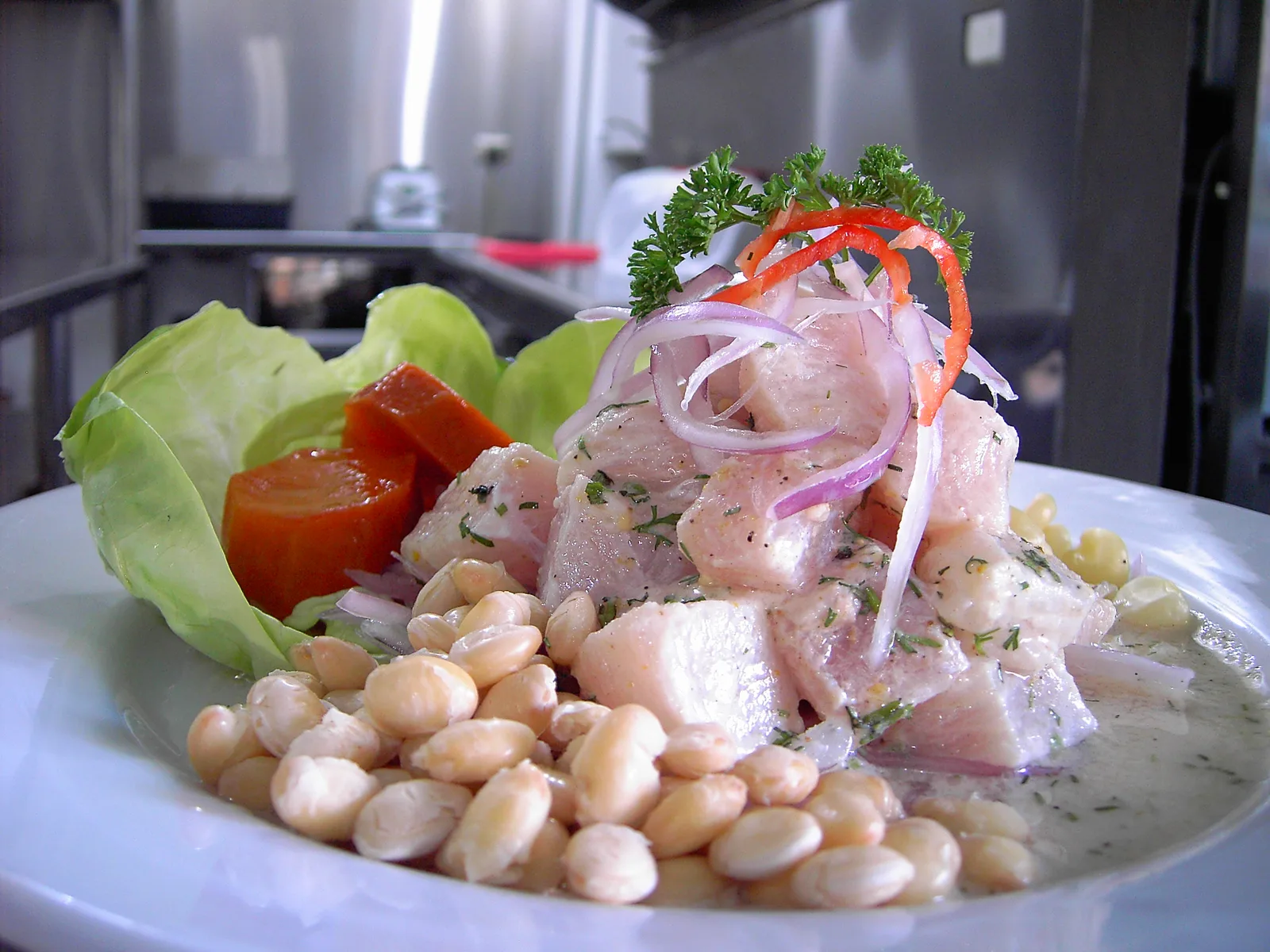
A plate of cebiche de corvina with lime-cured white fish cubes, red onion, ají strips, lettuce, sweet potato and choclo corn Peru flag Peru 35m
Lunch •Coastal Peru

Peruvian Ceviche

Peruvian ceviche is the national dish of Peru: cubes of very fresh sea bass cured in lime juice with red onion, ají limo and cilantro, with the milky, spicy marinade it leaves behind — leche de tigre — spooned over the top. It arrives with boiled sweet potato and big-kernel choclo corn, the sweet and starchy balance to all that citrus and heat. One serving is about 371 g.

Light & Fresh

Fresh sea bass cured in lime juice with red onion, ají limo and leche de tigre, served with sweet potato and choclo.

Pairs Well With
Boiled sweet potato, choclo corn and cancha
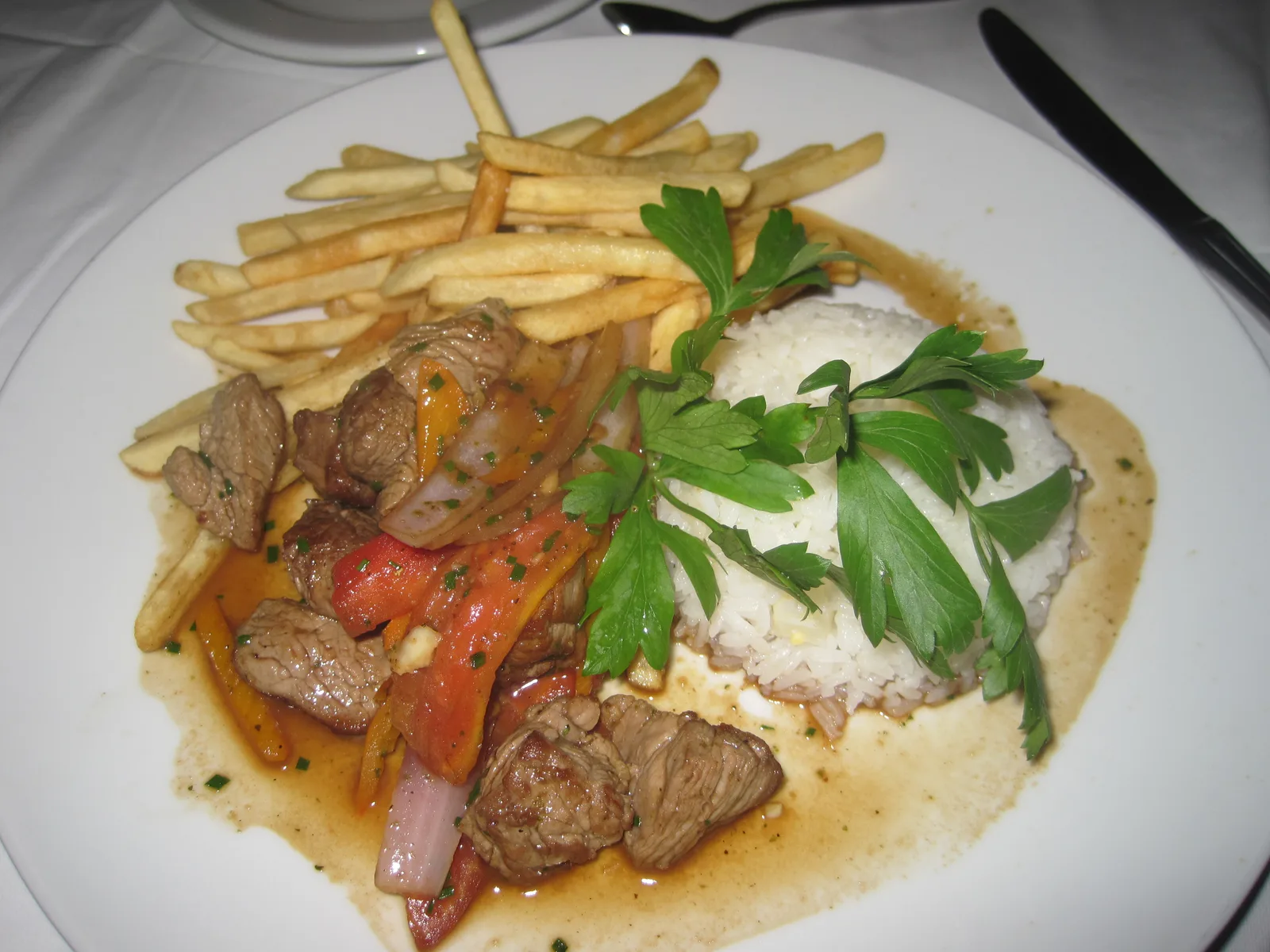
A plate of lomo saltado with seared beef strips, tomato and onion, French fries and a mound of white rice Peru flag Peru 40m
Dinner •Lima Heritage

Lomo Saltado

Lomo saltado is Peru's beloved Chifa stir-fry: strips of sirloin seared at screaming heat in a wok, tossed with red onion, tomato, soy sauce and red wine vinegar, then folded with crisp French fries and served beside white rice. It is the meeting of Cantonese wok cooking and Peruvian ingredients on one plate — smoky, salty, tangy and completely moreish. One serving is about 579 g.

Comfort & Energy

Sirloin seared at high heat with onion, tomato, soy and vinegar, tossed with fries and served with rice.

Pairs Well With
French fries, white rice and salsa criolla
Quick Prep (<30m)
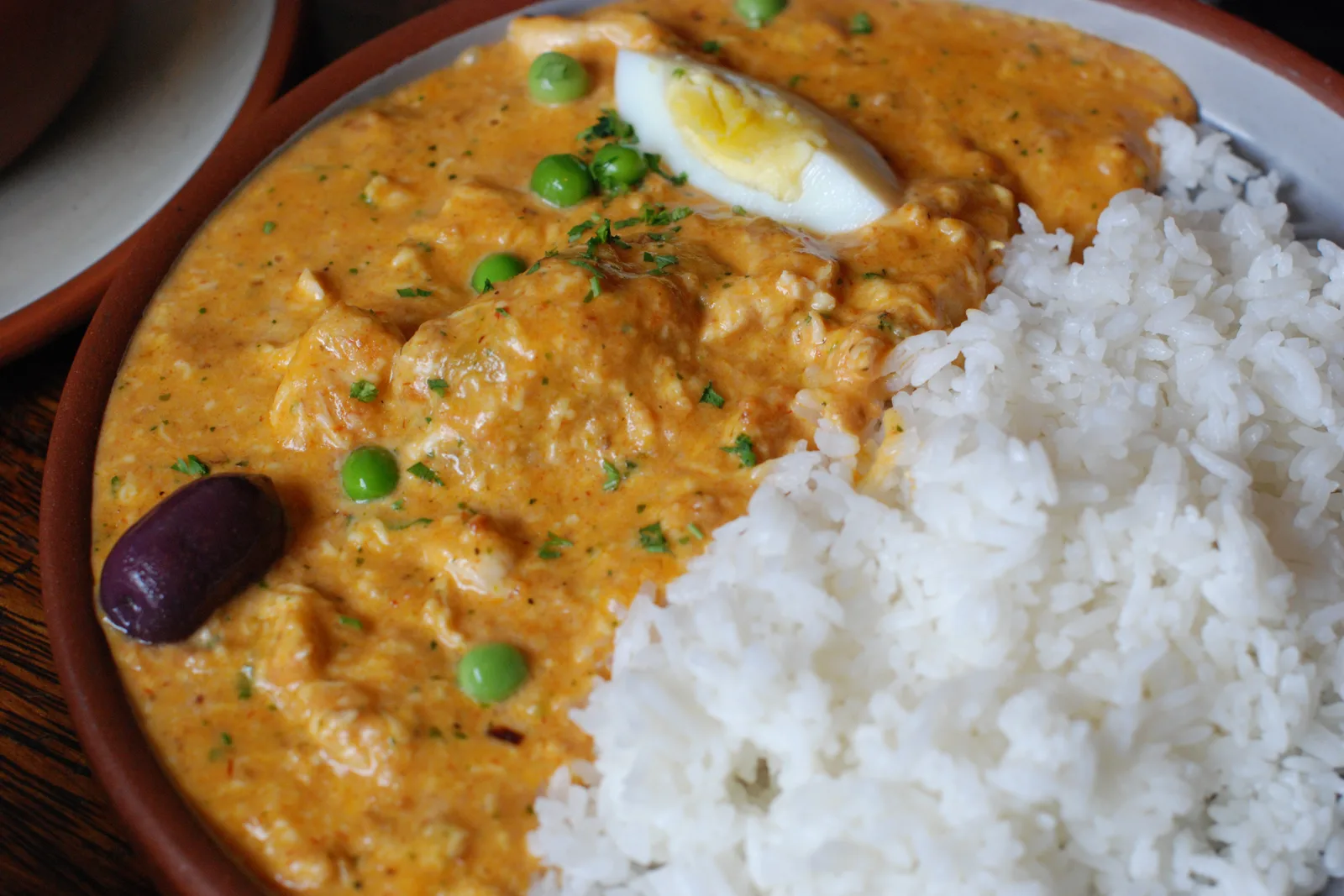
A bowl of ají de gallina with creamy golden chicken sauce, white rice, a boiled egg, peas and a black olive Peru flag Peru 1h
Dinner •Lima Heritage

Ají de Gallina

Ají de gallina is Lima's great comfort stew: poached chicken shredded into a velvety golden sauce of ají amarillo, bread soaked in evaporated milk, ground walnuts and Parmesan, served over white rice with a boiled egg, black olives and boiled potato. It is creamy, nutty, gently spicy and deeply filling — the dish Peruvians ask for when they come home. One serving is about 574 g.

Comfort & Warmth

Poached chicken in a creamy ají amarillo sauce thickened with bread, evaporated milk, walnuts and Parmesan.

Pairs Well With
White rice, boiled potato, boiled egg and black olives
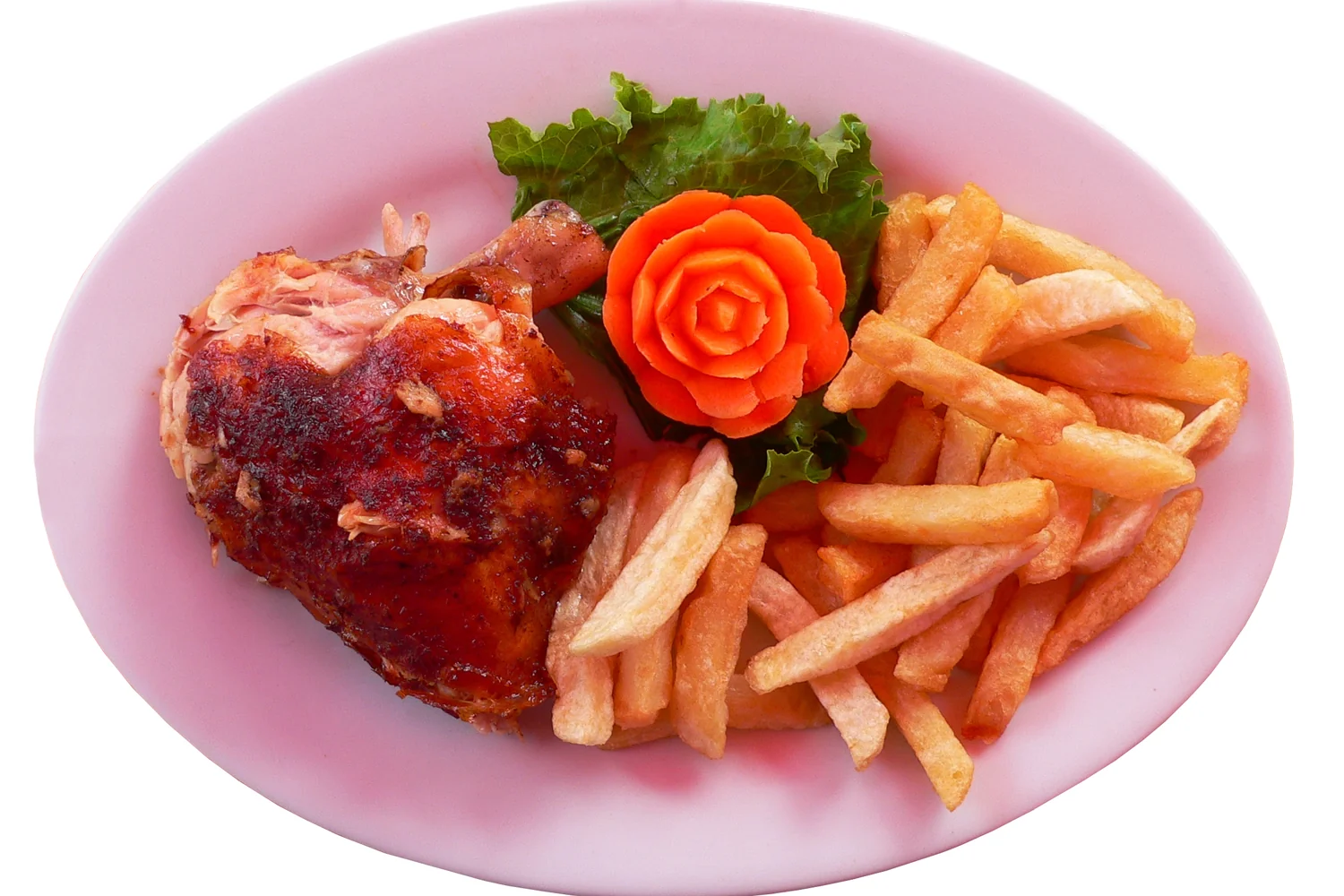
A glossy roasted chicken leg quarter with golden fries, lettuce and a carved carrot rose on a pink plate Peru flag Peru 1h 40m
Dinner •Lima Polleria Heritage

Pollo a la Brasa

This pollo a la brasa recipe marinates a whole chicken overnight in soy sauce, beer, lime, garlic, cumin and paprika, then roasts it slowly until the skin turns dark and crisp and the meat stays juicy. It is served the way every polleria in Lima serves it: a quarter chicken with thick-cut fries, a fresh salad and the two essential sauces, green aji verde and yellow aji amarillo. One serving is about 514 g.

High-Protein & Satisfying

Charcoal-roasted chicken with dark, crisp skin and juicy meat, served the polleria way with thick fries, salad and two aji sauces.

Pairs Well With
Aji verde, fries & salad
High Protein

The Dinner Gazette

Never wonder what’s for dinner again

One email a week with easy dinner ideas from around the world — ingredients, steps and nutrition, tested in our kitchen first.

Delivered every Thursday morning. Unsubscribe anytime.