Curated recipes from 193 countries  •  New seasonal Mediterranean issue out now

Overview

Jjajangmyeon

Korean Black Bean Noodles, Jajangmyeon

This jjajangmyeon recipe is Korea's best-loved comfort noodle: thick, chewy wheat noodles buried under a glossy black sauce of fried chunjang, diced pork, onion, zucchini and potato. The sauce is dark, savoury and faintly sweet, and it coats every strand. One serving is about 575 g.

Jjajangmyeon began as zhajiangmian, the fried-sauce noodles of Shandong in northern China, carried to the port of Incheon by Chinese migrants in the late 19th century. At Gonghwachun, a restaurant in Incheon's Chinatown founded in 1905, the dish took its Korean form: the sauce was sweetened with caramel and darkened until it turned jet-black, and the paste itself became chunjang, a Korean adaptation that does not exist in Chinese cooking. The old Gonghwachun building now houses the Jajangmyeon Museum, opened in 2012. The Chinese original, zhajiangmian, is still a different dish — saltier, browner and drier — while the Korean version is glossy, thick and faintly sweet. In Korea the noodles are also a ritual: on Black Day, 14 April, single people eat them together.

Pairs well with: Pickled yellow radish (danmuji) and raw onion with chunjang

Provenance

South Korea flag South Korea

Korean-Chinese Classic

East & South Asia

Time Dedication

45m

20m prep • 25m cook

Batch Yield

4 Servings

858 kcal per serving

1 serving ≈ 575 g

Technical Skill

Intermediate

Medium (One Pot Sauce)

Meal Timing & Digestive Fit

Breakfast

Not Advised

Lunch

Hearty Midday Main

Dinner

Ideal Hearty Main

Snack & Tea

Inappropriate

Pasta & Noodles Occasions: Family dinners, casual celebrations, Black Day (14 April), rainy days, takeaway nights at home Cost: Moderate — about $4–5 per serving at home

A bowl of jjajangmyeon — wheat noodles coated in glossy black bean sauce with pork, sprinkled with sesame seeds, with chopsticks and a spoon beside it

Korean-Chinese Classic

Photo: Andy Li, CC0, via Wikimedia Commons

The Heritage Formulary

Measured Ingredients

Estimated cost: Moderate — about $4–5 per serving at home (USD)
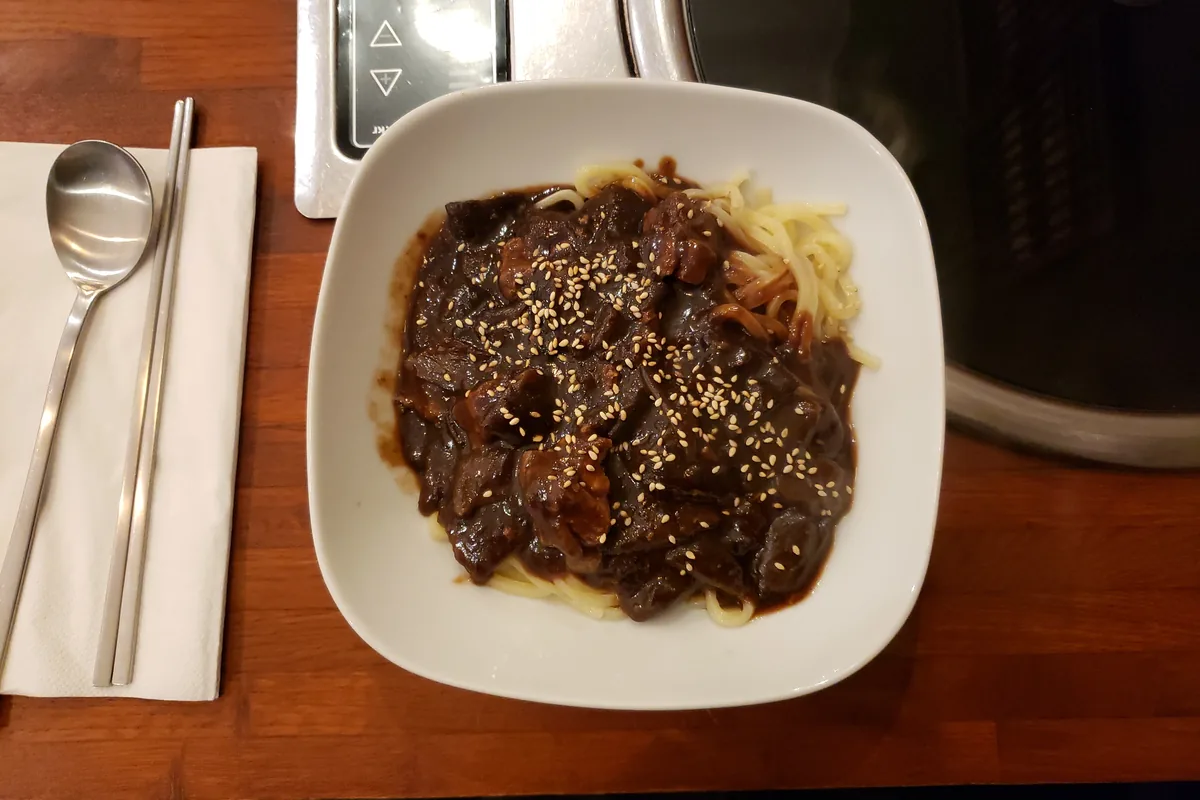
A good jjajangmyeon is judged by the sauce: jet-black, glossy and thick enough to coat the noodles, savoury with a gentle sweetness, never watery or bitter.

Execution Methodology & Culinary Technique

Step-by-Step Cooking Guide

Active 45m
P

Prep Stage: Dice Everything, Fry the Chunjang

20 Mins • Knife Work

Dice the pork, onion, zucchini, potato and cabbage into even 1 cm pieces so they cook at the same speed. Mince the garlic, grate the ginger, mix the cornstarch with 30 ml cold water, and measure the chunjang, sugar, soy sauce and oyster sauce into small bowls beside the stove. Fill a large pot with water for the noodles and put it on to boil.

Maestro Tip: Even dice matters more than speed here: a big chunk of potato stays raw while a small one turns to mush, and the sauce should hold its shape.

  1. 1

    Fry the Chunjang

    5 Mins Medium heat, about 160°C (320°F)

    Heat 30 ml of the oil in a large wok or heavy pan over medium heat. Add the 120 g chunjang and fry, stirring constantly, for 3 minutes until it darkens, loosens and smells roasted rather than raw. Scoop it into a bowl and set aside.

    Do not skip this step: raw chunjang is bitter and sour, and frying it in oil is what turns it into the deep, rounded flavour of a jjajangmyeon recipe.

    Done when: The paste is darker, glossy and smells nutty and roasted, not sharp or sour.

  2. 2

    Brown the Pork and Vegetables

    8 Mins Medium-high heat, about 180°C (355°F)

    Add the remaining 15 ml oil to the same pan. Fry the 300 g diced pork over medium-high heat for 3 minutes until browned at the edges. Add the 200 g onion, 150 g zucchini, 150 g potato and 100 g cabbage with the garlic and ginger, and stir-fry for 5 minutes until the onion softens and the potato edges turn translucent.

    Keep the pieces moving so they brown instead of steaming; if the pan looks crowded, cook in two batches.

    Done when: The pork is browned, the onion is soft and the vegetables have started to colour.

  3. 3

    Build the Sauce

    10 Mins Gentle simmer, about 95°C (200°F)

    Return the fried chunjang to the pan and stir it through the pork and vegetables for 1 minute. Pour in the 300 ml water, the 24 g sugar, 30 ml soy sauce and 30 g oyster sauce, and bring to a gentle simmer. Cover and cook for 8 minutes, until the potato is tender all the way through. Stir in the cornstarch slurry and simmer for 1 more minute until the sauce turns thick and glossy.

    Taste before you add more salt: the chunjang and soy sauce already carry most of the salt in this dish.

    Done when: The sauce is thick enough to coat a spoon, glossy and jet-black, and the potato yields easily to a fork.

  4. 4

    Cook the Noodles

    8 Mins Rolling boil, 100°C (212°F)

    While the sauce simmers, cook the 480 g noodles in the large pot of boiling water according to the packet — usually 5 to 8 minutes for fresh noodles, a little longer for dried. Drain well and rinse briefly under hot water to wash off excess starch, then drain again.

    Rinsing keeps the noodles from clumping and stops them soaking up the sauce too fast on the plate.

    Done when: The noodles are chewy, not soft, and separate easily when lifted with chopsticks.

  5. 5

    Plate and Toss

    2 Mins No heat — serve at about 20°C (68°F)

    Divide the noodles between 4 wide bowls. Ladle the hot black bean sauce generously over each bowl, scatter the 8 g sesame seeds and the 80 g cucumber matchsticks on top, and carry to the table. Toss the noodles and sauce together at the table until every strand is coated black.

    Toss at the table, not in the kitchen: the sauce cools fast, and mixing it hot keeps the noodles slippery and glossy.

    Done when: Each bowl is evenly black, glossy and steaming, with the cucumber still crisp on top.

Finishing Touches & Plating

Serve the jjajangmyeon at once, sauce spooned over the noodles, with pickled yellow radish and raw onion on the side. Toss well before eating — the first bite should be glossy, savoury and faintly sweet, with the cucumber adding a cool crunch.

Nutritional Physiology & Benefits

Nutrition

Energy

858

kcal / serving

Protein

33g

Complete AA

Carbs

121g

Complex

Fats

27g

Healthy

Per serving (4 servings · 1 serving ≈ 575 g)
Energy858 kcal
Protein33 g
Carbohydrates121 g
Fat27 g
Fibre8.0 g
Sugar16.9 g
Sodium1198 mg
Per 100g
Energy149.3 kcal
Protein5.8 g
Carbohydrates21.1 g
Fat4.6 g
Fibre1.4 g
Sugar2.9 g
Sodium208 mg

Nutrition values are estimated — calculated from USDA FoodData Central values for the listed ingredients.

Vitamins & minerals: B vitamins and iron (pork), vitamin C (cabbage and zucchini), selenium (pork). Nutrition values are estimated.

Protein from the Pork

One serving gives about 33 g of protein from the pork, which helps keep you full and supports everyday muscle maintenance.

Vegetables in Every Bowl

Onion, zucchini, potato and cabbage add fibre, vitamin C and potassium to a dish that is often thought of as noodles alone.

A Filling, Balanced Plate

Noodles, pork and vegetables together make a complete meal in one bowl, with carbohydrate for energy and protein and fibre to slow you down.

Food Pairings

What to Eat With

To optimize nutrient absorption and elevate the sensory depth, pair with these authentic accompaniments:

Sides

Pickled Yellow Radish (Danmuji)

The classic partner: its sharp, sweet crunch cuts through the rich black bean sauce and resets your palate between bites.

Vegetables

Raw Onion with Chunjang

Korean-Chinese restaurants serve raw onion with a dab of chunjang; the bite of raw onion balances the sauce's sweetness.

Cucumber Salad

A light, vinegary cucumber salad adds freshness and crunch to a rich, dark noodle bowl.

Drinks

Cold Barley Tea

Roasted barley tea is the usual table drink with jjajangmyeon; it is unsweetened and nutty, and it suits the salty-sweet sauce.

Complete menu

Serve jjajangmyeon as the main dish with pickled yellow radish and raw onion with chunjang on the side; a light cucumber salad and a cold barley tea complete the table.

Digestive Guardrails

What NOT to Combine

To prevent digestive distress, sluggishness, or palate clash, avoid pairing the dish with these elements:

A Second Salty Sauce

One serving already carries about 1,198 mg of sodium from the chunjang and soy sauce, so skip extra soy sauce or a salty soup alongside. This is general information, not medical advice.

Adding Raw Chunjang to the Pan

Stirring unfried chunjang straight into the sauce leaves it bitter and sour; fry it in oil first, as in step 1, or the whole bowl tastes flat and sharp.

General information only, not medical advice — consult a doctor for personal dietary decisions.

Who Should Eat It

Who Should Eat

  • General adultsA hearty, satisfying meal at about 858 kcal per serving.
  • ChildrenSuitable from age 5+ in a small portion; the sauce is mild, sweet and not spicy, and the noodles are soft and easy to eat.
  • ElderlyGood in a modest portion — the noodles are soft and the pork is tender; the sauce is quite salty, so keep the serving small.
  • Pregnant womenGenerally suitable if the pork is cooked right through; keep the portion moderate and skip any extra soy sauce.
  • Breastfeeding womenGenerally suitable; the pork and noodles add protein and energy, and the sauce is mild.
  • AthletesA strong post-training meal: about 33 g of protein and 121 g of carbohydrate per serving, which replaces energy after a hard session.
  • Weight gainA good choice — a full bowl with extra pork and noodles adds up to a hearty, energy-dense meal.
  • Weight lossKeep the serving small and load up on the cucumber and pickled radish instead; at about 858 kcal a full bowl is energy-dense, and the sauce is salty.

Health Conditions — Adjust or Avoid

Conditions

  • DiabetesOne serving carries about 121.1 g of carbohydrate, mostly from the noodles, so it is a large carbohydrate load. Ask your clinician about your carbohydrate target.
  • High blood pressureOne serving carries about 1198 mg of sodium, so keep the portion modest and skip salty sides. Ask your clinician about your daily sodium limit.
  • Kidney diseasePork is high in protein, so keep the portion small if your clinician has advised limits, and ask about portion size.
  • GoutEat occasionally — pork shoulder is moderately high in purines, and the sauce is salty. Ask your clinician if gout flares are frequent.
  • Stomach issuesThe rich, oily sauce can feel heavy; a small portion eaten slowly is easier to digest, and the cucumber garnish helps.
  • Cardiovascular diseaseThe sauce is high in sodium and the noodles are refined carbohydrate, so enjoy occasionally and keep the portion modest. Ask your clinician about how often it fits your diet.
  • Fatty liverKeep the portion modest and occasional; the dish is rich in fat, carbohydrate and energy. Ask your clinician about frequency.
  • Food allergiesContains wheat (gluten), soy, sesame and oyster sauce (shellfish). Do not serve to anyone with a wheat, soy, sesame or shellfish allergy; the dish is not suitable for vegetarians.
  • Special therapeutic dietsIf you follow a prescribed low-sodium diet, use low-sodium soy sauce and half the chunjang, and check with your clinician.

If you have a medical condition, consult your doctor before changing your diet.

Storage & Use

Storage & Use

How to store
Cool the sauce and noodles separately and store in airtight containers.
In the fridge
Sauce 3 days, noodles 2 days, at 4°C (39°F) or below.
In the freezer
Sauce up to 1 month; noodles do not freeze well and go mushy.
How to reheat
Reheat the sauce in a pan until steaming hot throughout, to 74°C (165°F); cook fresh noodles rather than reheating old ones.
Freezing recommended
Sauce only — freeze the sauce in portions and cook fresh noodles when you serve it.
Signs it has spoiled
Sour smell, slimy noodles, or a grey film on the sauce.

More recipes to explore

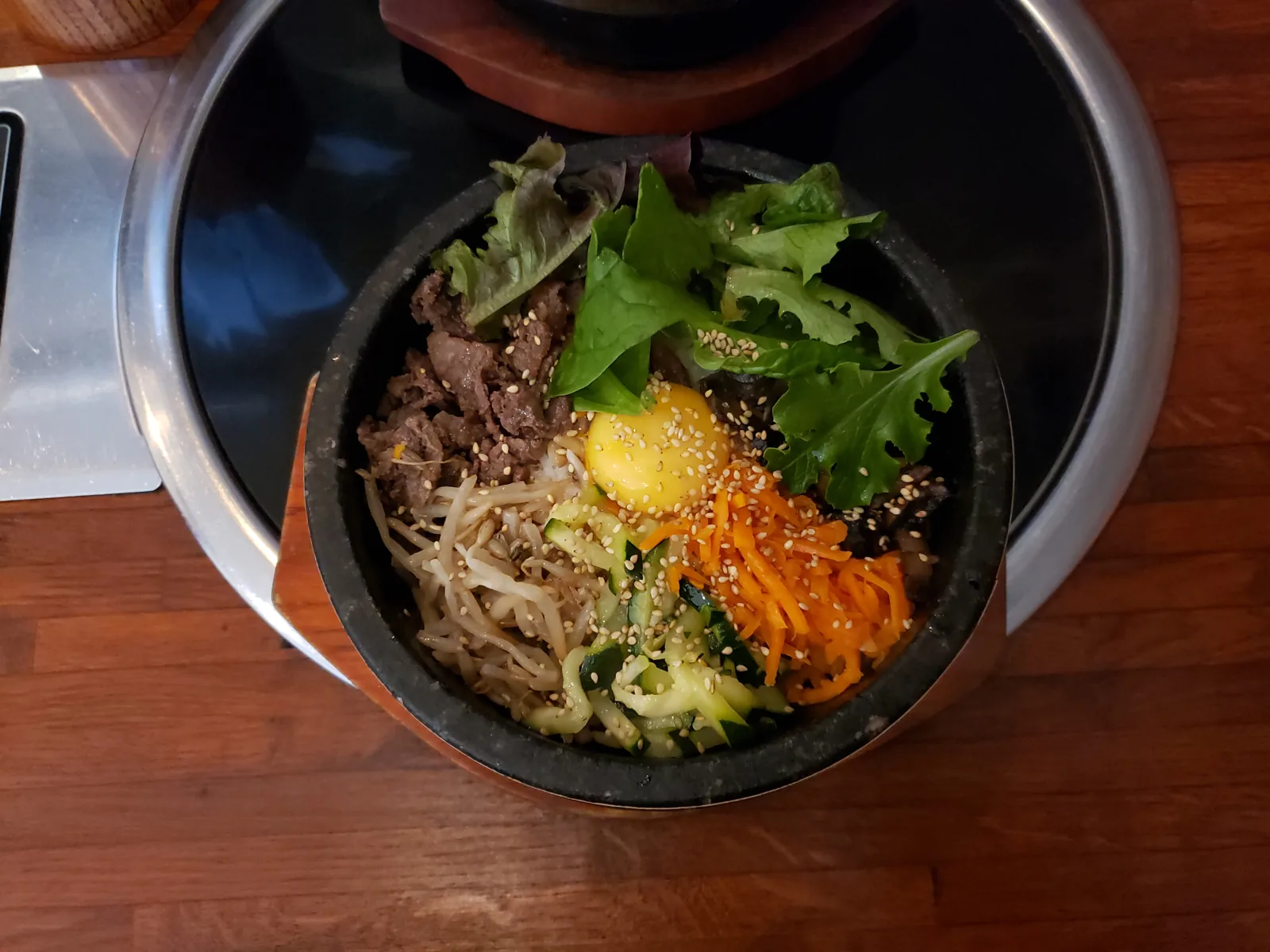
Dolsot bibimbap in a hot black stone bowl — bulgogi beef, egg yolk, carrots, zucchini, bean sprouts and sesame seeds over rice South Korea flag South Korea 1h 5m
Dinner •Korean Heritage

Bibimbap

This bibimbap recipe builds Korea's most famous rice bowl the dolsot way: hot rice in a sizzling stone pot, ringed with five separately seasoned namul vegetables, bulgogi beef and a fried egg, with gochujang to stir through at the table. The stone bowl crisps the bottom layer of rice into golden nurungji while you eat. One serving is about 510 g.

Colourful & Satisfying

Warm rice, five seasoned vegetables, bulgogi beef and a fried egg, mixed at the table with gochujang.

Pairs Well With
Kimchi, kongnamul-guk (bean sprout soup) & barley tea
Korean fried chicken pieces coated in a glossy red yangnyeom glaze South Korea flag South Korea 45m
Dinner •Korean Heritage

Korean Fried Chicken

This Korean fried chicken recipe is the real thing: boneless chicken in a thin potato-starch batter, fried twice — once to cook it through, once at higher heat to drive out moisture and shatter the crust — then tossed in a glossy yangnyeom glaze of gochujang, honey and garlic. The double fry is what keeps the skin crisp under the sauce. One serving is about 250 g.

Crispy & Bold

Double-fried chicken in a thin potato-starch crust, tossed in a sticky sweet-spicy yangnyeom glaze.

Pairs Well With
Pickled radish (chikin-mu), cold beer & steamed rice
High Protein • Quick Prep (<30m)
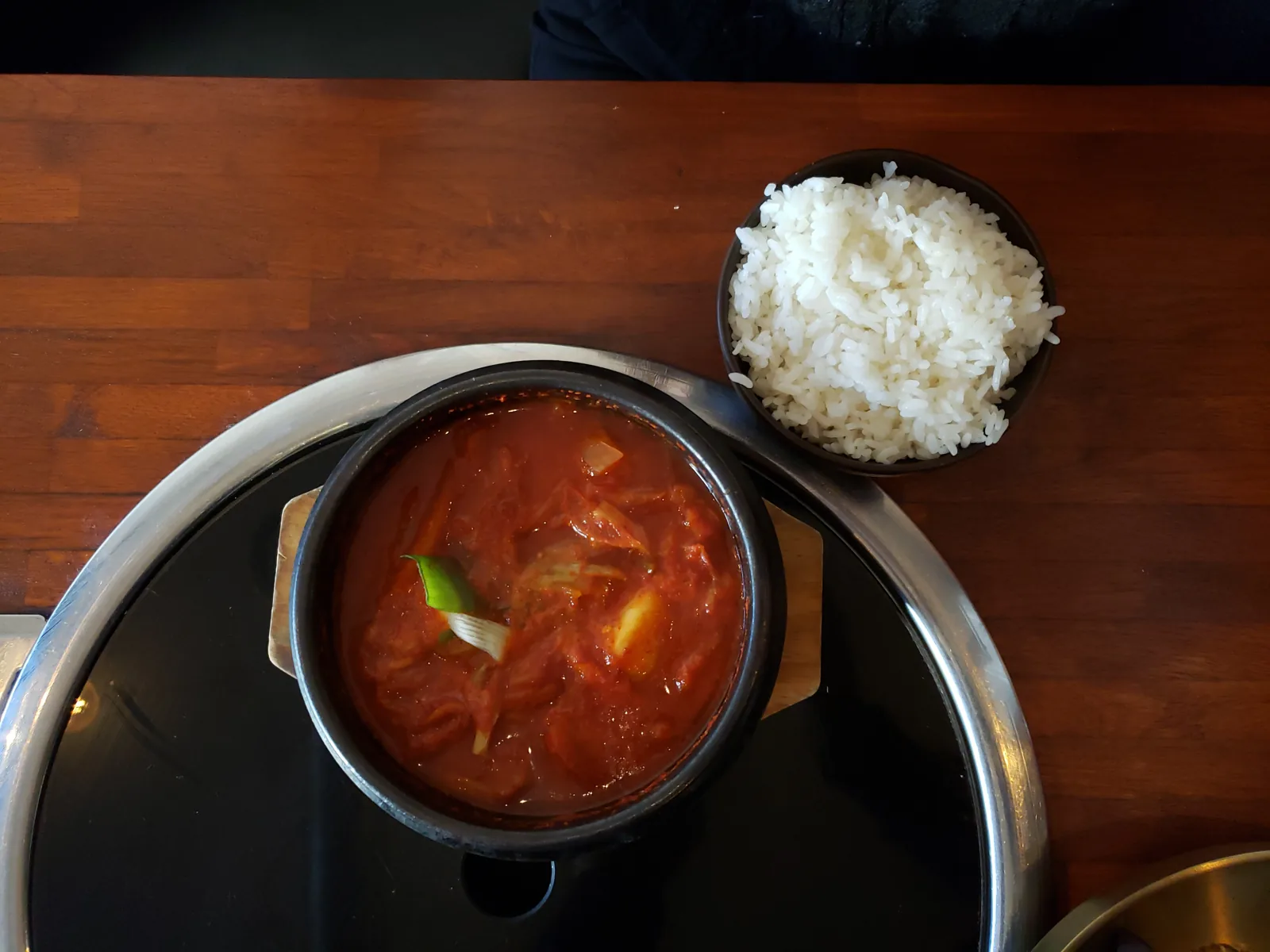
Kimchi jjigae — a red kimchi stew with tofu and spring onions in a black stone pot, served with a bowl of rice South Korea flag South Korea 45m
Dinner •Korean Heritage

Kimchi Jjigae

This kimchi jjigae recipe is the Korean comfort stew: aged, well-fermented kimchi fried with pork belly, then simmered in its own brine with tofu until the broth turns brick-red and rich. It is a stew, not the kimchi itself — the North Korean white kimchi published earlier is the pickled cabbage, while this is what you cook with it. One serving is about 425 g.

Comfort & Warmth

Aged kimchi and pork belly simmered in kimchi brine with tofu — sour, spicy and deeply savoury.

Pairs Well With
Steamed rice, fried egg & banchan
Soups & Broths • Fermented / Gut Health
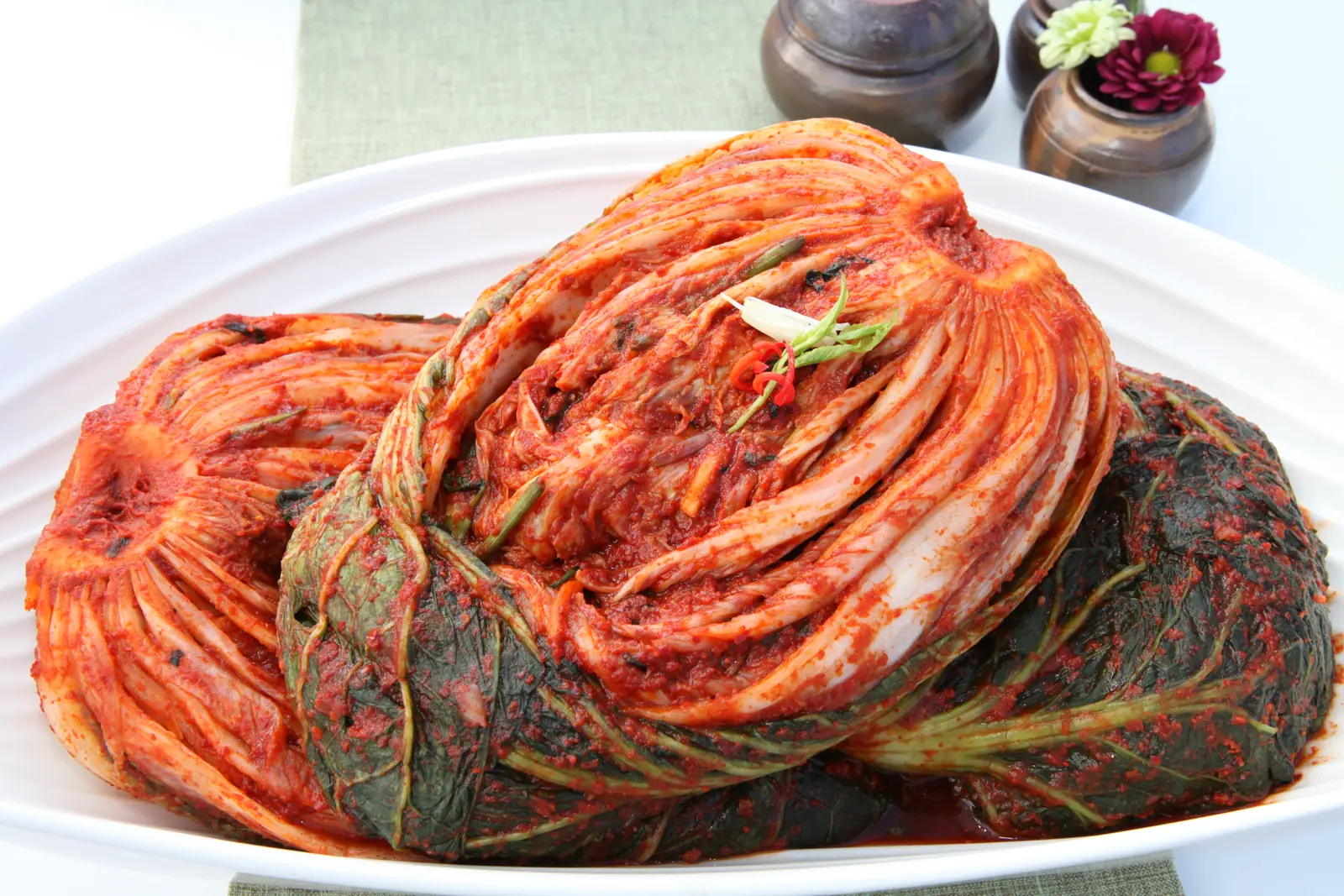
Whole heads of baechu kimchi coated in red gochugaru paste on a white platter South Korea flag South Korea 2h 35m
Dinner •Korean Kimjang Heritage

Baechu Kimchi

This kimchi recipe turns one head of napa cabbage into classic baechu kimchi: salted leaves packed with a bright red gochugaru paste, then left to ferment until tangy and fizzy. It is the spicy southern-style kimchi most people picture when they hear the word kimchi, and it keeps for weeks in the fridge. One serving is about 165 g.

Fermented & Fiery

Crisp, spicy, sour napa cabbage kimchi — Korea's everyday banchan, fermented at home in a jar.

Pairs Well With
Serve a small bowl with steamed rice, grilled meat or a fried egg.
Fermented / Gut Health

The Dinner Gazette

Never wonder what’s for dinner again

One email a week with easy dinner ideas from around the world — ingredients, steps and nutrition, tested in our kitchen first.

Delivered every Thursday morning. Unsubscribe anytime.