
Curated recipes from 193 countries  •  New seasonal Mediterranean issue out now

Overview

Kazakh Funchoza

Funchosa, Funchoza Salad, Фунчоза

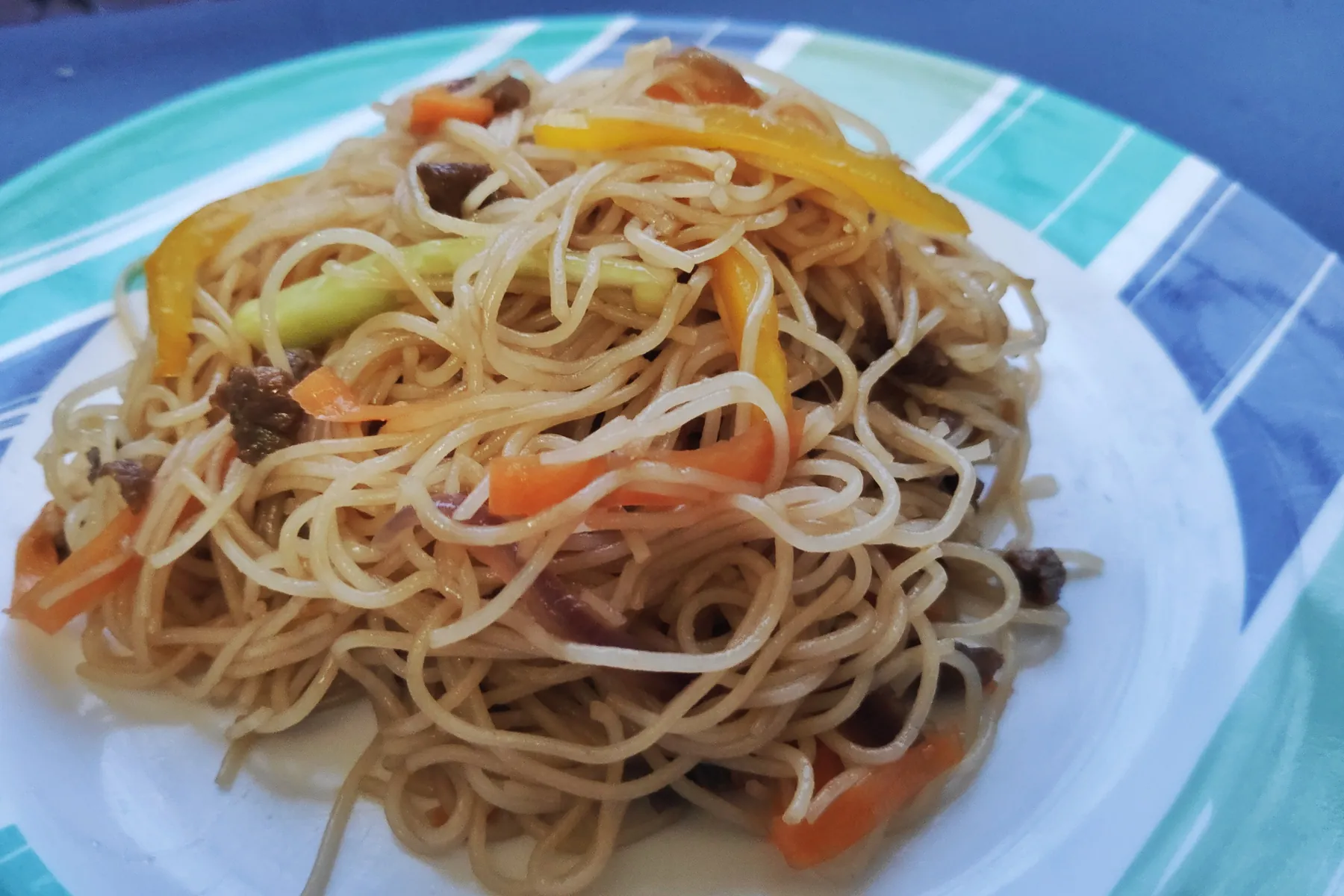
This kazakh funchoza recipe turns mung-bean glass noodles into a cold, tangy salad with strips of seared beef, crunchy carrot, cucumber, bell pepper and onion, all tossed in a soy-vinegar dressing with garlic, coriander and chilli. One serving is about 314 g. Serve it chilled after a short marinade, when the noodles have soaked up the dressing and the vegetables are still crisp.

Funchoza is a fixture of the Koryo-saram table — the ethnic Korean community whose families have lived in Kazakhstan and across Central Asia since the 1930s, carrying their foodways with them. On Kazakh tables it became a cold marinated salad: mung-bean glass noodles tossed with beef strips and garden vegetables in a sharp soy-vinegar dressing, quite different from Thailand's lime-and-fish-sauce glass noodle salad or Korea's hot, sweet japchae. The dish has travelled well beyond Central Asia — Anna Ansari's 2025 cookbook Silk Roads features a funchoza recipe — and it is now a familiar sight at Kazakh family lunches and holiday spreads.

Pairs well with: Warm baursak and a cup of hot green tea

Provenance

Kazakhstan flag Kazakhstan

Koryo-saram Table Classic

East & South Asia

Time Dedication

55m

45m prep • 10m cook

Batch Yield

4 Servings

418 kcal per serving

1 serving ≈ 314 g

Technical Skill

Intermediate

Moderate (Marinated Salad)

Meal Timing & Digestive Fit

Breakfast

Not Advised

Lunch

Prime Metabolic Fit

Dinner

Ideal Hearty Main

Snack & Tea

Inappropriate

Pasta & Noodles Occasions: Lunches, summer meals, family gatherings, potlucks and light dinners Cost: Moderate — about $3–4 per serving at home
A plate of Kazakh funchoza with glossy glass noodles, beef strips, carrot, yellow bell pepper and cucumber

Koryo-saram Table Classic

Photo: Melsj, CC BY-SA 4.0, via Wikimedia Commons

The Heritage Formulary

Measured Ingredients

Estimated cost: Moderate — about $3–4 per serving at home (USD)

Made the Kazakh way: noodles boiled just until transparent, beef seared in strips, dressing balanced tangy-salty with garlic, coriander and chilli, then chilled so the flavours marry.

Execution Methodology & Culinary Technique

Step-by-Step Cooking Guide

Active 55m
P

Prep Stage: Soak the Noodles and Slice the Vegetables

45 Mins • Knife Work

Cut the beef into thin strips and season it, then julienne the carrot, cucumber and bell pepper and slice the onion thinly so every vegetable matches the noodles in size. Whisk the soy sauce, rice vinegar, 1 tablespoon of oil, sugar, garlic, ground coriander and chilli flakes until the sugar dissolves, then taste: it should be sharply tangy first, then salty, with warmth at the back. Boil the noodles while you work, so everything is ready to toss at once.

Maestro Tip: Taste the dressing before anything goes in — once the noodles are tossed, the balance is much harder to fix.

  1. 1

    Soak and Boil the Glass Noodles

    10 Mins 100°C (212°F) boiling water

    Bring a large pot of water to a rolling boil. Add the 200g of dried mung-bean glass noodles and cook for 3–4 minutes, stirring once, until they turn fully transparent and springy. Drain at once, rinse under cold running water to stop the cooking, then snip the noodles into shorter lengths with kitchen scissors and set aside in a large bowl.

    Rinse well — hot noodles left in their own heat keep cooking and turn to mush.

    Done when: Noodles fully transparent, springy and separate, not cloudy or mushy.

  2. 2

    Sear the Beef Strips

    8 Mins Medium-high heat; beef to 63°C (145°F)

    Heat 1 tablespoon of vegetable oil in a wide frying pan over medium-high heat until it shimmers. Add the 300g of seasoned beef strips in a single layer and sear for 3–4 minutes, turning once, until browned on both sides and no longer pink inside — the strips should reach at least 63°C (145°F). Lift the beef out, rest it for 2 minutes, then add it to the bowl of noodles.

    Do not crowd the pan — strips piled on top of each other steam instead of browning.

    Done when: Beef browned outside, no pink inside, juices running clear.

  3. 3

    Whisk the Dressing and Toss the Salad

    7 Mins Room temperature, about 20°C (68°F)

    Whisk the 36g of soy sauce, 30g of rice vinegar, the remaining 1 tablespoon of oil, 8g of sugar, 12g of garlic, 3g of ground coriander and 2g of chilli flakes in a small bowl until the sugar dissolves. Pour the dressing over the noodles and beef, add the 120g of carrot, 150g of cucumber, 120g of bell pepper and 80g of red onion, and toss with tongs until every strand is glossy and coated. Fold in the chopped cilantro.

    Toss while the beef is still slightly warm — the noodles drink in the dressing much better.

    Done when: Every noodle strand glossy and evenly coated; vegetables still crisp.

  4. 4

    Chill, Marinate and Serve

    30 Mins Chilled, 4°C (40°F) in the fridge

    Cover the bowl and chill the salad in the fridge for at least 30 minutes so the noodles absorb the soy-vinegar dressing and the flavours marry. Taste once more before serving and adjust with a splash more soy sauce or vinegar if needed. Scatter the 30g of spring onions over the top and serve cold, straight from the fridge.

    Thirty minutes is the minimum — two hours in the fridge makes it even better, but do not leave it overnight.

    Done when: Salad cold through, noodles flavoured right to the centre, vegetables still crunchy.

Finishing Touches & Plating

Serve the funchoza cold, straight from the fridge, with the spring onions scattered over the top. If the noodles have stiffened, loosen them with a spoonful of cold water and a splash more soy sauce before serving.

Nutritional Physiology & Benefits

Nutrition

Energy

418

kcal / serving

Protein

19g

Complete AA

Carbs

56g

Complex

Fats

13g

Healthy

Per serving (4 servings · 1 serving ≈ 314 g)
Energy418 kcal
Protein19 g
Carbohydrates56 g
Fat13 g
Fibre2.8 g
Sugar6.6 g
Sodium670 mg
Per 100g
Energy133 kcal
Protein6.1 g
Carbohydrates17.8 g
Fat4.1 g
Fibre0.9 g
Sugar2.1 g
Sodium213 mg

Nutrition values are estimated — calculated from USDA FoodData Central values for the listed ingredients.

Vitamins & minerals: Vitamin C (bell pepper, cucumber), vitamin A (carrot), vitamin K and folate (cilantro, spring onions), iron and zinc (beef).

Lean Protein, Light Plate

The seared beef strips give about 19 g of protein a serving, while the whole salad stays light at around 418 kcal.

Crisp Vegetables, Real Fibre

Carrot, cucumber, bell pepper and onion add crunch, colour and about 2.8 g of fibre a serving, with no heavy sauce.

No Cream, No Deep Frying

The dressing is simply soy sauce, vinegar and a little oil, and only the beef sees the pan — so the salad stays fresh rather than greasy.

Food Pairings

What to Eat With

To optimize nutrient absorption and elevate the sensory depth, pair with these authentic accompaniments:

Sides

Warm Baursak

Soft, puffy Kazakh fried bread is made for mopping up the tangy dressing left at the bottom of the bowl.

Vegetables

Korean Carrot Salad (Morkovcha)

Another Koryo-saram table favourite — its garlicky, spiced carrots echo the dressing and double the crunch.

Drinks

Hot Green Tea

A hot, unsweetened green tea cleanses the palate between bites and balances the vinegar and chilli.

Chilled Ayran

Cold, lightly salted ayran cools the chilli heat and adds a creamy contrast to the sharp dressing.

Complete menu

Serve Kazakh funchoza with warm baursak and hot green tea, with Korean carrot salad on the side, as a light Kazakh lunch spread.

Digestive Guardrails

What NOT to Combine

To prevent digestive distress, sluggishness, or palate clash, avoid pairing the dish with these elements:

Overcooking the Noodles

Glass noodles left in boiling water for even a minute too long turn to mush and clump into a single lump that no dressing can save. This is general food guidance, not medical advice.

Undercooked Beef Strips

Beef strips must be cooked through to at least 63°C (145°F) — pink, cool centres in thin strips are a food-safety risk, so check the thickest strip before tossing. This is general food guidance, not medical advice.

Drowning It in Extra Soy Sauce

The dressing already carries about 670 mg of sodium a serving; pouring on more soy sauce pushes the salt up fast without improving the flavour. This is general food guidance, not medical advice.

General information only, not medical advice — consult a doctor for personal dietary decisions.

Who Should Eat It

Who Should Eat

  • General adultsA light, satisfying lunch — one serving with baursak is a full meal.
  • ChildrenServe a mild portion: hold back the chilli flakes for children and cut the beef strips short so they are easy to chew.
  • ElderlySoft noodles and tender beef strips are easy to eat; cut the vegetables fine and serve the salad well chilled.
  • Pregnant womenFine when the beef is cooked right through and the vegetables are washed well; keep the chilli modest if it upsets your stomach.
  • Breastfeeding womenA balanced, protein-rich lunch; the garlic and chilli are mild at these amounts, but eat a smaller portion if your baby seems unsettled.
  • AthletesAbout 19 g of protein and 56 g of carbohydrate a serving makes a good post-training lunch; add an extra 100 g of beef for a bigger recovery meal.
  • Weight gainAn easy plate to build up — add more beef, an extra tablespoon of oil in the dressing, and baursak on the side.
  • Weight lossAt 418 kcal a serving it fits a lighter lunch; keep the oil to 1 tablespoon and skip the baursak.

Health Conditions — Adjust or Avoid

Conditions

  • DiabetesGlass noodles are starchy — about 56 g of carbohydrate a serving — so keep the portion modest and skip sweet drinks with it. Ask your clinician if you are unsure.
  • High blood pressureOne serving carries about 670 mg of sodium from the soy sauce, so do not add extra soy sauce at the table. Ask your clinician if you are unsure.
  • Kidney diseaseThe beef and the salty dressing both matter here — keep the portion small and do not eat this salad often. Ask your clinician if you are unsure.
  • GoutBeef is rich in purines, so a modest portion is wiser than a second helping. Ask your clinician if you are unsure.
  • Stomach issuesVinegar and chilli can irritate a sensitive stomach — eat a small portion and leave out the chilli flakes. Ask your clinician if you are unsure.
  • Cardiovascular diseaseLean sirloin and a light oil-and-vinegar dressing keep the saturated fat low, but watch the salt. Ask your clinician if you are unsure.
  • Fatty liverA light, low-fat salad with lean beef and plenty of vegetables fits well; keep sugary drinks away from it. Ask your clinician if you are unsure.
  • Food allergiesContains soy and wheat (in standard soy sauce) — use tamari or gluten-free soy sauce if wheat is a problem. No nuts, egg or dairy in this recipe. Ask your clinician if you are unsure.
  • Special therapeutic dietsCheck the sodium, carbohydrate and protein against your prescribed plan before eating — and ask your clinician or dietitian if you are unsure.

If you have a medical condition, consult your doctor before changing your diet.

Storage & Use

Storage & Use

How to store
Cool to room temperature, then store in a covered container in the fridge.
In the fridge
Keeps 1 day in the fridge at 4°C (40°F) or below — the noodles stiffen and the salad is best eaten the day it is made.
In the freezer
Do not freeze — the noodles and fresh vegetables do not survive it.
How to reheat
Do not reheat; eat cold. If the beef was stored separately, heat it to 74°C (165°F) before adding it back.
Freezing recommended
No — this is a fresh salad, not a freezer dish.
Signs it has spoiled
Sour or off smell, slimy noodles, or beef that smells off or feels tacky.

More recipes to explore

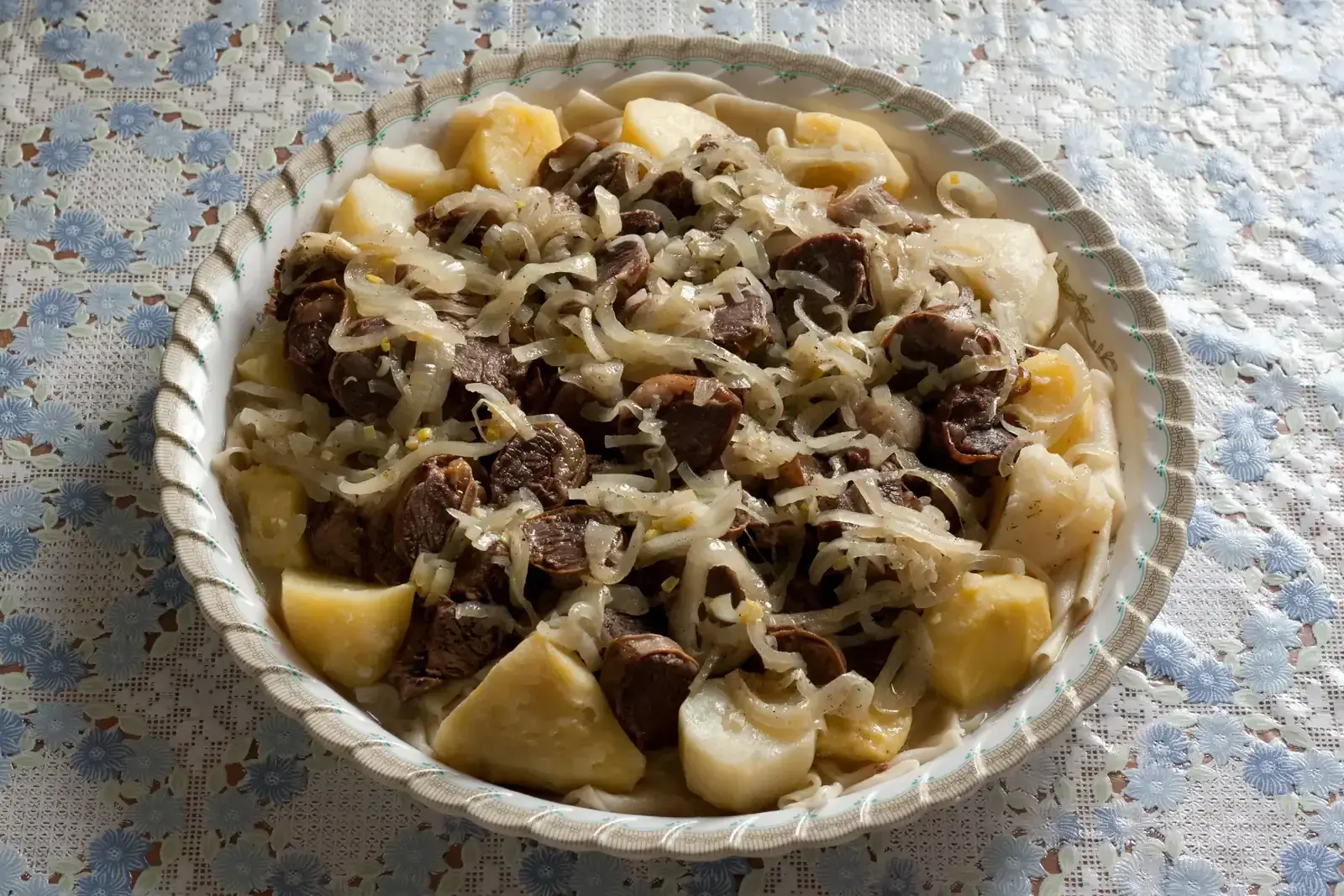
Kazakh beshbarmak on a large platter — sliced boiled horse meat and potatoes over flat noodles, topped with soft onions in broth Kazakhstan flag Kazakhstan 3h 45m
Dinner •Kazakh National Dish

Kazakh Beshbarmak

This kazakh beshbarmak recipe is Kazakhstan's national dish: horse meat simmered slowly on the bone until it falls apart, sliced and laid over wide, silky squares of homemade noodle, then covered with soft onions steeped in the rich cooking broth. The broth itself — sorpa — is served in bowls to sip alongside, and the whole platter is set in the middle of the table for everyone to share. One serving is about 560 g, including a bowl of sorpa.

Hearty & Celebratory

Tender boiled horse meat served over wide flat noodles with soft onions and hot sorpa broth — Kazakhstan's national feast dish.

Pairs Well With
Sorpa broth, pickled onions & kumis
Pasta & Noodles • High Protein
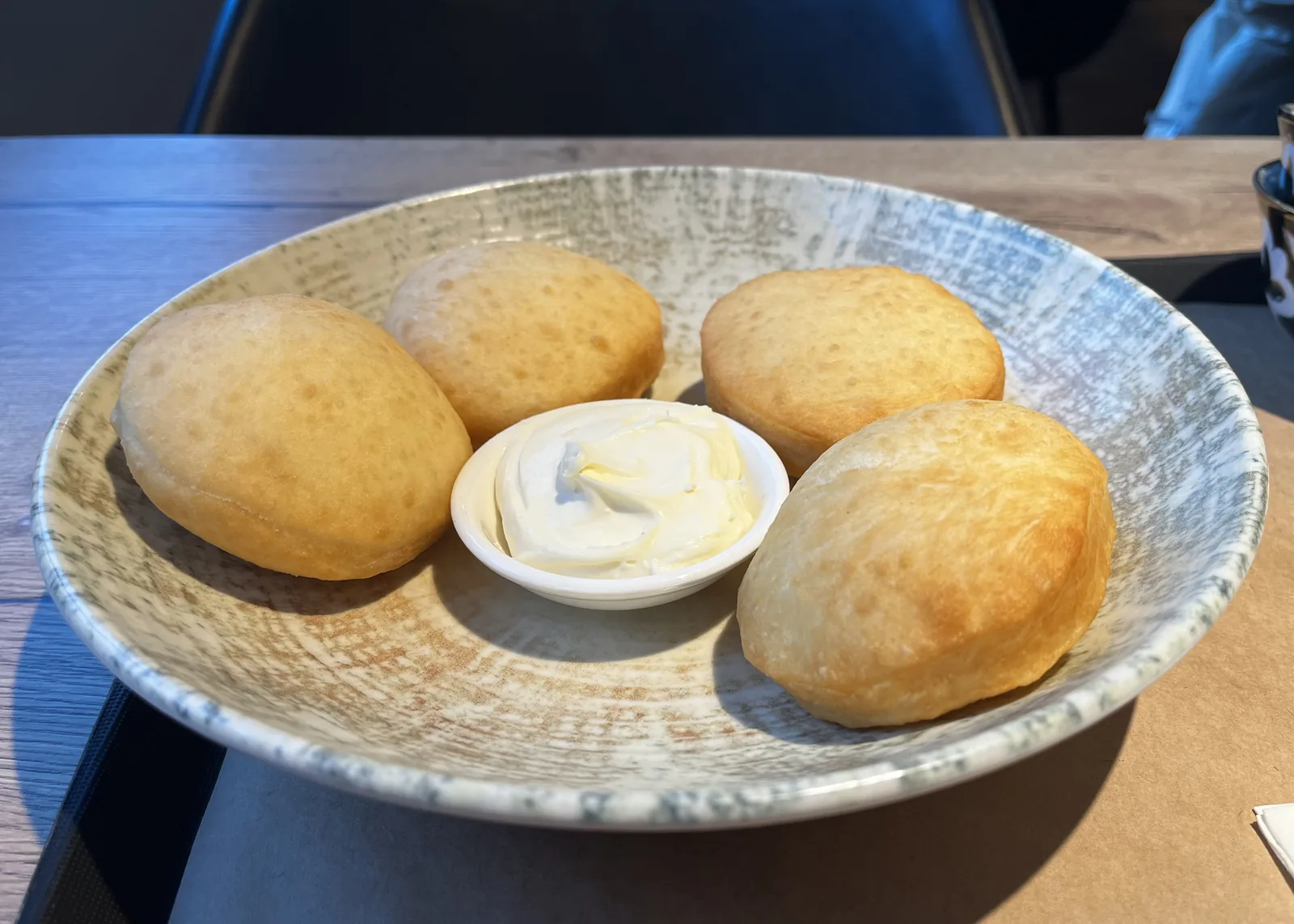
Kazakh baursak — four golden puffy fried dough balls in a bowl with a small dish of white kaymak cream Kazakhstan flag Kazakhstan 1h 40m
Snack & Tea •Kazakh Celebration Bread

Kazakh Baursak

This kazakh baursak recipe makes the puffy fried bread that sits at the heart of every Kazakh celebration: a soft yeast dough, rolled and cut into little pillows, fried until golden and hollow inside, light as air and crisp outside. The smell of frying baursak is said to rise to the sky so loved ones who have passed can share the feast. One serving is about 130 g — three warm baursak with a spoonful of sour cream.

Warm & Comforting

Golden, hollow, puffy fried bread — the sweet-smelling centrepiece of Kazakh celebrations and tea time.

Pairs Well With
Kaymak or sour cream, honey & black tea
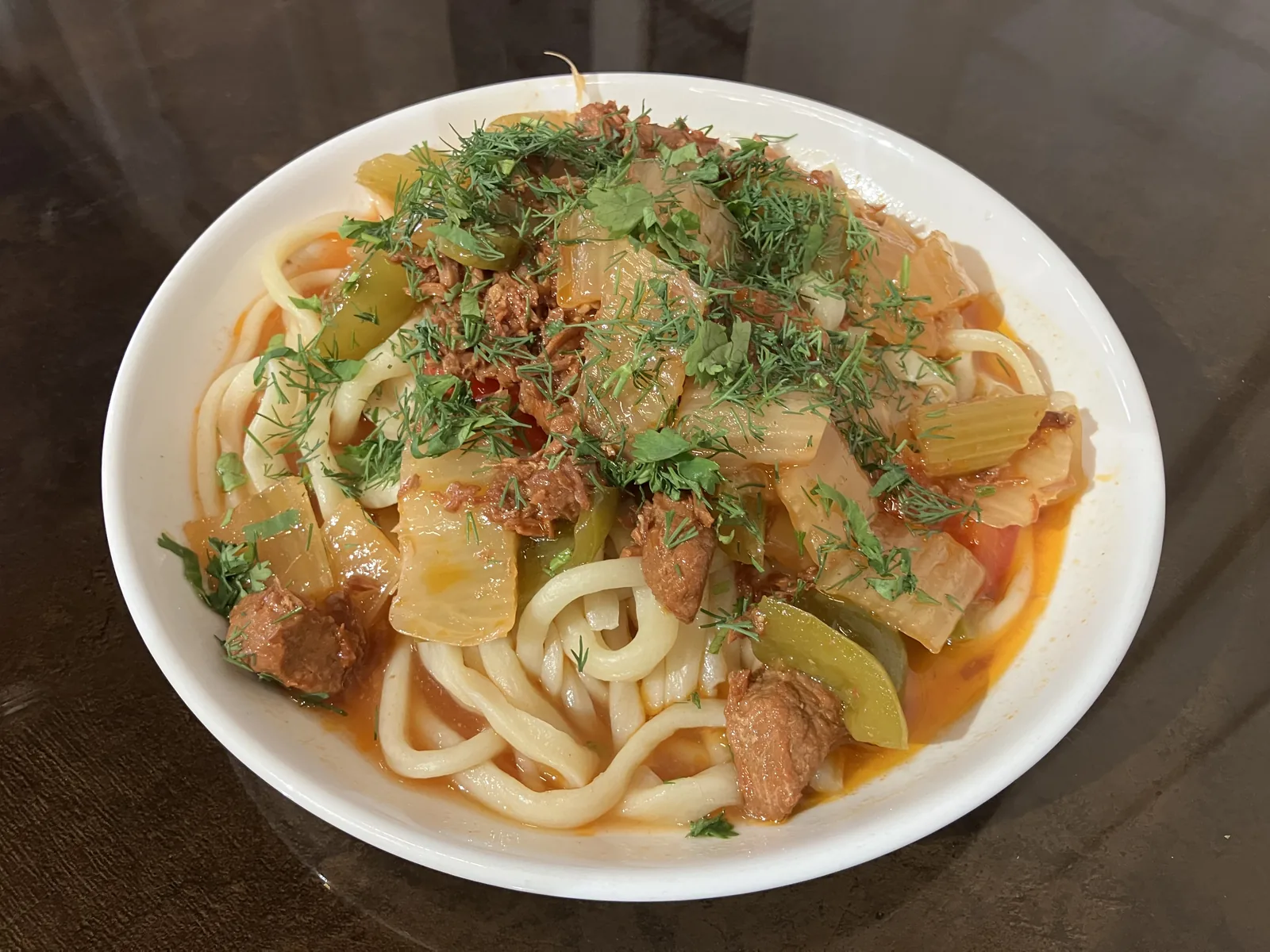
Lagman in a white bowl — thick hand-pulled noodles with beef, bell peppers and daikon in a savoury sauce, topped with fresh dill Kazakhstan flag Kazakhstan 2h
Dinner •Kazakh Silk Road Noodles

Kazakh Lagman

This kazakh lagman recipe is Kazakhstan's take on the great Silk Road noodle soup: noodles pulled by hand into long, chewy strands, laid in deep bowls and covered with a mild, savoury sauce of beef, daikon, bell peppers and tomatoes. It is gentler than its neighbours' versions — no fiery chilli heat, just warm cumin and coriander and the sweetness of the vegetables — and it is the dish Kazakh families cook when the steppe wind turns cold. One serving is about 675 g.

Hearty & Warming

Chewy hand-pulled noodles in a mild beef sauce with daikon and bell peppers — Kazakhstan's warming Silk Road noodle soup.

Pairs Well With
Pickled vegetables, flatbread & green tea
Pasta & Noodles
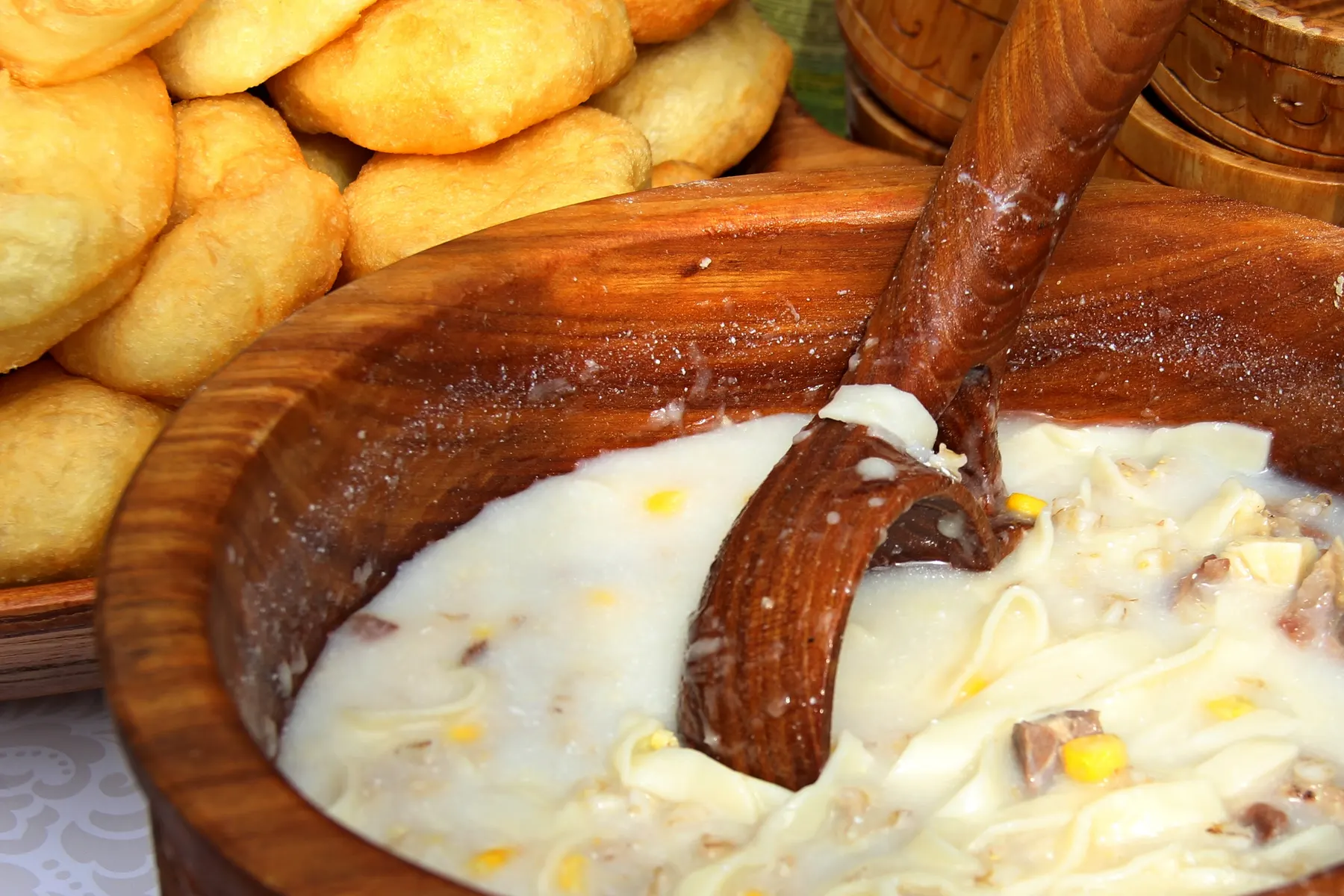
Kazakh nauryz kozhe in a carved wooden bowl — creamy milky soup with flat noodles, corn kernels and pieces of beef, a wooden ladle resting in the bowl, golden baursak behind Kazakhstan flag Kazakhstan 2h 15m
Lunch •Nauryz Spring New Year Dish

Kazakh Nauryz Kozhe

This kazakh nauryz kozhe recipe is the soup at the heart of Nauryz, the Kazakh spring new year: tender beef simmered into a clear broth, then thickened with millet, rice and barley, hand-cut noodles and sweet corn, and finished with warm milk, ayran and crumbled kurt until it turns creamy white and gently sour. By tradition it holds seven obligatory ingredients — water, meat, salt, fat, flour, a cereal and milk — each one a wish for the year ahead. One serving is about 610 g, a generous bowl that works as a full lunch.

Festive & Nourishing

A thick, milky-sour beef soup with millet, rice, barley and hand-cut noodles, made for the Kazakh spring new year.

Pairs Well With
Warm baursak, black tea & pickled vegetables
Soups & Broths

The Dinner Gazette

Never wonder what’s for dinner again

One email a week with easy dinner ideas from around the world — ingredients, steps and nutrition, tested in our kitchen first.

Delivered every Thursday morning. Unsubscribe anytime.