Curated recipes from 193 countries  •  New seasonal Mediterranean issue out now

Overview

Kenyan Chapati

Chapati ya Kenya, Kenyan layered flatbread

This kenyan chapati recipe makes eight soft, golden flatbreads with delicate oil layers that peel apart as you tear them. Unlike the crisp wholewheat parathas of South Asia, Kenyan chapati is made from white flour, rolled thin, brushed with oil, coiled and flattened again, so it stays soft and pliable for scooping up stew. One serving is about 205 g (two chapatis).

Chapati reached Kenya with the Indian Ocean trade, carried by merchants and workers who sailed between western India and the Swahili coast. Kenyan cooks made it their own: white flour instead of whole wheat, a soft pliable crumb instead of a crisp one, and the roll-brush-coil layering that gives the bread its peel-apart texture. Today it is eaten daily across the country — with beef stew, ndengu and chai — and food guides such as Afrofeast rank it third among Kenya's most-loved dishes. It is not the same bread as the wholewheat lachha paratha of Pakistan and India, which is layered with ghee and fried until flaky-crisp; Kenyan chapati stays soft, pale and flexible, made for scooping.

Pairs well with: Serve warm with Kenyan beef stew, ndengu (green grams) or a cup of spiced Kenyan chai.

Provenance

Kenya flag Kenya

Kenya Everyday Bread

African Heritage

Time Dedication

1h 15m

50m prep • 25m cook

Batch Yield

4 Servings

564 kcal per serving

1 serving ≈ 205 g

Technical Skill

Intermediate

Medium (Rolling & Layering)

Meal Timing & Digestive Fit

Breakfast

Not Advised

Lunch

Hearty Midday Main

Dinner

Ideal Hearty Main

Snack & Tea

Inappropriate

Occasions: Family dinners, weekend cooking, celebrations, everyday meals with stew Cost: Low — about $1 per serving at home
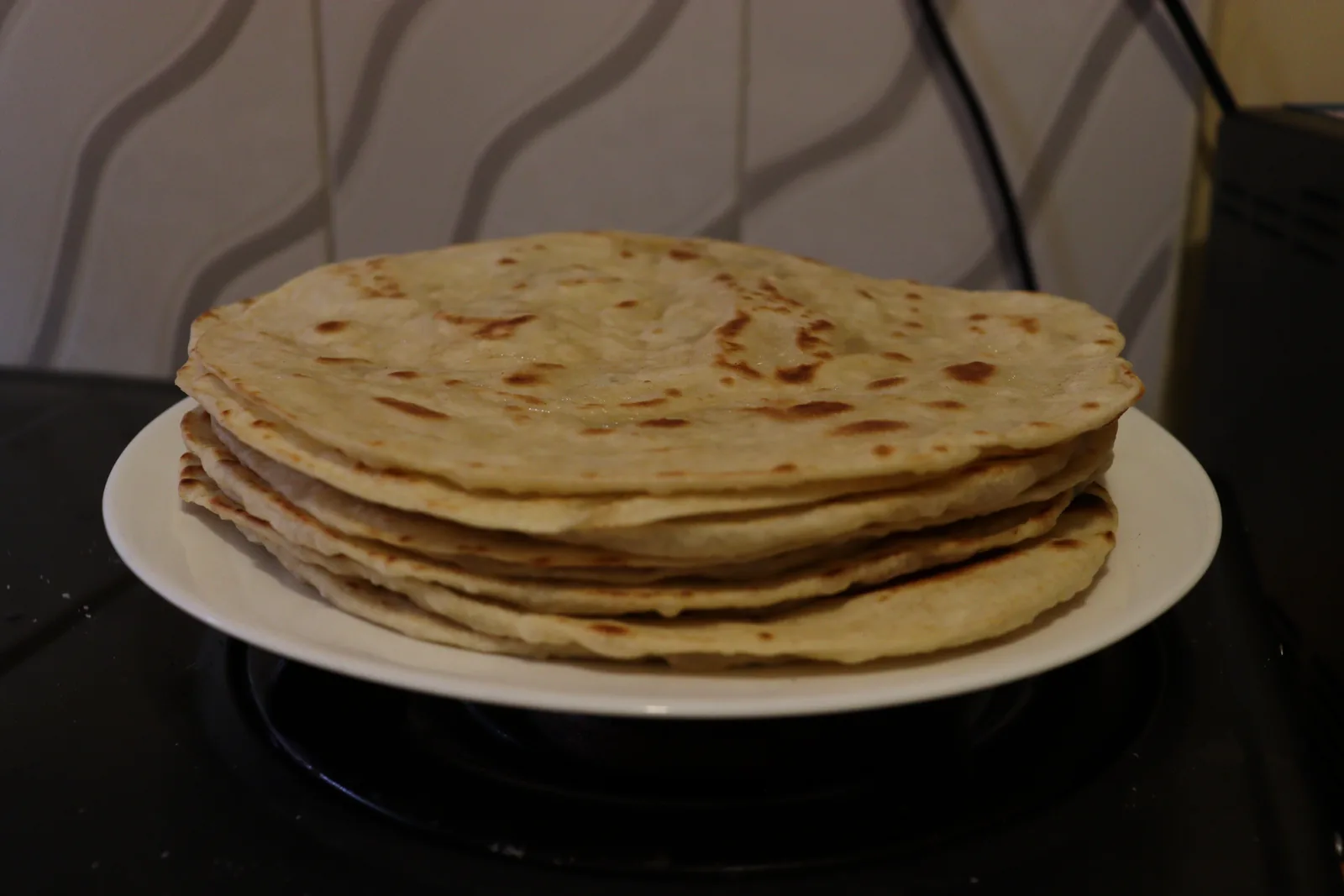
A stack of golden-spotted Kenyan chapatis on a white plate

Kenya Everyday Bread

Photo: safaritravelplus, CC0, via Wikimedia Commons

The Heritage Formulary

Measured Ingredients

Estimated cost: Low — about $1 per serving at home (USD)

A true Kenyan chapati is judged by its softness: it should bend without cracking, tear into thin oil layers, and stay pale gold with brown spots — never dark, crisp or stiff.

Execution Methodology & Culinary Technique

Step-by-Step Cooking Guide

Active 1h 15m
P

Prep Stage: Mix, Knead and Rest the Dough

40 Mins • Mixing & Resting

Sift the flour with the salt and sugar, rub in 15 ml of the oil, then add the warm water a little at a time and knead into a soft, smooth dough. Cover and rest for 30 minutes — the rest is what makes Kenyan chapati soft instead of tough.

Maestro Tip: The dough should feel soft and slightly tacky, like an earlobe. If it sticks to your hands, dust with a little flour; if it cracks, add water a teaspoon at a time.

  1. 1

    Mix and Knead the Dough

    10 Mins Room temperature, ~22°C (72°F)

    Sift 500 g of white flour into a large bowl with the salt and sugar. Rub in 15 ml of vegetable oil until the flour looks like fine crumbs. Pour in the warm water a little at a time, mixing with your hand, then knead on a clean surface for 8 minutes until the dough is soft, smooth and no longer sticky.

    Add the water gradually — too much at once makes a sticky dough that is hard to fix.

    Done when: The dough is smooth, soft and springs back slowly when pressed.

  2. 2

    Rest the Dough

    30 Mins Room temperature, ~22°C (72°F)

    Shape the dough into a ball, brush it lightly with oil, cover the bowl with a clean cloth or cling film and leave it to rest for 30 minutes. Do not skip this step: the rest relaxes the gluten so the chapatis roll out thin without springing back.

    Resting is the difference between a soft Kenyan chapati and a tough one — give it the full 30 minutes.

    Done when: The dough feels relaxed and stretches easily without tearing.

  3. 3

    Roll, Oil and Coil the Layers

    15 Mins Room temperature, ~22°C (72°F)

    Divide the dough into 8 equal balls. Roll one ball into a thin circle about 25 cm across on a lightly floured surface. Brush the whole surface generously with oil, then roll the circle up into a tight rope. Coil the rope into a flat spiral, like a snail shell, tuck the end underneath and press flat. Repeat with the remaining balls. This rolling, oiling and coiling is what builds the soft, peel-apart layers that make Kenyan chapati different from a plain flatbread — and from the crisp wholewheat lachha paratha, which is layered with ghee and fried until flaky-crisp.

    Oil the surface well and roll the rope tight — loose coils make thick, doughy layers instead of thin ones.

    Done when: Each spiral is neat, flat and evenly oiled, ready to roll out.

  4. 4

    Roll Out and Pan-Fry Until Golden

    20 Mins Medium heat, ~180°C (350°F)

    Roll each spiral gently into a round about 20 cm across, turning it often so it stays even and the layers do not press out. Heat a heavy frying pan or chapati pan over medium heat until a drop of water sizzles. Brush the pan lightly with oil and fry one chapati at a time for 2–3 minutes per side, brushing the top lightly with oil as it cooks, until golden with darker brown spots and light puffing. Stack the cooked chapatis under a clean cloth.

    Keep the heat at medium — a pan that is too hot burns the spots black before the inside cooks, and a cool pan dries the chapati out.

    Done when: Both sides are golden with brown spots, the chapati is soft and bends without cracking, and the edges show thin layers.

  5. 5

    Stack and Serve Warm

    5 Mins Serve warm, ~60°C (140°F)

    Keep the stack covered with a cloth for 5 minutes so the steam softens the chapatis further. Serve warm, two per person, with stew or chai — tear off pieces and use them to scoop up the food, as Kenyan families do.

    A covered stack stays soft for an hour; an uncovered chapati dries out and stiffens in minutes.

    Done when: The chapatis are warm, soft, pliable and peel into thin layers when torn.

Finishing Touches & Plating

Serve the chapatis warm from the cloth-covered stack, two per person, with a saucy stew or a cup of chai. Tear, scoop and eat while they are still soft.

Nutritional Physiology & Benefits

Nutrition

Energy

564

kcal / serving

Protein

13g

Complete AA

Carbs

98g

Complex

Fats

13g

Healthy

Per serving (4 servings · 1 serving ≈ 205 g)
Energy564 kcal
Protein13 g
Carbohydrates98 g
Fat13 g
Fibre3.4 g
Sugar2.9 g
Sodium585 mg
Per 100g
Energy275 kcal
Protein6.3 g
Carbohydrates47.8 g
Fat6.1 g
Fibre1.7 g
Sugar1.4 g
Sodium285 mg

Nutrition values are estimated — calculated from USDA FoodData Central values for the listed ingredients.

Vitamins & minerals: Enriched white flour supplies iron, thiamin, riboflavin, niacin and folate; the small amount of salt adds sodium. Nutrition is estimated.

Vegetarian and Filling

White flour, water and a little oil make a simple vegetarian bread that turns a bowl of beans or stew into a full meal.

Steady Energy for the Day

Two chapatis give about 98 g of carbohydrate per serving — the slow, steady fuel Kenyan families rely on for work and school.

Made From Four Pantry Staples

Flour, water, oil and salt are all it takes — no yeast, no special equipment, just a pan and a rolling pin.

Food Pairings

What to Eat With

To optimize nutrient absorption and elevate the sensory depth, pair with these authentic accompaniments:

Sides

Kenyan Beef Stew

The classic partner: soft chapati soaks up the rich tomato gravy, and tearing off pieces to scoop the stew is how the dish is meant to be eaten.

Ndengu (Green Grams Stew)

Mild, saucy green grams are the everyday chapati companion in Kenyan homes — the beans give protein and the chapati gives the bulk.

Vegetables

Kachumbari Salad

Fresh tomato, onion and chilli salad cuts through the soft, oily bread with crunch and acidity, keeping the meal bright.

Drinks

Kenyan Chai

Spiced milky chai is the other half of the Kenyan chapati ritual — torn chapati dunked in hot chai is a beloved breakfast and teatime habit.

Complete menu

Two warm Kenyan chapatis with Kenyan beef stew or ndengu, a spoonful of kachumbari salad and a cup of spiced Kenyan chai — the everyday Kenyan dinner plate.

Digestive Guardrails

What NOT to Combine

To prevent digestive distress, sluggishness, or palate clash, avoid pairing the dish with these elements:

A Second Starchy Staple in the Same Meal

Chapati with ugali or rice in the same sitting doubles the starch on the plate and can leave the meal heavy and hard to finish. Choose one staple per meal. This is general guidance, not medical advice.

Frying in Oil That Is Too Cool

Cool oil soaks into the dough instead of crisping the surface, leaving greasy, heavy chapatis. The pan must be hot enough that a drop of water sizzles before the chapati goes in.

General information only, not medical advice — consult a doctor for personal dietary decisions.

Who Should Eat It

Who Should Eat

  • General adultsA satisfying everyday bread — two chapatis with stew make a complete dinner.
  • ChildrenVery suitable — soft, mild and easy to tear and chew. Serve with a mild stew and keep the chai unsweetened.
  • ElderlyVery suitable — soft and easy to chew, especially served warm and fresh from the pan.
  • Pregnant womenGenerally suitable; the carbohydrate and iron from enriched flour support energy needs. Keep portions moderate.
  • Breastfeeding womenGenerally suitable; the carbs help meet the extra energy needs of breastfeeding — eat a satisfying portion with beans or stew.
  • AthletesA good pre-training carbohydrate base: eat two chapatis with beans 2–3 hours before exercise.
  • Weight gainA good choice — take an extra chapati and pair it with a rich stew.
  • Weight lossEnergy-dense, so keep to one chapati and load the plate with salad and vegetables instead of a second one.

Health Conditions — Adjust or Avoid

Conditions

  • DiabetesWhite flour has a high glycaemic index — keep to one chapati and pair it with beans or vegetables rather than a second one, and ask your clinician about portion size.
  • High blood pressureMost of the sodium comes from the added salt; season the dough lightly and ask your clinician about a suitable portion.
  • Kidney diseaseKeep the portion modest — the bread is low in potassium, but the salty stews it is usually eaten with may not be; ask your clinician about portion size.
  • GoutUsually fine in a modest portion — white flour is low in purines.
  • Stomach issuesUsually gentle when fresh and soft, but the frying oil can trouble a sensitive stomach — eat it warm with a mild stew and avoid very oily batches.
  • Cardiovascular diseaseA reasonable choice in moderation — it is vegetarian and low in saturated fat when fried in vegetable oil; keep the oil light and ask your clinician if unsure.
  • Fatty liverKeep the portion to one chapati and favour vegetable sides over extra bread.
  • Food allergiesContains wheat (gluten). Not suitable for coeliac disease or wheat allergy. The recipe contains no egg, milk or nuts.
  • Special therapeutic dietsIf you follow a prescribed low-sodium or low-carbohydrate diet, use less salt and a smaller portion, and check with your clinician.

If you have a medical condition, consult your doctor before changing your diet.

Storage & Use

Storage & Use

How to store
Cool completely, then stack with paper between layers in an airtight container or sealed bag.
In the fridge
3 days.
In the freezer
2 months (cooked, wrapped well in foil and a sealed bag).
How to reheat
Reheat in a dry pan over medium heat for 1–2 minutes per side, or wrapped in foil in the oven at 180°C (350°F) until hot through; reheat to 74°C (165°F). Avoid the microwave — it makes them tough.
Freezing recommended
Yes — cooked chapatis freeze well for up to 2 months.
Signs it has spoiled
Sour smell, stiff or slimy texture, or mould.

More recipes to explore

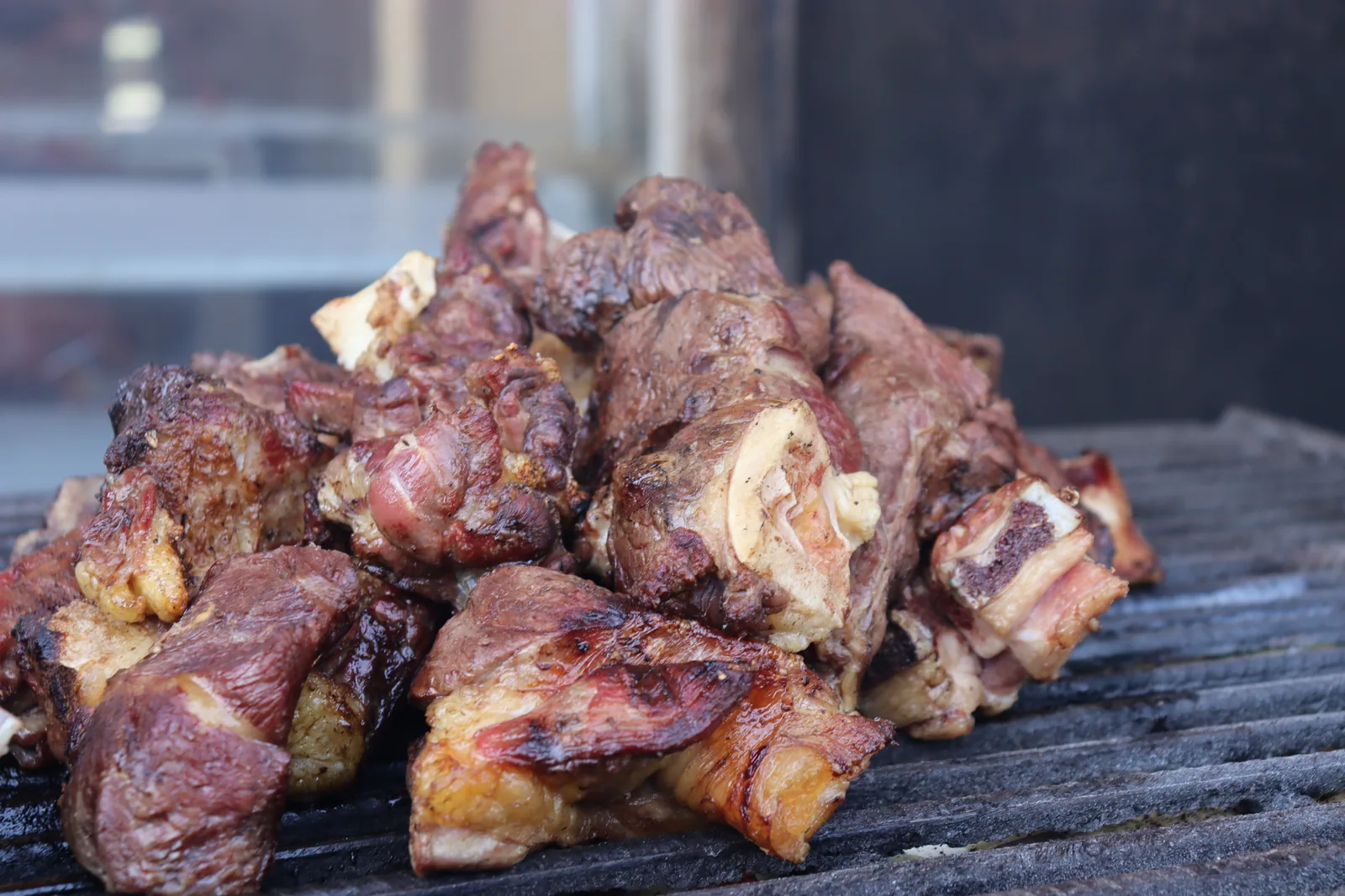
Charred bone-in nyama choma grilling over charcoal Kenya flag Kenya 1h 15m
Dinner •Kenya Heritage

Nyama Choma

Nyama choma means roast meat in Swahili, and this nyama choma recipe is Kenya's charcoal-grilled classic: beef rubbed with garlic, ginger and lemon, cooked low and slow over glowing coals until the edges crisp and the centre stays juicy. It is the centrepiece of Kenyan weekends, sliced hot off the grill and eaten with the hands. One serving is about 250 g.

High-Protein Grilling

Beef chunks rubbed with garlic, ginger, lemon and coriander, grilled slowly over charcoal until charred outside and juicy inside.

Pairs Well With
Ugali, kachumbari & cold lager
High Protein
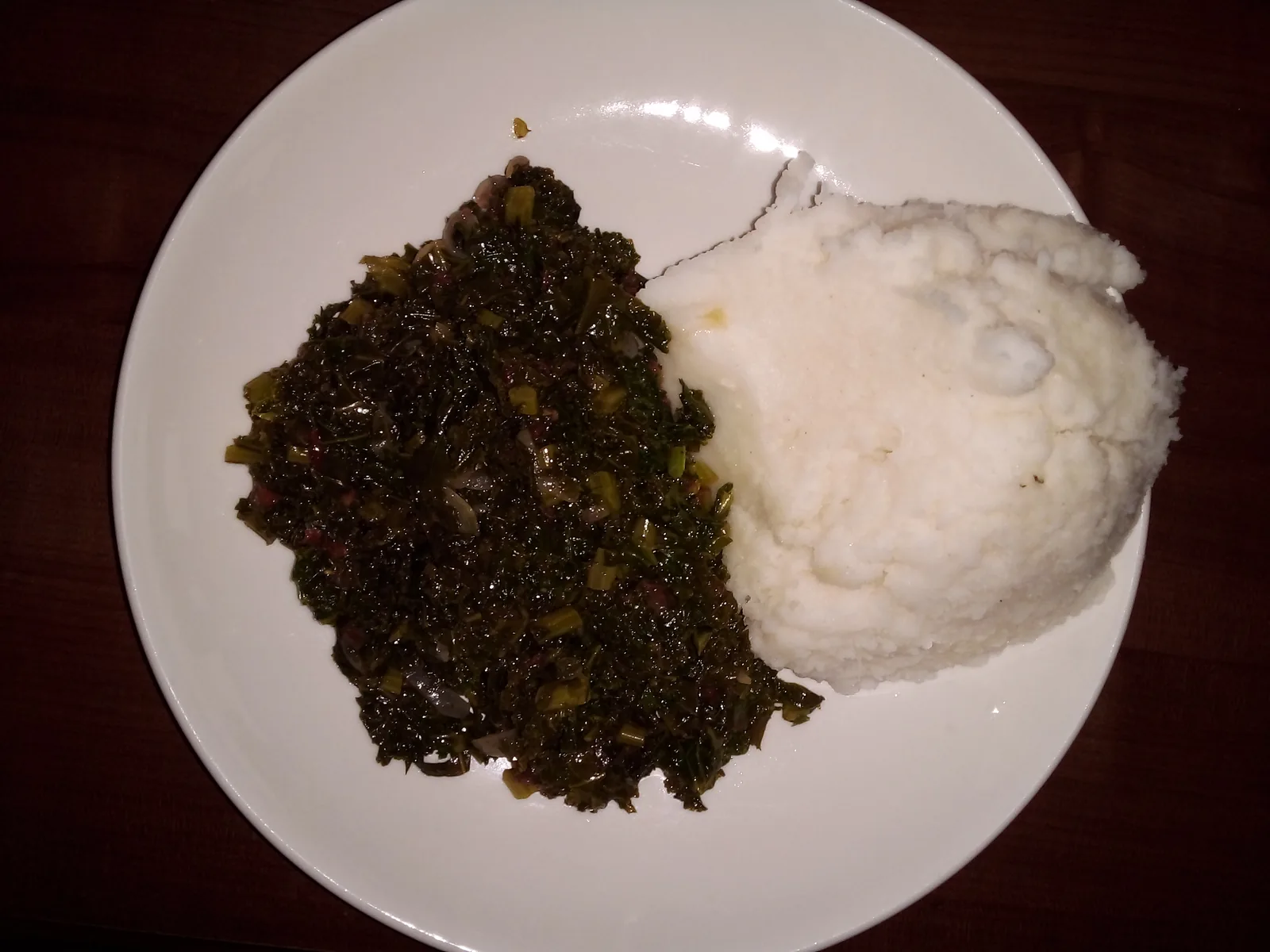
A plate of white ugali with sautéed sukuma wiki collard greens Kenya flag Kenya 45m
Dinner •Kenya Heritage

Ugali with Sukuma Wiki

This ugali sukuma wiki recipe is the plate Kenya eats most days: a firm mound of white maize ugali, torn off by hand and used to scoop up sukuma wiki — collard greens sautéed with onion, tomato and garlic until just wilted. It costs very little, fills you up, and carries a surprising amount of fibre and vitamins. One serving is about 475 g.

Everyday Energy

Firm white maize ugali with sautéed collard greens, onion, tomato and garlic — Kenya's everyday plate.

Pairs Well With
Nyama choma, kachumbari & black tea
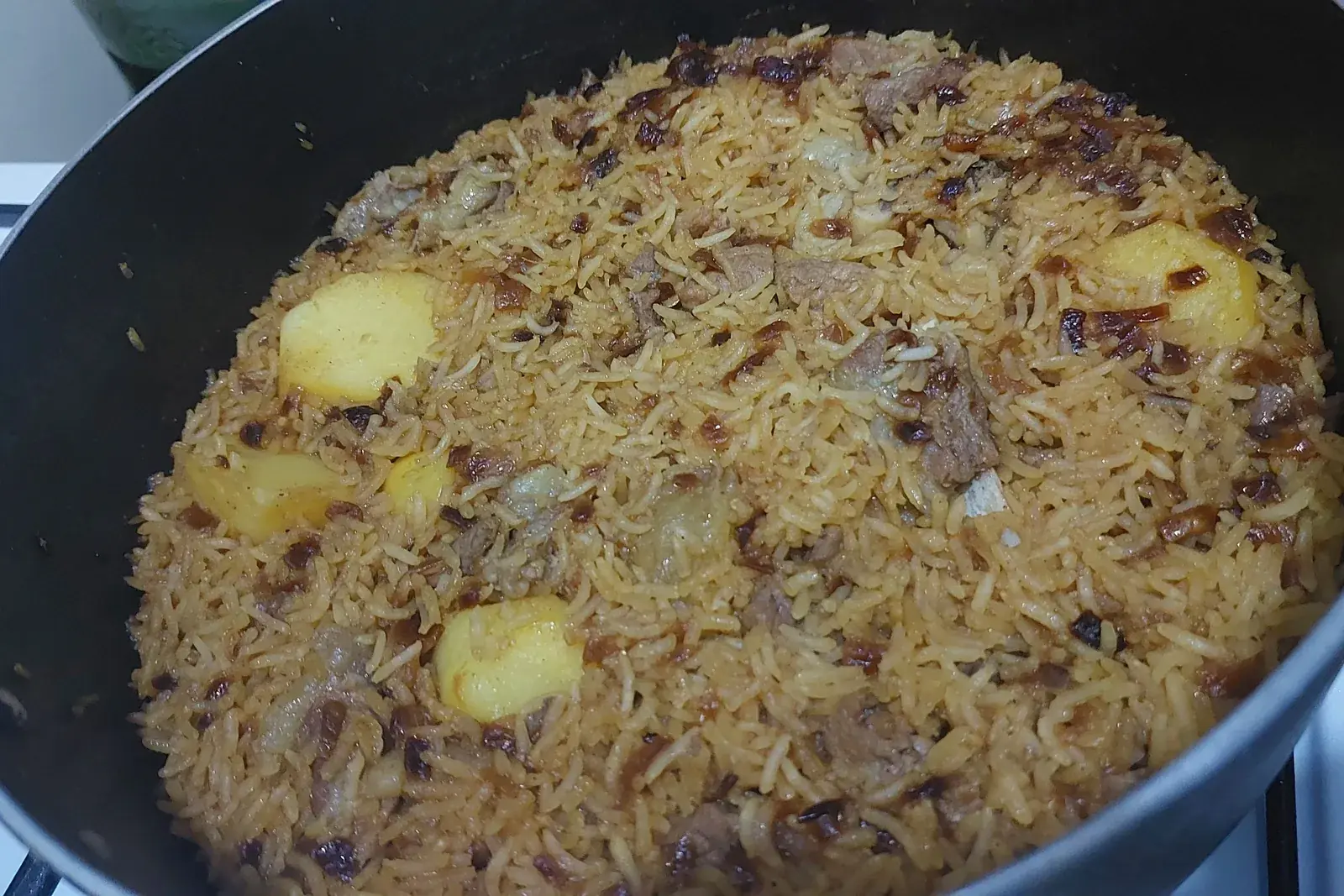
A pot of Kenyan pilau rice with beef and potatoes Kenya flag Kenya 1h 15m
Dinner •Swahili Coast Heritage

Kenyan Pilau

This kenyan pilau recipe is the Swahili coast's celebration rice: long-grain basmati cooked in rich beef broth with pilau masala — cumin, cardamom, cinnamon, cloves and black pepper — plus tender beef and potatoes, all in one pot. The onions are browned until dark and sweet, the spices are bloomed in oil, and the rice steams until every grain is separate and fragrant. One serving is about 385 g.

Celebration Rice

Basmati rice cooked in beef broth with pilau masala, potatoes and browned onions — the Swahili coast's celebration dish.

Pairs Well With
Kachumbari, pilipili & hot chai
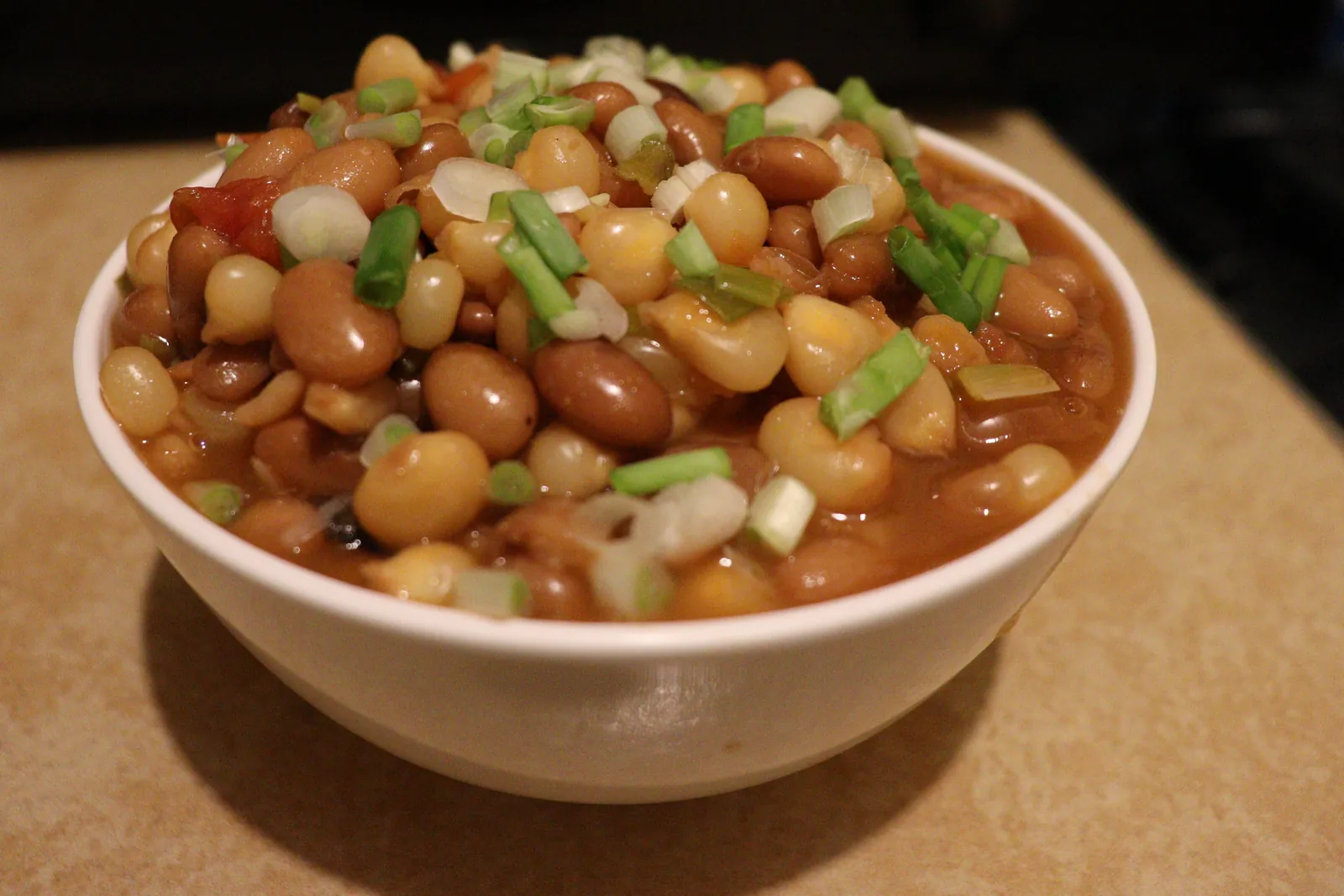
A white bowl of githeri — whole maize kernels and kidney beans stewed together in a light broth, topped with chopped spring onion Kenya flag Kenya 2h 45m
Dinner •Central Kenya Staple

Githeri

This githeri recipe makes Kenya's beloved one-pot meal: whole maize kernels and red kidney beans boiled together until tender, with potato, onion and tomato. Every kernel and every bean stays whole in the bowl — unlike muthokoi, where the maize is dehulled and pounded, githeri never mashes or grinds its two main ingredients. It is the humble, hearty staple of Central Kenya, filling enough to stand alone at dinner. One serving is about 407 g.

Hearty & Wholesome

Whole maize kernels and kidney beans, boiled together in one pot until tender — simple, filling and naturally plant-based.

Pairs Well With
Soft Kenyan chapati, sukuma wiki and a cup of milky Kenyan chai

The Dinner Gazette

Never wonder what’s for dinner again

One email a week with easy dinner ideas from around the world — ingredients, steps and nutrition, tested in our kitchen first.

Delivered every Thursday morning. Unsubscribe anytime.