-
1
Soak the Glutinous Rice Overnight
8 Hours (overnight) + 10 Mins
Room temperature, about 25°C (77°F)
Put the 200 g of glutinous rice in a bowl, rinse it under cold water until the water runs clear, then cover with the 300 ml of cold water and leave it to soak overnight, for at least 8 hours. In the morning, drain the rice well in a sieve and shake off as much water as you can — the grains should be plump, white and soft enough to crush between your fingers.
If you are short on time, soak for at least 4 hours in warm water — but overnight gives the softest, most even crust.
Done when: Plump, white grains that crush easily between your fingers.
-
2
Toast the Serundeng
8 Mins
Medium-low heat, about 150°C (300°F)
Put the 60 g of grated coconut in a dry wok or frying pan with the minced garlic, the 10 g of palm sugar and a small pinch of the salt. Toast over medium-low heat, stirring constantly, for 6–8 minutes until the coconut turns an even golden brown and smells nutty and sweet. Tip it onto a plate at once so it does not keep cooking in the hot pan.
Do not walk away from the serundeng — it goes from golden to burnt in under a minute.
Done when: Evenly golden, dry and fragrant toasted coconut.
-
3
Prepare the Ebi and Fried Shallots
15 Mins
Medium heat, about 170°C (340°F)
Soak the 30 g of dried shrimp in warm water for 10 minutes, then drain, pat dry and toast in a dry pan for 1–2 minutes until fragrant. Chop the shrimp finely. Heat 10 g of the oil in the same pan over medium heat and fry the sliced shallots, stirring, for 2–3 minutes until golden and crisp. Lift them out with a slotted spoon and drain on paper towel, keeping the remaining 5 g of oil for the wok.
Fry the shallots just until golden — they keep darkening for a few seconds after they leave the oil.
Done when: Fragrant chopped shrimp and golden, crisp shallot rings.
-
4
Beat the Egg and Fold in the Rice
5 Mins
Room temperature, about 25°C (77°F)
Beat the 4 duck eggs in a large bowl with the remaining salt and the 2 g of white pepper until the yolks and whites are fully mixed. Stir in half of the chopped dried shrimp, then fold in the drained glutinous rice until every grain is coated in egg. The mixture should be thick and spoonable, not runny.
Duck egg is the traditional choice for its rich, deep-gold yolk; 4 large chicken eggs work well as a substitute.
Done when: A thick, even mixture with every rice grain coated in beaten egg.
-
5
Cook the Crust in the Wok
12 Mins
Medium heat, about 180°C (350°F)
Brush a small wok or frying pan (about 20 cm across) very lightly with the remaining 5 g of oil and set it over medium heat. Spoon in a quarter of the rice-and-egg mixture, press it flat with the back of the spoon into a round about 1 cm thick, and cook for 6–8 minutes without moving it, until the underside is deep golden and crisp. Flip the crust with a wide spatula — or, like the street vendors, lift the wok and turn it over the heat for a few seconds so the top crisps too — and cook 3–4 minutes more until the egg is completely set, cooked through to 74°C (165°F), with no runny patches. Repeat with the remaining mixture to make 4 crusts.
Do not crowd the wok: one crust at a time gives the crisp base that gives kerak telor its name.
Done when: Deep golden and crisp underneath, egg fully set with no runny patches; the crust holds together when lifted.
-
6
Top and Serve Hot
5 Mins
Serve hot, about 65°C (150°F)
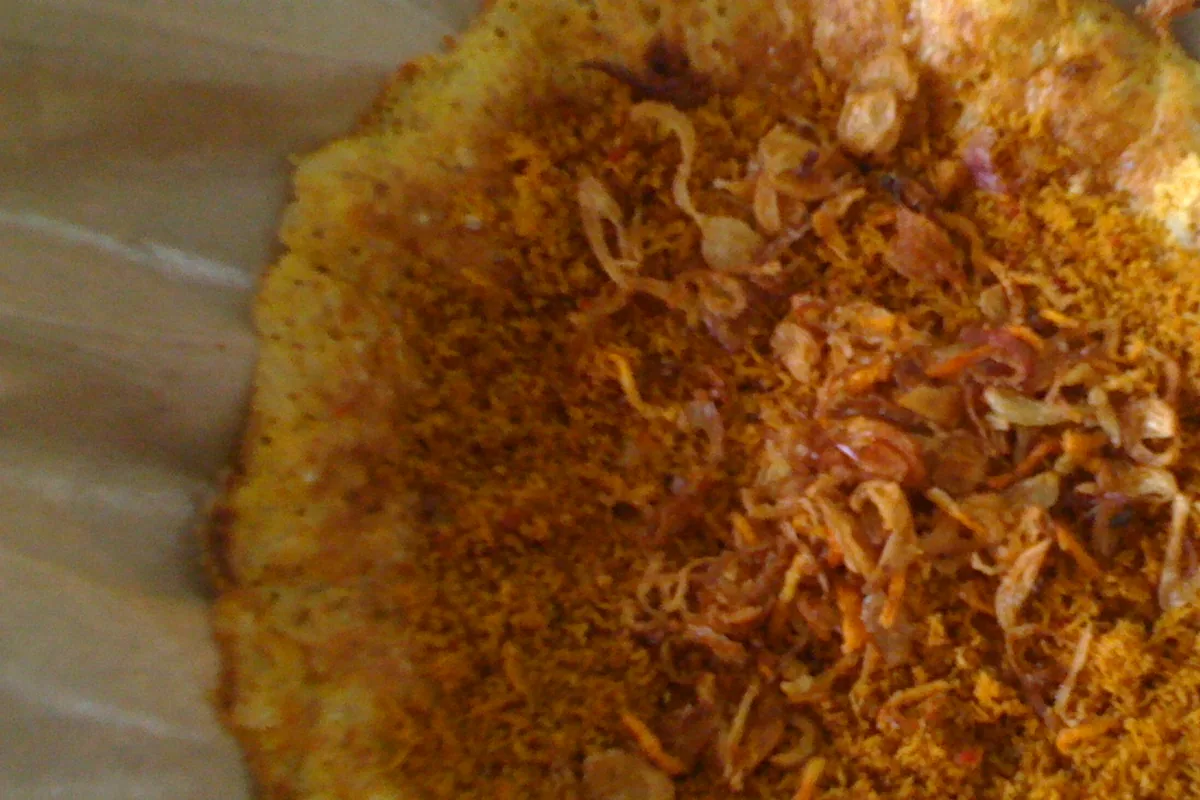
Slide each crust onto a plate and scatter the golden serundeng, the remaining chopped dried shrimp and the fried shallots generously over the top. Serve at once, while the base is still crackling and the toppings are crisp.
Scatter the toppings at the table so they stay crisp — piled on too early, they soften from the steam.
Done when: A hot, crisp crust generously covered in golden serundeng, shrimp and shallots.
auto_awesome Finishing Touches & Plating
Serve each kerak telor the moment it leaves the wok, with the serundeng, dried shrimp and fried shallots scattered over the top at the table so they stay crisp. Eat it with your hands or a spoon, Jakarta street-stall style, while the crust is still crackling.

 Indonesia
35m