Curated recipes from 193 countries  •  New seasonal Mediterranean issue out now

Overview

Kreatopita

Kefalonian Meat Pie — Greek Beef Pie

This kreatopita recipe bakes diced beef, rice, tomato, cinnamon and mint in a golden olive-oil pastry kneaded with white wine — a deep, festive pie from the island of Kefalonia, finished with feta and egg. One serving is about 300 g.

Kreatopita — literally meat pie — is one of the great festive pies of Greece, and the best-known version comes from the Ionian island of Kefalonia, where a deep pie of meat and rice in a wine-kneaded olive-oil pastry is baked for New Year, sometimes with a lucky coin hidden inside like the vasilopita. Greek pites vary from village to village, and Kefalonian families argue fondly over whether the filling should be beef, pork, lamb or all three — but the cinnamon, mint and rice are the signatures that mark it as Kefalonian.

Pairs well with: Greek salad, lemon potatoes and a glass of red wine

Provenance

Greece flag Greece

Kefalonian Festive Pie

Mediterranean & Italy

Time Dedication

2h

40m prep • 80m cook

Batch Yield

8 Servings

585 kcal per serving

1 serving ≈ 300 g

Technical Skill

Advanced

Hard (Pastry & Filling)

Meal Timing & Digestive Fit

Breakfast

Not Advised

Lunch

Hearty Midday Main

Dinner

Ideal Hearty Main

Snack & Tea

Inappropriate

Occasions: Festive dinners, New Year, family gatherings, Sunday lunch Cost: Medium — about $4–5 per serving at home
Tags: Beef Savory Baked
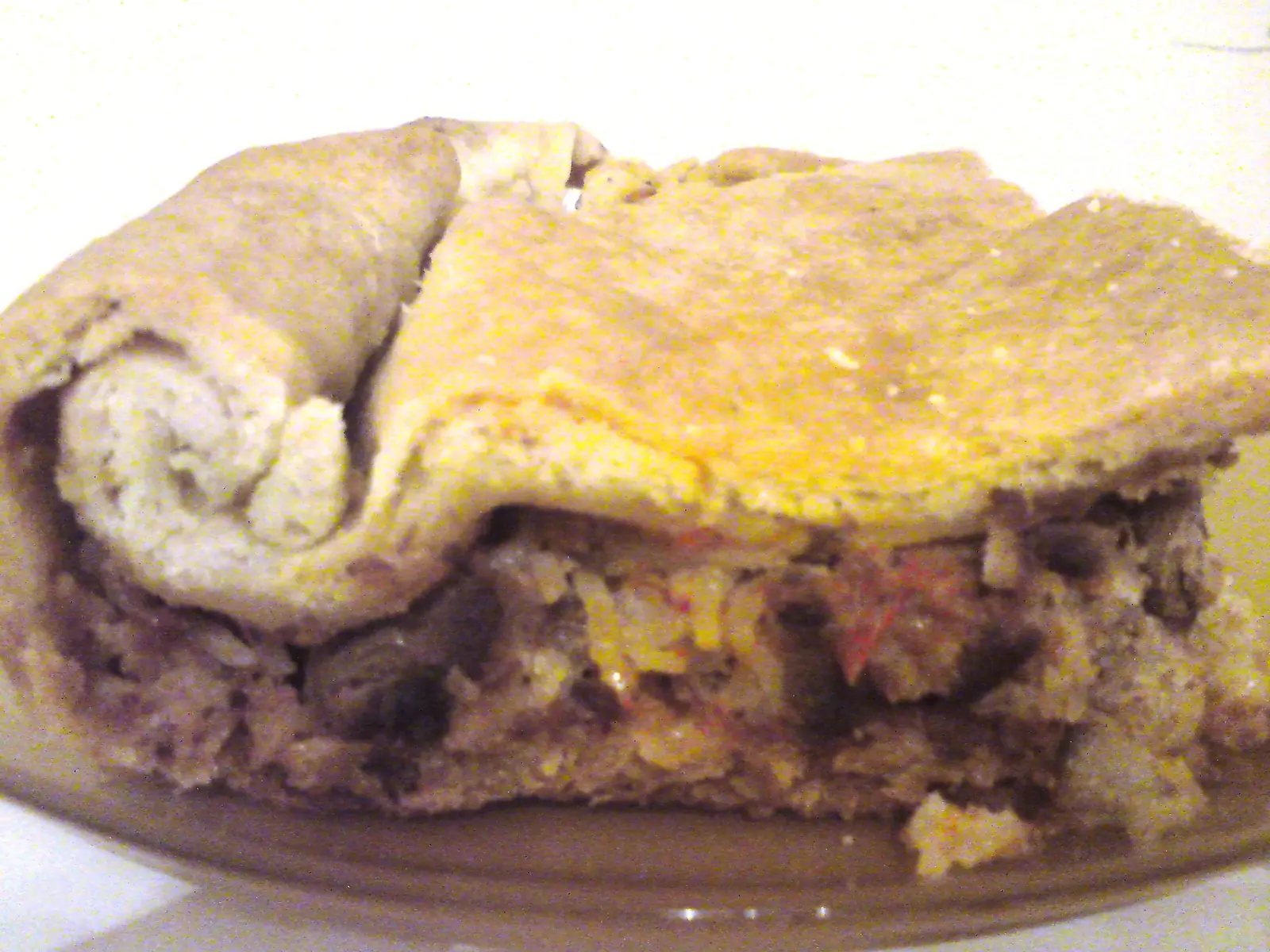
A slice of Kefalonian kreatopita, a Greek meat pie with a golden crust and a beef and rice filling

Kefalonian Festive Pie

Photo: Saintfevrier, CC BY-SA 3.0, via Wikimedia Commons

The Heritage Formulary

Measured Ingredients

Estimated cost: Medium — about $4–5 per serving at home (USD)

True Kefalonian kreatopita uses a wine-kneaded olive-oil pastry and a filling of meat, rice, tomato, cinnamon and mint — never a pale, under-baked crust.

Execution Methodology & Culinary Technique

Step-by-Step Cooking Guide

Active 2h
P

Prep Stage: Make the Pastry and Cut the Filling

40 Mins • Knead, Rest & Dice

Sift the flour with 3 g of the salt, rub in 60 ml of the olive oil, then knead in 60 ml of the white wine and 60 ml of the water until smooth. Cover and rest the pastry for 30 minutes. Meanwhile dice the beef, chop the onion, mince the garlic, chop the tomatoes and mint, crumble the feta, rinse the rice and beat the eggs.

Maestro Tip: Resting the pastry is not optional — a rested dough rolls out without springing back and bakes up tender, not tough.

  1. 1

    Brown the Beef

    10 Mins Medium-high heat, about 190°C (375°F)

    Heat 30 ml of the olive oil in a large, heavy pan over medium-high heat. Brown the diced beef in two batches for about 4 minutes each, turning until coloured on all sides, then lift out and set aside.

    Brown in batches — a crowded pan steams the meat grey instead of browning it, and the flavour lives in the browning.

    Done when: The beef is browned on the outside and still pink inside, with browned bits left in the pan.

  2. 2

    Simmer the Filling

    30 Mins Low simmer, about 95°C (200°F)

    In the same pan, soften the onion for 3 minutes, add the garlic, cinnamon and tomato paste and cook for 1 minute, then add the tomatoes, 60 ml of white wine and 150 ml of water. Return the beef, add the rice and 4 g of salt, cover and simmer gently for about 25 minutes until the beef is tender, the rice is cooked and the liquid is absorbed. The filling should be moist, not wet.

    If the pan dries out before the rice is cooked, add water a splash at a time — a wet filling makes a soggy pie.

    Done when: The beef is tender, the rice is cooked through, and the filling holds together in a spoon.

  3. 3

    Mix in the Cheese, Egg and Mint

    5 Mins Off the heat — filling cooling, about 60°C (140°F)

    Take the pan off the heat and leave the filling for 10 minutes to cool slightly. Stir in the crumbled feta, the beaten eggs, the chopped mint and the black pepper. The eggs should coat the filling, not scramble in it.

    Wait for the filling to cool — eggs added to a boiling filling will scramble and the pie will not slice cleanly.

    Done when: The filling is evenly mixed, creamy from the feta and egg, and flecked green with mint.

  4. 4

    Assemble the Pie

    10 Mins Room temperature, about 20°C (68°F) — no heat

    Heat the oven to 180°C (350°F). Divide the rested pastry in two, one piece slightly larger. Roll the larger piece out and line a greased 28 cm (11 inch) round pie dish, letting the edges hang over. Spoon in the filling and level it. Roll out the second piece, lay it over the top, fold the overhanging edges together and crimp to seal. Brush the top with a little of the remaining olive oil and cut two small steam vents.

    Seal the edges well — a gap lets the filling bubble out and the top crust sinks into the pie.

    Done when: The pie is sealed all round with a smooth, oiled top and two small vents.

  5. 5

    Bake Until Golden

    40 Mins 180°C (350°F)

    Bake for about 40 minutes until the pastry is deep golden and crisp and the centre of the pie reaches at least 74°C (165°F). If the top colours too fast, cover it loosely with foil for the last 10 minutes.

    Listen for a hollow tap on the crust and look for a deep gold colour — pale pastry means a soft, doughy base.

    Done when: The crust is deep golden and crisp, and the filling is hot right through.

  6. 6

    Rest and Slice

    10 Mins Resting, about 60°C (140°F)

    Rest the pie in its dish for 10 minutes before slicing — the filling sets as it cools and the slices hold their shape. Cut into 8 generous wedges and serve warm.

    Cutting too soon is the classic mistake: the filling runs out and the first slice collapses.

    Done when: The wedges hold their shape, showing layers of beef, rice and golden pastry.

Finishing Touches & Plating

Rest the pie for ten minutes, then cut it into eight wedges and serve warm with a Greek salad — the filling should slice cleanly and show beef, rice and golden pastry in every piece.

Nutritional Physiology & Benefits

Nutrition

Energy

585

kcal / serving

Protein

29g

Complete AA

Carbs

60g

Complex

Fats

23g

Healthy

Per serving (8 servings · 1 serving ≈ 300 g)
Energy585 kcal
Protein29 g
Carbohydrates60 g
Fat23 g
Fibre3.1 g
Sugar3.2 g
Sodium637 mg
Per 100g
Energy195 kcal
Protein9.7 g
Carbohydrates20 g
Fat7.7 g
Fibre1 g
Sugar1.1 g
Sodium212 mg

Nutrition values are estimated — calculated from USDA FoodData Central values for the listed ingredients.

Vitamins & minerals: Iron and vitamin B12 (beef), calcium (feta), vitamin C (tomatoes), vitamin K (mint). Nutrition is estimated.

Properly Filling

At about 585 kcal and 29.2 g of protein a serving, one wedge with a salad is a complete, satisfying meal.

Beef, Rice and Herbs

Diced beef, rice, tomato and fresh mint give protein, slow carbs and fresh flavour in a single slice.

Rich in Iron and B12

Beef is a strong source of iron and vitamin B12, which support normal energy and blood health as part of a varied diet.

Food Pairings

What to Eat With

To optimize nutrient absorption and elevate the sensory depth, pair with these authentic accompaniments:

Vegetables

Greek Salad

Cool tomato, cucumber, onion and olives cut through the rich pastry and refresh the palate between bites of pie.

Sides

Lemon Potatoes

Crisp lemon-roasted potatoes echo the pie's Greek flavours without repeating its pastry richness.

Sauces

Tzatziki

Cold, garlicky yoghurt against the warm, spiced pie is the classic Greek contrast — cool and tangy beside hot and savoury.

Drinks

Red Wine

A medium-bodied Greek red stands up to the beef and cinnamon without overwhelming the pastry.

Complete menu

Serve kreatopita warm with a Greek salad and lemon potatoes, finishing with tzatziki and a glass of red wine.

Digestive Guardrails

What NOT to Combine

To prevent digestive distress, sluggishness, or palate clash, avoid pairing the dish with these elements:

Cutting the Pie Hot

A pie cut straight from the oven falls apart — the filling needs ten minutes to set. Patience is part of the recipe. This is general information, not medical advice.

Using a Wet Filling

A filling that is still swimming in liquid will soak the base and leave it doughy. Simmer until the liquid is absorbed before the eggs go in. This is general information, not medical advice.

General information only, not medical advice — consult a doctor for personal dietary decisions.

Who Should Eat It

Who Should Eat

  • General adultsA hearty, complete meal — one wedge with a salad is a full dinner.
  • ChildrenA festive pie children usually love, but cut small pieces and check for heat — the filling stays hot inside for a long time.
  • ElderlySoft filling and tender pastry are easy to eat, but the pie is rich — serve a modest wedge with salad.
  • Pregnant womenGenerally suitable when fully cooked through; the pie is rich, so eat a modest portion and balance it with salad.
  • Breastfeeding womenA calorie- and protein-rich meal that fits a hungry day; the iron from the beef is a bonus.
  • AthletesGood post-training protein at about 29.2 g a serving, with carbs from the pastry and rice for recovery.
  • Weight gainAt about 585 kcal a serving, this is a genuinely helpful calorie-dense main.
  • Weight lossRich and filling — keep to one wedge with a large salad, and skip the extra bread.

Health Conditions — Adjust or Avoid

Conditions

  • DiabetesThe pastry and rice add up to about 60 g of carbs a serving — keep to one wedge and load the plate with salad. Ask your clinician.
  • High blood pressureThe feta and pastry carry salt at about 637 mg a serving — keep portions modest. Ask your clinician.
  • Kidney diseaseBeef is rich in purines, so keep portions modest and ask your clinician if you have kidney concerns.
  • GoutA rich, spiced pie can be a trigger — eat a modest wedge and ask your clinician if you are unsure.
  • Stomach issuesThe cinnamon and fat can irritate sensitive stomachs — eat a small, well-cooked wedge slowly. Ask your clinician about your triggers.
  • Cardiovascular diseaseRed meat, cheese and pastry add saturated fat, so this is an occasional dish rather than an everyday one. Ask your clinician.
  • Fatty liverA rich, calorie-dense pie — enjoy it occasionally and in a modest portion. Ask your clinician.
  • Food allergiesContains wheat (flour), egg and milk (feta). Free from peanut, tree nuts, fish and shellfish.
  • Special therapeutic dietsNot suitable for gluten-free, low-fat or low-sodium therapeutic diets as written; ask your clinician or dietitian before adapting it.

If you have a medical condition, consult your doctor before changing your diet.

Storage & Use

Storage & Use

How to store
Cool completely, cover and store in the fridge; keep leftover wedges in an airtight container.
In the fridge
3 days, chilled.
In the freezer
2 months, wrapped tightly in foil and sealed in a bag.
How to reheat
Reheat in the oven at 180°C (350°F) for 12–15 minutes until the centre reaches 74°C (165°F) and the pastry crisps again.
Freezing recommended
Yes — freeze in wedges for easy portions.
Signs it has spoiled
Sour smell from the filling, soft or mouldy pastry, or a slimy texture.

More recipes to explore

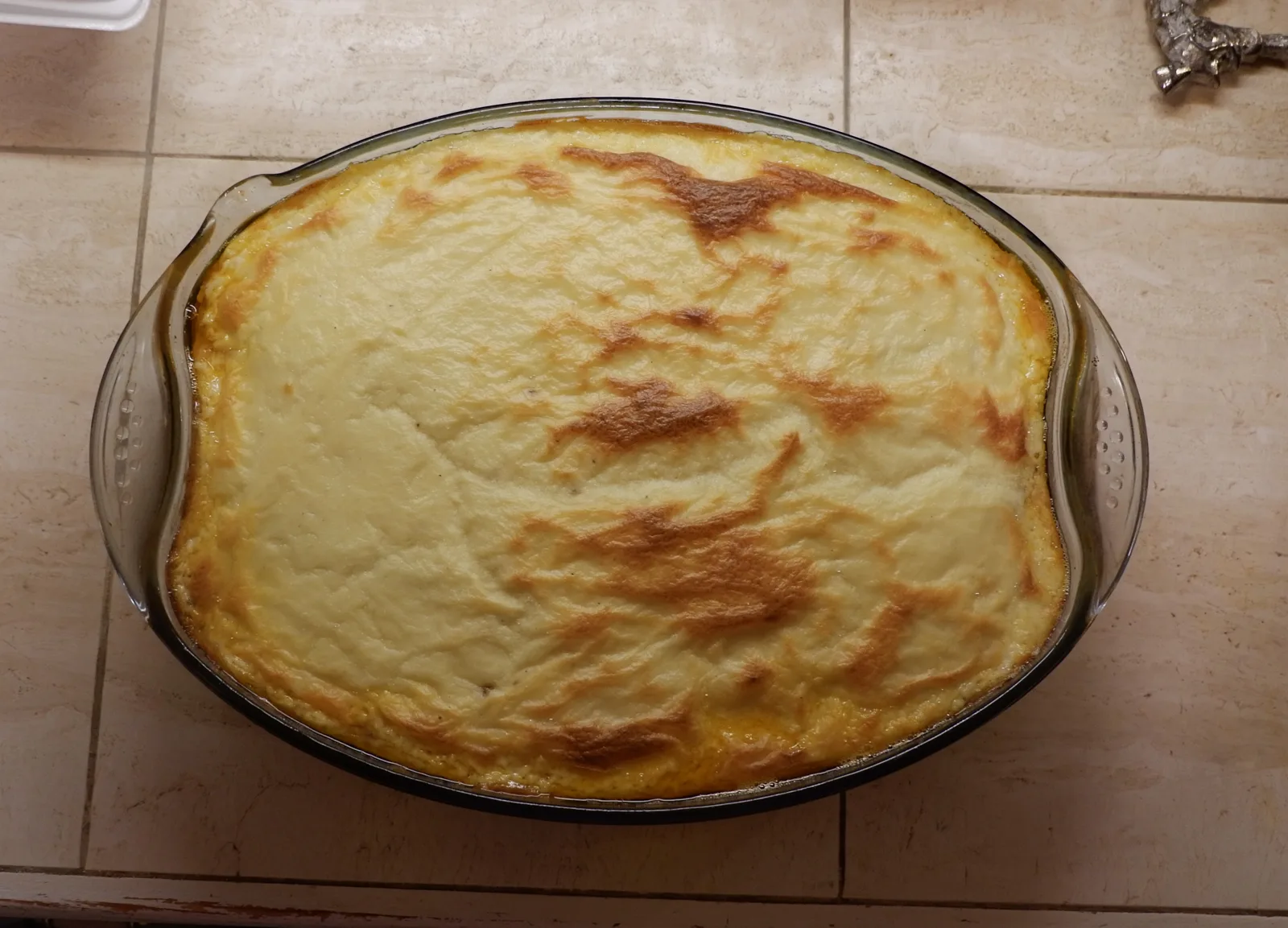
A whole Greek moussaka in a glass baking dish, its bechamel top baked golden brown with darker patches Greece flag Greece 2h
Dinner •Greek Classic

Greek Moussaka

Greek moussaka is a layered bake of fried aubergine and potato, a cinnamon-spiced beef sauce, and a thick bechamel that turns deep gold in the oven. It is the dish most Greek tavernas are judged by, and it is made for sharing at a slow family dinner. One serving is about 412 g.

Comfort & Warmth

A hearty layered bake built around aubergine, potatoes and a spiced meat sauce under a creamy bechamel topping.

Pairs Well With
Serve with a crisp Greek salad, warm bread and a glass of red wine.
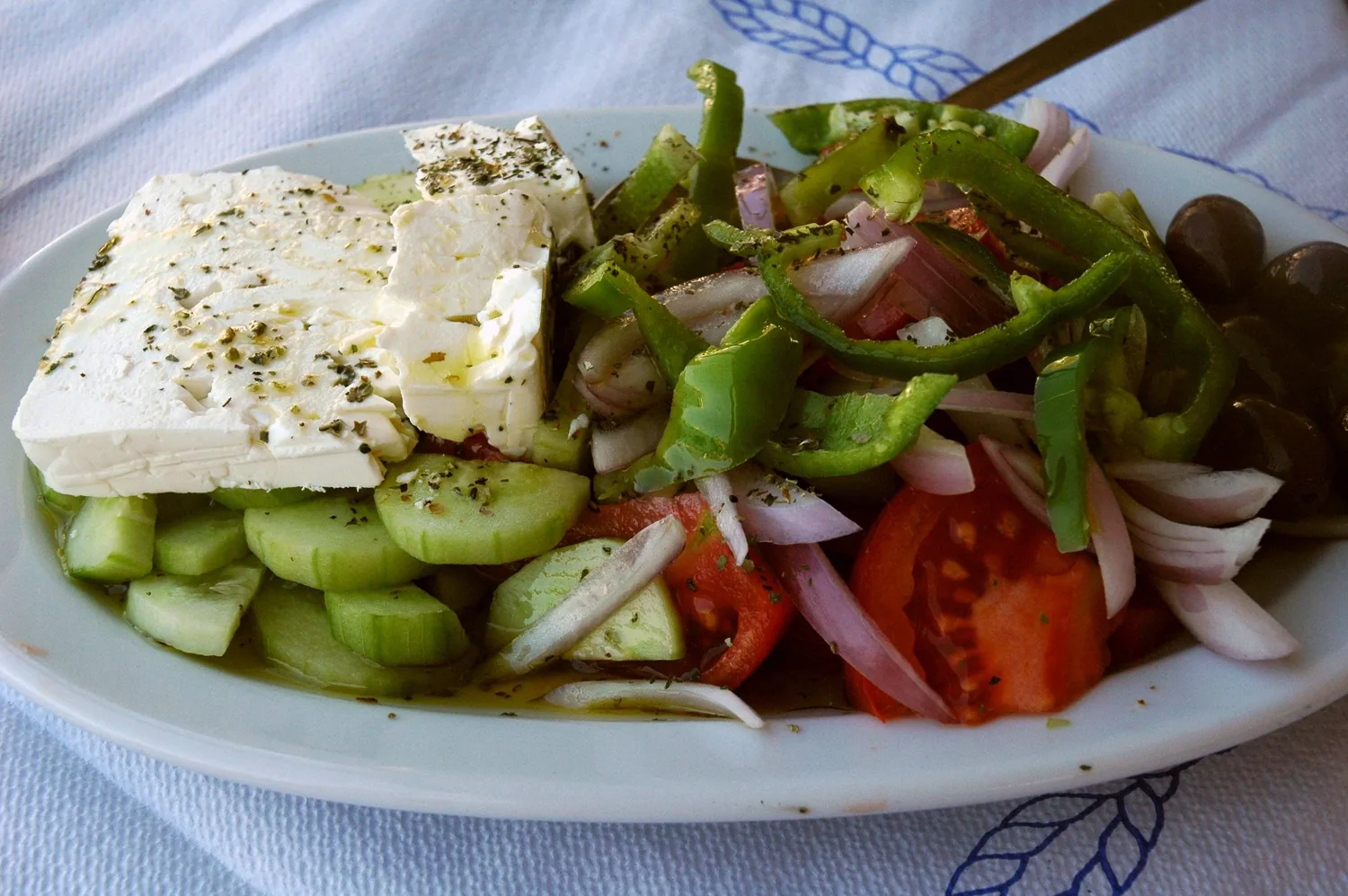
Greek salad (horiatiki) with a slab of feta sprinkled with oregano, Kalamata olives, tomato wedges, cucumber and red onion on a white plate Greece flag Greece 20m
Lunch •Aegean Table Classic

Greek Salad

This Greek salad recipe is the real horiatiki: chunky ripe tomatoes, peeled cucumber, red onion and green pepper, with Kalamata olives and a whole slab of feta on top, dressed with extra-virgin olive oil and dried Greek oregano. There is no lettuce and no heavy dressing — just summer vegetables at their best, ready in twenty minutes. One serving is about 411 g.

Fresh Summer Lunch

Crisp garden vegetables, salty feta and Kalamata olives under good olive oil — a bright, satisfying lunch with no cooking at all.

Pairs Well With
Crusty bread & grilled fish
Quick Prep (<30m)
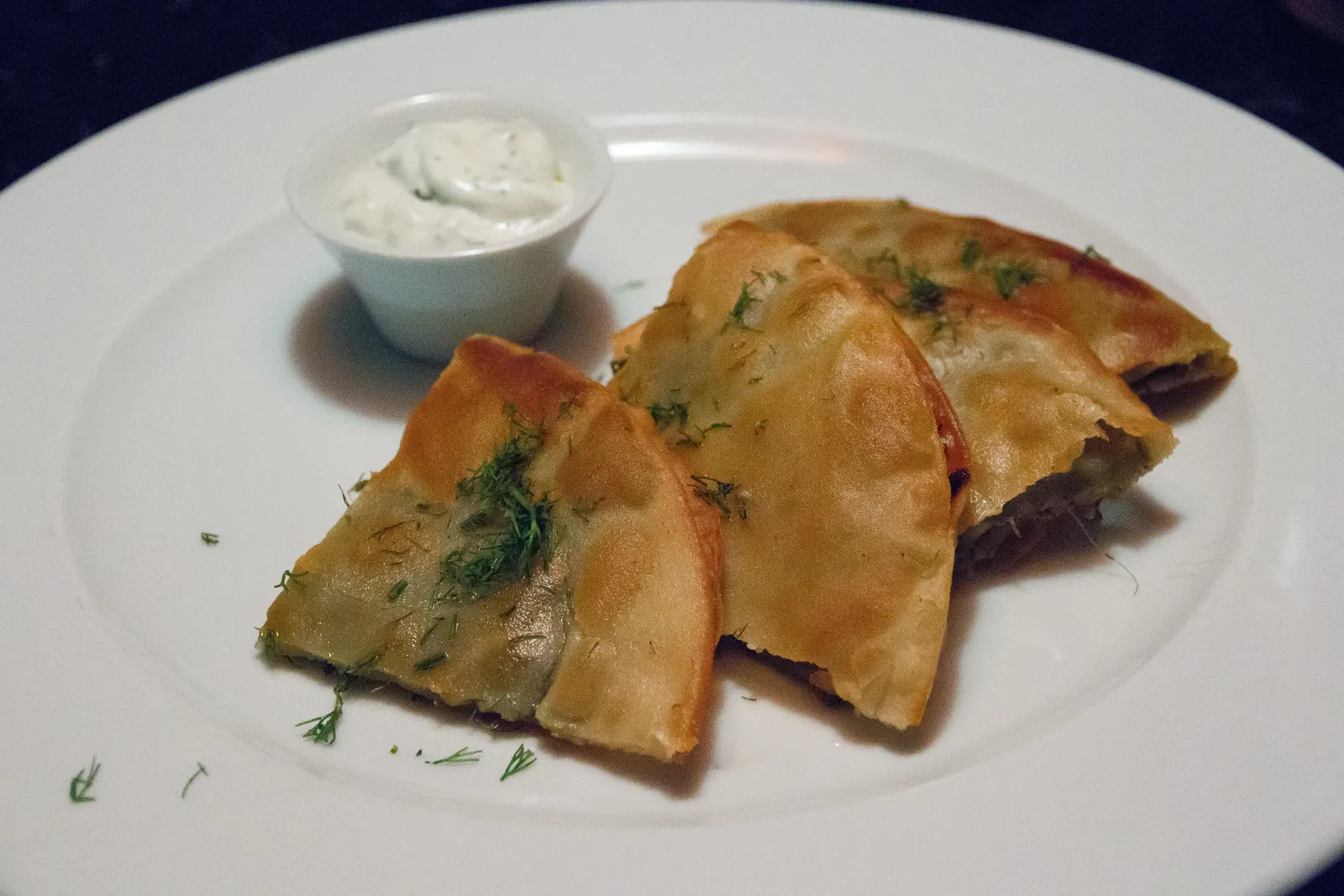
Golden spanakopita triangles sprinkled with fresh dill, served on a white plate with a small bowl of tzatziki Greece flag Greece 1h 20m
Lunch •Greek Bakery Classic

Spanakopita

This spanakopita recipe is the Greek spinach pie found in every bakery in Greece: paper-thin filo brushed with olive oil, layered over a filling of wilted spinach, salty feta, ricotta, leeks and a generous handful of fresh dill, then baked until the top shatters and the inside stays soft and savoury. It is the pie Greeks eat for lunch, take on picnics and set out on a mezze table. One serving is about 220 g.

Crisp Filo, Spinach & Feta

Layers of olive-oil-brushed filo wrapped around a spinach, feta, dill and leek filling, baked until golden and crisp.

Pairs Well With
Greek salad, tzatziki & lemon wedges
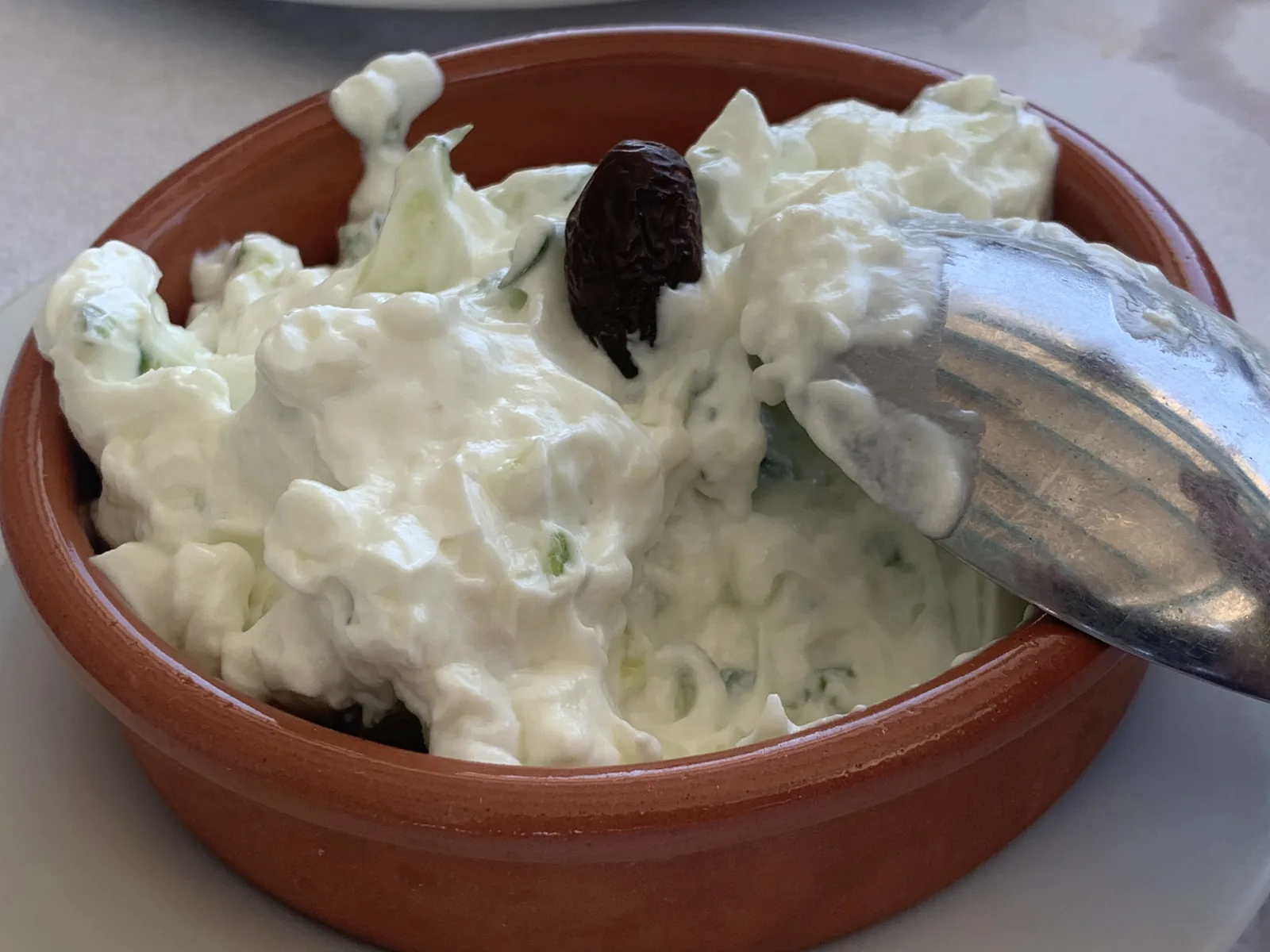
A terracotta bowl of thick white tzatziki with cucumber and a black olive, with a spoon Greece flag Greece 25m
Snack & Tea •Greek Meze Classic

Tzatziki

This tzatziki recipe is the real Greek version: thick strained yogurt, cucumber grated and squeezed bone dry, raw garlic, a thread of olive oil and a handful of dill. No cooking at all — just grating, squeezing and stirring — and the result is cool, creamy and sharp enough to cut through grilled meat. One serving is about 120 g.

Cool & Creamy

Thick Greek yogurt folded with grated cucumber, garlic and dill — the cool white dip at the heart of every Greek meze.

Pairs Well With
Spoon over grilled meat, or serve as a dip with warm pitta and raw vegetables.

The Dinner Gazette

Never wonder what’s for dinner again

One email a week with easy dinner ideas from around the world — ingredients, steps and nutrition, tested in our kitchen first.

Delivered every Thursday morning. Unsubscribe anytime.