Curated recipes from 193 countries  •  New seasonal Mediterranean issue out now

Overview

Lamprais

Lumprais, Lumprice, Lampraise, Dutch Burgher Lump Rice

This lamprais recipe packs ghee rice cooked in stock, a three-meat curry of chicken, beef and pork, spiced pork frikkadels, a boiled egg, brinjal moju and sweet seeni sambol into a banana-leaf parcel, then steams it until the leaf perfumes everything inside. One serving is about 540 g.

Lamprais comes from Sri Lanka's Dutch Burgher community, descendants of Dutch settlers who ruled the island's coast from 1658 to 1796. The name is an anglicised form of the Dutch lomprijst, loosely a packet or lump of rice, and the dish is often linked to the Indonesian lemper, a leaf-wrapped rice snack the Dutch knew from the East Indies. A traditional lamprais layers rice cooked in meat stock with a three-meat curry, frikkadels, seeni sambol, brinjal moju and a boiled egg, all folded in banana leaf and baked or steamed — one of the earliest printed recipes appears in Hilda Deutrom's Ceylon Daily News Cookery Book of 1929.

Pairs well with: Pol sambol, papadum and king coconut water

Provenance

Sri Lanka flag Sri Lanka

Dutch-Burgher Heritage

East & South Asia

Time Dedication

2h

45m prep • 75m cook

Batch Yield

4 Servings

849 kcal per serving

1 serving ≈ 540 g

Technical Skill

Advanced

Complex (Banana-Leaf Parcels)

Meal Timing & Digestive Fit

Breakfast

Not Advised

Lunch

Prime Metabolic Fit

Dinner

Ideal Hearty Main

Snack & Tea

Inappropriate

Occasions: Sunday lunches, festive family gatherings, celebration meals, potlucks Cost: Medium — about $6–7 per serving at home
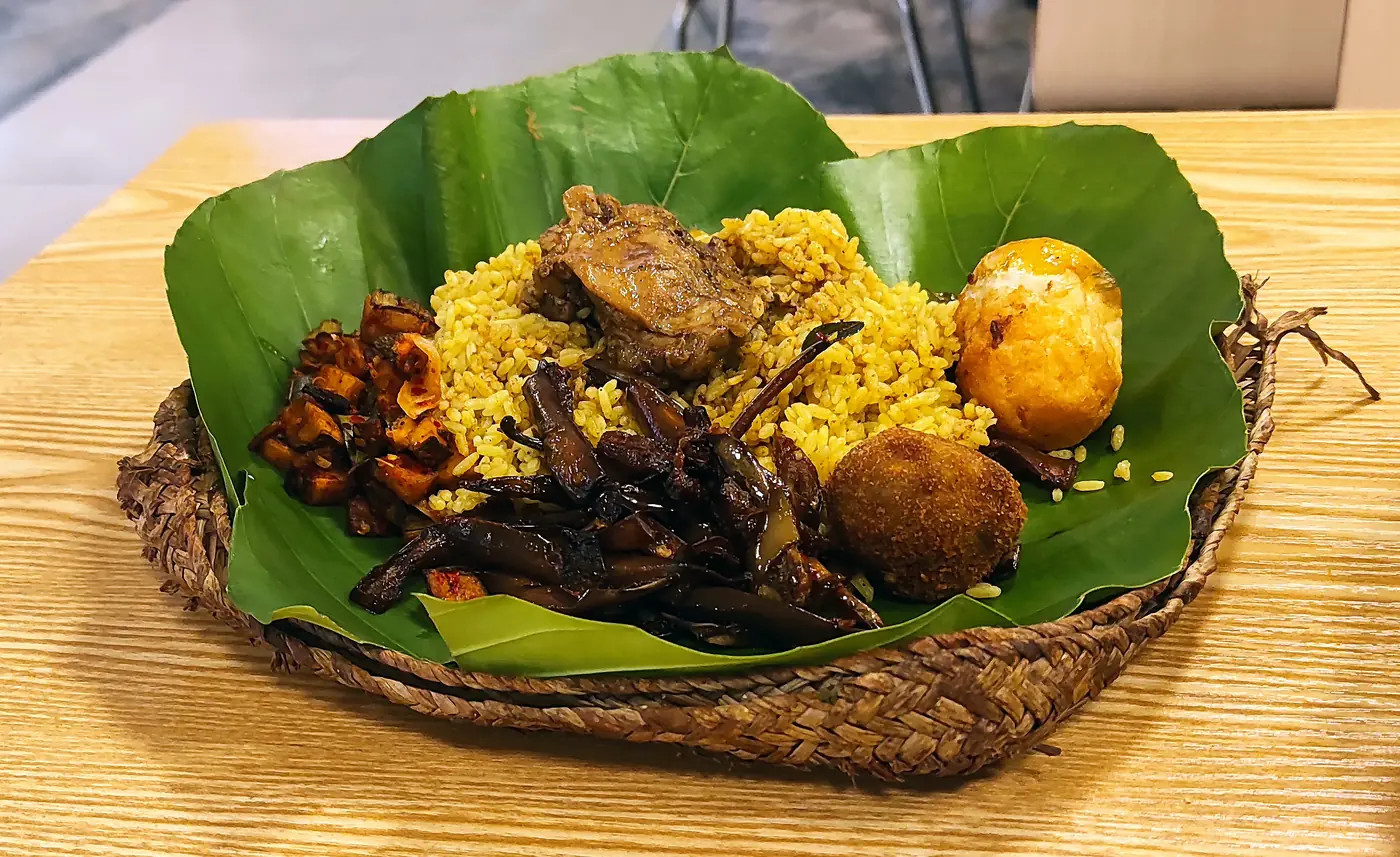
Lamprais served open on a banana leaf in a woven basket — yellow ghee rice with chicken curry, a boiled egg, a meatball and dark brinjal moju

Dutch-Burgher Heritage

Photo: AntanO, CC BY-SA 4.0, via Wikimedia Commons

The Heritage Formulary

Measured Ingredients

Estimated cost: Medium — about $6–7 per serving at home (USD)

Made the Burgher way: rice cooked in stock, three-meat curry, frikkadels and sambols, all steamed in banana leaf.

Execution Methodology & Culinary Technique

Step-by-Step Cooking Guide

Active 2h
P

Prep Stage: Cut the Meats, Rinse the Rice, Soften the Leaves

45 Mins • Cutting, Rinsing & Softening

Cut the chicken and beef into bite-size pieces, keep the minced pork cold, and rinse the rice until the water runs clear. Dice the onion, tomato, garlic and ginger, cut the eggplant, and measure out the spices so the three curries move quickly once the pans are hot. Wipe the banana leaves clean and pass each one briefly over a flame or through hot water until it turns glossy and bends without cracking.

Maestro Tip: Softening the leaf is the step most first-timers skip — a stiff leaf tears when you fold it, and a torn parcel leaks curry into the steamer.

  1. 1

    Cook the Ghee Rice

    20 Mins Medium heat, ~180°C (350°F), then low simmer ~95°C (203°F)

    Melt 15 g of the ghee in a heavy pot, fry half the diced onion with the cinnamon, cardamom, cloves, pandan leaf and curry leaves for 2 minutes, then stir in the drained rice and turmeric until every grain is coated. Pour in 400 ml of water or light chicken stock, add a pinch of salt, bring to a boil, then cover, turn the heat to low and cook for 15 minutes. Rest off the heat for 5 minutes, then fluff with a fork.

    Do not lift the lid while the rice steams — the trapped steam is what finishes the grains.

    Done when: Tender, separate grains, pale gold and smelling of spice.

  2. 2

    Simmer the Chicken Curry

    25 Mins Medium heat, ~180°C (350°F), simmer ~95°C (203°F)

    Heat 15 g of ghee in a pan, fry the remaining diced onion, garlic and ginger for 3 minutes, then add the curry powder and chilli powder and fry for 1 minute more. Add the chicken pieces and tomato, stir to coat, then pour in the coconut milk. Simmer gently for 20 minutes until the chicken is cooked through and the sauce is thick. Season with salt; the chicken must reach 74°C (165°F) inside.

    A gentle simmer, not a rolling boil, keeps the coconut milk from splitting.

    Done when: Tender chicken in a thick, dark-gold sauce; juices run clear and the meat reaches 74°C (165°F).

  3. 3

    Simmer the Beef Curry

    20 Mins Medium heat, ~180°C (350°F), simmer ~95°C (203°F)

    In a second pan, fry the beef in the remaining ghee until browned on all sides, then add half the curry powder and a pinch of salt. Cover and simmer for 15 minutes until the beef is tender and the sauce clings to the meat. The beef is a whole cut, so a good simmer is enough — there is no single safe temperature for whole beef, but it should be steaming hot through and tender to the bite.

    Cut one piece open to check — it should yield easily to a fork, not spring back.

    Done when: Tender beef in a dark, clinging sauce.

  4. 4

    Fry the Pork Frikkadels

    10 Mins Medium heat, ~180°C (350°F)

    Mix the minced pork with a pinch of salt, half the crushed garlic and a pinch of curry powder, then roll into 8 small balls. Fry in a lightly oiled pan for 8 minutes, turning often, until browned all over and cooked through — minced pork must reach 71°C (160°F) inside.

    Keep the balls small, about the size of a walnut, so they cook through without drying out.

    Done when: Browned, firm meatballs with no pink in the centre; 71°C (160°F) inside.

  5. 5

    Make the Brinjal Moju and Seeni Sambol

    15 Mins Medium heat, ~180°C (350°F)

    Fry the eggplant cubes in the vegetable oil for 8 minutes until golden and soft, then toss with the vinegar, a pinch of sugar and a pinch of chilli powder and set aside — this is the sharp brinjal moju. In the same pan, fry the sliced onion in a little oil for 5 minutes until soft and sweet, then stir in the remaining sugar and a pinch of chilli powder — this is the seeni sambol.

    Fry the eggplant in a single layer so it browns instead of steaming.

    Done when: Golden, soft eggplant in a sharp-sweet pickle; soft, glossy, sweet onions.

  6. 6

    Boil the Eggs and Assemble the Parcels

    10 Mins Boiling water, 100°C (212°F)

    Boil the eggs for 10 minutes, cool in cold water and peel. Lay a softened banana leaf on the bench, spoon a quarter of the rice into the centre, and top with a quarter each of the chicken curry, beef curry, two frikkadels, half a boiled egg, brinjal moju and seeni sambol. Fold the leaf over the filling and tuck the ends under to make a neat parcel.

    Put the rice down first — it soaks up the curry juices and keeps the leaf from tearing.

    Done when: Four firm parcels that hold their shape when lifted.

  7. 7

    Steam the Parcels

    15 Mins Steaming, 100°C (212°F)

    Set the parcels seam-side down in a steamer basket over boiling water, cover and steam for 15 minutes so the leaf perfumes the rice and the flavours run together. The food inside is already cooked — the steam is for aroma and for bringing everything back to steaming hot, at least 74°C (165°F) in the centre.

    Do not crowd the basket; steam in two batches if the parcels touch.

    Done when: Parcels hot through, the leaf darkened and fragrant.

  8. 8

    Rest and Serve

    5 Mins Room temperature, ~22°C (72°F)

    Rest the parcels for 5 minutes, then serve each one closed on a plate and let everyone open their own — the rush of fragrant steam is half the pleasure. Peel the leaf back, remove it, and eat the rice and curries with a fork and spoon.

    Open the parcel away from your face; the first steam is fierce.

    Done when: A fragrant, steaming parcel that opens onto golden rice and rich curries.

Finishing Touches & Plating

Serve each parcel closed on a plate and let everyone open their own — the leaf, the steam and the smell are part of the dish.

Nutritional Physiology & Benefits

Nutrition

Energy

849

kcal / serving

Protein

48g

Complete AA

Carbs

78g

Complex

Fats

39g

Healthy

Per serving (4 servings · 1 serving ≈ 540 g)
Energy849 kcal
Protein48 g
Carbohydrates78 g
Fat39 g
Fibre6.4 g
Sugar8.5 g
Sodium668 mg
Per 100g
Energy157 kcal
Protein8.8 g
Carbohydrates14.4 g
Fat7.1 g
Fibre1.2 g
Sugar1.6 g
Sodium124 mg

Nutrition values are estimated — calculated from USDA FoodData Central values for the listed ingredients.

Vitamins & minerals: Iron and vitamin B12 (beef, pork, chicken, egg), vitamin A (egg, tomato), vitamin C (tomato, onion), potassium (eggplant, onion).

Serious Protein in One Parcel

About 47.8 g of protein per serving from chicken, beef, pork and egg — enough to keep you full for hours after a festive lunch.

Spices, Not Just Heat

Turmeric, cinnamon, cardamom and cloves give warmth and depth, while the chilli stays in the background — flavour first, fire second.

A Complete Meal in a Leaf

Rice, three meats, egg, eggplant and onion all in one parcel — a whole balanced meal with no extra dishes to cook.

Food Pairings

What to Eat With

To optimize nutrient absorption and elevate the sensory depth, pair with these authentic accompaniments:

Sides

Pol Sambol

Fresh coconut sambol with chilli and lime cuts through the rich curries and gives the parcel a bright, crunchy contrast.

Papadum

A crisp papadum adds crunch against the soft steamed rice and is made for scooping up the last of the curry.

Full Menus

Watalappan

The classic Burgher dessert — steamed coconut custard with jaggery — is the traditional sweet finish to a lamprais lunch.

Drinks

King Coconut Water

Cold king coconut water cools the palate between bites and suits the tropical richness of the parcel.

Complete menu

Open the parcel with pol sambol and papadum on the side, and finish with watalappan and king coconut water.

Digestive Guardrails

What NOT to Combine

To prevent digestive distress, sluggishness, or palate clash, avoid pairing the dish with these elements:

Do Not Eat the Banana Leaf

The leaf is a wrapper and flavouring, not food — its tough fibre is not meant to be eaten. Peel it back and remove it before eating. This is general information, not medical advice.

Do Not Leave Parcels Sitting Warm for Hours

Cooked rice and meat left warm at room temperature can grow bacteria that cause food poisoning, so refrigerate leftovers within 2 hours and reheat to 74°C (165°F). This is general information, not medical advice.

General information only, not medical advice — consult a doctor for personal dietary decisions.

Who Should Eat It

Who Should Eat

  • General adultsA generous, festive lunch — one parcel is a full meal, so there is no need for a second.
  • ChildrenChildren usually love the rice, egg and meatballs; keep the chilli powder light and serve their curry mild.
  • ElderlySoft rice and tender meats suit older diners, but the parcel is rich — a half portion is often enough.
  • Pregnant womenAll the meats and the egg are fully cooked, but the dish is rich and salty — a moderate portion is best. Ask your clinician for personal advice.
  • Breastfeeding womenA complete, protein-rich meal; keep the portion moderate because of the salt and fat. Ask your clinician for personal advice.
  • AthletesAbout 47.8 g of protein and plenty of carbohydrate make it a strong post-training meal — eat it after, not before, a hard session.
  • Weight gainCalorie-dense and filling, so it works well for weight gain — one parcel is about 849 kcal.
  • Weight lossVery rich at about 849 kcal per serving; share a parcel or eat half with extra salad if you are watching calories.

Health Conditions — Adjust or Avoid

Conditions

  • DiabetesAbout 77.6 g of carbohydrate per serving from the rice — watch the rice portion and skip the sugary sambol. Ask your clinician for personal advice.
  • High blood pressureSodium is 668 mg per serving and the curries are salty — go easy on extra soy sauce or salt at the table. Ask your clinician for personal advice.
  • Kidney diseaseRich in protein and potassium, but salty and high in protein — keep the portion small. Ask your clinician for personal advice.
  • GoutOrgan meats are not used and purines are moderate, but beef and pork are present — a half portion is safer. Ask your clinician for personal advice.
  • Stomach issuesThe moju and sambol are sharp and vinegary, and the curries are spiced — skip the pickle if your stomach is sensitive. Ask your clinician for personal advice.
  • Cardiovascular diseaseHigh in saturated fat from ghee and fatty meats — eat it as an occasional festive meal, not a weekly one. Ask your clinician for personal advice.
  • Fatty liverRich and fatty at 38.5 g of fat per serving — a half portion with extra vegetables is the lighter choice. Ask your clinician for personal advice.
  • Food allergiesContains egg, and the curry powder may contain traces of nuts or mustard depending on the brand — check the label. Ask your clinician for personal advice.
  • Special therapeutic dietsNot suitable for low-sodium, low-fat or vegetarian therapeutic diets; the rice and eggplant alone can be adapted. Ask your clinician for personal advice.

If you have a medical condition, consult your doctor before changing your diet.

Storage & Use

Storage & Use

How to store
Cool the parcels quickly, then wrap tightly in foil or a sealed container.
In the fridge
Up to 3 days in the fridge.
In the freezer
Up to 1 month (freeze without the boiled egg, which turns rubbery).
How to reheat
Steam or microwave until steaming hot through, at least 74°C (165°F).
Freezing recommended
Yes — the rice and curries freeze well; freeze the egg separately or leave it out.
Signs it has spoiled
Sour smell, slimy rice, or a dull grey colour on the meat.

More recipes to explore

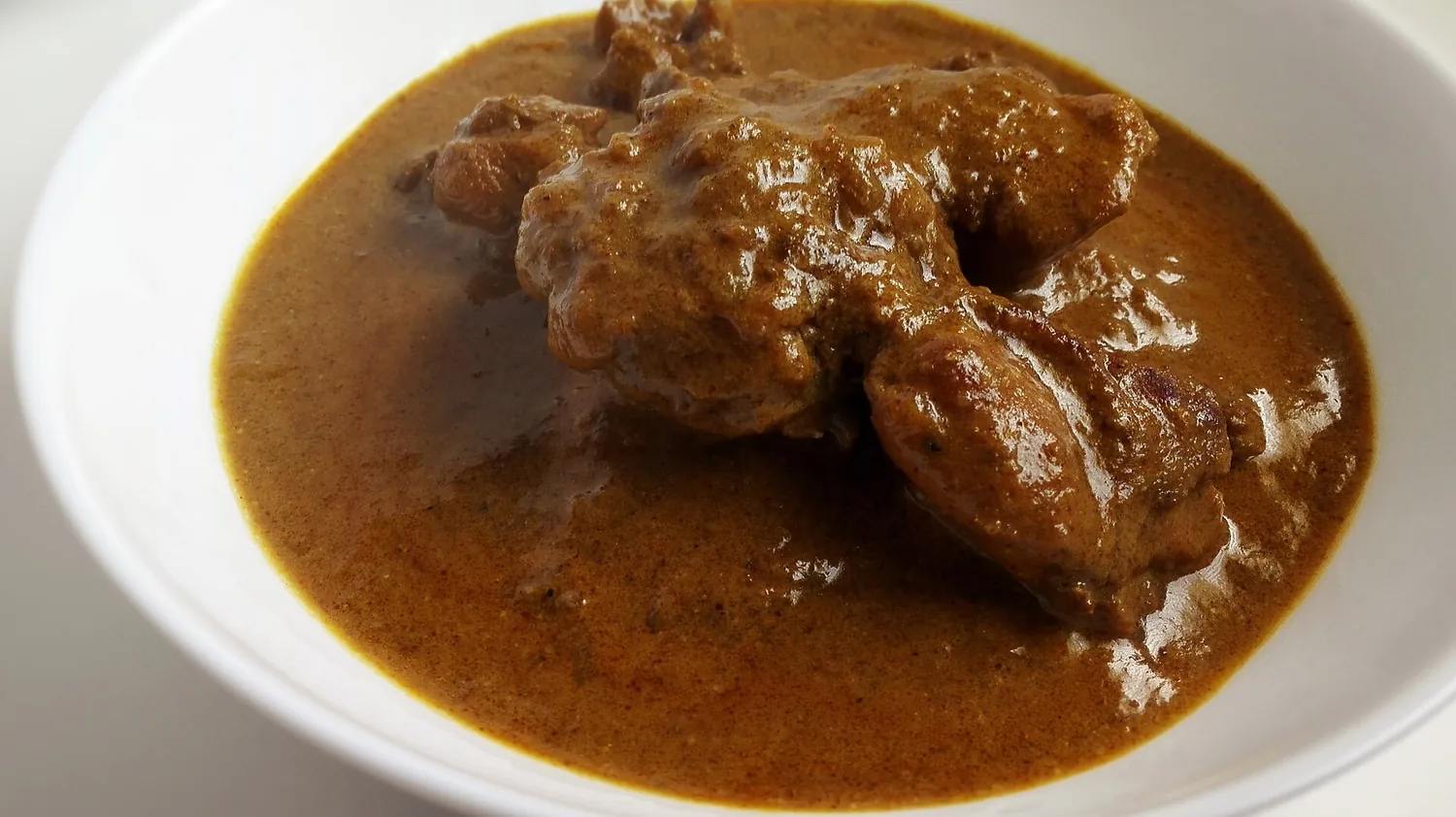
A bowl of dark Sri Lankan chicken curry in coconut milk sauce Sri Lanka flag Sri Lanka 1h 5m
Dinner •Sri Lankan Heritage

Sri Lankan Chicken Curry

Dark, roasted-spice chicken curry in rich coconut milk, soured gently with goraka and scented with curry leaves and lemongrass. This Sri Lankan chicken curry recipe is the everyday kukul mas of Sri Lankan homes: deeply savoury, warmly hot and spooned over rice. One serving is about 466 g.

Hearty & Comforting

Bone-in chicken simmered in coconut milk with dark roasted curry powder, goraka and curry leaves.

Pairs Well With
Steamed red rice and pol sambol
High Protein
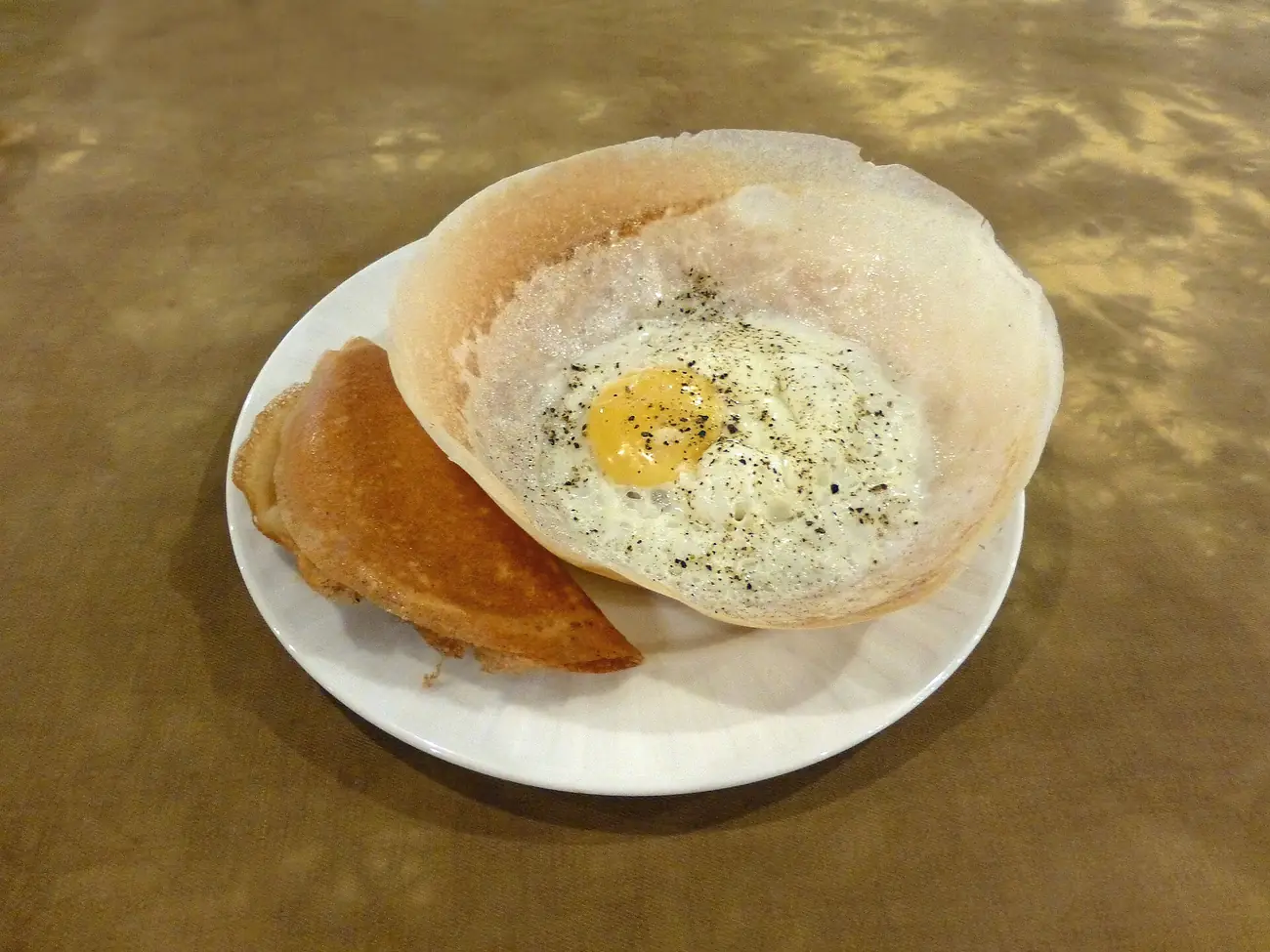
A Sri Lankan egg hopper, a bowl-shaped rice pancake with an egg in the centre Sri Lanka flag Sri Lanka 45m
Breakfast •Sri Lankan Heritage

Sri Lankan Hoppers

Bowl-shaped pancakes with lacy, crisp edges and a soft, spongy centre, made from fermented rice flour and coconut milk and cooked in a small wok-like appa pan. This Sri Lankan hoppers recipe makes the classic egg hopper — an appa with a whole egg gently steamed in its centre — the breakfast Sri Lanka is famous for. One serving is about 269 g (2 hoppers, one with egg).

Light & Fermented

Fermented rice-flour and coconut-milk batter cooked into crisp-edged bowls, each with a soft egg in the centre.

Pairs Well With
Lunu miris and pol sambol
Fermented / Gut Health
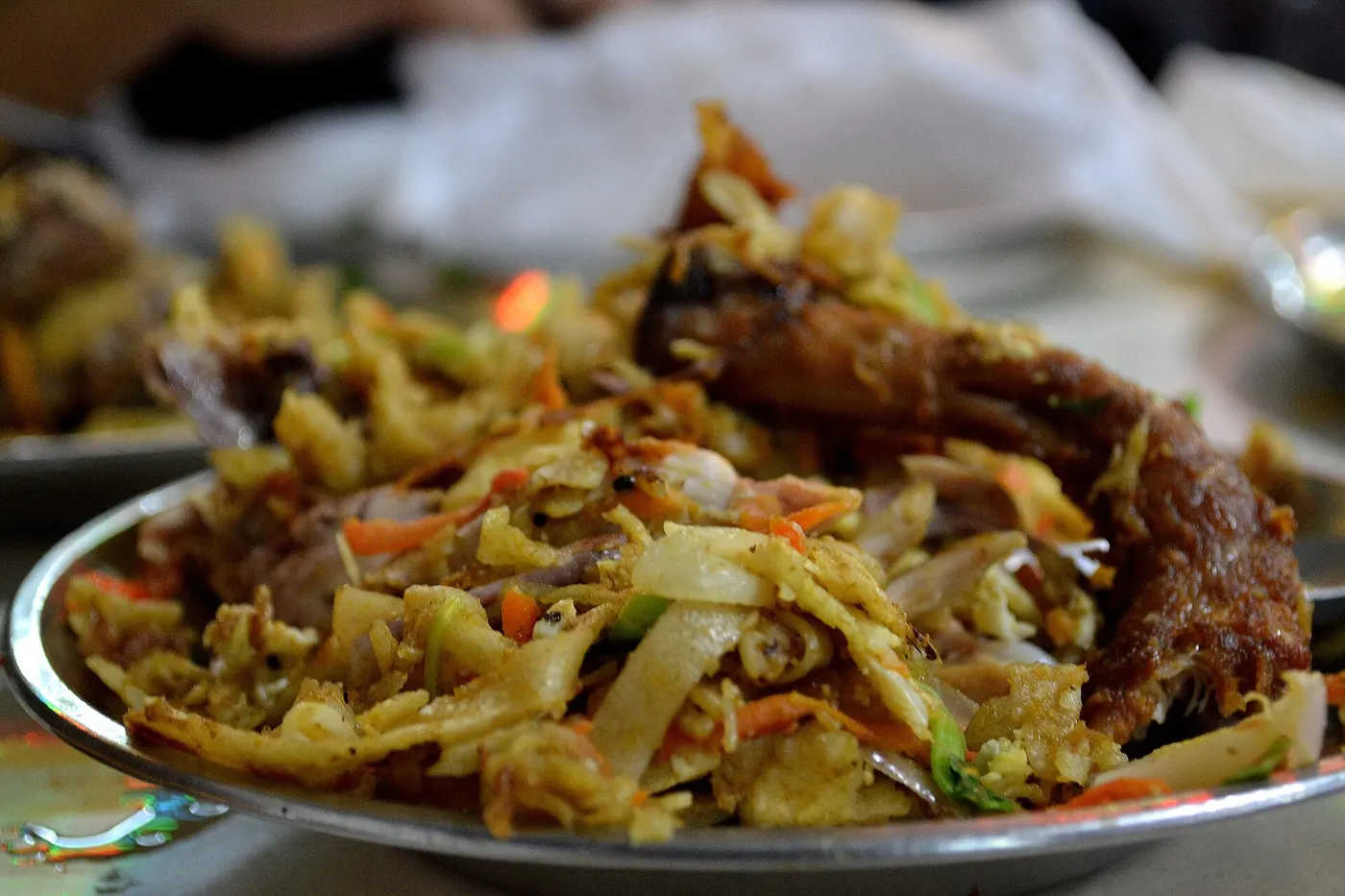
A plate of chicken kottu roti, chopped roti stir-fried with chicken and vegetables Sri Lanka flag Sri Lanka 45m
Dinner •Sri Lankan Heritage

Kottu Roti

Sri Lanka's famous late-night street food: godamba roti chopped and stir-fried on a hot griddle with chicken curry, egg, onion, carrot and cabbage, mixed with two steel blades in the rhythmic clanging every Sri Lankan knows. This kottu roti recipe makes chicken kottu at home — crisp-edged roti ribbons, saucy chicken and vegetables in every bite. One serving is about 394 g.

Hearty Street Food

Godamba roti chopped on a hot griddle with chicken curry, egg and vegetables.

Pairs Well With
Extra chicken curry gravy and pol sambol
Quick Prep (<30m)
Creamy yellow Sri Lankan dhal curry in a white bowl with a coconut milk swirl and sliced spring onions Sri Lanka flag Sri Lanka 50m
Dinner •Sri Lankan Heritage

Sri Lankan Dhal Curry

This sri lankan dhal curry recipe makes Sri Lanka's everyday lentil curry: red lentils simmered soft with turmeric and cinnamon, finished with creamy coconut milk and a hot-oil tempering of mustard seeds, cumin, fenugreek and curry leaves. It is the gentle, golden curry that sits at the centre of most Sri Lankan rice-and-curry meals. One serving is about 400 g.

Comfort & Warmth

Red lentils simmered in coconut milk with curry leaves and a mustard-seed tempering, served warm with rice.

Pairs Well With
Steamed rice, roast paan or string hoppers, with pol sambol on the side.
High Protein

The Dinner Gazette

Never wonder what’s for dinner again

One email a week with easy dinner ideas from around the world — ingredients, steps and nutrition, tested in our kitchen first.

Delivered every Thursday morning. Unsubscribe anytime.