Curated recipes from 193 countries  •  New seasonal Mediterranean issue out now

Overview

Leberkase

Bavarian Meatloaf, Leberkäse, Fleischkäse, Leberkäs

This leberkase recipe is the Bavarian baked meatloaf: finely ground pork and beef emulsified with ice water, onion and warm spices, then baked in a loaf tin until the top turns deep golden-brown and crisp. Despite the name, which sounds like liver cheese, the Bavarian version contains neither liver nor cheese. One serving is about 180 g.

Leberkäse has been made in Bavaria for over 200 years. The story told in Munich is that Elector Karl Theodor brought his own butcher with him to Bavaria, and the butcher created the fine, baked sausage loaf from pork and beef. The name is a puzzle: it sounds like liver cheese, but the Bavarian loaf contains neither — the name comes from the old words Laib, meaning loaf, and Käs, meaning a compact mass. German food rules still reserve the label Bayerischer Leberkäse for the liver-free version, while loaves sold as Leberkäse outside Bavaria must contain liver. The hot slice in a crusty roll, the Leberkässemmel, is one of Bavaria's most popular snacks.

Pairs well with: Crusty roll, sweet mustard & fried egg

Provenance

Germany flag Germany

Bavarian Butcher's Loaf

Nordic & European

Time Dedication

1h 45m

30m prep • 75m cook

Batch Yield

6 Servings

337 kcal per serving

1 serving ≈ 180 g

Technical Skill

Intermediate

Medium (Meat Emulsion)

Meal Timing & Digestive Fit

Breakfast

Not Advised

Lunch

Prime Metabolic Fit

Dinner

Ideal Hearty Main

Snack & Tea

Inappropriate

High Protein Occasions: Oktoberfest, beer gardens, quick lunches, butcher's shop snacks Cost: Low — about $2–3 per serving at home
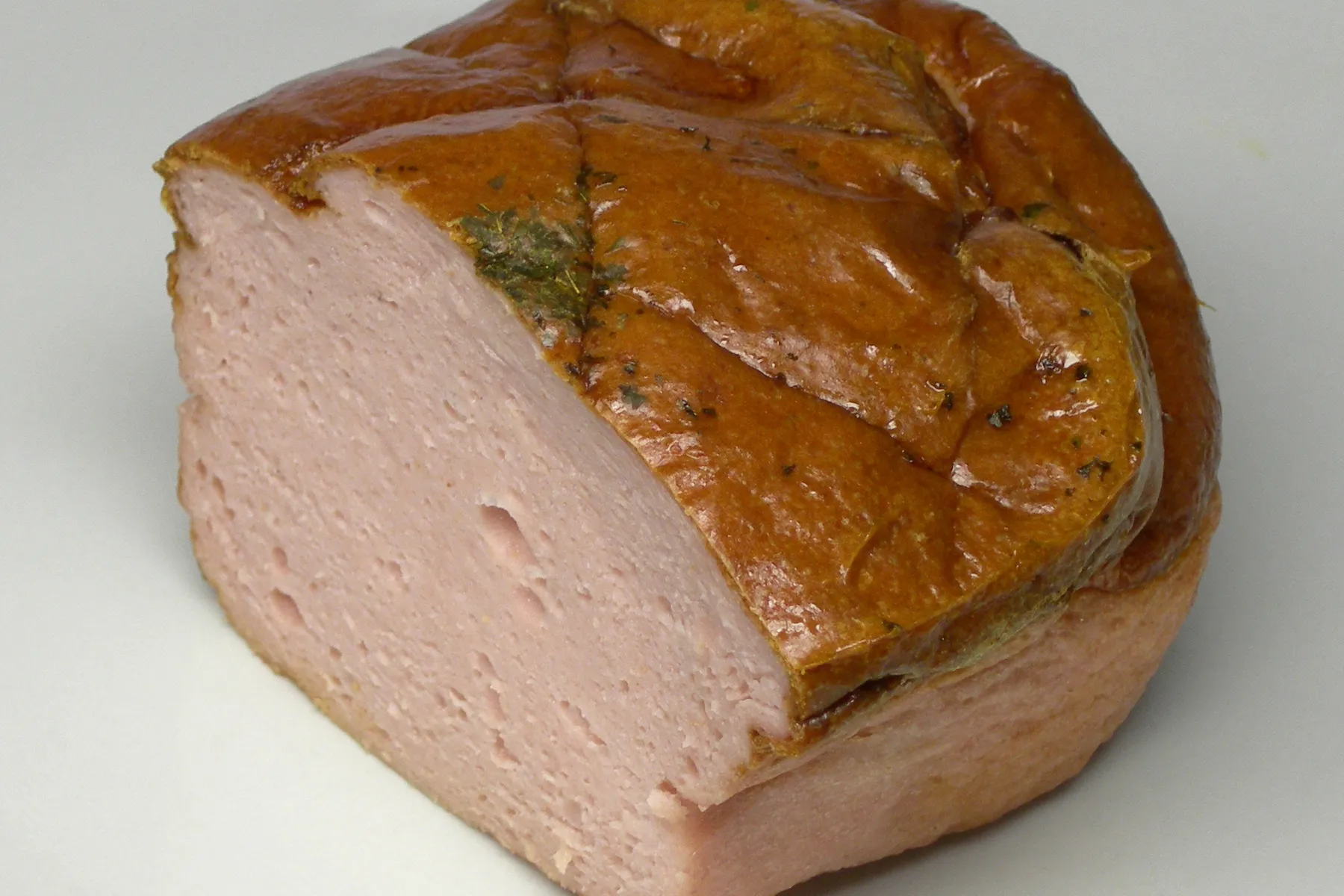
A whole Bavarian Leberkäse loaf with a glossy golden-brown crust and a pale pink, finely textured slice cut from one end

Bavarian Butcher's Loaf

Photo: Rainer Zenz, CC BY-SA 3.0, via Wikimedia Commons

The Heritage Formulary

Measured Ingredients

Estimated cost: Low — about $2–3 per serving at home (USD)

A Bavarian Leberkäse with finely ground pork and beef, ice water, onion and warm spices, baked to a deep golden crust.

Execution Methodology & Culinary Technique

Step-by-Step Cooking Guide

Active 1h 45m
P

Prep Stage: Chilling and Grinding the Meat

30 Mins • Chilling & Grinding

Cut the pork into cubes and chill the pork and beef in the freezer for 30 minutes — the meat must stay icy cold all the way through grinding and mixing, or the emulsion will split and the loaf will turn crumbly. Grate the onion and garlic and measure the salt and spices while the meat chills.

Maestro Tip: If the meat warms up at any point, put the bowl back in the freezer for 15 minutes — cold meat is the whole secret of a smooth Leberkäse.

  1. 1

    Grind the Meat Fine

    15 Mins Cold, below 12°C (54°F)

    Pass the chilled pork and beef twice through a meat grinder fitted with the fine plate, keeping the bowl over ice. The mince should look like a smooth, sticky paste, not like ordinary minced meat.

    Grind twice — the second pass is what gives Leberkäse its fine, sausage-like texture.

    Done when: A smooth, pale, sticky meat paste with no visible chunks.

  2. 2

    Mix the Emulsion

    10 Mins Cold, below 12°C (54°F)

    Put the ground meat in a large cold bowl and beat in the salt, white pepper, marjoram and nutmeg. Add the grated onion and garlic, then pour in the ice water a little at a time, beating hard with a wooden spoon or a stand mixer for 6–8 minutes until the mixture turns glossy, sticky and uniform.

    Beat until the mixture pulls away from the bowl in one mass — that stickiness means the proteins have bound the water in.

    Done when: A glossy, sticky, uniform paste that holds its shape on the spoon.

  3. 3

    Fill the Loaf Tin

    5 Mins Room temperature, about 20°C (68°F)

    Lightly oil a 25 cm loaf tin. Press the meat mixture into the tin in layers, pushing out any air pockets, and smooth the top with a wet spatula. Score a shallow cross-hatch on the surface with a knife — this is where the crust will crack and brown.

    Bang the tin firmly on the bench a few times to knock out hidden air pockets, which would leave holes in the slice.

    Done when: A smooth, level loaf with no air pockets and a scored top.

  4. 4

    Bake Until Golden

    75 Mins Oven at 175°C (350°F)

    Bake at 175°C (350°F) for 65–75 minutes, until the top is deep golden-brown and crisp and a thermometer pushed into the centre reads at least 71°C (160°F). If the top browns too fast, cover it loosely with foil for the last 20 minutes.

    Do not skip the thermometer — a loaf this thick can look done on top while the centre is still undercooked.

    Done when: Deep golden, crackled crust; centre at least 71°C (160°F).

  5. 5

    Rest and Slice

    15 Mins Resting, about 60°C (140°F)

    Rest the loaf in the tin for 10 minutes, then turn it out onto a board and rest 5 minutes more. Cut into finger-thick slices, about 180 g each, with a long sharp knife.

    Cut with a single smooth stroke — sawing tears the fine crumb.

    Done when: Clean, firm slices with a pale pink, even crumb.

  6. 6

    Serve in a Roll

    5 Mins Serving temperature, about 60°C (140°F)

    Serve each warm slice in a crusty bread roll spread with sweet mustard, or on a plate with a fried egg and potato salad. Eat while the slice is still warm and the crust is crisp.

    A smear of sweet mustard is not optional in Bavaria — it is part of the dish.

    Done when: A warm, crisp-edged slice in a roll, ready to eat.

Finishing Touches & Plating

Serve the Leberkäse warm, sliced finger-thick, in a crusty roll with sweet mustard — the classic Leberkässemmel — or with a fried egg and potato salad for a fuller lunch.

Nutritional Physiology & Benefits

Nutrition

Energy

337

kcal / serving

Protein

30g

Complete AA

Carbs

3g

Complex

Fats

23g

Healthy

Per serving (6 servings · 1 serving ≈ 180 g)
Energy337 kcal
Protein30 g
Carbohydrates3 g
Fat23 g
Fibre0.6 g
Sugar0.7 g
Sodium1140 mg
Per 100g
Energy187 kcal
Protein16.4 g
Carbohydrates1.5 g
Fat12.7 g
Fibre0.3 g
Sugar0.4 g
Sodium633 mg

Nutrition values are estimated — calculated from USDA FoodData Central values for the listed ingredients.

Vitamins & minerals: Vitamin B12, niacin and zinc (pork and beef), vitamin B6 and selenium (pork), iron (beef).

High in Protein

About 29.6 g of protein per serving from the pork and beef makes this a filling, energy-rich lunch.

B12 and Zinc

Pork and beef are rich in vitamin B12, zinc and iron, nutrients that support normal energy and immune function.

No Liver, No Cheese

Despite the name, the Bavarian loaf contains neither liver nor cheese — just meat, water, onion and spices.

Food Pairings

What to Eat With

To optimize nutrient absorption and elevate the sensory depth, pair with these authentic accompaniments:

Sides

Crusty Bread Roll

A crusty Semmel roll is the classic partner — its crunch contrasts with the soft, fine loaf, and it soaks up the juices.

Fried Egg

A fried egg on top of the slice, the Leberkäse mit Spiegelei of Munich beer gardens, adds richness and turns the snack into a full lunch.

Potato Salad

Warm Bavarian potato salad with vinegar and mustard is the classic plate partner — its acidity balances the fatty loaf.

Sauces

Sweet Mustard

Bavarian sweet mustard is the traditional condiment — its gentle sweetness cuts through the rich, salty meat.

Complete menu

Leberkäse in a crusty roll with sweet mustard, warm potato salad and a fried egg.

Digestive Guardrails

What NOT to Combine

To prevent digestive distress, sluggishness, or palate clash, avoid pairing the dish with these elements:

Undercooking the Centre

This is ground meat, so the centre must reach at least 71°C (160°F) — a loaf that looks brown on top can still be undercooked inside, which is a food-safety risk. Use a thermometer. This is general food information, not medical advice.

Letting the Meat Warm Up

Warm meat will not emulsify: the fat melts out, the loaf turns crumbly and greasy, and the texture is lost. Keep everything icy cold until the tin goes in the oven. This is general food information, not medical advice.

General information only, not medical advice — consult a doctor for personal dietary decisions.

Who Should Eat It

Who Should Eat

  • General adultsA hearty, satisfying lunch — one thick slice in a roll with mustard is the classic portion.
  • ChildrenMild and easy to chew; serve a thinner slice in a roll and go light on the mustard.
  • ElderlySoft and easy to eat, but salty — a smaller slice with salad suits a lighter appetite.
  • Pregnant womenEat only freshly baked and steaming hot, with the centre fully cooked through; avoid cold sliced leftovers unless reheated to 74°C (165°F).
  • Breastfeeding womenA filling, protein-rich lunch; the high salt means plenty of water alongside is a good idea.
  • AthletesHigh in protein and energy — a solid post-training lunch, best with a roll and salad.
  • Weight gainEnergy-dense and protein-rich, which suits a higher-energy day.
  • Weight lossRich and salty at about 337 kcal a slice before the roll; one thin slice with salad is the lighter choice.

Health Conditions — Adjust or Avoid

Conditions

  • DiabetesOnly about 2.7 g of carbohydrate per serving; the roll adds the carbs, so choose a small roll, and ask your clinician about portion size.
  • High blood pressureAbout 1,140 mg of sodium per serving — this is a salty cured-style loaf, so keep the portion small and ask your clinician whether it fits your plan.
  • Kidney diseaseHigh in protein and sodium; ask your clinician whether this portion suits your plan.
  • GoutRed meat and pork are moderately high in purines; keep the portion small and occasional — ask your clinician.
  • Stomach issuesA rich, fatty loaf that can feel heavy; a thin slice with plain bread is gentler, and ask your clinician if your stomach keeps bothering you.
  • Cardiovascular diseaseHigh in saturated fat and sodium; enjoy a thin slice occasionally rather than as a daily lunch, and ask your clinician about the right portion for you.
  • Fatty liverA fatty, energy-dense meatloaf; one thin slice with salad is the lighter way to enjoy it — ask your clinician about the right portion for you.
  • Food allergiesContains pork and beef; the loaf itself is free of gluten, egg and dairy, but the usual roll contains wheat — if you have a food allergy, ask your clinician whether it is safe for you.
  • Special therapeutic dietsFollow your clinician's guidance on sodium and saturated fat portions; this is general information, not medical advice.

If you have a medical condition, consult your doctor before changing your diet.

Storage & Use

Storage & Use

How to store
Cool completely, then wrap tightly in cling film or foil.
In the fridge
3–4 days in the fridge, wrapped.
In the freezer
Up to 2 months, sliced and wrapped; thaw in the fridge overnight.
How to reheat
Reheat slices in a pan or oven until steaming hot, at least 74°C (165°F) all the way through.
Freezing recommended
Yes, sliced — slices thaw quickly and fry well.
Signs it has spoiled
Sour or off smell, slimy surface, or grey-green discoloration.

More recipes to explore

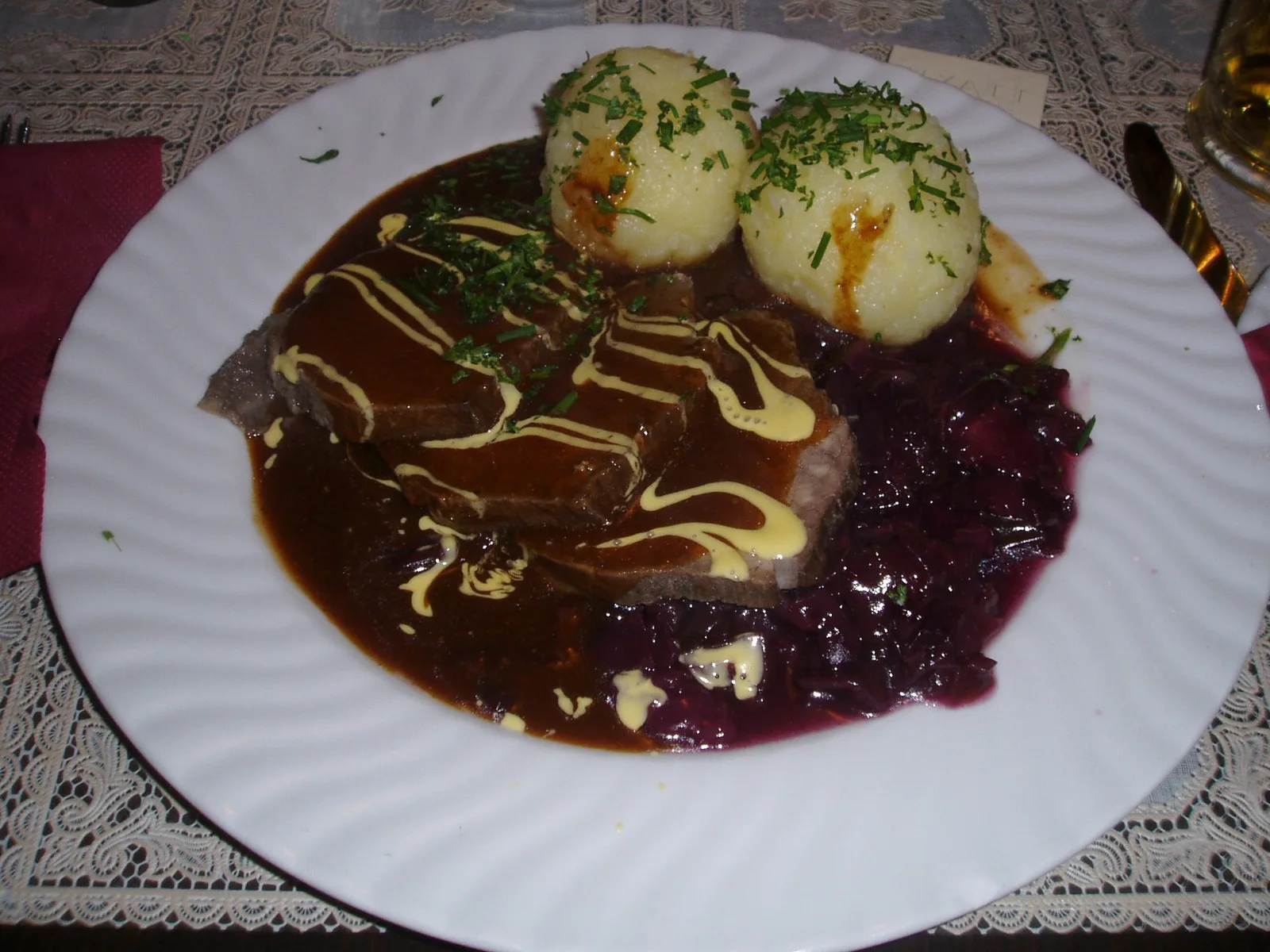
Sliced sauerbraten in dark sweet-sour gravy with potato dumplings and braised red cabbage on a white plate Germany flag Germany 3h 30m
Dinner •Rhineland Heritage

Sauerbraten

This sauerbraten recipe starts with a beef chuck roast steeped for three days in red wine vinegar, red wine and warm spices, then braised slowly until it slices like butter. The marinade becomes a dark, sweet-sour gravy thickened with crushed gingersnaps and studded with raisins, the Rhineland way. One serving is about 300 g, with gravy.

Comfort & Warmth

A slow-braised German pot roast in a sweet-sour vinegar gravy, sliced thick and served hot with potato dumplings and red cabbage.

Pairs Well With
Potato dumplings, braised red cabbage & a glass of Spätburgunder
High Protein
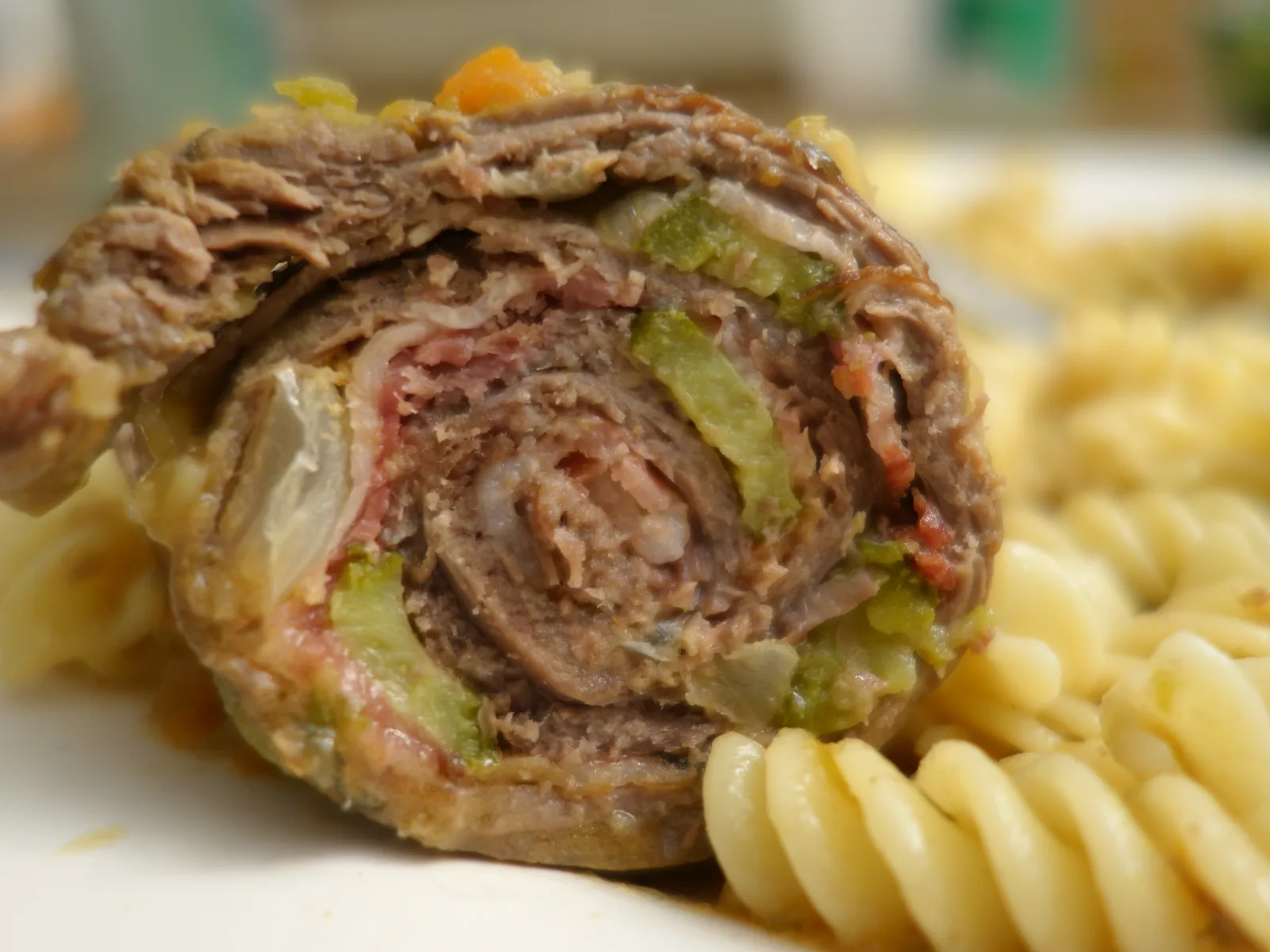
A sliced German beef roulade showing the spiral of beef, bacon and dill pickle, served with pasta Germany flag Germany 2h 10m
Dinner •German Sunday Heritage

Rouladen

This rouladen recipe spreads thin slices of top round with mustard, then rolls them around smoky bacon, dill pickles and onion into neat parcels. The rolls are browned, then braised slowly in red wine and beef stock until tender, and the braising liquid becomes a rich gravy. One serving is about 375 g — two rolls with gravy.

Comfort & Warmth

Thin beef rolls stuffed with bacon, dill pickle and onion, braised in red wine gravy and served hot with dumplings.

Pairs Well With
Potato dumplings, braised red cabbage & a German lager
High Protein
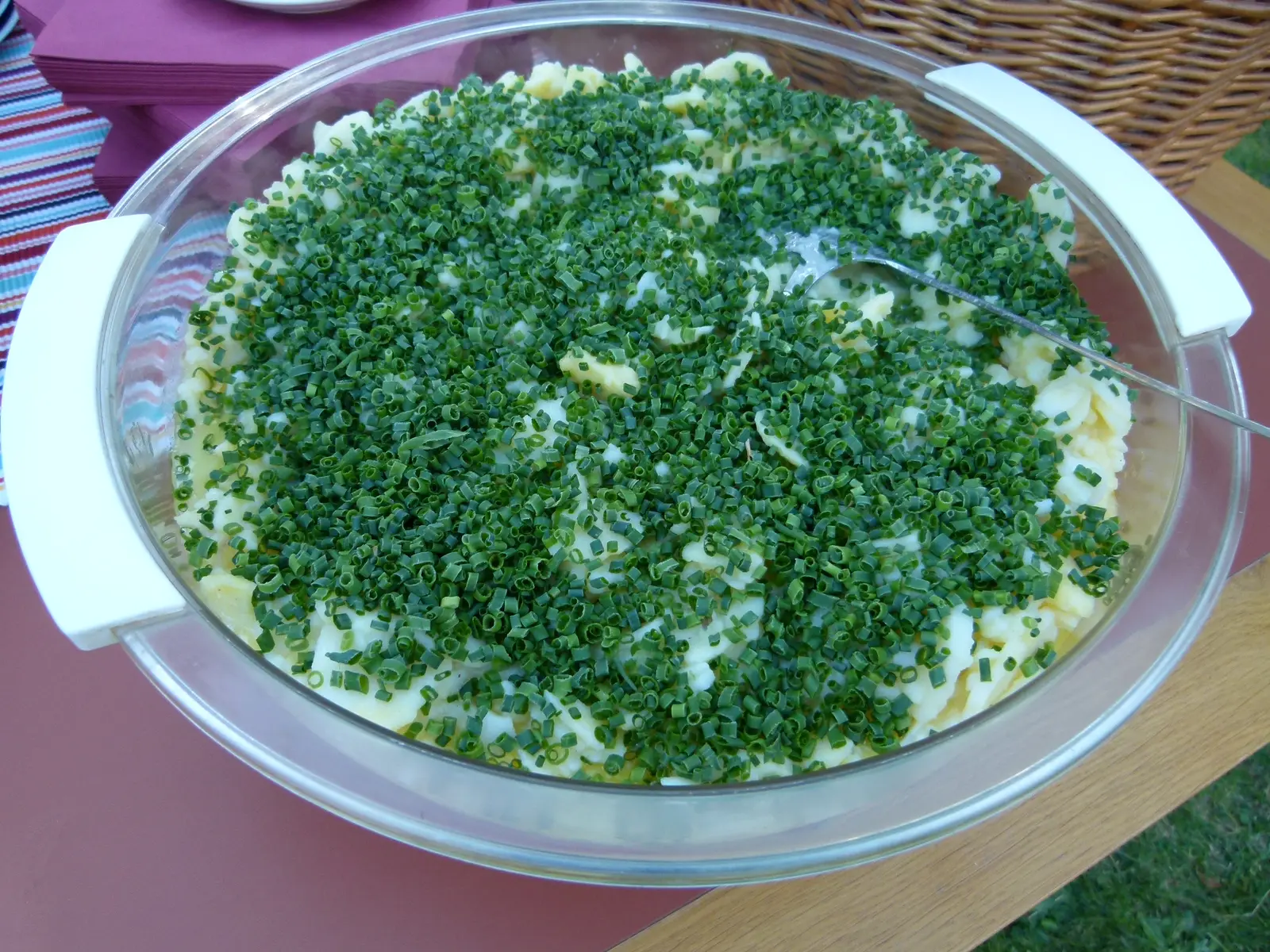
A glass bowl of warm Swabian potato salad topped with chopped chives Germany flag Germany 45m
Lunch •Swabian Heritage

German Potato Salad

This german potato salad recipe is the warm Swabian kind: waxy potatoes sliced while still hot, tossed with crisp bacon, soft onion and sliced egg, then dressed with hot beef stock, vinegar and mustard so every slice drinks up the tangy dressing. No mayonnaise anywhere — the potatoes stay light, glossy and warm. One serving is about 292 g.

Comfort & Warmth

Warm waxy potatoes in a bacon, mustard and vinegar dressing, served straight from the bowl while still steaming.

Pairs Well With
Grilled sausages, schnitzel & a cold German lager
Quick Prep (<30m)
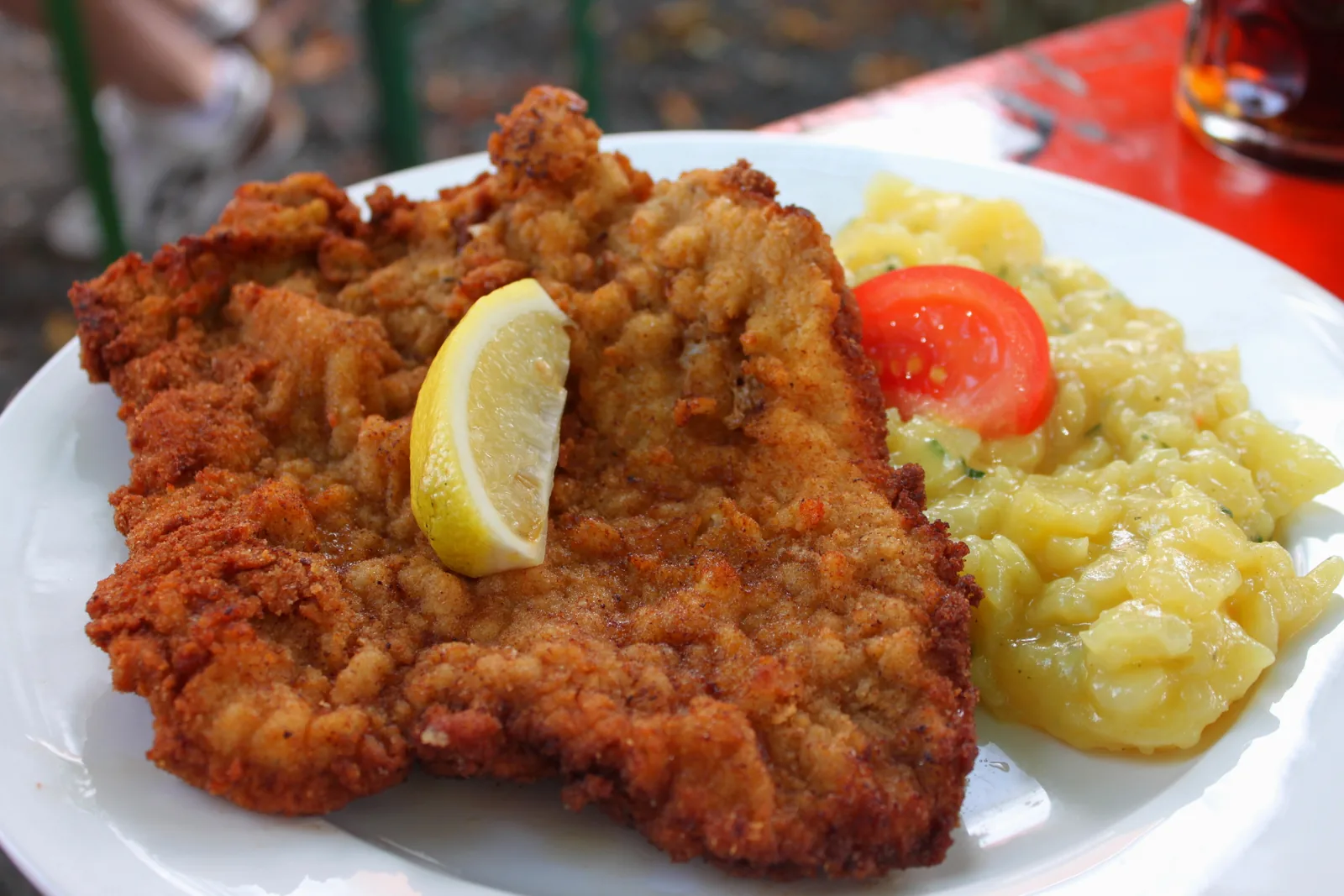
Golden breaded pork schnitzel with a lemon wedge and potato salad on a white plate Germany flag Germany 40m
Dinner •German Heritage

German Pork Schnitzel

German pork schnitzel is the everyday hero of German cooking: a pork cutlet pounded thin, coated in flour, egg and breadcrumbs, and fried in butter until it turns deep golden and crisp. This german schnitzel recipe follows the German way — real pork, a loose crumb, and a wedge of lemon on the side, with potato salad to mop up. One serving is about 200 g.

Classic Comfort

A golden, crisp pork cutlet with lemon and potato salad — a satisfying, protein-rich German dinner.

Pairs Well With
Warm potato salad, cucumber salad and a cold lager.
High Protein

The Dinner Gazette

Never wonder what’s for dinner again

One email a week with easy dinner ideas from around the world — ingredients, steps and nutrition, tested in our kitchen first.

Delivered every Thursday morning. Unsubscribe anytime.