
Curated recipes from 193 countries  •  New seasonal Mediterranean issue out now

Overview

Liboke

Liboke ya Mbisi, Maboke — Fish in Banana Leaves

Liboke is the Congo River's way of cooking fish: tilapia, tomato and onion folded into banana leaves, tied into parcels and steamed until the fish flakes and the leaves smell of smoke and citrus. Unwrapping a hot liboke at the table is half the pleasure — the steam carries ginger, garlic and lemon before you even see the fish. This liboke recipe makes 4 parcels in 55 minutes. One serving is about 313 g.

Liboke, from the Lingala word for a parcel or pocket, is the signature cooking method of the Congo River basin, in the Democratic Republic of the Congo and the Republic of the Congo. Fish, meat or vegetables are wrapped in banana leaves and steamed, baked or grilled, and in Kinshasa the leaf parcels are a familiar lunchtime sight, carried through the streets in baskets and sold still warm.

Pairs well with: Steamed white rice, boiled plantains and chikwangue

Provenance

Democratic Republic of the Congo flag Democratic Republic of the Congo

Congo River Heritage

African Heritage

Time Dedication

55m

30m prep • 25m cook

Batch Yield

4 Servings

290 kcal per serving

1 serving ≈ 313 g

Technical Skill

Intermediate

Intermediate (Leaf Wrapping)

Meal Timing & Digestive Fit

Breakfast

Not Advised

Lunch

Hearty Midday Main

Dinner

Ideal Hearty Main

Snack & Tea

Inappropriate

High Protein Occasions: Family dinners, riverside lunches, weekend cooking, light summer meals Cost: Low — about $3–4 per serving at home
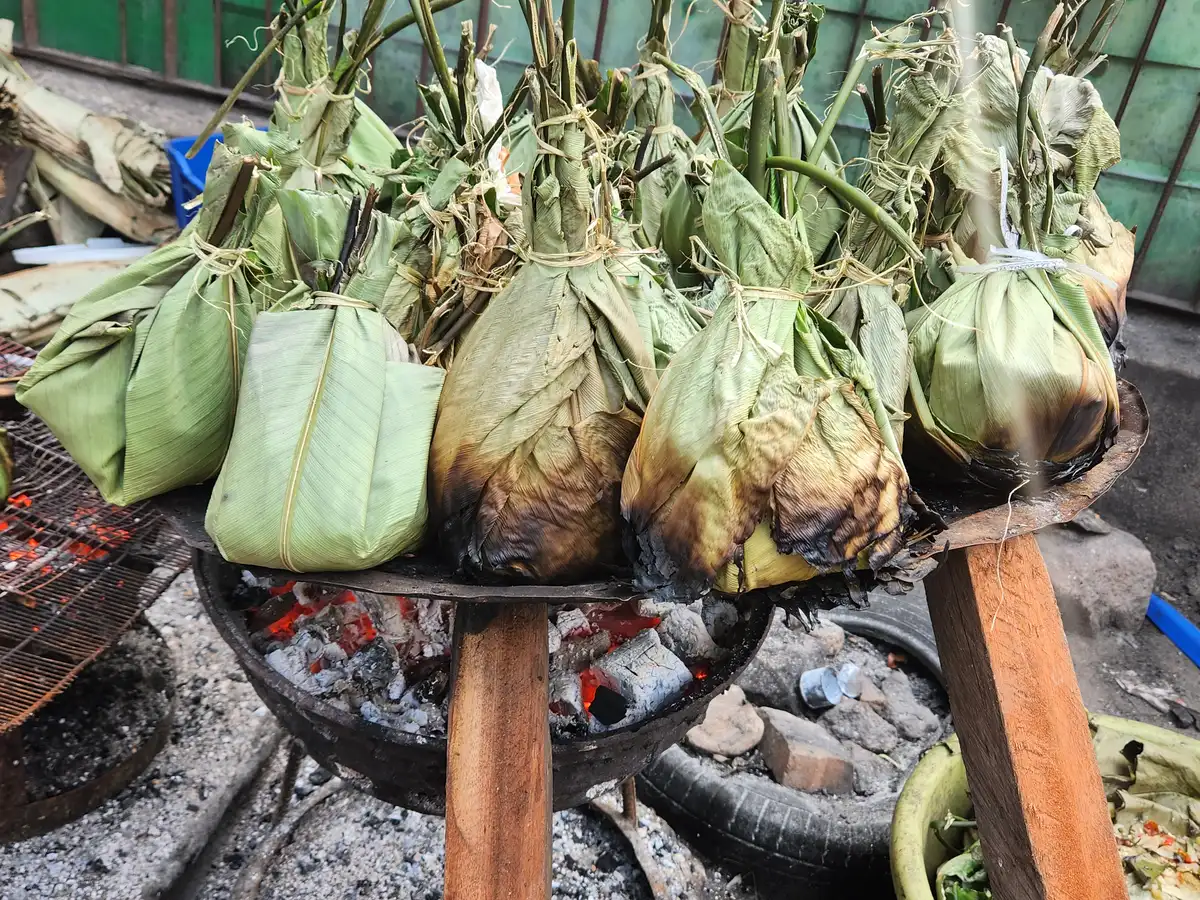
Liboke leaf parcels grilling over a charcoal fire in the Democratic Republic of the Congo

Congo River Heritage

Photo: Lingabo, CC0, via Wikimedia Commons

The Heritage Formulary

Measured Ingredients

Estimated cost: Low — about $3–4 per serving at home (USD)

A good liboke is judged by the moment it opens: the fish should be moist and flaky, the leaf fragrant, and the juices bright with lemon and tomato.

Execution Methodology & Culinary Technique

Step-by-Step Cooking Guide

Active 55m
P

Prep Stage: Soften the Leaves and Marinate the Fish

30 Mins • Marinating

Soften the banana leaves over a flame or in boiling water until they turn shiny and bend without cracking, then lay them out in double layers. Rub the tilapia with salt, pepper, garlic, ginger, lemon juice and olive oil, layer on the tomato and onion, and leave it to marinate for 15 minutes while you set up the steamer. The marinade is short, but it is where the flavour starts.

Maestro Tip: If a leaf tears, patch it with a second leaf underneath — two layers are the rule, not a backup plan.

  1. 1

    Marinate the Fish

    15 Mins • Marinating Room temperature, about 20°C (68°F)

    In a wide bowl, toss the tilapia pieces with the salt, black pepper, minced garlic, grated ginger, lemon juice and olive oil. Turn the fish so every piece is coated, then set aside for 15 minutes. The lemon firms the surface of the fish slightly and brightens the whole parcel.

    Do not marinate longer than 30 minutes — the lemon juice will start to cook the fish and make it mushy.

    Done when: The fish is evenly coated and smells of lemon and ginger.

  2. 2

    Wrap the Parcels

    10 Mins • Wrapping Room temperature, about 20°C (68°F)

    Lay out 4 double layers of banana leaf. On each, place a bed of tomato and onion slices, then 2 pieces of fish, then more tomato and onion on top. Tuck in half a bay leaf and a whole scotch bonnet if using. Fold the leaf up like a parcel — bottom up, sides in, top down — and tie firmly with string or a strip of leaf. The parcels should be snug but not bursting.

    Fold the leaf with the shiny side in, against the fish — it releases the most aroma as it steams.

    Done when: Each parcel is closed tight with no gaps; nothing leaks when you lift it.

  3. 3

    Steam the Parcels

    25 Mins • Steaming Steaming over boiling water, 100°C (212°F)

    Set a steamer basket or a rack over a pot of boiling water, or place the parcels in a baking dish with 2 cm of water in the bottom and cover tightly with foil. Steam for 25 minutes. The leaves will darken and the parcels will puff slightly with steam. Check the thickest piece of fish: it must be opaque all the way through and reach 63°C (145°F) at the centre, flaking easily with a fork.

    Keep the water at a steady boil; if the pot runs dry the leaves scorch and the fish dries out.

    Done when: Fish flakes cleanly, is opaque to the centre, and reaches 63°C (145°F); the tomato has melted into the juices.

  4. 4

    Rest and Unwrap

    5 Mins • Resting Off the heat, cooling from 90°C (194°F)

    Lift the parcels out carefully and rest them for 5 minutes. Cut the string at the table and open each parcel in front of the person eating it — the rush of fragrant steam is the point of the dish. Spoon the cooking juices over the fish.

    Open the parcel away from your face; the first steam is very hot.

    Done when: The parcel opens to tender fish in its own tomato and lemon juices, with the leaf darkened and fragrant.

Finishing Touches & Plating

Serve each liboke still in its leaf on a plate, with rice or boiled plantains beside it and the juices spooned over the fish. Eat straight from the leaf — it is the plate, the wrapping and the seasoning all at once.

Nutritional Physiology & Benefits

Nutrition

Energy

290

kcal / serving

Protein

42g

Complete AA

Carbs

9g

Complex

Fats

10g

Healthy

Per serving (4 servings · 1 serving ≈ 313 g)
Energy290 kcal
Protein42 g
Carbohydrates9 g
Fat10 g
Fibre1.7 g
Sugar3.9 g
Sodium498 mg
Per 100g
Energy93 kcal
Protein13.3 g
Carbohydrates2.8 g
Fat3.3 g
Fibre0.6 g
Sugar1.3 g
Sodium159 mg

Nutrition values are estimated — calculated from USDA FoodData Central values for the listed ingredients.

Vitamins & minerals: Vitamin D and B12 (tilapia), vitamin C (lemon, tomato), potassium (tomato, onion), selenium (fish).

High-Protein, Light Meal

With 42 g of protein and only 290 kcal per serving, liboke is a genuinely filling dinner that stays light.

Gentle Cooking, Kept Nutrients

Steaming inside a sealed leaf keeps the fish moist without frying, and the juices — with their vitamin C from lemon and tomato — stay in the parcel instead of draining away.

Easy on Digestion

A simple, low-fat parcel of fish, tomato and onion with no cream or frying is kind to sensitive stomachs.

Food Pairings

What to Eat With

To optimize nutrient absorption and elevate the sensory depth, pair with these authentic accompaniments:

Sides

Steamed White Rice

Plain rice soaks up the lemony tomato juices from the parcel, which is where most of the flavour ends up.

Chikwangue (Cassava Bread)

The dense, slightly sour cassava bread sold on Kinshasa streets is the traditional starch with liboke, and its chew stands up to the soft fish.

Vegetables

Boiled Plantains

Their mild sweetness rounds out the sharp lemon and chilli in the parcel, and they are the classic Kinshasa accompaniment.

Drinks

Ginger Tea or Cold Hibiscus

Ginger tea echoes the ginger in the marinade, while a cold hibiscus drink cools the chilli heat.

Complete menu

Open the liboke at the table over steamed white rice, with boiled plantains and a cold hibiscus drink on the side; finish with fresh mango or pineapple.

Digestive Guardrails

What NOT to Combine

To prevent digestive distress, sluggishness, or palate clash, avoid pairing the dish with these elements:

Very Spicy Drinks Right After

Strong alcohol or very hot chilli sauce on top of the scotch bonnet can irritate the stomach lining and mask the delicate fish. Keep the drink mild. This is general information, not medical advice.

Leaving Parcels Out at Room Temperature

Cooked fish in a warm, sealed leaf is a good place for bacteria to grow. Eat the parcels hot, and refrigerate any leftovers within 2 hours. This is general food-safety information, not medical advice.

General information only, not medical advice — consult a doctor for personal dietary decisions.

Who Should Eat It

Who Should Eat

  • General adultsA light, high-protein dinner — ideal when you want something satisfying without heaviness.
  • ChildrenSuitable from age 2+ with the chilli left out and all bones checked; tilapia is mild and flakes easily.
  • ElderlyExcellent — soft, moist fish that needs little chewing; serve with rice rather than tough plantain.
  • Pregnant womenGenerally suitable; ensure the fish is cooked right through to 63°C (145°F) and served hot. Keep the chilli mild.
  • Breastfeeding womenGenerally suitable; the protein, B12 and vitamin D support recovery — serve the fish hot and fresh.
  • AthletesA strong choice — about 42 g of protein per serving with light carbs; add a bigger rice portion for glycogen.
  • Weight gainAdd a generous serving of rice or plantains and a second parcel — the fish itself is lean.
  • Weight lossA good choice — 290 kcal per serving with high protein; keep the rice portion modest and load up on tomato and onion.

Health Conditions — Adjust or Avoid

Conditions

  • DiabetesOnly about 9 g of carbohydrate per serving, so this dish is naturally gentle on blood sugar. Watch the rice or plantain portion instead; ask your clinician about your plate.
  • High blood pressureOne serving carries about 498 mg of sodium. Skip extra salt at the table and keep the rice plain; ask your clinician about your sodium limit.
  • Kidney diseaseThe fish and vegetables are modest in potassium and sodium, and the portion is light. Keep the salt as written and ask your clinician about your portion.
  • GoutTilapia is low in purines compared with oily fish and red meat, so it is usually a gentler choice — eat in normal portions and ask your clinician.
  • Stomach issuesSteamed fish with tomato and onion is usually gentle, but skip the chilli and go easy on the lemon if acid bothers you.
  • Cardiovascular diseaseSteamed white fish with olive oil is low in saturated fat and a good fit for a heart-friendly pattern; ask your clinician if you follow a prescribed plan.
  • Fatty liverA lean, low-fat fish dish is a good fit; keep the rice portion moderate and ask your clinician about your overall plan.
  • Food allergiesContains fish (tilapia). Do not serve to anyone with a fish allergy. Naturally gluten-free and dairy-free.
  • Special therapeutic dietsIf you follow a prescribed low-sodium diet, use less salt and no bouillon; check with your clinician.

If you have a medical condition, consult your doctor before changing your diet.

Storage & Use

Storage & Use

How to store
Cool the parcels quickly and store them, still wrapped, in airtight containers.
In the fridge
Cooked fish parcels 2 days.
In the freezer
2 months (wrap tightly in foil as well).
How to reheat
Steam again for 10 minutes or microwave in the leaf until the fish reaches 74°C (165°F) all the way through.
Freezing recommended
Possible, but the leaf loses its aroma — best eaten fresh.
Signs it has spoiled
Sour or ammonia smell, slimy fish, or a leaf that smells off.

More recipes to explore

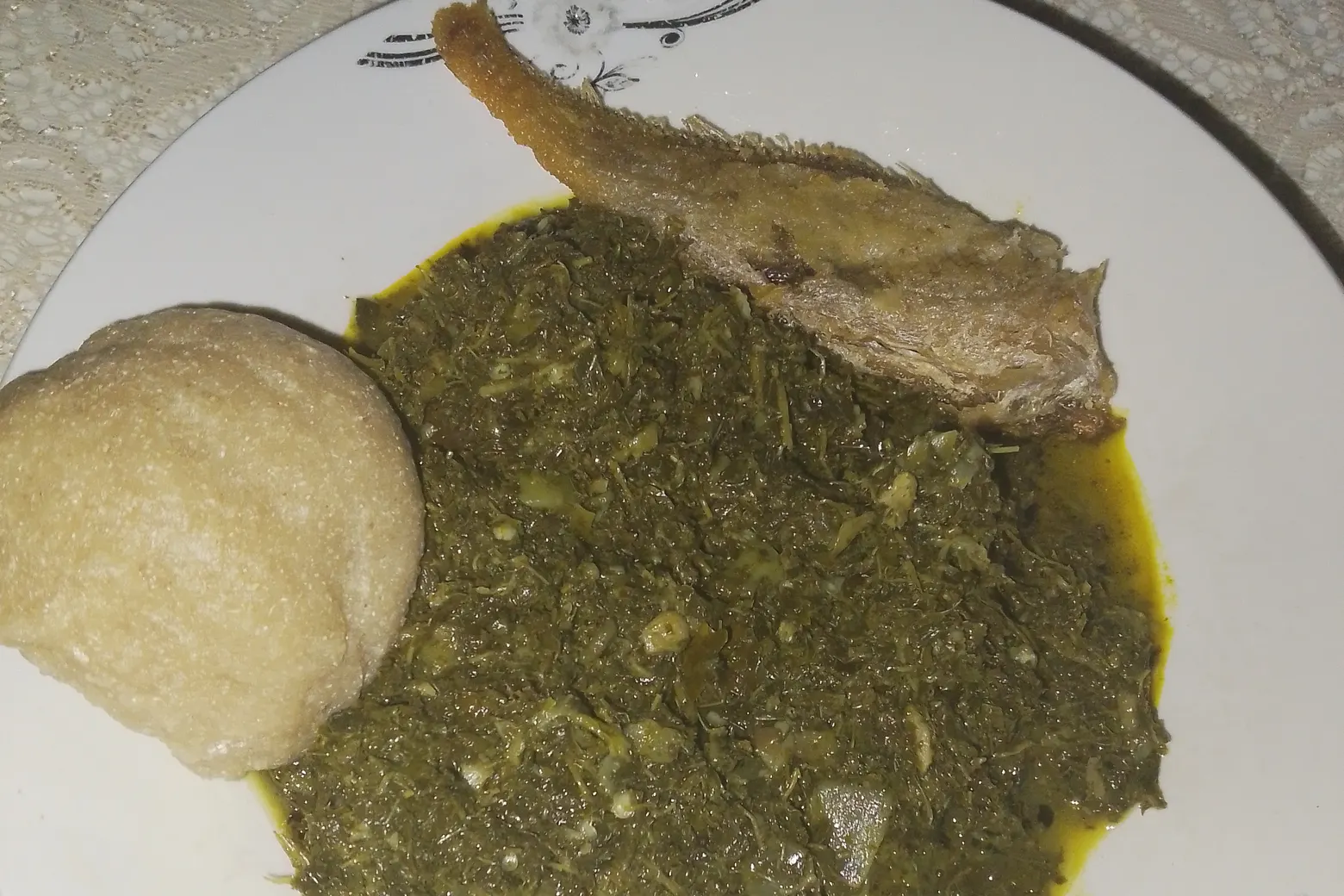
A plate of pondu (saka-saka) cassava leaf stew served with fufu and a piece of fried fish on the side Democratic Republic of the Congo flag Democratic Republic of the Congo 1h 55m
Dinner •Kinshasa Heritage

Pondu

Pondu is the deep-green cassava leaf stew of the Democratic Republic of the Congo: pounded leaves boiled long, then simmered low and slow in red palm oil with peanut butter, onion, garlic, tomato and eggplant until thick and glossy. This plant-based pondu recipe keeps the traditional method and flavour, with smoked fish left out so the pot stays vegan. One serving is about 425 g.

Comfort & Warmth

Slow-simmered pounded cassava leaves in red palm oil with peanut butter, onion and eggplant — a deep-green, hearty stew from the Congo Basin.

Pairs Well With
Fufu, boiled plantains and a spoonful of hot sauce
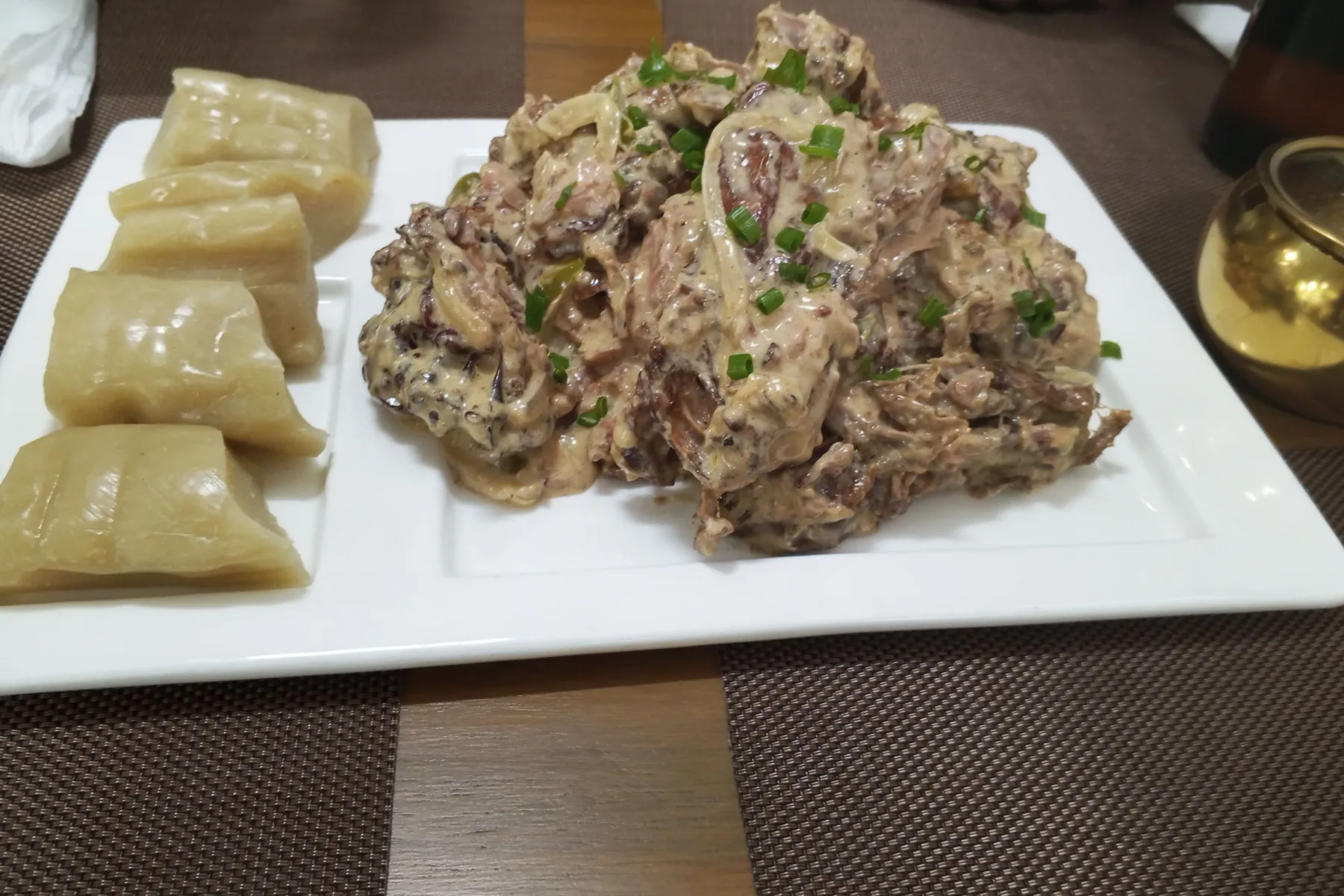
Poulet mayo — roast chicken pieces coated in creamy mayonnaise with spring onions, served on a white plate with sliced chikwangue (kwanga) Democratic Republic of the Congo flag Democratic Republic of the Congo 1h 40m
Dinner •Kinshasa Heritage

Poulet Mayo

Poulet mayo is Kinshasa's creamy roast-chicken street food: a whole chicken rubbed with paprika, thyme and rosemary, roasted until golden, then cut up and tossed in mayonnaise with mustard, lime, charred onion, green pepper, cucumber and spring onions, and roasted a second time in a parchment parcel. This poulet mayo recipe follows that two-roast method, so the chicken stays juicy and the mayonnaise turns into a warm, tangy coating rather than a cold sauce. One serving is about 367 g.

Hearty & Creamy

Roast chicken, cooked twice and tossed in mayonnaise with raw onion, pepper and cucumber — a rich, creamy Kinshasa street-food favourite.

Pairs Well With
Chikwangue (kwanga), fried plantains and a cold drink
High Protein
Bœuf bourguignon — French beef braised in red wine France flag France 4h
Dinner •Burgundy Terroir

Bœuf Bourguignon

Beef braised gently in red wine until the connective tissue melts into a velvet, gelatin-rich sauce — the classic Burgundy Sunday dinner.

Cellular Repair

Beef braised in red wine until spoon-tender, with mushrooms and pearl onions.

Pairs Well With
Parsnip Purée & Steamed French Haricots Verts
High Protein
Vietnamese braised pork belly with golden eggs in caramel sauce Vietnam flag Vietnam 1h 45m
Dinner •One Pot

Vietnamese Braised Pork and Eggs

Pork belly slowly braised in coconut water and caramel until meltingly tender, with golden eggs that soak up the sweet-savoury sauce — the Vietnamese family dish that tastes better the next day.

Comfort & Sustained Energy

Slow-braised pork belly and eggs in coconut water and caramel.

Pairs Well With
Steamed rice & pickled mustard greens
High Protein

The Dinner Gazette

Never wonder what’s for dinner again

One email a week with easy dinner ideas from around the world — ingredients, steps and nutrition, tested in our kitchen first.

Delivered every Thursday morning. Unsubscribe anytime.



