Curated recipes from 193 countries  •  New seasonal Mediterranean issue out now

Overview

Pondu

Saka-Saka, Mpondu — Congolese Cassava Leaf Stew

Pondu is the deep-green cassava leaf stew of the Democratic Republic of the Congo: pounded leaves boiled long, then simmered low and slow in red palm oil with peanut butter, onion, garlic, tomato and eggplant until thick and glossy. This plant-based pondu recipe keeps the traditional method and flavour, with smoked fish left out so the pot stays vegan. One serving is about 425 g.

Pondu, also called saka-saka across the Congo Basin, is the everyday stew of the Democratic Republic of the Congo, built from the leaves of the cassava plant that also gives the region its staple fufu. Pounding the leaves by hand in a mortar, boiling them long, and finishing them in red palm oil is a technique shared across Central Africa, and the dish turns up at family meals, weddings and celebrations alike.

Pairs well with: Fufu, boiled plantains and a spoonful of hot sauce

Provenance

Democratic Republic of the Congo flag Democratic Republic of the Congo

Kinshasa Heritage

African Heritage

Time Dedication

1h 55m

25m prep • 90m cook

Batch Yield

4 Servings

476 kcal per serving

1 serving ≈ 425 g

Technical Skill

Intermediate

Intermediate (Long Simmer)

Meal Timing & Digestive Fit

Breakfast

Not Advised

Lunch

Hearty Midday Main

Dinner

Ideal Hearty Main

Snack & Tea

Inappropriate

Occasions: Family dinners, weekend cooking, celebrations, vegan gatherings Cost: Low — about $2–3 per serving at home
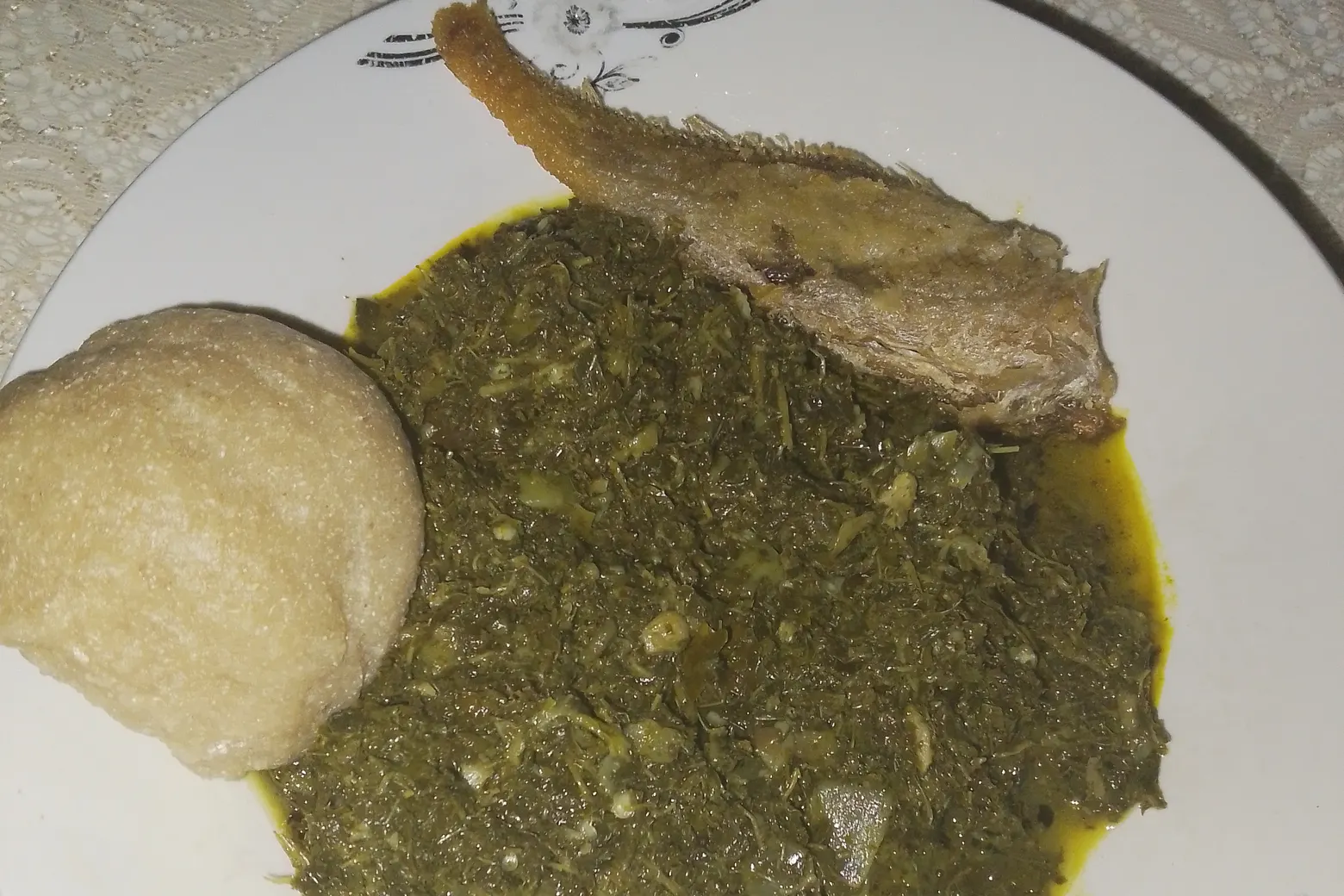
A plate of pondu (saka-saka) cassava leaf stew served with fufu and a piece of fried fish on the side

Kinshasa Heritage

Photo: Pangou Stephane, CC0, via Wikimedia Commons

The Heritage Formulary

Measured Ingredients

Estimated cost: Low — about $2–3 per serving at home (USD)

A good pondu is judged by its texture: the leaves should be silky and fully tender, never stringy, with the peanut butter melted in and a gloss of palm oil on top.

Execution Methodology & Culinary Technique

Step-by-Step Cooking Guide

Active 1h 55m
P

Prep Stage: Thaw, Rinse and Chop

25 Mins • Knife Work

Thaw the frozen cassava leaves, rinse them in a colander and squeeze out the extra water. While they drain, chop the onion, garlic, tomato, eggplant and spring onions, and loosen the peanut butter with warm water so it pours. This is a dish of patience, and having everything ready before the pot gets hot is what keeps the long simmer calm.

Maestro Tip: Squeeze the leaves well — water left in them thins the stew and doubles the simmering time.

  1. 1

    Boil the Leaves Uncovered

    30 Mins • Rolling Boil Rolling boil, 100°C (212°F)

    Put the thawed, rinsed cassava leaves in a large pot with 1 litre of boiling water. Boil UNCOVERED for 30 minutes, stirring now and then. Do not put the lid on: raw cassava leaves contain cyanogenic compounds, and the long uncovered boil is what drives them off. Drain the leaves in a colander and press out the water.

    Never taste raw cassava leaves and never shorten this boil — it is a safety step, not a suggestion.

    Done when: Leaves are dark green, soft, and smell earthy rather than sharp; the water runs dark.

  2. 2

    Build the Base

    8 Mins • Medium Heat Medium heat, about 160°C (320°F)

    Warm the red palm oil in the same pot over medium heat until it shimmers. Add the onion and cook 3 minutes until soft and sweet-smelling, then stir in the garlic and spring onions for 1 minute. Add the tomato and eggplant and cook 4 minutes more, until the tomato breaks down and the eggplant starts to soften.

    Let the onion truly soften before the garlic goes in — burnt garlic turns the whole pot bitter.

    Done when: The base is glossy orange, the onion is translucent, and the tomato has melted into the oil.

  3. 3

    Simmer the Leaves

    45 Mins • Low Simmer Low simmer, about 90°C (194°F)

    Return the drained leaves to the pot with the warm stock, the crumbled bouillon cube and half the salt. Drop in the whole scotch bonnet. Cover and simmer on low for 45 minutes, stirring every 10 minutes and adding a splash of hot water if the pot looks dry. The leaves should slowly relax into the sauce.

    Keep the heat low enough that the pot murmurs rather than bubbles hard — a fierce boil toughens the leaves.

    Done when: The leaves are silky and very tender, and a spoon dragged through leaves a slow trail.

  4. 4

    Stir in the Peanut Butter

    15 Mins • Low Simmer Low simmer, about 90°C (194°F)

    Stir the loosened peanut butter into the pot a spoonful at a time, mixing well after each spoonful so it melts into the stew instead of clumping. Simmer 15 minutes more, uncovered, stirring often, until the stew is thick, glossy and dark green with a sheen of orange oil at the edges. Fish out the whole chilli, taste, and adjust the salt.

    If the peanut butter clumps, take the pot off the heat and whisk in a spoonful of hot water until smooth.

    Done when: The stew coats a spoon thickly and holds its shape for a second before slowly spreading.

  5. 5

    Rest and Serve

    10 Mins • Resting Off the heat, cooling from 90°C (194°F)

    Take the pot off the heat, put the lid on, and rest for 10 minutes. The flavours settle and the stew thickens a little more. Serve hot in bowls with fufu or boiled plantains for scooping.

    Pondu tastes better the next day — if you can wait, make it ahead and reheat gently.

    Done when: The stew is thick, dark green and glossy, and smells of peanuts and palm oil.

Finishing Touches & Plating

Serve the pondu hot with fufu or boiled plantains, and let everyone scoop with their hands or a spoon. The photo shows a traditional serving with a piece of fried fish on the side; this version keeps the pot plant-based, and the fish is simply the classic accompaniment for a non-vegan table.
Nutritional Physiology & Benefits

Nutrition

Energy

476

kcal / serving

Protein

15g

Complete AA

Carbs

33g

Complex

Fats

37g

Healthy

Per serving (4 servings · 1 serving ≈ 425 g)
Energy476 kcal
Protein15 g
Carbohydrates33 g
Fat37 g
Fibre9.1 g
Sugar9.0 g
Sodium1170 mg
Per 100g
Energy112 kcal
Protein3.5 g
Carbohydrates7.7 g
Fat8.6 g
Fibre2.1 g
Sugar2.1 g
Sodium275 mg

Nutrition values are estimated — calculated from USDA FoodData Central values for the listed ingredients.

Vitamins & minerals: Vitamin A and vitamin C (cassava leaves, tomato), vitamin E (palm oil), folate and iron (cassava leaves, peanut butter), potassium (eggplant, tomato).

Leafy Green Goodness

Cassava leaves are a dark leafy green rich in vitamin A, vitamin C, folate and iron, and they bring 9 g of fibre per serving to the table.

Slow, Steady Energy

Peanut butter and palm oil make this a filling, energy-dense stew that keeps hunger away for hours without a heavy plate of meat.

Plant-Based Protein

With 15 g of protein per serving from leaves and peanuts, pondu is a satisfying vegan main that does not rely on processed meat substitutes.

Food Pairings

What to Eat With

To optimize nutrient absorption and elevate the sensory depth, pair with these authentic accompaniments:

Sides

Fufu

The classic partner: a soft, neutral cassava dough that scoops the thick stew cleanly and lets the peanut and palm flavours lead.

Vegetables

Boiled Plantains

Their gentle sweetness balances the earthy, slightly bitter leaves and the richness of the palm oil.

Drinks

Ginger Tea or Hibiscus Drink

A warm, unsweetened ginger tea or a cold hibiscus drink cuts through the richness of the stew and refreshes the palate.

More Pairings

Fried Fish (for a Non-Vegan Table)

Smoked or fried fish is the traditional protein beside pondu; its salty, smoky flavour contrasts beautifully with the creamy leaves.

Complete menu

Serve the pondu as the main stew with a mound of fufu and boiled plantains on the side, a glass of hibiscus drink, and a small plate of sliced tomato and onion to freshen the plate.

Digestive Guardrails

What NOT to Combine

To prevent digestive distress, sluggishness, or palate clash, avoid pairing the dish with these elements:

Raw or Under-Boiled Cassava Leaves

Raw cassava leaves contain cyanogenic compounds that can release hydrogen cyanide. Always boil them uncovered for at least 30 minutes before simmering, and never taste them raw. This is general food-safety information, not medical advice.

Very Salty Sides With the Stew

Pondu already carries about 1,170 mg of sodium per serving from the bouillon and salt, so pairing it with salty stock cubes, salty sauces or heavily salted fish can push sodium very high in one meal. Keep the sides plain. This is general information, not medical advice.

General information only, not medical advice — consult a doctor for personal dietary decisions.

Who Should Eat It

Who Should Eat

  • General adultsA hearty, balanced vegan dinner — fibre, plant protein and healthy fats in one pot.
  • ChildrenSuitable from age 3+ with the chilli left out and the stew served lukewarm; the leaves are soft and easy to chew.
  • ElderlyGood choice — soft, warm and easy to eat; keep the portion modest if salt is a concern.
  • Pregnant womenGenerally suitable; the leaves are thoroughly cooked and the dish is plant-based. Keep the chilli mild and check with your clinician about palm oil and sodium.
  • Breastfeeding womenGenerally suitable; the iron, folate and protein support recovery — keep portions moderate and the chilli gentle.
  • AthletesA filling post-training meal with slow energy, though the protein is moderate — add beans or an egg on the side for a bigger recovery plate.
  • Weight gainA good choice — energy-dense and satisfying; eat a full serving with fufu and plantains.
  • Weight lossEnjoy a smaller serving with extra vegetables and less fufu; the stew itself is rich, so the starch on the side is where the calories are easiest to trim.

Health Conditions — Adjust or Avoid

Conditions

  • DiabetesThe stew has about 33 g of carbohydrate per serving, mostly from leaves and peanuts. Keep the fufu or plantain portion small and load the plate with the stew itself; ask your clinician about your portion.
  • High blood pressureOne serving carries about 1,170 mg of sodium. Skip the bouillon cube, halve the salt, and use unsalted peanut butter; ask your clinician about your sodium limit.
  • Kidney diseaseThe stew is rich in potassium from the leaves and tomato, and high in sodium. Keep portions small and ask your clinician whether this dish fits your potassium and sodium limits.
  • GoutCassava leaves and peanuts are low in purines, and the stew has no meat, so it is gentler than meat stews — but keep portions moderate and ask your clinician.
  • Stomach issuesThe stew is soft, warm and low in acid, which most sensitive stomachs handle well; leave the chilli out entirely if spice bothers you.
  • Cardiovascular diseasePalm oil is high in saturated fat, so this is an occasional dish rather than an everyday one. Keep the portion modest and balance the week with lighter meals; ask your clinician if you follow a low-saturated-fat plan.
  • Fatty liverThe stew is rich and energy-dense, so keep the portion to one serving and go easy on the fufu; ask your clinician about fitting it into your eating plan.
  • Food allergiesContains peanut (peanut butter) — do not serve to anyone with a peanut allergy. Naturally gluten-free; check that your bouillon cube is certified gluten-free if you have coeliac disease.
  • Special therapeutic dietsIf you follow a prescribed low-sodium, low-saturated-fat or low-potassium diet, use less salt and oil and a smaller portion, and check with your clinician.

If you have a medical condition, consult your doctor before changing your diet.

Storage & Use

Storage & Use

How to store
Cool quickly and store in an airtight container.
In the fridge
4 days.
In the freezer
3 months.
How to reheat
Reheat gently on the stove with a splash of water, stirring often, until it reaches 74°C (165°F) all the way through.
Freezing recommended
Yes — pondu freezes very well for up to 3 months.
Signs it has spoiled
Sour or sharp smell, slimy surface, or mould.

More recipes to explore

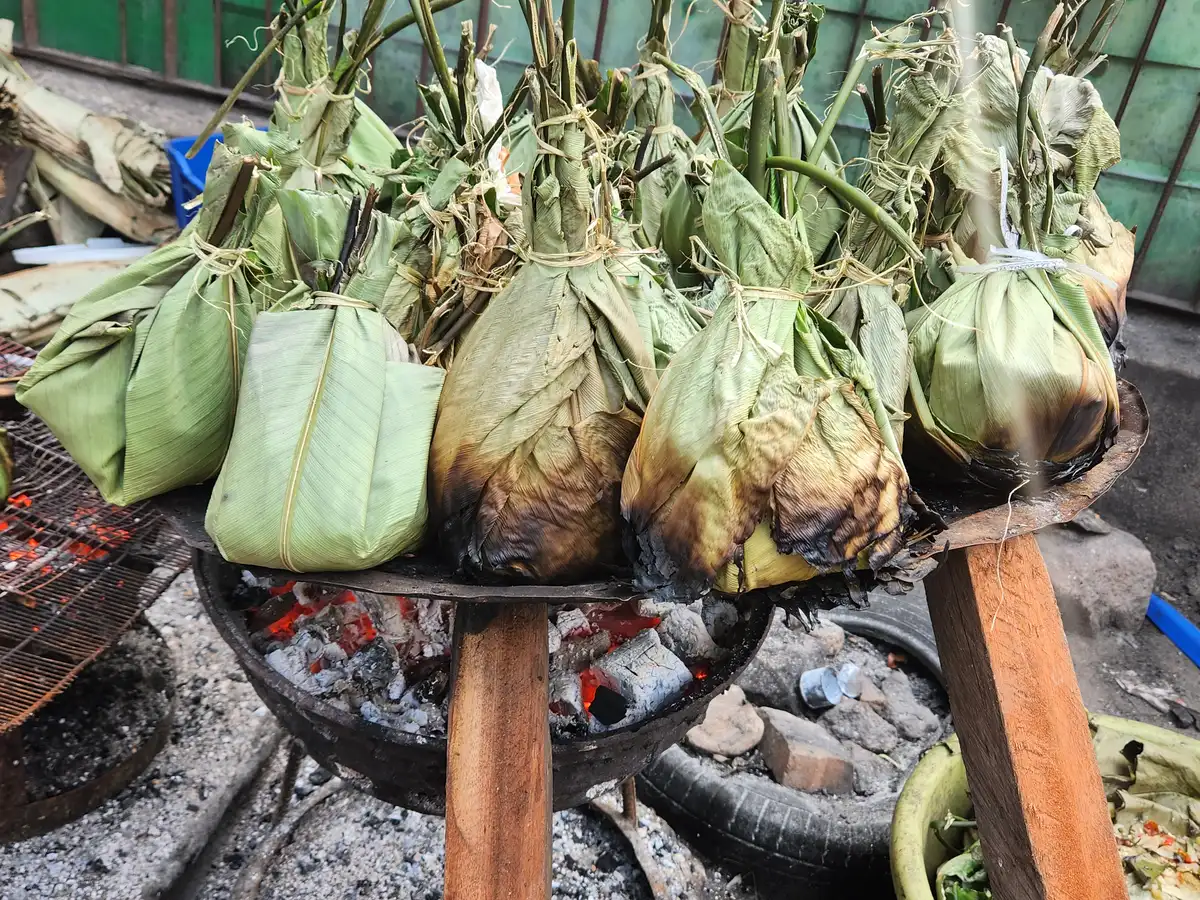
Liboke leaf parcels grilling over a charcoal fire in the Democratic Republic of the Congo Democratic Republic of the Congo flag Democratic Republic of the Congo 55m
Dinner •Congo River Heritage

Liboke

Liboke is the Congo River's way of cooking fish: tilapia, tomato and onion folded into banana leaves, tied into parcels and steamed until the fish flakes and the leaves smell of smoke and citrus. Unwrapping a hot liboke at the table is half the pleasure — the steam carries ginger, garlic and lemon before you even see the fish. This liboke recipe makes 4 parcels in 55 minutes. One serving is about 313 g.

Light & Fresh

Tilapia steamed in banana leaves with tomato, onion, lemon and ginger — the Congo River's parcel cooking, light, fragrant and high in protein.

Pairs Well With
Steamed white rice, boiled plantains and chikwangue
High Protein
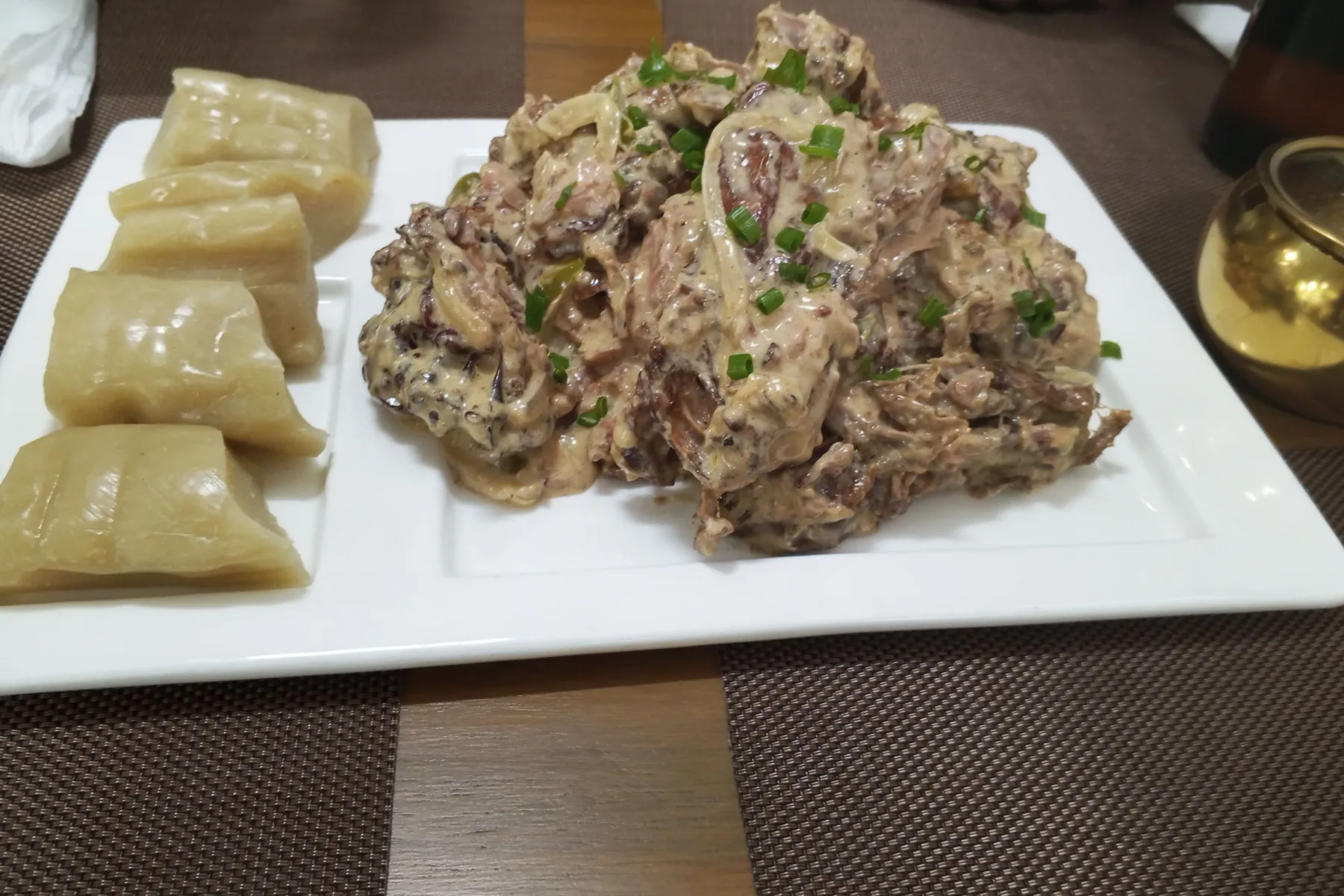
Poulet mayo — roast chicken pieces coated in creamy mayonnaise with spring onions, served on a white plate with sliced chikwangue (kwanga) Democratic Republic of the Congo flag Democratic Republic of the Congo 1h 40m
Dinner •Kinshasa Heritage

Poulet Mayo

Poulet mayo is Kinshasa's creamy roast-chicken street food: a whole chicken rubbed with paprika, thyme and rosemary, roasted until golden, then cut up and tossed in mayonnaise with mustard, lime, charred onion, green pepper, cucumber and spring onions, and roasted a second time in a parchment parcel. This poulet mayo recipe follows that two-roast method, so the chicken stays juicy and the mayonnaise turns into a warm, tangy coating rather than a cold sauce. One serving is about 367 g.

Hearty & Creamy

Roast chicken, cooked twice and tossed in mayonnaise with raw onion, pepper and cucumber — a rich, creamy Kinshasa street-food favourite.

Pairs Well With
Chikwangue (kwanga), fried plantains and a cold drink
High Protein
Bœuf bourguignon — French beef braised in red wine France flag France 4h
Dinner •Burgundy Terroir

Bœuf Bourguignon

Beef braised gently in red wine until the connective tissue melts into a velvet, gelatin-rich sauce — the classic Burgundy Sunday dinner.

Cellular Repair

Beef braised in red wine until spoon-tender, with mushrooms and pearl onions.

Pairs Well With
Parsnip Purée & Steamed French Haricots Verts
High Protein
Vietnamese braised pork belly with golden eggs in caramel sauce Vietnam flag Vietnam 1h 45m
Dinner •One Pot

Vietnamese Braised Pork and Eggs

Pork belly slowly braised in coconut water and caramel until meltingly tender, with golden eggs that soak up the sweet-savoury sauce — the Vietnamese family dish that tastes better the next day.

Comfort & Sustained Energy

Slow-braised pork belly and eggs in coconut water and caramel.

Pairs Well With
Steamed rice & pickled mustard greens
High Protein

The Dinner Gazette

Never wonder what’s for dinner again

One email a week with easy dinner ideas from around the world — ingredients, steps and nutrition, tested in our kitchen first.

Delivered every Thursday morning. Unsubscribe anytime.