Curated recipes from 193 countries  •  New seasonal Mediterranean issue out now

Overview

Luzerner Chügelipastete

Lucerne Meat Pie; Lozärner Chügelipastete; Fritschipastete

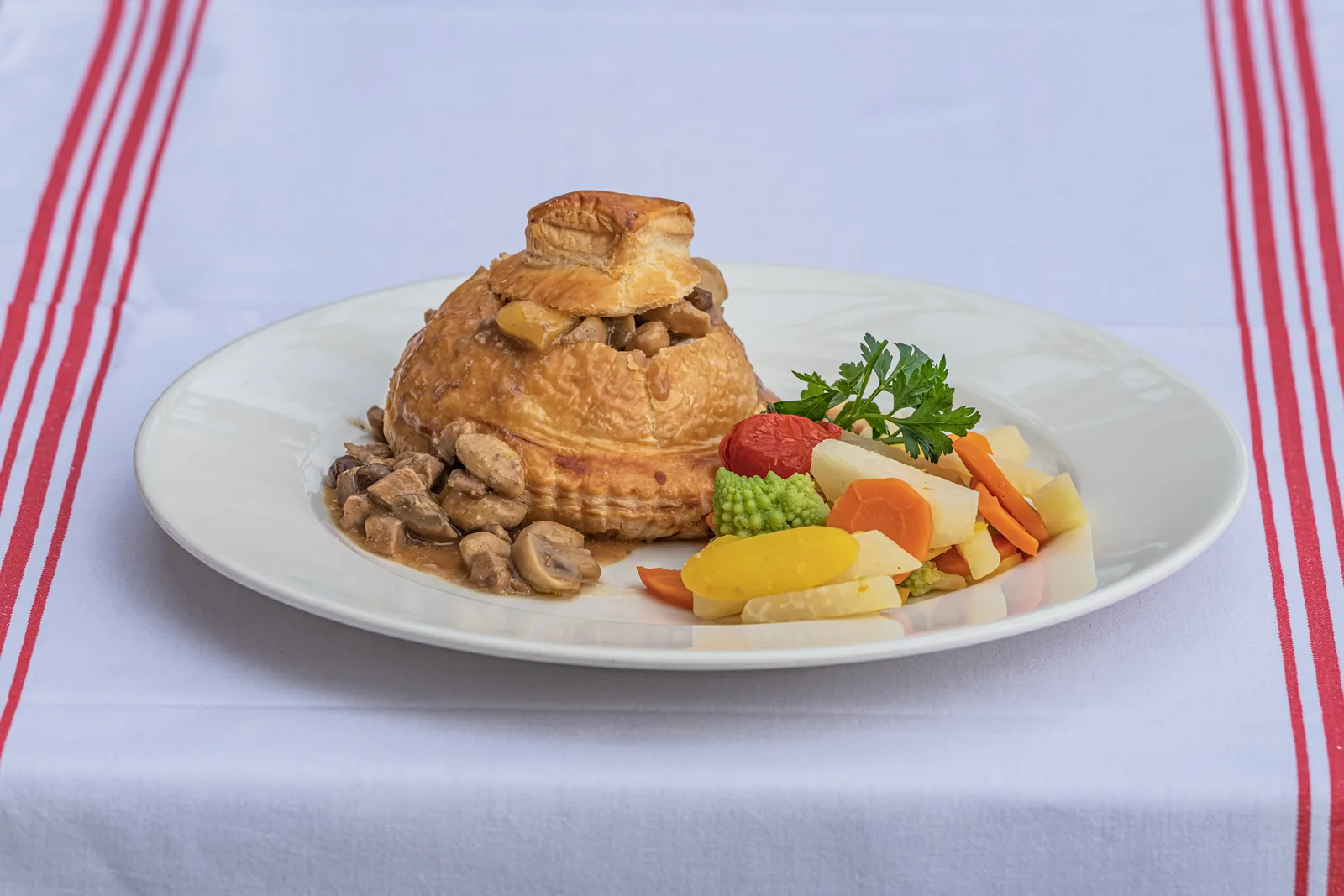
The Chügelipastete is Lucerne's festive pie: a crisp puff-pastry shell filled to the brim with diced veal and mushrooms simmered in a creamy white-wine sauce. The shells are baked separately so they stay flaky, the filling is spooned in at the last moment, and the plate is finished with buttered vegetables. One serving is about 530 g, including the vegetables.

In Lucerne the pie belongs to carnival: during Fasnacht it is served as the Fritschipastete, named for Fritschi, the figure who leads the carnival parade. The dialect word Chügeli means little balls, a nod to the cubes of veal in the filling. Families across central Switzerland still make it for festive dinners, with the shells baked separately so they arrive at the table crisp.

Pairs well with: Serve one filled shell per person with buttered carrots and peas and a glass of dry white wine.

Provenance

Switzerland flag Switzerland

Lucerne Carnival Classic

Nordic & European

Time Dedication

1h 30m

30m prep • 60m cook

Batch Yield

4 Servings

1038 kcal per serving

1 serving ≈ 530 g

Technical Skill

Advanced

Hard (Pastry & Sauce)

Meal Timing & Digestive Fit

Breakfast

Not Advised

Lunch

Hearty Midday Main

Dinner

Ideal Hearty Main

Snack & Tea

Inappropriate

Occasions: Lucerne carnival dinner, festive family dinner, Swiss Sunday lunch, special-occasion dinner Cost: Medium-high — about $8–9 per serving at home
A golden puff-pastry shell filled with veal and mushrooms in cream sauce, served with colourful vegetables on a white plate.

Lucerne Carnival Classic

Photo: A.Savin, Free Art License, via Wikimedia Commons

The Heritage Formulary

Measured Ingredients

Estimated cost: Medium-high — about $8–9 per serving at home (USD)

The veal is browned first, the sauce is simmered until it coats a spoon, and the shells are baked separately so they stay crisp.

Execution Methodology & Culinary Technique

Step-by-Step Cooking Guide

Active 1h 30m
P

Prep Stage: Veal Diced, Pastry Cut, Vegetables Ready

30 Mins • Dicing, Slicing & Shaping

Dice the veal, slice the mushrooms, chop the onion and parsley, and peel and slice the carrots. Cut the puff pastry into rounds, press them into moulds or shape them into shells, and keep everything chilled until the oven is hot.

Maestro Tip: Keep the puff pastry cold right up to baking — warm pastry will not puff, and the shells will come out flat.

  1. 1

    Brown the Veal

    10 Mins • Hands On Hot pan, about 190°C (375°F)

    Heat half the butter in a wide pan over medium-high heat. Pat the veal dry, season with salt and pepper, and brown it in two batches, about 4 minutes a batch, until golden on all sides. Lift it out and set it aside — do not cook it through yet.

    Dry veal browns; wet veal steams. Pat every cube dry before it goes in the pan.

    Done when: Veal is golden on all sides, with browned bits left in the pan.

  2. 2

    Build the Cream Sauce

    15 Mins • Hands On Medium heat, about 160°C (320°F)

    Melt the rest of the butter in the same pan and cook the onion for 5 minutes until soft, then add the garlic and mushrooms and cook for 5 more minutes until the mushrooms give up their water. Sprinkle over the flour, stir for a minute, then pour in the wine and stock, scraping the browned bits off the base.

    Let the mushrooms cook until their water has gone — a watery pan makes a thin sauce.

    Done when: Mushrooms are golden, the flour smells nutty, and the liquid is starting to thicken.

  3. 3

    Simmer Until Tender

    25 Mins • Hands On Gentle simmer, about 95°C (203°F)

    Return the veal to the pan with any juices, pour in the cream, and simmer gently for about 20 minutes until the veal is tender and the sauce coats a spoon. Stir in the nutmeg and lemon juice, taste, and season with salt and pepper. The filling should be steaming hot, at least 71°C (160°F).

    Never let the sauce boil hard once the cream is in — it can split. Keep it at a gentle simmer.

    Done when: Veal is tender, sauce coats a spoon, filling is steaming hot, at least 71°C (160°F).

  4. 4

    Bake the Pastry Shells

    25 Mins • Hands On Oven 200°C (400°F)

    While the filling simmers, heat the oven to 200°C (400°F). Roll the cold pastry out, cut four large rounds, press them into buttered moulds or shape them into cups, and brush with the beaten egg. Bake for 20–25 minutes until puffed and deep golden, then lift the shells out and keep them warm.

    Brush the egg wash on thinly — a thick coat runs down the sides and glues the layers together.

    Done when: Shells are puffed, crisp and deep golden, with a hollow centre for the filling.

  5. 5

    Fill and Serve

    5 Mins • Hands On Serving temperature, filling about 65°C (150°F)

    Steam the carrots and peas for 4–5 minutes until just tender, and butter them lightly. Set one shell on each plate, spoon the hot filling in generously, scatter over the parsley, and serve at once with the vegetables on the side.

    Fill the shells at the table if you can — a filled shell starts going soft within minutes.

    Done when: Shells are filled to the brim, parsley on top, vegetables hot on the side.

Finishing Touches & Plating

Spoon the hot filling into the shells at the table so the pastry stays crisp, scatter over the parsley, and serve at once with the carrots and peas on the side.

Nutritional Physiology & Benefits

Nutrition

Energy

1038

kcal / serving

Protein

46g

Complete AA

Carbs

64g

Complex

Fats

65g

Healthy

Per serving (4 servings · 1 serving ≈ 530 g)
Energy1038 kcal
Protein46 g
Carbohydrates64 g
Fat65 g
Fibre7.4 g
Sugar11.2 g
Sodium1229 mg
Per 100g
Energy196 kcal
Protein8.7 g
Carbohydrates12.1 g
Fat12.2 g
Fibre1.4 g
Sugar2.1 g
Sodium232 mg

Nutrition values are estimated — calculated from USDA FoodData Central values for the listed ingredients.

Vitamins & minerals: Vitamin B12 and iron (veal), B vitamins (mushrooms), vitamin A (carrots and peas).

46 g of Protein per Serving

Veal is the main protein here, and one serving carries about 46 g — a genuinely filling dinner.

Iron and Vitamin B12 From Veal

Veal brings iron and vitamin B12, which the body uses to make red blood cells.

Real Vegetables on the Side

Carrots and peas add fibre, colour and vitamin A to a rich plate, and they balance the creamy sauce.

Food Pairings

What to Eat With

To optimize nutrient absorption and elevate the sensory depth, pair with these authentic accompaniments:

Drinks

Dry White Wine

A dry Swiss white wine echoes the wine in the sauce and cuts through the cream.

Vegetables

Green Salad with Lemon

A sharp, lemon-dressed salad refreshes the palate between rich, creamy bites.

Buttered Green Beans

Buttered green beans add a second green vegetable and a little crunch next to the soft filling.

Sides

Apple and Celery Salad

Crisp apple and celery bring acidity and crunch that lift the whole plate.

Complete menu

Start with a green salad with lemon, serve the Chügelipastete with buttered carrots and peas as the main plate, and finish with fresh fruit and coffee.

Digestive Guardrails

What NOT to Combine

To prevent digestive distress, sluggishness, or palate clash, avoid pairing the dish with these elements:

Veal and Gout

Veal is rich in purines, so anyone with gout should keep the portion modest and skip second helpings. This is general food information, not medical advice.

Cream, Butter and Saturated Fat

The sauce is built on cream and butter, so the dish is high in saturated fat — an occasional festive meal rather than a weekly one. This is general food information, not medical advice.

Wheat, Egg and Milk Allergens

The shells contain wheat and are brushed with egg, and the sauce contains cream and butter, so check carefully before serving to anyone with a wheat, egg or milk allergy. This is general food information, not medical advice.

General information only, not medical advice — consult a doctor for personal dietary decisions.

Who Should Eat It

Who Should Eat

  • General adultsA rich, festive dinner for most adults; one filled shell with vegetables is a full plate.
  • ChildrenSoft veal and creamy sauce are easy for children to eat; serve a smaller shell and skip the wine in their portion — the alcohol cooks off, but the flavour stays.
  • ElderlySoft, tender veal in a smooth sauce is easy to chew; serve a smaller portion with extra vegetables.
  • Pregnant womenThe veal is cooked through and the cream is pasteurised, so it is safe to eat; keep the portion modest because the dish is rich. Ask your clinician.
  • Breastfeeding womenEnergy-dense and very satisfying, which suits the higher calorie needs of breastfeeding; balance the plate with the vegetables.
  • AthletesAbout 46 g of protein per serving makes it a solid post-training dinner, with pastry and vegetables for carbohydrate.
  • Weight gainRich in calories and protein, so it suits a weight-gain goal as a festive way to add energy.
  • Weight lossVery high in calories, so keep it an occasional single shell, go easy on the pastry, and load the plate with vegetables.

Health Conditions — Adjust or Avoid

Conditions

  • DiabetesAbout 64 g of carbohydrate per serving, mostly from the pastry, so blood-sugar impact is significant — a smaller shell with extra vegetables is the sensible choice. Ask your clinician.
  • High blood pressureSodium is about 1,229 mg per serving, mostly from the stock, pastry and salt; keep the portion modest and skip extra salt. Ask your clinician.
  • Kidney diseaseHigh in protein and moderate in potassium from the veal and mushrooms; people with kidney disease should ask their clinician about portion size.
  • GoutVeal is rich in purines; a normal portion is usually fine, but keep it modest and occasional, and ask your clinician.
  • Stomach issuesA rich cream sauce can sit heavily on a sensitive stomach; eat a small portion slowly and skip the wine in the sauce if it triggers symptoms — ask your clinician if they persist.
  • Cardiovascular diseaseHigh in saturated fat from the cream, butter and pastry; an occasional modest portion is the sensible approach — ask your clinician.
  • Fatty liverVery high in calories, which can add to liver fat if eaten often — keep it an occasional festive meal and ask your clinician.
  • Food allergiesContains wheat (pastry), egg (wash) and milk (cream and butter). Check the pastry label too, as some brands contain soya.
  • Special therapeutic dietsThis is a general-information recipe, not a therapeutic diet. Anyone on a prescribed diet should ask their clinician or dietitian before making it a regular meal.

If you have a medical condition, consult your doctor before changing your diet.

Storage & Use

Storage & Use

How to store
Cool the filling and the shells separately within an hour; store the filling in a sealed container and the shells in a tin.
In the fridge
Filling keeps 2 days refrigerated; filled shells go soft within hours.
In the freezer
The filling freezes well for up to 1 month; do not freeze filled shells.
How to reheat
Reheat the filling gently until steaming hot, at least 74°C (165°F); crisp the shells for 5 minutes in a 180°C (350°F) oven, then fill.
Freezing recommended
Yes for the filling only; no for the shells or the finished dish.
Signs it has spoiled
Sour smell, grey meat or mould — discard if any of these appear.

More recipes to explore

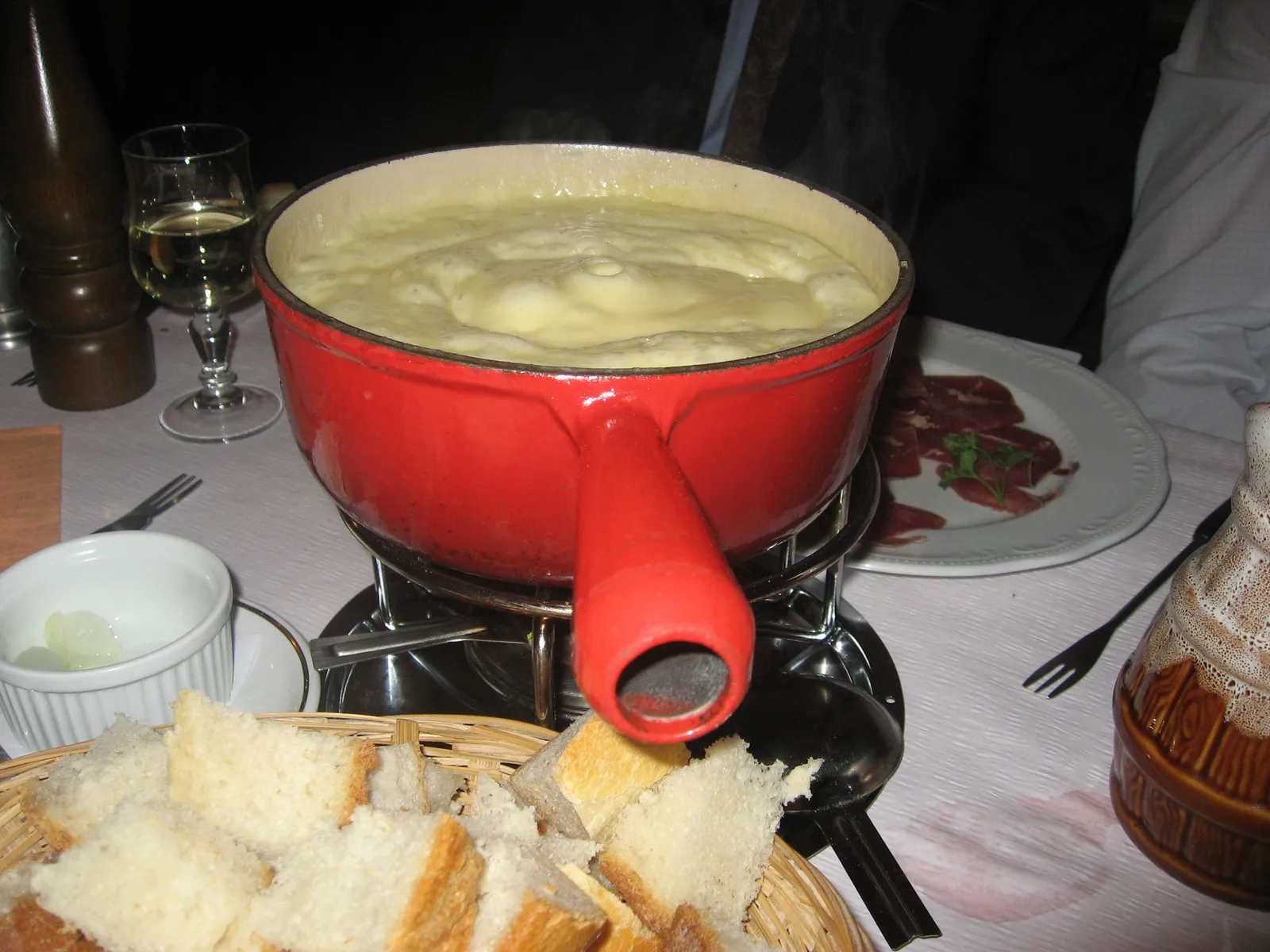
A red fondue pot of melted cheese with bread cubes and a glass of white wine Switzerland flag Switzerland 40m
Dinner •Swiss Alpine Classic

Swiss Cheese Fondue

Swiss cheese fondue is the Alps in a pot: Gruyere and Emmental melted slowly into dry white wine with garlic and a splash of kirsch, kept warm at the table while everyone dips cubes of bread into the bubbling cheese. One serving is about 310 g.

Comfort & Togetherness

Gruyere and Emmental melted in white wine, shared from one pot.

Pairs Well With
Cubes of crusty bread, boiled potatoes and cornichons on the side
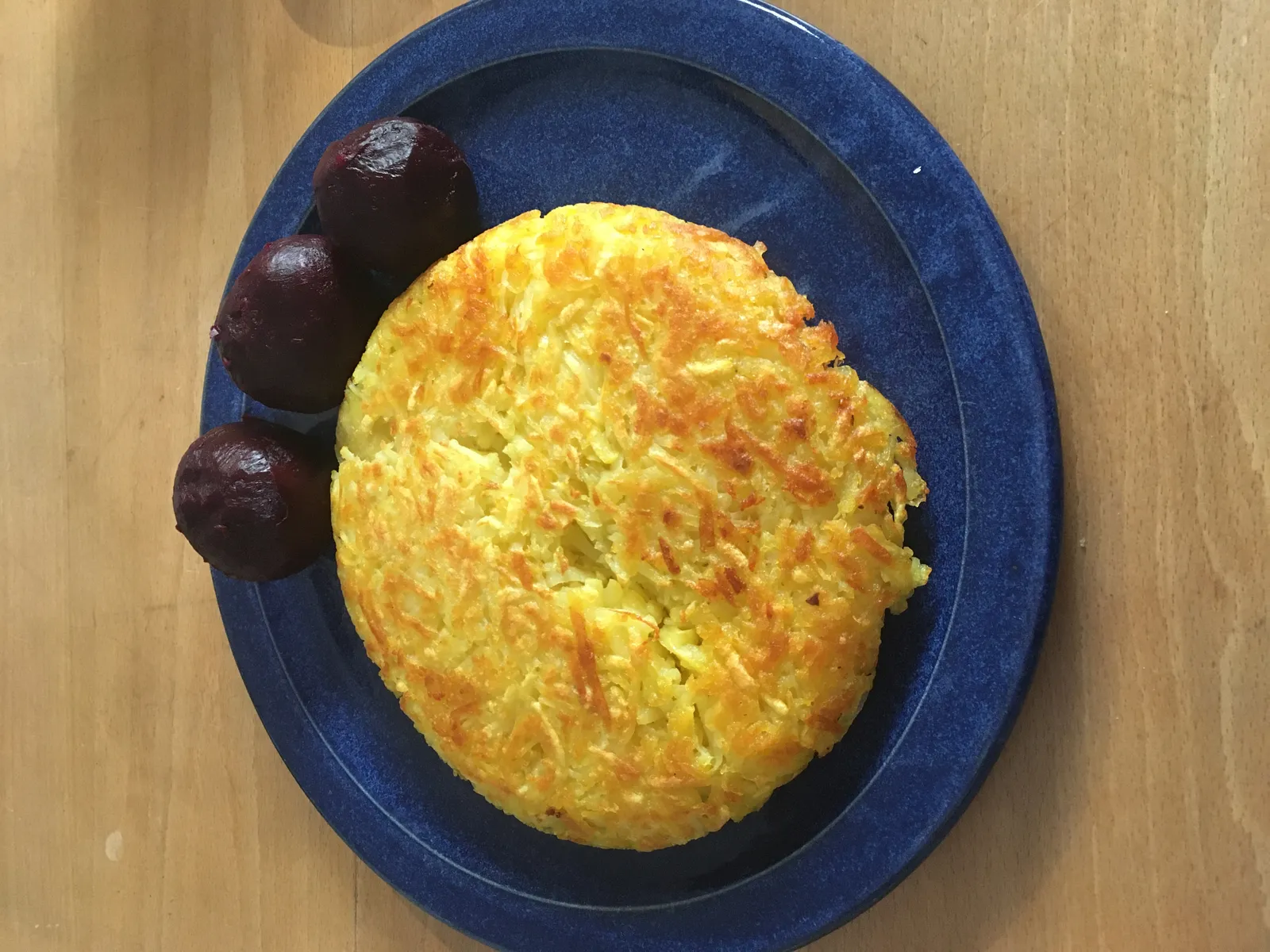
A large golden rosti potato cake on a blue plate Switzerland flag Switzerland 40m
Lunch •Bernese Farmhouse Classic

Rösti

Rösti is Switzerland's crisp potato cake: grated potato pressed into one large golden disc and fried in butter until the outside shatters and the inside stays soft, then topped with a fried egg. One serving is about 240 g.

Simple & Satisfying

One large crisp cake of grated potato, pan-fried in butter and topped with a fried egg.

Pairs Well With
A fried egg on top and a simple green salad with sharp vinaigrette
Quick Prep (<30m)
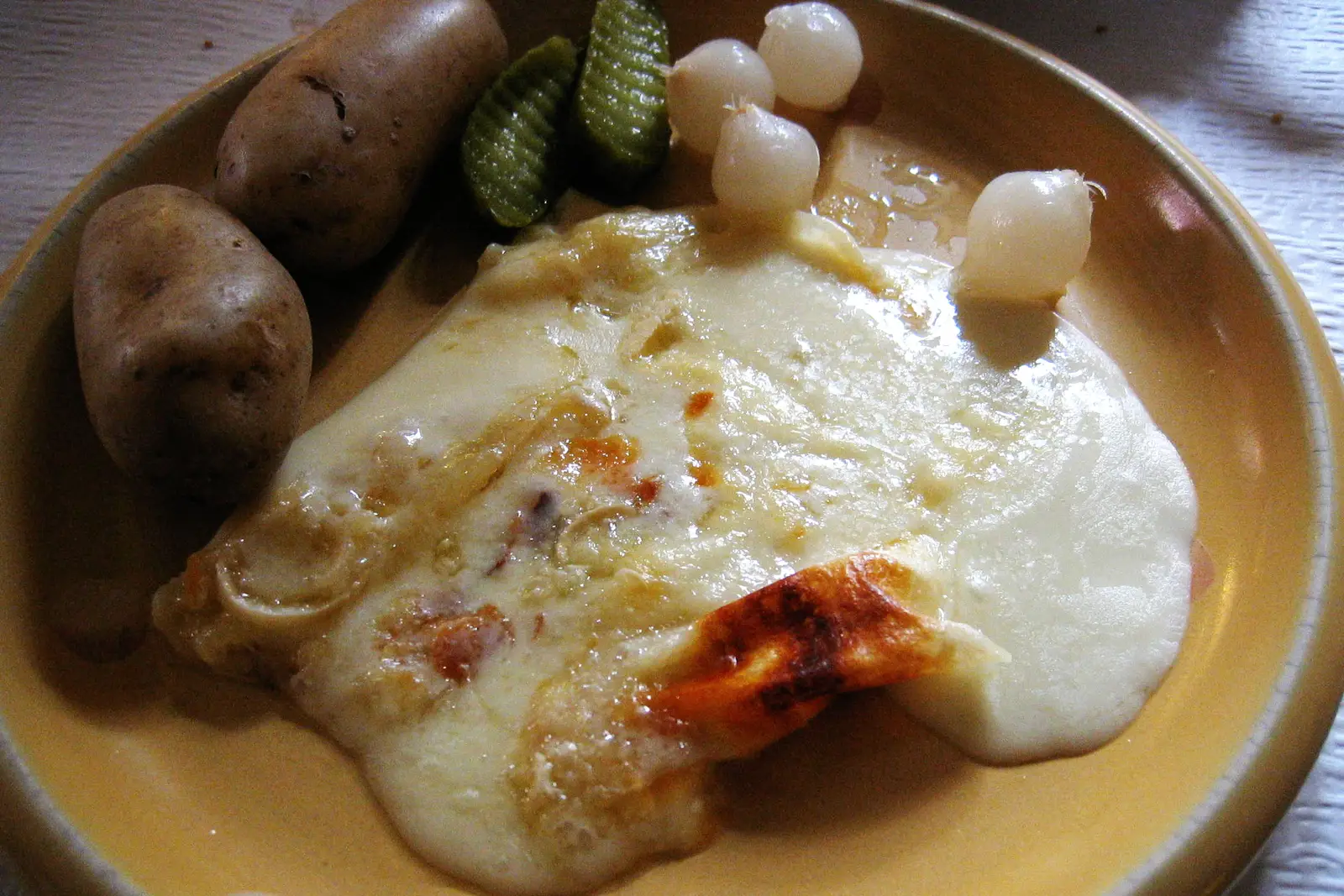
Melted raclette cheese scraped over a plate with boiled potatoes and pickles Switzerland flag Switzerland 40m
Dinner •Valais Alpine Classic

Raclette

Raclette is the Swiss Alps' other great melted-cheese meal: a half-wheel of raclette cheese is warmed until the cut face bubbles, then scraped in ribbons over boiled potatoes, with cornichons and pickled onions to cut the richness. One serving is about 365 g.

Comfort & Togetherness

Melted raclette cheese scraped over boiled potatoes with pickles.

Pairs Well With
Boiled potatoes, cornichons, pickled onions and a green salad
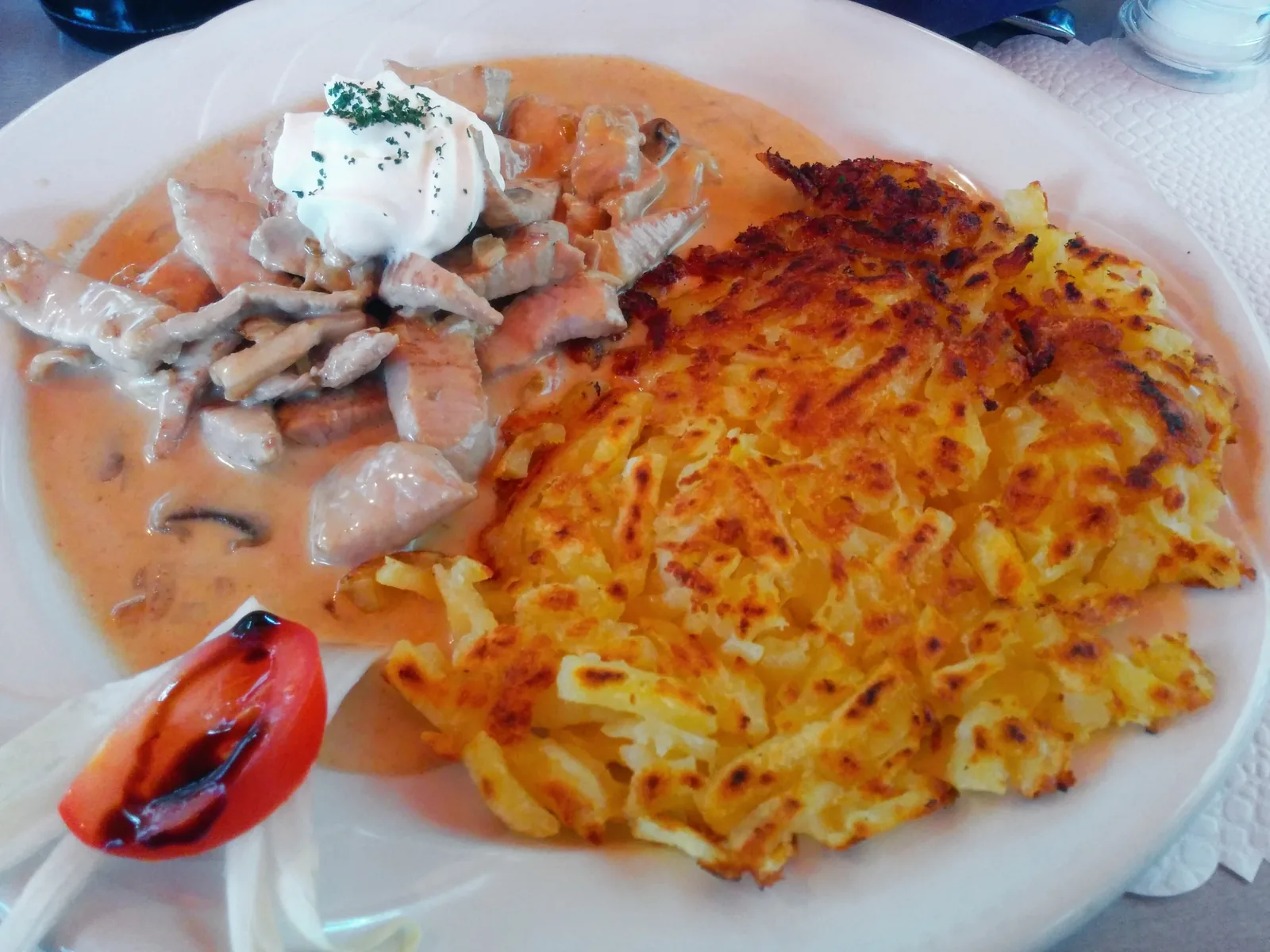
A plate of Zürcher Geschnetzeltes — veal strips in cream sauce with a dollop of cream — beside golden rösti. Switzerland flag Switzerland 40m
Dinner •Zurich Classic

Zürcher Geschnetzeltes

Zürcher Geschnetzeltes is Zurich's signature dish: thin strips of veal quickly seared, then finished in a white-wine and cream sauce with mushrooms and onion. One serving is about 335 g, before the rösti it is traditionally served with.

Rich & Comforting

Tender strips of veal in a white-wine cream sauce with mushrooms — Zurich's classic, with rösti.

Pairs Well With
Serve with golden rösti and a glass of dry Swiss white wine.
High Protein

The Dinner Gazette

Never wonder what’s for dinner again

One email a week with easy dinner ideas from around the world — ingredients, steps and nutrition, tested in our kitchen first.

Delivered every Thursday morning. Unsubscribe anytime.