
Curated recipes from 193 countries  •  New seasonal Mediterranean issue out now

Overview

Maakouda

Maakouda Batata, Moroccan Potato Cakes

This maakouda recipe turns fluffy mashed potatoes into crisp, golden patties seasoned with cumin, garlic, turmeric and fresh herbs, fried until the outside shatters and the middle stays soft. It is Morocco's beloved street-food snack: cheap, filling and eaten hot, plain or tucked into bread with harissa. One serving is two patties, about 137 g.

Maakouda is the queen of Moroccan street food, fried by the thousand every day around Jemaa el-Fnaa in Marrakech and outside school gates across the country. The name comes from the Arabic word for 'bound' or 'knotted', for the way the mashed potato is bound together with egg and flour before frying. Vendors sell the golden patties plain, with harissa, or tucked into crusty khobz bread as a sandwich — a full meal for the price of a snack.

Pairs well with: Harissa, mint tea & olives

Provenance

Morocco flag Morocco

Moroccan Street Food

Middle Eastern

Time Dedication

50m

25m prep • 25m cook

Batch Yield

8 Servings

192 kcal per serving

1 serving ≈ 137 g

Technical Skill

Easy

Easy (Fried)

Meal Timing & Digestive Fit

Breakfast

Not Advised

Lunch

Inappropriate

Dinner

Inappropriate

Snack & Tea

Ideal Light Bite

Quick Prep (<30m) Occasions: Street-food snacks, Ramadan iftar, picnics, sandwich fillings Cost: Low — about $0.50–1 per serving at home
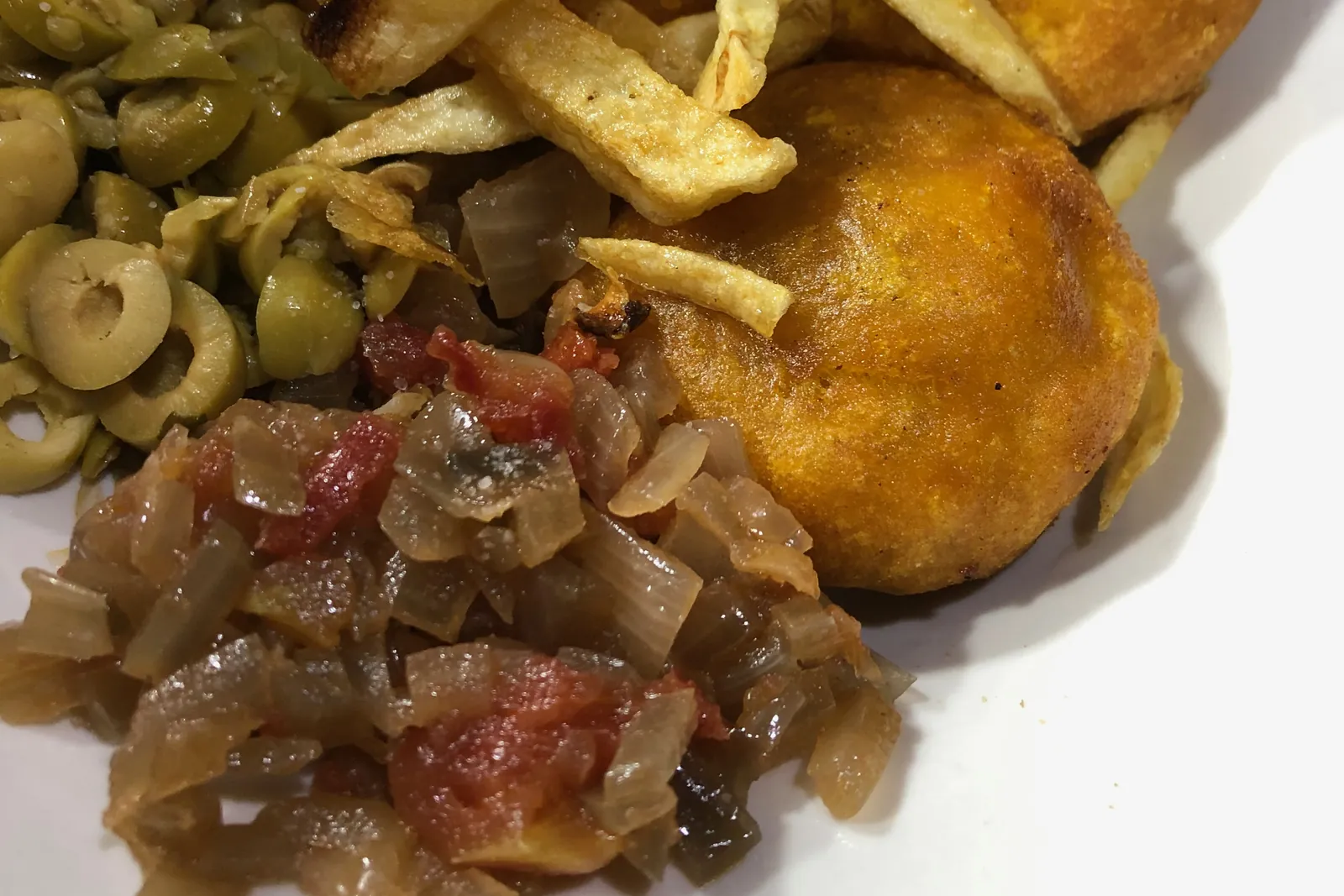
A golden maakouda potato patty on a white plate with green olives and onion-tomato relish

Moroccan Street Food

Photo: إيان, CC BY-SA 4.0, via Wikimedia Commons

The Heritage Formulary

Measured Ingredients

Estimated cost: Low — about $0.50–1 per serving at home (USD)

A true maakouda is judged by its contrast: a shattering golden crust outside and a fluffy, fragrant potato middle inside.

Execution Methodology & Culinary Technique

Step-by-Step Cooking Guide

Active 50m
P

Prep Stage: Boil, Mash & Season

25 Mins • Boil & Mash

Peel and chunk the potatoes, chop the parsley, cilantro and garlic, and measure the spices and flour. Boil the potatoes until completely tender, drain them very well, and mash while hot so no water is left in the mash. Let the mash cool for 5 minutes before adding the egg, or the egg will scramble.

Maestro Tip: Dry mash is everything — wet potatoes make patties that fall apart in the oil, so drain well and mash over the hot pan for a minute to steam off the last water.

  1. 1

    Boil and Mash the Potatoes

    20 Mins • Boil & Mash Boiling water, 100°C (212°F)

    Put the potato chunks in a pot, cover with cold salted water, and boil for 15–18 minutes until they break apart easily. Drain thoroughly, return the potatoes to the hot pot for 1 minute to steam dry, then mash until smooth with no lumps. Tip into a bowl and leave for 5 minutes to cool slightly.

    Steam-drying the potatoes in the hot pot is the step most people skip — it is what keeps the patties firm.

    Done when: Fluffy, dry mash with no lumps and no puddles of water.

  2. 2

    Season and Bind

    5 Mins • Mix Warm mash, ~60°C (140°F)

    Stir the minced garlic, chopped parsley and cilantro, cumin, turmeric, paprika, salt and pepper into the warm mash. Pour in the beaten eggs and the 60 g flour and mix until a soft, slightly sticky dough forms that holds together when squeezed.

    Mix with a spoon, not your hands, while the mash is still warm — it blends faster and more evenly.

    Done when: A soft dough that holds its shape when squeezed in your palm.

  3. 3

    Shape the Patties

    10 Mins • Shape Room temperature, ~20°C (68°F)

    Wet your hands lightly, take about 65 g of mixture at a time, and shape 16 round, flat patties about 7 cm across and 1.5 cm thick. Dust each patty lightly on both sides with the 40 g coating flour and set on a tray.

    Wet hands stop the mixture sticking to you, and even thickness means even frying — thick middles stay raw while thin edges burn.

    Done when: 16 even, flat patties, lightly dusted, holding their shape.

  4. 4

    Fry Until Golden

    15 Mins • Fry Oil at 175°C (350°F)

    Heat the oil in a deep pan to 175°C (350°F). Fry the patties in batches of 4–5 for 3–4 minutes a side until deep golden and crisp, turning once. Do not crowd the pan or the oil cools and the patties soak up grease.

    Fry in small batches — a crowded pan drops the oil temperature and gives you soggy, oily patties.

    Done when: Deep golden, crisp crusts; the patties sizzle hard the moment they hit the oil.

  5. 5

    Drain and Serve

    5 Mins • Drain Hot, ~80°C (175°F)

    Lift the patties out with a slotted spoon and drain on kitchen paper for a minute. Sprinkle with a little extra salt while hot and serve at once, with harissa or a tomato-onion relish on the side.

    Salt them while they are still hot and glistening — salt will not stick once the crust has cooled.

    Done when: Crisp outside, fluffy and steaming inside; no grease pooling on the paper.

Finishing Touches & Plating

Serve hot and crisp, straight from the pan, with harissa to dip and mint tea to drink. Maakouda is at its best in the first 15 minutes — after that the crust softens.

Nutritional Physiology & Benefits

Nutrition

Energy

192

kcal / serving

Protein

5g

Complete AA

Carbs

29g

Complex

Fats

7g

Healthy

Per serving (8 servings · 1 serving ≈ 137 g)
Energy192 kcal
Protein5 g
Carbohydrates29 g
Fat7 g
Fibre3.0 g
Sugar1.0 g
Sodium318 mg
Per 100g
Energy140 kcal
Protein3.8 g
Carbohydrates20.8 g
Fat4.8 g
Fibre2.2 g
Sugar0.7 g
Sodium232 mg

Nutrition values are estimated — calculated from USDA FoodData Central values for the listed ingredients.

Vitamins & minerals: Vitamin C and B6 (potatoes), vitamin K (parsley and cilantro), iron (cumin and turmeric), potassium (potatoes), choline (egg).

Real Food, Few Ingredients

Just potatoes, egg, herbs and spices — no additives, no ready-made coating, nothing you cannot pronounce.

Filling for Few Calories

At 192 kcal for two patties, with potato starch and 3.0 g of fibre, maakouda is a snack that actually fills you up.

Gentle on the Stomach

Soft mashed potato with mild spices is easy to digest, and the patties are pan-fried, not deep-fried in batter.

Food Pairings

What to Eat With

To optimize nutrient absorption and elevate the sensory depth, pair with these authentic accompaniments:

Drinks

Mint Tea

Sweet Moroccan mint tea is the classic partner — its freshness cuts through the fried richness.

Sides

Green Olives

Salty green olives add bite and saltiness that balance the soft, mild potato.

Tomato-Onion Relish

A spoon of cooked onion and tomato relish adds sweetness and acidity that lift the cumin-spiced patties.

Full Menus

Khobz Sandwich

Tuck two patties into crusty khobz bread with harissa and salad — the way Moroccan street vendors sell them.

Complete menu

Serve hot maakouda with harissa, green olives and mint tea, or tuck two patties into khobz bread with salad for a street-food sandwich.

Digestive Guardrails

What NOT to Combine

To prevent digestive distress, sluggishness, or palate clash, avoid pairing the dish with these elements:

Eating Them Cold and Soggy

Maakouda left sitting goes soft and greasy as the crust absorbs oil; eat them hot, or reheat in a hot oven to crisp them again. This is general information, not medical advice.

Double-Fried Sides

Chips or other fried food on the same plate doubles the fat of the meal for little benefit — olives, salad or relish are better partners. This is general information, not medical advice.

General information only, not medical advice — consult a doctor for personal dietary decisions.

Who Should Eat It

Who Should Eat

  • General adultsA light fried snack at 192 kcal for two patties — enjoy hot with tea rather than as a whole meal.
  • ChildrenSoft inside and easy to chew, with mild spices — children love them, but cut them up for younger children and watch the hot oil heat.
  • ElderlySoft, moist and easy to chew, but fried — two patties with salad is a good light snack.
  • Pregnant womenPotatoes and egg supply energy and protein; the salt is moderate, so keep to two patties and check with your clinician about salt intake.
  • Breastfeeding womenA filling snack that provides steady energy; two patties with salad make a good between-meals bite.
  • AthletesPotato starch gives quick carbohydrate, so they work as a post-training snack with a protein-rich main.
  • Weight gainEnergy-dense enough to help add calories between meals — three or four patties as a snack.
  • Weight lossFried and starchy, so they are a treat rather than an everyday snack — two patties, and skip the chips with them.

Health Conditions — Adjust or Avoid

Conditions

  • DiabetesPotato starch raises blood sugar, so people with diabetes should keep to two patties and pair them with salad, not bread; check with your clinician.
  • High blood pressureThe salt and frying add up, so keep the portion to two patties if you watch your blood pressure; check with your clinician.
  • Kidney diseasePotatoes are high in potassium, so people with kidney disease should eat these rarely and in a small portion; ask your clinician.
  • GoutLow in purines, so gout is not a particular concern with maakouda; the frying fat is the bigger issue.
  • Stomach issuesSoft and mild, so usually gentle on the stomach, but fried food can feel heavy — eat slowly and keep to two patties.
  • Cardiovascular diseasePan-fried in oil, so this is an occasional snack rather than a regular one for heart health; check with your clinician.
  • Fatty liverA fried, starchy snack is heavy on the liver in large amounts — keep it to two patties occasionally; ask your clinician for guidance.
  • Food allergiesContains wheat (flour) and egg. If you are allergic to wheat or egg, do not eat these patties — a cornstarch version avoids the wheat.
  • Special therapeutic dietsNot suitable for low-fat or low-starch therapeutic diets; a baked version is lighter but will not be as crisp. Ask your clinician for guidance.

If you have a medical condition, consult your doctor before changing your diet.

Storage & Use

Storage & Use

How to store
Cool completely, then store in a covered container lined with kitchen paper.
In the fridge
2–3 days; reheat in a hot oven to crisp them again.
In the freezer
1 month, uncooked shaped patties, separated with baking paper; fry from frozen, adding 2 minutes a side.
How to reheat
Reheat in a hot oven at 200°C (400°F) for 8–10 minutes until crisp; do not microwave — they go soggy. Reheat to 74°C (165°F).
Freezing recommended
Yes — freeze the shaped, uncooked patties for the best result.
Signs it has spoiled
Sour smell, slimy surface, or mould spots.

More recipes to explore

Moroccan lamb and prune tagine with almonds and sesame Morocco flag Morocco 2h 35m
Lunch •Atlas Mountains

Lamb & Prune Tagine

Clay vessel braised lamb shoulder infused with Ras el Hanout, saffron stamens, and natural sun-dried fruit pectins.

Immunity & Warming

Slow-braised lamb with prunes, almonds and couscous.

Pairs Well With
Spiced Couscous & Preserved Lemon Salad
High Protein
A clay bowl of Moroccan couscous with vegetables, chickpeas, carrot and pumpkin Morocco flag Morocco 1h 15m
Dinner •Maghreb Friday Table

Moroccan Couscous with Vegetables

This moroccan couscous recipe steams fine semolina until fluffy, then ladles over a slow-cooked stew of seven vegetables, chickpeas and warm spices. One serving is about 475 g.

Comfort & Warmth

Fluffy steamed semolina with a slow vegetable stew and chickpeas.

Pairs Well With
Harissa, mint tea and crusty bread
Quick Prep (<30m)
A bowl of Moroccan harira soup with chickpeas, noodles and fresh herbs Morocco flag Morocco 1h 15m
Lunch •Ramadan Iftar Table

Harira Soup

This harira soup recipe simmers lentils, chickpeas, tomatoes and lamb with ginger, cinnamon and fresh herbs, then thickens it the traditional way with a flour slurry. One serving is about 450 g.

Comfort & Warmth

A thick, warming tomato and lentil soup, the soup Moroccans break their fast with.

Pairs Well With
Dates, chebakia and mint tea
Soups & Broths • High Protein
Moroccan chicken tagine with preserved lemon slices, green olives and fresh parsley Morocco flag Morocco 1h 15m
Dinner •Moroccan Heritage

Moroccan Chicken Tagine

Moroccan chicken tagine is the dish Morocco is best known for: chicken braised slowly with onions, ginger and saffron, then finished with salty preserved lemon and green olives. This moroccan chicken tagine recipe uses a heavy pot instead of a clay tagine, so anyone can make it — the conical lid's job is done by a tight-fitting lid and a gentle flame. One serving is about 315 g.

Slow-Cooked Comfort

Chicken braised slowly with ginger, saffron, preserved lemon and green olives until the meat falls from the bone.

Pairs Well With
Couscous, khobz bread and mint tea.
High Protein

The Dinner Gazette

Never wonder what’s for dinner again

One email a week with easy dinner ideas from around the world — ingredients, steps and nutrition, tested in our kitchen first.

Delivered every Thursday morning. Unsubscribe anytime.