
Curated recipes from 193 countries  •  New seasonal Mediterranean issue out now

Overview

Malawian Zitumbuwa

Zitumbuwa za Nthochi, Malawian Banana Cakes

This zitumbuwa recipe makes Malawi's banana fritters: ripe bananas mashed with cornmeal and flour into a thick batter, spooned into hot oil and fried into golden cakes, crisp outside and soft inside. One serving is about 185 g (4 cakes).

Zitumbuwa are one of Malawi's best-loved snacks — a way of using up the bananas that ripen faster than a family can eat them. Ripe bananas are mashed with ufa, the cornmeal that is the backbone of Malawian cooking, and fried into golden cakes that are sold at market stalls, eaten at tea time and packed for school. The traditional flour is mgaiwa, a whole-grain cornmeal that still holds its bran and germ, which gives the cakes a slightly coarser crumb and a deeper flavour than refined flour. Every Malawian cook adjusts the recipe — some add an egg, some a splash of milk, some a pinch of cinnamon — but the heart of it never changes: banana, cornmeal, sugar and hot oil.

Pairs well with: Milky tea, or a glass of cold milk

Provenance

Malawi flag Malawi

Malawian Banana Fritter

African Heritage

Time Dedication

30m

15m prep • 15m cook

Batch Yield

4 Servings

386 kcal per serving

1 serving ≈ 185 g

Technical Skill

Easy

Easy (Frying)

Meal Timing & Digestive Fit

Breakfast

Not Advised

Lunch

Inappropriate

Dinner

Inappropriate

Snack & Tea

Ideal Light Bite

Quick Prep (<30m) Occasions: Afternoon snacks, tea time, school holidays, market food, family gatherings Cost: Low — about $1–2 per serving at home
Malawian zitumbuwa — golden fried banana fritter balls dusted with sugar, stacked on wooden skewers

Malawian Banana Fritter

Photo: Herbertkikoy, CC BY-SA 4.0, via Wikimedia Commons

The Heritage Formulary

Measured Ingredients

Estimated cost: Low — about $1–2 per serving at home (USD)

A good zitumbuwa is judged by its contrast: deep golden and crisp outside, soft, sweet and steamy inside, with no raw batter at the centre.

Execution Methodology & Culinary Technique

Step-by-Step Cooking Guide

Active 30m
P

Prep Stage: Mash the Bananas, Mix the Batter

15 Mins • Mixing

Mash the ripe bananas in a large bowl until smooth, then whisk in the sugar, beaten egg and milk. Stir in the cornmeal, flour, baking powder and salt until you have a thick, spoonable batter, and let it rest for 5 minutes while the oil heats.

Maestro Tip: The batter should be thick enough to hold its shape on a spoon — if it runs, add a spoonful more cornmeal.

  1. 1

    Mash the Bananas

    5 Mins • Mixing Room temperature, about 20°C (68°F)

    Peel the bananas into a large bowl and mash with a fork or potato masher until smooth. Whisk in the sugar, beaten egg and milk until well mixed.

    Very ripe bananas mash in seconds; if yours are still firm, they are not ripe enough for zitumbuwa.

    Done when: The banana mixture is smooth, with no large lumps left.

  2. 2

    Mix the Batter

    10 Mins • Mixing Room temperature, about 20°C (68°F)

    Stir the cornmeal, flour, baking powder and salt into the banana mixture with a wooden spoon until you have a thick, dough-like batter that is still soft and light. Let it rest for 5 minutes.

    Do not overmix once the flour is in — a few gentle folds keep the cakes light instead of tough.

    Done when: The batter is thick, holds its shape on a spoon, and is lump-free.

  3. 3

    Fry the Cakes

    12 Mins • Frying Medium-high heat, oil at 175°C (350°F)

    Heat the oil in a deep pan over medium-high heat until a drop of batter sizzles at once. Wet your palms, scoop up a spoonful of batter, flatten it gently into a round cake, and slide it into the oil. Fry in batches of 4–5 for about 2 minutes per side until deep golden.

    Wet hands stop the sticky batter from clinging to your palms, and small batches keep the oil hot so the cakes fry crisp instead of soaking up oil.

    Done when: The cakes are deep golden on both sides and puffed up.

  4. 4

    Drain, Dust and Serve

    3 Mins • Serving Serve hot, about 60°C (140°F)

    Lift the cakes out with a slotted spoon and drain on paper for a minute. Dust with the extra sugar while they are still hot and serve straight away, while the crust is crisp.

    Eat them warm — the crust softens as it cools, so these are at their best in the first few minutes.

    Done when: The cakes are hot, crisp and lightly dusted with sugar.

Finishing Touches & Plating

Drain the cakes on paper, dust them with sugar while they are still hot, and serve straight away while the crust is crisp — with milky tea, the way they are eaten in Malawi.

Nutritional Physiology & Benefits

Nutrition

Energy

386

kcal / serving

Protein

7g

Complete AA

Carbs

69g

Complex

Fats

11g

Healthy

Per serving (4 servings · 1 serving ≈ 185 g)
Energy386 kcal
Protein7 g
Carbohydrates69 g
Fat11 g
Fibre5.0 g
Sugar24.6 g
Sodium253 mg
Per 100g
Energy209 kcal
Protein3.8 g
Carbohydrates37.1 g
Fat5.8 g
Fibre2.7 g
Sugar13.3 g
Sodium137 mg

Nutrition values are estimated — calculated from USDA FoodData Central values for the listed ingredients.

Vitamins & minerals: Vitamin B6 and vitamin C (banana), potassium (banana), iron and magnesium (cornmeal), thiamin (enriched flour).

Quick Energy from Real Fruit

Ripe banana is a natural source of carbohydrate and potassium, so zitumbuwa make a genuinely satisfying snack between meals.

Simple, Pantry Ingredients

Banana, cornmeal, flour, sugar and egg — a short list of pantry ingredients, turned into a warm snack with no fuss.

Gentle on the Stomach

Very ripe banana is soft and easy to digest, and the cornmeal crust is lighter than a heavy wheat batter.

Food Pairings

What to Eat With

To optimize nutrient absorption and elevate the sensory depth, pair with these authentic accompaniments:

Drinks

Hot Milky Tea

The Malawian pairing: hot, milky tea softens the fried richness of the cakes and is the drink they were made to be eaten with.

Cold Milk

A glass of cold milk cools the warm, sweet cakes and adds protein — the school-afternoon combination.

Sides

Fresh Mango or Papaya

Slices of ripe mango or papaya add a cool, juicy freshness next to the hot, sweet cakes and make the snack feel lighter.

Roasted Groundnuts

A small bowl of roasted groundnuts adds salty crunch against the soft, sweet cakes — the market-stall contrast.

Complete menu

Serve the zitumbuwa hot as an afternoon snack with milky lemon tea, followed by fresh mango; for a fuller spread, add a plate of roasted groundnuts for crunch.

Digestive Guardrails

What NOT to Combine

To prevent digestive distress, sluggishness, or palate clash, avoid pairing the dish with these elements:

Eating Them Cold and Soggy

The crisp crust softens quickly as the cakes cool, and cold fried batter can feel greasy and heavy. Eat them warm, within a few minutes of frying. This is general information, not medical advice.

Very Sweet Drinks with the Cakes

The cakes already carry about 25 g of sugar per serving, so a sweet soda or juice on the side adds a lot of sugar at once. Unsweetened tea or black coffee is the better partner. This is general information, not medical advice.

General information only, not medical advice — consult a doctor for personal dietary decisions.

Who Should Eat It

Who Should Eat

  • General adultsA sweet, satisfying snack — four cakes with tea is plenty for one sitting.
  • ChildrenChildren love zitumbuwa; serve one or two, cooled to a safe temperature, and keep the sugar dusting light.
  • ElderlySoft inside and easy to chew when warm; eat a small portion and skip the extra sugar on top.
  • Pregnant womenEat a small portion only — the cakes are sweet and fried. Ask your clinician about fried and sugary snacks during pregnancy.
  • Breastfeeding womenA small portion is fine as an occasional snack; the banana gives quick energy. Ask your clinician if you are watching your sugar intake.
  • AthletesA handy quick-energy snack after training, with carbohydrate and potassium from the banana; pair with a protein-rich meal afterwards.
  • Weight gainA good choice — add a second serving and a glass of milk for extra energy.
  • Weight lossAn occasional treat rather than an everyday snack: about 386 kcal and 25 g of sugar per serving, so keep the portion small and skip the sugar dusting.

Health Conditions — Adjust or Avoid

Conditions

  • DiabetesEach serving carries about 69 g of carbohydrate and 25 g of sugar — a small portion only, and ideally not on an empty stomach. Ask your clinician about your carbohydrate target.
  • High blood pressureThe cakes are moderate in sodium as written; skip the extra salt and watch sweet drinks on the side. Ask your clinician about your sodium limit.
  • Kidney diseaseBanana is fairly high in potassium; keep portions small and ask your clinician whether this snack fits your plan.
  • GoutEat occasionally and in a small portion — the sugar and fried oil add up quickly. Ask your clinician about frequency.
  • Stomach issuesFried food can be heavy on a sensitive stomach; eat a small portion while warm and stop if it feels uncomfortable. If symptoms persist, ask your clinician.
  • Cardiovascular diseaseAn occasional small portion is fine, but the fried oil and sugar add up — keep it a treat, not a daily snack. Ask your clinician about your fat intake.
  • Fatty liverA small occasional portion is fine, but this is a sweet fried snack — not a good everyday choice. Ask your clinician for guidance.
  • Food allergiesContains wheat (gluten) and egg. The cakes are dairy-free if you use water instead of milk. If you use only cornmeal and skip the flour, they are gluten-free.
  • Special therapeutic dietsIf you follow a prescribed low-potassium or low-sugar diet, keep the portion small and check with your clinician first.

If you have a medical condition, consult your doctor before changing your diet.

Storage & Use

Storage & Use

How to store
Cool completely, then store in an airtight container lined with paper.
In the fridge
1 day at 4°C (39°F) or below; the crust softens in the fridge.
In the freezer
Up to 1 month in a sealed bag; thaw at room temperature.
How to reheat
Reheat in a hot oven at 180°C (350°F) for 5 minutes until crisp again and heated through to 74°C (165°F).
Freezing recommended
Yes — freeze the cooled cakes in a sealed bag and reheat in the oven.
Signs it has spoiled
Sour smell, slimy surface, or a grey, dull crust.

More recipes to explore

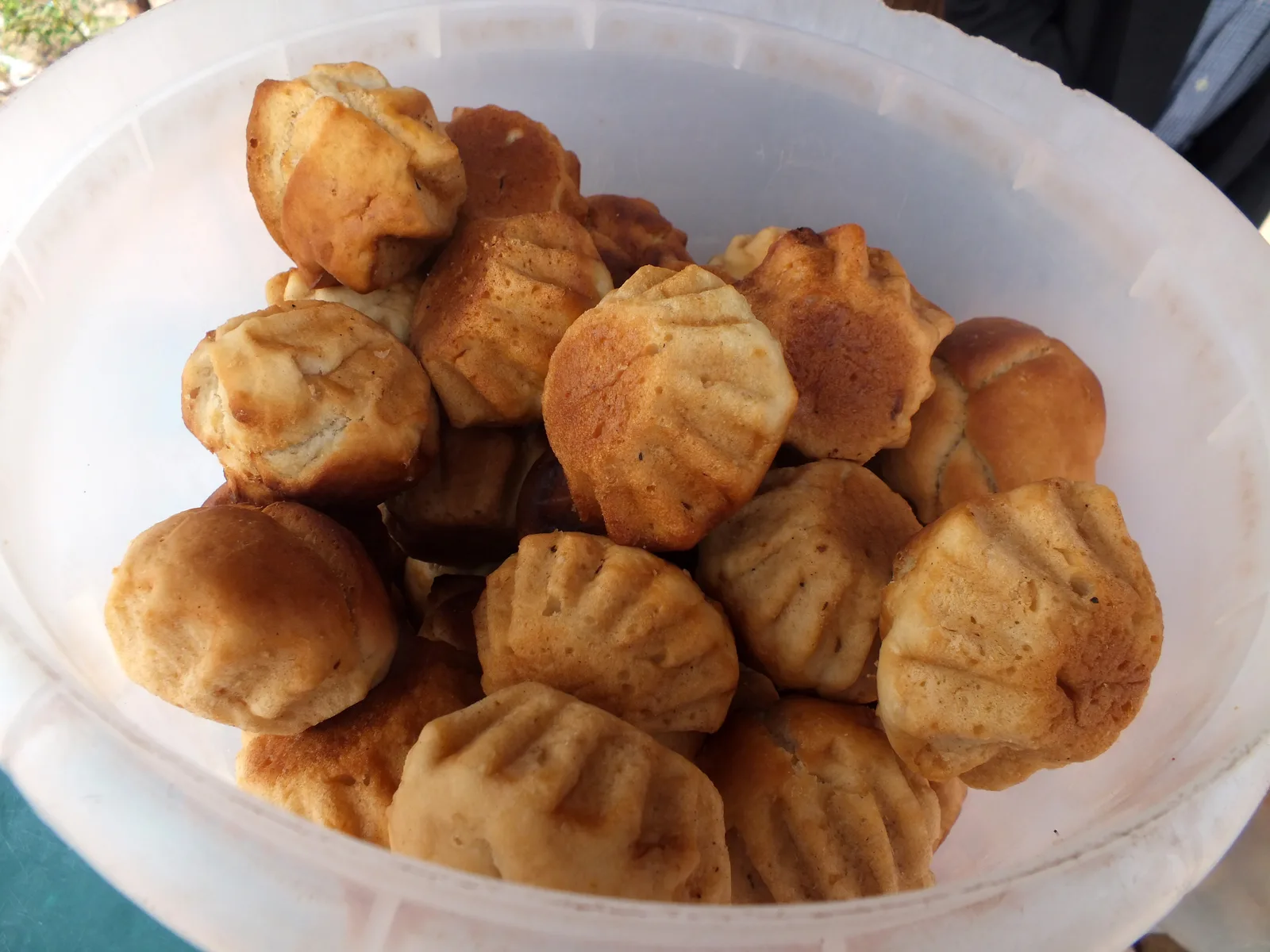
Malawian mandasi — a bowl of golden, puffy fried dough cakes Malawi flag Malawi 1h 40m
Breakfast •Malawian Breakfast Fritter

Malawian Mandasi

This mandasi recipe makes Malawi's beloved breakfast fritters: soft, puffy yeast dough cakes, lightly sweet and scented with cardamom, fried until deep golden and eaten warm with tea. One serving is about 170 g (3 mandasi).

Sweet & Golden

Soft, puffy yeast dough cakes fried golden and dusted with sugar — the warm breakfast fritter eaten with tea across Malawi.

Pairs Well With
Hot sweet tea with milk, or strong black coffee
Quick Prep (<30m)
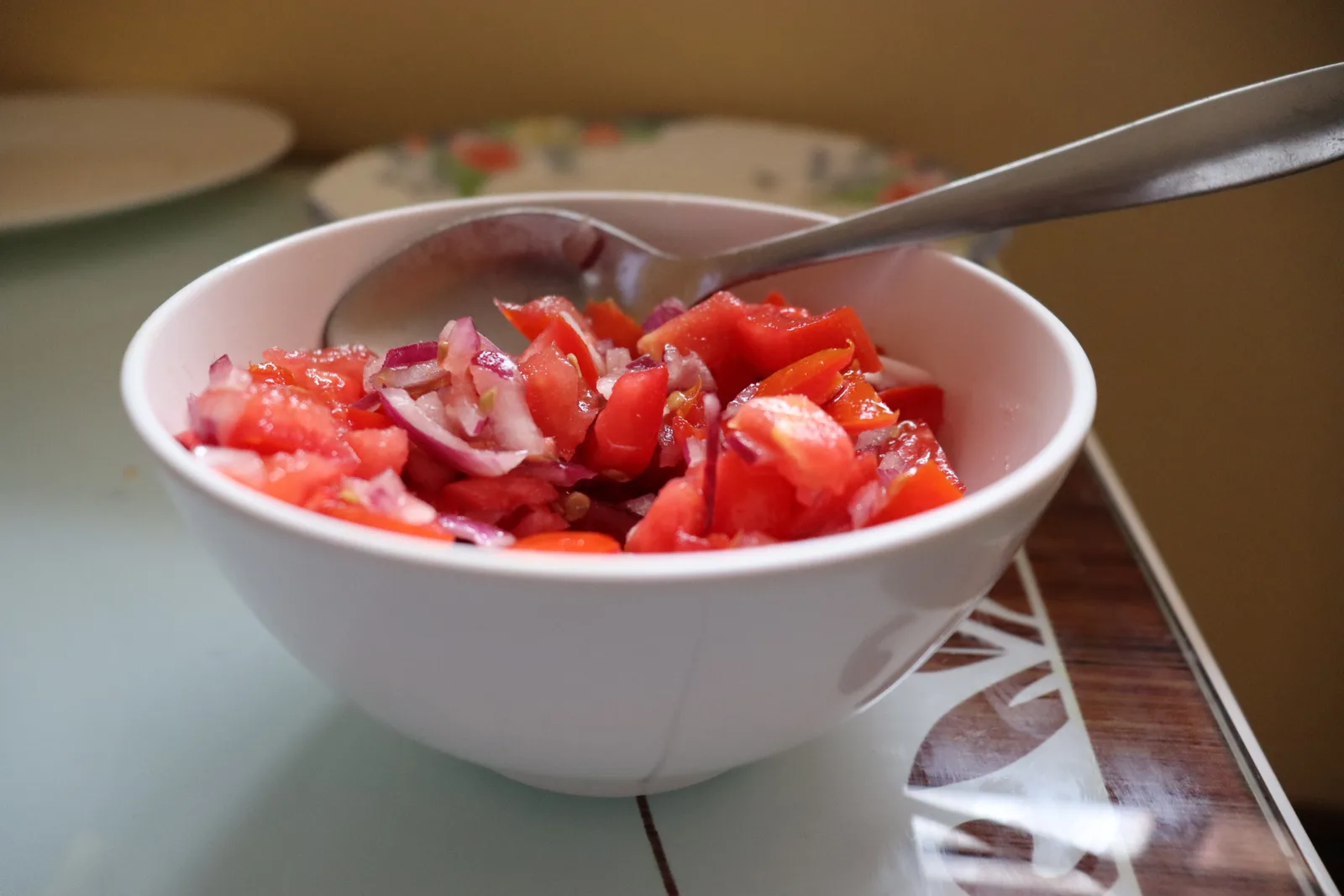
Malawian kachumbari — a white bowl of chopped tomato and red onion salad with a spoon Malawi flag Malawi 15m
Lunch •East African Tomato Onion Salad

Malawian Kachumbari

This kachumbari recipe is the fresh East African tomato and onion salad that sits beside grilled fish and meat all across Malawi: ripe tomatoes, sharp red onion, cilantro and lemon, tossed raw and served cool. One serving is about 171 g.

Fresh & Bright

Ripe tomatoes, red onion, cilantro and lemon tossed raw — the cool, sharp salad served with grilled fish and meat across East and Southern Africa.

Pairs Well With
Grilled fish, grilled meat, or rice dishes
Quick Prep (<30m)
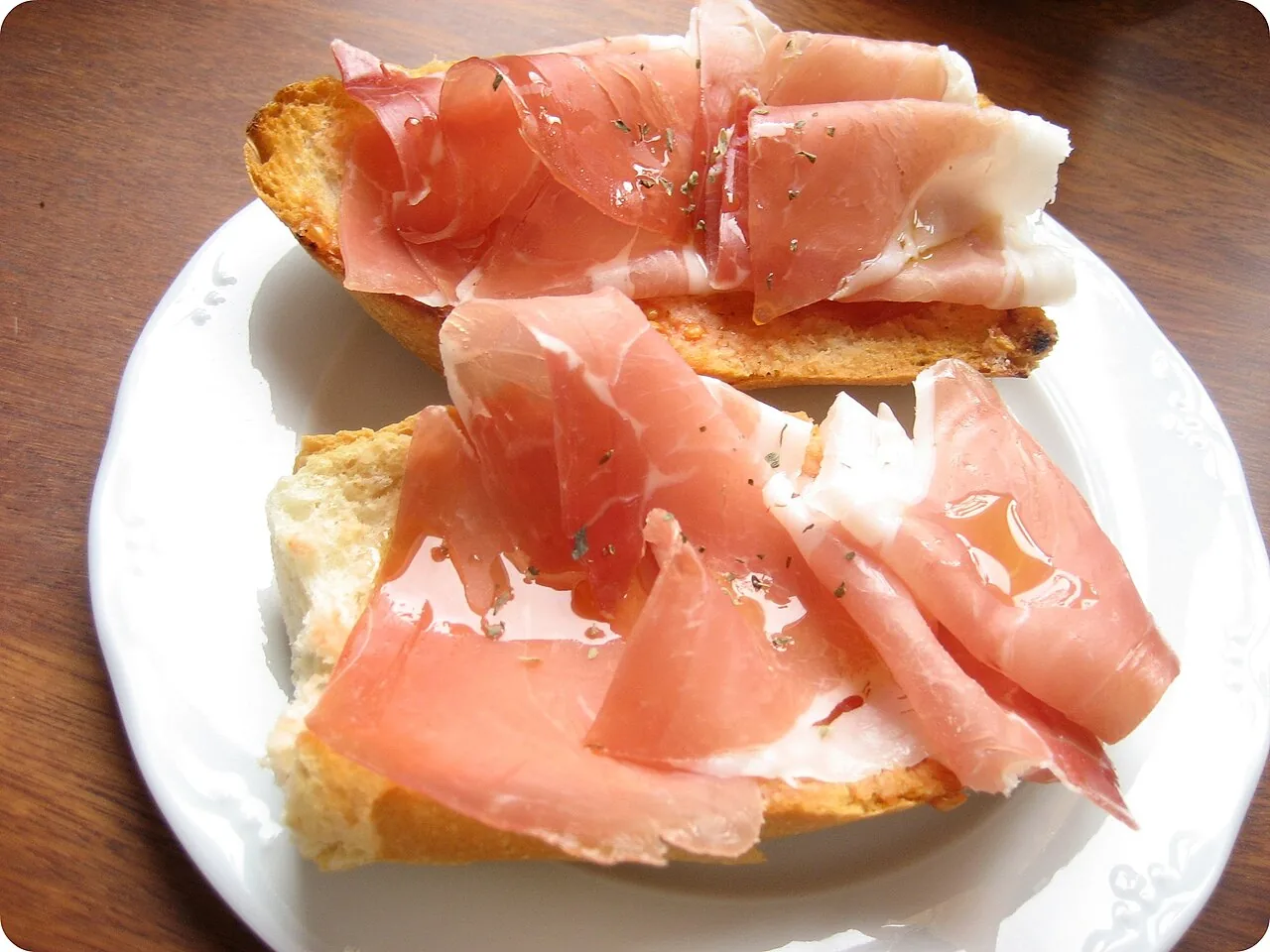
Pan con tomate with jamón ibérico on toasted bread Spain flag Spain 15m
Snack & Tea •Catalan Aperitivo

Pan con Tomate & Jamón Ibérico

Country bread rubbed with ripe Ramallet tomato, drizzled with cold-pressed Arbequina olive oil and topped with jamón ibérico.

Vascular Health

Toasted tomato bread with jamón ibérico, olive oil and olives.

Pairs Well With
Castelvetrano Olives & Sparkling Mineral Water
Quick Prep (<30m)
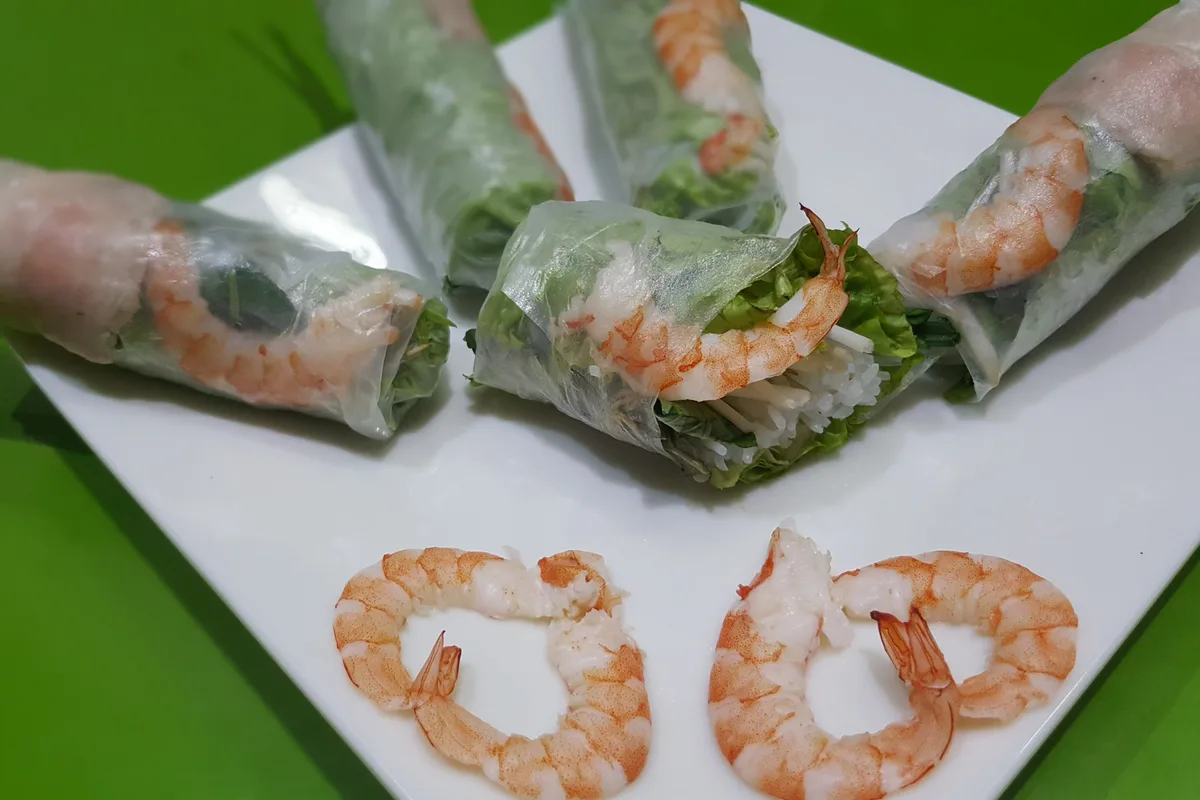
Gỏi cuốn — Vietnamese fresh spring rolls with prawn and pork Vietnam flag Vietnam 1h 5m
Snack & Tea •Saigon Refresh

Gỏi Cuốn Tôm Thịt

Fresh rice paper rolls filled with poached prawns, tender pork, rice vermicelli, lettuce, herbs and carrot, served with a peanut dipping sauce.

Light Digestion

Nothing is fried, so the rolls stay light and fresh — a cool, herb-filled snack for hot days.

Pairs Well With
Artisanal Peanut Dip & Fresh Lotus Root Water
High Protein

The Dinner Gazette

Never wonder what’s for dinner again

One email a week with easy dinner ideas from around the world — ingredients, steps and nutrition, tested in our kitchen first.

Delivered every Thursday morning. Unsubscribe anytime.