Curated recipes from 193 countries  •  New seasonal Mediterranean issue out now

Overview

Masala Dosa

Masale Dose

A masala dosa recipe for a golden, shatteringly crisp crepe made from a fermented rice and urad dal batter, folded around a soft, turmeric-yellow potato masala. One serving is about 285 g. The batter ferments for 8-12 hours overnight, so start the day before; the hands-on cooking takes about 70 minutes.

Masala dosa is a South Indian breakfast of a crisp fermented rice and lentil crepe wrapped around a spiced potato filling. The potato-filled version was created and popularised in Madras, now Chennai, in the 1930s by restaurateur K. Krishna Rao of the Udupi-style Sri Krishna Vilas and New Woodlands hotels. From there it spread through South India and then around the world, and in 2011 CNNGo listed masala dosa among the world's 50 most delicious foods.

Pairs well with: Serve hot with coconut chutney and sambar for dipping.

Provenance

India flag India

South Indian Heritage

East & South Asia

Time Dedication

1h 10m

30m prep • 40m cook

Batch Yield

4 Servings

448 kcal per serving

1 serving ≈ 285 g

Technical Skill

Intermediate

Medium (Fermented Batter)

Meal Timing & Digestive Fit

Breakfast

Prime Morning Fit

Lunch

Inappropriate

Dinner

Inappropriate

Snack & Tea

Inappropriate

Fermented / Gut Health Occasions: Weekend breakfasts, family breakfasts, South Indian breakfast spreads, brunch with friends Cost: Low — about $2–3 per serving at home
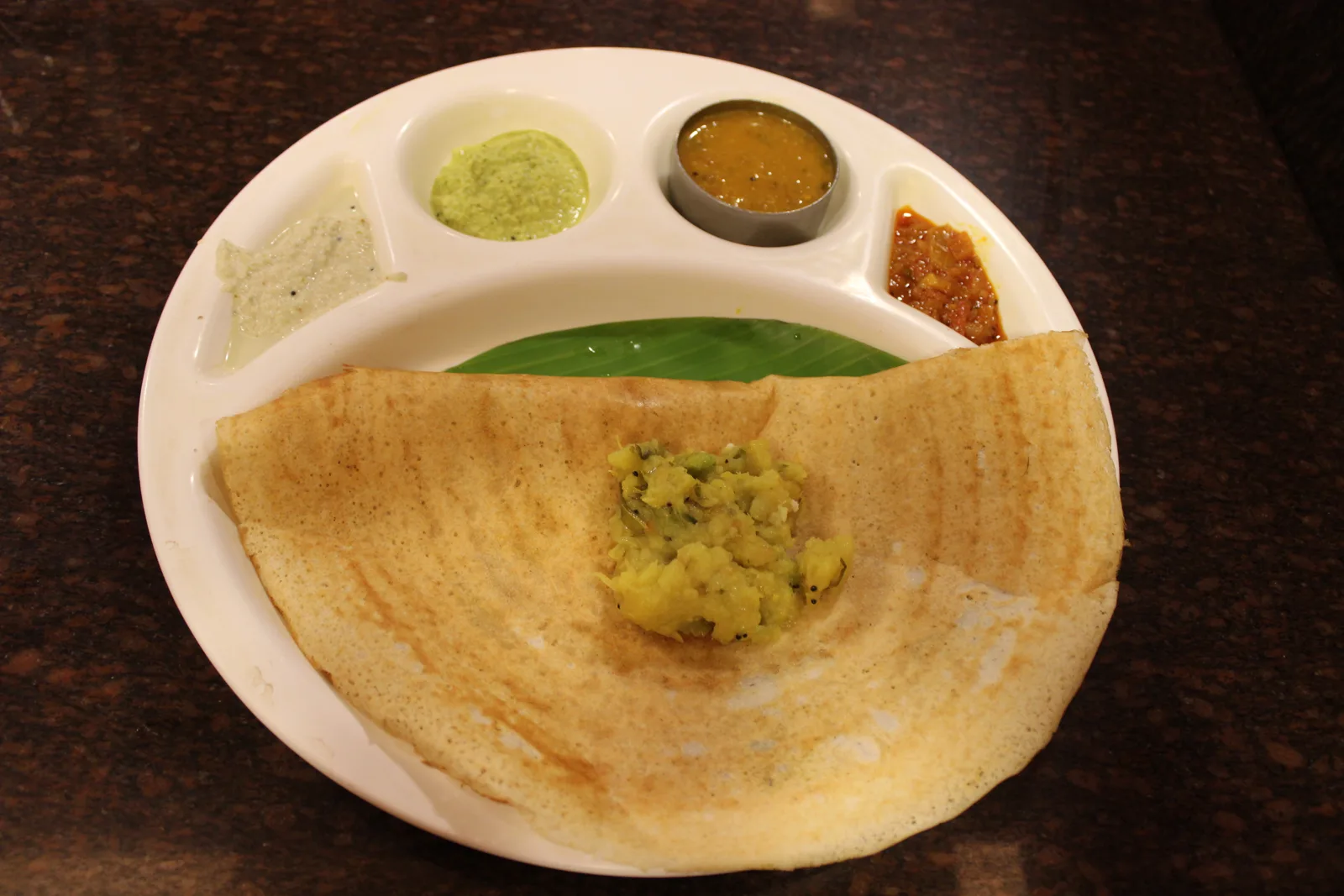
A golden folded masala dosa with spiced potato filling, served with coconut chutney, sambar and tomato chutney on a plate

South Indian Heritage

Photo: KARTY JazZ, CC BY-SA 4.0, via Wikimedia Commons

The Heritage Formulary

Measured Ingredients

Estimated cost: Low — about $2–3 per serving at home (USD)

This recipe follows the classic South Indian method: parboiled rice and urad dal batter, fermented overnight, pan-roasted crisp on a tawa and filled with potato masala.

Execution Methodology & Culinary Technique

Step-by-Step Cooking Guide

Active 1h 10m
P

Prep Stage: Soak, Grind & Ferment

30 Mins Active • Plus 8–12 Hours Fermenting

Rinse the rice, urad dal, fenugreek and poha, then soak the rice and poha together and the dal and fenugreek together for 4-6 hours. Grind each to a smooth batter, mix with salt, and leave to ferment in a warm spot for 8-12 hours until doubled and lightly sour. While the batter ferments, boil the potatoes and slice the onion so the masala comes together quickly the next morning.

Maestro Tip: In a cold kitchen, ferment the batter inside the oven with only the light on. If it has not risen after 12 hours, give it 2-4 hours more rather than cooking a flat, sour-less batter.

  1. 1

    Soak the Rice and Lentils

    10 Mins Active • Soak 4–6 Hours Room temperature, ~24°C (75°F)

    Rinse the parboiled rice and poha in several changes of water, then cover with fresh water and soak for 4-6 hours. In a separate bowl, rinse the urad dal and fenugreek seeds and soak them the same way. Start this the morning or afternoon before you plan to eat.

    Keep the rice and dal in separate bowls: the dal grinds smooth while the rice stays slightly coarse, and that contrast is what makes a crisp dosa.

    Done when: Rice grains that crush easily between finger and thumb; dal that has swelled to nearly double its size.

  2. 2

    Grind the Batter

    10 Mins Room temperature, ~24°C (75°F)

    Drain the dal and grind it first with a little fresh water until it is pale, fluffy and completely smooth, about 4 minutes. Drain the rice and poha and grind them a little coarser, adding water a spoonful at a time until the batter falls from the spoon in a thick ribbon. Mix both batters together with 5g of the salt.

    Do not make the batter watery: it should coat the back of a spoon and hold a ribbon for a second. Thin batter tears on the pan; thick batter will not spread.

    Done when: A smooth, pourable batter with a fine grain, like thin pancake batter with a little body.

  3. 3

    Ferment Overnight

    8–12 Hours (Hands-off) Warm spot, ~28°C (82°F)

    Cover the bowl loosely and leave the batter in a warm spot for 8-12 hours, or overnight. The wild yeasts and bacteria from the dal do the work: the batter should rise to nearly double, smell pleasantly sour like yoghurt, and show bubbles on the surface. Stir it gently once, just to mix, and add a splash of water if it is thicker than pouring cream.

    Never stir the batter hard after fermenting or seal the bowl airtight: vigorous stirring knocks out the gas that makes the dosa light, and a sealed bowl can overflow as it rises.

    Done when: Batter doubled in volume, bubbly on top, and smelling gently sour. If it smells sharp or vinegary, it has gone too far.

  4. 4

    Cook the Potato Masala

    15 Mins Medium heat, ~175°C (350°F)

    Heat 10g of the oil in a pan over medium heat. Add the mustard seeds and wait for them to pop, then add the cumin seeds, urad dal and chana dal and fry for 30 seconds until golden. Add the curry leaves, onion, ginger and green chillies and cook for 4-5 minutes until the onion is soft. Stir in the turmeric and the remaining 4g of salt, then add the crumbled potatoes and 2-3 tablespoons of water. Cook for 5 minutes, mashing lightly as you go, until soft and holding together. Take off the heat and stir in the lemon juice and coriander.

    Do not mash the potatoes to a puree: the masala should be soft with visible chunks, so it sits in the dosa instead of sliding out.

    Done when: A soft, yellow, spoonable masala that holds its shape in a mound and smells of mustard, ginger and curry leaves.

  5. 5

    Spread and Crisp the Dosa

    20 Mins (4 Dosas) Medium-high heat, ~200°C (400°F)

    Heat a flat cast-iron tawa or large non-stick pan over medium-high heat until a drop of water sizzles and evaporates in seconds. Wipe it very lightly with oiled kitchen paper. Pour a ladleful of batter (about 150 ml) into the centre and spiral it outwards with the back of the ladle into a thin round about 30 cm across. Drizzle about 5g of oil around the edges and cook for 2-3 minutes without touching it, until the edges lift and the surface turns golden and lacy. Do not flip it.

    If the batter sticks or tears, the pan is either too cool or too oily: wipe it clean with a damp cloth, let it heat again, and try with a light hand. The first dosa is often the practice one.

    Done when: Edges curling up, underside deep golden and crisp, top dry with tiny holes. It should lift cleanly with a spatula.

  6. 6

    Fill, Fold and Serve

    5 Mins Serving hot, above 60°C (140°F)

    Spoon about a quarter of the warm potato masala down the centre of the dosa while it is still on the pan, fold one side over it, then fold again or roll it into a cone. Slide onto a plate and serve immediately with coconut chutney and hot sambar on the side. Repeat with the remaining batter and masala, wiping the pan and letting it reheat between dosas.

    Serve each dosa the moment it leaves the pan: a dosa waits for no one, and five minutes in a pile turns crisp into soft.

    Done when: A hot, crisp parcel with the yellow masala visible at the open end, ready to eat with the hands or a fork.
Finishing Touches & Plating

Eat the dosa straight away while the shell is still crisp and the potato masala is steaming, tearing off pieces to dip into chutney and sambar.

Nutritional Physiology & Benefits

Nutrition

Energy

448

kcal / serving

Protein

12g

Complete AA

Carbs

80g

Complex

Fats

9g

Healthy

Per serving (4 servings · 1 serving ≈ 285 g)
Energy448 kcal
Protein12 g
Carbohydrates80 g
Fat9 g
Fibre7.7 g
Sugar2.6 g
Sodium897 mg
Per 100g
Energy157 kcal
Protein4.1 g
Carbohydrates28.2 g
Fat3.1 g
Fibre2.7 g
Sugar0.9 g
Sodium315 mg

Nutrition values are estimated — calculated from USDA FoodData Central values for the listed ingredients.

Vitamins & minerals: Provides vitamin C and potassium from the potatoes, folate and iron from the urad dal, and B vitamins from the rice; the green chillies and coriander add small amounts of vitamin A and vitamin K. All nutrition values are estimated.

Fermented Batter

The rice and lentil batter is fermented overnight, and fermented foods are a normal, traditional part of a varied diet.

Steady Energy from Rice & Potato

One serving carries about 80 g of carbohydrate from rice and potato, which makes this a genuinely filling breakfast rather than a light snack.

Fibre, Potassium & Folate

The urad dal and potato together supply about 7.7 g of fibre per serving, plus potassium and folate from the lentils and potatoes.

Food Pairings

What to Eat With

To optimize nutrient absorption and elevate the sensory depth, pair with these authentic accompaniments:

Sauces

Coconut Chutney

Cool, creamy coconut chutney is the classic counterpoint: its mild richness softens the crisp, hot dosa and balances the warmth of the chillies.

Tomato-Onion Chutney

A sharp, sweet-sour tomato chutney adds a bright note next to the mild potato masala, so the plate never tastes flat.

Soups

Hot Sambar

A ladle of hot lentil sambar gives you something to dip into and adds more lentil protein and warmth; the sour-savoury broth wakes up the potato filling.

Drinks

South Indian Filter Coffee

Strong, milky filter coffee is the traditional breakfast partner in South India, and its bitterness cuts through the richness of the fried dosa.

Complete menu

Start with a small bowl of sambar, then the masala dosa with coconut chutney and tomato chutney, and finish with South Indian filter coffee.

Digestive Guardrails

What NOT to Combine

To prevent digestive distress, sluggishness, or palate clash, avoid pairing the dish with these elements:

Stacking Hot Dosas in a Sealed Box

Trapped steam softens the crisp shell within minutes, so a dosa stored hot in a closed container turns limp and chewy. Keep dosas uncovered and eat them fresh. This is general food information, not medical advice.

Very Salty Pickles and Chutneys on the Side

One serving already carries about 900 mg of sodium, so salty pickles and extra-salty chutneys on the side push a single breakfast well past a comfortable amount of salt. Choose fresh coconut chutney instead. This is general food information, not medical advice.

General information only, not medical advice — consult a doctor for personal dietary decisions.

Who Should Eat It

Who Should Eat

  • General adultsA satisfying breakfast as written; one dosa with chutney and sambar is a full meal.
  • ChildrenSuitable for children over 2 years; leave out the green chillies and cut the dosa into strips for small hands.
  • ElderlySoft potato filling and easy-to-chew crepe suit older eaters; serve the dosa slightly less crisp if chewing is difficult.
  • Pregnant womenFine as part of a varied diet; make sure the potato masala is served piping hot and the batter has fermented properly.
  • Breastfeeding womenA filling, energy-rich breakfast; the lentils add iron and folate to the day's food.
  • AthletesGood the morning before training for its carbohydrate, with sambar on the side for extra protein; add an egg or a glass of milk if more protein is needed.
  • Weight gainA helpful breakfast: energy-dense, easy to eat in quantity, and two dosas instead of one adds about 448 kcal.
  • Weight lossOne dosa with plenty of sambar and a small spoon of chutney keeps the meal filling; skip a second dosa and the extra oil.

Health Conditions — Adjust or Avoid

Conditions

  • DiabetesAbout 80 g of carbohydrate per serving, so count it as a full carbohydrate portion and pair it with sambar and vegetables rather than a second dosa; ask your clinician or dietitian about portions for you.
  • High blood pressureOne serving carries about 900 mg of sodium, so keep the salt as written and skip salty pickles on the side; ask your clinician about a lower-salt version.
  • Kidney diseasePotatoes and lentils are rich in potassium, and the salt adds sodium, so people with kidney disease should not eat this regularly without checking with their clinician.
  • GoutLentils contain purines, so eat modest portions and not every day if you have gout; ask your clinician for advice.
  • Stomach issuesThe fermented batter is usually well tolerated, but green chillies, mustard seeds and onion can trouble sensitive stomachs; leave out the chillies and eat the dosa freshly cooked. Ask your clinician if symptoms persist.
  • Cardiovascular diseaseCooked with only a little oil, this is a low-fat, plant-based breakfast; keep the oil at the stated amount and favour sambar over fried sides. Ask your clinician or dietitian about what fits your diet.
  • Fatty liverA plant-based, low-fat breakfast as written; avoid adding ghee or a second oily dosa. Ask your clinician or dietitian for advice.
  • Food allergiesContains legumes (urad dal, chana dal) and mustard seeds; the usual coconut chutney served alongside contains tree nut (coconut). Check every ingredient if you have a legume, mustard or coconut allergy.
  • Special therapeutic dietsNaturally gluten-free and vegetarian; it is not vegan if ghee is used, so use oil. For a low-sodium or low-potassium therapeutic diet, ask your clinician before eating it.

If you have a medical condition, consult your doctor before changing your diet.

Storage & Use

Storage & Use

How to store
Cool the potato masala quickly and store it covered; keep leftover batter in its bowl with a loose lid and cooked dosas uncovered at room temperature only until served.
In the fridge
Fermented batter keeps 5 days in the fridge at 4°C (40°F) or below; potato masala keeps 3 days.
In the freezer
Potato masala freezes up to 1 month; the fermented batter does not freeze well and loses its rise.
How to reheat
Reheat the potato masala in a pan until steaming hot, to 74°C (165°F); warm a leftover dosa on a dry hot griddle for 30 seconds a side, though it will not be as crisp as fresh.
Freezing recommended
No for the batter; yes for the potato masala only.
Signs it has spoiled
Batter that smells sharply vinegary or shows pink or black mould; masala that smells sour or feels slimy.

More recipes to explore

A bowl of creamy orange-red butter chicken with a swirl of cream, a pat of butter and fresh cilantro, with garlic naan behind it India flag India 1h 5m
Dinner •Delhi Heritage

Butter Chicken

Charred, yogurt-marinated chicken simmers in a velvety sauce of tomatoes, butter, cashews and cream, finished with dried fenugreek and a swirl of cream. This butter chicken recipe is mild rather than fiery, so the sweetness of the tomatoes and the richness of the butter come through in every spoonful. One serving is about 370 g.

Comfort & Warmth

Tandoori-style chicken folded into a silky tomato, butter and cream sauce — rich, mild and deeply satisfying.

Pairs Well With
Butter naan, basmati rice & cucumber raita
High Protein
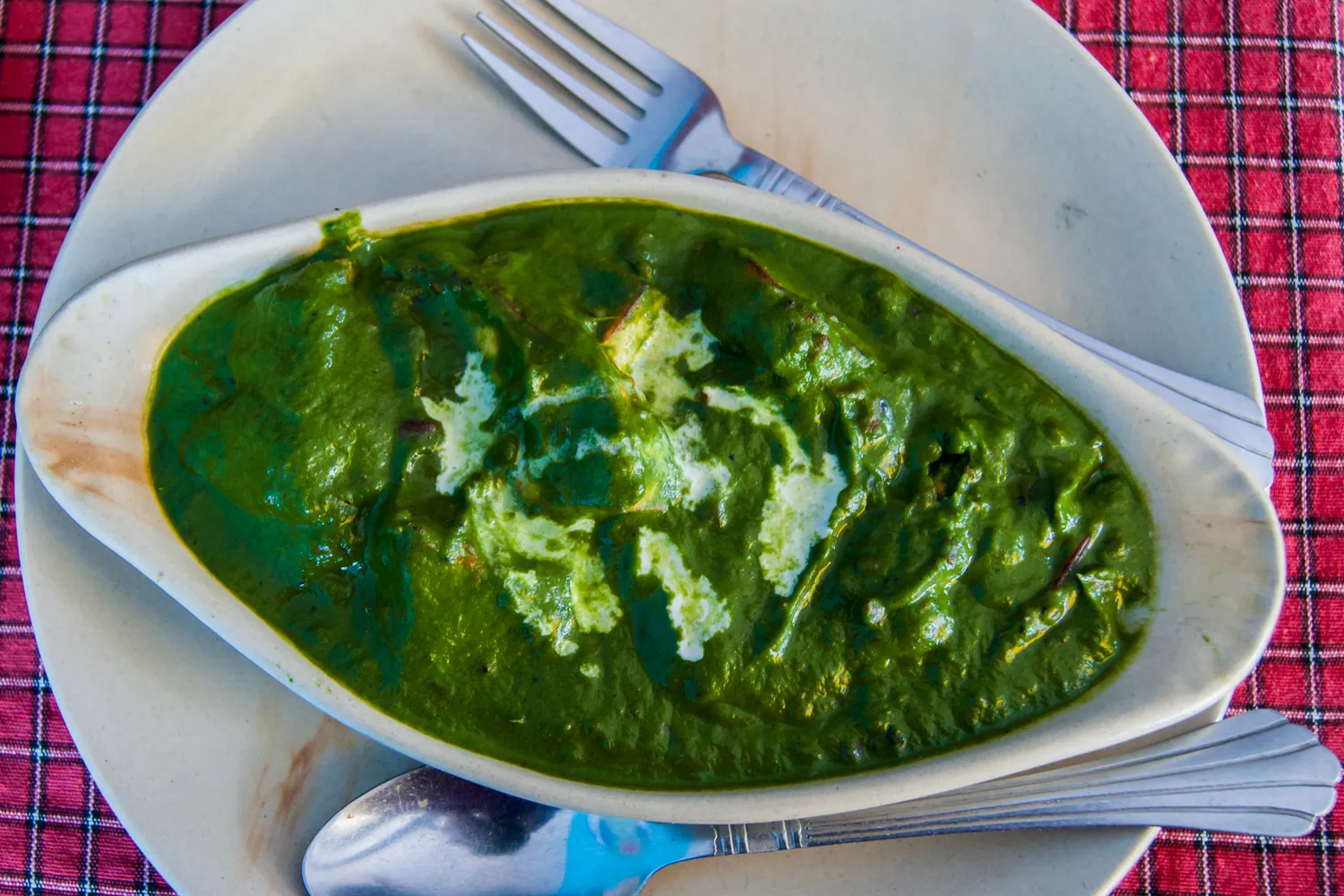
A bowl of palak paneer — vivid green spinach curry with soft paneer cubes and a swirl of cream India flag India 45m
Dinner •Punjabi Heritage

Palak Paneer

Palak paneer is a mild North Indian curry of fresh spinach blended silky-smooth, simmered with onion, tomato, ginger and garam masala, then finished with soft cubes of paneer and a swirl of cream. One serving is about 295 g. It is gentle, savoury and filling, and it comes together in one pot in about 45 minutes.

Comfort & Warmth

A mild, creamy spinach curry with soft paneer cubes that makes a satisfying vegetarian dinner.

Pairs Well With
Serve hot with butter naan or steamed basmati rice and a spoonful of cucumber raita.
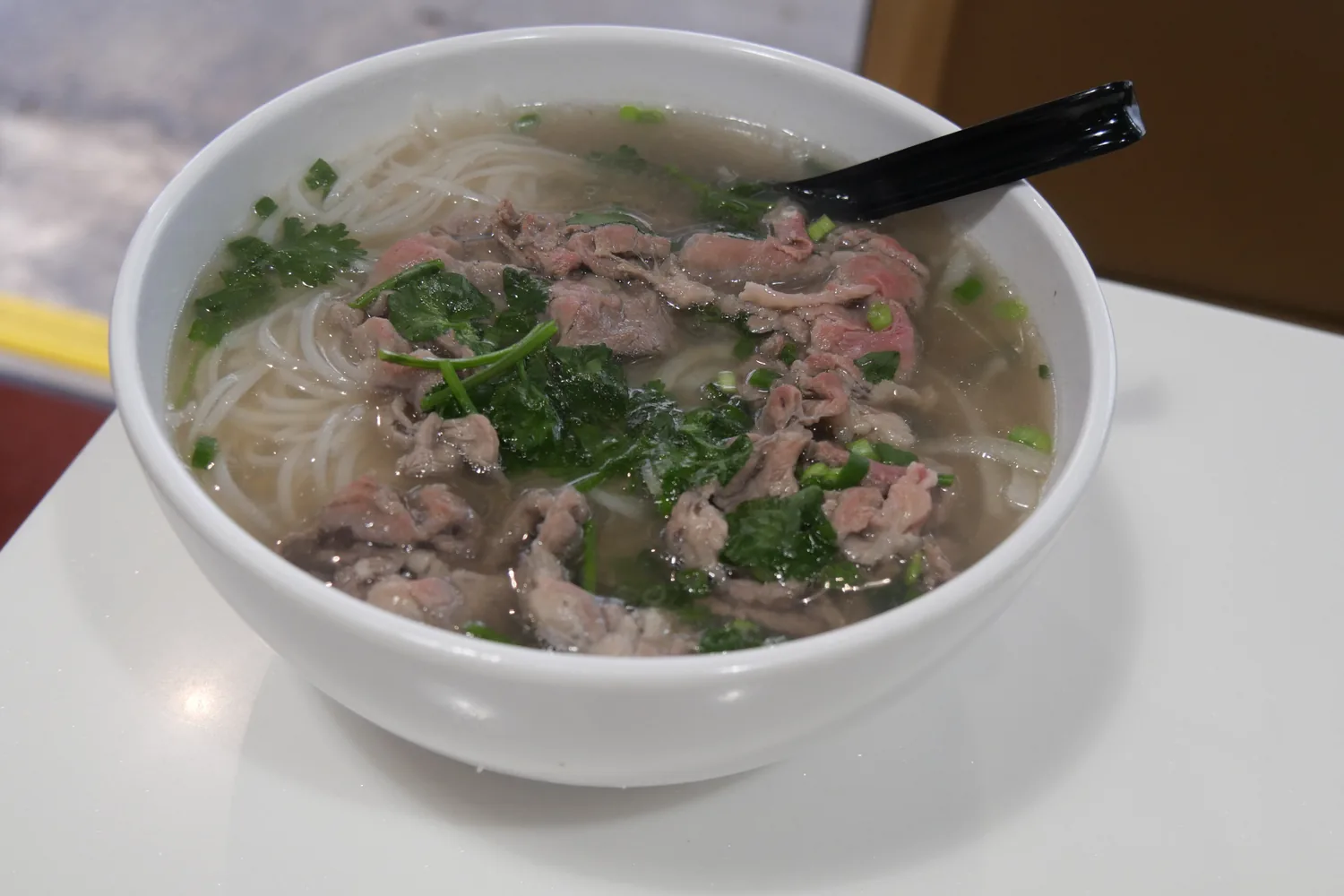
A bowl of Vietnamese phở bò with rare beef, rice noodles and fresh herbs Vietnam flag Vietnam 3h 30m
Breakfast •Hanoi Heritage

Phở Bò Tái Nạm

Slow-simmered star anise and cinnamon bone broth with hand-cut rice noodles, supplying clean restorative warmth and collagen. One serving is about 775 g.

Immunity & Warming

Slow-simmered bone broth with rice noodles, rare beef and fresh herbs.

Pairs Well With
Crispy quẩy, fresh lime & sawtooth coriander
Soups & Broths • High Protein
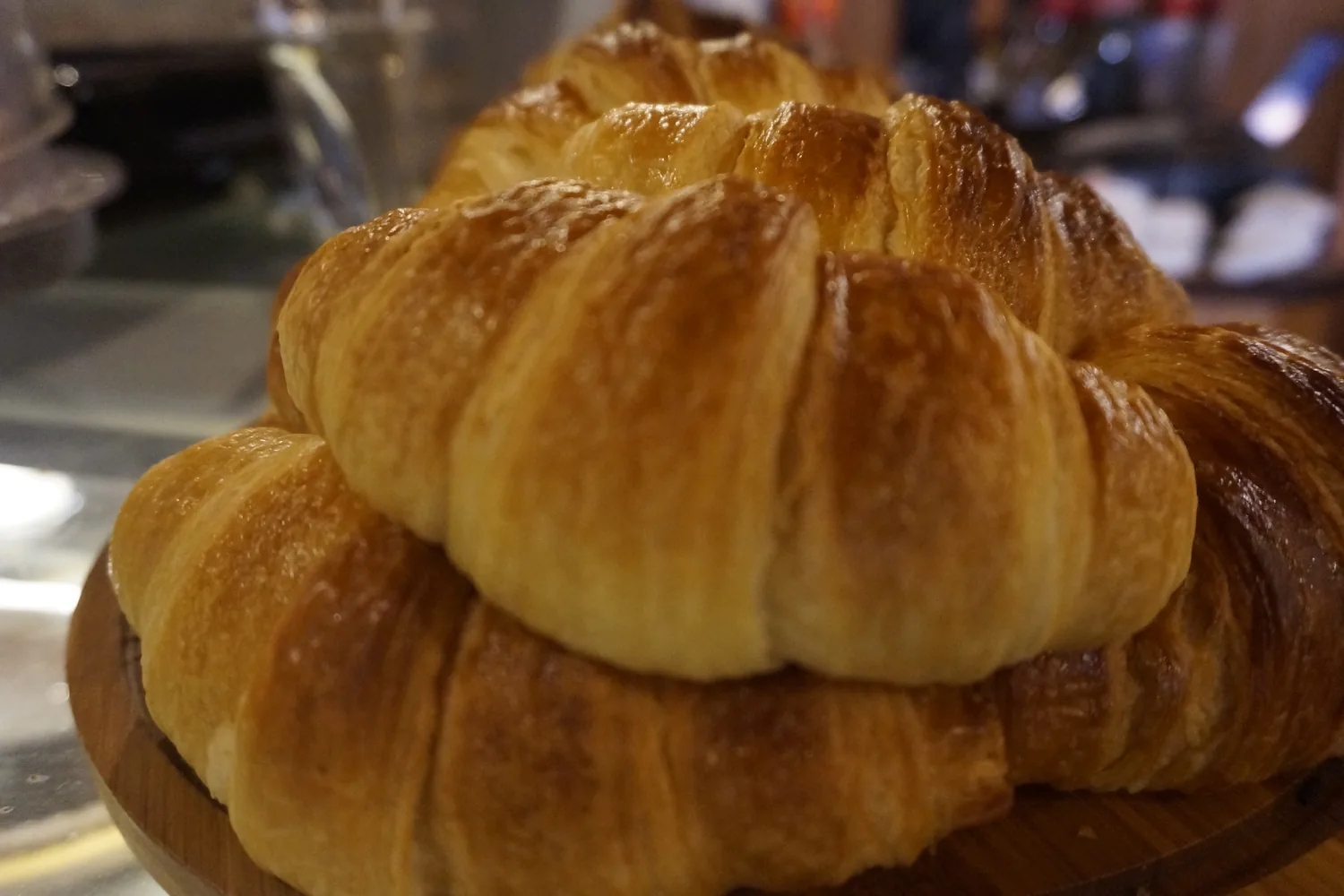
Golden butter croissants on a wooden board France flag France 20m
Breakfast •Parisian Boulangerie

Croissant au Beurre & Café

Laminated cultured butter pastry paired with washed Arabica, for a slow, pleasurable Parisian morning — best with a little protein alongside. One serving is about 390 g.

Sustained Focus

Flaky all-butter croissant with café au lait, Comté and green apple.

Pairs Well With
Comté cheese wedge & Green apple slices
Quick Prep (<30m)

The Dinner Gazette

Never wonder what’s for dinner again

One email a week with easy dinner ideas from around the world — ingredients, steps and nutrition, tested in our kitchen first.

Delivered every Thursday morning. Unsubscribe anytime.