Curated recipes from 193 countries  •  New seasonal Mediterranean issue out now

Overview

Mastellen

Mastel, Antwerp Cinnamon Ring Rolls, Antwerp Mastel

This mastellen recipe makes soft Antwerp ring-shaped cinnamon rolls: an enriched yeast dough with cinnamon kneaded right in, shaped into rings with a thumb-pressed hole and brushed with egg wash so they bake glossy and deep golden. They are not boiled like bagels and not fried like doughnuts — they are baked, and the cinnamon is inside the dough, not sprinkled on top. Unlike suikerbrood, which is a sliced sugar loaf, and rozijnenbrood, which is a raisin loaf, a mastel is one single ring roll, made to be eaten in the hand. One serving is about 111 g.

The mastel is a Flemish bakery classic from Antwerp: a small ring-shaped roll that looks like a doughnut but is in fact made of brioche-style enriched dough to which cinnamon is added, baked — never boiled or fried — with a glossy egg-washed top. It is a different thing from its Belgian bakery cousins: suikerbrood is a sliced sugar loaf and rozijnenbrood is a raisin loaf, while a mastel is one single ring roll, made to be eaten in the hand with coffee. In Ghent the same roll is also served as mastelles repassées, halved and spread with butter and brown sugar, then pressed flat with a hot iron until caramelised.

Pairs well with: Black coffee, butter & brown sugar, hot chocolate

Provenance

Belgium flag Belgium

Antwerp Bakery Classic

Nordic & European

Time Dedication

2h 5m

100m prep • 25m cook

Batch Yield

8 Servings

352 kcal per serving

1 serving ≈ 111 g

Technical Skill

Intermediate

Medium (Enriched Yeast Dough)

Meal Timing & Digestive Fit

Breakfast

Not Advised

Lunch

Inappropriate

Dinner

Inappropriate

Snack & Tea

Ideal Light Bite

Occasions: Afternoon coffee, breakfast, bakery visits, Antwerp festivals Cost: Low — about $1–2 per serving at home
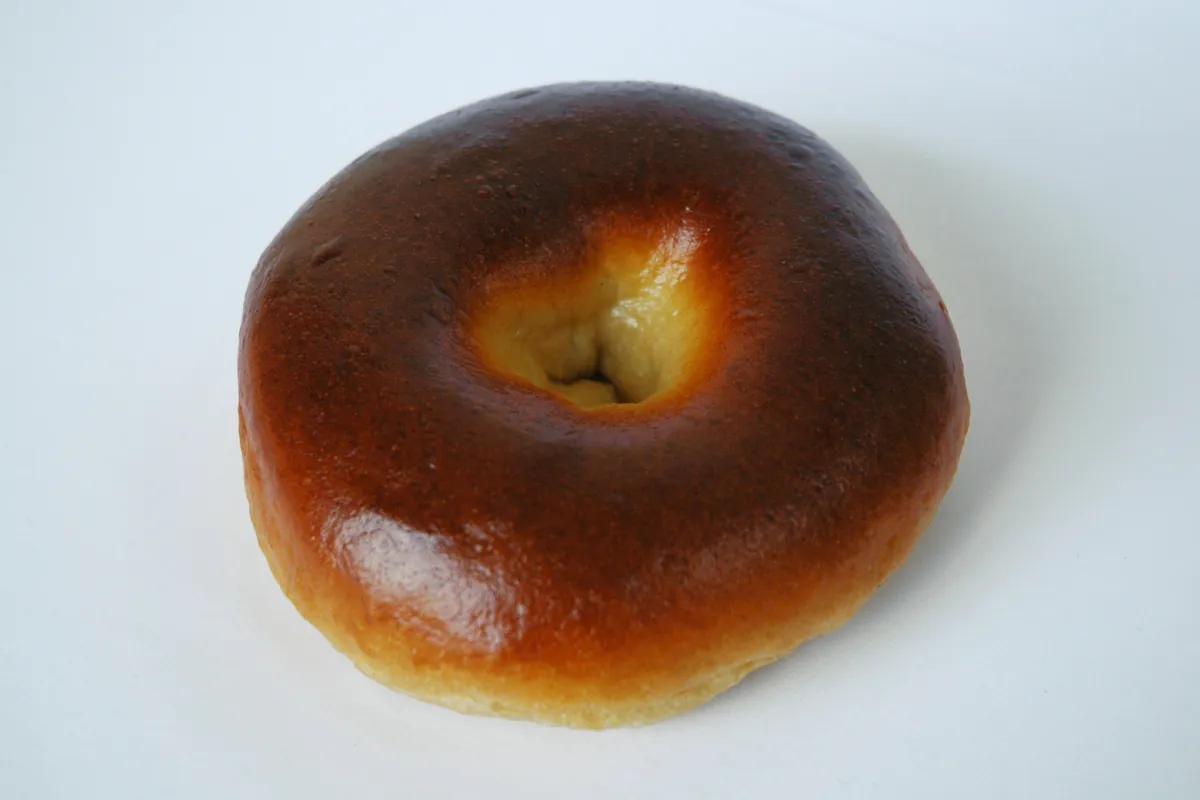
A single glossy deep-golden mastellen ring roll with a thumb-pressed hole in the centre, on a plain white background

Antwerp Bakery Classic

Photo: DimiTalen, CC0, via Wikimedia Commons

The Heritage Formulary

Measured Ingredients

Estimated cost: Low — about $1–2 per serving at home (USD)

A plain Antwerp mastel: enriched yeast dough with cinnamon inside, shaped into a ring with a thumb-pressed hole and egg-washed to a glossy deep-golden top.

Execution Methodology & Culinary Technique

Step-by-Step Cooking Guide

Active 2h 5m
P

Prep Stage: Warm Milk, Cinnamon Dough and Egg Wash

20 Mins • Weighing & Warming

Warm the milk to about 35°C (95°F) and bloom the yeast in it, soften the butter, and weigh out the flour, sugar, cinnamon and salt. Beat one egg for the dough and a second egg in a small bowl for the wash — the egg is structural in the enriched dough and the wash is what gives the rings their glossy deep-golden top. Line two baking trays with baking paper before you start kneading.

Maestro Tip: If the milk is hotter than about 40°C (104°F) it will kill the yeast — it should feel warm on your wrist, like a baby's bottle.

  1. 1

    Mix and Knead the Cinnamon Dough

    15 Mins Room temperature, about 20°C (68°F)

    Stir the yeast into the warm milk and leave it 5 minutes until foamy. Mix the flour, sugar, cinnamon and salt in a large bowl, then add the yeasty milk and 1 beaten egg. Knead for 8–10 minutes until smooth and elastic, then knead in the soft butter a cube at a time until the dough is soft, smooth and no longer sticky.

    Knead the cinnamon right into the dough — it should be evenly speckled through the crumb, not sitting on the surface.

    Done when: A smooth, soft dough that springs back when poked.

  2. 2

    First Rise

    60 Mins Warm place, about 25°C (77°F)

    Shape the dough into a ball, put it in a lightly oiled bowl and cover with a damp cloth or cling film. Leave in a warm place for about 60 minutes, until doubled in size.

    A turned-off oven with the light on is a good warm spot — never put the bowl on a hot radiator.

    Done when: Doubled in size; a fingertip pressed in leaves a dent that stays.

  3. 3

    Shape the Rings

    15 Mins Room temperature, about 20°C (68°F)

    Tip the dough out and divide it into 8 equal pieces, about 123 g each. Roll each piece into a smooth ball, then push your thumb right through the centre and stretch the hole open to about 3 cm — the hole closes up as the ring rises, so make it generous. Set the rings well apart on the lined trays.

    If the dough springs back, let it rest 5 minutes and try again — a relaxed dough stretches without tearing.

    Done when: Eight even rings, each with a clear hole in the middle.

  4. 4

    Second Rise and Egg Wash

    30 Mins Warm place, about 25°C (77°F)

    Cover the rings loosely and leave them to rise for 25–30 minutes, until puffy. Heat the oven to 190°C (375°F). Brush every ring generously all over with the beaten egg — top and sides — so the wash gives the baked rolls their glossy deep-golden top.

    Brush gently so you do not press the air out of the risen rings, and do not let the wash pool in the hole.

    Done when: Puffy rings, fully coated in egg wash with no dry patches.

  5. 5

    Bake the Rings

    25 Mins Oven at 190°C (375°F)

    Bake at 190°C (375°F) for 20–25 minutes, until deep golden brown and glossy, and the centre of a roll reads at least 74°C (165°F) on a thermometer so the egg in the dough is fully cooked. The rolls should sound hollow when tapped underneath.

    If the tops brown too fast, lay a sheet of foil loosely over the trays for the last 5 minutes.

    Done when: Deep-golden, glossy tops; hollow tap; at least 74°C (165°F) inside.

  6. 6

    Cool and Serve

    10 Mins Cooling, about 40°C (104°F)

    Move the rings to a wire rack and cool for at least 10 minutes — the crumb is still setting inside. Serve warm or at room temperature, plain or split with a smear of butter.

    Cutting a hot roll tears the crumb — give it the full 10 minutes on the rack.

    Done when: Warm, not hot, with a soft crumb and a glossy crust.

Finishing Touches & Plating

Serve the mastellen warm or at room temperature with black coffee or hot chocolate. In Ghent, a leftover mastel is sometimes served as mastelles repassées — halved, spread with butter and brown sugar, then pressed flat with a hot iron until caramelised — but the plain ring roll, eaten in the hand, is the Antwerp classic.

Nutritional Physiology & Benefits

Nutrition

Energy

352

kcal / serving

Protein

9g

Complete AA

Carbs

58g

Complex

Fats

9g

Healthy

Per serving (8 servings · 1 serving ≈ 111 g)
Energy352 kcal
Protein9 g
Carbohydrates58 g
Fat9 g
Fibre2.5 g
Sugar9.2 g
Sodium421 mg
Per 100g
Energy317 kcal
Protein8.5 g
Carbohydrates52.2 g
Fat8.1 g
Fibre2.2 g
Sugar8.3 g
Sodium379 mg

Nutrition values are estimated — calculated from USDA FoodData Central values for the listed ingredients.

Vitamins & minerals: B vitamins and iron (enriched flour, yeast), vitamin A and calcium (milk, butter, egg), riboflavin (egg).

Cinnamon Inside, Not on Top

The cinnamon is kneaded into the dough, so every bite carries its warm flavour with no extra sugary topping.

Egg Gives Structure and Protein

One egg is built into the dough and one is brushed on as a wash, giving about 9.4 g of protein per roll and the glossy golden top.

A Filling Bakery Snack

About 352 kcal per roll with slow-release carbohydrate from the enriched dough — a proper snack with coffee, not a biscuit.

Food Pairings

What to Eat With

To optimize nutrient absorption and elevate the sensory depth, pair with these authentic accompaniments:

Drinks

Black Coffee

Black coffee is the classic Flemish partner — its bitterness cuts the sweet cinnamon dough and the rich egg-washed crust.

Hot Chocolate

Thick Belgian hot chocolate matches the cinnamon warmth of the roll and turns a snack into an afternoon treat.

Black Tea

Hot black tea is a lighter, gentler partner that lets the cinnamon flavour of the roll come through.

Sides

Butter and Brown Sugar

A smear of butter, sometimes with brown sugar, melts into the warm crumb and is how the rolls are eaten in Antwerp bakeries.

Complete menu

Mastellen with black coffee and a smear of butter, followed by fresh fruit.

Digestive Guardrails

What NOT to Combine

To prevent digestive distress, sluggishness, or palate clash, avoid pairing the dish with these elements:

Eating Them Straight from the Oven

The crumb is still setting and the inside is hot enough to burn your mouth — wait at least 10 minutes on the rack. This is general food information, not medical advice.

Storing Them Uncovered

An uncovered roll dries out in hours — keep them in a sealed bag or tin and eat within 2 days. This is general food information, not medical advice.

General information only, not medical advice — consult a doctor for personal dietary decisions.

Who Should Eat It

Who Should Eat

  • General adultsA soft, sweet bakery roll; one with black coffee is a classic Flemish afternoon snack.
  • ChildrenChildren love the ring shape and the cinnamon — serve one roll, warm, with milk or hot chocolate.
  • ElderlySoft and easy to chew; serve at room temperature with tea or coffee.
  • Pregnant womenFine in moderation; make sure the rolls are baked right through, with the centre at least 74°C (165°F).
  • Breastfeeding womenAn energy-rich snack; the egg, milk and butter give lasting energy between meals.
  • AthletesGood carbohydrate and energy after training, with about 9.4 g of protein per roll.
  • Weight gainAn energy-dense roll that suits a higher-energy day.
  • Weight lossSweet and energy-dense at about 352 kcal a roll; one roll with black coffee is the lighter choice.

Health Conditions — Adjust or Avoid

Conditions

  • DiabetesAbout 57.9 g of carbohydrate and 9.2 g of sugar per roll; one roll is a full portion, and ask your clinician about portion size.
  • High blood pressureAbout 421 mg of sodium per roll, mostly from the salt in the dough; ask your clinician if you are on a low-sodium plan.
  • Kidney diseaseModerate in protein and sodium; ask your clinician whether this portion suits your plan.
  • GoutLow in purines; the egg and flour are not a major concern for most people with gout — ask your clinician.
  • Stomach issuesA rich, yeasted roll that can feel heavy; keep the portion to one roll if your stomach is sensitive, and ask your clinician if your stomach keeps bothering you.
  • Cardiovascular diseaseThe fat is mostly saturated from butter, and the roll is sweet; enjoy one roll occasionally, and ask your clinician about the right portion for you.
  • Fatty liverA sweet, energy-dense roll; one roll with black coffee is the lighter way to enjoy it — ask your clinician about the right portion for you.
  • Food allergiesContains wheat (gluten), egg and milk (butter) — the main allergens in this recipe; if you have a food allergy, ask your clinician whether it is safe for you.
  • Special therapeutic dietsFollow your clinician's guidance on sugar and carbohydrate portions; this is general information, not medical advice.

If you have a medical condition, consult your doctor before changing your diet.

Storage & Use

Storage & Use

How to store
Cool completely, then store in a sealed bag or tin at room temperature.
In the fridge
2 days in the fridge, sealed; bring back to room temperature before eating.
In the freezer
Up to 2 months, well wrapped; thaw at room temperature.
How to reheat
Warm in a 160°C (325°F) oven for 5 minutes until the centre reaches 74°C (165°F).
Freezing recommended
Yes — freeze the same day they are baked for the best crumb.
Signs it has spoiled
Sour or yeasty smell, mould spots, or a dry, hard crumb.

More recipes to explore

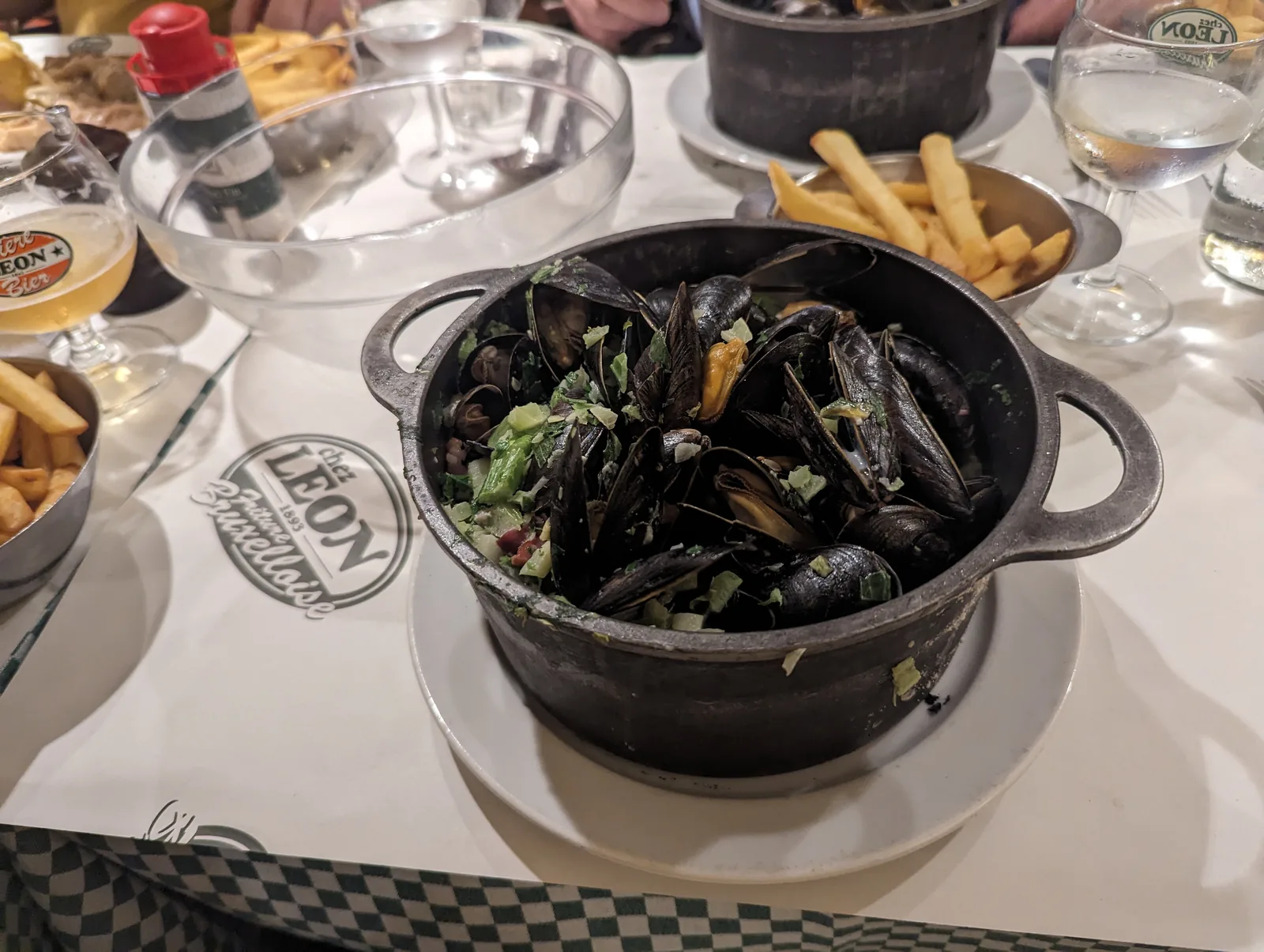
Moules-frites — a black pot of steamed mussels with herbs, served with golden fries at a Brussels brasserie Belgium flag Belgium 1h
Dinner •Brussels Brasserie Classic

Moules-Frites

This moules frites recipe makes the plate Belgium is proudest of: a black pot of mussels steamed open in white wine, shallots and cream, served with a heap of crisp, twice-cooked fries and a pot of mayonnaise. The mussels are sweet and briny, the broth is made for dipping, and the fries stay crisp if you keep them out of the pot. One serving is about 350 g.

Seaside Comfort

Sweet mussels steamed in white wine and cream, piled next to golden twice-cooked fries.

Pairs Well With
Crisp Belgian lager & mayonnaise
High Protein
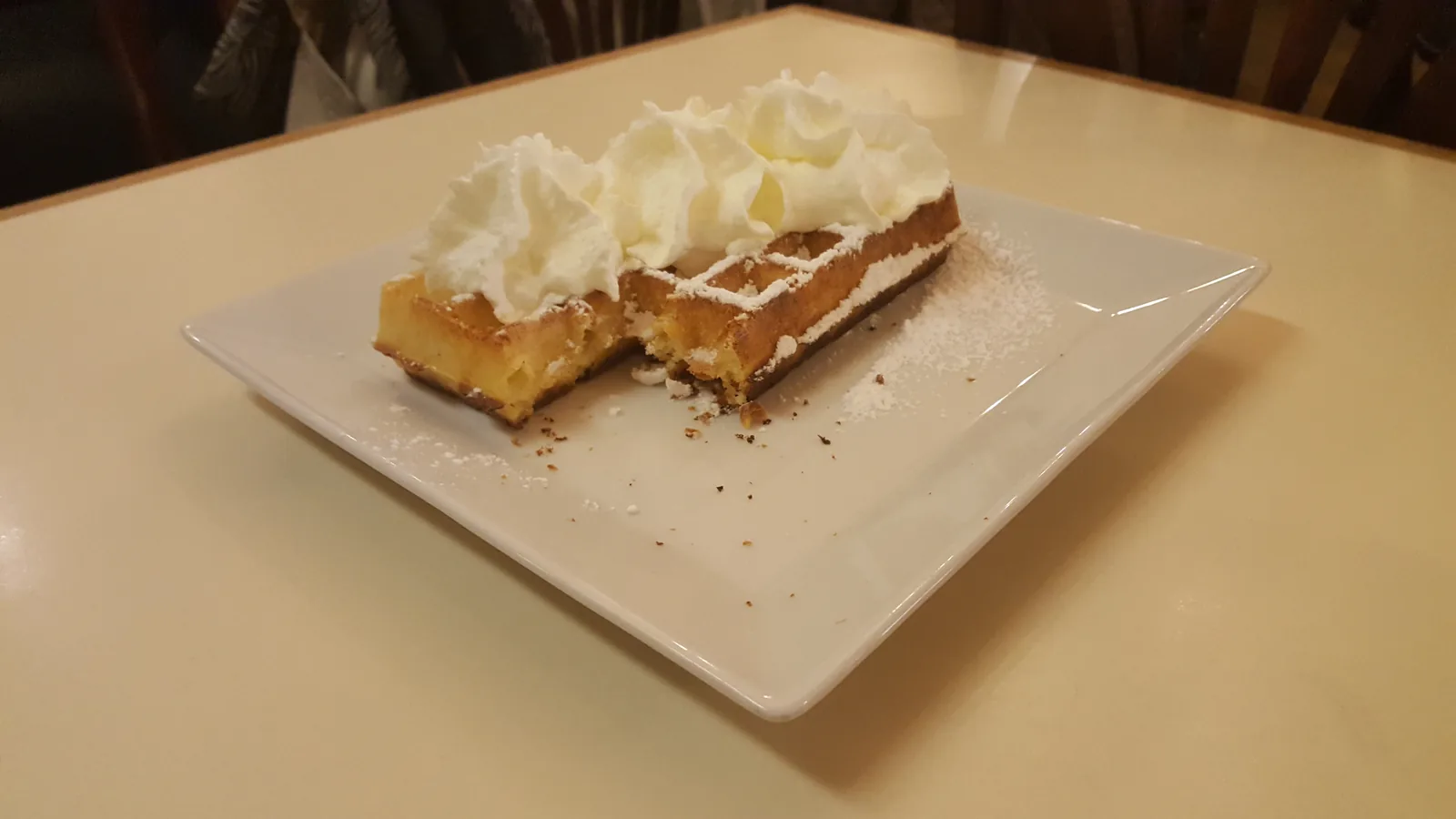
Belgian waffles — a golden Brussels waffle topped with whipped cream and icing sugar on a white plate Belgium flag Belgium 1h 35m
Breakfast •Brussels Bakery Classic

Belgian Waffles

This Belgian waffles recipe makes the light, yeasted kind: a risen batter cooked in a hot iron until the outside is crisp and golden and the inside stays soft and airy. The deep pockets hold butter, syrup or berries, and a dusting of icing sugar is all they really need. This recipe makes 8 waffles; one serving is 2 waffles, about 210 g. Nutrition is for the plain waffles, before toppings.

Weekend Breakfast Treat

Light, yeasted Brussels waffles with deep pockets, crisp outside and soft inside.

Pairs Well With
Strong coffee & fresh berries
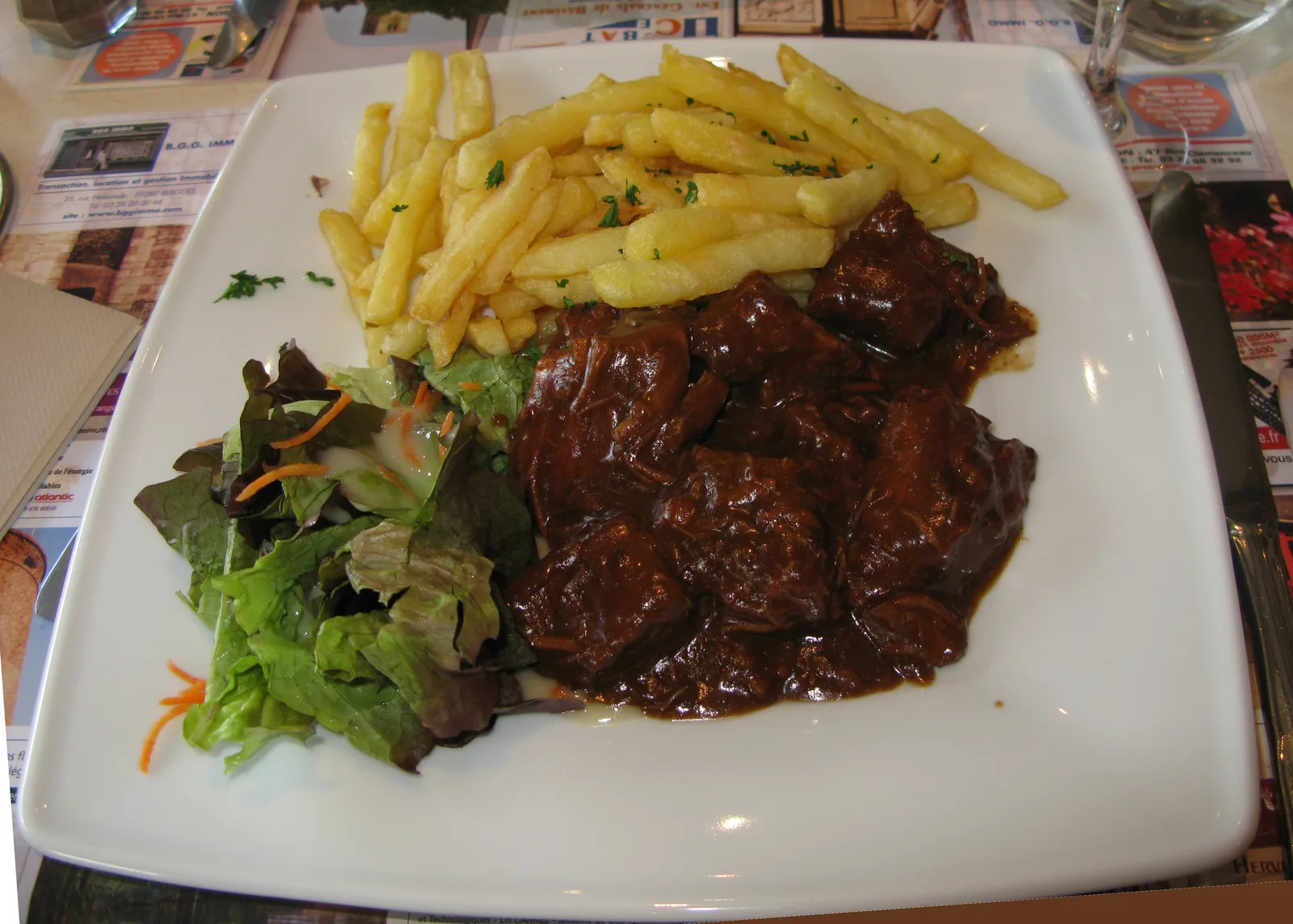
Carbonade flamande — dark beer-braised beef stew with fries and a small salad on a white plate Belgium flag Belgium 2h 55m
Dinner •Flemish Farmhouse Classic

Carbonade Flamande

This carbonade flamande recipe is Flanders' answer to the French beef stew: chunks of beef braised for hours in dark Belgian ale with sweet caramelised onions, thyme and bay, thickened the old way with slices of bread spread with mustard. The sauce turns dark, glossy and sweet-sour, and the beef goes spoon-tender. One serving is about 250 g, not counting the fries or potatoes served alongside.

Slow Sunday Comfort

Beef braised low and slow in dark Belgian ale with onions and mustard bread.

Pairs Well With
Dark Belgian ale & fries
High Protein
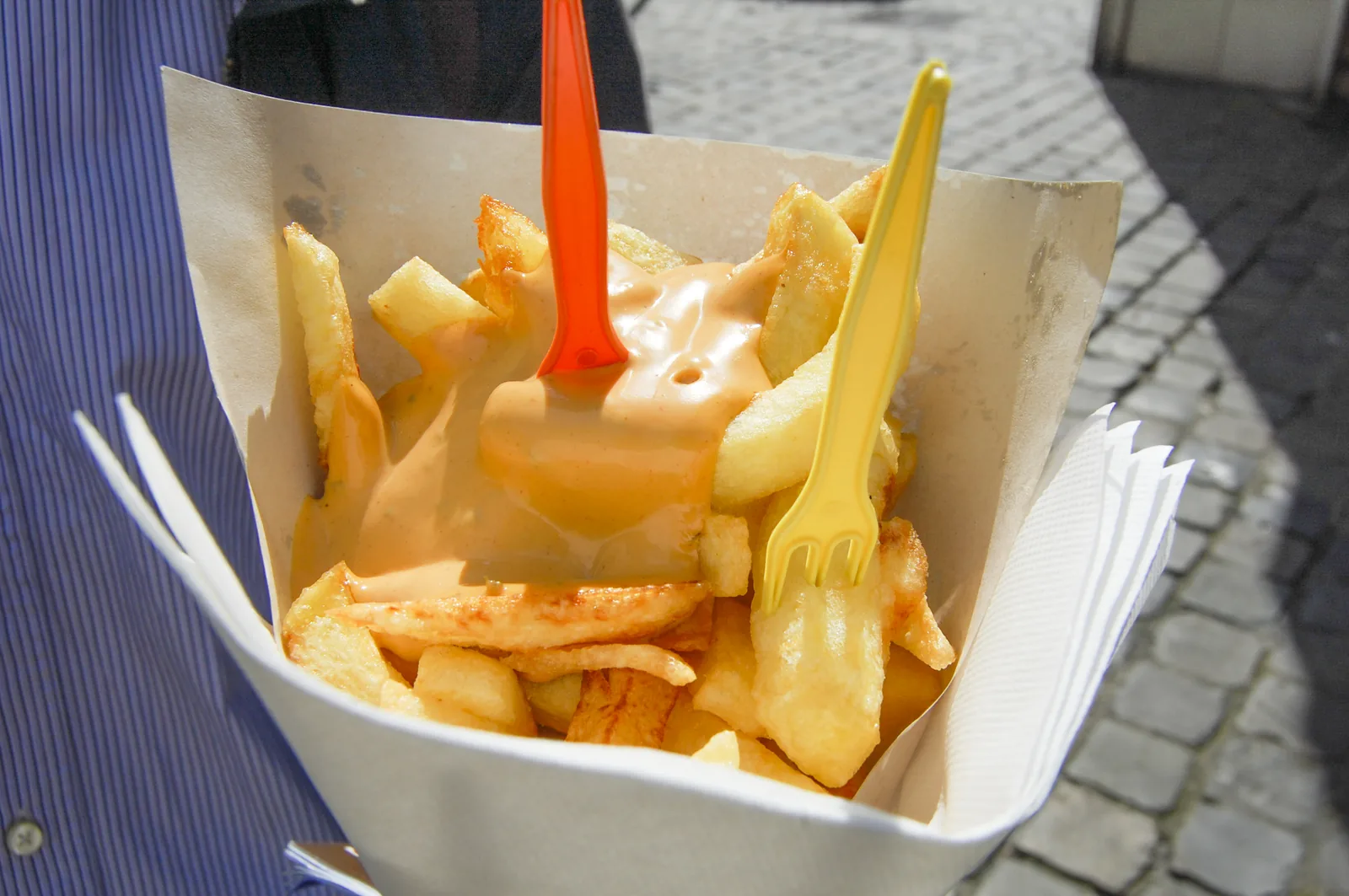
A paper cone of golden Belgian fries topped with andalouse sauce and two small plastic forks. Belgium flag Belgium 55m
Snack & Tea •Brussels Friterie Classic

Belgian Fries

Belgian fries are the real thing: thick batons of floury potato, fried twice — once gently to cook them through, once hot to shatter the outside — and served in a paper cone with andalouse sauce. One serving is about 253 g.

Crisp & Golden

Thick-cut potatoes fried twice in vegetable oil — crisp outside, fluffy inside, with andalouse sauce.

Pairs Well With
Serve hot in a paper cone with andalouse sauce and a cold lager.
Quick Prep (<30m)

The Dinner Gazette

Never wonder what’s for dinner again

One email a week with easy dinner ideas from around the world — ingredients, steps and nutrition, tested in our kitchen first.

Delivered every Thursday morning. Unsubscribe anytime.