Curated recipes from 193 countries  •  New seasonal Mediterranean issue out now

Overview

Mauritian Fish Vindaye

Vindaye Poisson, Fish Vindaloo, Vindaye de Poisson

Mauritian fish vindaye is firm tuna, fried until golden, then coated in a warm mustard and turmeric paste with soft onions, peppers and chillies, and finished with white wine vinegar so the fish pickles lightly as it rests. One serving is about 295 g. This mauritian fish vindaye recipe serves 4, takes 45 minutes plus a short rest, and tastes best the next day, once the vinegar and spices have soaked into the fish.

Vindaye takes its name from the Portuguese vinha d'alhos, a wine-and-garlic marinade that travelled to Goa as vindaloo and on to Mauritius with Indian cooks. On the island the marinade was reworked around the local catch: firm fish fried and then pickled in mustard seeds, turmeric and vinegar, with onions and chillies. Today fish vindaye is a fixture of Mauritian parties, served as a gajak — a nibble with a drink — as well as a main dish with rice or bread.

Pairs well with: Serve with steamed basmati rice or crusty bread, a crunchy cabbage and carrot salad, and a cold drink.

Provenance

Mauritius flag Mauritius

Mauritian Creole Classic

African Heritage

Time Dedication

45m

20m prep • 25m cook

Batch Yield

4 Servings

351 kcal per serving

1 serving ≈ 295 g

Technical Skill

Intermediate

Medium (Frying & Pickling)

Meal Timing & Digestive Fit

Breakfast

Not Advised

Lunch

Hearty Midday Main

Dinner

Ideal Hearty Main

Snack & Tea

Inappropriate

High Protein Occasions: Party nibble (gajak), family dinner, make-ahead lunch Cost: Moderate — about $4–5 per serving at home
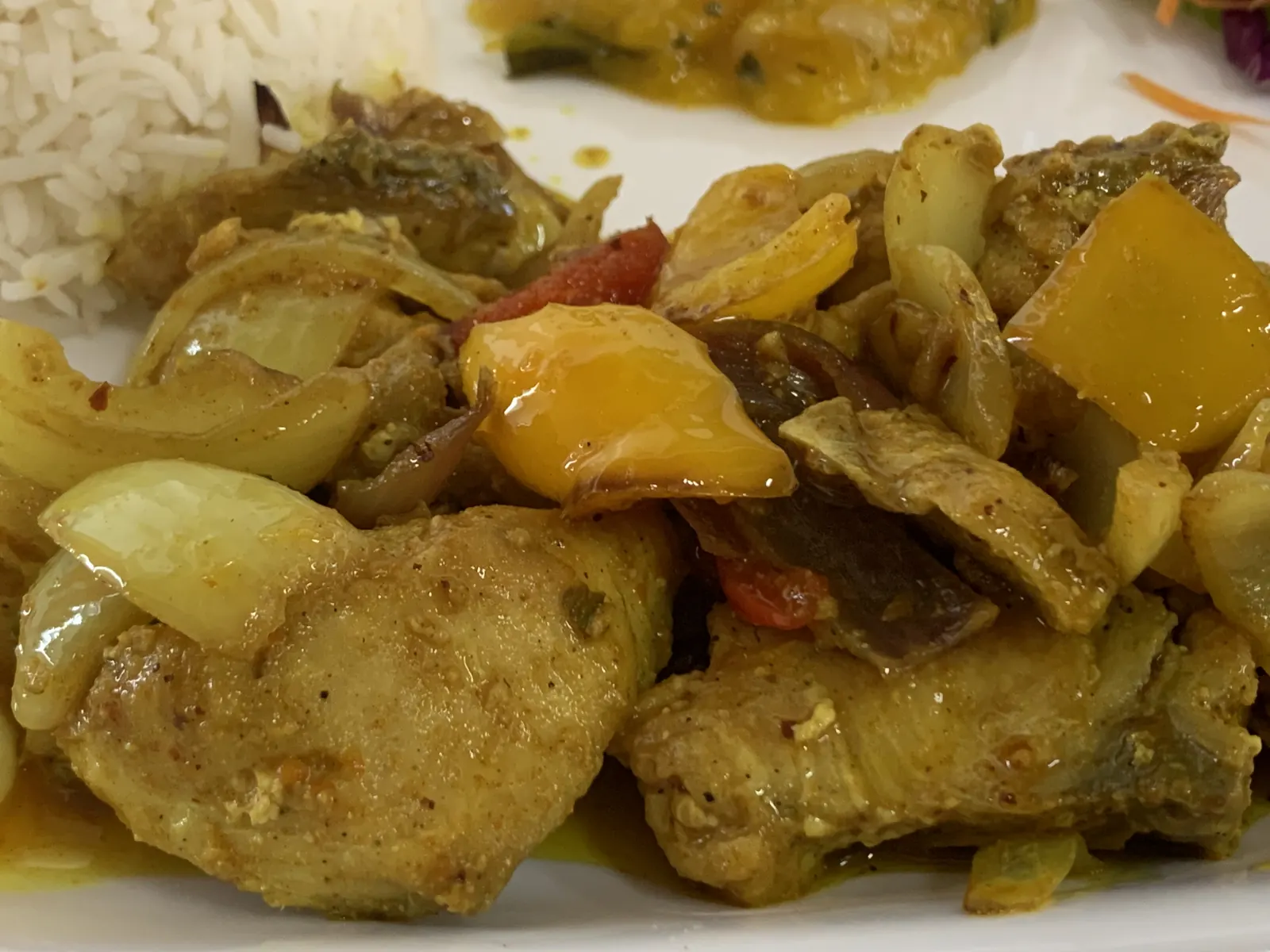
Golden fish vindaye with sliced onions, peppers and coriander in a turmeric-mustard sauce, served with white rice

Mauritian Creole Classic

Photo: Benoît Prieur, CC0, via Wikimedia Commons

The Heritage Formulary

Measured Ingredients

Estimated cost: Moderate — about $4–5 per serving at home (USD)

Made with firm fish fried golden, coated in a mustard and turmeric paste with onions and vinegar, then rested so the pickle flavour soaks in.

Execution Methodology & Culinary Technique

Step-by-Step Cooking Guide

Active 45m
P

Prep Stage: Dry the Fish, Slice the Onions, Grind the Paste

20 Mins • Cutting, Slicing & Grinding

Pat the tuna very dry and cut it into thick chunks. Slice the onions into half-rings and the pepper into strips, then grind the mustard seeds with the turmeric, garlic, ginger and fenugreek and a splash of cold water into a thick paste. Measure out the vinegar, water, sugar and salt so the sauce comes together quickly once the fish is fried.

Maestro Tip: Fish that is properly dry browns instead of steaming — take the extra minute with the paper towels, it makes the whole dish.

  1. 1

    Grind the Mustard-Turmeric Paste

    10 Mins No heat — room temperature, about 20°C (68°F)

    Put the coarsely ground mustard seeds in a small bowl with the ground turmeric, chopped garlic, chopped ginger, fenugreek seeds and a pinch of the salt. Add 2 tablespoons of cold water and stir, or grind briefly, until you have a thick, spoonable paste.

    Keep the paste thick, not runny — it should coat the fish rather than slide off it.

    Done when: A thick, golden paste that holds its shape on a spoon.

  2. 2

    Fry the Fish Until Golden

    8 Mins Oil at about 175°C (350°F)

    Heat 30g of the oil in a large frying pan over medium-high heat until it shimmers. Lay the fish chunks in a single layer without crowding the pan and fry for about 2 minutes per side until golden at the edges. The fish does not need to be cooked through yet. Lift it out onto a plate.

    Fry in two batches if the pan is small — crowded fish steams, and steamed fish falls apart in the sauce.

    Done when: Golden edges and a firm surface; the centre can still be slightly translucent.

  3. 3

    Soften the Onions and Bloom the Spices

    5 Mins Medium heat, about 160°C (320°F)

    In the same pan, add the remaining 15g of oil. Fry one third of the sliced onions with the pepper strips until just translucent, about 2 minutes — they should stay a little crunchy. Add the curry leaves, then the mustard-turmeric paste, and stir for 1 to 2 minutes until fragrant. Do not let the mustard cook too long or it turns bitter.

    The paste is ready when it smells warm and nutty; if it starts to darken, take the pan off the heat at once.

    Done when: Onions soft but still crunchy, paste fragrant and a shade darker.

  4. 4

    Simmer the Fish in the Vinegar Sauce

    10 Mins Gentle simmer at about 95°C (200°F)

    Pour in the white wine vinegar and the water, add the sugar and the remaining salt, and bring to a gentle simmer. Slide the fried fish back into the pan, spoon the sauce over it, cover and simmer on low for 5 to 8 minutes until the fish is opaque and flakes easily. Check the thickest piece reaches 63°C (145°F) inside.

    Turn the fish once, gently, with a wide spoon — tongs and forks break the chunks apart.

    Done when: Fish opaque throughout and flaking easily, coated in a glossy golden sauce.

  5. 5

    Rest the Vindaye Before Serving

    30 Mins (or overnight) Rest at room temperature, about 20°C (68°F), then chill at 4°C (39°F) if keeping overnight

    Take the pan off the heat and stir in the remaining raw sliced onions, the green chillies and the chopped coriander. Let the vindaye rest for at least 30 minutes so the vinegar and spices soak into the fish. For the classic flavour, cover and chill it overnight in the fridge, then serve it at room temperature or gently reheated.

    Vindaye is a pickle at heart — it genuinely tastes better the next day, so make it ahead whenever you can.

    Done when: The fish has taken on the golden colour of the sauce and the onions have softened slightly.

Finishing Touches & Plating

Spoon the vindaye onto plates with its golden sauce and crunchy raw onions, scatter over the coriander, and serve with rice or bread — it is at its best after a night in the fridge, eaten at room temperature.
Nutritional Physiology & Benefits

Nutrition

Energy

351

kcal / serving

Protein

40g

Complete AA

Carbs

16g

Complex

Fats

14g

Healthy

Per serving (4 servings · 1 serving ≈ 295 g)
Energy351 kcal
Protein40 g
Carbohydrates16 g
Fat14 g
Fibre3.4 g
Sugar6.1 g
Sodium550 mg
Per 100g
Energy119 kcal
Protein13.5 g
Carbohydrates5.3 g
Fat4.8 g
Fibre1.2 g
Sugar2.1 g
Sodium186 mg

Nutrition values are estimated — calculated from USDA FoodData Central values for the listed ingredients.

Vitamins & minerals: Nutrition is estimated. Tuna brings protein, selenium and vitamin B12; turmeric and mustard seeds add iron and manganese; onions, peppers and coriander add vitamin C and vitamin K.

Lean Protein

Tuna is a lean fish, so a serving gives about 40 g of protein with modest fat — enough to keep you full without a heavy meal.

Mustard and Turmeric

Mustard seeds and turmeric bring the dish its colour and warmth, with iron, manganese and the plant compounds that give turmeric its yellow colour.

Light, Vinegar-Bright Flavour

The sauce is vinegar-based rather than cream- or coconut-based, so the dish stays light and the fish, not the fat, is the star.

Food Pairings

What to Eat With

To optimize nutrient absorption and elevate the sensory depth, pair with these authentic accompaniments:

Sides

Steamed Basmati Rice

Plain rice soaks up the golden vinegar sauce and calms the mustard heat, which is why vindaye is most often served over rice.

Crusty Bread or Baguette

In Mauritius vindaye is a gajak, a party nibble eaten with fresh bread — the bread is perfect for scooping up the pickled fish and sauce.

Vegetables

Cabbage and Carrot Salad

A crunchy, lightly dressed raw salad adds cool freshness and a second crunch next to the soft onions and tender fish.

Sauces

Achard (Pickled Vegetables)

Mauritian pickled cabbage and carrot echo the vinegar tang of the vindaye itself, so the two pickles sit naturally on one plate.

Drinks

Iced Tea or Fresh Lime Soda

A cold, lightly sweet drink cools the chilli heat and refreshes the palate between bites of the sharp, mustardy fish.

Complete menu

Fish vindaye with steamed basmati rice and a cabbage and carrot salad, followed by fresh fruit; iced tea to drink.

Digestive Guardrails

What NOT to Combine

To prevent digestive distress, sluggishness, or palate clash, avoid pairing the dish with these elements:

Undercooked or Raw Fish

Vindaye is a pickle, not a cure — the vinegar does not cook the fish, so the fish must reach 63°C (145°F) inside before resting. This is general guidance, not medical advice.

Heavy, Creamy Dishes Alongside

A rich coconut curry or creamy sauce on the same plate fights the sharp vinegar flavour of vindaye and makes the meal unnecessarily heavy — keep the sides light. This is general guidance, not medical advice.

General information only, not medical advice — consult a doctor for personal dietary decisions.

Who Should Eat It

Who Should Eat

  • General adultsA bright, punchy fish dish — tangy, lightly spiced and satisfying with rice or bread.
  • ChildrenThe vinegar tang and mustard heat are strong for young children; serve them a small piece of fish with plain rice and leave the chillies out of their portion.
  • ElderlySoft, flaky fish that is easy to chew; keep the portion modest and the chillies light, and serve it warm rather than fridge-cold.
  • Pregnant womenEat the fish fully cooked to 63°C (145°F) and freshly made or properly chilled; tuna is best eaten in moderation because of mercury. Ask your clinician about portion size and frequency.
  • Breastfeeding womenA good protein-rich meal, but keep tuna portions moderate for the same mercury reason as in pregnancy. Ask your clinician if unsure.
  • AthletesAbout 40 g of protein per serving with rice makes a strong recovery meal after training.
  • Weight gainA lean dish, so someone gaining weight should pair a full portion with a generous serving of rice or bread.
  • Weight lossHigh in protein and light on fat, so it suits a weight-loss plate — keep the rice portion modest and load up on the salad.

Health Conditions — Adjust or Avoid

Conditions

  • DiabetesThe fish itself is very low in carbohydrate, but the rice alongside it adds up — keep the rice portion modest and favour the salad. Ask your clinician about portion size.
  • High blood pressureSalt is measured at 5 g for 4 servings; do not add extra salty pickles or soy sauce on top. Ask your clinician about sodium.
  • Kidney diseaseTuna is high in protein and the sauce adds salt, so portion size matters — a smaller serving with more salad is kinder. Ask your clinician.
  • GoutTuna is moderately high in purines, so keep the portion modest and drink water with the meal. Ask your clinician.
  • Stomach issuesVinegar and mustard can irritate a sensitive stomach — if you are prone to reflux, eat a smaller portion and skip the raw chillies. Ask your clinician.
  • Cardiovascular diseaseA lean fish dish low in saturated fat, which fits a heart-friendly pattern in moderate portions; keep tuna frequency moderate. Ask your clinician.
  • Fatty liverLow in fat and high in protein, but the rice portion decides the meal's energy — a modest serving of rice keeps it lighter. Ask your clinician.
  • Food allergiesContains fish (tuna) and mustard seeds — both are recognised allergens. Check the vinegar and spice labels for traces if you have other allergies. Ask your clinician if you have allergies.
  • Special therapeutic dietsNaturally gluten-free and dairy-free, and it fits a low-carbohydrate plate when served with salad instead of rice. Ask your clinician or dietitian before changing your diet.

If you have a medical condition, consult your doctor before changing your diet.

Storage & Use

Storage & Use

How to store
Cool completely, then store in an airtight container in the fridge, with the fish covered by the sauce.
In the fridge
3 to 4 days in the fridge; the flavour improves after the first night.
In the freezer
Not recommended — freezing makes the fish dry and the onions soft and watery.
How to reheat
Warm gently in a covered pan over low heat until steaming, or serve at room temperature; if reheating, bring the fish to 74°C (165°F) inside.
Freezing recommended
No — this dish is a pickle and keeps best chilled, not frozen.
Signs it has spoiled
Sour smell beyond the normal vinegar tang, slimy fish, or a dull grey colour on the sauce.

More recipes to explore

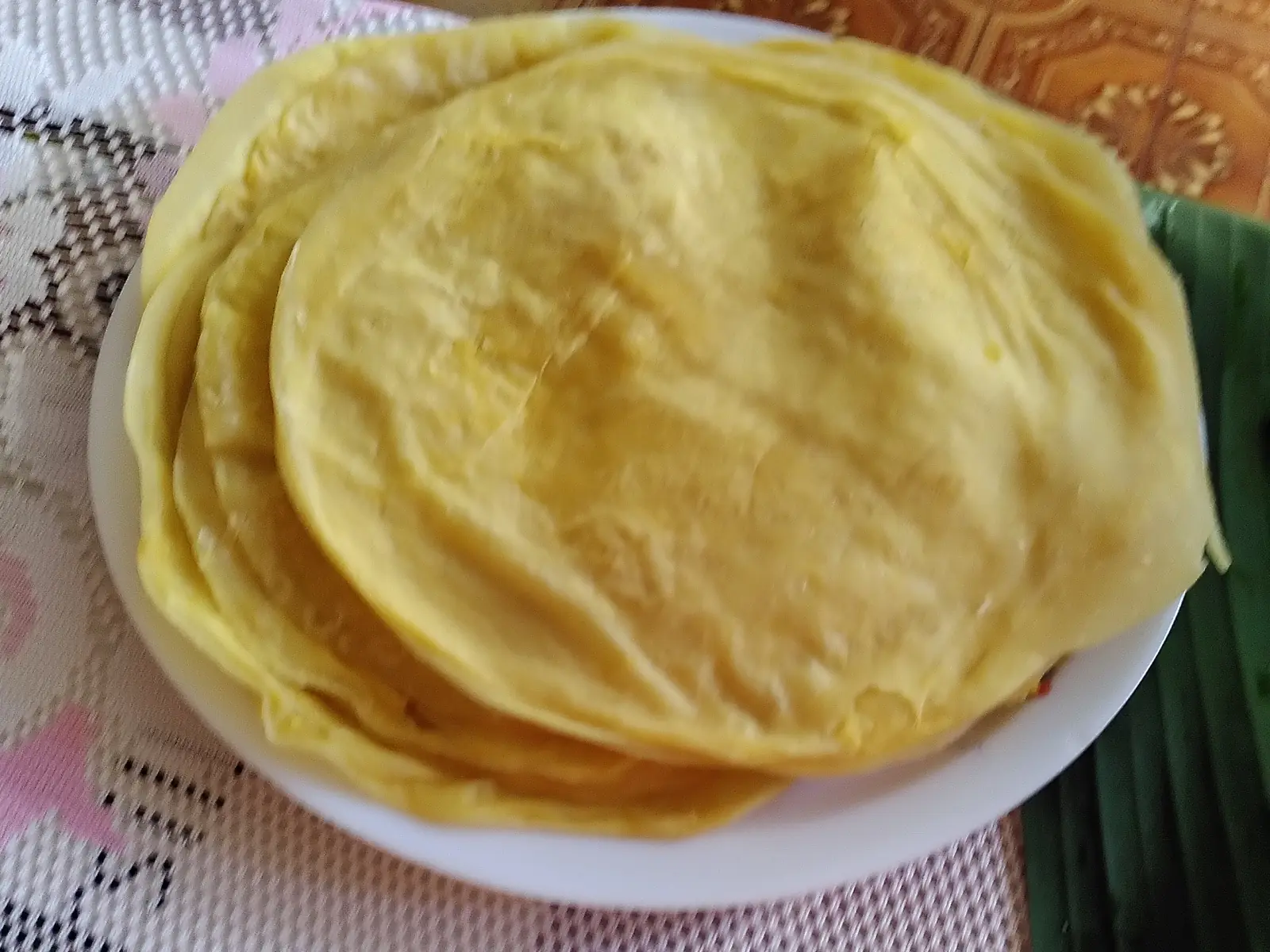
A stack of thin golden-yellow dholl puri flatbreads on a white plate Mauritius flag Mauritius 1h 15m
Lunch •Port Louis Street Food

Dholl Puri

Mauritian dholl puri is a thin, golden flatbread made from wheat flour kneaded with ground yellow split peas, cumin and turmeric, griddled until soft and folded around butter bean curry, tomato chutney and pickles. One serving is about 440 g: two warm puris with bean curry and chutney. This mauritian dholl puri recipe makes 8 puris, enough for 4 people, and tastes best eaten fresh off the griddle.

Comfort & Warmth

A soft, warm flatbread with a hearty bean curry, made to be eaten with your hands and shared.

Pairs Well With
Serve with butter bean curry (cari gros pois), tomato chutney and pickled vegetables, plus a cold drink.
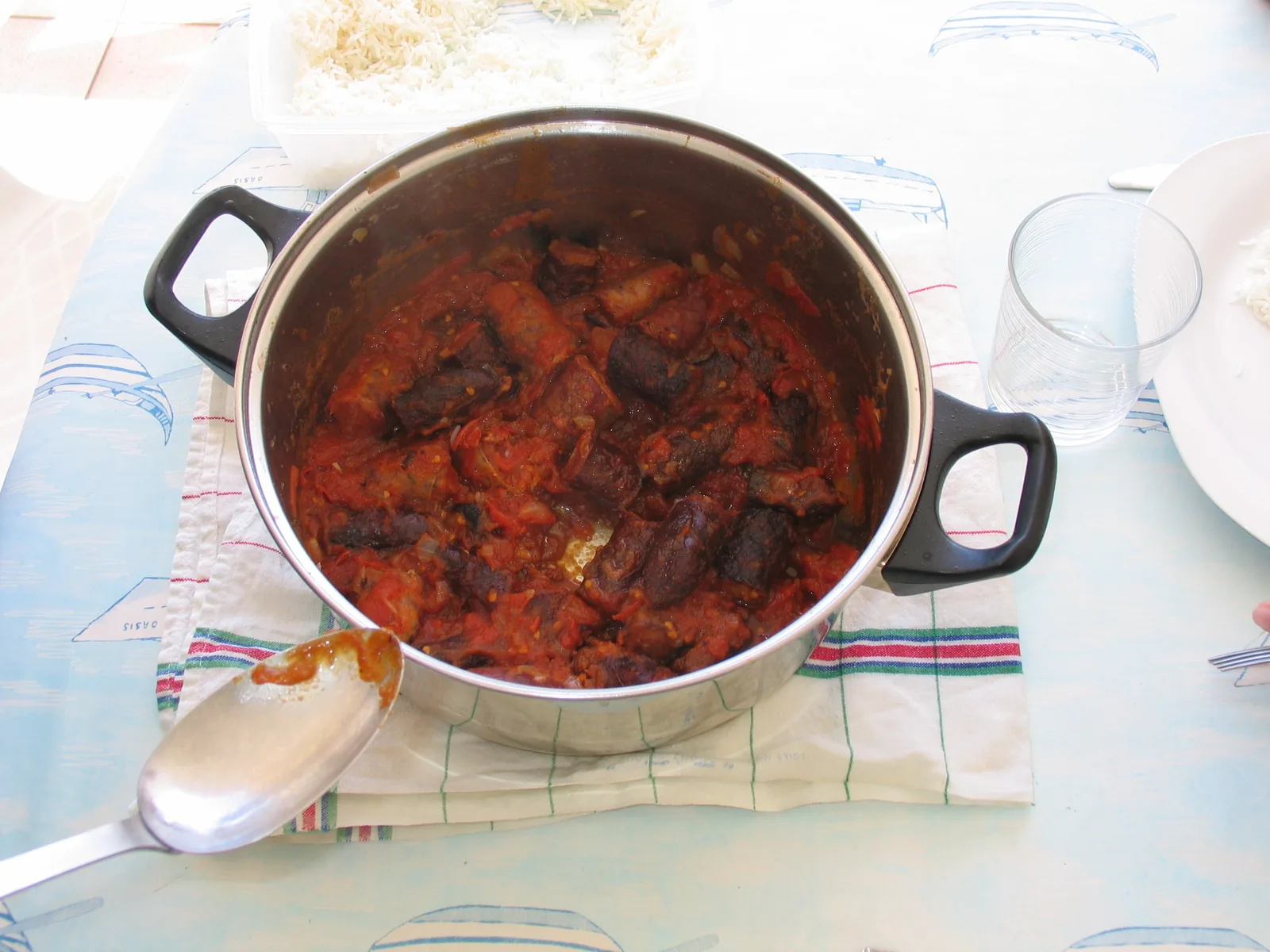
A pot of rougaille saucisse, pork sausages simmered in a rich red tomato sauce, with rice behind Mauritius flag Mauritius 55m
Dinner •Mauritian Creole Classic

Rougaille Saucisse

Rougaille saucisse is a Creole stew of browned pork sausages simmered in a spiced tomato sauce with onion, garlic, ginger, thyme and chilli, served over plain white rice. One serving is about 320 g of stew. This rougaille saucisse recipe serves 4 and takes under an hour, most of it hands-off simmering.

Comfort & Warmth

A rich, slow-simmered tomato and sausage stew that tastes like a Mauritian family dinner.

Pairs Well With
Serve over steamed white rice with a little of the sauce spooned on top, plus a green salad.
High Protein
Bœuf bourguignon — French beef braised in red wine France flag France 4h
Dinner •Burgundy Terroir

Bœuf Bourguignon

Beef braised gently in red wine until the connective tissue melts into a velvet, gelatin-rich sauce — the classic Burgundy Sunday dinner.

Cellular Repair

Beef braised in red wine until spoon-tender, with mushrooms and pearl onions.

Pairs Well With
Parsnip Purée & Steamed French Haricots Verts
High Protein
Vietnamese braised pork belly with golden eggs in caramel sauce Vietnam flag Vietnam 1h 45m
Dinner •One Pot

Vietnamese Braised Pork and Eggs

Pork belly slowly braised in coconut water and caramel until meltingly tender, with golden eggs that soak up the sweet-savoury sauce — the Vietnamese family dish that tastes better the next day.

Comfort & Sustained Energy

Slow-braised pork belly and eggs in coconut water and caramel.

Pairs Well With
Steamed rice & pickled mustard greens
High Protein

The Dinner Gazette

Never wonder what’s for dinner again

One email a week with easy dinner ideas from around the world — ingredients, steps and nutrition, tested in our kitchen first.

Delivered every Thursday morning. Unsubscribe anytime.