-
1
Whisk the Batter Until Smooth
5 Mins
No heat — room temperature, about 20°C (68°F)
Put the chickpea flour in a large bowl and pour in the water a little at a time, whisking constantly so no lumps form. Once it is smooth, whisk in 15 g (1 tablespoon) of the olive oil, the salt and the black pepper. The batter should be the consistency of thin cream and coat the back of a spoon in a pale, even layer.
Pouring the water in all at once is how lumps happen — a slow pour with steady whisking keeps the batter silky.
Done when: The batter runs off the whisk in a smooth ribbon with no lumps and no dry flour at the bottom of the bowl.
-
2
Rest the Batter
30 Mins
Room temperature, about 20°C (68°F)
Cover the bowl loosely and leave the batter to rest for at least 30 minutes, and up to 2 hours if that suits your day. Skim off any foam that rises to the top and give the batter one last whisk before you use it — the flour will have settled a little at the bottom.
Use the resting time to heat the oven and the pan; a screaming-hot pan is the second half of the recipe.
Done when: The batter looks slightly thicker than before and smells faintly nutty; a quick whisk brings it back to thin cream.
-
3
Heat the Oven and the Pan
10 Mins
Oven at 250°C (480°F)
Heat the oven to 250°C (480°F), the hottest most home ovens go, with a heavy 30 cm (12 in) ovenproof frying pan or round metal tray inside on the middle shelf. The pan must be genuinely hot before the batter touches it — this is what crisps the base in seconds. Keep the oven door shut while it heats so the temperature does not drop.
A cast-iron skillet or a thick steel pan holds heat best; a thin tray cools the moment the batter hits it and the socca steams instead of crisping.
Done when: The pan is too hot to touch and a drop of water flicked onto it sizzles and vanishes at once.
-
4
Pour and Bake Until Blistered and Gold
12-15 Mins
250°C (480°F); finish under the grill (broiler) for 2 Mins if needed
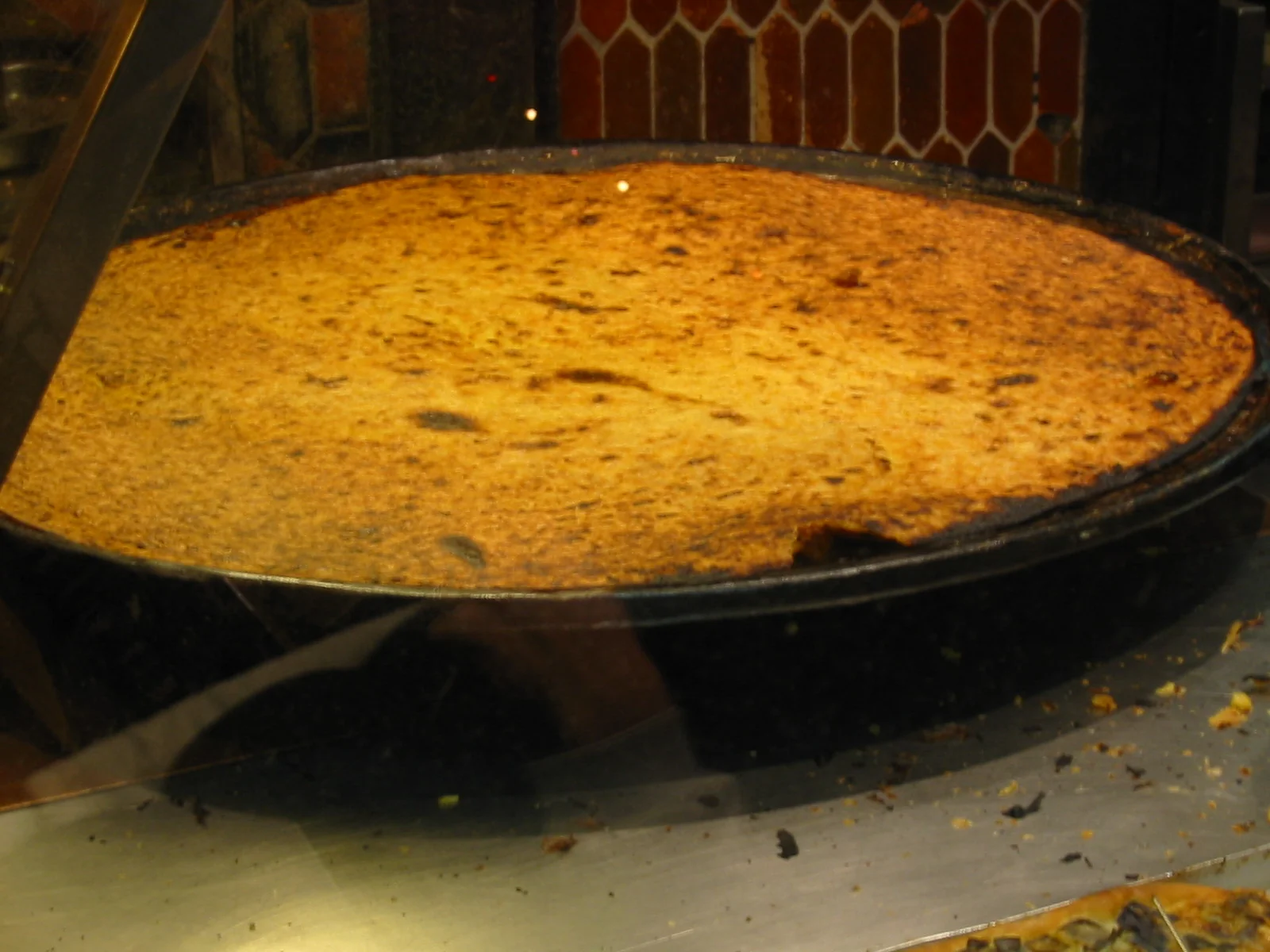
Working quickly, pull the oven shelf out partway, pour the remaining 25 g of olive oil into the hot pan and swirl it to coat the base, then pour in all the batter in one smooth stream — it should sizzle on contact. Slide the pan back in and bake for 10 to 12 minutes until the socca is set, the edges have pulled away from the pan and the top is golden. If the top is still pale, switch on the grill (broiler) for 1 to 2 minutes and watch it closely until dark golden blisters appear.
Do not open the oven in the first 8 minutes — the socca needs steady, fierce heat to set and crisp. Under the grill, it can go from golden to burnt in under a minute, so stay and watch.
Done when: The top is deep gold with darker blistered patches, the edges are crisp and lifting, and the centre is set but still soft when pressed gently.
-
5
Cut and Serve Hot
5 Mins
Serve hot, about 60°C (140°F) or above
Take the pan out of the oven and leave the socca for 2 minutes so it firms up enough to cut. Slide a thin spatula underneath to loosen it, then cut it into rough wedges or strips, the way market vendors do, and serve at once on warmed plates. Grind plenty of black pepper over the top and, if you like, add a final thread of olive oil.
Socca waits for no one — it is at its best in the first 10 minutes, crisp at the edges and soft inside. Cut it in the pan and eat it with your hands, Nice style.
Done when: The wedges hold their shape when lifted, the underside is crisp and golden, and the inside is tender and steaming.
auto_awesome Finishing Touches & Plating
Cut the socca into rough wedges straight from the pan, shower with freshly ground black pepper, and serve hot within 10 minutes while the edges are still crisp.
 Monaco
1h 15m
 Spain
 Vietnam