Curated recipes from 193 countries  •  New seasonal Mediterranean issue out now

Overview

Morcilla Dominicana

Dominican blood sausage; Dominican morcilla

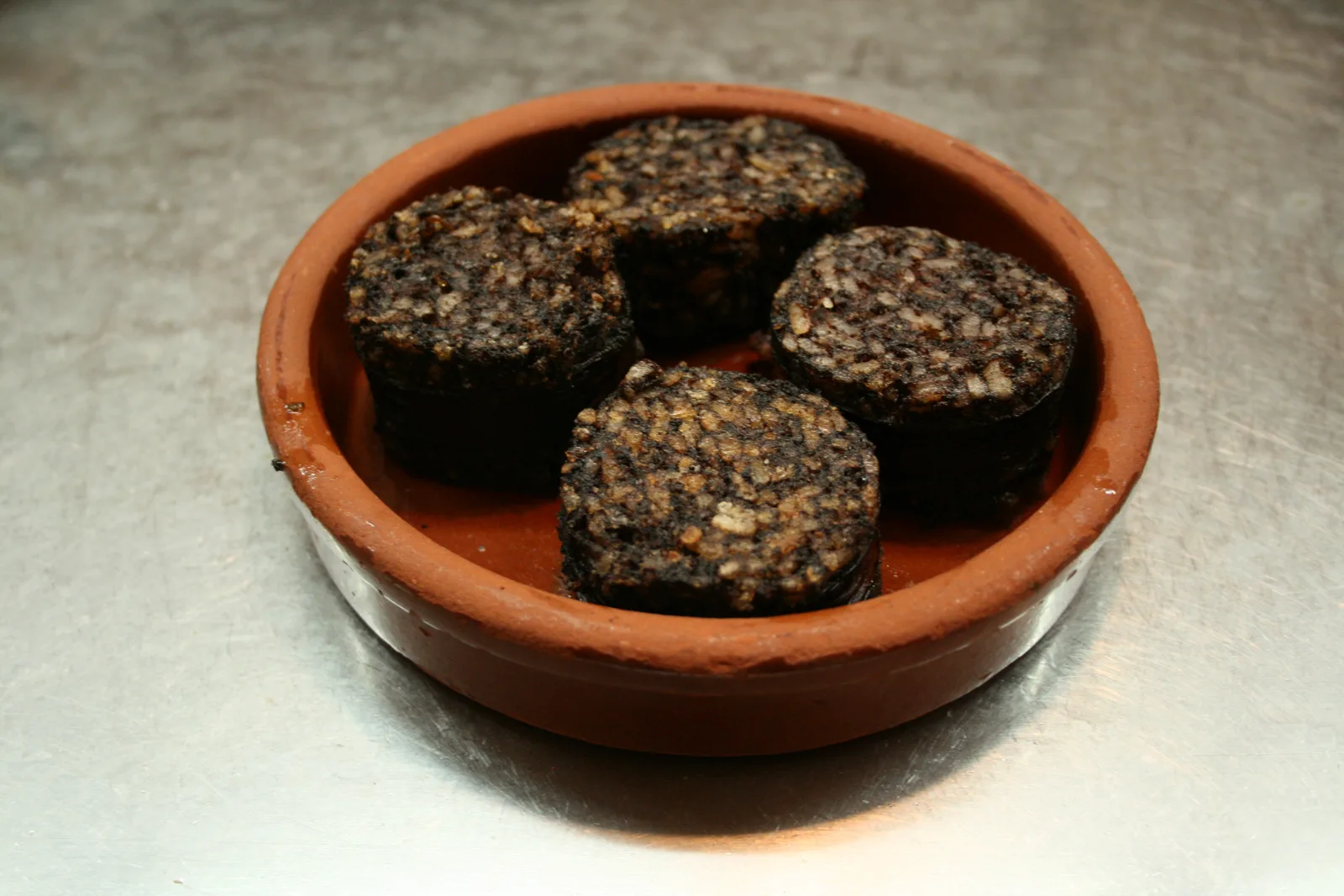
Morcilla dominicana is a Dominican blood sausage of fresh pork blood, cooked rice, diced pork fat, onion, green bell pepper, garlic and culantro, seasoned with oregano and cumin, stuffed into natural casings, poached until set and then fried until the skin is crisp. One serving (two links) is about 270 g.

Morcilla came to the Dominican Republic with Spanish colonists, and Dominican cooks made it their own with the herbs of the island: culantro, green pepper and Dominican oregano, with rice as the filler instead of the onion-heavy Spanish styles. It is a classic cuchifrito — the fried pork snacks sold at lechoneras and street stands — and a familiar sight at festive family gatherings, sliced thick and eaten with tostones and avocado.

Pairs well with: Fried green plantains (tostones) & avocado, with lime

Provenance

Dominican Republic flag Dominican Republic

Dominican Heritage

Latin America & Caribbean

Time Dedication

1h 20m

45m prep • 35m cook

Batch Yield

4 Servings

647 kcal per serving

1 serving ≈ 270 g

Technical Skill

Intermediate

Medium (Sausage Making)

Meal Timing & Digestive Fit

Breakfast

Not Advised

Lunch

Prime Metabolic Fit

Dinner

Ideal Hearty Main

Snack & Tea

Inappropriate

Occasions: Festive gatherings, Street food, Weekend lunch Cost: Moderate — about $3–4 per serving at home
Tags: Pork Savory Rich
Four thick slices of dark rice blood sausage in a terracotta dish, the cut faces showing grains of rice

Dominican Heritage

Photo: Tamorlan, CC BY 3.0, via Wikimedia Commons

The Heritage Formulary

Measured Ingredients

Estimated cost: Moderate — about $3–4 per serving at home (USD)

Made from scratch with fresh blood, rice and natural casings, poached gently and fried crisp.

Execution Methodology & Culinary Technique

Step-by-Step Cooking Guide

Active 1h 20m
P

Prep Stage: Rice Cooked, Filling Mixed, Casings Soaked

45 Mins • Cooking, Mixing, Stuffing

Cook the rice the day before if you can, then strain the cold blood and stir in the diced back fat, cooled rice, onion, green pepper, garlic, cilantro, salt and spices until evenly mixed. Rinse and soak the casings, then stuff loosely — the rice swells as it cooks, so overfilled sausages burst — and tie into 8 links of about 15 cm (6 in). Work quickly and keep everything cold; warm blood sausage mix is hard to stuff and unsafe to leave out.

Maestro Tip: Stuff loosely and prick out air pockets with a clean needle; a sausage that is 80% full cooks evenly and does not burst.

  1. 1

    Cook the rice and chill the blood

    15 mins Cold, below 4°C (40°F)

    Cook the rice until just tender, spread it on a tray and cool it completely — warm rice makes the filling gluey. Strain 500 ml of cold pork blood through a fine sieve into a large cold bowl, and dice the chilled back fat into 5 mm cubes. Dice the onion and green pepper very fine, mince the garlic and chop the cilantro.

    Day-old rice is ideal: dry, separate grains bind the filling without turning it to paste.

    Done when: Rice cooled and fluffy; blood strained and cold; fat, onion, pepper, garlic and cilantro all diced and ready.

  2. 2

    Mix the filling

    10 mins Cold, below 4°C (40°F)

    Add the diced back fat, cooled rice, onion, green pepper, garlic, cilantro, salt, cumin, oregano and black pepper to the strained blood, and stir gently until everything is evenly distributed. Fry a tiny spoonful in a pan and taste it — it should be well-salted, warmly spiced with cumin and oregano, and bright with cilantro and pepper. Keep the bowl over ice while you work.

    Taste the fried spoonful before stuffing: it is the only chance to fix the seasoning.

    Done when: Evenly mixed, deep red filling with visible cubes of fat, grains of rice and flecks of green pepper and cilantro.

  3. 3

    Stuff and tie the links

    20 mins Cold, below 4°C (40°F)

    Rinse the soaked casings and slide one onto a sausage stuffer or a wide funnel. Fill loosely, easing the mix along and pricking out air pockets with a clean needle, then twist and tie into 8 links of about 15 cm (6 in) each. Do not overfill: the rice swells as it cooks and tight links burst in the pot.

    Wet hands and a wet work surface stop the casings sticking and tearing.

    Done when: 8 even links, about 80% full, with no air pockets and no leaks.

  4. 4

    Poach until set

    20 mins Water at 80°C (175°F), never boiling

    Lower the links into a large pot of water at 80°C (175°F) — hot enough to set the blood, cool enough not to burst the casings — and poach for 20 minutes, turning once. The links are done when they feel firm all the way through and a thermometer in the centre of a link reads at least 71°C (160°F). Lift them out and let them cool for 10 minutes before frying.

    Never let the water boil: boiling is what bursts morcilla.

    Done when: Links firm to the touch, centre at least 71°C (160°F), skins intact.

  5. 5

    Fry crisp and serve

    10 mins Oil at 180°C (350°F)

    Heat the oil in a wide pan to 180°C (350°F). Fry the poached links for 3–4 minutes per side until the skin is dark, crisp and blistered, and the centre is piping hot at 74°C (165°F). Drain briefly on paper, then slice thickly or serve whole with tostones, avocado and lime wedges.

    Fry in batches so the pan stays hot; crowded links steam instead of crisping.

    Done when: Skin dark and crisp, centre hot at 74°C (165°F), slices showing rice, fat and green pepper.

Finishing Touches & Plating

Serve the morcilla hot from the pan, sliced thick so the rice-flecked centre shows, with tostones, avocado and lime wedges on the side — the crisp skin, the creamy spiced centre and the bright lime are the whole point of the dish.

Nutritional Physiology & Benefits

Nutrition

Energy

647

kcal / serving

Protein

26g

Complete AA

Carbs

25g

Complex

Fats

49g

Healthy

Per serving (4 servings · 1 serving ≈ 270 g)
Energy647 kcal
Protein26 g
Carbohydrates25 g
Fat49 g
Fibre2.4 g
Sugar2.4 g
Sodium1212 mg
Per 100g
Energy240 kcal
Protein9.7 g
Carbohydrates9.1 g
Fat18.3 g
Fibre0.9 g
Sugar0.9 g
Sodium449 mg

Nutrition values are estimated — calculated from USDA FoodData Central values for the listed ingredients.

Vitamins & minerals: Iron and vitamin B12 (pork blood), zinc and selenium (pork), vitamin C (green bell pepper), vitamin B6 and folate (onion, garlic, cilantro).

Very rich in iron

Pork blood is one of the richest food sources of iron, and the iron in blood is the haem form, which the body absorbs well.

High in protein

Two links give about 26 g of protein, which helps the meal feel satisfying and supports normal muscle maintenance.

Vitamin B12

Blood sausage is a strong source of vitamin B12, a vitamin found mainly in animal foods that supports normal red blood cell formation.

Food Pairings

What to Eat With

To optimize nutrient absorption and elevate the sensory depth, pair with these authentic accompaniments:

Sides

Tostones (fried green plantain)

Crisp, salty tostones are the classic Dominican partner: their crunch and mild starch balance the soft, rich sausage.

White rice (arroz blanco)

Plain rice soaks up the juices and turns two links into a full, filling lunch.

Vegetables

Avocado and tomato salad

Cool, creamy avocado and juicy tomato cut through the richness and add freshness to a heavy plate.

Pickled red onion

Sharp, vinegary onion lifts the fatty sausage and cleans the palate between bites.

Drinks

Cold lager or malt drink

A cold, lightly bitter drink refreshes the palate against the salty, fatty sausage.

Complete menu

Two links of morcilla with tostones, avocado and tomato salad, white rice and lime wedges, followed by fresh fruit.

Digestive Guardrails

What NOT to Combine

To prevent digestive distress, sluggishness, or palate clash, avoid pairing the dish with these elements:

Undercooked blood sausage

Morcilla must reach 71°C (160°F) at its centre when poached and be heated to 74°C (165°F) when fried; undercooked blood sausage can carry harmful bacteria. Always check with a thermometer. This is general information, not medical advice.

Large portions with salty sides

Morcilla is rich and salty, so a big serving with salty plantain chips and cured meats piles up sodium and saturated fat; two links with salad is the balanced plate. This is general information, not medical advice.

General information only, not medical advice — consult a doctor for personal dietary decisions.

Who Should Eat It

Who Should Eat

  • General adultsA rich, satisfying lunch for most adults; two links with tostones and salad make a complete plate.
  • ChildrenNot recommended for young children — the flavour is very strong, the texture is unusual, and the salt and fat are high.
  • ElderlyBest in small portions — one link with salad and tostones — because the sausage is rich, salty and heavy.
  • Pregnant womenEat only freshly cooked and piping hot, from a trusted source; avoid morcilla that has been sitting out, and ask your clinician about iron-rich offal foods during pregnancy.
  • Breastfeeding womenFine as an occasional food; keep the portion modest and pair with salad rather than extra salty sides.
  • AthletesEnergy-dense with about 26 g of protein per serving, so it can follow hard training, but it is high in fat and salt — not an everyday choice.
  • Weight gainTwo links with tostones and rice cover a large share of daily energy and protein needs in one plate.
  • Weight lossVery energy-dense and high in fat and salt, so keep it rare and small — one link with a big salad, not two with extra bread.

Health Conditions — Adjust or Avoid

Conditions

  • DiabetesLow in carbohydrate, but the rice and the richness mean portions still matter; ask your clinician about fitting it into your meal plan.
  • High blood pressureSodium is about 1,212 mg per serving, so keep the portion small, skip extra salt, and ask your clinician if you are on a sodium-restricted diet.
  • Kidney diseaseHigh in protein and potassium, so people on a kidney diet should keep portions small and ask their clinician before eating it.
  • GoutBlood sausage is rich in purines, so people with gout should eat it rarely and in small portions; ask your clinician for personal advice.
  • Stomach issuesThe sausage is rich and fatty, which can feel heavy on a sensitive stomach; eat a small portion, chew well, and ask your clinician if symptoms persist.
  • Cardiovascular diseaseHigh in saturated fat and sodium, so it is best as an occasional small portion with salad rather than a regular meal; ask your clinician about your overall pattern.
  • Fatty liverHigh in saturated fat, so people with fatty liver should keep it rare and small and favour leaner proteins most days; ask your clinician for guidance.
  • Food allergiesContains pork and natural casings; people with a pork allergy should avoid it entirely, and anyone with a meat allergy should check with their clinician.
  • Special therapeutic dietsNot suitable for low-sodium, low-fat or low-purine therapeutic diets except in very small occasional portions; ask your clinician or dietitian first.

If you have a medical condition, consult your doctor before changing your diet.

Storage & Use

Storage & Use

How to store
Cool poached links quickly, then store in a covered container in the fridge; fry only what you will eat.
In the fridge
2 days for poached links; fried morcilla should be eaten the same day.
In the freezer
Up to 2 months, wrapped tightly; freeze after poaching, before frying, and thaw overnight in the fridge.
How to reheat
Reheat in a hot pan or in a 180°C (350°F) oven until hot all the way through, to 74°C (165°F); the microwave makes the skin rubbery.
Freezing recommended
Yes — after poaching, before frying.
Signs it has spoiled
Sour or off smell, slimy casing, grey or green discolouration, or a swollen package — discard, do not taste to check.

More recipes to explore

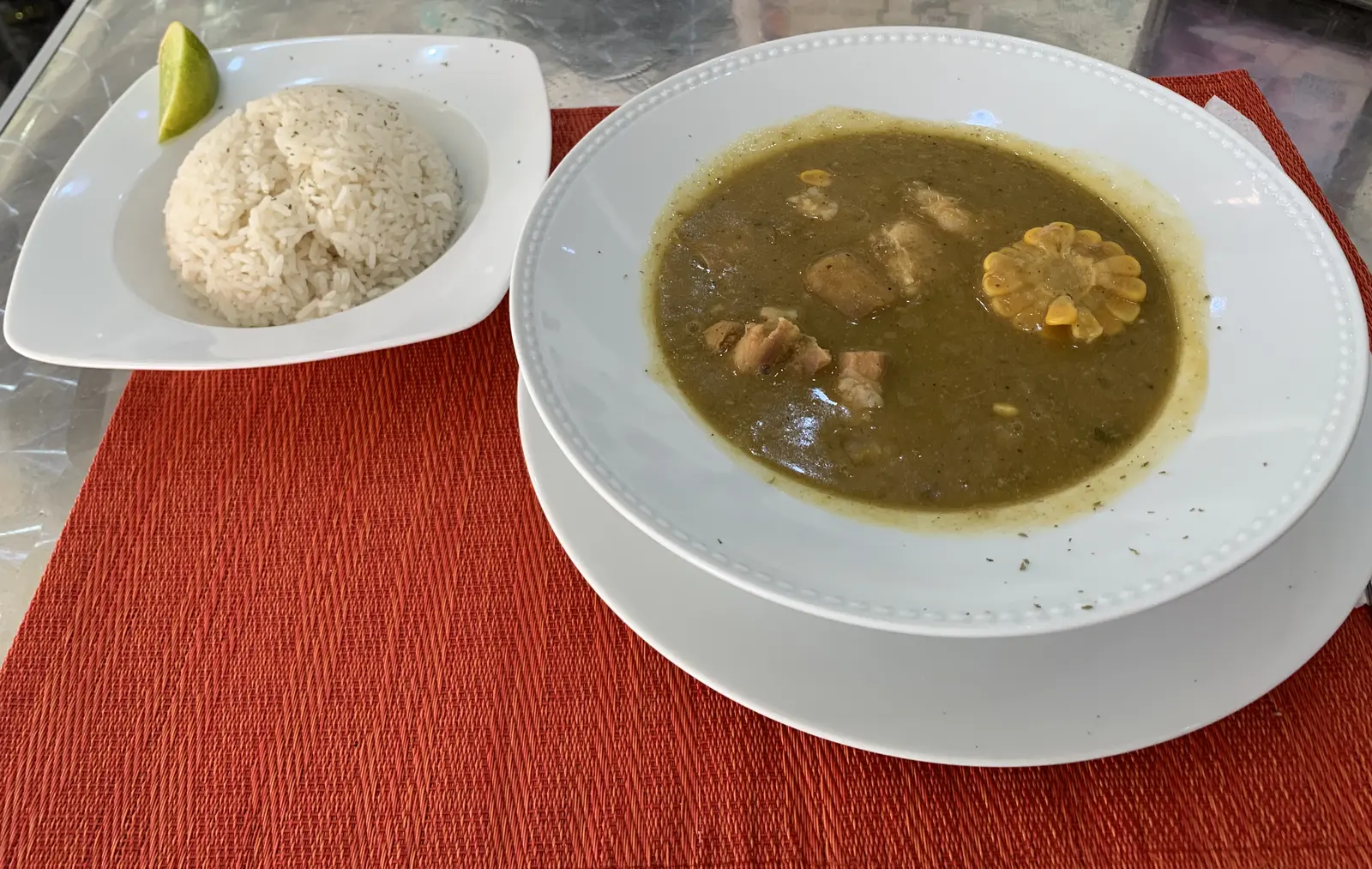
A bowl of Dominican sancocho stew with meat and a round of corn, served with white rice and a lime wedge Dominican Republic flag Dominican Republic 3h 15m
Dinner •Dominican Heritage

Sancocho Dominicano

This sancocho dominicano recipe simmers beef, pork ribs, chicken and longaniza sausage together with yuca, yautía, ñame, green plantain, pumpkin and corn until the broth turns thick and golden. The yautía slowly melts into the pot and gives the soup its signature body, while a squeeze of lime at the table brightens every spoonful. One serving is about 560 g.

Comfort & Warmth

A thick, slow-simmered celebration stew of mixed meats and starchy root vegetables, served hot in deep bowls with white rice on the side.

Pairs Well With
White rice, ripe avocado & lime wedges
Soups & Broths
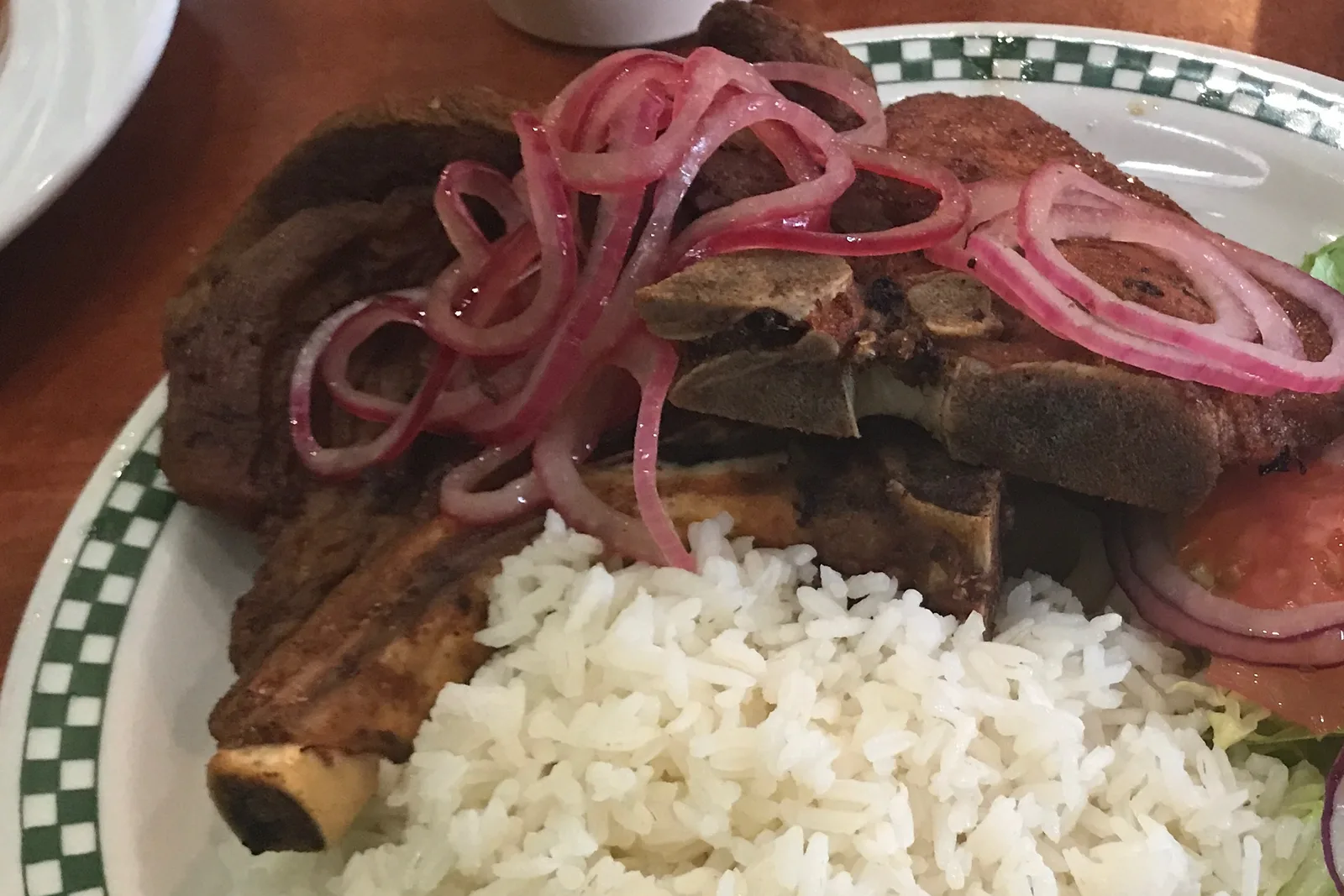
A La Bandera Dominicana plate with white rice, braised meat topped with pickled red onions, tomato and lettuce salad, with a cup of bean stew and tostones beside it Dominican Republic flag Dominican Republic 1h 30m
Lunch •Dominican Republic's National Lunch Plate

La Bandera Dominicana

This la bandera dominicana recipe makes the Dominican Republic's national lunch: a mound of white rice (arroz blanco) next to red beans stewed with squash (habichuelas guisadas) and chicken braised in sofrito and tomato (pollo guisado), with crisp twice-fried green plantains (tostones) and a fresh tomato and lettuce salad. The name means 'the flag', because the white rice, red beans and meat echo the colours of the Dominican flag. One serving is about 695 g.

Hearty & Satisfying

White rice, stewed red beans, braised chicken, tostones and salad on one plate — the lunch the Dominican Republic eats every day.

Pairs Well With
A tall glass of morir soñando, the Dominican orange-and-milk drink
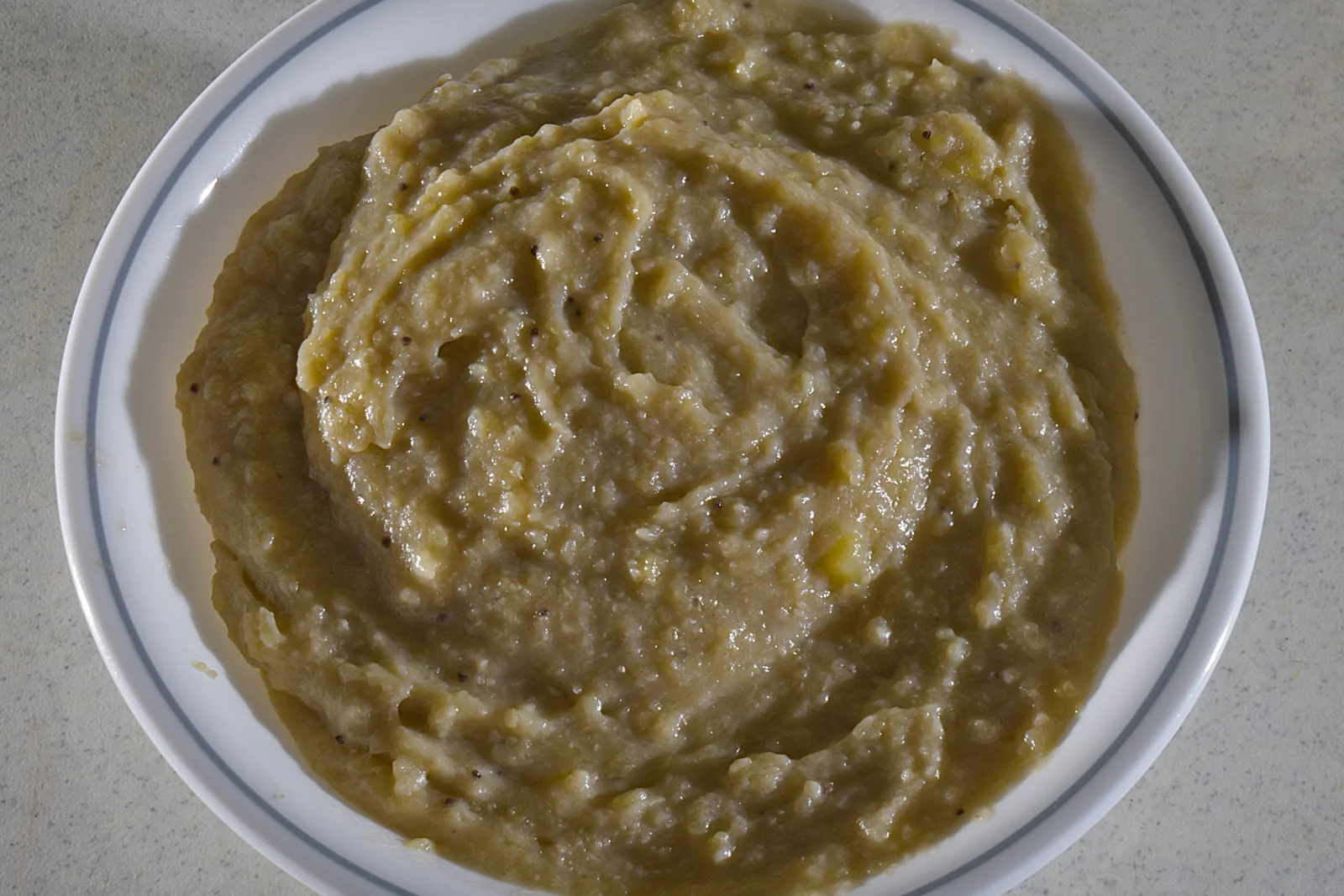
A bowl of smooth mashed green plantain (mangú) in a white bowl Dominican Republic flag Dominican Republic 40m
Breakfast •Dominican Breakfast Classic

Mangú Dominicano

Green plantains are boiled until tender, then mashed silky-smooth with butter and a little of their own cooking water, and finished with a tangle of red onions softened in vinegar and oil. It is the Dominican Republic's national breakfast dish, mild, starchy and comforting, with the sharp onions doing all the talking. One serving is about 280 g.

Hearty Breakfast Energy

Boiled green plantains mashed with butter and topped with tangy sautéed onions for a filling, slow-burning start to the day.

Pairs Well With
Sautéed red onions, fried eggs, fried cheese and fried Dominican salami (Los Tres Golpes)
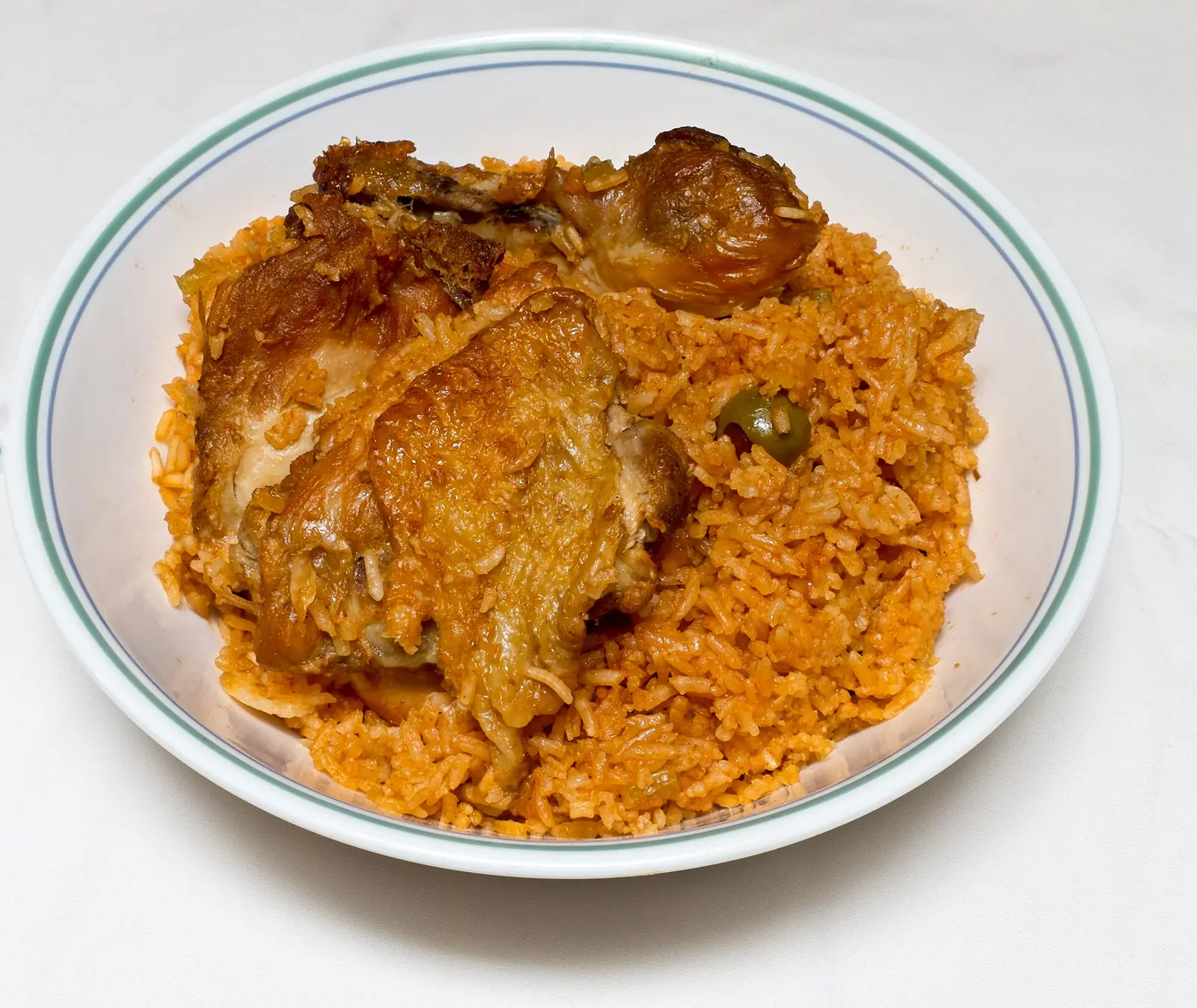
A white bowl of orange-red locrio de pollo with browned chicken pieces and a green olive on a white tablecloth Dominican Republic flag Dominican Republic 1h 20m
Dinner •Dominican One-Pot Classic

Locrio de Pollo

This locrio de pollo recipe starts with bone-in chicken thighs browned in a dark caramel — the quemado that gives the dish its deep colour — then simmers long-grain rice in the same pot with sofrito, tomato paste, pumpkin and green olives until every grain is orange-red and fragrant. It is a true one-pot dinner, and the crispy toasted rice at the bottom, the concón, is the prize everyone fights over. One serving is about 400 g.

Family Comfort

Bone-in chicken browned in caramelised sugar, then simmered with rice, sofrito, tomato, pumpkin and olives in one pot — the Dominican family dinner.

Pairs Well With
Fried plantains, avocado & green salad
High Protein

The Dinner Gazette

Never wonder what’s for dinner again

One email a week with easy dinner ideas from around the world — ingredients, steps and nutrition, tested in our kitchen first.

Delivered every Thursday morning. Unsubscribe anytime.