
Curated recipes from 193 countries  •  New seasonal Mediterranean issue out now

Overview

Mushroom Risotto

Risotto ai Funghi

This mushroom risotto recipe stirs Arborio rice slowly with hot stock, white wine and two kinds of mushrooms, then finishes it the Milanese way with cold butter and Parmesan. One serving is about 500 g.

Risotto belongs to the Po Valley, where rice has grown in the flooded paddies of Lombardy and Piedmont since the 15th century. The dish as we know it took shape in Milan in the 19th century, when cooks learned that slowly stirring short-grain rice with hot stock released its starch into a creamy sauce — no cream needed. The famous story says saffron risotto was born in 1574, when an apprentice working on the stained glass of Milan Cathedral joked that saffron belonged in the rice too; whether or not that happened, saffron and mushrooms became the two great Milanese risottos.

Pairs well with: A rocket and Parmesan salad and a glass of dry white wine

Provenance

Italy flag Italy

Milanese Classic

Mediterranean & Italy

Time Dedication

50m

15m prep • 35m cook

Batch Yield

4 Servings

554 kcal per serving

1 serving ≈ 500 g

Technical Skill

Intermediate

Intermediate (Slow Stirring)

Meal Timing & Digestive Fit

Breakfast

Not Advised

Lunch

Hearty Midday Main

Dinner

Ideal Hearty Main

Snack & Tea

Inappropriate

Occasions: Comforting dinners, autumn evenings, first courses, vegetarian mains Cost: Low — about $3–4 per serving at home
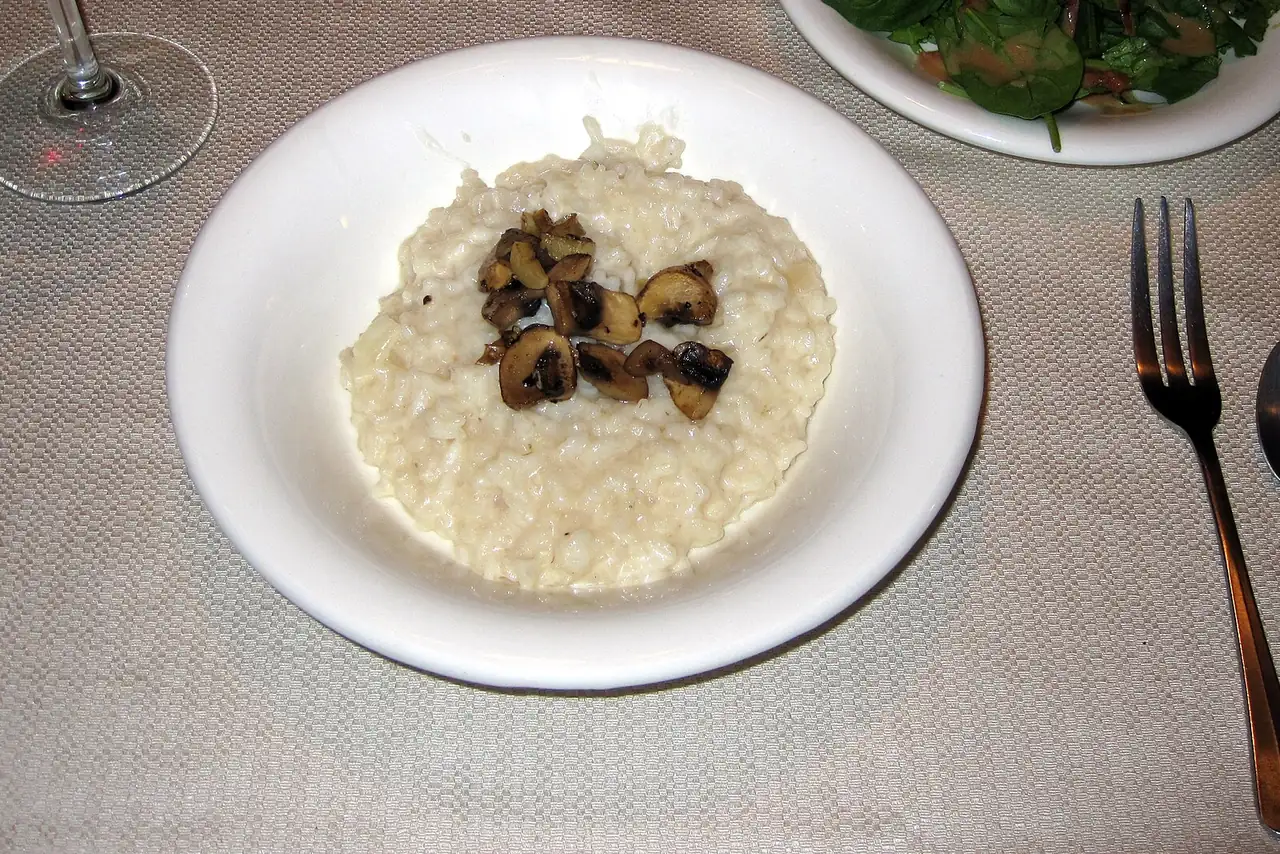
A bowl of creamy mushroom risotto topped with sautéed mushrooms, with a spinach salad beside it

Milanese Classic

Photo: Karen and Brad Emerson, CC BY 2.0, via Wikimedia Commons

The Heritage Formulary

Measured Ingredients

Estimated cost: Low — about $3–4 per serving at home (USD)

A true risotto is all'onda — it should flow like a slow wave when the pan is shaken, never sit in a stiff mound, and never need cream.

Execution Methodology & Culinary Technique

Step-by-Step Cooking Guide

Active 50m
P

Prep Stage: Soak the Porcini, Heat the Stock

15 Mins • Pan Work

Soak the dried porcini in hot water for 20 minutes, then strain through a fine sieve and add the soaking liquid to the stock — it is liquid gold. Put the stock on to simmer and keep it hot for the whole cook. Wipe the fresh mushrooms clean and slice them thickly.

Maestro Tip: Never wash mushrooms under the tap — they drink water and will never brown properly.

  1. 1

    Sauté the Mushrooms

    8 Mins High heat, about 200°C (390°F)

    Heat the olive oil and 20 g of the butter in a wide pan until foaming. Add the mushrooms in a single layer and fry without moving them for 3 minutes, then turn and fry for 3 minutes more until deeply browned. Add the thyme and season lightly.

    Do not crowd the pan and do not stir too soon — mushrooms brown only when they sit still in a hot pan.

    Done when: The mushrooms are deeply browned at the edges and smell nutty.

  2. 2

    Soften the Shallots and Toast the Rice

    5 Mins Medium heat, about 160°C (320°F)

    In the same pan, soften the shallots and garlic for 3 minutes until translucent. Add the rice and stir for 2 minutes until the grains are hot, translucent at the edges and smell faintly nutty — this is the tostatura.

    Toasting the rice is what keeps the grains separate and the risotto creamy instead of gluey.

    Done when: The grains are hot, glossy and translucent at the edges.

  3. 3

    Deglaze with Wine

    2 Mins Medium-high heat, about 180°C (355°F)

    Pour in the white wine and stir until it has almost completely evaporated and the sharp smell has gone. The rice should smell fragrant, not boozy.

    Let the wine cook off fully — raw wine makes the risotto sour.

    Done when: The pan is nearly dry and the rice smells of wine, not alcohol.

  4. 4

    Add Stock, Ladle by Ladle

    20 Mins Gentle simmer, about 95°C (203°F)

    Add the hot stock one ladle at a time, stirring often and waiting until each ladle is almost absorbed before adding the next. After 18 minutes, fold in the mushrooms and the soaked porcini. The rice should be creamy and al dente — tender with a slight bite.

    Hot stock, one ladle at a time, is the whole method; cold stock or a flood of stock makes glue.

    Done when: The rice flows slowly when the pan is shaken — all'onda, like a wave — and the grains still have a bite.

  5. 5

    Mantecatura — Butter and Parmesan

    2 Mins Off the heat (about 70°C / 158°F)

    Take the pan off the heat. Beat in the cold butter cubes and the Parmesan with vigour until the risotto turns glossy and creamy. Taste for salt and pepper, then rest for 1 minute with the lid on.

    Cold butter beaten in off the heat is what makes the risotto shine — hot butter just melts away.

    Done when: The risotto is glossy, creamy and flows like a slow wave.

Finishing Touches & Plating

Serve the risotto at once in warm, shallow bowls, with extra Parmesan and the parsley scattered over the top. Risotto waits for no one — it thickens by the minute.

Nutritional Physiology & Benefits

Nutrition

Energy

554

kcal / serving

Protein

15g

Complete AA

Carbs

80g

Complex

Fats

17g

Healthy

Per serving (4 servings · 1 serving ≈ 500 g)
Energy554 kcal
Protein15 g
Carbohydrates80 g
Fat17 g
Fibre4.3 g
Sugar5.8 g
Sodium1241 mg
Per 100g
Energy111 kcal
Protein3.1 g
Carbohydrates16 g
Fat3.4 g
Fibre0.9 g
Sugar1.2 g
Sodium248 mg

Nutrition values are estimated — calculated from USDA FoodData Central values for the listed ingredients.

Vitamins & minerals: B vitamins (mushrooms, rice), vitamin D (mushrooms), calcium (Parmesan), potassium (mushrooms).

Gentle, Comforting Warmth

A warm, creamy bowl of rice is easy on the stomach and deeply comforting — the kind of food that slows an evening down.

Mushrooms Bring the Depth

Mushrooms add umami, fibre and B vitamins for very few calories, and the dried porcini give the whole dish its woodsy backbone.

Slow Carbs, Steady Energy

Arborio rice releases its energy gradually, so the risotto keeps you full without a sharp rise and fall.

Food Pairings

What to Eat With

To optimize nutrient absorption and elevate the sensory depth, pair with these authentic accompaniments:

Vegetables

Rocket and Parmesan Salad

Peppery rocket with lemon and shaved Parmesan cuts through the risotto's richness and adds a fresh, bitter note.

Drinks

A Glass of Dry White Wine

The same dry white you cooked with is the perfect partner — its acidity lifts the butter and Parmesan.

Sides

Crusty Bread

Bread is for the last spoonfuls, when the bowl is nearly empty and the creamy rice needs scooping.

Full Menus

As a First Course

In Italy risotto is a primo — serve a smaller portion first, then a simple grilled fish or chicken.

Complete menu

Serve the risotto as a first course with a rocket and Parmesan salad, then a simple grilled fish; or make it the main event with crusty bread.

Digestive Guardrails

What NOT to Combine

To prevent digestive distress, sluggishness, or palate clash, avoid pairing the dish with these elements:

Rinsing the Rice

Rinsing Arborio washes away the surface starch that makes risotto creamy — the rice goes in dry, straight from the bag. This is general guidance, not medical advice.

Adding All the Stock at Once

Flooding the pan drowns the rice and turns it to porridge; one ladle at a time is what builds the cream.

General information only, not medical advice — consult a doctor for personal dietary decisions.

Who Should Eat It

Who Should Eat

  • General adultsA warm, satisfying dinner — eaten fresh, with a salad on the side.
  • ChildrenVery suitable — soft, creamy and mild; a favourite with children. Skip the wine or let it cook off fully.
  • ElderlyExcellent — soft, warm and easy to eat.
  • Pregnant womenGenerally suitable; the wine cooks off during the long simmer, but keep the portion moderate.
  • Breastfeeding womenGenerally suitable; the protein is modest, so add a side of chicken or fish if you need more.
  • AthletesA good pre-training dinner: complex carbs for lasting energy, eaten 2–3 hours before exercise.
  • Weight gainA good choice — take a generous second helping.
  • Weight lossA good choice — the risotto is filling; keep the portion modest and load up on the salad.

Health Conditions — Adjust or Avoid

Conditions

  • DiabetesThe rice is the main source of carbs — keep it to about a cup cooked and ask your clinician about portion size.
  • High blood pressureThe stock and Parmesan carry the salt; use low-sodium stock and season lightly. Ask your clinician about a suitable portion.
  • Kidney diseaseA small portion is usually fine, but the stock adds potassium — keep portions modest and ask your clinician if unsure.
  • GoutAn occasional food — mushrooms are low in purines, but keep the portion modest.
  • Stomach issuesThe risotto is usually gentle — soft rice and mushrooms are kind to the stomach; skip the wine if it bothers you.
  • Cardiovascular diseaseA good choice in moderation — keep the butter and Parmesan modest.
  • Fatty liverA good choice — keep the portion modest and favour the mushrooms and salad.
  • Food allergiesContains milk (butter, Parmesan) and wheat only if stock contains it — check the label. Naturally gluten-free with a certified stock.
  • Special therapeutic dietsIf you follow a prescribed low-fat or low-sodium diet, use less butter and Parmesan and check with your clinician.

If you have a medical condition, consult your doctor before changing your diet.

Storage & Use

Storage & Use

How to store
Cool quickly, spread thin on a tray to cool fast, then store in an airtight container.
In the fridge
2 days.
In the freezer
1 month, but the texture softens — eat it fresh whenever you can.
How to reheat
Warm gently in a pan with a splash of hot stock, stirring until creamy and steaming throughout; reheat to 74°C (165°F). Do not reheat rice more than once.
Freezing recommended
Only if you must — up to 1 month; the texture will be softer.
Signs it has spoiled
Sour smell, slimy texture, or rice that smells fermented.

More recipes to explore

Tagliatelle al ragù Bolognese in a bowl with Parmigiano-Reggiano Italy flag Italy 4h 25m
Lunch •Emilia-Romagna

Tagliatelle al Ragù Bolognese

Slow-braised soffritto and coarse ground heritage meats layered over handmade egg yolk dough for mid-day stamina.

Lean Protein

Slow-simmered beef ragù tossed through fresh egg tagliatelle.

Pairs Well With
Bitter Radicchio & Aged Balsamico di Modena
Pasta & Noodles • High Protein
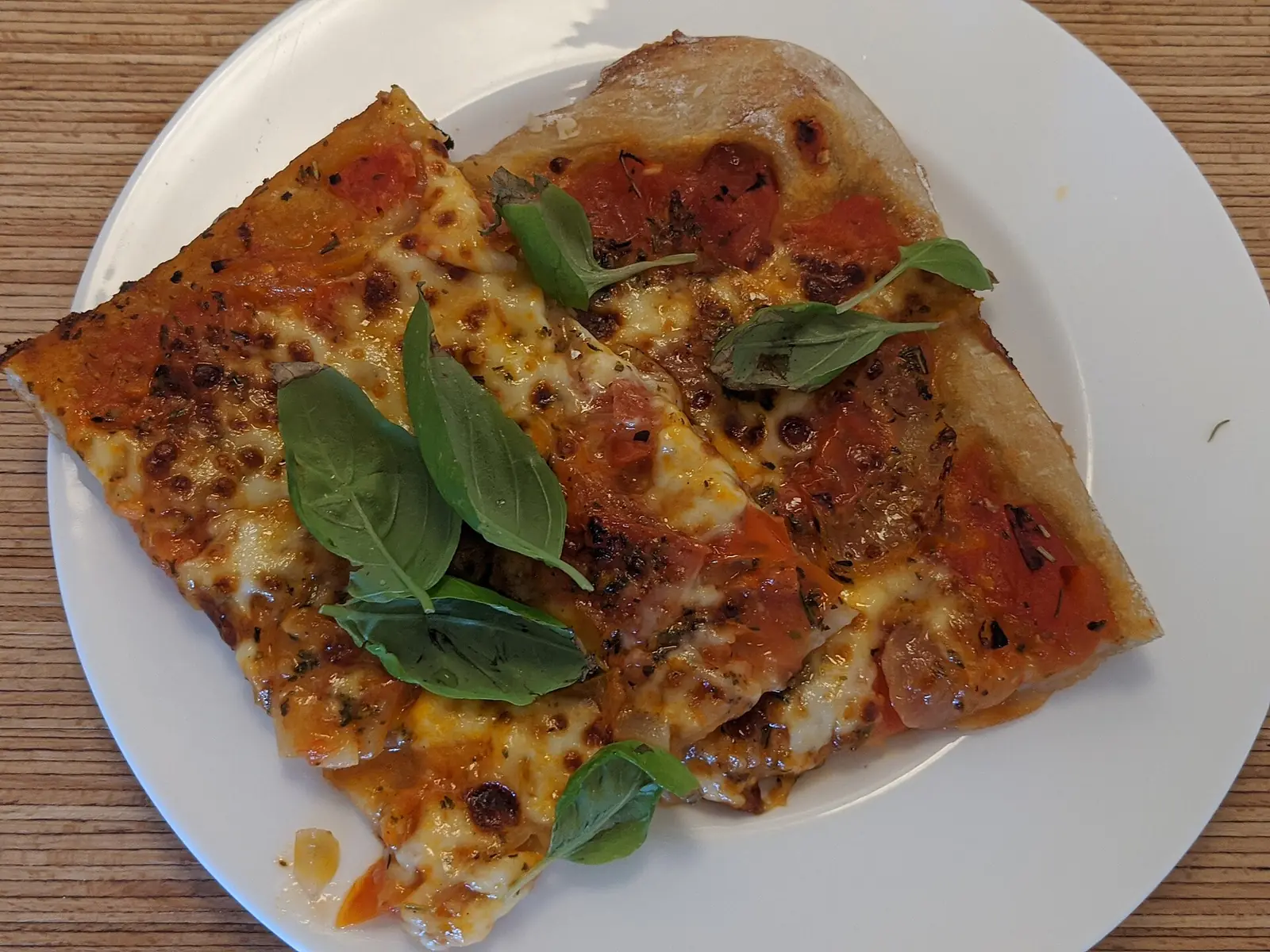
Two slices of pizza margherita with tomato, melted mozzarella and fresh basil on a white plate Italy flag Italy 45m
Dinner •Naples Classic

Pizza Margherita

This pizza margherita recipe makes a proper Neapolitan-style pizza at home: a soft, airy dough, San Marzano tomato sauce, fior di latte mozzarella and fresh basil. One serving is about 325 g — two slices.

Simple & Satisfying

Wood-fired-style pizza with tomato, fior di latte mozzarella and basil — three ingredients, done properly.

Pairs Well With
A simple green salad and a glass of Chianti or sparkling water
Bœuf bourguignon — French beef braised in red wine France flag France 4h
Dinner •Burgundy Terroir

Bœuf Bourguignon

Beef braised gently in red wine until the connective tissue melts into a velvet, gelatin-rich sauce — the classic Burgundy Sunday dinner.

Cellular Repair

Beef braised in red wine until spoon-tender, with mushrooms and pearl onions.

Pairs Well With
Parsnip Purée & Steamed French Haricots Verts
High Protein
Vietnamese braised pork belly with golden eggs in caramel sauce Vietnam flag Vietnam 1h 45m
Dinner •One Pot

Vietnamese Braised Pork and Eggs

Pork belly slowly braised in coconut water and caramel until meltingly tender, with golden eggs that soak up the sweet-savoury sauce — the Vietnamese family dish that tastes better the next day.

Comfort & Sustained Energy

Slow-braised pork belly and eggs in coconut water and caramel.

Pairs Well With
Steamed rice & pickled mustard greens
High Protein

The Dinner Gazette

Never wonder what’s for dinner again

One email a week with easy dinner ideas from around the world — ingredients, steps and nutrition, tested in our kitchen first.

Delivered every Thursday morning. Unsubscribe anytime.



