Curated recipes from 193 countries  •  New seasonal Mediterranean issue out now

Overview

New Zealand Hāngī

Hāngī, Māori Earth-Oven Feast

This hangi recipe brings New Zealand's Māori earth-oven feast into a home kitchen: pork, lamb and chicken rubbed with garlic and salt, layered with kūmara, potato, pumpkin, cabbage and carrots in cabbage-leaf-lined parcels with sage stuffing, then slow-roasted until everything is tender and smoky. Traditionally the food goes into flax baskets over white-hot stones in a pit dug in the ground and is buried under wet sacks and earth; here a low oven and foil do the same job, and the recipe says so plainly. One serving is about 773 g.

The hāngī is the Māori earth oven, brought to New Zealand by Polynesian ancestors who cooked in heated-stone pits across the Pacific. Evidence from early settler sites such as Wairau Bar, from about 1280, shows large cooking pits — umu — used to cook the tap root of the tī kōuka (cabbage tree) for one to two days. Over time the hāngī became the Māori way of feeding a crowd: a pit dug 50–100 cm deep, andesite or basalt stones heated to 600–700°C (1,100–1,300°F) by a mānuka or kānuka fire, food layered in flax baskets — meat below, vegetables above — then buried under wet sacks and earth to steam for 2–4 hours. What sets a hāngī apart from other Pacific earth ovens is its Māori character: flax (harakeke) baskets and whāriki flax matting instead of banana leaves, and the New Zealand garden on the plate — lamb, pork and chicken with kūmara, potato, pumpkin and cabbage, and sage stuffing, with no coconut cream and no taro or cassava. In Rotorua, hāngī have also been cooked for centuries using geothermal steam. Today the hāngī is still the centre of Māori gatherings — Matariki, Christmas, weddings and tangihanga — where the feast is lifted from the ground and shared.

Pairs well with: Watercress salad and rewena bread on the side, with gravy from the pan juices

Provenance

New Zealand flag New Zealand

Māori Earth-Oven Feast

Oceania & Pacific

Time Dedication

4h

60m prep • 180m cook

Batch Yield

8 Servings

1010 kcal per serving

1 serving ≈ 773 g

Technical Skill

Advanced

Advanced (Slow Roast)

Meal Timing & Digestive Fit

Breakfast

Not Advised

Lunch

Hearty Midday Main

Dinner

Ideal Hearty Main

Snack & Tea

Inappropriate

High Protein Occasions: Matariki, Christmas, weddings, tangihanga, large family gatherings, community feasts Cost: Low — about $4–5 per serving at home
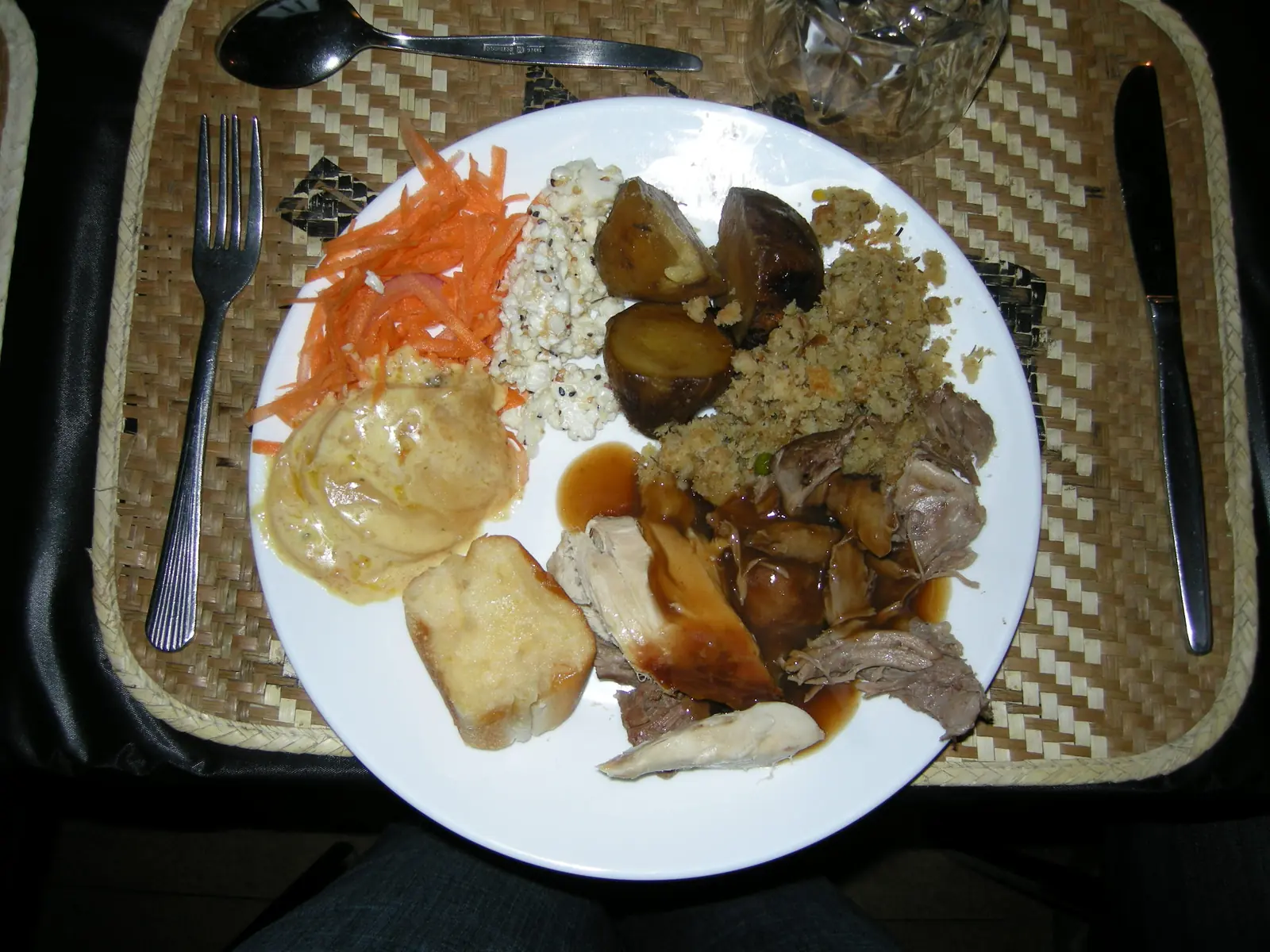
A plated hāngī dinner — slow-cooked meat with gravy, sage stuffing, roast potato and kūmara, and carrot salad on a woven flax placemat

Māori Earth-Oven Feast

Photo: einalem, CC BY-SA 2.0, via Wikimedia Commons

The Heritage Formulary

Measured Ingredients

Estimated cost: Low — about $4–5 per serving at home (USD)
A good hāngī is judged by the meat: it should be so tender it falls apart, and the roots should be soft right through, with the faint smoky flavour of the stones.

Execution Methodology & Culinary Technique

Step-by-Step Cooking Guide

Active 4h
P

Prep Stage: Season, Peel & Wrap

60 Mins • Knife Work & Wrapping

Rub the pork, lamb and chicken with the garlic-salt paste and set aside. Peel and cut the kūmara, potatoes, pumpkin and carrots into large chunks — big pieces stay moist and hold their shape through the long roast. Cut the cabbage into wedges and keep the large outer leaves for lining the parcels. Make the sage stuffing, then wrap everything in cabbage leaves and foil. Heat the oven while you wrap so it is ready the moment the parcels are sealed.

Maestro Tip: Cut the roots big. Small pieces turn to mush after three hours; chunks the size of a fist come out tender but intact.

  1. 1

    Season the Meats

    15 Mins Room temperature

    Mix the crushed garlic with most of the salt and half the chopped onion. Rub the paste all over the pork chunks, the lamb chunks and the chicken thighs, working it into every fold. Leave the seasoned meat at room temperature while you prepare the vegetables — no more than 30 minutes — so it goes into the oven evenly tempered.

    Season generously: a hāngī feeds a crowd, and the roots underneath are unseasoned, so the meat carries the salt for the whole plate.

    Done when: Every piece is coated in the garlic-salt rub.

  2. 2

    Make the Sage Stuffing

    15 Mins Medium heat

    Melt the butter in a pan over medium heat and cook the remaining onion until soft, about 5 minutes. Stir in the sage and the pinch of salt, then pour the butter over the bread cubes in a bowl and toss until every cube is coated. Pack the stuffing loosely into 4 small foil parcels of its own — do not pack it tight, or the centre stays raw. Stuffing is the classic companion to a hāngī, and it soaks up the meat juices as it cooks.

    Loose, not tight: stuffing swells as it steams, and a hard-packed parcel cooks unevenly.

    Done when: Bread cubes are evenly buttered and loosely packed into 4 parcels.

  3. 3

    Line the Baskets and Wrap

    15 Mins Oven preheating to 160°C (320°F)

    Lay a sheet of foil flat and line it with 2 cabbage leaves. Arrange a share of pork, lamb and chicken in the centre, then pile the potato, kūmara, pumpkin, cabbage wedges and carrots on top — meat at the bottom, vegetables on top, exactly as a hāngī basket is layered. Fold the leaves over the food, then seal the foil tightly around it, crimping the edges. Make 4 parcels this way, dividing the food evenly, and tuck a stuffing parcel into each pan alongside. Put the parcels seam-side up in a large deep roasting pan and pour in 240 ml (1 cup) of water — the steam keeps the leaves from scorching. Meanwhile, heat the oven to 160°C (320°F). In a traditional hāngī, this is the moment the flax baskets go onto white-hot andesite or basalt stones in a pit and are buried under wet sacks and earth; the oven version here is the home adaptation.

    Seal the foil well. A loose parcel dries out; a tight one steams in its own juices, which is exactly how a buried hāngī cooks.

    Done when: 4 sealed parcels, snug in the pan with a little water underneath.

  4. 4

    Roast Low and Slow

    165 Mins 160°C (320°F)

    Cover the pan tightly with a lid or a double layer of foil and roast at 160°C (320°F) for 2 hours 45 minutes. Do not open the pan for the first 2 hours — every peek lets out the steam that does the cooking. The pork, lamb and chicken must reach at least 74°C (165°F) at the thickest part, and the roots should be tender all the way through when pierced with a knife.

    If the pan looks dry when you finally check, add another 120 ml (½ cup) of hot water around the parcels, not over them, and reseal quickly.

    Done when: Meat reads 74°C (165°F) or higher; pork and lamb pull apart easily and roots are soft to the centre.

  5. 5

    Rest, Unwrap and Serve

    30 Mins Resting, then serving hot

    Take the pan out of the oven and let the parcels rest, still sealed, for 15 minutes — the juices settle back into the meat and the roots finish softening. Then open the parcels carefully (hot steam escapes), lift the food onto a large platter or a woven flax mat, and pour any juices from the foil over the top as gravy. Serve the stuffing parcels alongside, opened at the table. Eat hot, with your hands or with serving spoons, the way a Māori feast is shared.

    Open the foil away from your face: three hours of trapped steam is hotter than it looks.

    Done when: Meat is juicy and falling apart, roots are tender, stuffing is soft and savoury.

Finishing Touches & Plating

Taste a piece of kūmara and a piece of pork before serving — if the roots need salt, sprinkle a little over the platter, not into the parcels. Serve the hāngī piled high on a platter, with the stuffing opened at the table so everyone can help themselves.

Nutritional Physiology & Benefits

Nutrition

Energy

1010

kcal / serving

Protein

64g

Complete AA

Carbs

67g

Complex

Fats

54g

Healthy

Per serving (8 servings · 1 serving ≈ 773 g)
Energy1010 kcal
Protein64 g
Carbohydrates67 g
Fat54 g
Fibre9.9 g
Sugar14.0 g
Sodium828 mg
Per 100g
Energy131 kcal
Protein8.2 g
Carbohydrates8.7 g
Fat7 g
Fibre1.3 g
Sugar1.8 g
Sodium107 mg

Nutrition values are estimated — calculated from USDA FoodData Central values for the listed ingredients.

Vitamins & minerals: Vitamin A (kūmara, pumpkin, carrots), vitamin C (cabbage, potatoes, kūmara), B vitamins, iron and zinc (pork, lamb, chicken), potassium (potatoes, kūmara, pumpkin).

Serious Protein for a Feast

Each serving carries about 63.6 g of protein from pork, lamb and chicken, so a hāngī plate keeps you full for hours — the reason it is the meal Māori cook when a crowd needs feeding.

Slow Cooking, Whole Foods

Nothing here is fried or processed: meat, root vegetables and cabbage, cooked slowly in their own steam. The roots and cabbage add about 9.9 g of fibre per serving, which is rare for a roast dinner.

Vitamin A, Vitamin C and Potassium

Kūmara, pumpkin and carrots are rich in vitamin A, cabbage and potatoes add vitamin C, and the roots bring potassium — everyday nutrients from the garden, not from a bottle.

Food Pairings

What to Eat With

To optimize nutrient absorption and elevate the sensory depth, pair with these authentic accompaniments:

Vegetables

Watercress Salad

Fresh watercress with a squeeze of lemon is the classic green with a hāngī: its peppery bite cuts through the rich, fatty meats and refreshes the palate between mouthfuls.

Sides

Rewena Bread

Māori potato bread is made for mopping up the pan juices — its soft, slightly sour crumb soaks up the gravy far better than plain white bread.

Drinks

Kawakawa Tea

A hot cup of kawakawa tea is the traditional drink with a hāngī: warm, herbal and unsweetened, it settles a heavy feast without adding more richness.

Full Menus

Steamed Pudding to Finish

A golden-syrup steamed pudding with custard is the classic hāngī dessert — it uses the same slow-steaming idea as the feast itself and gives a sweet, soft ending after a heavy roast.

Complete menu

Start with watercress salad and rewena bread, follow with the hāngī feast — pork, lamb, chicken, kūmara, potato, pumpkin and cabbage with sage stuffing — and finish with steamed pudding and custard.

Digestive Guardrails

What NOT to Combine

To prevent digestive distress, sluggishness, or palate clash, avoid pairing the dish with these elements:

Undercooked Meat in a Big Slow Roast

Pork, lamb and chicken in a large parcel can look done on the outside while the centre is still undercooked. Always check the thickest piece with a thermometer — it must reach 74°C (165°F) — and never shorten the cooking time to hurry a feast. This is general information, not medical advice.

Leaving a Big Feast Out Too Long

A hāngī makes a lot of food, and a large pile of meat cools slowly through the temperature range where bacteria grow fastest. Serve within 2 hours of cooking, refrigerate leftovers promptly at 4°C (39°F) or below, and reheat them to 74°C (165°F). Discard anything left at room temperature longer than that — do not taste-test to decide. This is general information, not medical advice.

A Very Rich, Salty Plate

This is a celebration meal, not an everyday one: about 1010 kcal and 828 mg of sodium per serving, with 54.1 g of fat. If you watch your salt, fat or energy intake, take a smaller portion and fill the rest of the plate with salad or watercress. This is general information, not medical advice.

General information only, not medical advice — consult a doctor for personal dietary decisions.

Who Should Eat It

Who Should Eat

  • General adultsA generous feast plate: ideal for Matariki, Christmas and big family dinners, and best enjoyed as an occasional meal rather than a weekly roast.
  • ChildrenFine for children once everything is cooked right through and cooled enough to eat — serve small pieces of meat and roots, and open the stuffing for them, as the cabbage leaves can be stringy.
  • ElderlyChoose the tenderest pieces and cut the roots small; the long roast makes the meat soft, but the plate is rich, so a modest portion with plenty of vegetables suits most older diners.
  • Pregnant womenSafe when the pork, lamb and chicken reach 74°C (165°F) and the food is eaten freshly cooked and hot. Skip any piece you are unsure about.
  • Breastfeeding womenA good energy-rich meal while breastfeeding — the protein and calories are genuinely useful. Keep portions sensible and drink plenty of water or kawakawa tea with it.
  • AthletesExcellent after heavy training: about 63.6 g of protein and 67.3 g of carbs per serving. Eat it within a couple of hours of training and add fruit for quick energy.
  • Weight gainOne of the easiest ways to add energy: a full plate is about 1010 kcal, and the roots and stuffing add calories without feeling as heavy as fried food.
  • Weight lossEnjoy a smaller plate — mostly chicken and roots, less pork, lamb and stuffing — and load up on watercress salad. A full serving is too energy-dense for a regular weight-loss meal.

Health Conditions — Adjust or Avoid

Conditions

  • DiabetesThe roots are starchy (about 67.3 g of carbs per serving), so portions matter more than the meat. Take half a serving of roots and fill the plate with watercress salad instead; ask your clinician about your carbohydrate target.
  • High blood pressureAbout 828 mg of sodium per serving, mostly from the added salt. Use less salt in the rub and skip extra salty sides; ask your clinician about your sodium target.
  • Kidney diseaseHigh in protein (about 63.6 g) and potassium from potatoes, kūmara and pumpkin, which some kidney diets limit — keep the portion small and ask your clinician before making it a regular meal.
  • GoutPork, lamb and chicken are sources of purines, so eat hāngī occasionally and in modest portions if you have gout; ask your clinician about your personal limit.
  • Stomach issuesThe long, slow roast makes the meat and roots easy to digest, but the meal is rich and fatty — if your stomach is unsettled, choose chicken and roots over pork, lamb and stuffing. Ask your clinician if symptoms persist.
  • Cardiovascular diseaseThe fat is mostly from pork and lamb, so balance the plate: more chicken and roots, less pork, lamb and stuffing, and a big watercress salad on the side. Ask your clinician about your fat intake.
  • Fatty liverHigh in energy and saturated fat, so it suits a fatty-liver eating pattern only as an occasional feast in a small portion, with vegetables doing most of the work on the plate; ask your clinician for guidance.
  • Food allergiesContains wheat and gluten (stuffing bread) and milk (butter). Naturally dairy-free without the stuffing. The dish is free of nuts, egg and shellfish.
  • Special therapeutic dietsIf you follow a prescribed low-sodium, low-purine, low-saturated-fat or carbohydrate-counted diet, adjust the salt, meat choices and root portions and check with your clinician first.

If you have a medical condition, consult your doctor before changing your diet.

Storage & Use

Storage & Use

How to store
Cool leftovers quickly, then store meat and roots separately in covered containers in the fridge; keep stuffing in its own container.
In the fridge
Up to 3 days at 4°C (39°F) or below.
In the freezer
Cooked pork, lamb and chicken freeze well for up to 3 months; roots turn watery and grainy after freezing, so freeze the meat only.
How to reheat
Reheat to 74°C (165°F) throughout — covered in the oven at 160°C (320°F) with a splash of water, or in a pan with a lid. Do not reheat more than once.
Freezing recommended
Yes for the meats; no for the roots and stuffing.
Signs it has spoiled
Sour or off smell, slimy meat, grey or mouldy roots, or stuffing that smells sour.

More recipes to explore

A tub of hokey pokey ice cream in a parlour display — pale vanilla ice cream swirled with golden honeycomb toffee pieces New Zealand flag New Zealand 6h 30m
Snack & Tea •New Zealand Kiwiana Classic

New Zealand Hokey Pokey Ice Cream

This hokey pokey ice cream recipe starts with a silky no-churn vanilla base — whipped cream, sweetened condensed milk and vanilla — then folds in shards of homemade hokey pokey, the golden honeycomb toffee New Zealanders have loved for generations. The honeycomb stays crunchy against the cold cream, giving every spoonful a caramel snap. One serving is about 146 g.

Sweet & Comforting

Creamy no-churn vanilla ice cream folded with crunchy homemade honeycomb toffee — a rich, sweet treat to enjoy in small scoops.

Pairs Well With
Crisp wafers or a waffle cone, with a cup of black tea or flat white coffee
Golden New Zealand whitebait fritters on a white plate, tiny whitebait visible curled through the egg batter New Zealand flag New Zealand 22m
Lunch •New Zealand Seasonal Classic

New Zealand Whitebait Fritters

This whitebait fritters recipe folds tiny New Zealand whitebait through lightly beaten egg with just a spoonful of flour, then pan-fries spoonfuls in butter until golden. The fish stay clearly visible, curled through the egg — the classic Kiwi way to eat the seasonal catch. One serving is about 173 g.

Delicate & Savoury

Tiny whole whitebait folded through egg with just a spoonful of flour, pan-fried in butter — high in protein and light on the stomach.

Pairs Well With
Buttered white bread and lemon wedges, with a crisp green salad
Bœuf bourguignon — French beef braised in red wine France flag France 4h
Dinner •Burgundy Terroir

Bœuf Bourguignon

Beef braised gently in red wine until the connective tissue melts into a velvet, gelatin-rich sauce — the classic Burgundy Sunday dinner.

Cellular Repair

Beef braised in red wine until spoon-tender, with mushrooms and pearl onions.

Pairs Well With
Parsnip Purée & Steamed French Haricots Verts
High Protein
Vietnamese braised pork belly with golden eggs in caramel sauce Vietnam flag Vietnam 1h 45m
Dinner •One Pot

Vietnamese Braised Pork and Eggs

Pork belly slowly braised in coconut water and caramel until meltingly tender, with golden eggs that soak up the sweet-savoury sauce — the Vietnamese family dish that tastes better the next day.

Comfort & Sustained Energy

Slow-braised pork belly and eggs in coconut water and caramel.

Pairs Well With
Steamed rice & pickled mustard greens
High Protein

The Dinner Gazette

Never wonder what’s for dinner again

One email a week with easy dinner ideas from around the world — ingredients, steps and nutrition, tested in our kitchen first.

Delivered every Thursday morning. Unsubscribe anytime.