
Curated recipes from 193 countries  •  New seasonal Mediterranean issue out now

Overview

Nigerian Pounded Yam

Iyan, Iyán, Utara-ji, Sakwara, Pounded White Yam

This Nigerian pounded yam recipe starts with white yam — puna yam, not cassava, plantain or garri — boiled until soft and pounded in a mortar until it turns into a smooth, stretchy, dough-like swallow. Pinch off a small ball, dip it into egusi or ogbono soup, and swallow. One serving is about 325 g.

Pounded yam is one of the oldest foods of the West African yam belt, made by boiling white yam — puna yam, Dioscorea rotundata — and pounding it in a wooden mortar with a pestle until it turns smooth and stretchy. It is known as iyan in Yoruba, utara-ji in Igbo and sakwara in Hausa, and it is eaten across Nigeria, Benin, Togo and Ghana. Yam holds a place in southern Nigerian life that no other crop matches: it is honoured at New Yam festivals, and pounded yam is its most prestigious form, the swallow served at celebrations and to honoured guests.

Pairs well with: Serve hot with egusi soup, ogbono soup or efo riro for scooping — the swallow is the carrier, the soup brings the flavour.

Provenance

Nigeria flag Nigeria

Nigerian Classic

African Heritage

Time Dedication

55m

15m prep • 40m cook

Batch Yield

4 Servings

354 kcal per serving

1 serving ≈ 325 g

Technical Skill

Intermediate

Medium (Pounding)

Meal Timing & Digestive Fit

Breakfast

Not Advised

Lunch

Hearty Midday Main

Dinner

Ideal Hearty Main

Snack & Tea

Inappropriate

Occasions: Family dinner, Sunday lunch, celebrations, welcoming guests Cost: Low — about $1–2 per serving at home
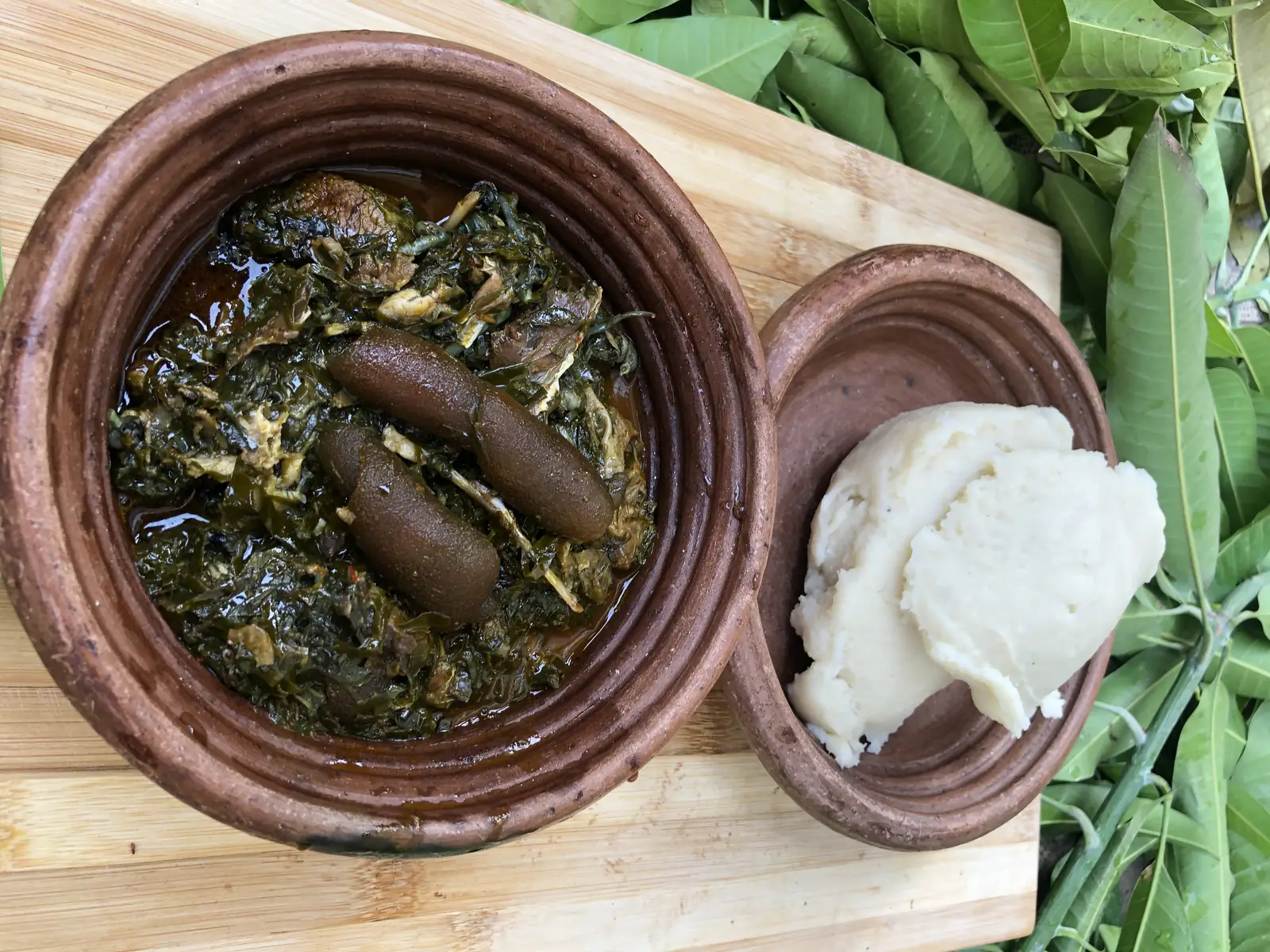
A mound of smooth white pounded yam in a clay bowl beside a bowl of afang soup with meat

Nigerian Classic

Photo: Joan Onanyo, CC BY-SA 4.0, via Wikimedia Commons

The Heritage Formulary

Measured Ingredients

Estimated cost: Low — about $1–2 per serving at home (USD)

Made from white yam only — boiled until tender, then pounded in a mortar (or blended) until smooth, stretchy and lump-free, with no cassava, plantain or garri.

Execution Methodology & Culinary Technique

Step-by-Step Cooking Guide

Active 55m
P

Peel and Cut the Yam

15 Mins • Peeling and Cutting

Peel the white yam thickly, rinse the chunks, and cut them into even pieces about 5 cm (2 in) across so they cook at the same speed. Put the pot of water on to boil while you work, and set the mortar, pestle and a jug of water within reach — once the yam is boiled, the pounding starts straight away while it is still hot.

Maestro Tip: Even chunks matter: small pieces turn to mush while big ones stay hard, and hard lumps are the one fault a good pounded yam must not have.

  1. 1

    Peel and Cut the White Yam

    15 Mins No heat — room temperature

    Peel 1200 g of white yam thickly with a sharp knife, cutting away all the brown skin and any dark spots. Rinse the peeled yam and cut it into even chunks about 5 cm (2 in) across. Put a large pot of water on the stove to boil while you work.

    Peel thickly: the skin and the layer just under it are bitter, and any brown flecks left in will show as dark specks in the finished white swallow.

    Done when: Clean off-white chunks, all roughly the same size, with no skin or dark spots left.

  2. 2

    Boil the Yam Until Tender

    25 Mins Boil at 100°C (212°F)

    Put the yam chunks in the pot, add just enough boiling water to cover them, and simmer with the lid on for about 25 minutes. The yam is ready when a fork slides through the thickest chunk with no resistance at all — it should be soft right through, not just at the edges. Drain off the cooking water and leave the yam in the hot pot for a minute so the steam dries the surface.

    Do not undercook: yam that is firm in the middle will never pound smooth, no matter how long you work it. If in doubt, boil it 5 minutes longer.

    Done when: A fork passes through the thickest chunk with no resistance; the yam crushes easily between finger and thumb.

  3. 3

    Pound the Yam Smooth

    10 Mins Pound while steaming hot, about 70°C (158°F)

    Move the hot yam into the mortar straight away and pound with the pestle, turning the mass over with a spoon between strokes so every part is worked. Add a splash of the reserved water only if the yam sticks and stops moving, and sprinkle over the pinch of salt. Keep pounding for about 10 minutes until the yam is completely smooth, stretchy and lump-free — it should pull away from the pestle in a soft, elastic sheet. If you have no mortar, blend the hot yam in a food processor in short bursts with a splash of water, scraping down the sides, until it is just as smooth.

    Pound while the yam is hot; as it cools it stiffens and the lumps set. Work in a steady rhythm and fold the mass over often — that folding is what makes it stretchy instead of sticky.

    Done when: Perfectly smooth with no lumps, glossy and stretchy — it pulls in a sheet and holds its shape when scooped.

  4. 4

    Shape the Mound and Serve

    5 Mins Serve hot, about 60°C (140°F)

    Wet your hands or a spoon, scoop the pounded yam out of the mortar, and shape it into one smooth mound per serving on a plate or in a small bowl. Serve at once, while it is still hot and soft, with a bowl of egusi, ogbono or efo riro beside it for scooping.

    Wet hands stop the yam sticking to your skin while you shape it. Serve immediately — pounded yam firms up as it cools.

    Done when: A smooth, rounded mound, soft and warm, ready to be pinched into balls at the table.

Finishing Touches & Plating

Serve the pounded yam hot, in smooth mounds, with the soup in a separate bowl. At the table, pinch off a small ball with the fingers of your right hand, dip it into the soup, and swallow — that is how pounded yam is eaten.

Nutritional Physiology & Benefits

Nutrition

Energy

354

kcal / serving

Protein

5g

Complete AA

Carbs

84g

Complex

Fats

1g

Healthy

Per serving (4 servings · 1 serving ≈ 325 g)
Energy354 kcal
Protein5 g
Carbohydrates84 g
Fat1 g
Fibre12.3 g
Sugar1.5 g
Sodium224 mg
Per 100g
Energy109 kcal
Protein1.4 g
Carbohydrates25.8 g
Fat0.2 g
Fibre3.8 g
Sugar0.5 g
Sodium69 mg

Nutrition values are estimated — calculated from USDA FoodData Central values for the listed ingredients.

Vitamins & minerals: Nutrition is estimated. White yam brings potassium, vitamin C and vitamin B6, plus dietary fibre, with small amounts of magnesium and iron.

Slow-Release Energy

A 325 g serving gives about 354 calories, almost all from yam starch, so one mound is a filling dinner that keeps you full for hours.

Naturally Gluten-Free

Pounded yam is made from yam and water only, with no wheat or flour, so it is naturally free of gluten.

Rich in Potassium and Fibre

White yam brings about 12 g of fibre and a good amount of potassium per serving, along with vitamin C and vitamin B6.

Food Pairings

What to Eat With

To optimize nutrient absorption and elevate the sensory depth, pair with these authentic accompaniments:

Soups

Egusi Soup

The classic pairing: the thick, nutty melon-seed soup clings to the smooth swallow, and the mild yam lets the egusi flavour shine.

Ogbono Soup

The slippery, draw texture of ogbono soup slides over the soft yam perfectly, and its rich flavour makes the plain swallow taste complete.

Vegetables

Efo Riro

The leafy, peppery vegetable stew adds colour, spice and greens to the plate, and its sauce soaks into each ball of yam.

Drinks

Cold Zobo Drink

A cold glass of tart hibiscus zobo cuts through the richness of the soup and refreshes the palate between mouthfuls of the starchy swallow.

Complete menu

Pounded yam with egusi soup and a glass of cold zobo — the swallow, the soup and the drink together make the classic Nigerian dinner.

Digestive Guardrails

What NOT to Combine

To prevent digestive distress, sluggishness, or palate clash, avoid pairing the dish with these elements:

Letting It Go Cold and Stiff

Pounded yam firms up as it cools and becomes hard to pinch and swallow, so serve it hot and eat it while it is soft. Reheat gently with a splash of water rather than eating it cold and stiff. This is general guidance, not medical advice.

Piling the Plate Too High

Pounded yam is energy-dense — a single 325 g serving already carries about 354 calories before the soup is counted — so a modest mound with plenty of soup is a better balance than a heaped plate. This is general guidance, not medical advice.

General information only, not medical advice — consult a doctor for personal dietary decisions.

Who Should Eat It

Who Should Eat

  • General adultsA filling, comforting dinner — a modest mound of pounded yam with a rich soup is a complete meal.
  • ChildrenSoft, mild and easy to swallow, but serve small balls and keep the soup mild; children should eat it warm, not hot.
  • ElderlySoft and easy to chew, but serve a smaller portion and make sure the yam is lump-free so it swallows smoothly.
  • Pregnant womenA plain, gentle staple that is usually well tolerated; keep portions moderate and pair it with a vegetable-rich soup.
  • Breastfeeding womenAn energy-rich meal that helps meet the extra calorie needs of breastfeeding; pair it with a protein-rich soup.
  • AthletesA useful high-carbohydrate meal after hard training, best paired with a protein-rich soup such as egusi with meat or fish.
  • Weight gainEnergy-dense and easy to eat in larger amounts — a full serving with a rich soup is a substantial dinner for someone gaining weight.
  • Weight lossKeep the mound small, about half a serving, and fill the rest of the plate with vegetable soup; the yam itself is filling but calorie-dense.

Health Conditions — Adjust or Avoid

Conditions

  • DiabetesPounded yam is almost entirely starch and raises blood sugar, so keep the portion small and pair it with a vegetable-rich, low-starch soup. Ask your clinician about portion size.
  • High blood pressureThe yam itself is low in sodium, but keep the pinch of salt out and watch the salt in the soup served with it. Ask your clinician about sodium limits.
  • Kidney diseaseWhite yam is high in potassium, which some kidney diets limit, so portion size matters. Ask your clinician whether pounded yam fits your diet.
  • GoutPounded yam itself is low in purines; the gout concern is the meat or fish in the soup served with it, not the swallow. Ask your clinician about the soup ingredients.
  • Stomach issuesSoft, plain pounded yam is usually gentle on the stomach, but eat it warm and in small balls, and avoid very spicy soups if they upset you. Ask your clinician if symptoms persist.
  • Cardiovascular diseaseThe yam is low in fat and free of cholesterol; the heart-health question is the palm oil and meat in the soup, so favour a lighter, vegetable-rich soup. Ask your clinician about your overall diet.
  • Fatty liverA large starchy portion adds to total calorie and carbohydrate intake, so keep the mound modest and favour vegetable soups. Ask your clinician about portion size.
  • Food allergiesPounded yam contains yam and water only — no gluten, egg, milk, nut or soy. Yam allergy is uncommon but exists, so anyone with a known yam allergy should avoid it. Ask your clinician if unsure.
  • Special therapeutic dietsThe dish is vegan and gluten-free as written, but its high starch content means it may not fit low-carbohydrate or renal diets. Ask your clinician or dietitian before adding it to a therapeutic diet.

If you have a medical condition, consult your doctor before changing your diet.

Storage & Use

Storage & Use

How to store
Cool completely, then wrap each mound tightly in cling film or pack into an airtight container so the surface does not dry out.
In the fridge
Pounded yam keeps 2 days, in the fridge.
In the freezer
Pounded yam keeps 1 month, in portions.
How to reheat
Reheat gently in a covered pan or microwave with a splash of water, at 74°C (165°F) through, then knead or stir until soft and smooth again.
Freezing recommended
Yes — up to 1 month in wrapped portions; thaw overnight in the fridge, then reheat with a splash of water.
Signs it has spoiled
Sour smell, slimy surface, or dark spots — throw it away if any of these appear.

More recipes to explore

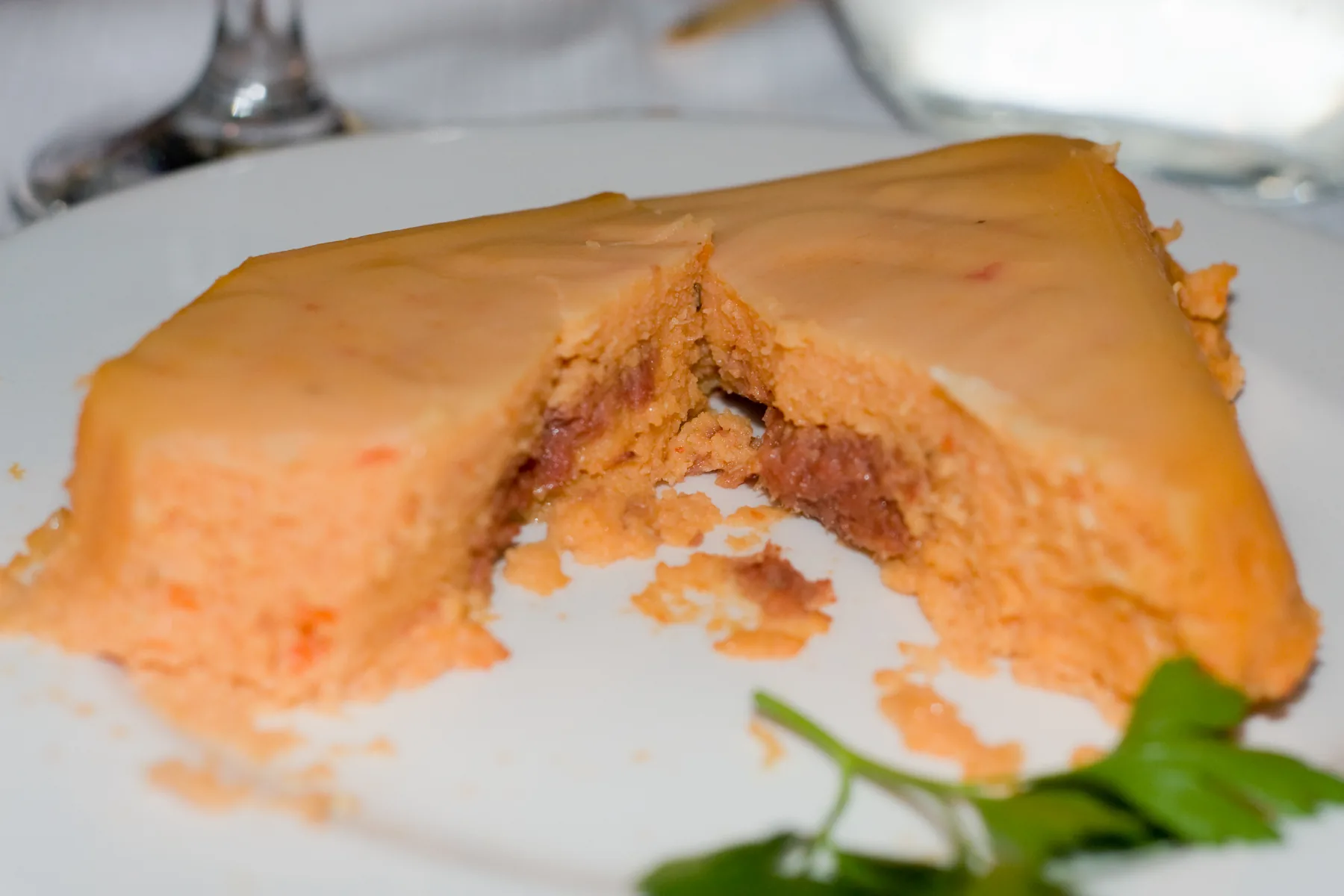
A slice of orange Nigerian moi moi bean pudding cut open to show the filling, on a white plate Nigeria flag Nigeria 1h 30m
Lunch •Yoruba Heritage

Nigerian Moi Moi

This moi moi recipe turns peeled black-eyed peas, red peppers, onion and palm oil into a smooth orange batter, steamed in foil parcels or leaves until it sets into a sliceable pudding with boiled egg inside. One serving is about 280 g. It takes about 90 minutes from soaking the beans to unmoulding the puddings, and most of that time the pot looks after itself.

Comfort & Warmth

A soft, savoury steamed bean pudding that is filling, high in protein and gentle enough for a weekday lunch.

Pairs Well With
Serve warm with pap (akamu), garri, or plain white rice and a spoon of vegetable soup.
High Protein
A pot of Nigerian egusi soup, golden ground melon seeds with dark leafy greens and pieces of meat Nigeria flag Nigeria 1h 20m
Dinner •West African Classic

Egusi Soup

This egusi soup recipe simmers ground melon seeds with beef, stockfish, palm oil and ugu leaves into a thick, golden soup with soft egusi lumps and tender meat. One serving is about 450 g. It takes about 80 minutes, most of it a gentle simmer, and serves 4 with a swallow on the side.

Comfort & Warmth

A thick, nutty melon-seed soup with beef, stockfish and leafy greens — the most loved soup in Nigeria, built for pounded yam and eba.

Pairs Well With
Serve hot with pounded yam, eba, amala or fufu, and let the swallow scoop up the soup.
Soups & Broths • High Protein
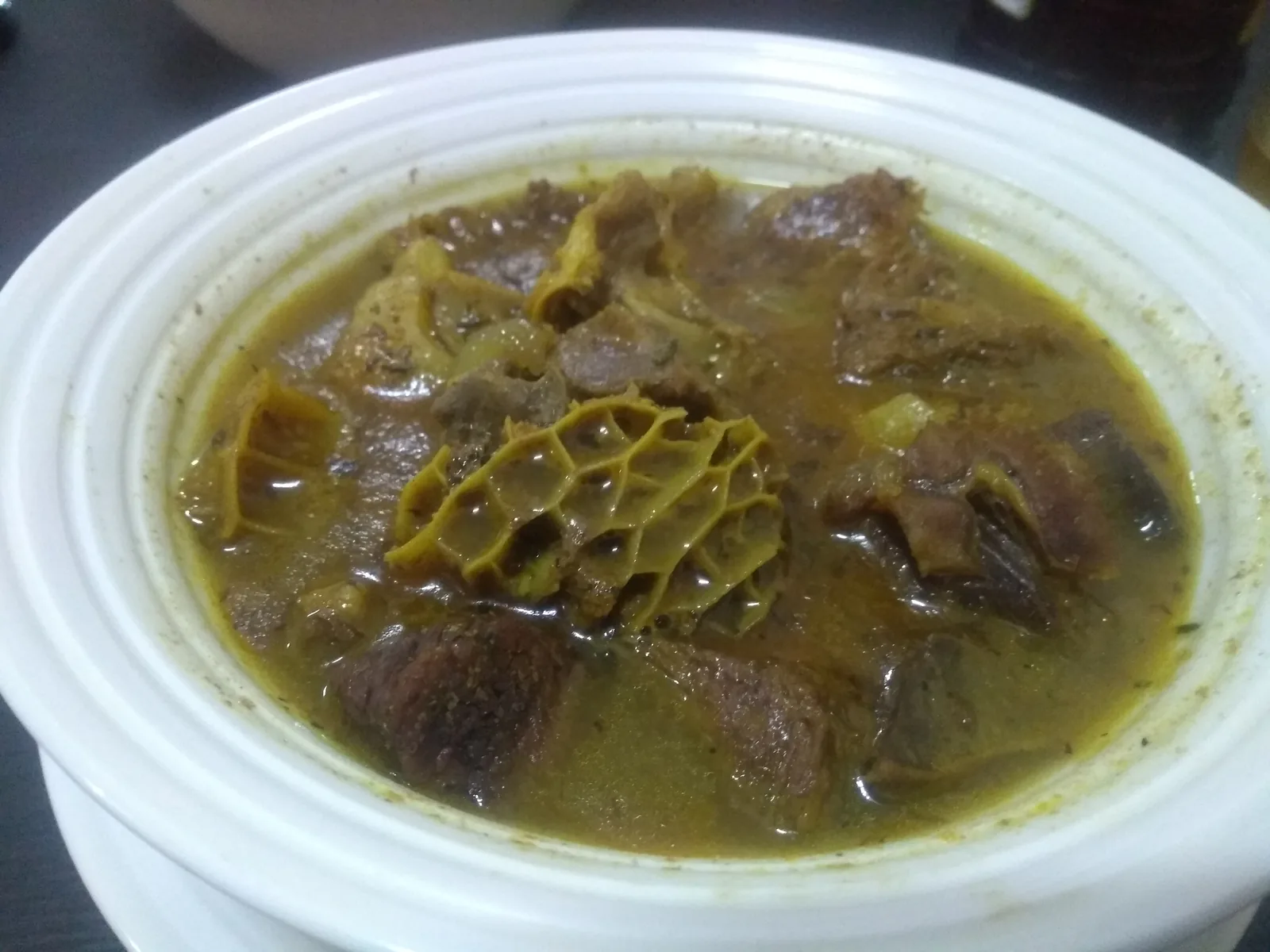
A bowl of Nigerian assorted meat pepper soup, pieces of meat and tripe in a light golden spicy broth Nigeria flag Nigeria 1h 5m
Dinner •Nigerian Street-Food Classic

Nigerian Pepper Soup

This nigerian pepper soup recipe simmers goat meat in a thin, spicy broth with calabash nutmeg, grains of selim, uziza and scent leaves until the meat is tender and the broth is fragrant. One serving is about 400 g. It takes about 65 minutes, serves 4, and needs only one pot and a handful of spices.

Comfort & Warmth

A light, fiery goat-meat broth with native spices and scent leaves — hot, aromatic and easy on the stomach after a long day.

Pairs Well With
Serve steaming hot on its own, or with boiled yam, white rice or a cold drink on the side.
Soups & Broths • High Protein
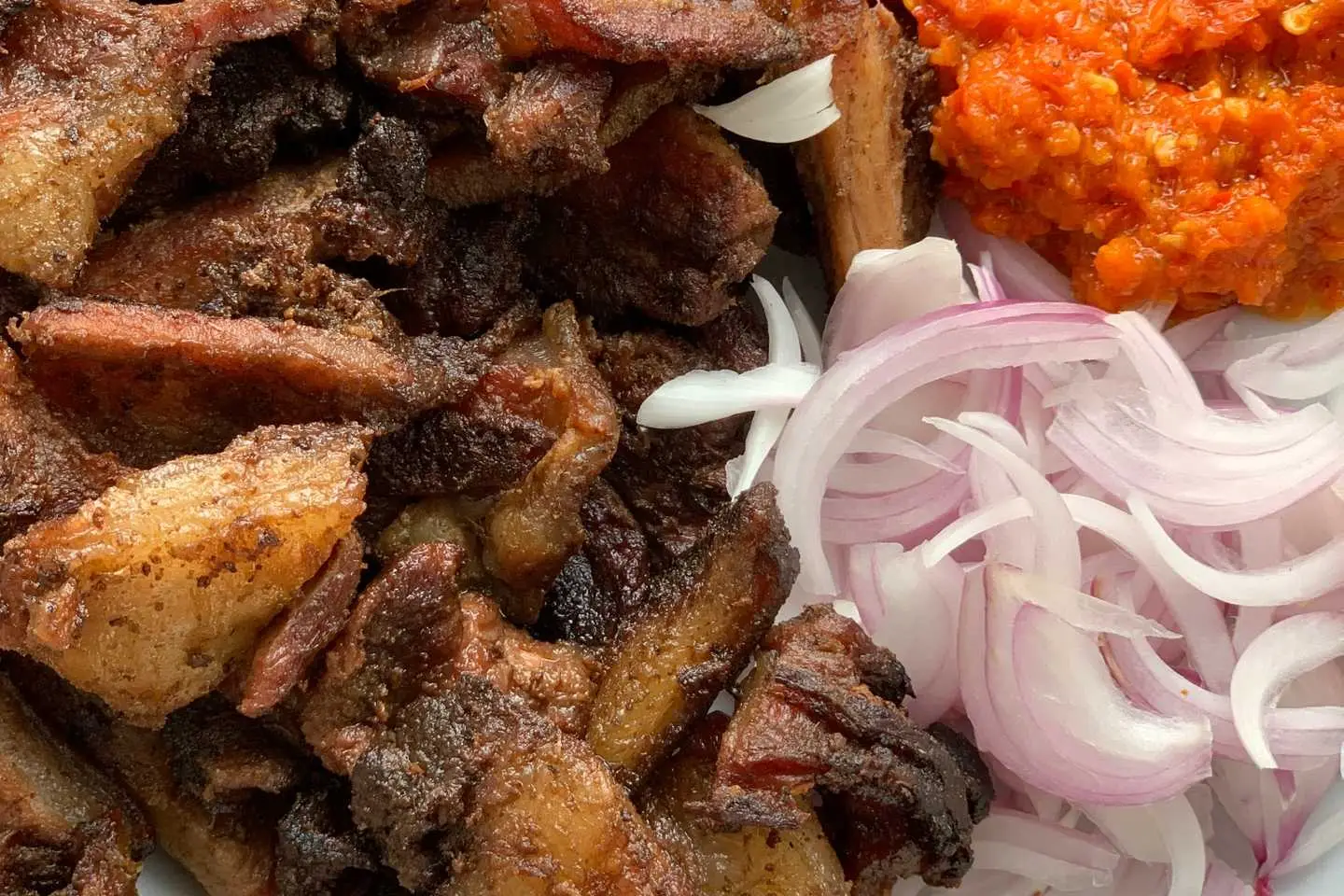
Grilled suya beef pieces with sliced red onions and red pepper sauce on a white plate Nigeria flag Nigeria 1h 10m
Dinner •Nigerian Heritage

Suya

This suya recipe is Nigeria's most famous street food: thin slices of beef coated in yaji, a nutty peanut-spice rub, grilled over charcoal until smoky and charred at the edges, then sliced off the skewers and served with raw onion, tomato and cabbage. Unlike plain grilled skewers, suya gets its flavour from the yaji itself — ground peanuts, cayenne, ginger, garlic and warm spices pressed onto the meat before and after grilling. One serving is about 275 g.

High-Protein Street Food

Thin beef slices coated in yaji, a ground-peanut and chilli spice rub, threaded on skewers and grilled over charcoal.

Pairs Well With
Sliced red onion, tomato and cabbage, with extra yaji for sprinkling, and a cold drink
High Protein

The Dinner Gazette

Never wonder what’s for dinner again

One email a week with easy dinner ideas from around the world — ingredients, steps and nutrition, tested in our kitchen first.

Delivered every Thursday morning. Unsubscribe anytime.