Curated recipes from 193 countries  •  New seasonal Mediterranean issue out now

Overview

Nom Banh Chok

Num Banh Chok, Num Banhchok, Khmer Noodles, Nom Pachok

This nom banh chok recipe makes Cambodia's beloved breakfast noodles: soft rice noodles ladled with a fragrant yellow fish curry built on kroeung — lemongrass, galangal, turmeric, garlic and kaffir lime — with coconut milk, then piled high with bean sprouts, cucumber, banana flower, basil and mint. It is often called Khmer noodles, and it is eaten all over Cambodia in the morning. One serving is about 560 g.

Num banh chok is so central to Cambodian food that people often just call it Khmer noodles. The noodles are made from lightly fermented rice, which gives them their soft, slightly tangy bite, and they are served with a fish curry built on kroeung, the Cambodian paste of lemongrass, galangal, turmeric, garlic and kaffir lime. The most common version, samlor proher, uses a yellow or yellow-green kroeung with freshwater fish and coconut milk. A popular Khmer folk legend tells of the scholar Thun Chey, exiled to China, who made a living selling num banh chok there — a story Cambodians still tell, even though it is legend rather than history. Vendors sell it from bicycles and market stalls across Cambodia every morning.

Pairs well with: Extra herbs and chillies on the side, with a hot Cambodian coffee or iced tea.

Provenance

Cambodia flag Cambodia

Cambodian Heritage

East & South Asia

Time Dedication

1h

25m prep • 35m cook

Batch Yield

4 Servings

543 kcal per serving

1 serving ≈ 560 g

Technical Skill

Intermediate

Medium (Fish Curry Noodles)

Meal Timing & Digestive Fit

Breakfast

Prime Morning Fit

Lunch

Inappropriate

Dinner

Inappropriate

Snack & Tea

Inappropriate

Pasta & Noodles Occasions: Cambodian breakfasts, market mornings, family weekends, warm-weather meals Cost: Low — about $3–4 per serving at home
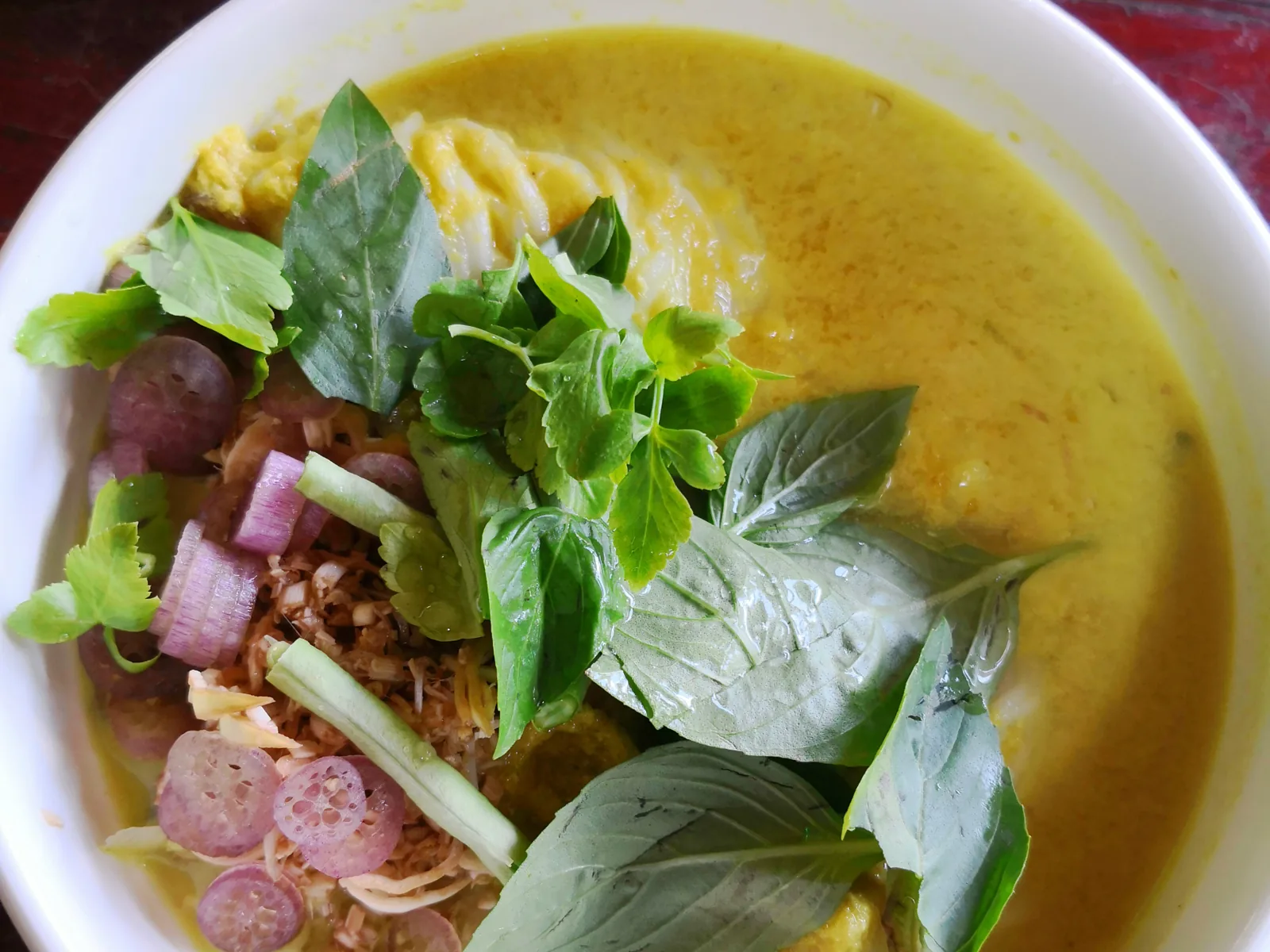
Nom banh chok in a white bowl: yellow fish curry over rice noodles with fresh basil, banana flower and herbs

Cambodian Heritage

Photo: Thomas Wanhoff from Siem Reap, Cambodia, CC BY-SA 2.0, via Wikimedia Commons

The Heritage Formulary

Measured Ingredients

Estimated cost: Low — about $3–4 per serving at home (USD)

Made the Cambodian way: kroeung pounded fresh, fish poached and flaked into the broth, noodles cooked separately and topped raw and crisp.

Execution Methodology & Culinary Technique

Step-by-Step Cooking Guide

Active 1h
P

Prep Stage: Kroeung Paste & Fresh Toppings

25 Mins • Pounding & Slicing

Soak the dried chillies, then pound the kroeung paste: lemongrass, galangal, turmeric, garlic, shallot and soaked chilli, pounded until smooth. While the paste rests, slice the cucumber and banana flower, cut the long beans, and rinse the bean sprouts, basil and mint.

Maestro Tip: Pound the fibrous lemongrass and galangal first, before the softer ingredients — they need the longest pounding to turn smooth.

  1. 1

    Pound the Kroeung Paste

    10 Mins No heat — room temperature, ~20°C (68°F)

    Put the chopped lemongrass, galangal, turmeric, garlic, shallot and soaked dried chillies in a mortar and pound for about 10 minutes until you have a smooth, fragrant yellow paste. Add a spoonful of water if it sticks to the pestle.

    A smooth paste matters — lumps of lemongrass stay stringy in the finished curry, so keep pounding until it feels like a thick cream.

    Done when: A smooth, bright yellow paste that smells of lemongrass and lime.

  2. 2

    Poach the Fish

    10 Mins Simmering, ~90°C (195°F)

    Bring the water to a gentle simmer in a large pot and slide in the fish fillets. Poach for about 8 minutes until the fish flakes easily and reaches 63°C (145°F) right through, then lift it out, let it cool for a minute and flake it into small pieces. Keep the poaching water — it becomes the broth.

    Keep the water at a bare simmer, not a boil — boiling makes the fish tough and clouds the broth.

    Done when: Fish that flakes into soft, white pieces with a fork.

  3. 3

    Build the Fish Curry Broth

    15 Mins Gentle simmer, ~90°C (195°F)

    Heat the oil in the same pot and fry the kroeung paste for about 3 minutes until fragrant. Stir in the flaked fish, then pour in the poaching water, coconut milk and kaffir lime leaves. Simmer gently for about 10 minutes, then season with the fish sauce, sugar and salt. Taste — it should be savoury, lightly sweet and fragrant.

    Fry the paste until the oil turns yellow and smells warm; raw kroeung tastes grassy and sharp.

    Done when: A golden, fragrant broth with flakes of fish through it.

  4. 4

    Cook the Noodles

    5 Mins Boiling, 100°C (212°F)

    While the broth simmers, cook the rice vermicelli in a separate large pot of boiling water for about 4 minutes until soft but still springy. Drain well and rinse briefly under cold water so the noodles do not stick together.

    Cook the noodles separately, never in the curry — the starch they release would turn the broth cloudy and thick.

    Done when: Soft, springy noodles that separate easily with chopsticks.

  5. 5

    Assemble the Bowls

    5 Mins Hot broth, ~85°C (185°F)

    Divide the noodles between four bowls. Ladle the hot fish curry over the top, then pile on the bean sprouts, cucumber, banana flower, long beans, basil and mint. Serve at once with lime wedges on the side.

    Put the toppings on top, not stirred in — the crisp vegetables and herbs stay fresh against the hot broth.

    Done when: A bowl of noodles in golden curry, crowned with a bright pile of fresh herbs and vegetables.

Finishing Touches & Plating

Serve each bowl with a lime wedge and extra chillies on the side, so every eater can brighten and heat their own noodles.

Nutritional Physiology & Benefits

Nutrition

Energy

543

kcal / serving

Protein

22g

Complete AA

Carbs

80g

Complex

Fats

16g

Healthy

Per serving (4 servings · 1 serving ≈ 560 g)
Energy543 kcal
Protein22 g
Carbohydrates80 g
Fat16 g
Fibre6.0 g
Sugar7.9 g
Sodium939 mg
Per 100g
Energy97 kcal
Protein3.9 g
Carbohydrates14.2 g
Fat2.8 g
Fibre1.1 g
Sugar1.4 g
Sodium168 mg

Nutrition values are estimated — calculated from USDA FoodData Central values for the listed ingredients.

Vitamins & minerals: White fish supplies B vitamins and selenium, turmeric and lemongrass add flavour with almost no calories, and the bean sprouts, cucumber and herbs add vitamin C and folate.

Protein from Fish

One serving carries about 22.0 g of protein from the white fish, which makes this a real breakfast, not a snack.

A Pile of Fresh Vegetables

Bean sprouts, cucumber, banana flower and herbs add crunch, vitamin C and folate with almost no calories.

Light but Filling

At about 543 kcal a serving with plenty of vegetables and herbs, the bowl is filling without feeling heavy.

Food Pairings

What to Eat With

To optimize nutrient absorption and elevate the sensory depth, pair with these authentic accompaniments:

Sides

Extra Herbs & Chillies

A side plate of extra basil, mint and chillies lets each eater build their own bowl, the Cambodian way.

Vegetables

Banana Flower Salad

More sliced banana flower with lime adds a crisp, lightly tangy bite that matches the creamy curry.

Drinks

Hot Cambodian Coffee

Strong, sweet Cambodian coffee is the classic breakfast partner to a hot bowl of noodles.

Iced Tea

Cold, unsweetened iced tea refreshes the palate between spoonfuls of warm, fragrant curry.

Complete menu

Serve the nom banh chok with extra herbs and chillies on the side, follow with fresh fruit, and finish with hot Cambodian coffee or iced tea.

Digestive Guardrails

What NOT to Combine

To prevent digestive distress, sluggishness, or palate clash, avoid pairing the dish with these elements:

Overcooking the Fish

Fish poached past 63°C (145°F) turns dry and stringy, and boiling the broth hard clouds it — keep it at a gentle simmer. This is general food information, not medical advice.

Very Salty Condiments

The broth is already seasoned with fish sauce and salt, so extra soy sauce or salty chilli paste in the same bowl pushes the salt too far. This is general food information, not medical advice.

General information only, not medical advice — consult a doctor for personal dietary decisions.

Who Should Eat It

Who Should Eat

  • General adultsA comforting breakfast — about 22.0 g protein and 543 kcal per serving, best eaten hot in a sensible portion.
  • ChildrenA mild, noodle-based breakfast children usually love — take the dried chilli out of their portion and go easy on the fish sauce.
  • ElderlySoft noodles and flaked fish make this an easy, warming meal for older eaters; serve it well seasoned but not too hot.
  • Pregnant womenFine as an occasional breakfast when the fish is cooked right through to 63°C (145°F); keep the portion modest. Ask your clinician about portions.
  • Breastfeeding womenA warm, nourishing meal with protein and carbohydrate for recovery; one serving is enough because the bowl is large.
  • AthletesGood fuel for recovery, with about 22.0 g protein and plenty of carbohydrate per serving — add an extra piece of fish for more protein.
  • Weight gainEnergy-rich and easy to eat in a good amount, so it suits weight gain when served with plenty of noodles.
  • Weight lossHearty at about 543 kcal a serving; take a smaller bowl with more bean sprouts and cucumber and fewer noodles for a lighter meal.

Health Conditions — Adjust or Avoid

Conditions

  • DiabetesAbout 79.5 g carbohydrate per serving, mostly from the noodles, so keep the noodle portion as stated and load up on bean sprouts and cucumber. Ask your clinician about portions.
  • High blood pressureOne serving carries about 939 mg sodium, so keep other salty foods out of the same meal and do not add extra fish sauce at the table. Ask your clinician about portions.
  • Kidney diseasePortions should stay modest, and the protein content matters for some kidney diets. Ask your clinician about portions.
  • GoutWhite fish is a low-purine protein, so one modest serving with plenty of vegetables is usually fine. Ask your clinician about portions.
  • Stomach issuesA gentle, mild curry that is usually kind to the stomach; skip the dried chilli if it bothers you. Ask your clinician about portions.
  • Cardiovascular diseaseLow in fat at about 15.9 g per serving, so one bowl with vegetables is a balanced meal. Ask your clinician about portions.
  • Fatty liverA moderate-energy meal, so keep portions modest and avoid eating it late at night. Ask your clinician about portions.
  • Food allergiesContains fish (fish fillet and fish sauce). People with fish allergy should not eat it unless a safe substitute is used. Ask your clinician about safe alternatives.
  • Special therapeutic dietsNot suitable for a low-sodium therapeutic diet as written; any lighter version changes the dish and should be discussed with a clinician.

If you have a medical condition, consult your doctor before changing your diet.

Storage & Use

Storage & Use

How to store
Cool quickly and store the broth, noodles and toppings in separate covered containers.
In the fridge
The broth keeps 2 days and the cooked noodles 2 days in the fridge at 4°C (40°F) or below.
In the freezer
The broth freezes well for up to 1 month; the noodles and fresh toppings do not freeze well.
How to reheat
Reheat the broth until boiling, then pour over freshly warmed noodles and warm through until steaming hot, to 74°C (165°F).
Freezing recommended
Yes — the broth only, without noodles or toppings.
Signs it has spoiled
Sour smell, cloudy broth, or slimy noodles.

More recipes to explore

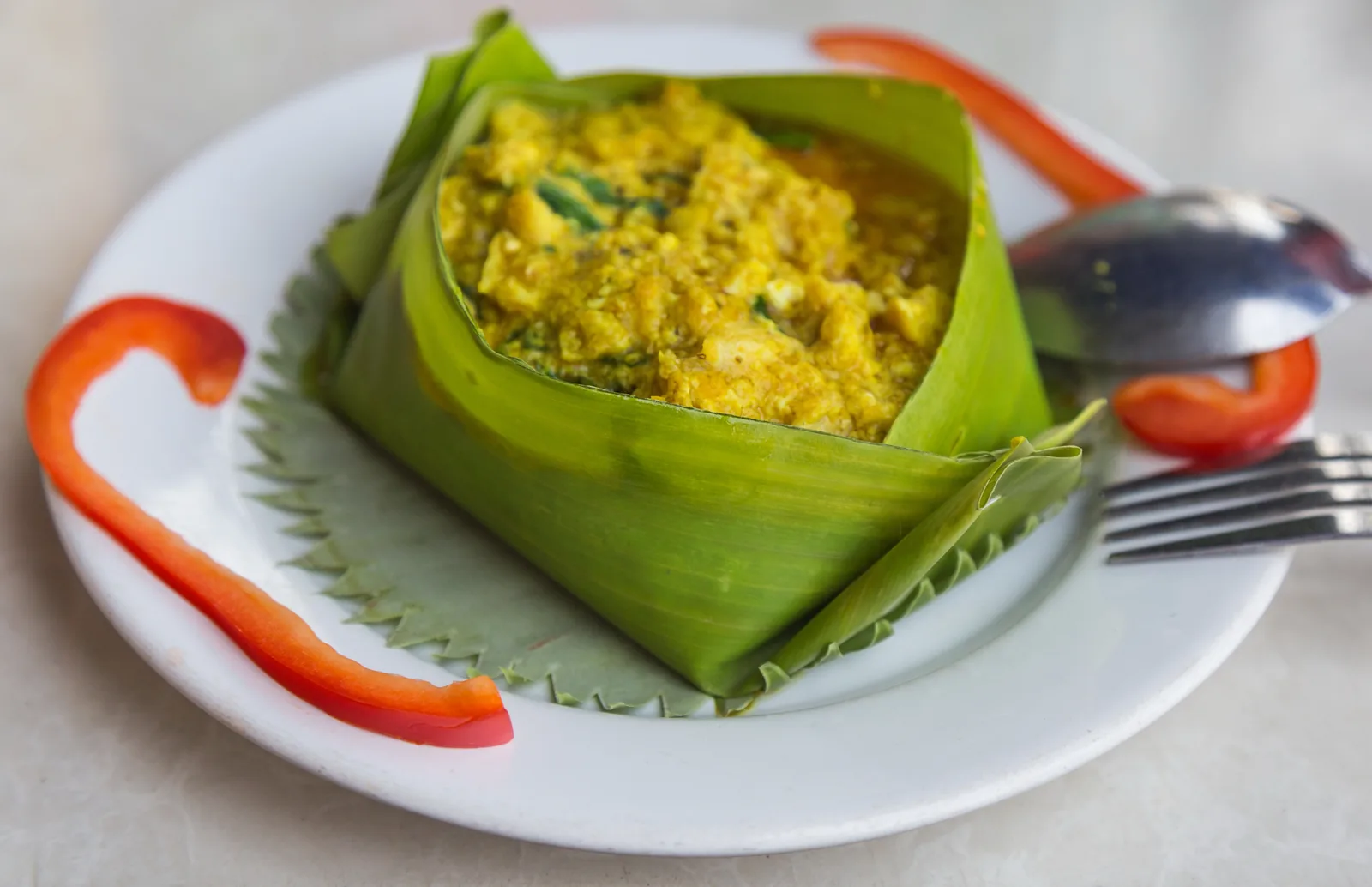
Cambodian fish amok, a yellow steamed fish mousse in a folded banana leaf cup on a white plate Cambodia flag Cambodia 1h
Dinner •Cambodian Heritage

Cambodian Fish Amok

This cambodian fish amok recipe turns fresh white fish, yellow kroeung paste and coconut milk into a silky steamed mousse, set in a banana leaf cup and finished with coconut cream, lime leaf and chilli. It is Cambodia's most loved celebration dish, gentle rather than fiery, and it eats like a savoury custard with rice. One serving is about 240 g, without the rice.

Comfort & Warmth

A steamed fish mousse in a banana leaf cup, fragrant with lemongrass and coconut, served hot with rice.

Pairs Well With
Steamed jasmine rice and a crisp green papaya salad.
High Protein
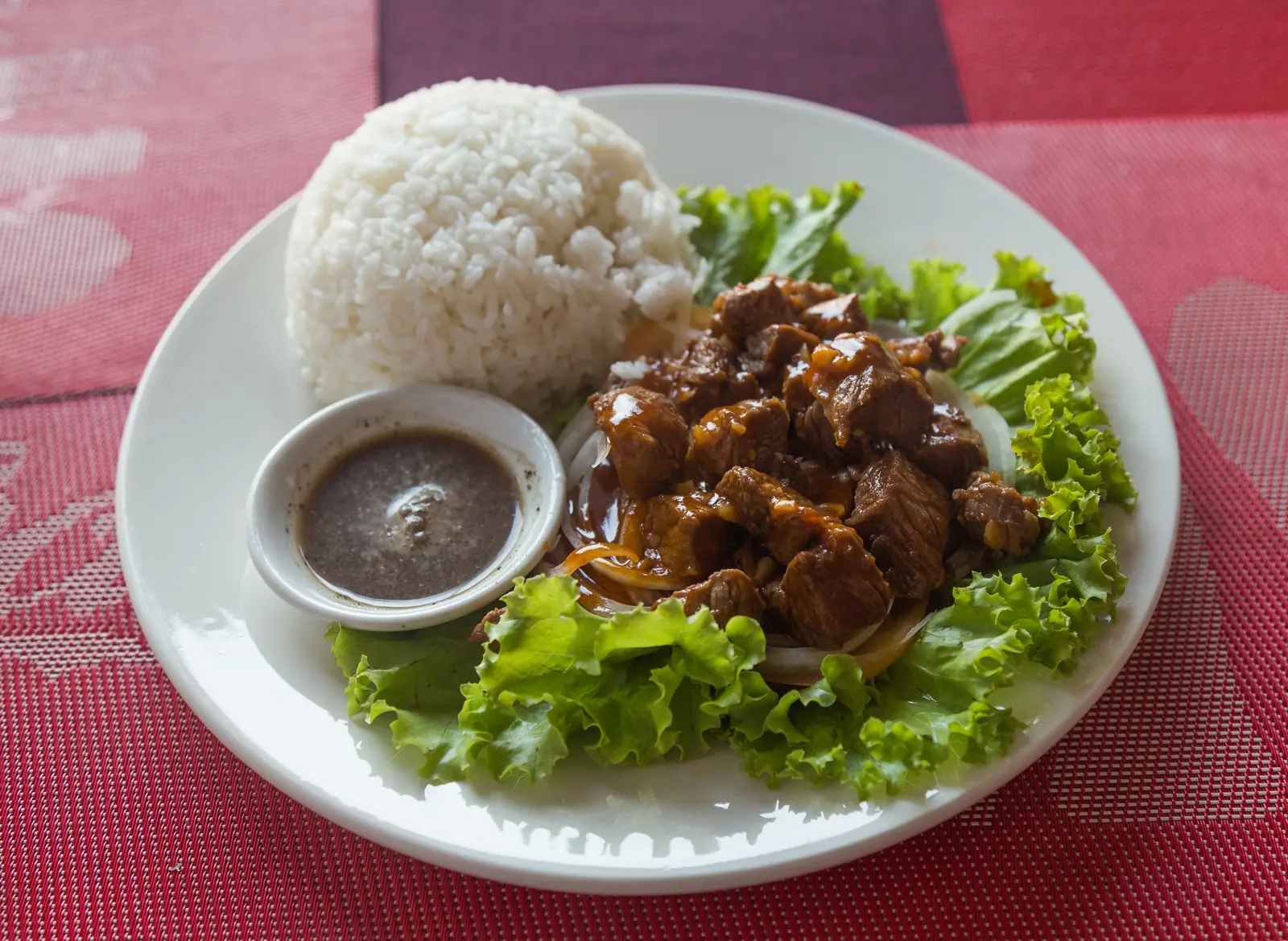
Cambodian lok lak: stir-fried beef cubes on lettuce with rice and a small bowl of lime-pepper dipping sauce Cambodia flag Cambodia 35m
Dinner •Cambodian Heritage

Cambodian Lok Lak

This cambodian lok lak recipe shakes cubes of marinated beef in a very hot wok until browned at the edges, then piles them over crisp lettuce, tomato, onion and cucumber with a fried egg and a bowl of lime-pepper dipping sauce. The dip is the soul of the dish: sharp lime, salt and cracked Kampot pepper cut straight through the rich beef. One serving is about 535 g, with rice.

Hearty & Satisfying

Stir-fried beef cubes over lettuce, tomato and onion, with the sharp lime-and-Kampot-pepper dip that defines the dish.

Pairs Well With
Steamed jasmine rice and the lime-pepper dip.
High Protein
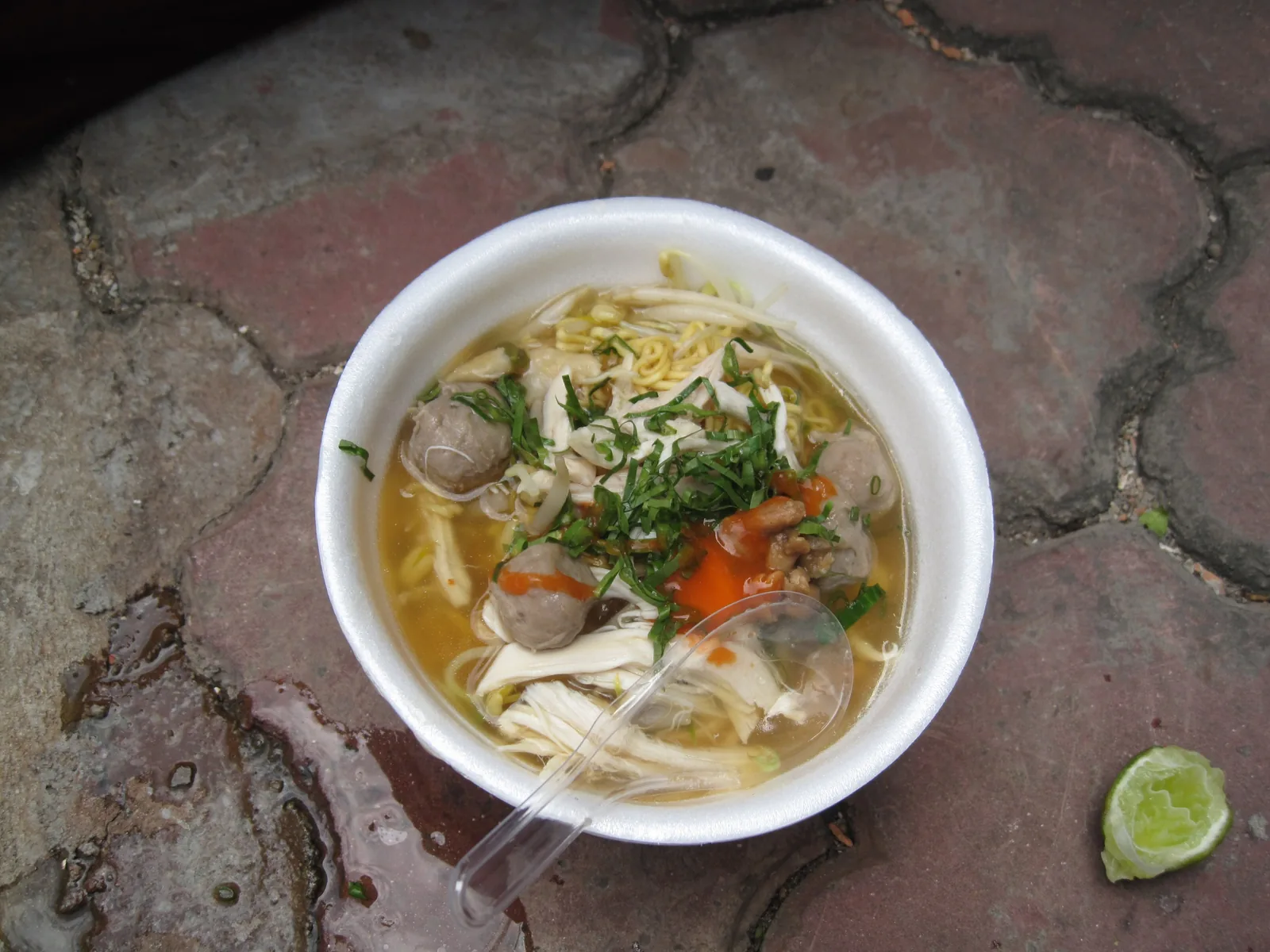
Khmer kuy teav: a street-stall bowl of Cambodian pork noodle soup with meatballs, bean sprouts, herbs and chilli Cambodia flag Cambodia 3h
Breakfast •Cambodian Heritage

Khmer Kuy Teav

This kuy teav recipe simmers pork bones with dried shrimp and squid into a clear, gently sweet broth, then ladles it over rice noodles with seasoned minced pork, sliced liver, shrimp and a soft egg. Bean sprouts, herbs, fried garlic, lime and chilli go on at the table, so every bowl is seasoned to taste. One serving is about 850 g, broth and toppings together.

Warm & Nourishing

A clear pork-bone broth with rice noodles, minced pork, liver, shrimp and a tangle of fresh herbs — Cambodia's classic breakfast bowl.

Pairs Well With
Fried garlic, fresh herbs, lime wedges and chilli sauce at the table.
Soups & Broths • Pasta & Noodles
A bowl of Vietnamese phở bò with rare beef, rice noodles and fresh herbs Vietnam flag Vietnam 3h 30m
Breakfast •Hanoi Heritage

Phở Bò Tái Nạm

Slow-simmered star anise and cinnamon bone broth with hand-cut rice noodles, supplying clean restorative warmth and collagen. One serving is about 775 g.

Immunity & Warming

Slow-simmered bone broth with rice noodles, rare beef and fresh herbs.

Pairs Well With
Crispy quẩy, fresh lime & sawtooth coriander
Soups & Broths • High Protein

The Dinner Gazette

Never wonder what’s for dinner again

One email a week with easy dinner ideas from around the world — ingredients, steps and nutrition, tested in our kitchen first.

Delivered every Thursday morning. Unsubscribe anytime.