-
1
Make and Rest the Dough
40 Mins
Room temperature, about 22°C (72°F)
Mix the 300 g flour with the 150 ml cold water a little at a time, and knead for 8–10 minutes until the dough is smooth, firm and no longer sticky. Cover with a damp cloth and rest for 30 minutes — the rest relaxes the gluten so the dough rolls thin without springing back.
The dough should feel firm, like a dumpling dough, not soft like bread dough. If it is sticky, add flour a tablespoon at a time; if it cracks, add water a teaspoon at a time.
Done when: The dough is smooth, springs back when pressed, and no longer sticks to your hands.
-
2
Mix the Pork-Kimchi Filling
10 Mins
Room temperature, about 22°C (72°F)
Put the 300 g ground pork in a bowl and add the 150 g crumbled tofu, 120 g squeezed-dry kimchi, 60 g garlic chives, 15 g garlic, 10 g ginger, 15 ml soy sauce, 10 ml sesame oil, 2 g salt and 1 g pepper. Stir in one direction for 2–3 minutes until the mixture turns sticky and holds together in a ball. Taste a tiny fried spoonful and adjust the salt — the filling should be boldly seasoned, because the plain wrapper dulls it.
Squeeze the kimchi really dry — wet filling makes soggy wrappers that split in the steamer.
Done when: A sticky filling that holds its shape when scooped.
-
3
Roll the Wrappers
15 Mins
Room temperature, about 22°C (72°F)
Divide the rested dough into 24 equal pieces and roll each one into a round wrapper about 9 cm (3.5 inches) across and 1–2 mm thick — thin in the middle, slightly thicker at the edges. Keep the wrappers you are not working with under the damp cloth.
Northern mandu wrappers are a little thicker than southern ones — that is what makes them plump and chewy rather than delicate.
Done when: Round, even wrappers, thin enough to see your fingers through faintly.
-
4
Fill and Pleat the Mandu
20 Mins
Room temperature, about 22°C (72°F)
Put a heaped teaspoon of filling in the centre of each wrapper, fold it in half and pinch the edges together in small pleats, or gather the edges up and twist them shut into a round purse shape. Seal each mandu tightly so no juice can escape — wet the rim with a dab of water if it will not grip.
Do not overfill — a heaped teaspoon is enough. Overstuffed mandu burst in the steamer.
Done when: Each mandu is plump, tightly sealed, and about the size of a walnut.
-
5
Steam Until Juicy
12 Mins
Boiling water, 100°C (212°F)
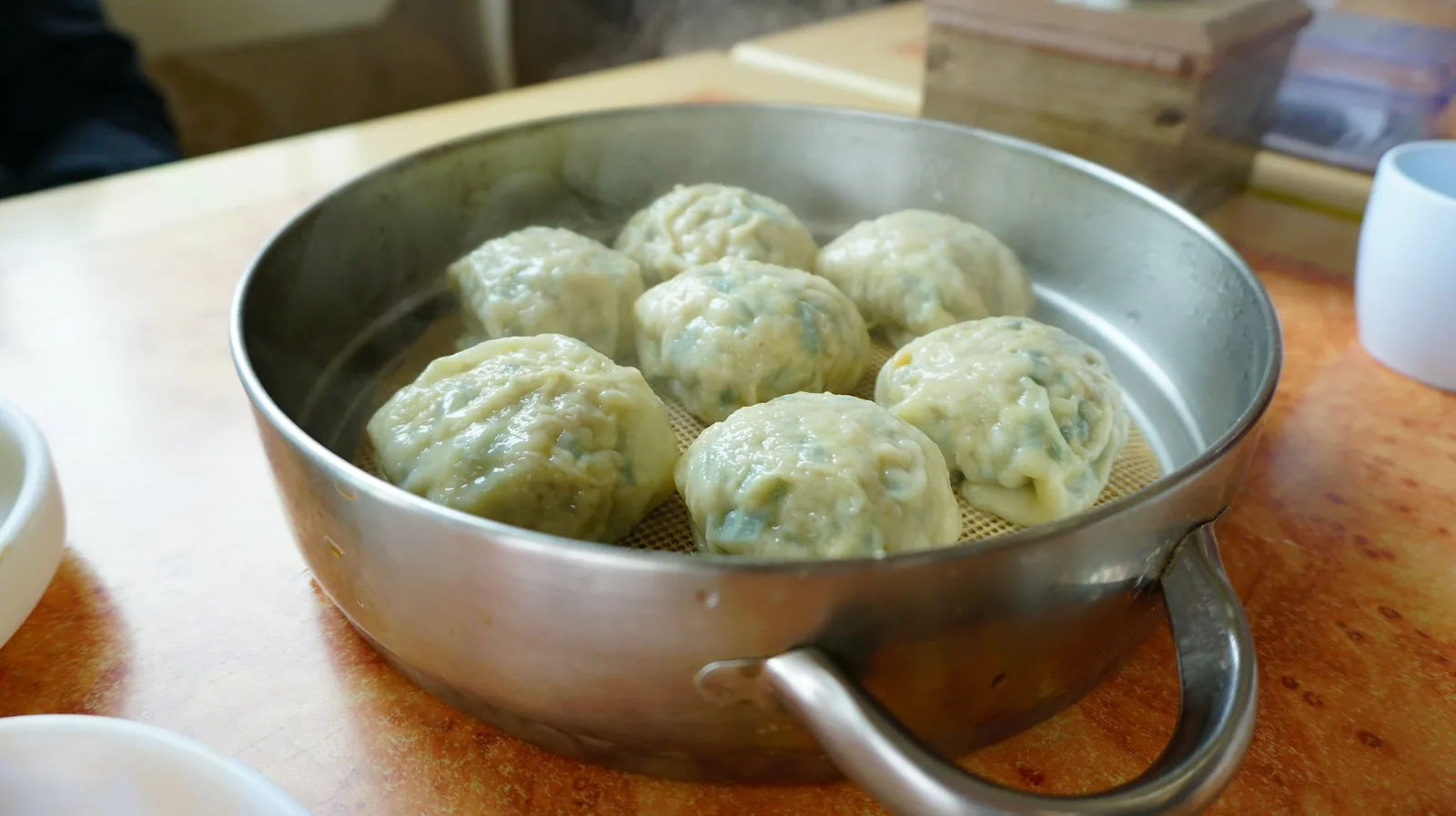
Bring water to a boil in a steamer pot. Lightly oil the steamer basket or line it with cabbage leaves, set the mandu in with space between them, and steam with the lid on for 10–12 minutes — the wrappers turn slightly translucent and glossy, and the pork inside must reach at least 71°C (160°F).
Do not lift the lid in the first 8 minutes — the rush of cool air can make the wrappers wrinkle and stick. Steam in batches rather than crowding the basket.
Done when: The wrappers are tender and slightly translucent, and the centre of a cut-open mandu is steaming hot with no pink pork.
-
6
Mix the Dip and Serve
5 Mins
Room temperature, about 22°C (72°F)
While the mandu steam, stir together the 20 ml soy sauce, 20 ml rice vinegar, 5 ml sesame oil, 2 g gochugaru and 10 g spring onion in a small bowl. Serve the mandu straight from the steamer, six per person, with the dip on the side.
Make the dip while the mandu steam so everything lands on the table hot.
Done when: A sharp, glossy dip with spring onion rings floating on top.
auto_awesome Finishing Touches & Plating
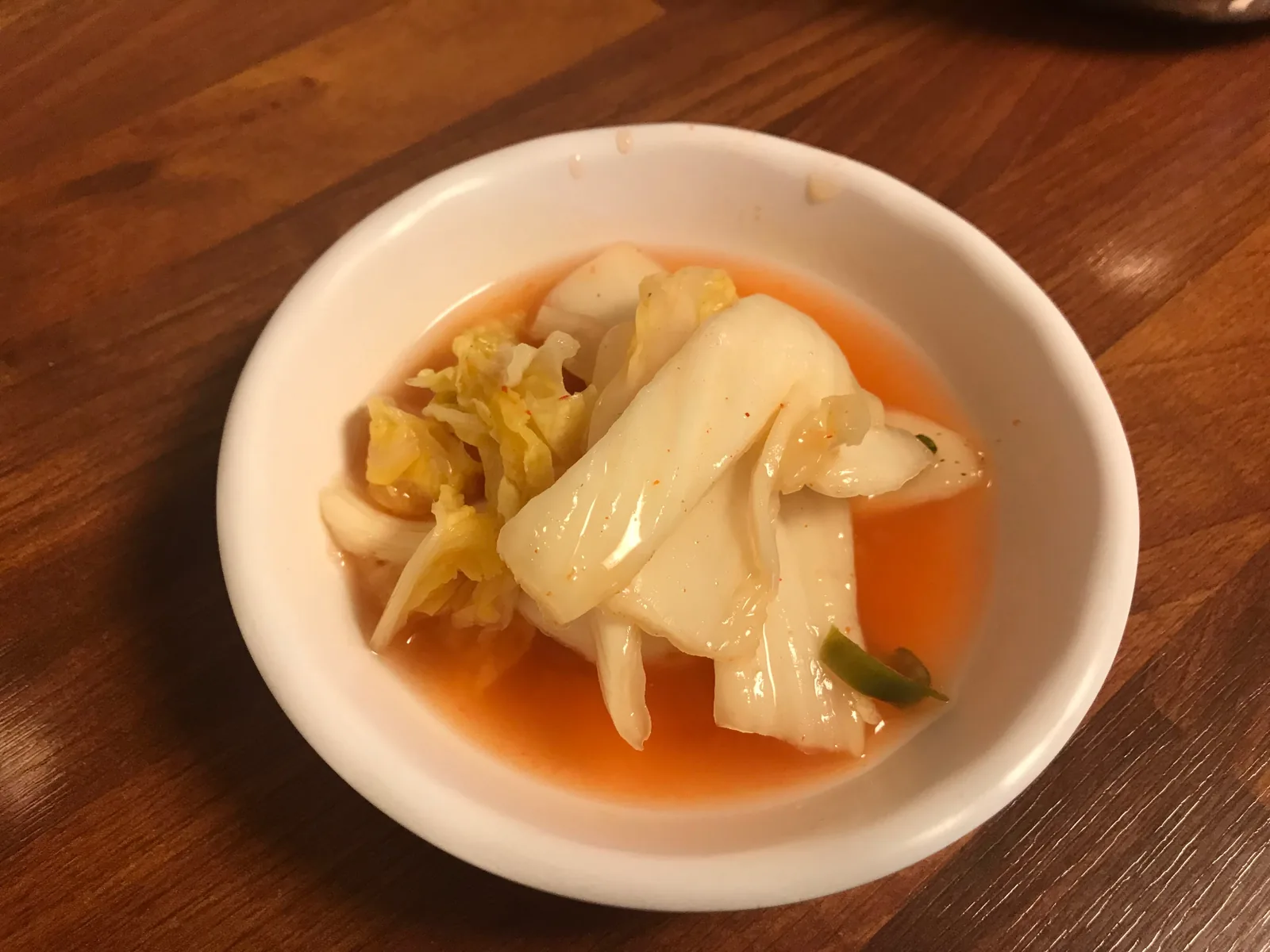
Serve the mandu straight from the steamer, glossy and hot, with the soy-vinegar dip on the side and a small bowl of white kimchi on the table.
 North Korea
2h 45m

 France

 Vietnam