-
1
Braise the Brisket and Build the Broth
90 Mins
Gentle simmer, about 95°C (200°F)
Put the 400 g brisket in a large pot with the 1200 ml water and bring to a gentle simmer. Skim off the foam, then keep it at the barest simmer for 90 minutes until the brisket is completely tender — a skewer should slide in with no resistance and the meat must be well past 74°C (165°F) inside. Lift the brisket out, let it cool, and slice it thinly across the grain. Strain the broth through a fine sieve.
Never let the broth boil hard — a rolling boil clouds it and toughens the meat.
Done when: The brisket yields easily to a skewer and the broth is clear and pale gold.
-
2
Season and Chill the Broth Until Icy
30 Mins
Chill to 4°C (40°F) or colder
Stir the 6 g salt, 15 ml soy sauce, 10 g sugar and 30 ml rice vinegar into the strained broth, then taste — it should be lightly salty, gently sour and clearly beefy, not rich or heavy. Set the pot in a bowl of ice water and stir for 10 minutes, then refrigerate until icy cold, about 4°C (40°F). A few ice cubes in the bowl at serving time are traditional.
Chill the broth in a wide, shallow container rather than a deep pot — it cools in half the time.
Done when: The broth is icy cold and tastes bright, not flat.
-
3
Mix and Knead the Noodle Dough
15 Mins
Room temperature, about 22°C (72°F)
Mix the 240 g buckwheat flour and 60 g potato starch in a bowl, then pour in the 150 ml boiling water a little at a time, stirring with chopsticks until it clumps. Turn it out and knead hard for 8–10 minutes — buckwheat has almost no gluten, so the dough will feel stiff and crumbly at first, then come together into a firm, smooth ball. Wrap it and rest for 20 minutes.
If the dough cracks when you fold it, knead in water a teaspoon at a time; if it sticks, dust with potato starch, never wheat flour.
Done when: The dough is smooth, firm and no longer crumbly.
-
4
Roll and Cut the Noodles
15 Mins
Room temperature, about 22°C (72°F)
Roll the rested dough out on a starch-dusted surface to about 2 mm thick, then fold it loosely and cut it into fine noodles about 2 mm wide. Toss them lightly with potato starch so they do not stick. Work fast — buckwheat dough dries out and turns brittle in minutes. If you own a noodle press, feed the dough through it instead.
Cut the noodles shorter than you think — long buckwheat noodles are traditionally snipped with scissors at the table because they are so chewy.
Done when: Even, fine noodles that hold their shape when lifted.
-
5
Cook the Noodles, Then Shock Them Cold
3 Mins
Boiling water, 100°C (212°F)
Bring a large pot of water to a rolling boil and drop the noodles in, stirring once so they do not clump. Cook for 2–3 minutes until they turn a shade darker and feel springy, then drain and rinse at once under cold running water, rubbing gently with your hands until the noodles are completely cold and the starchy slickness is gone. Drain well.
Do not skip the cold rinse — it stops the cooking and gives naengmyeon its signature chewy bite.
Done when: The noodles are cold, springy and separate, not sticky.
-
6
Assemble the Bowls
5 Mins
Serve cold, about 4°C (40°F)
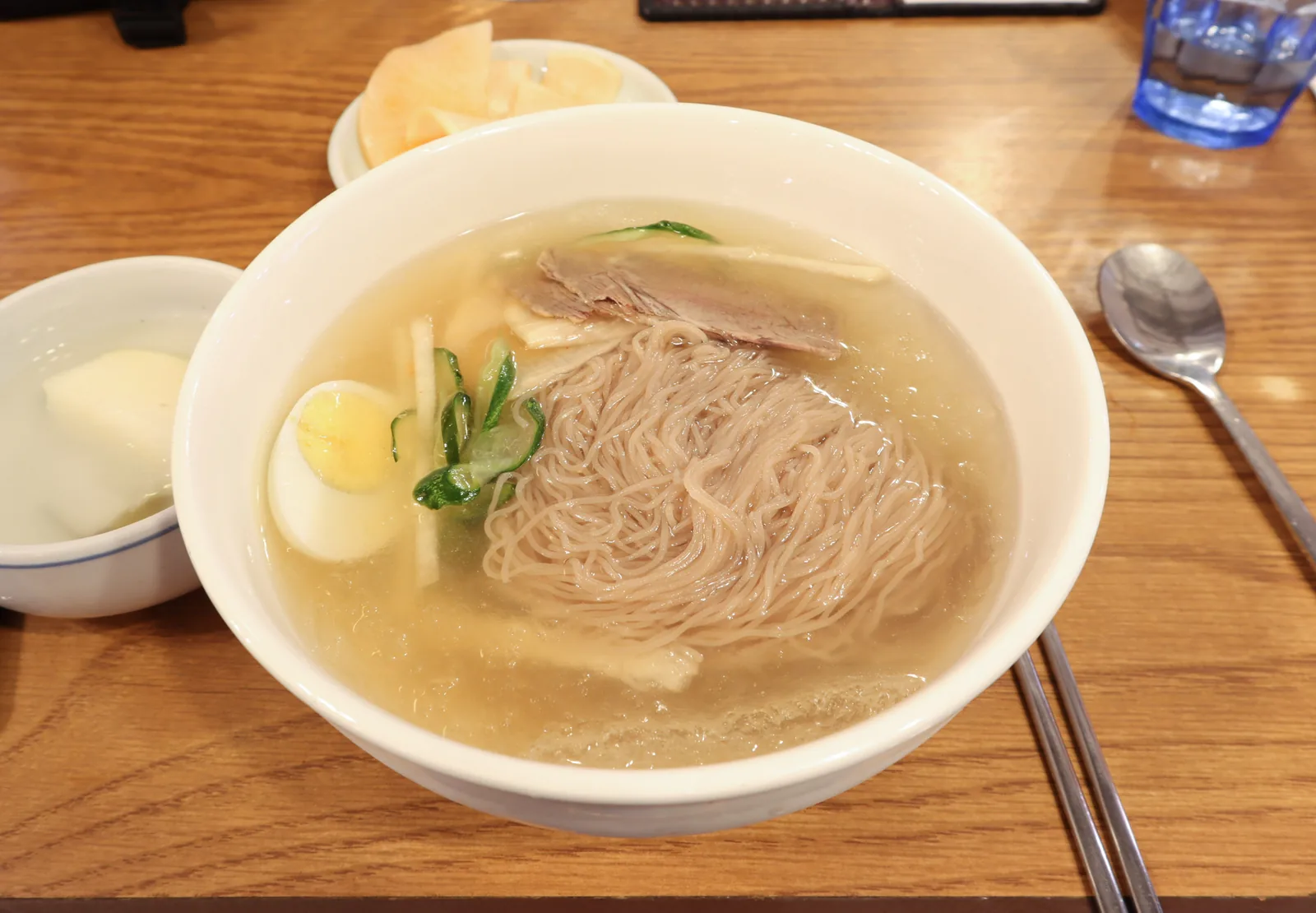
Divide the cold noodles between four chilled bowls and ladle about 300 ml of the icy broth over each. Top with the sliced brisket, half a boiled egg, cucumber, Asian pear and daikon, then scatter over the sesame seeds. Put the mustard paste on the table so each person can stir in as much heat as they like.
Chill the bowls in the freezer for 10 minutes first — a warm bowl melts the chill in seconds.
Done when: A cold bowl with clear broth, noodles mounded in the middle and bright toppings on top.
auto_awesome Finishing Touches & Plating
Serve at once, ice-cold, with the mustard and extra vinegar on the side so each person seasons their own bowl. Eat the noodles quickly — they are at their best in the first few minutes.
 North Korea
2h 35m
 Italy
 Thailand