Curated recipes from 193 countries  •  New seasonal Mediterranean issue out now

Overview

Ocopa Arequipena

Ocopa Arequipeña, Arequipa Green Sauce Potatoes

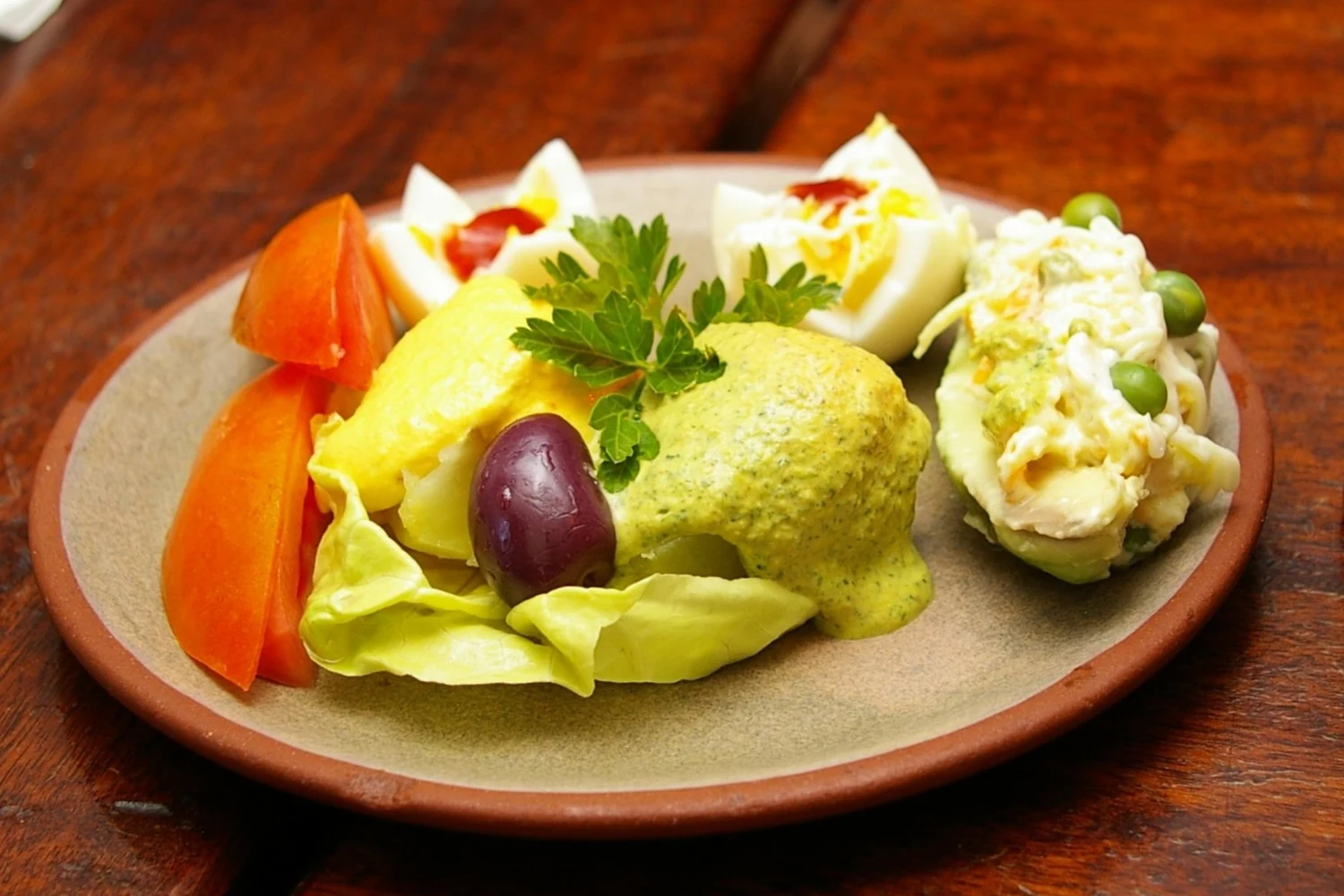
This ocopa arequipena recipe coats boiled potatoes in a creamy green sauce of huacatay, roasted peanuts, ají amarillo and queso fresco, served cool on lettuce with egg, tomato and black olives. It is the herbal, nutty cousin of papa a la huancaína, and the signature starter of Arequipa's picanterías. One serving is about 421 g.

Ocopa takes its name from the bag the Inca chasqui messengers carried, in which they kept dried chillies, ground peanuts and Andean herbs to eat on their long runs — a paste ground on the batán, the stone mortar still used in Peruvian kitchens. When the Spanish arrived, milk, cheese and onion joined the paste and it became the creamy sauce Arequipa is known for. One of Peru's first cookbooks, La Mesa Peruana, published in 1867, already records ocopa, and the modern version — with sweet vanilla crackers to thicken and sweeten the sauce — appears in its 1994 edition. The green colour and the flavour come from huacatay, the black mint that grows wild around Arequipa.

Pairs well with: Serve cool as a starter with crusty bread, choclo corn, and a cold beer or chicha morada.

Provenance

Peru flag Peru

Arequipa Picantería Classic

Latin America & Caribbean

Time Dedication

50m

20m prep • 30m cook

Batch Yield

4 Servings

586 kcal per serving

1 serving ≈ 421 g

Technical Skill

Intermediate

Moderate (Blender Sauce)

Meal Timing & Digestive Fit

Breakfast

Not Advised

Lunch

Prime Metabolic Fit

Dinner

Ideal Hearty Main

Snack & Tea

Inappropriate

Occasions: Family lunches, Peruvian feasts, starter courses, potlucks, summer meals Cost: Low — about $2–2.50 per serving at home
A plate of ocopa arequipena with green huacatay sauce over potatoes, egg, tomato and olives

Arequipa Picantería Classic

Photo: G M, CC BY 2.0, via Wikimedia Commons

The Heritage Formulary

Measured Ingredients

Estimated cost: Low — about $2–2.50 per serving at home (USD)

Boiled potatoes in a creamy green huacatay-peanut sauce, served cool with egg, olives and tomato.

Execution Methodology & Culinary Technique

Step-by-Step Cooking Guide

Active 50m
P

Prep Stage: Boil the Potatoes, Toast the Peanuts

20 Mins

Put the potatoes on to boil in salted water while you work: toast the peanuts in a dry pan, chop the onion, mince the garlic, pick the huacatay leaves, and boil and peel the eggs. Have the queso fresco, evaporated milk, ají paste and crackers measured and ready beside the blender.

Maestro Tip: Boiling the potatoes in their skins keeps them from going waterlogged — peel them while they are still warm, when the skins slip off easily.

  1. 1

    Boil the Potatoes Until Tender

    25 Mins Boiling water, 100°C (212°F)

    Put the whole unpeeled potatoes in a large pan, cover with cold salted water, and bring to a rolling boil. Cook for 20–25 minutes until a knife slides in easily. Drain, peel while warm, and slice into thick rounds about 1 cm thick. Leave to cool.

    Start the potatoes first — everything else takes less time, and the sauce is best made while they cool.

    Done when: A knife slides through with no resistance; slices hold their shape.

  2. 2

    Toast the Peanuts

    5 Mins Medium heat, ~160°C (320°F)

    Toast the peanuts in a dry frying pan over medium heat for 3–4 minutes, shaking the pan, until they smell nutty and take on a little colour. Tip them out and leave to cool.

    Toasting is what gives ocopa its roasted backbone — raw peanuts make a flat, pale sauce.

    Done when: Peanuts smell toasted and nutty, with a few golden spots.

  3. 3

    Fry the Onion, Garlic and Ají

    8 Mins Medium heat, ~160°C (320°F)

    Heat the oil in the same pan and fry the onion for 4–5 minutes until soft and translucent. Add the garlic and the ají amarillo paste and fry for 2–3 minutes more, stirring, until the paste darkens a shade and smells fragrant.

    Frying the ají paste in oil wakes up its flavour and takes the raw edge off the chilli.

    Done when: Onion is soft and sweet; the paste is fragrant and a shade darker.

  4. 4

    Blend the Green Sauce

    5 Mins Room temperature, ~20°C (68°F)

    Put the fried onion mixture in a blender with the toasted peanuts, queso fresco, evaporated milk, huacatay leaves, crackers and salt. Blend until completely smooth and creamy, about 2 minutes, scraping down the sides once. Add a splash of milk if it is too thick — it should pour in a slow ribbon and coat a spoon.

    Blend longer than you think — a grainy sauce is the one fault ocopa cannot hide.

    Done when: Sauce is smooth, creamy and pale green, thick enough to coat a spoon.

  5. 5

    Plate the Potatoes and Sauce

    5 Mins Room temperature, ~20°C (68°F)

    Lay the lettuce leaves on four plates. Arrange the potato slices over the lettuce, spoon the green sauce generously over the top, and garnish each plate with egg quarters, tomato wedges and black olives.

    Sauce the potatoes just before serving so the sauce stays bright green and glossy.

    Done when: Each plate has a neat bed of potatoes under a generous ladle of green sauce.

  6. 6

    Rest and Serve Cool

    10 Mins Room temperature, ~20°C (68°F)

    Leave the plated ocopa to settle for 10 minutes so the sauce sinks into the warm potatoes and the flavours marry. Serve cool or at room temperature, about 421 g per person, as a starter.

    Ocopa is a starter, not a side — serve it first, while everyone is still hungry.

    Done when: Potatoes are cool, sauce is settled, and the plate looks like a picantería serving.

Finishing Touches & Plating

Serve the ocopa cool, the green sauce glossy over the potatoes, with egg, tomato and olives around the plate — and a piece of crusty bread to chase the last of the sauce.

Nutritional Physiology & Benefits

Nutrition

Energy

586

kcal / serving

Protein

22g

Complete AA

Carbs

56g

Complex

Fats

32g

Healthy

Per serving (4 servings · 1 serving ≈ 421 g)
Energy586 kcal
Protein22 g
Carbohydrates56 g
Fat32 g
Fibre7.9 g
Sugar11.7 g
Sodium709 mg
Per 100g
Energy139 kcal
Protein5.2 g
Carbohydrates13.2 g
Fat7.6 g
Fibre1.9 g
Sugar2.8 g
Sodium168 mg

Nutrition values are estimated — calculated from USDA FoodData Central values for the listed ingredients.

Vitamins & minerals: Vitamin C and potassium (potatoes and tomato), vitamin E and magnesium (peanuts), calcium (queso fresco), iron and folate (egg). Nutrition values are estimated.

Filling, Real Food Energy

About 56 g of carbohydrate per serving from potatoes and peanuts — a starter that actually satisfies, not just a garnish.

Peanuts and Herbs, Not Just Cream

Roasted peanuts bring plant protein, vitamin E and magnesium, and huacatay brings the fresh herbal note that makes ocopa what it is.

A Generous Plate of Vegetables

Potatoes, lettuce, tomato, onion and olives — the plate is mostly vegetables, with the sauce as the flavour, not the bulk.

Food Pairings

What to Eat With

To optimize nutrient absorption and elevate the sensory depth, pair with these authentic accompaniments:

Sides

Crusty Bread

A hunk of crusty bread is the practical partner — it mops up the green sauce that the potatoes leave behind.

Vegetables

Choclo Corn

Boiled Andean corn on the cob is the traditional picantería companion; its big, starchy kernels suit the creamy sauce.

Drinks

Chicha Morada

The sweet-spiced purple corn drink is the classic Arequipa cooler with ocopa — its fruitiness plays against the herbal sauce.

Cold Beer

A cold lager cuts through the richness of the peanut sauce and refreshes the palate between bites.

Full Menus

Arequipa Picantería Menu

Start with ocopa, follow with rocoto relleno or adobo arequipeño, and finish with queso helado — the White City's classic meal.

Complete menu

Start with ocopa, follow with rocoto relleno and choclo corn, and finish with queso helado and a glass of chicha morada.

Digestive Guardrails

What NOT to Combine

To prevent digestive distress, sluggishness, or palate clash, avoid pairing the dish with these elements:

Very Spicy Main Dishes Right After

Ocopa already brings chilli heat, so a fiercely spicy main straight after can overwhelm the palate — let the herbal sauce have its moment first. This is general information, not medical advice.

Serving It Piping Hot

Ocopa is meant to be served cool or at room temperature; heating the sauce dulls the huacatay and can make it split. This is general information, not medical advice.

General information only, not medical advice — consult a doctor for personal dietary decisions.

Who Should Eat It

Who Should Eat

  • General adultsA generous, satisfying starter for most adults — one plate with bread is a light lunch on its own.
  • ChildrenSuitable from age 3+; the sauce is mildly spicy, so go easy on the ají for small children and check for peanut and egg allergies first.
  • ElderlySoft potatoes and a creamy sauce are easy to eat; serve at room temperature, not fridge-cold.
  • Pregnant womenGenerally suitable; the sauce is made fresh and the eggs are fully cooked. Ask your clinician about portion size.
  • Breastfeeding womenA filling, protein-rich starter between feeds — the peanuts and egg keep you going.
  • AthletesA good carbohydrate base after training; add a piece of chicken or fish alongside for more protein.
  • Weight gainA good choice — take a second helping of potatoes and sauce for extra energy.
  • Weight lossKeep to one plate and go light on the bread alongside; the sauce is rich, but the vegetables do most of the work.

Health Conditions — Adjust or Avoid

Conditions

  • DiabetesAbout 56 g of carbohydrate per serving, mostly from potatoes — keep to one plate and skip the bread. Ask your clinician about portion size.
  • High blood pressureAbout 709 mg of sodium per serving from the cheese, olives and salt — do not add more salt. Ask your clinician about portion size.
  • Kidney diseaseModerate in potassium and phosphorus from potatoes and cheese; eat a moderate portion and ask your clinician first.
  • GoutPotatoes and vegetables are low in purines, but peanuts are moderate — keep to one serving. Ask your clinician about frequency.
  • Stomach issuesCool, creamy and mild; usually gentle on the stomach, but the chilli can irritate — use less ají if needed. Ask your clinician if symptoms persist.
  • Cardiovascular diseasePeanuts and cheese bring saturated fat — keep the portion to one plate and balance the day. Ask your clinician about portion size.
  • Fatty liverRich and creamy, so one plate is the right portion; skip the extra bread. Ask your clinician about portion size.
  • Food allergiesContains peanuts, egg, milk (queso fresco and evaporated milk) and gluten (wheat crackers). Do not serve to anyone with a peanut allergy — ask your clinician if you are unsure.
  • Special therapeutic dietsIf you follow a prescribed low-sodium diet, use low-salt cheese and skip the olives; check with your clinician before eating.

If you have a medical condition, consult your doctor before changing your diet.

Storage & Use

Storage & Use

How to store
Store the sauce and the potatoes separately in airtight containers in the fridge; assemble just before serving.
In the fridge
Sauce 2–3 days; boiled potatoes 3–4 days.
In the freezer
Not recommended — the sauce splits and the potatoes go grainy.
How to reheat
Do not reheat the sauce; serve it cool. Potatoes can be warmed gently, then cooled before saucing.
Freezing recommended
No — the sauce does not freeze well.
Signs it has spoiled
Sour smell, sauce separated with a grey tinge, or slimy potatoes.

More recipes to explore

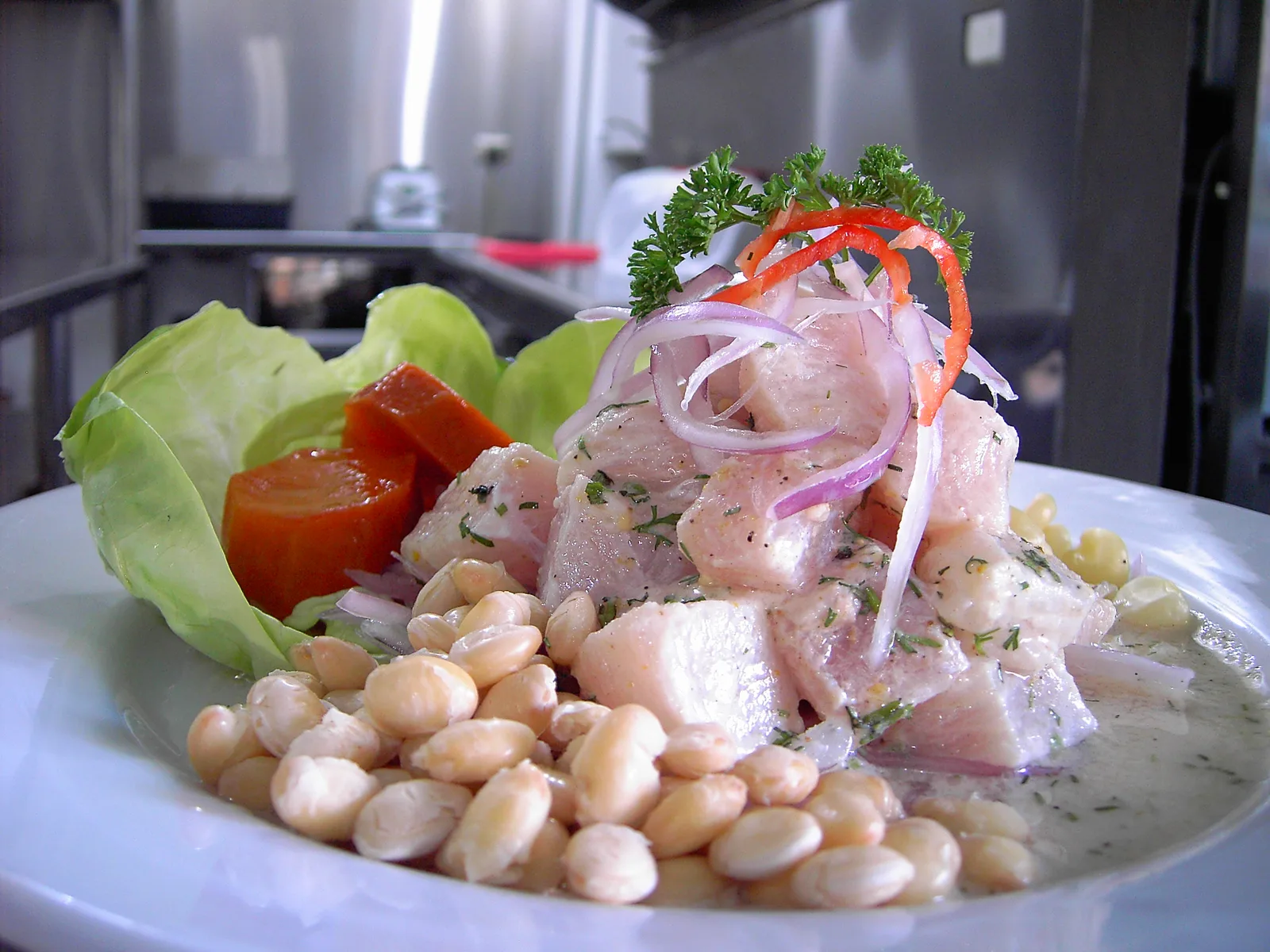
A plate of cebiche de corvina with lime-cured white fish cubes, red onion, ají strips, lettuce, sweet potato and choclo corn Peru flag Peru 35m
Lunch •Coastal Peru

Peruvian Ceviche

Peruvian ceviche is the national dish of Peru: cubes of very fresh sea bass cured in lime juice with red onion, ají limo and cilantro, with the milky, spicy marinade it leaves behind — leche de tigre — spooned over the top. It arrives with boiled sweet potato and big-kernel choclo corn, the sweet and starchy balance to all that citrus and heat. One serving is about 371 g.

Light & Fresh

Fresh sea bass cured in lime juice with red onion, ají limo and leche de tigre, served with sweet potato and choclo.

Pairs Well With
Boiled sweet potato, choclo corn and cancha
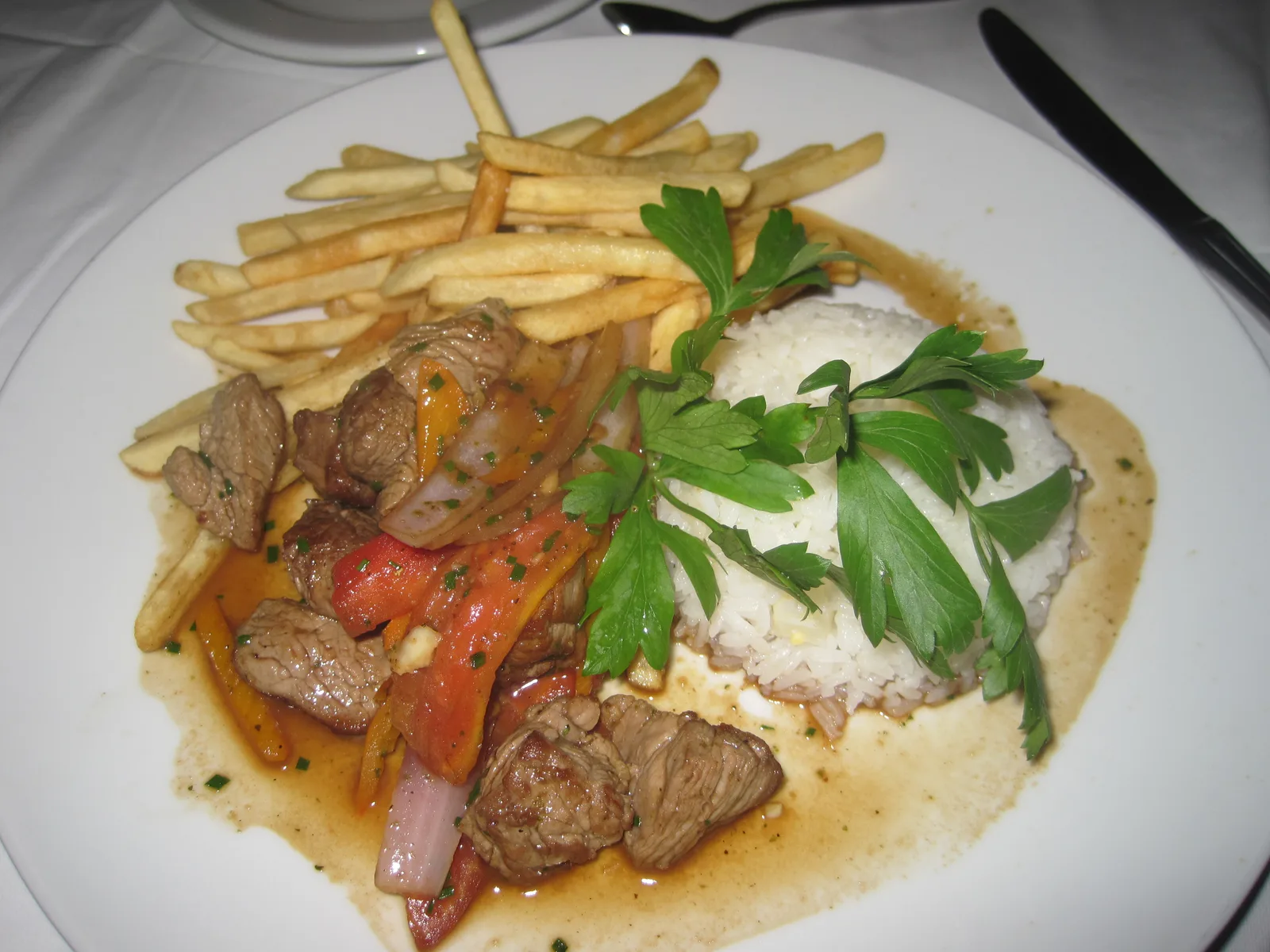
A plate of lomo saltado with seared beef strips, tomato and onion, French fries and a mound of white rice Peru flag Peru 40m
Dinner •Lima Heritage

Lomo Saltado

Lomo saltado is Peru's beloved Chifa stir-fry: strips of sirloin seared at screaming heat in a wok, tossed with red onion, tomato, soy sauce and red wine vinegar, then folded with crisp French fries and served beside white rice. It is the meeting of Cantonese wok cooking and Peruvian ingredients on one plate — smoky, salty, tangy and completely moreish. One serving is about 579 g.

Comfort & Energy

Sirloin seared at high heat with onion, tomato, soy and vinegar, tossed with fries and served with rice.

Pairs Well With
French fries, white rice and salsa criolla
Quick Prep (<30m)
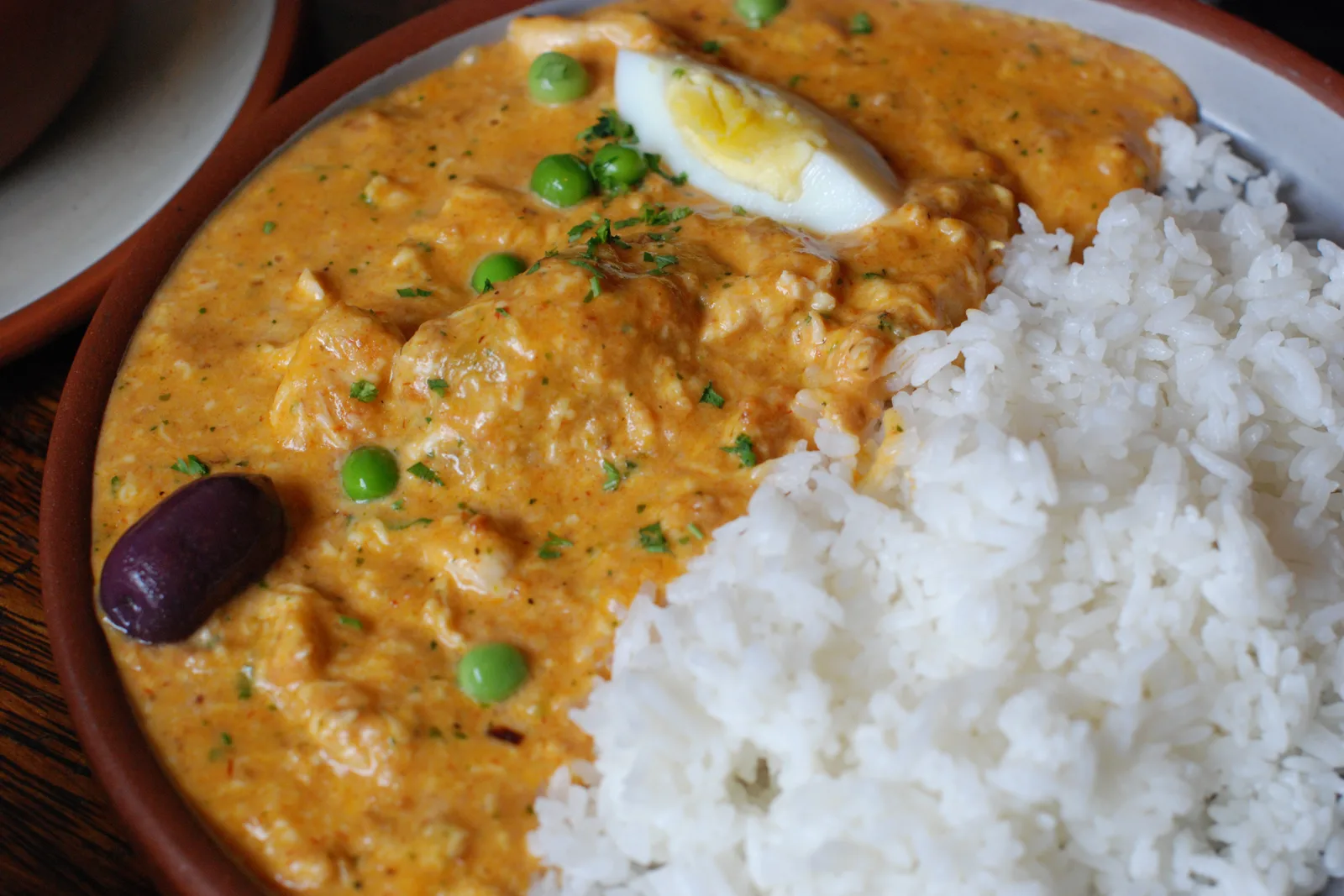
A bowl of ají de gallina with creamy golden chicken sauce, white rice, a boiled egg, peas and a black olive Peru flag Peru 1h
Dinner •Lima Heritage

Ají de Gallina

Ají de gallina is Lima's great comfort stew: poached chicken shredded into a velvety golden sauce of ají amarillo, bread soaked in evaporated milk, ground walnuts and Parmesan, served over white rice with a boiled egg, black olives and boiled potato. It is creamy, nutty, gently spicy and deeply filling — the dish Peruvians ask for when they come home. One serving is about 574 g.

Comfort & Warmth

Poached chicken in a creamy ají amarillo sauce thickened with bread, evaporated milk, walnuts and Parmesan.

Pairs Well With
White rice, boiled potato, boiled egg and black olives
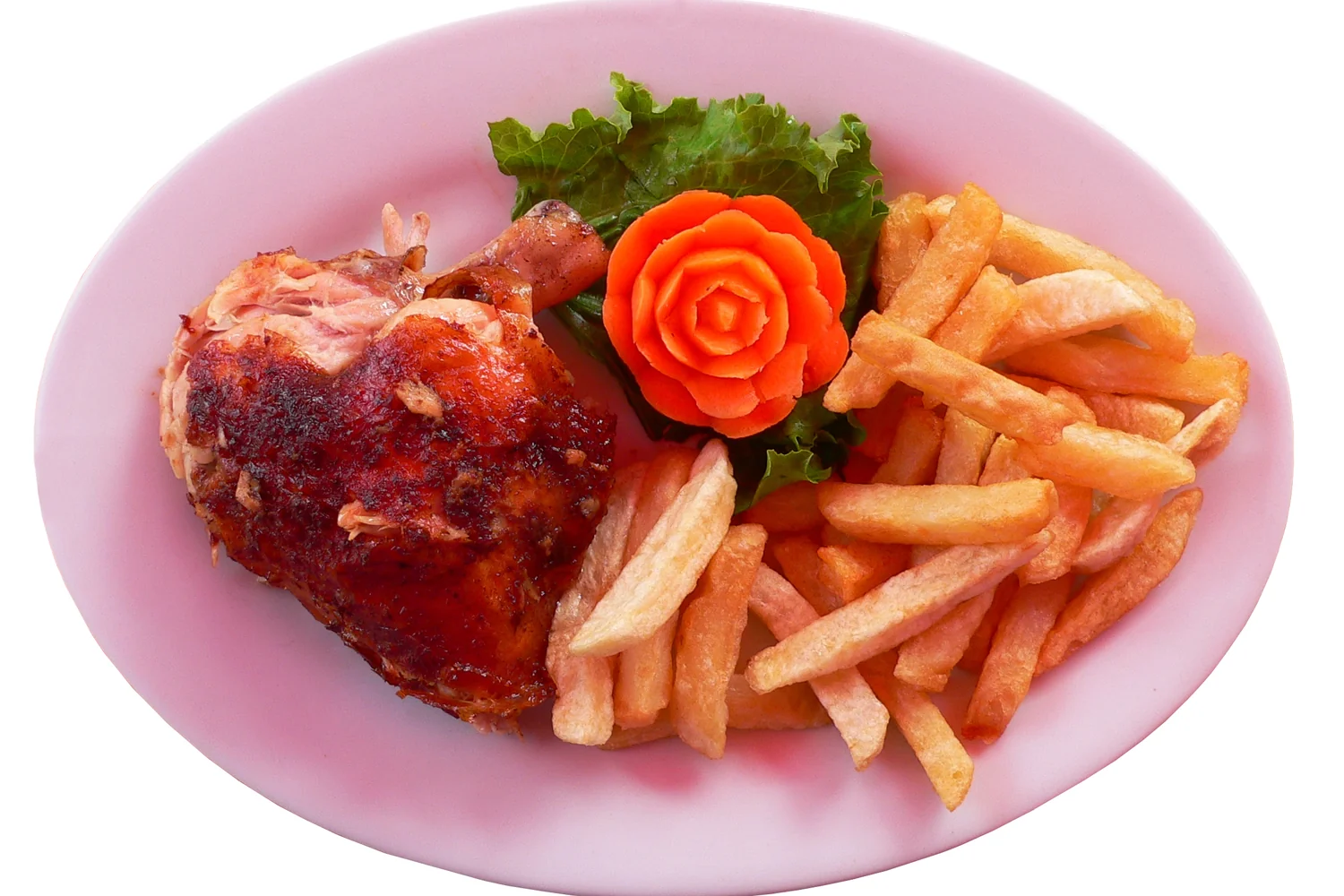
A glossy roasted chicken leg quarter with golden fries, lettuce and a carved carrot rose on a pink plate Peru flag Peru 1h 40m
Dinner •Lima Polleria Heritage

Pollo a la Brasa

This pollo a la brasa recipe marinates a whole chicken overnight in soy sauce, beer, lime, garlic, cumin and paprika, then roasts it slowly until the skin turns dark and crisp and the meat stays juicy. It is served the way every polleria in Lima serves it: a quarter chicken with thick-cut fries, a fresh salad and the two essential sauces, green aji verde and yellow aji amarillo. One serving is about 514 g.

High-Protein & Satisfying

Charcoal-roasted chicken with dark, crisp skin and juicy meat, served the polleria way with thick fries, salad and two aji sauces.

Pairs Well With
Aji verde, fries & salad
High Protein

The Dinner Gazette

Never wonder what’s for dinner again

One email a week with easy dinner ideas from around the world — ingredients, steps and nutrition, tested in our kitchen first.

Delivered every Thursday morning. Unsubscribe anytime.