
Curated recipes from 193 countries  •  New seasonal Mediterranean issue out now

Overview

Ojingeo Bokkeum

Spicy Stir-Fried Squid, Korean Spicy Squid

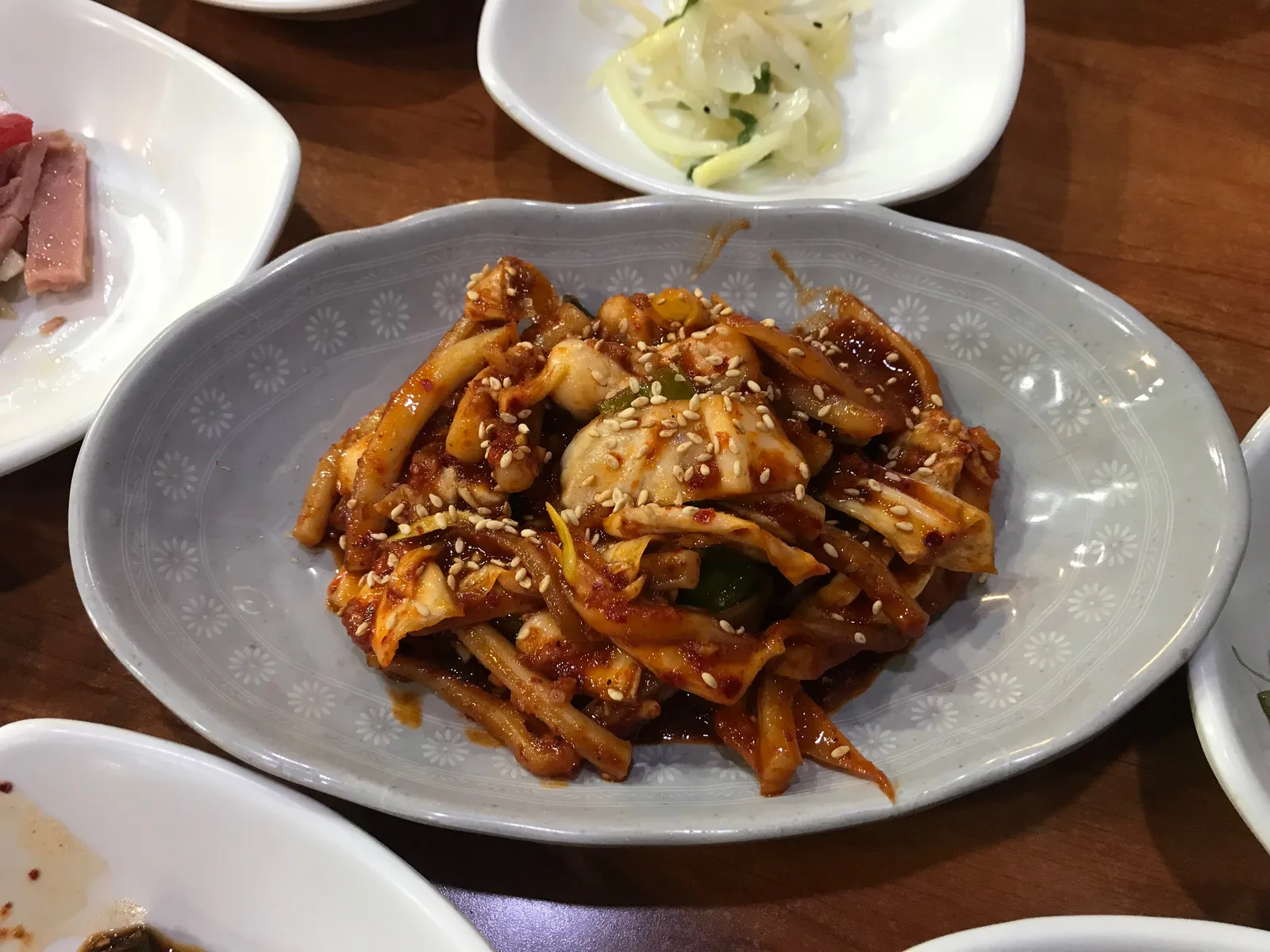
Ojingeo bokkeum is squid stir-fried fast over high heat in a sweet, spicy gochujang sauce with onion, carrot and scallions. The squid stays tender, the vegetables stay crisp, and the sauce turns glossy and red. One serving is about 220 g.

Ojingeo means squid and bokkeum means stir-fried, and this dish has long been a fixture of Korean home cooking and barbecue spreads — a quick pan of squid and vegetables in gochujang, served as a side dish or a main over rice, and a classic anju, the food eaten alongside drinks.

Pairs well with: Steamed rice, kimchi & cold barley tea

Provenance

South Korea flag South Korea

Korean Banchan Classic

East & South Asia

Time Dedication

30m

20m prep • 10m cook

Batch Yield

4 Servings

292 kcal per serving

1 serving ≈ 220 g

Technical Skill

Intermediate

Intermediate (Fast Stir-Fry)

Meal Timing & Digestive Fit

Breakfast

Not Advised

Lunch

Hearty Midday Main

Dinner

Ideal Hearty Main

Snack & Tea

Inappropriate

Occasions: Weeknight dinners, Korean barbecue nights, drinking snacks, family meals Cost: Medium — about $4–5 per serving at home
A grey bowl of spicy stir-fried squid in red gochujang sauce, sprinkled with sesame seeds

Korean Banchan Classic

Photo: lazy fri13th, CC BY 2.0, via Wikimedia Commons

The Heritage Formulary

Measured Ingredients

Estimated cost: Medium — about $4–5 per serving at home (USD)

A good ojingeo bokkeum is judged by the squid: tender and curled, never rubbery, with a glossy sauce that clings rather than pools.

Execution Methodology & Culinary Technique

Step-by-Step Cooking Guide

Active 30m
P

Prep Stage: Clean the Squid & Mix the Sauce

20 Mins • Knife Work

Clean the squid first: pull out the quill and innards, peel off the skin, rinse well, then score the inside of the body in a crosshatch and cut it into bite-size pieces. Whisk the gochujang, gochugaru, soy sauce, sugar, garlic and ginger into a smooth sauce, and cut all the vegetables before you light the pan — this stir-fry takes about 3 minutes once the heat is on.

Maestro Tip: Pat the squid very dry with paper towels. Wet squid steams instead of searing, and the sauce turns watery.

  1. 1

    Mix the Spicy Sauce

    5 Mins Room temperature, about 22°C (72°F)

    Stir the 60 g gochujang, 15 g gochugaru, 30 ml soy sauce, 12 g sugar, 15 g minced garlic and 5 g minced ginger together in a small bowl until the sugar dissolves and the sauce is smooth. Taste it: it should be spicy first, then sweet, then savoury.

    Mixing the sauce ahead means the squid spends no extra seconds in the pan while you fumble with jars.

    Done when: The sauce is smooth, deep red, and coats a spoon.

  2. 2

    Sear the Vegetables

    2 Mins High heat, about 200°C (390°F)

    Heat the 15 ml vegetable oil in a large wok or wide pan over high heat until it shimmers. Add the 150 g onion, 80 g carrot and 20 g chilli and stir-fry for 2 minutes, until the onion starts to soften but the carrot is still crisp.

    Firmer vegetables go in first; the scallions wait until the end so they stay green.

    Done when: The onion is just turning translucent at the edges.

  3. 3

    Add the Squid & Sauce

    3 Mins High heat, about 200°C (390°F)

    Add the 600 g squid and all of the sauce to the pan. Stir-fry hard for 2–3 minutes, tossing constantly, until the squid turns opaque and curls and the sauce thickens and clings to every piece. Squid is done at 63°C (145°F) — it should look white and opaque, never translucent.

    Do not walk away: 30 seconds too long turns squid from tender to rubbery.

    Done when: The squid is opaque white, curled, and coated in a glossy red sauce.

  4. 4

    Finish with Scallions & Sesame

    1 Min Off the heat

    Take the pan off the heat. Toss in the 60 g scallions, the 10 ml sesame oil and the 1 g black pepper, then scatter the 5 g sesame seeds over the top. Serve at once, straight from the pan, with steamed rice.

    Sesame oil burns over high heat and turns bitter — it always goes in last, off the flame.

    Done when: The scallions are bright green and just wilted; the dish smells nutty and spicy.

Finishing Touches & Plating

Serve the squid piled over steamed rice so the rice soaks up the sauce, with kimchi on the side. Eat it while it is still hot — squid firms up as it cools.

Nutritional Physiology & Benefits

Nutrition

Energy

292

kcal / serving

Protein

27g

Complete AA

Carbs

25g

Complex

Fats

9g

Healthy

Per serving (4 servings · 1 serving ≈ 220 g)
Energy292 kcal
Protein27 g
Carbohydrates25 g
Fat9 g
Fibre3.5 g
Sugar10.5 g
Sodium711 mg
Per 100g
Energy133 kcal
Protein12 g
Carbohydrates11.5 g
Fat4.2 g
Fibre1.6 g
Sugar4.8 g
Sodium323 mg

Nutrition values are estimated — calculated from USDA FoodData Central values for the listed ingredients.

Vitamins & minerals: Squid supplies selenium, vitamin B12 and iodine; onion, carrot and scallions add vitamin A, vitamin C and folate. All nutrition values are estimated.

Lean, High-Protein Main

Squid is low in fat and rich in protein, with about 26 g of protein per serving, so the dish is filling without being heavy.

Vegetables Stay Crisp

Onion, carrot, scallions and chilli are cooked for only a few minutes, so they keep their crunch, fibre and vitamin C.

Selenium & B12

Squid is a good source of selenium and vitamin B12, nutrients that support normal immune and nerve function.

Food Pairings

What to Eat With

To optimize nutrient absorption and elevate the sensory depth, pair with these authentic accompaniments:

Sides

Steamed Short-Grain Rice

Plain rice soaks up the spicy sauce and cools the heat between bites, which is why this dish is almost always served over it.

Vegetables

Kimchi

Sour, crunchy kimchi adds acidity and crunch that cut through the rich gochujang glaze.

Drinks

Cold Barley Tea

Unsweetened barley tea is the classic Korean table drink with spicy food — it refreshes the palate without adding sweetness.

Light Lager

A cold, light lager is the traditional anju pairing: its bitterness and fizz stand up to the chilli heat.

Complete menu

Start with the ojingeo bokkeum over steamed rice, with kimchi and a small bowl of bean sprout soup on the side; finish with cold barley tea.

Digestive Guardrails

What NOT to Combine

To prevent digestive distress, sluggishness, or palate clash, avoid pairing the dish with these elements:

Overcooking the Squid

Squid goes rubbery in seconds once it passes the point of doneness, so never leave it in the pan while you set the table. This is general cooking advice, not medical advice.

Very Sugary Drinks With the Meal

The sauce is already sweet, so a sugary soft drink on top can make the meal feel cloying and adds a lot of extra sugar; water or unsweetened tea is the better match. This is general nutrition information, not medical advice.

General information only, not medical advice — consult a doctor for personal dietary decisions.

Who Should Eat It

Who Should Eat

  • General adultsA complete, bold main — lean protein, vegetables and rice in one plate.
  • ChildrenSuitable for children who like spicy food; leave out the chilli and halve the gochugaru for younger children, and cut the squid small.
  • ElderlyGood in small portions; the squid is soft and easy to chew, but keep the spice mild and the sodium in mind.
  • Pregnant womenGenerally suitable when the squid is cooked through until opaque; keep the spice at a level you are comfortable with and check with your clinician if unsure.
  • Breastfeeding womenGenerally suitable; the protein and B12 support recovery — keep the spice moderate.
  • AthletesA strong choice: about 26 g of protein per serving with moderate calories for a post-workout meal.
  • Weight gainA good choice — serve a generous portion over extra rice and add a second helping of squid.
  • Weight lossA good choice — the squid is lean and filling; go easy on the rice and load up on the vegetables.

Health Conditions — Adjust or Avoid

Conditions

  • DiabetesThe sauce has about 10 g of sugar per serving from gochujang and sugar; ask your clinician about portion size, and serve with extra vegetables instead of extra rice.
  • High blood pressureThe sauce is salty — most of the sodium comes from soy sauce and gochujang. Use low-sodium soy sauce and a little less gochujang if you watch salt, and ask your clinician.
  • Kidney diseaseSquid is moderate in purines and the sauce is salty; eat in modest portions and ask your clinician about frequency.
  • GoutSquid is low in purines compared with red meat, but the sauce is salty; an occasional modest portion is usually fine — ask your clinician if unsure.
  • Stomach issuesThe chilli heat and gochujang can irritate a sensitive stomach; use less gochugaru and skip the fresh chilli if your stomach is sensitive.
  • Cardiovascular diseaseSquid is low in saturated fat, which suits a heart-friendly pattern; keep the added oil modest and the vegetables generous.
  • Fatty liverA lean, low-fat choice; keep the rice portion moderate and the vegetables generous.
  • Food allergiesContains mollusc shellfish (squid), soy (soy sauce), sesame and wheat — gochujang may contain wheat. Check every label; if you have a shellfish allergy, do not eat this dish.
  • Special therapeutic dietsIf you follow a prescribed low-sodium diet, use low-sodium soy sauce and less gochujang, and check the portion with your clinician.

If you have a medical condition, consult your doctor before changing your diet.

Storage & Use

Storage & Use

How to store
Cool quickly and store in an airtight container in the fridge; keep rice separate.
In the fridge
Cooked squid 2 days; sauce 5 days.
In the freezer
Not recommended — thawed squid turns rubbery.
How to reheat
Reheat gently in a pan over medium heat to 74°C (165°F), just until hot; do not re-cook.
Freezing recommended
No — the texture suffers badly.
Signs it has spoiled
Sour or fishy smell, slimy texture, or squid that looks grey.

More recipes to explore

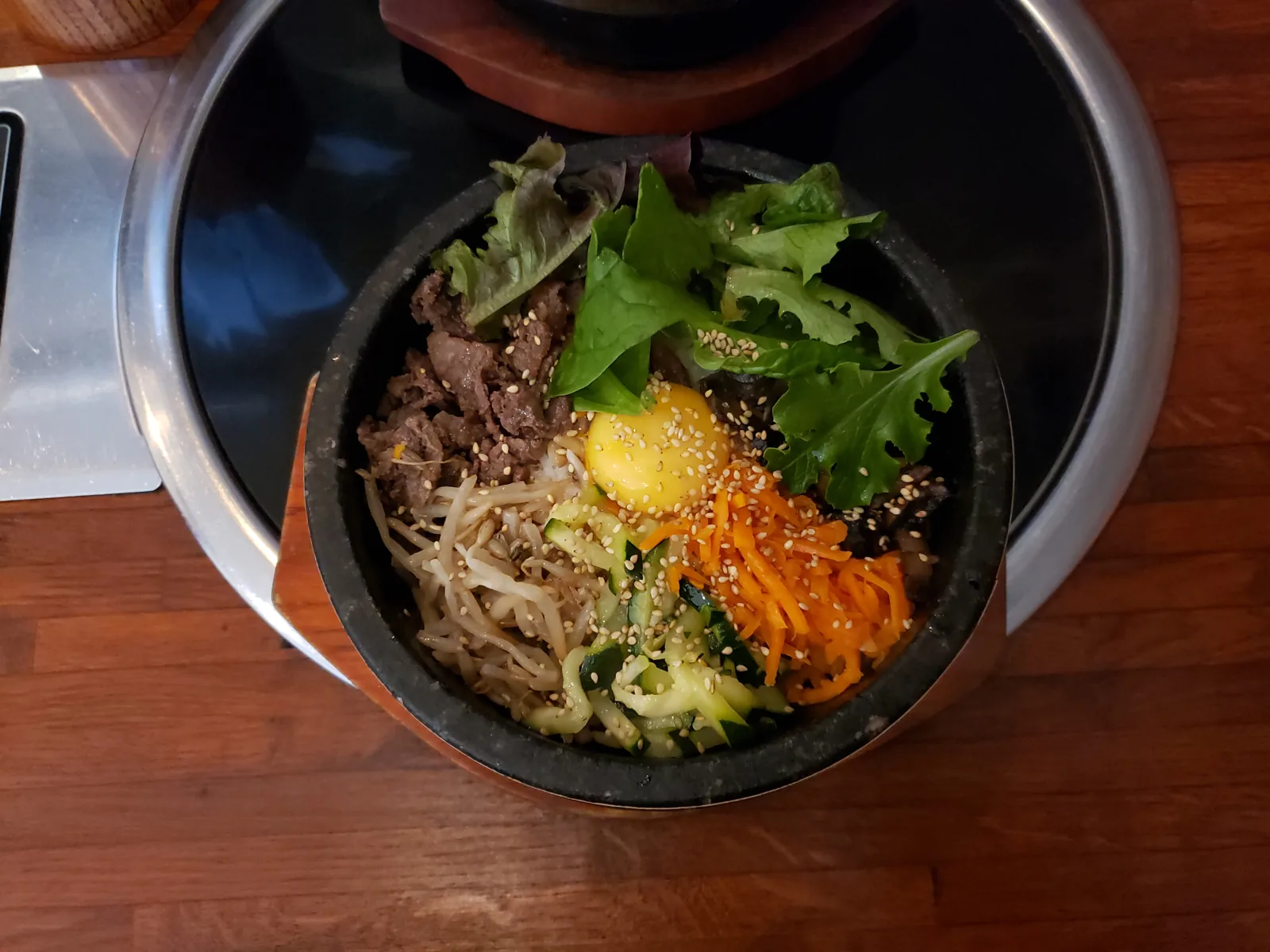
Dolsot bibimbap in a hot black stone bowl — bulgogi beef, egg yolk, carrots, zucchini, bean sprouts and sesame seeds over rice South Korea flag South Korea 1h 5m
Dinner •Korean Heritage

Bibimbap

This bibimbap recipe builds Korea's most famous rice bowl the dolsot way: hot rice in a sizzling stone pot, ringed with five separately seasoned namul vegetables, bulgogi beef and a fried egg, with gochujang to stir through at the table. The stone bowl crisps the bottom layer of rice into golden nurungji while you eat. One serving is about 510 g.

Colourful & Satisfying

Warm rice, five seasoned vegetables, bulgogi beef and a fried egg, mixed at the table with gochujang.

Pairs Well With
Kimchi, kongnamul-guk (bean sprout soup) & barley tea
Korean fried chicken pieces coated in a glossy red yangnyeom glaze South Korea flag South Korea 45m
Dinner •Korean Heritage

Korean Fried Chicken

This Korean fried chicken recipe is the real thing: boneless chicken in a thin potato-starch batter, fried twice — once to cook it through, once at higher heat to drive out moisture and shatter the crust — then tossed in a glossy yangnyeom glaze of gochujang, honey and garlic. The double fry is what keeps the skin crisp under the sauce. One serving is about 250 g.

Crispy & Bold

Double-fried chicken in a thin potato-starch crust, tossed in a sticky sweet-spicy yangnyeom glaze.

Pairs Well With
Pickled radish (chikin-mu), cold beer & steamed rice
High Protein • Quick Prep (<30m)
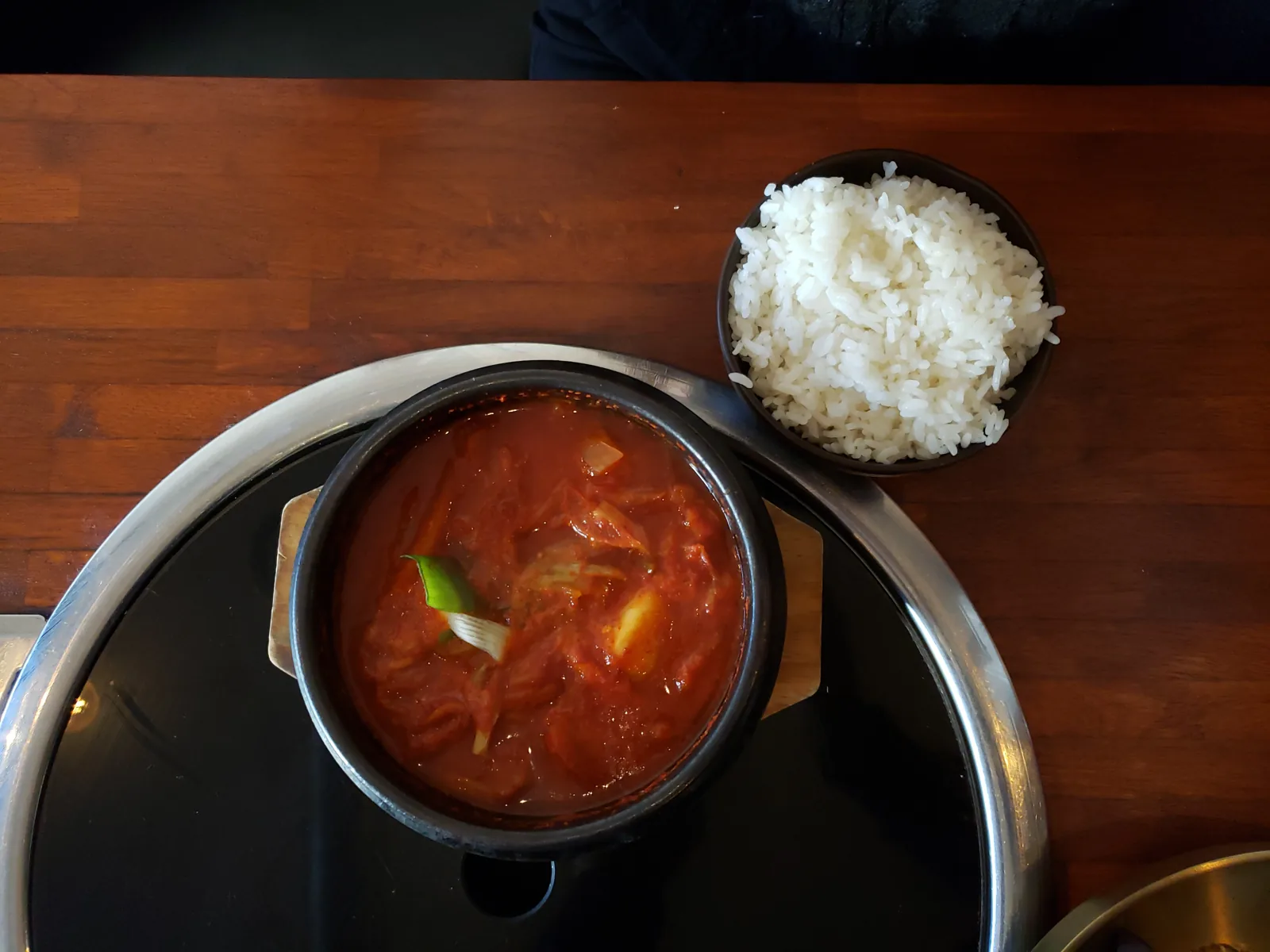
Kimchi jjigae — a red kimchi stew with tofu and spring onions in a black stone pot, served with a bowl of rice South Korea flag South Korea 45m
Dinner •Korean Heritage

Kimchi Jjigae

This kimchi jjigae recipe is the Korean comfort stew: aged, well-fermented kimchi fried with pork belly, then simmered in its own brine with tofu until the broth turns brick-red and rich. It is a stew, not the kimchi itself — the North Korean white kimchi published earlier is the pickled cabbage, while this is what you cook with it. One serving is about 425 g.

Comfort & Warmth

Aged kimchi and pork belly simmered in kimchi brine with tofu — sour, spicy and deeply savoury.

Pairs Well With
Steamed rice, fried egg & banchan
Soups & Broths • Fermented / Gut Health
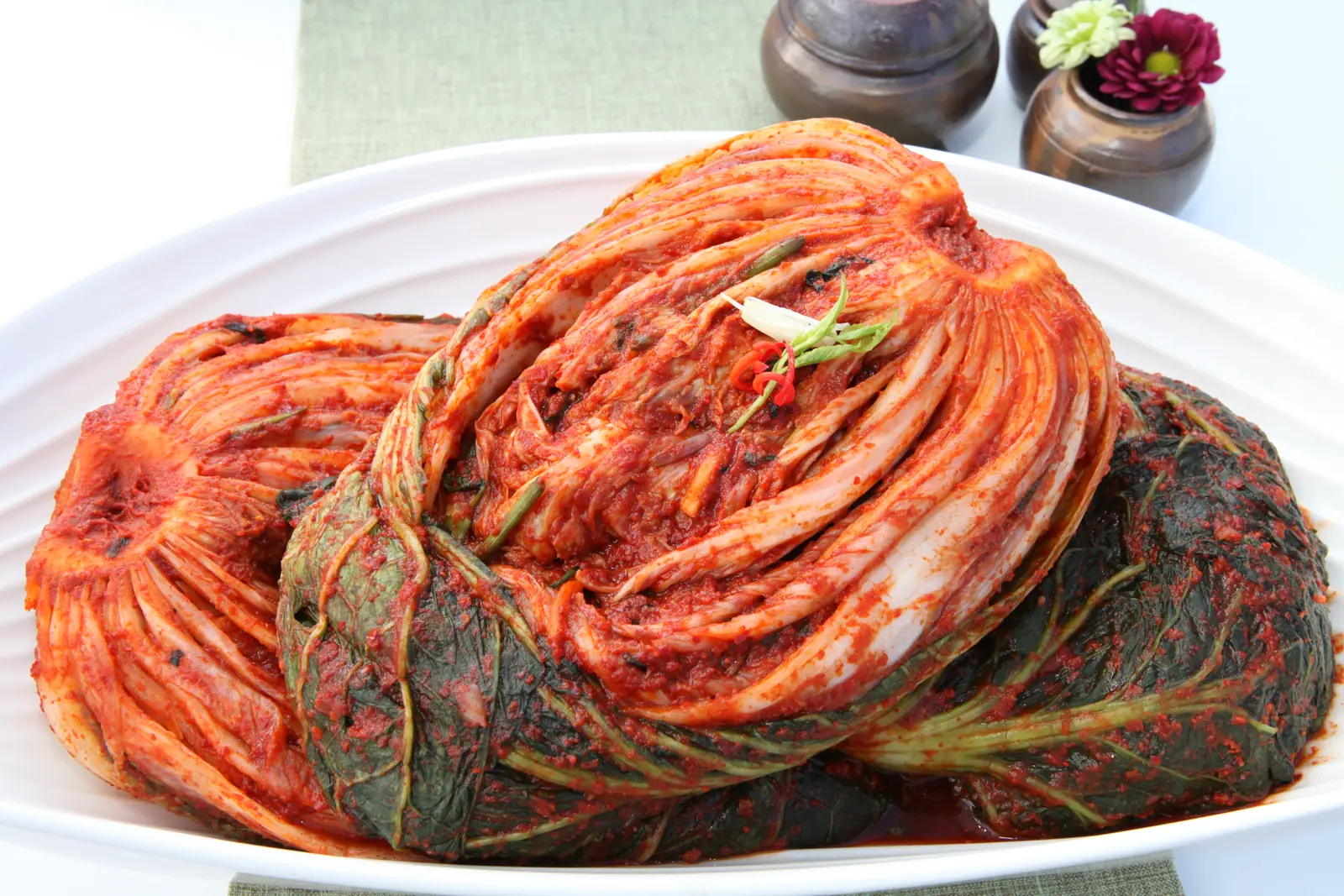
Whole heads of baechu kimchi coated in red gochugaru paste on a white platter South Korea flag South Korea 2h 35m
Dinner •Korean Kimjang Heritage

Baechu Kimchi

This kimchi recipe turns one head of napa cabbage into classic baechu kimchi: salted leaves packed with a bright red gochugaru paste, then left to ferment until tangy and fizzy. It is the spicy southern-style kimchi most people picture when they hear the word kimchi, and it keeps for weeks in the fridge. One serving is about 165 g.

Fermented & Fiery

Crisp, spicy, sour napa cabbage kimchi — Korea's everyday banchan, fermented at home in a jar.

Pairs Well With
Serve a small bowl with steamed rice, grilled meat or a fried egg.
Fermented / Gut Health

The Dinner Gazette

Never wonder what’s for dinner again

One email a week with easy dinner ideas from around the world — ingredients, steps and nutrition, tested in our kitchen first.

Delivered every Thursday morning. Unsubscribe anytime.