Curated recipes from 193 countries  •  New seasonal Mediterranean issue out now

Overview

Omble Chevalier Recipe

Swiss Arctic Char, Pan-Fried Arctic Char, Saibling

This omble chevalier recipe pan-fries whole Arctic char until the skin is crisp and golden, then finishes it with lemon butter and a splash of white wine. One serving is about 200 g and carries 392 calories. Serve it with potato salad and a green salad, the way the lakeside inns do.

The omble chevalier — Arctic char — is the prized fish of Switzerland's cold Alpine lakes, above all Lake Geneva and Lake Neuchâtel, where it has been caught and eaten for centuries. It is a cousin of the salmon and the trout, but it lives deeper and colder, and its flesh is pink, delicate and less fatty than salmon. The lakeside inns serve it the simple way: whole, dusted with flour, fried golden in butter, and finished with lemon — never buried under a heavy sauce. It is a different fish from the perch of the same lakes, which is served as small skinless fillets, and from the rainbow trout of the rivers, which is usually cooked with almonds. The char stands on its own: one whole fish per person, crisp skin, lemon butter, and potato salad.

Pairs well with: Potato salad, a green salad and a dry white wine.

Provenance

Switzerland flag Switzerland

Lake Geneva Heritage

Nordic & European

Time Dedication

35m

15m prep • 20m cook

Batch Yield

4 Servings

392 kcal per serving

1 serving ≈ 200 g

Technical Skill

Intermediate

Intermediate (Whole Fish)

Meal Timing & Digestive Fit

Breakfast

Not Advised

Lunch

Hearty Midday Main

Dinner

Ideal Hearty Main

Snack & Tea

Inappropriate

Occasions: Lakeside dinners, weekend cooking, guests, summer evenings Cost: Medium — about $6–8 per serving at home

Tags: Fish Savory Mild
A whole pan-fried omble chevalier, golden Arctic char with potato salad, lemon and parsley on a white plate

Lake Geneva Heritage

Photo: Benreis, CC BY 3.0, via Wikimedia Commons

The Heritage Formulary

Measured Ingredients

Estimated cost: Medium — about $6–8 per serving at home (USD)
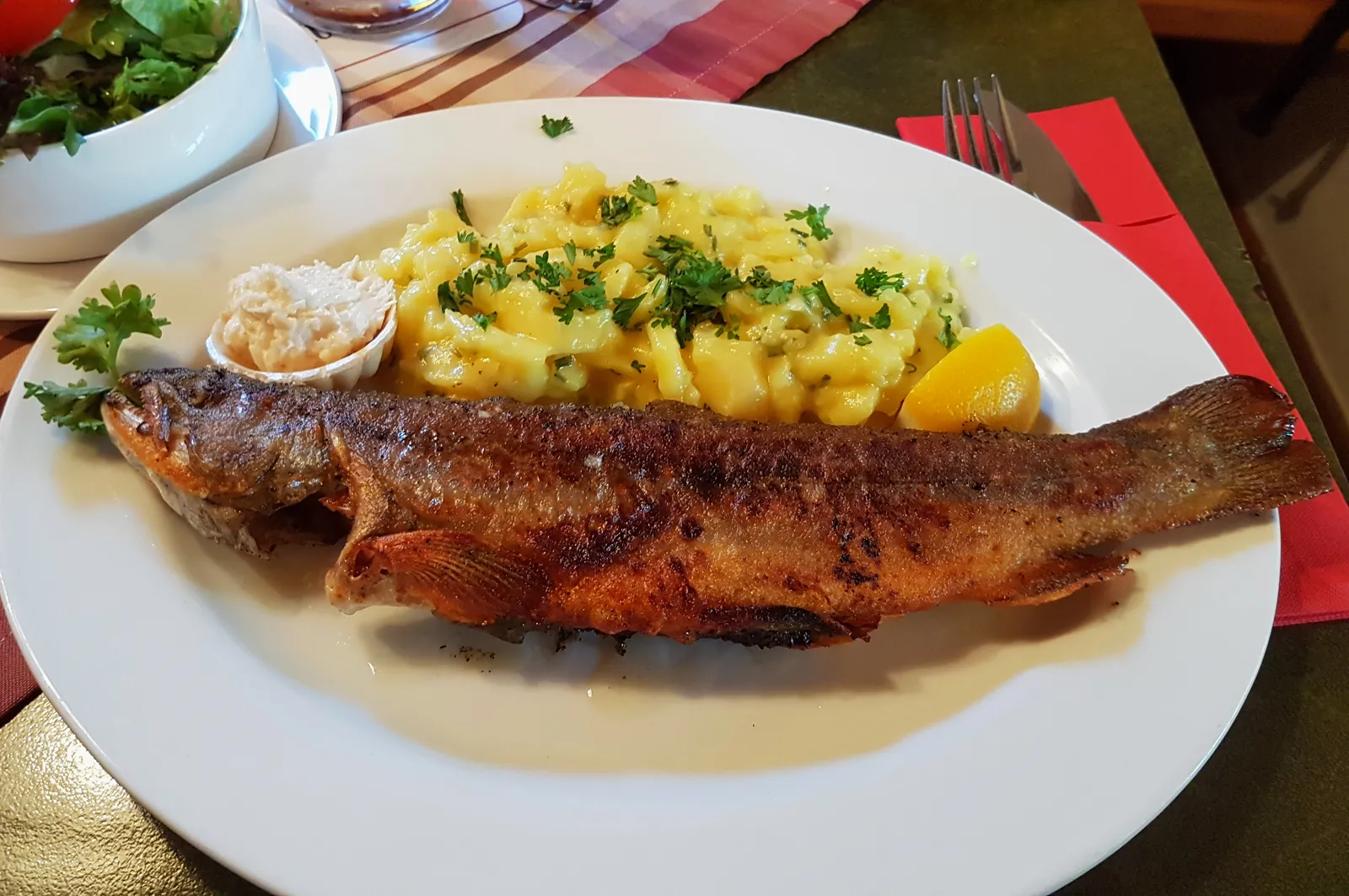
The skin must be crisp and the flesh just opaque — char overcooks quickly, so watch the clock.

Execution Methodology & Culinary Technique

Step-by-Step Cooking Guide

Active 35m
P

Prep Stage: Fish, Flour and Lemon Butter

15 Mins • Fish, Flour and Lemon Butter

Rinse the char inside and out and pat them very dry — dry skin is what turns crisp. Score the skin three times on each side, season inside and out with salt and white pepper, and dust lightly with flour, shaking off the excess. Chop the parsley, crush the garlic, halve the lemon, and measure out the wine, butter and oil so everything is within reach once the fish hits the pan.

Maestro Tip: Wet skin steams instead of crisping. Pat the fish dry twice — once after rinsing, once just before flouring.

  1. 1

    Season and dust the fish

    8 Mins Room temperature, about 20°C (68°F)

    Season each char inside and out with salt and white pepper. Dust lightly with flour on both sides and shake off every bit of excess — you want a whisper of flour, not a coating.

    Too much flour turns gummy in the pan; the skin should still show through.

    Done when: The fish are evenly seasoned with a faint, dry dusting of flour.

  2. 2

    Fry the first side

    5 Mins Medium-high heat, about 190°C (375°F)

    Heat the butter and oil in a large frying pan over medium-high heat until the butter foams. Lay the fish in skin-side down — away from you, so the hot butter does not splash — and fry for about 4 to 5 minutes without moving them, until the skin is deep golden and crisp.

    Do not touch the fish for the first 3 minutes; lifting them early tears the skin off.

    Done when: The skin is crisp and deep golden, and the flesh has turned opaque halfway up the side.

  3. 3

    Turn and finish

    5 Mins Medium heat, about 175°C (350°F)

    Turn each fish carefully with a wide spatula and fry for a further 4 minutes on the second side, until the flesh is just opaque and flakes easily. The thickest part must reach 63°C (145°F). Lift the fish onto a warm platter and keep them warm.

    A fish is done when it flakes at the thickest part but still looks juicy — dry char is a shame.

    Done when: The flesh flakes easily, the skin is crisp on both sides, and the fish is hot through.

  4. 4

    Make the lemon-wine butter

    4 Mins Medium heat, about 175°C (350°F)

    Add the crushed garlic to the same pan and cook for 30 seconds, then pour in the white wine and let it bubble for 1 minute, scraping up the browned bits. Take the pan off the heat, swirl in the remaining butter until it melts into a glossy sauce, and stir in the lemon juice.

    Take the pan off the heat before adding the final butter — that is what keeps the sauce glossy instead of split.

    Done when: The sauce is glossy, golden and smells of lemon and butter.

  5. 5

    Rest and serve

    3 Mins Hot, about 70°C (158°F)

    Spoon the lemon butter over the fish, scatter the parsley and chives on top, and serve immediately with lemon wedges and potato salad.

    Serve at once — crisp skin softens as it waits.

    Done when: The fish are glossy with sauce, the skin is still crisp, and the dish is steaming hot.

Finishing Touches & Plating

Spoon the pan sauce over the fish at the table and eat it while the skin is still crisp — with potato salad and a glass of dry white wine, it is the lakeside inns' way.

Nutritional Physiology & Benefits

Nutrition

Energy

392

kcal / serving

Protein

31g

Complete AA

Carbs

10g

Complex

Fats

25g

Healthy

Per serving (4 servings · 1 serving ≈ 200 g)
Energy392 kcal
Protein31 g
Carbohydrates10 g
Fat25 g
Fibre0.5 g
Sugar0.4 g
Sodium453 mg
Per 100g
Energy196 kcal
Protein15.4 g
Carbohydrates4.9 g
Fat12.3 g
Fibre0.2 g
Sugar0.2 g
Sodium226 mg

Nutrition values are estimated — calculated from USDA FoodData Central values for the listed ingredients.

Vitamins & minerals: Vitamin D and B12 (Arctic char), omega-3 fats (char), vitamin C (lemon, parsley).

Omega-3 Rich Fish

Arctic char is a cold-water fish rich in omega-3 fats, which support heart health as part of a balanced diet.

Lean Protein

About 30.8 g of protein per serving from the fish alone, with very little carbohydrate — a satisfying dinner that is not heavy.

Quick Weeknight Fish

A whole fish on the table in 35 minutes from a short list of pantry ingredients — no marinating, no special equipment.

Food Pairings

What to Eat With

To optimize nutrient absorption and elevate the sensory depth, pair with these authentic accompaniments:

Sides

Potato Salad

The classic lakeside partner: cool, creamy potato salad balances the hot, crisp fish and soaks up the lemon butter.

Crusty Bread

Good bread is there for the sauce: it mops up the lemon butter that runs off the fish.

Vegetables

Green Salad

A sharp, lemon-dressed green salad cuts through the butter and keeps the plate feeling light and fresh.

Drinks

Dry White Wine

A dry white wine from the same lakes — a Chasselas, if you can find one — matches the delicate fish without overpowering it.

Complete menu

Serve omble chevalier with potato salad, a green salad and crusty bread, with a dry white wine, followed by fresh fruit.

Digestive Guardrails

What NOT to Combine

To prevent digestive distress, sluggishness, or palate clash, avoid pairing the dish with these elements:

Raw or Undercooked Fish

Char must be cooked through to 63°C (145°F) at its thickest part. Raw or undercooked freshwater fish can carry parasites and bacteria — never serve it rare. This is general food-safety information, not medical advice.

Heavy Cream Sauces

A heavy cream sauce buries the delicate flavour of the char and makes a light fish dinner feel rich and greasy. The lemon butter is enough. This is general nutrition information, not medical advice.

General information only, not medical advice — consult a doctor for personal dietary decisions.

Who Should Eat It

Who Should Eat

  • General adultsA light, elegant dinner — rich in protein and omega-3 fats, with a modest portion of potato salad on the side.
  • ChildrenMild and not fishy, so children often like it; pick the bones out carefully and serve a fillet portion, not the whole fish.
  • ElderlySoft, flaky fish that is easy to chew; serve it filleted off the bone and check carefully for small bones.
  • Pregnant womenFine when cooked right through to 63°C (145°F); freshwater fish must never be served undercooked — ask a clinician if you are unsure.
  • Breastfeeding womenA protein-rich, omega-3-rich dinner that supports a busy day; the fish is light and easy to digest.
  • AthletesAbout 30.8 g of protein per serving for recovery, with potato salad for carbohydrate — a strong post-training dinner.
  • Weight gainLight in energy for a fish dinner, so add extra potato salad and bread if you are trying to gain weight.
  • Weight lossAt 392 calories per serving with high protein and low carbohydrate, it is a friendly choice; keep the butter sauce modest.

Health Conditions — Adjust or Avoid

Conditions

  • DiabetesOnly 9.8 g of carbohydrate per serving — a gentle choice; ask a clinician about portion size as part of your overall meal.
  • High blood pressureSodium is about 453 mg per serving; keep the salt as written and skip salty sides — ask a clinician for personal advice.
  • Kidney diseaseHigh in protein, which some kidney diets limit — ask a clinician about portion size before eating it regularly.
  • GoutFish is low in purines compared with red meat and offal; keep the portion normal and ask a clinician about your overall diet.
  • Stomach issuesLight, lean fish that is usually easy on the stomach; the butter sauce can bother some people, so keep it modest — ask a clinician if symptoms persist.
  • Cardiovascular diseaseRich in omega-3 fats and low in saturated fat for a butter-fried dish; enjoy as part of a balanced meal and ask a clinician about your overall eating pattern.
  • Fatty liverLow in carbohydrate and moderate in fat; a reasonable choice in a normal portion — ask a clinician for personal guidance.
  • Food allergiesContains fish (Arctic char), milk (butter) and gluten (flour dusting). The wine is cooked into the sauce. Free of nuts, egg and soy as written.
  • Special therapeutic dietsNot suitable for a vegetarian, vegan or dairy-free diet as written; a gluten-free version can use rice flour — ask a clinician or dietitian before adapting it.

If you have a medical condition, consult your doctor before changing your diet.

Storage & Use

Storage & Use

How to store
Cool quickly, then store in a sealed container in the fridge.
In the fridge
2 days in the fridge at 4°C (39°F) or below.
In the freezer
Up to 1 month, wrapped well; the crisp skin will soften.
How to reheat
Reheat gently in an oven at 160°C (320°F) for about 8 minutes until steaming hot, about 74°C (165°F); the skin will not be as crisp as fresh.
Freezing recommended
Only if needed — fried fish is best eaten fresh.
Signs it has spoiled
Sour or ammonia smell, slimy flesh, or dull, sunken eyes on a whole fish — discard it.

More recipes to explore

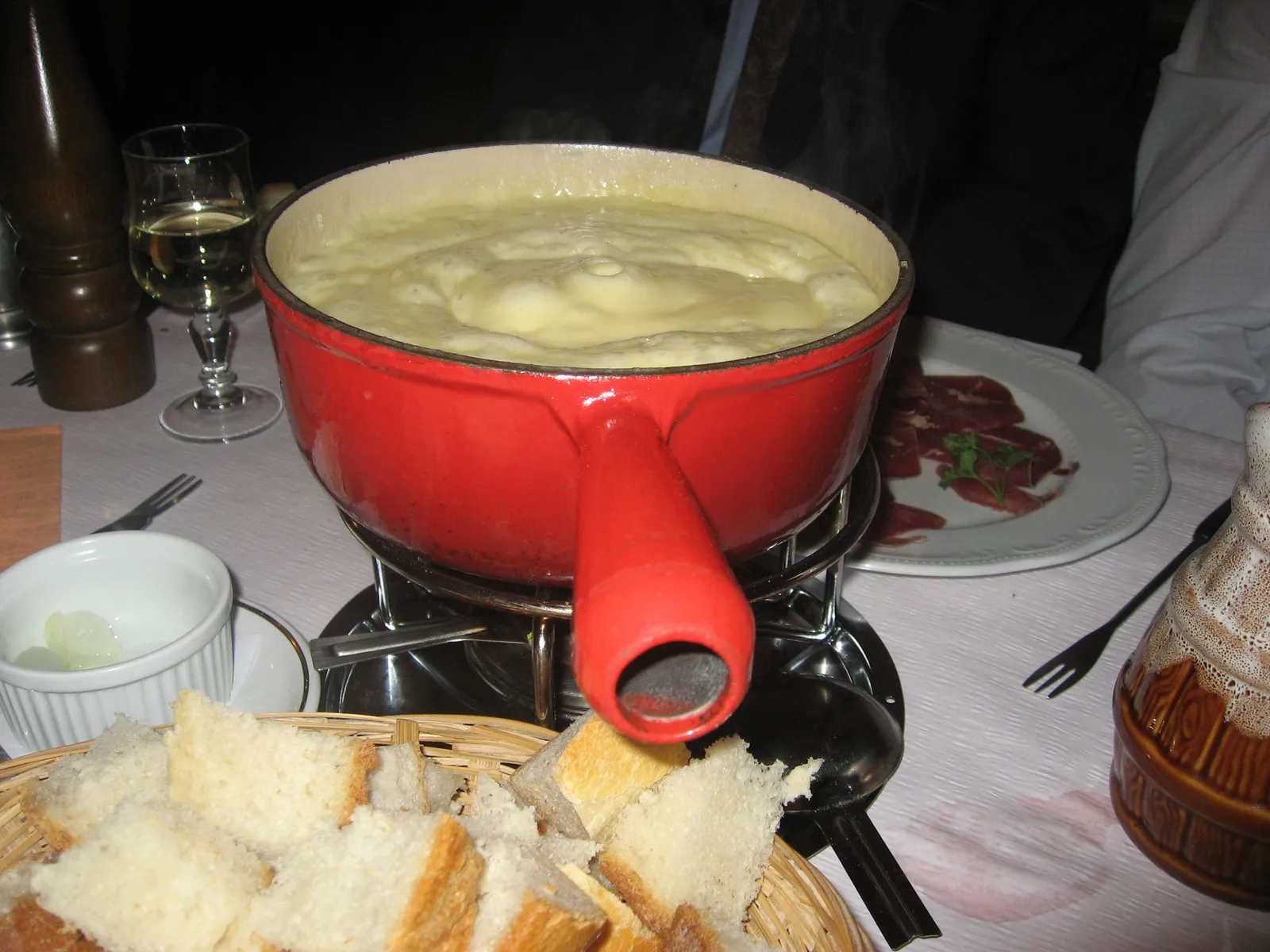
A red fondue pot of melted cheese with bread cubes and a glass of white wine Switzerland flag Switzerland 40m
Dinner •Swiss Alpine Classic

Swiss Cheese Fondue

Swiss cheese fondue is the Alps in a pot: Gruyere and Emmental melted slowly into dry white wine with garlic and a splash of kirsch, kept warm at the table while everyone dips cubes of bread into the bubbling cheese. One serving is about 310 g.

Comfort & Togetherness

Gruyere and Emmental melted in white wine, shared from one pot.

Pairs Well With
Cubes of crusty bread, boiled potatoes and cornichons on the side
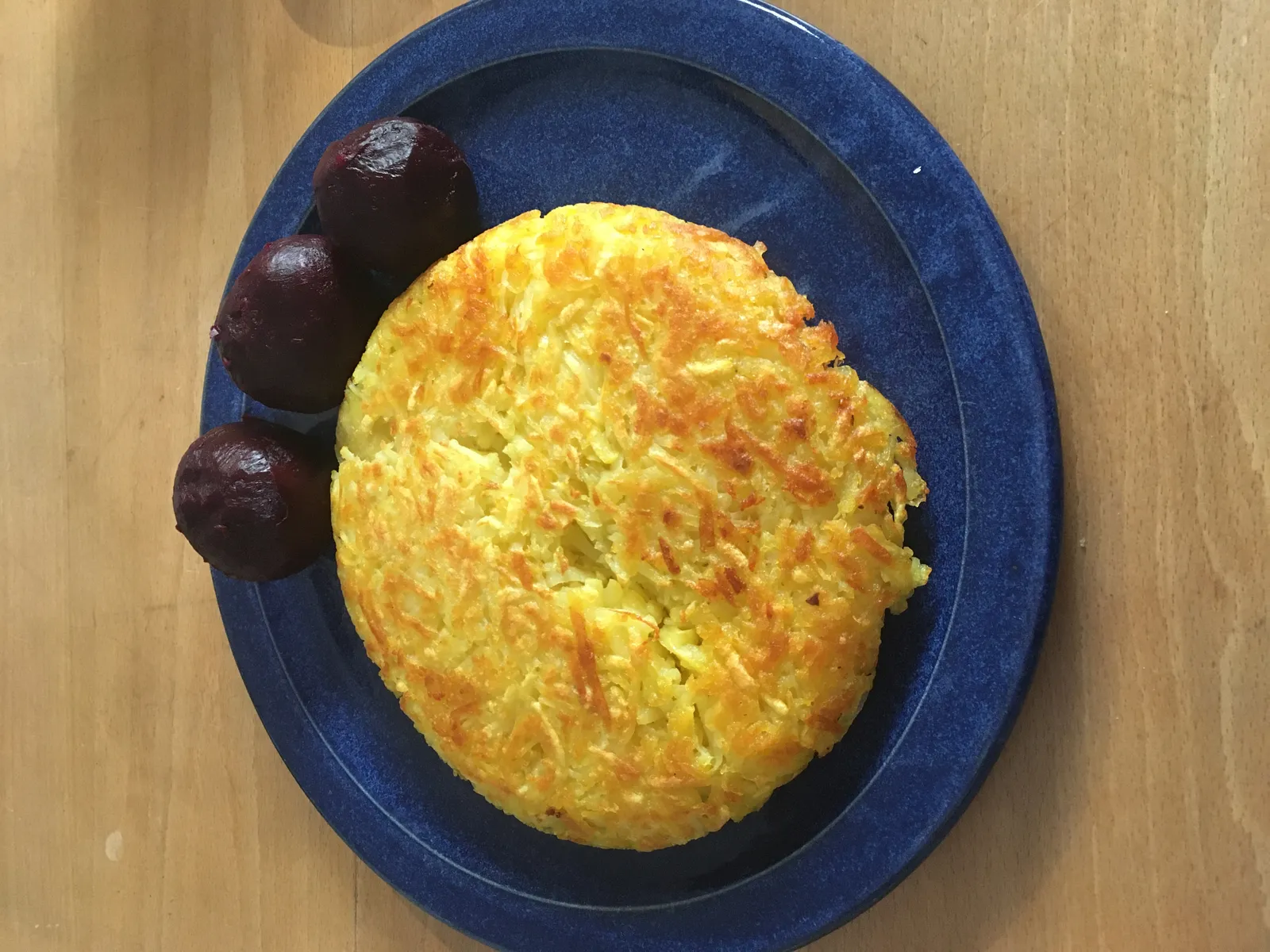
A large golden rosti potato cake on a blue plate Switzerland flag Switzerland 40m
Lunch •Bernese Farmhouse Classic

Rösti

Rösti is Switzerland's crisp potato cake: grated potato pressed into one large golden disc and fried in butter until the outside shatters and the inside stays soft, then topped with a fried egg. One serving is about 240 g.

Simple & Satisfying

One large crisp cake of grated potato, pan-fried in butter and topped with a fried egg.

Pairs Well With
A fried egg on top and a simple green salad with sharp vinaigrette
Quick Prep (<30m)
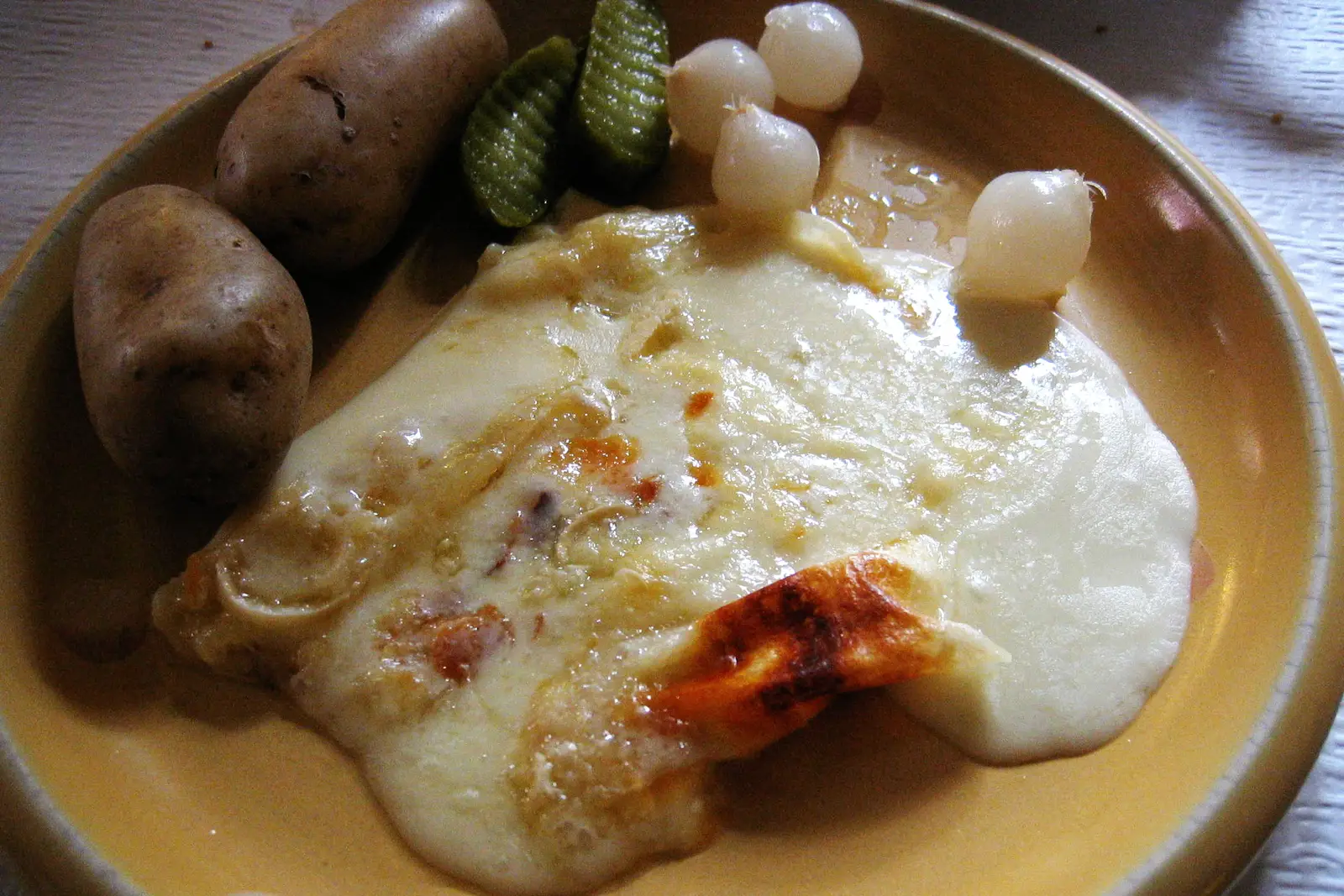
Melted raclette cheese scraped over a plate with boiled potatoes and pickles Switzerland flag Switzerland 40m
Dinner •Valais Alpine Classic

Raclette

Raclette is the Swiss Alps' other great melted-cheese meal: a half-wheel of raclette cheese is warmed until the cut face bubbles, then scraped in ribbons over boiled potatoes, with cornichons and pickled onions to cut the richness. One serving is about 365 g.

Comfort & Togetherness

Melted raclette cheese scraped over boiled potatoes with pickles.

Pairs Well With
Boiled potatoes, cornichons, pickled onions and a green salad
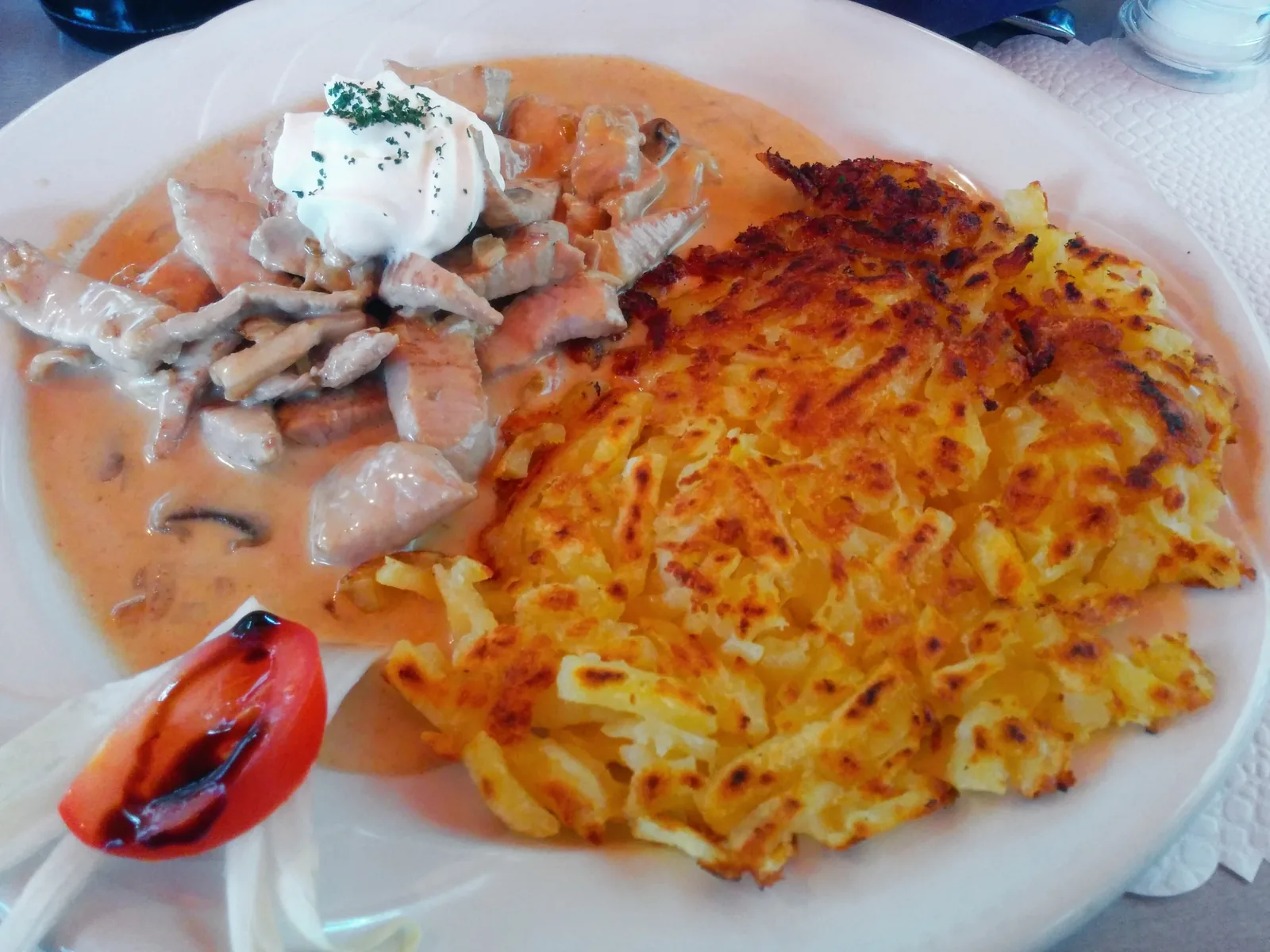
A plate of Zürcher Geschnetzeltes — veal strips in cream sauce with a dollop of cream — beside golden rösti. Switzerland flag Switzerland 40m
Dinner •Zurich Classic

Zürcher Geschnetzeltes

Zürcher Geschnetzeltes is Zurich's signature dish: thin strips of veal quickly seared, then finished in a white-wine and cream sauce with mushrooms and onion. One serving is about 335 g, before the rösti it is traditionally served with.

Rich & Comforting

Tender strips of veal in a white-wine cream sauce with mushrooms — Zurich's classic, with rösti.

Pairs Well With
Serve with golden rösti and a glass of dry Swiss white wine.
High Protein

The Dinner Gazette

Never wonder what’s for dinner again

One email a week with easy dinner ideas from around the world — ingredients, steps and nutrition, tested in our kitchen first.

Delivered every Thursday morning. Unsubscribe anytime.