

Curated recipes from 193 countries  •  New seasonal Mediterranean issue out now

Overview

Pain à la Grecque

Greek Bread; Brood van de Gracht; Brussels Sugar Bread

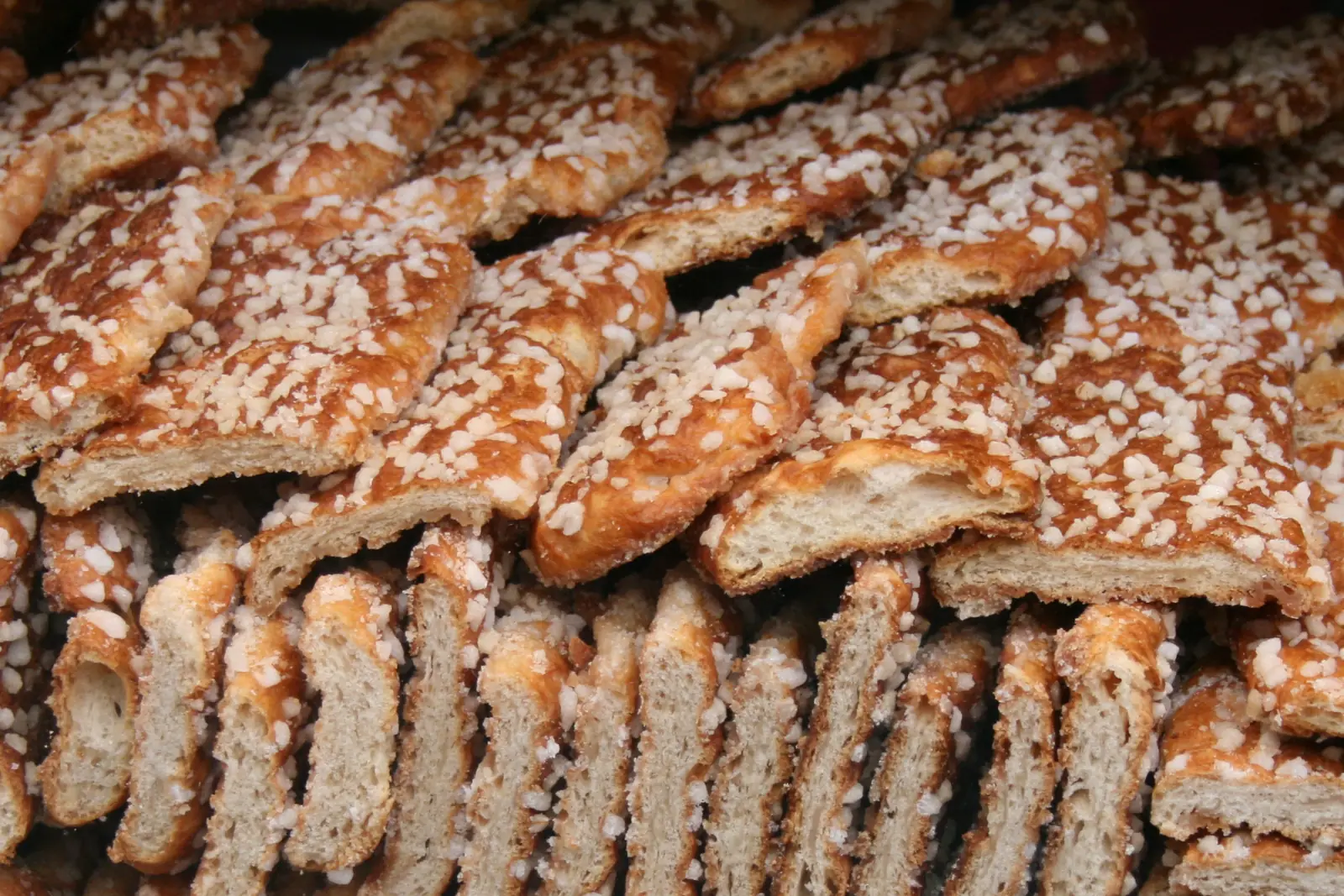
Pain à la grecque is Brussels in a bite: a flat rectangle of soft milk bread, sweetened with brown sugar, warmed with cinnamon and finished with a thick crust of crunchy pearl sugar. It is baked flat so every slice has the same sugary crunch, and it is at its best still faintly warm from the oven. One serving is about 97 g.

The name is a misunderstanding: the bread was first sold by Augustinian monks near the Wolvengracht — the wolves' ditch — in the centre of Brussels, and Brood van de Gracht, bread from the canal, was misheard in French as pain à la grecque, Greek bread. It has nothing to do with Greece at all. The loaf became a Brussels bakery staple, and Maison Dandoy, baking near the Grand-Place since 1829, made it one of the city's best-known treats.

Pairs well with: Serve warm or at room temperature with black coffee or hot chocolate.

Provenance

Belgium flag Belgium

Brussels Bakery Classic

Nordic & European

Time Dedication

2h 25m

120m prep • 25m cook

Batch Yield

10 Servings

334 kcal per serving

1 serving ≈ 97 g

Technical Skill

Intermediate

Medium (Yeasted Dough)

Meal Timing & Digestive Fit

Breakfast

Not Advised

Lunch

Inappropriate

Dinner

Inappropriate

Snack & Tea

Ideal Light Bite

Occasions: Afternoon snack with coffee, Brussels bakery treat, school snack, coffee break with friends Cost: Low — about $1–2 per serving at home
Golden slices of pain à la grecque stacked in a pile, crusted with white pearl sugar.

Brussels Bakery Classic

Photo: Michel wal, CC BY-SA 3.0, via Wikimedia Commons

The Heritage Formulary

Measured Ingredients

Estimated cost: Low — about $1–2 per serving at home (USD)

The dough is kneaded until smooth, risen until doubled, and baked flat so the pearl sugar stays crunchy.

Execution Methodology & Culinary Technique

Step-by-Step Cooking Guide

Active 2h 25m
P

Prep Stage: Dough Mixed, Risen and Shaped

2 Hrs • Mixing, Rising & Shaping

Warm the milk, wake the yeast, then knead flour, cinnamon, brown sugar, egg and butter into a soft dough. Let it rise in a warm place until doubled, about 90 minutes, then roll it flat, brush with butter and press the pearl sugar into the top.

Maestro Tip: The dough is soft and a little sticky — flour your hands lightly, but do not add extra flour to the bowl or the loaf turns dry.

  1. 1

    Wake the Yeast

    10 Mins • Hands On Warm milk, about 40°C (104°F)

    Pour the warm milk into a jug, stir in the yeast and a spoonful of the brown sugar, and leave it for 10 minutes until the top is foamy and smells of fresh bread.

    Milk hotter than 45°C (113°F) kills the yeast — if it feels hot on your wrist, let it cool first.

    Done when: Milk is foamy on top and smells yeasty and fresh.

  2. 2

    Mix and Knead the Dough

    20 Mins • Hands On Room temperature, about 22°C (72°F)

    Stir the flour, cinnamon, salt and the rest of the brown sugar in a large bowl. Pour in the yeasty milk and the beaten egg, then work in the softened butter. Knead on a lightly floured surface for about 10 minutes until the dough is smooth, soft and springs back when poked.

    If the dough sticks, flour your hands, not the dough — extra flour dries the loaf out.

    Done when: Dough is smooth, soft and springs back when poked.

  3. 3

    Let the Dough Rise

    90 Mins • Hands Off Warm place, about 26°C (79°F)

    Shape the dough into a ball, put it in a lightly oiled bowl, cover with a cloth and leave it in a warm place for about 90 minutes, until it has doubled in size.

    An oven with just the light on is a perfect warm place for rising.

    Done when: Dough has doubled in size and holds a dent when poked gently.

  4. 4

    Shape, Sugar and Bake

    30 Mins • Hands On Oven 190°C (375°F)

    Heat the oven to 190°C (375°F). Knock the dough back gently and roll it into a flat rectangle about 2 cm thick on a lined baking tray. Brush the top with the melted butter, scatter the pearl sugar over it and press it in lightly. Bake for 22–25 minutes until deep golden and the sugar has set.

    Press the sugar in firmly — loose nibs fall off when you cut the loaf.

    Done when: Loaf is deep golden, the sugar crust is set, and the base sounds hollow when tapped.

  5. 5

    Cool and Cut

    10 Mins • Hands On Room temperature, about 22°C (72°F)

    Leave the loaf on the tray for 10 minutes so the sugar crust sets, then lift it onto a rack. Cut into thick strips with a serrated knife and serve warm, or let it cool completely.

    Cut with a sawing motion — pressing straight down crushes the sugar crust.

    Done when: Sugar crust is set and crisp; slices hold their shape when cut.

Finishing Touches & Plating

Let the loaf cool for 10 minutes so the sugar crust sets, then cut it into thick strips with a serrated knife. Eat it warm, or let it cool completely and keep it in a tin.

Nutritional Physiology & Benefits

Nutrition

Energy

334

kcal / serving

Protein

7g

Complete AA

Carbs

58g

Complex

Fats

8g

Healthy

Per serving (10 servings · 1 serving ≈ 97 g)
Energy334 kcal
Protein7 g
Carbohydrates58 g
Fat8 g
Fibre1.8 g
Sugar19.2 g
Sodium332 mg
Per 100g
Energy345 kcal
Protein7.2 g
Carbohydrates59.7 g
Fat8.6 g
Fibre1.9 g
Sugar19.8 g
Sodium343 mg

Nutrition values are estimated — calculated from USDA FoodData Central values for the listed ingredients.

Vitamins & minerals: B vitamins and iron (flour and egg), calcium (milk and butter).

A Filling Afternoon Snack

One slice carries about 334 kcal, enough to bridge the gap between lunch and dinner without a heavy meal.

Cinnamon, Not Colouring

The warm flavour comes from real ground cinnamon, not flavourings or colourings.

Calcium From Milk and Butter

Milk and butter in the dough bring calcium, which the body uses to keep bones and teeth healthy.

Food Pairings

What to Eat With

To optimize nutrient absorption and elevate the sensory depth, pair with these authentic accompaniments:

Drinks

Black Coffee

Bitter black coffee balances the sweet, sugary crust and is the classic Brussels pairing.

Hot Chocolate

Thick Belgian hot chocolate doubles the comfort — sweet bread with sweet chocolate, made for a cold afternoon.

More Pairings

Salted Butter

A thin spread of salted butter on a warm slice adds a salty edge that makes the sugar taste brighter.

Sides

Apple Slices

Crisp, tart apple slices cut through the sweetness and add freshness to the plate.

Complete menu

Serve a slice of pain à la grecque with black coffee and apple slices as an afternoon break, and finish with a small square of dark chocolate.

Digestive Guardrails

What NOT to Combine

To prevent digestive distress, sluggishness, or palate clash, avoid pairing the dish with these elements:

High in Sugar

Each slice carries about 19 g of sugar, so it is a treat rather than an everyday bread — enjoy one slice and save the rest for another day. This is general food information, not medical advice.

Wheat and Gluten

The loaf is made from wheat flour, so anyone with coeliac disease or a wheat allergy must not eat it. This is general food information, not medical advice.

Milk and Egg Allergens

Milk, butter and egg are all in the dough, so check the ingredients carefully if you cook for someone with a milk or egg allergy. This is general food information, not medical advice.

General information only, not medical advice — consult a doctor for personal dietary decisions.

Who Should Eat It

Who Should Eat

  • General adultsA sweet, filling snack for most adults; one slice with coffee is the classic Brussels break.
  • ChildrenSoft, sweet and easy to eat, and children love the crunchy sugar — keep it to one slice as a treat, not an everyday snack.
  • ElderlySoft and easy to chew, with no hard crust; serve a smaller slice with tea or coffee.
  • Pregnant womenA comforting snack, but high in sugar, so one slice at a time is the sensible portion.
  • Breastfeeding womenEnergy-dense and satisfying, which suits the higher calorie needs of breastfeeding; pair it with fruit rather than a second slice.
  • AthletesAbout 58 g of carbohydrate per slice makes it a quick energy top-up, best eaten a couple of hours before training rather than after.
  • Weight gainSweet, energy-dense and easy to eat, so it suits a weight-gain goal as a tasty way to add calories.
  • Weight lossHigh in sugar and calories, so keep it an occasional single slice and skip the butter.

Health Conditions — Adjust or Avoid

Conditions

  • DiabetesAbout 58 g of carbohydrate and 19 g of sugar per slice, so blood-sugar impact is significant — one small slice, or none, is the sensible choice. Ask your clinician.
  • High blood pressureSodium is about 332 mg per slice, mostly from the salt in the dough; the bigger concern is the sugar, not the salt. Ask your clinician.
  • Kidney diseaseModerate in potassium and phosphorus from the milk and egg; people with kidney disease should ask their clinician about portion size.
  • GoutBread and yeast are moderate in purines; a normal portion is usually fine, but keep it modest and ask your clinician.
  • Stomach issuesSweet, yeasted bread can sit heavily on a sensitive stomach; eat a small slice slowly and skip the coffee if it triggers symptoms — ask your clinician if they persist.
  • Cardiovascular diseaseMade with butter and sugar, so the dish is high in saturated fat and added sugar; an occasional single slice is the sensible approach — ask your clinician.
  • Fatty liverHigh in sugar and calories, which can add to liver fat if eaten often — keep it an occasional treat and ask your clinician.
  • Food allergiesContains wheat (gluten), milk (milk and butter) and egg — the three main allergens in this loaf.
  • Special therapeutic dietsThis is a general-information recipe, not a therapeutic diet. Anyone on a prescribed diet should ask their clinician or dietitian before making it a regular food.

If you have a medical condition, consult your doctor before changing your diet.

Storage & Use

Storage & Use

How to store
Cool completely, then keep in an airtight tin at room temperature.
In the fridge
Keeps 3 days in a tin; refrigeration dries it out, so avoid the fridge.
In the freezer
Freezes well for up to 2 months, wrapped tightly; thaw at room temperature.
How to reheat
Warm slices in a 160°C (320°F) oven for 5 minutes to bring back the crunch.
Freezing recommended
Yes, sliced and wrapped, up to 2 months.
Signs it has spoiled
Stale, dry crumb is normal after a few days; discard if it smells sour or shows mould.

More recipes to explore

Moules-frites — a black pot of steamed mussels with herbs, served with golden fries at a Brussels brasserie Belgium flag Belgium 1h
Dinner •Brussels Brasserie Classic

Moules-Frites

This moules frites recipe makes the plate Belgium is proudest of: a black pot of mussels steamed open in white wine, shallots and cream, served with a heap of crisp, twice-cooked fries and a pot of mayonnaise. The mussels are sweet and briny, the broth is made for dipping, and the fries stay crisp if you keep them out of the pot. One serving is about 350 g.

Seaside Comfort

Sweet mussels steamed in white wine and cream, piled next to golden twice-cooked fries.

Pairs Well With
Crisp Belgian lager & mayonnaise
High Protein

Belgian waffles — a golden Brussels waffle topped with whipped cream and icing sugar on a white plate Belgium flag Belgium 1h 35m
Breakfast •Brussels Bakery Classic

Belgian Waffles

This Belgian waffles recipe makes the light, yeasted kind: a risen batter cooked in a hot iron until the outside is crisp and golden and the inside stays soft and airy. The deep pockets hold butter, syrup or berries, and a dusting of icing sugar is all they really need. This recipe makes 8 waffles; one serving is 2 waffles, about 210 g. Nutrition is for the plain waffles, before toppings.

Weekend Breakfast Treat

Light, yeasted Brussels waffles with deep pockets, crisp outside and soft inside.

Pairs Well With
Strong coffee & fresh berries
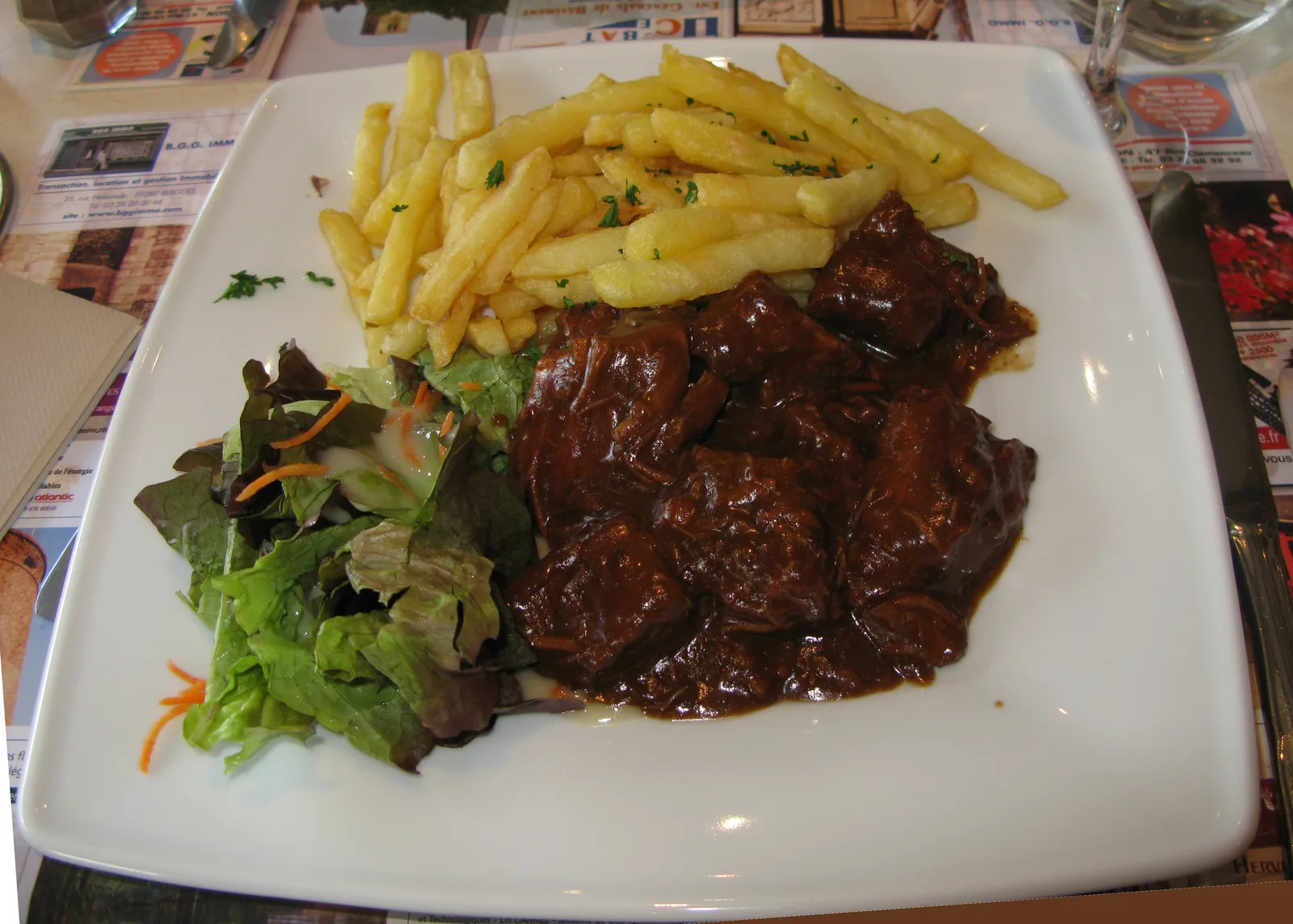
Carbonade flamande — dark beer-braised beef stew with fries and a small salad on a white plate Belgium flag Belgium 2h 55m
Dinner •Flemish Farmhouse Classic

Carbonade Flamande

This carbonade flamande recipe is Flanders' answer to the French beef stew: chunks of beef braised for hours in dark Belgian ale with sweet caramelised onions, thyme and bay, thickened the old way with slices of bread spread with mustard. The sauce turns dark, glossy and sweet-sour, and the beef goes spoon-tender. One serving is about 250 g, not counting the fries or potatoes served alongside.

Slow Sunday Comfort

Beef braised low and slow in dark Belgian ale with onions and mustard bread.

Pairs Well With
Dark Belgian ale & fries
High Protein
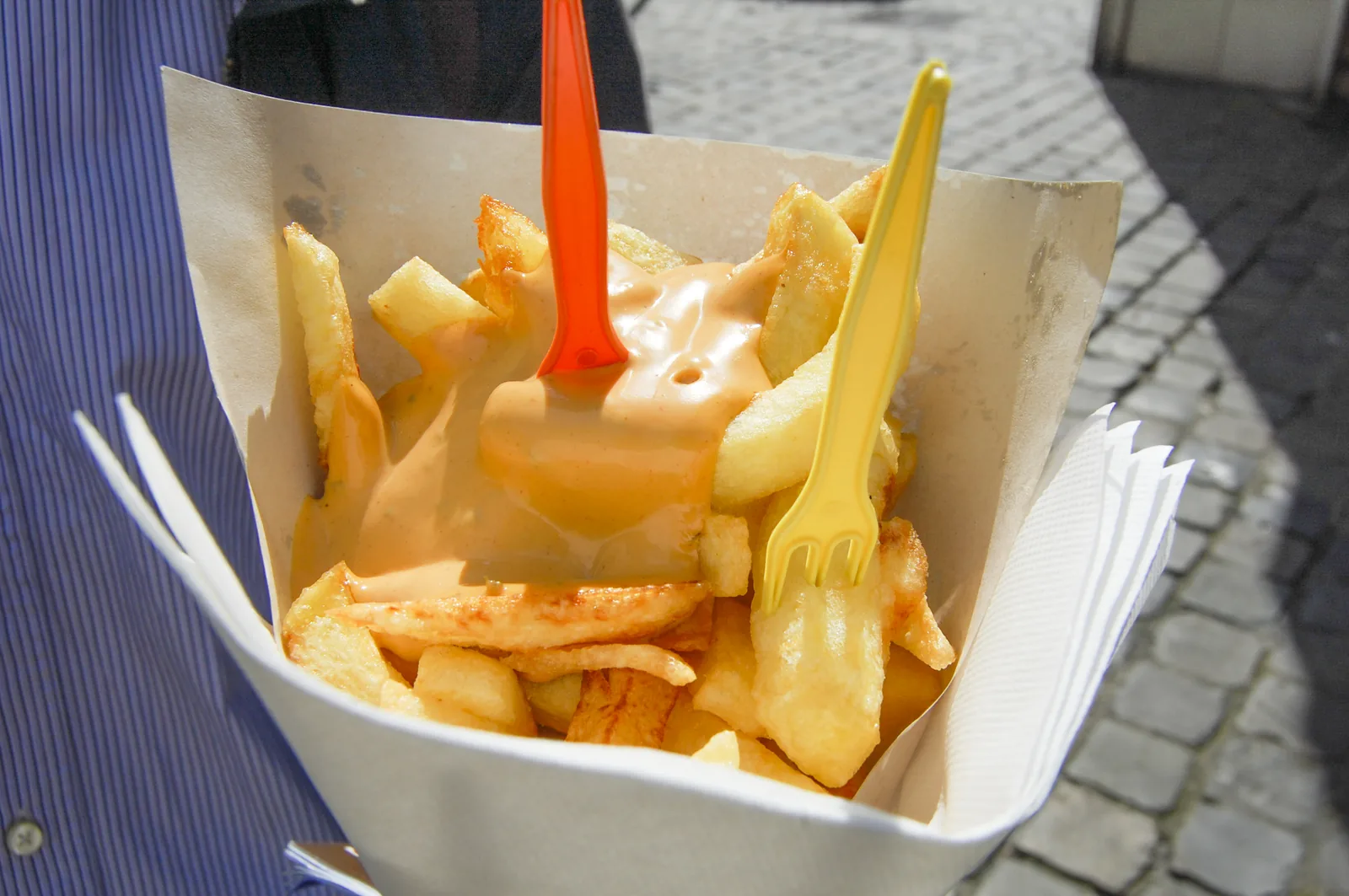
A paper cone of golden Belgian fries topped with andalouse sauce and two small plastic forks. Belgium flag Belgium 55m
Snack & Tea •Brussels Friterie Classic

Belgian Fries

Belgian fries are the real thing: thick batons of floury potato, fried twice — once gently to cook them through, once hot to shatter the outside — and served in a paper cone with andalouse sauce. One serving is about 253 g.

Crisp & Golden

Thick-cut potatoes fried twice in vegetable oil — crisp outside, fluffy inside, with andalouse sauce.

Pairs Well With
Serve hot in a paper cone with andalouse sauce and a cold lager.
Quick Prep (<30m)

The Dinner Gazette

Never wonder what’s for dinner again

One email a week with easy dinner ideas from around the world — ingredients, steps and nutrition, tested in our kitchen first.

Delivered every Thursday morning. Unsubscribe anytime.