Curated recipes from 193 countries  •  New seasonal Mediterranean issue out now

Overview

Palauan Grilled Fish

Banana-Leaf Snapper with Mashed Taro

This palau grilled fish recipe glazes a whole red snapper with dark mushroom soy sauce, sesame oil, ginger, garlic and kaffir lime leaf, wraps it in a banana leaf and grills it in the parcel over coals. The fish steams in its own juices inside the leaf — soft and fragrant, with no crisp skin — and it is served with mashed taro enriched with coconut cream. One serving is about 350 g.

In Palau the reef catch is often cooked the gentle way: a whole snapper glazed and wrapped in a banana leaf, then grilled in the parcel so the fish steams in its own juices. A Palauan grilled snapper in this style is seasoned with fresh ginger, garlic and kaffir lime leaf, glazed with a dark, mushroom-flavoured soy sauce and sesame oil, and wrapped in banana leaf before it meets the coals — lime slices finish the dish, and taro is the traditional side. The leaf does the work of an oven: it traps the steam, perfumes the flesh and keeps the fish moist, so there is no crisp skin, only soft, fragrant fish.

Pairs well with: Mashed taro, lime wedges and a cucumber salad

Provenance

Palau flag Palau

Koror's Banana-Leaf Grill

Oceania & Pacific

Time Dedication

55m

25m prep • 30m cook

Batch Yield

4 Servings

443 kcal per serving

1 serving ≈ 350 g

Technical Skill

Intermediate

Intermediate (Banana Leaf)

Meal Timing & Digestive Fit

Breakfast

Not Advised

Lunch

Hearty Midday Main

Dinner

Ideal Hearty Main

Snack & Tea

Inappropriate

High Protein Occasions: Family dinners, weekend barbecues, seaside gatherings, warm evenings Cost: Moderate — about $5–6 per serving at home
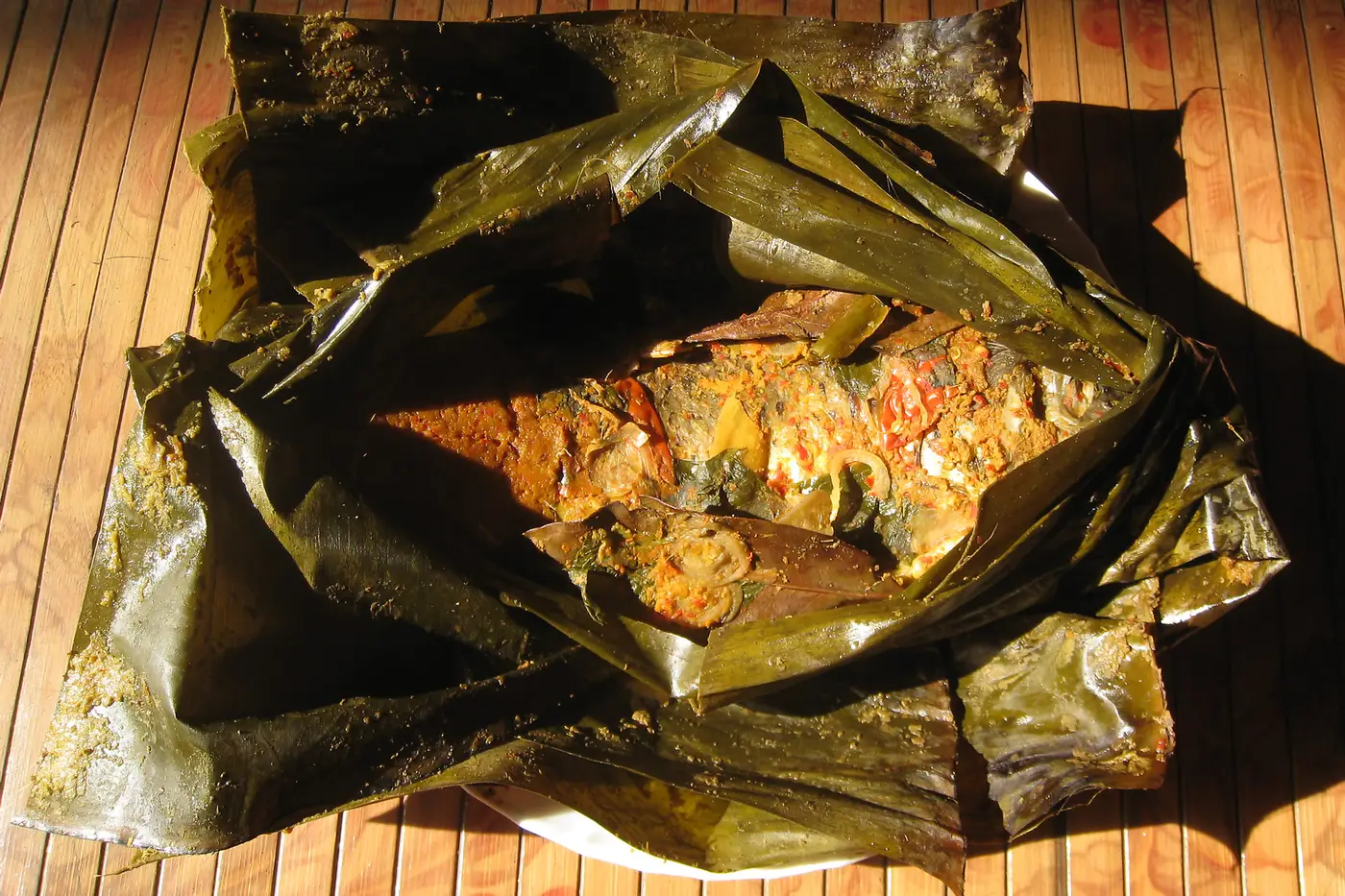
A whole fish cooked in an opened banana-leaf parcel, coated in spice paste

Koror's Banana-Leaf Grill

Photo: Gunawan Kartapranata, CC BY-SA 3.0, via Wikimedia Commons

The Heritage Formulary

Measured Ingredients

Estimated cost: Moderate — about $5–6 per serving at home (USD)

A good banana-leaf fish is judged when the parcel opens: fragrant steam, moist flesh that flakes cleanly off the bone, and a dark, glossy glaze.

Execution Methodology & Culinary Technique

Step-by-Step Cooking Guide

Active 55m
P

Prep Stage: Taro On, Fish Glazed

25 Mins • Marinating

Get the taro boiling first so it can cook while you work. Score the snapper, mix the soy sauce, sesame oil, ginger, garlic, torn kaffir lime leaves and lime juice into a glaze, and rub it over the fish and inside the cavity. Wrap the fish in the softened banana leaves, fold the ends under and tie the parcel with kitchen string, then leave it to marinate for 15 minutes while the taro cooks and the coals burn down.

Maestro Tip: Soften the banana leaves over a flame or in boiling water first — a stiff leaf cracks when you fold it, and a cracked parcel leaks the glaze onto the coals.

  1. 1

    Boil and Mash the Taro

    25 Mins Boiling water, 100°C (212°F), then mashing off the heat

    Put the taro chunks in a pot with water to cover and 3 g of the salt. Bring to a boil and cook for 18–20 minutes until a knife slides easily into the thickest chunk. Drain well, return the taro to the warm pot, and mash with the coconut milk and the remaining 1 g of salt until smooth and creamy. Keep warm with the lid on.

    Mash the taro while it is still hot — cold taro turns stiff and gluey and will not take the coconut milk.

    Done when: The taro is completely tender and mashes to a smooth, pale, creamy pile with no lumps.

  2. 2

    Glaze and Wrap the Fish

    10 Mins Room temperature, ~20°C (68°F)

    Rinse the snapper inside and out and pat it very dry. Cut 3 shallow diagonal slashes, about 1 cm deep, on each side. Mix the soy sauce, sesame oil, ginger, garlic, torn kaffir lime leaves, lime juice and 1 g of salt, and rub the glaze over the fish and inside the cavity. Lay the fish on the softened banana leaves, fold them over into a tight parcel, fold the ends under and tie with kitchen string. Leave to marinate for 15 minutes.

    Score just through the skin into the flesh — too deep and the fish falls apart when you unwrap it.

    Done when: The fish is evenly coated in the dark glaze, the parcel is tight with no gaps, and the leaves hold their fold.

  3. 3

    Grill the Parcel

    15 Mins Medium coals, ~200°C (400°F)

    On a charcoal grill, light charcoal or dry coconut husks and let them burn down to grey-white coals with no flame — about 15 minutes. Lay the parcel on the grate and grill for 7–8 minutes, then turn once with two wide spatulas and grill 7–8 minutes more. The fish steams inside the leaf, so there is no crisp skin — that is the point. The fish is done when the leaf is charred at the edges and the flesh at the thickest part flakes easily and reaches 63°C (145°F).

    Do not open the parcel on the grill to check — every opening lets the steam out. Judge by time and by the charring leaf, and check the temperature once, after unwrapping.

    Done when: The leaf is darkened and charred at the edges, the parcel feels hot and slightly soft, and the flesh inside is opaque white and flakes cleanly off the bone.

  4. 4

    Rest, Unwrap and Serve

    5 Mins Resting off the heat, ~60°C (140°F)

    Lift the parcel onto a platter and rest it for 3 minutes. Cut the string and open the leaves at the table so everyone smells the ginger, lime leaf and sesame. Scatter the spring onions over the fish, lay the lime wedges alongside, and serve with the warm mashed taro.

    Open the parcel at the table — the rush of fragrant steam is half the pleasure of this dish.

    Done when: The fish is hot through, the flesh is moist and fragrant, and the mashed taro is steaming.

Finishing Touches & Plating

Serve the fish in its opened banana leaf on a platter, with the mashed taro alongside, lime wedges for squeezing at the table, and spring onions scattered over the top.

Nutritional Physiology & Benefits

Nutrition

Energy

443

kcal / serving

Protein

38g

Complete AA

Carbs

46g

Complex

Fats

12g

Healthy

Per serving (4 servings · 1 serving ≈ 350 g)
Energy443 kcal
Protein38 g
Carbohydrates46 g
Fat12 g
Fibre7.4 g
Sugar2.2 g
Sodium928 mg
Per 100g
Energy127 kcal
Protein10.8 g
Carbohydrates13 g
Fat3.5 g
Fibre2.1 g
Sugar0.6 g
Sodium265 mg

Nutrition values are estimated — calculated from USDA FoodData Central values for the listed ingredients.

Vitamins & minerals: Vitamin D and B12 (snapper), vitamin C (lime, spring onion, chilli), potassium and vitamin B6 (taro), selenium and iodine (snapper).

Lean Protein, Generously

A whole reef fish gives about 38 g of lean protein per serving, and steaming it in the leaf adds no frying fat at all.

Omega-3s and Vitamin D

Snapper is one of the few foods that naturally provides vitamin D, and cooking it in a parcel keeps its healthy fats and moisture in the fish instead of dripping onto the coals.

Taro, Lime and Ginger

The mashed taro brings steady energy and about 7.4 g of fibre per serving, while the lime, ginger and kaffir lime leaf add brightness and vitamin C.

Food Pairings

What to Eat With

To optimize nutrient absorption and elevate the sensory depth, pair with these authentic accompaniments:

Sides

Mashed Taro

Mashed taro is the Palauan partner for this fish — its mild, creamy starch soaks up the dark soy-sesame glaze in a way rice never quite does.

Vegetables

Cucumber and Lime Salad

Cool, crisp cucumber with lime adds crunch next to the soft, steamed fish and the creamy taro, and its freshness keeps the rich glaze from feeling heavy.

Full Menus

Palauan Demok

On a bigger table, taro leaves simmered in coconut cream sit beside this fish — the green coconut pot and the banana-leaf fish are the two halves of a Palauan feast.

Drinks

Coconut Water or Sparkling Water

A cold, unsweetened drink cools the chilli in the glaze and suits a warm evening — coconut water is the island choice.

Complete menu

Serve the banana-leaf fish with mashed taro, a cucumber and lime salad, and demok on the side for a full Palauan table, with coconut water to drink.

Digestive Guardrails

What NOT to Combine

To prevent digestive distress, sluggishness, or palate clash, avoid pairing the dish with these elements:

Grilling the Fish Unwrapped

This fish is meant to steam inside its banana leaf. Grilled open over the coals it dries out, the glaze burns, and you lose the ginger and lime-leaf fragrance the leaf traps in. Keep the parcel closed until the table. This is general guidance, not medical advice.

A Heavy Creamy Sauce on Top

The fish is already rich with its soy-sesame glaze. A heavy, creamy sauce on top would smother the leaf-steamed flavour — keep the topping to lime and spring onion.

General information only, not medical advice — consult a doctor for personal dietary decisions.

Who Should Eat It

Who Should Eat

  • General adultsA complete, satisfying dinner — steamed reef fish, mashed taro and lime, with the chilli kept optional.
  • ChildrenSuitable from age 3+; serve the flesh only, carefully checked for small bones, and keep the chilli out of a child's portion.
  • ElderlyVery suitable — the flesh steams soft and moist and is easy to eat, but take care with the fine bones of a whole fish.
  • Pregnant womenGenerally suitable; make sure the fish is cooked through to 63°C (145°F) and eat it freshly cooked and hot. Reef fish from the open ocean is usually low in mercury, but keep portions moderate.
  • Breastfeeding womenGenerally suitable; the protein and vitamin D support recovery — eat it freshly cooked and hot.
  • AthletesA strong post-training meal: about 38 g protein per serving with mashed taro for glycogen.
  • Weight gainA good choice — take a generous helping of fish and mashed taro, and add a second lime wedge.
  • Weight lossKeep the portion modest — half the fish with a modest scoop of mashed taro — and load the plate with the cucumber salad instead of a second helping of taro.

Health Conditions — Adjust or Avoid

Conditions

  • DiabetesMashed taro is the main source of carbs — keep it to a moderate scoop and ask your clinician about portion size.
  • High blood pressureThis dish is high in sodium (about 928 mg per serving) from the soy sauce and salt — season lightly, do not add extra soy at the table, and let the lime do the work. Ask your clinician about a suitable portion.
  • Kidney diseaseLimit the portion of fish and mashed taro, and note the sodium is high; ask your clinician about portion size.
  • GoutEat occasionally and in moderate portions — fish is generally low in purines, but large servings still add up.
  • Stomach issuesThe steamed fish and soft taro are usually gentle, but the chilli, raw spring onion and sesame oil can irritate a sensitive stomach — keep the chilli out and cook the onion soft.
  • Cardiovascular diseaseSteamed fish is naturally low in saturated fat, though the coconut milk and sesame oil add fat — keep the oil modest and the portion sensible. Ask your clinician.
  • Fatty liverA reasonable choice — lean fish with taro and vegetables; keep the coconut milk modest and skip a second helping. Ask your clinician.
  • Food allergiesContains fish, soy, wheat and sesame. The dark mushroom soy sauce contains wheat, so this dish is NOT gluten-free as made — use tamari instead of soy sauce for a gluten-free version. Fish allergy is the key risk — do not serve to anyone with a fish allergy.
  • Special therapeutic dietsIf you follow a prescribed low-sodium diet, use half the soy sauce and less salt, and check with your clinician.

If you have a medical condition, consult your doctor before changing your diet.

Storage & Use

Storage & Use

How to store
Cool quickly and store in an airtight container; keep the mashed taro separate from the fish if possible.
In the fridge
1–2 days.
In the freezer
Up to 2 months; freeze the cooked fish without the taro, and freeze the taro separately.
How to reheat
Reheat gently in a covered pan or oven until steaming, and make sure it reaches 74°C (165°F) throughout.
Freezing recommended
Only if needed — leaf-steamed fish is best eaten fresh from the parcel; freezing softens the flesh.
Signs it has spoiled
Sour or ammonia smell, slimy flesh, or a dull, grey colour on the fish.

More recipes to explore

Bœuf bourguignon — French beef braised in red wine France flag France 4h
Dinner •Burgundy Terroir

Bœuf Bourguignon

Beef braised gently in red wine until the connective tissue melts into a velvet, gelatin-rich sauce — the classic Burgundy Sunday dinner.

Cellular Repair

Beef braised in red wine until spoon-tender, with mushrooms and pearl onions.

Pairs Well With
Parsnip Purée & Steamed French Haricots Verts
High Protein
Vietnamese braised pork belly with golden eggs in caramel sauce Vietnam flag Vietnam 1h 45m
Dinner •One Pot

Vietnamese Braised Pork and Eggs

Pork belly slowly braised in coconut water and caramel until meltingly tender, with golden eggs that soak up the sweet-savoury sauce — the Vietnamese family dish that tastes better the next day.

Comfort & Sustained Energy

Slow-braised pork belly and eggs in coconut water and caramel.

Pairs Well With
Steamed rice & pickled mustard greens
High Protein
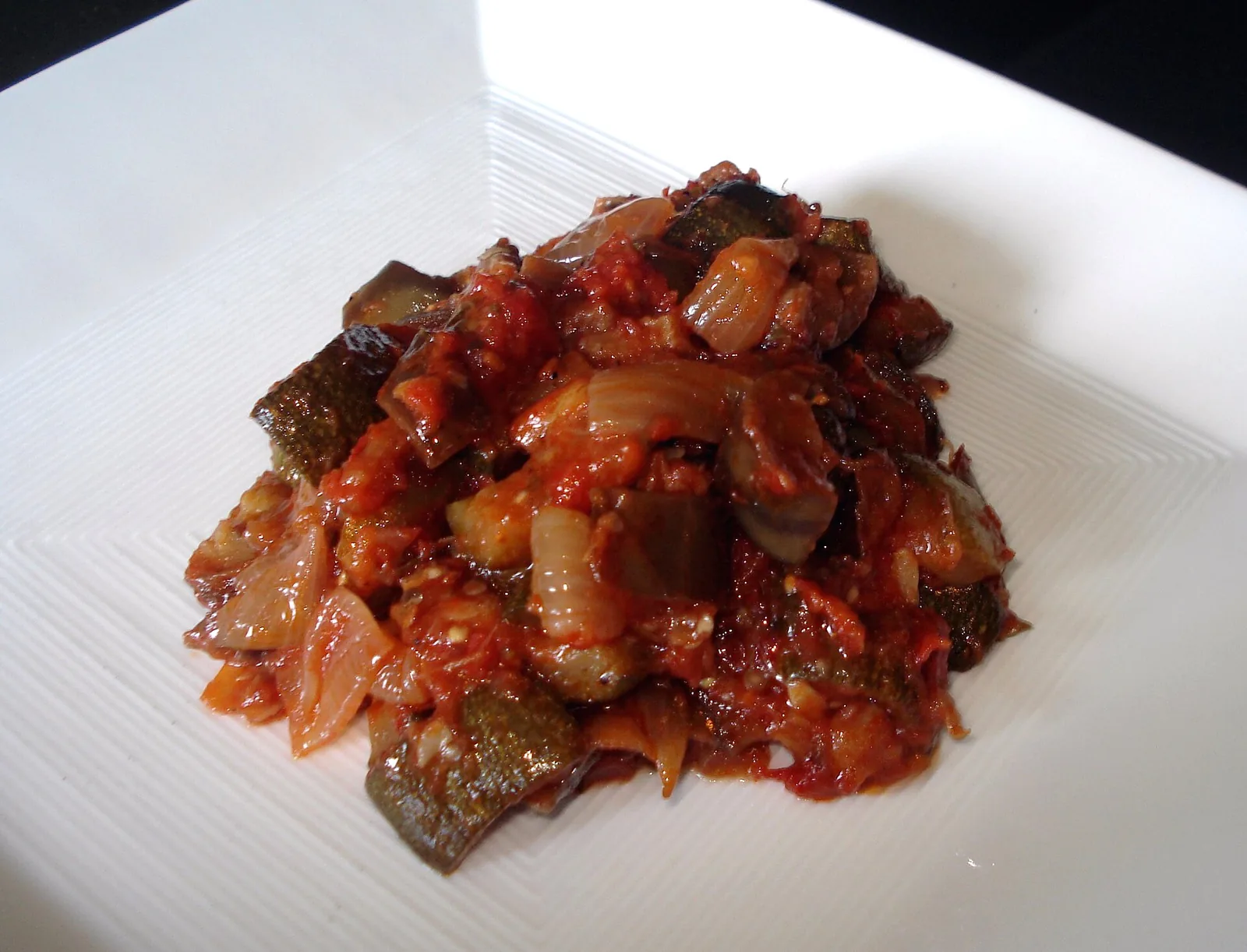
A mound of classic ratatouille with eggplant, zucchini, tomato and onion on a white plate France flag France 1h 15m
Dinner •Nice Provençal

Ratatouille

This ratatouille recipe cooks eggplant, zucchini, peppers and tomatoes separately first, so each vegetable keeps its own texture, then brings them together for a slow, fragrant simmer. One serving is about 400 g.

Light & Vegetable-Rich

Slow-simmered summer vegetables in olive oil — light, fragrant and full of fibre.

Pairs Well With
Crusty sourdough bread, grilled fish or a fried egg
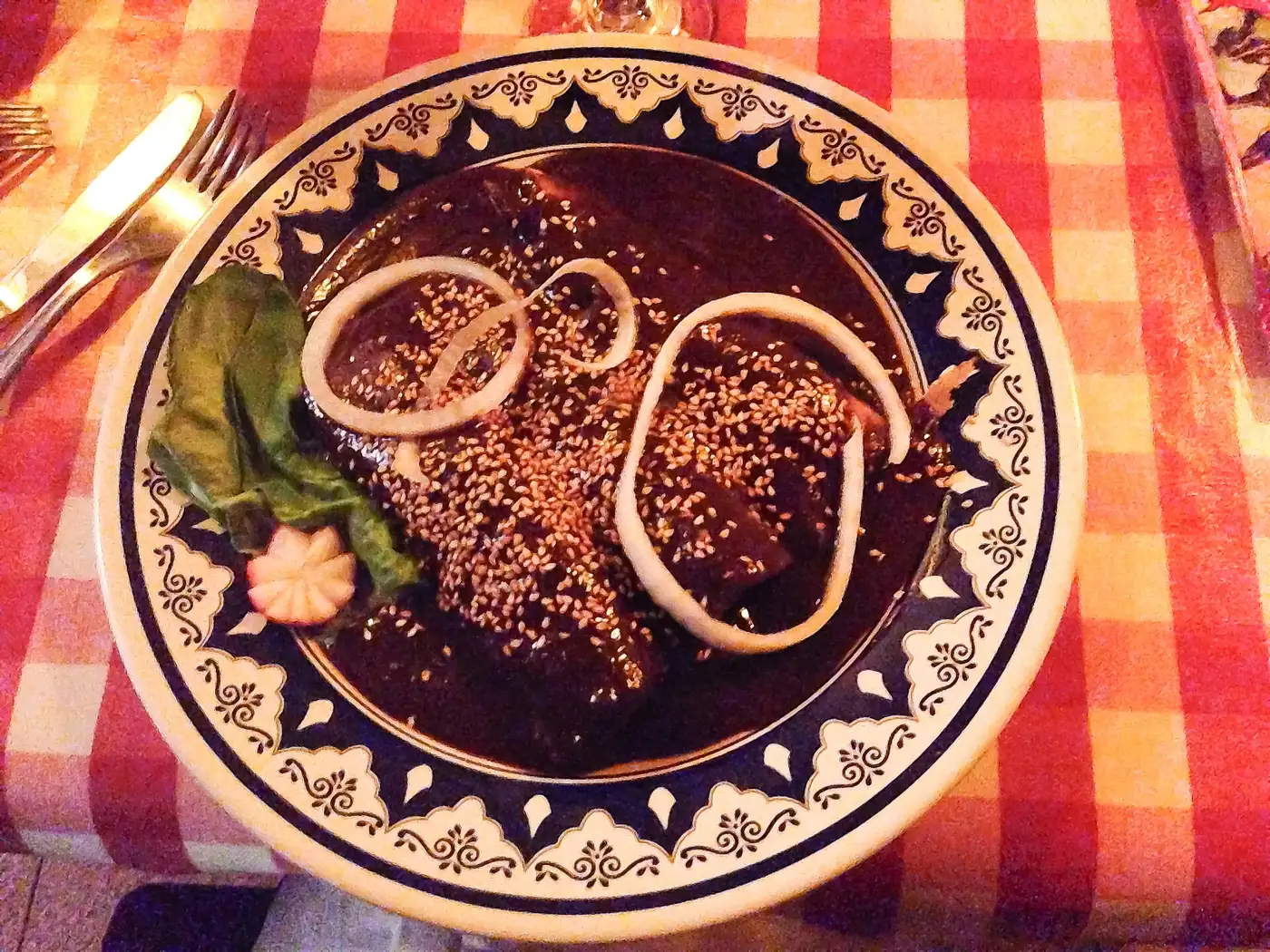
Chicken covered in dark mole poblano sauce with sesame seeds and onion rings on a patterned plate Mexico flag Mexico 2h 40m
Dinner •Puebla Celebration Dish

Mole Poblano

This mole poblano recipe builds the dark Puebla sauce the slow way — chillies toasted and soaked, nuts and seeds fried, chocolate melted in at the end — and serves it over tender chicken. One serving is about 300 g.

Rich & Festive

Dark, complex sauce of chillies, nuts, seeds and chocolate over tender chicken.

Pairs Well With
Mexican red rice, warm tortillas and a cold hibiscus agua fresca
High Protein

The Dinner Gazette

Never wonder what’s for dinner again

One email a week with easy dinner ideas from around the world — ingredients, steps and nutrition, tested in our kitchen first.

Delivered every Thursday morning. Unsubscribe anytime.