-
1
Wake the yeast and mix the dough
10 minutes
Lukewarm milk (about 35°C / 95°F)
Stir the yeast into the lukewarm milk with a pinch of sugar and leave it for 5 minutes until it foams. Meanwhile mix the flour, the rest of the sugar and the salt in a large bowl. Pour in the yeasted milk and one beaten egg, and mix until a shaggy dough forms.
Milk hotter than about 43°C (110°F) kills the yeast — it should feel warm on your wrist, not hot.
Done when: The yeast is foamy and the dough comes together in one rough mass.
-
2
Knead in the butter and let it rise
105 minutes
Warm place (about 26°C / 80°F)
Turn the dough onto a lightly floured surface and knead for about 10 minutes until smooth and springy. Work in the softened butter a little at a time, kneading until it disappears, then knead for 5 minutes more. Shape into a ball, place in a greased bowl, cover, and leave in a warm place until doubled in size.
A dough that springs back slowly is ready; one that snaps back fast needs more kneading.
Done when: The dough is smooth, elastic and bounces back when pressed; it has doubled in size.
-
3
Roll out the dough and spread the filling
15 minutes
Room temperature (20°C / 68°F)
Punch the dough down gently and roll it on a floured surface into a rectangle about 40 cm by 30 cm, keeping the thickness even. Lay the ham slices over the dough in a single overlapping layer, leaving a clean 2 cm border along one long edge for sealing. Scatter the halved olives and the raisins evenly over the ham.
Pat the olives dry — wet filling makes the dough soggy and the roll splits.
Done when: The rectangle is even and the filling covers the dough in one layer, with a clean border at the far edge.
-
4
Roll, seal and let it rise again
35 minutes
Warm place (about 26°C / 80°F)
Roll the dough up firmly from the long edge nearest you, like a Swiss roll, keeping the roll tight so there are no air pockets. Pinch the seam and the ends closed and place the loaf seam-side down on a lined baking tray. Cover loosely and leave for about 30 minutes until it puffs up again.
Roll firmly but do not crush the dough — a loose roll leaves holes in the spiral.
Done when: The roll is tight and even, the seam is sealed, and the loaf has visibly puffed.
-
5
Glaze and bake until deep golden
40 minutes
180°C (350°F), centre 88°C (190°F)
Brush the whole loaf generously with the second beaten egg and bake in the middle of the oven for about 40 minutes, until deeply golden all over and the centre reaches about 88°C (190°F). If the top browns too fast, cover it loosely with foil for the last 10 minutes.
The egg glaze is what gives the loaf its shine — brush it on evenly, including the sides.
Done when: The crust is deep golden and glossy, the loaf sounds hollow when tapped underneath, and the centre reaches 88°C (190°F).
-
6
Cool and slice
20 minutes
Room temperature (20°C / 68°F)
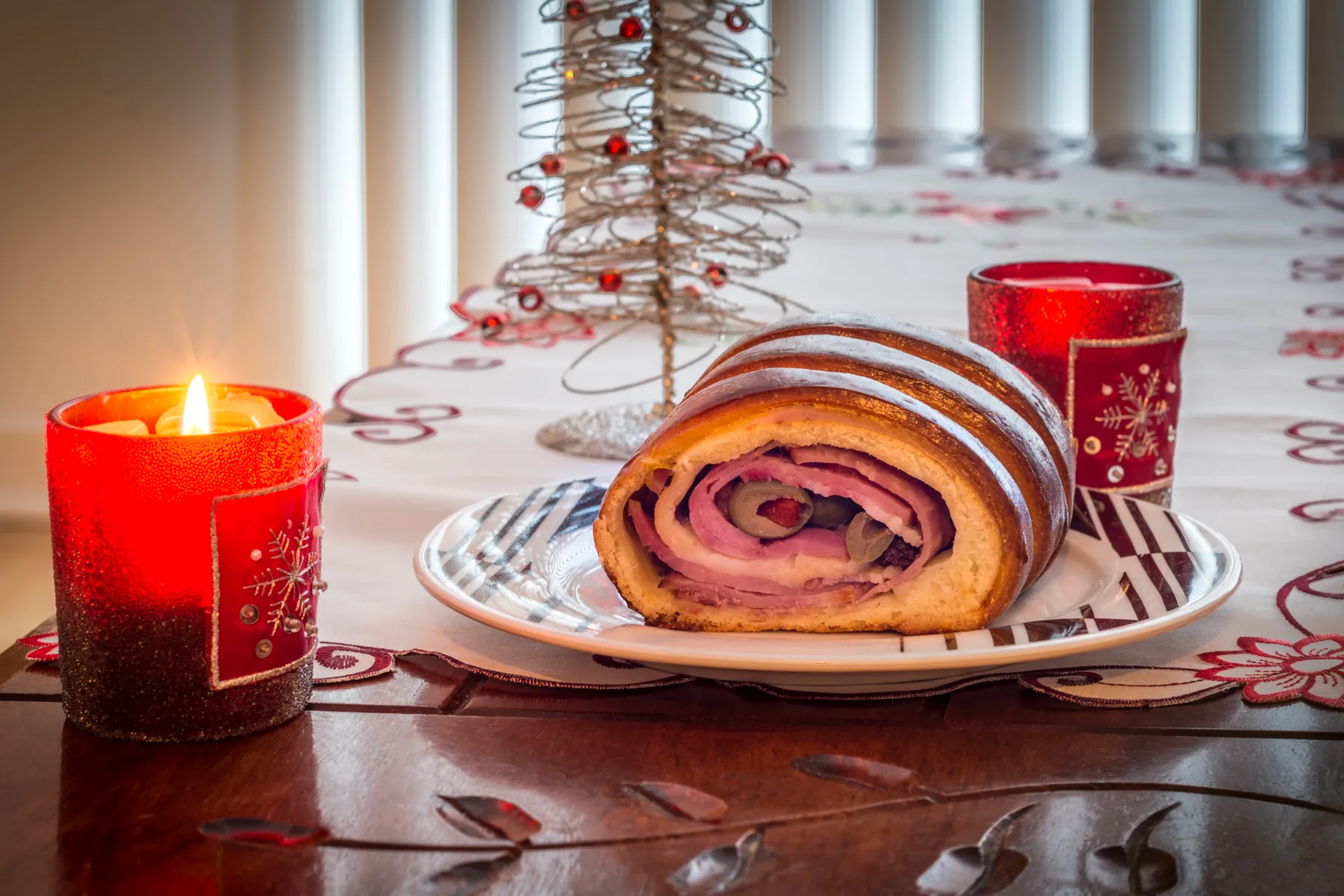
Move the loaf to a wire rack and let it cool for at least 20 minutes before slicing. Cut with a sharp serrated knife into slices about 2 cm thick, so each slice shows the full spiral of ham, olive and raisin.
Slicing warm bread with a plain knife squashes it — a serrated blade saws cleanly through the crust.
Done when: The slices hold their shape and the spiral is crisp and visible in every piece.
auto_awesome Finishing Touches & Plating
Let the loaf cool for at least 20 minutes before slicing, then cut with a sharp serrated knife so the spiral stays crisp and neat.

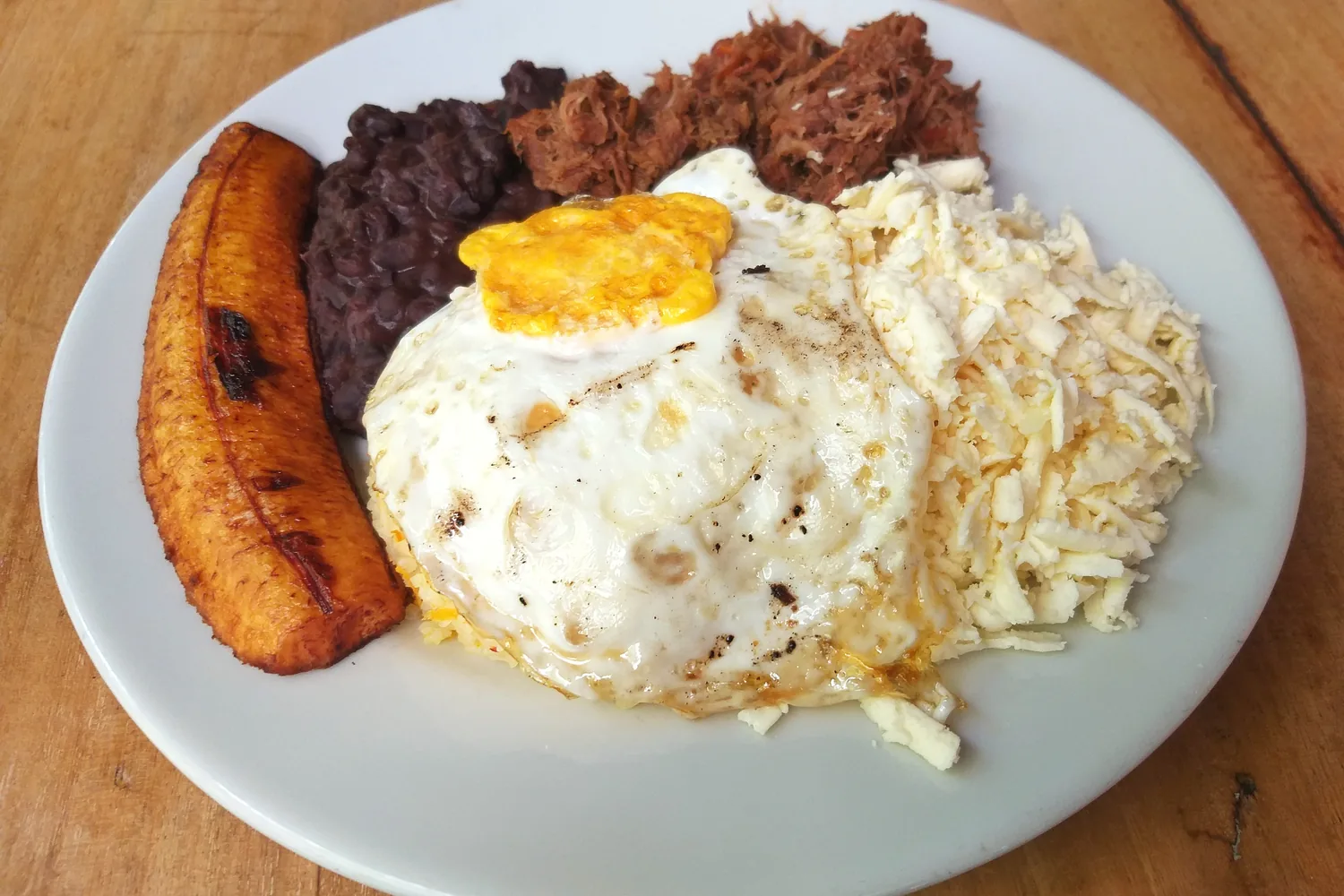
 Venezuela
3h