
Curated recipes from 193 countries  •  New seasonal Mediterranean issue out now

Overview

Pandebono

Pan de bono, Pandebono valluno

Pandebono is a warm Colombian cheese bread from Valle del Cauca, made from cassava starch, cheese and egg and baked until puffed and golden. This pandebono recipe makes 12 rolls, and one serving is about 117 g (two rolls). It is a baked, wheat-free cheese roll, not a griddled corn cake like a Colombian arepa or an arepa de choclo, and it uses a cassava-starch base rather than the corn-and-curd base of an almojabana.

Pandebono comes from Valle del Cauca in southwestern Colombia, around Cali, and is traditionally eaten warm with hot chocolate a few minutes after baking. Local tradition, documented by Edouard Andre in Picturesque America (1884), links its name to Hacienda El Bono on the road between Dagua and Cali, where a cook named Genoveva is said to have added cassava starch and cheese to the bread served to muleteers travelling to Buenaventura; the name merged from el pan de El Bono into pandebono. Today it is a bakery staple across Colombia, and it is a baked wheat-free cassava-starch cheese roll, not a griddled corn cake like a Colombian arepa or an arepa de choclo.

Pairs well with: Hot chocolate or strong black coffee, the classic Valle del Cauca breakfast pairing.

Provenance

Colombia flag Colombia

Valle del Cauca Heritage

Latin America & Caribbean

Time Dedication

45m

25m prep • 20m cook

Batch Yield

6 Servings

301 kcal per serving

1 serving ≈ 117 g

Technical Skill

Intermediate

Moderate (Shaped by Hand)

Meal Timing & Digestive Fit

Breakfast

Prime Morning Fit

Lunch

Inappropriate

Dinner

Inappropriate

Snack & Tea

Inappropriate

Occasions: Breakfast, Coffee break, Weekend baking, Family brunch Cost: Low — about $1–2 per serving at home
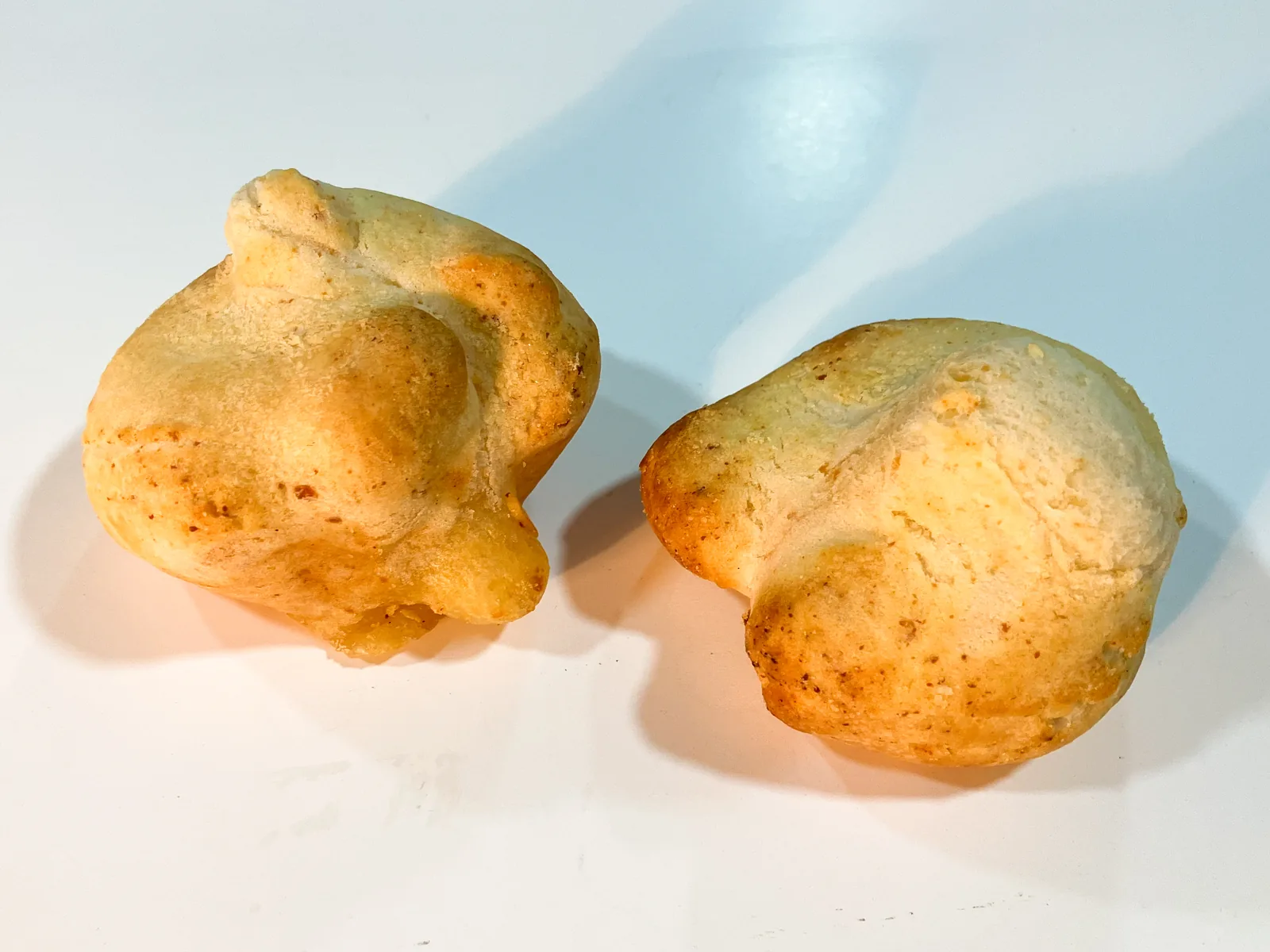
Two golden pandebono cheese rolls on a plain white background

Valle del Cauca Heritage

Photo: El Mono Español, CC BY-SA 4.0, via Wikimedia Commons

The Heritage Formulary

Measured Ingredients

Estimated cost: Low — about $1–2 per serving at home (USD)

Baked from cassava starch, cheese and egg with no wheat flour, and best eaten warm within an hour of baking.

Execution Methodology & Culinary Technique

Step-by-Step Cooking Guide

Active 45m
P

Prep Stage: Dough & Cheese

25 Mins • Mixing & Shaping

Sift the cassava starch, cornstarch, baking powder and salt into a large bowl and stir in the grated queso fresco and mozzarella with the butter cubes. Pour in the beaten egg and half the milk, mix, then add the remaining milk a spoonful at a time until a soft dough forms. Divide into 12 pieces of about 60 g each and roll into balls with a small pinched peak on top.

Maestro Tip: Cassava starch drinks liquid slowly, so wait a minute after adding milk before deciding the dough needs more; a dough that is too wet makes flat rolls.

  1. 1

    Mix the Dry Ingredients and Cheese

    5 Mins Room temperature

    Combine the cassava starch, cornstarch, baking powder and salt in a large bowl. Stir in the grated queso fresco and mozzarella and the butter cubes, then rub the butter in with your fingertips until the mix looks crumbly with visible shreds of cheese.

    Keep the cheese cold until you use it so it stays in shreds instead of melting into the starch.

    Done when: A crumbly mix with visible shreds of cheese.

  2. 2

    Add the Egg and Milk

    5 Mins Room temperature

    Pour the beaten egg and half the milk into the bowl and mix with a wooden spoon. Add the remaining milk a spoonful at a time, kneading gently, until a soft dough comes together that holds its shape without sticking to your hands.

    The single egg is doing real work here: it binds the starch dough, colours the crumb golden and helps the rolls puff and set in the oven.

    Done when: A soft, smooth dough that holds together without sticking.

  3. 3

    Shape 12 Rolls

    10 Mins Room temperature

    Divide the dough into 12 pieces of about 60 g each. Roll each into a ball, then pinch the top into a slight peak, the traditional pandebono shape. Set them on a lined baking tray about 5 cm apart.

    If the dough cracks at the edges, wet your hands lightly and knead the piece again before rolling.

    Done when: 12 even balls, each with a small pinched peak.

  4. 4

    Bake Until Golden

    20 Mins 200°C (400°F)

    Bake on the middle rack for 18 to 20 minutes until the rolls are puffed, deep golden and cracked on top, and sound hollow when tapped underneath.

    Do not open the oven during the first 10 minutes, or the rolls may deflate before they set.

    Done when: Puffed, deep golden rolls that sound hollow when tapped underneath.

  5. 5

    Cool Briefly and Serve Warm

    5 Mins Serve warm, about 60°C (140°F)

    Rest the rolls on the tray for 5 minutes, then serve warm, when the shell is crisp and the centre is soft and chewy.

    Pandebono is at its best within an hour of baking; reheat leftovers briefly rather than eating them cold.

    Done when: Warm rolls with a crisp shell and a soft, chewy centre.

Finishing Touches & Plating

Serve the pandebono warm from the oven, split open if you like, with a cup of hot chocolate or black coffee, just as it is eaten for breakfast in Valle del Cauca.

Nutritional Physiology & Benefits

Nutrition

Energy

301

kcal / serving

Protein

8g

Complete AA

Carbs

44g

Complex

Fats

10g

Healthy

Per serving (6 servings · 1 serving ≈ 117 g)
Energy301 kcal
Protein8 g
Carbohydrates44 g
Fat10 g
Fibre0.5 g
Sugar0.7 g
Sodium673 mg
Per 100g
Energy257 kcal
Protein6.8 g
Carbohydrates37.5 g
Fat8.9 g
Fibre0.4 g
Sugar0.6 g
Sodium575 mg

Nutrition values are estimated — calculated from USDA FoodData Central values for the listed ingredients.

Vitamins & minerals: Provides calcium and phosphorus from the cheese and milk, vitamin A from the butter and egg, and small amounts of B vitamins from the egg.

Naturally Gluten-Free

Pandebono is made from cassava starch, not wheat, so it is naturally free of gluten and suits a gluten-free breakfast.

Protein from Cheese and Egg

Each serving gives about 7.9 g of protein from the cheese and the egg, which helps a small breakfast feel more filling.

Quick Morning Bake

The dough comes together in minutes with no yeast and no rising time, so warm rolls are on the table in about 45 minutes.

Food Pairings

What to Eat With

To optimize nutrient absorption and elevate the sensory depth, pair with these authentic accompaniments:

Drinks

Hot Chocolate

In Valle del Cauca, pandebono is traditionally eaten warm with hot chocolate: the sweet, warm drink balances the salty, savoury cheese roll.

Black Coffee

Strong black coffee cuts through the richness of the cheese and egg, and the bitter edge makes the salty roll taste even better.

Sides

Fresh Fruit

A small plate of papaya or mango adds freshness and a little sweetness next to the rich, cheesy rolls.

Full Menus

Arepa and Egg Breakfast

For a bigger Colombian breakfast, serve pandebono beside a griddled arepa and a fried egg; the two breads show the two sides of Colombian baking, corn cake and cassava cheese roll.

Complete menu

Two warm pandebono rolls with a cup of hot chocolate and a small plate of fresh papaya, followed by black coffee.

Digestive Guardrails

What NOT to Combine

To prevent digestive distress, sluggishness, or palate clash, avoid pairing the dish with these elements:

Wheat Flour Instead of Cassava Starch

Wheat flour makes a completely different bread and the rolls will not puff or chew the way pandebono should; only cassava starch (tapioca starch) works. This is general food information, not medical advice.

Eating It Cold and Stale

Pandebono firms up quickly as it cools, so a day-old roll eaten cold tastes dry and tough; reheat it in a hot oven for a few minutes instead. This is general food information, not medical advice.

General information only, not medical advice — consult a doctor for personal dietary decisions.

Who Should Eat It

Who Should Eat

  • General adultsA warm, filling breakfast for most adults; two rolls with hot chocolate or coffee make a complete light meal.
  • ChildrenChildren usually love the soft, cheesy rolls; serve warm and cut in half for small hands, and watch the hot filling.
  • ElderlySoft and easy to chew when warm, but the cheese makes it fairly salty, so one roll with fruit is a gentler portion.
  • Pregnant womenMade with cooked egg and pasteurised cheese and milk, so it is generally fine; choose pasteurised cheese and ask your clinician if unsure.
  • Breastfeeding womenA handy, energy-rich snack between feeds; the cheese and egg add protein and calcium.
  • AthletesGood quick energy from the starch with some protein, best eaten after training rather than just before, since the cheese is rich.
  • Weight gainAn easy way to add energy: two warm rolls with hot chocolate add a useful amount of calories in a small portion.
  • Weight lossRich for its size, so one roll with fresh fruit and black coffee is a better portion than two with sweet hot chocolate.

Health Conditions — Adjust or Avoid

Conditions

  • DiabetesCassava starch is starchy and raises blood sugar, so one roll with eggs or fruit is a better portion than two plain ones. Ask your clinician about portions.
  • High blood pressureThe cheese and salt make this fairly salty, so keep the portion small and skip extra salt elsewhere that day. Ask your clinician about sodium limits.
  • Kidney diseaseHigh in sodium and phosphorus from the cheese, so it is not a good everyday choice for a low-sodium or low-phosphorus diet. Ask your clinician.
  • GoutCheese and egg are low in purines, but the rolls are rich, so keep portions modest. Ask your clinician about your diet.
  • Stomach issuesSoft and easy to digest when warm, though the cheese can feel heavy; eat slowly and avoid eating it very hot. Ask your clinician if symptoms persist.
  • Cardiovascular diseaseContains saturated fat from cheese and butter, so enjoy it occasionally and in small portions. Ask your clinician about saturated fat.
  • Fatty liverEnergy-dense and rich in saturated fat, so a small occasional portion fits better than a daily habit. Ask your clinician about your diet.
  • Food allergiesContains milk, cheese and egg, and is made in a kitchen where wheat may be present; the recipe itself is wheat-free. Check labels and ask your clinician if you have allergies.
  • Special therapeutic dietsNaturally gluten-free and vegetarian, but not dairy-free or egg-free; a clinician or dietitian can advise on fitting it into a therapeutic diet.

If you have a medical condition, consult your doctor before changing your diet.

Storage & Use

Storage & Use

How to store
Cool completely and store in a sealed container or bag at room temperature.
In the fridge
Keeps 2 days in the fridge at 4°C (40°F) or below; the crumb firms up when cold.
In the freezer
Baked rolls freeze up to 1 month in a sealed bag; thaw at room temperature.
How to reheat
Reheat in a hot oven at 180°C (350°F) for 5 minutes until warm through, to 74°C (165°F) in the centre.
Freezing recommended
Yes — baked rolls freeze well and reheat almost like fresh.
Signs it has spoiled
Sour smell, mould, or a slimy surface.

More recipes to explore

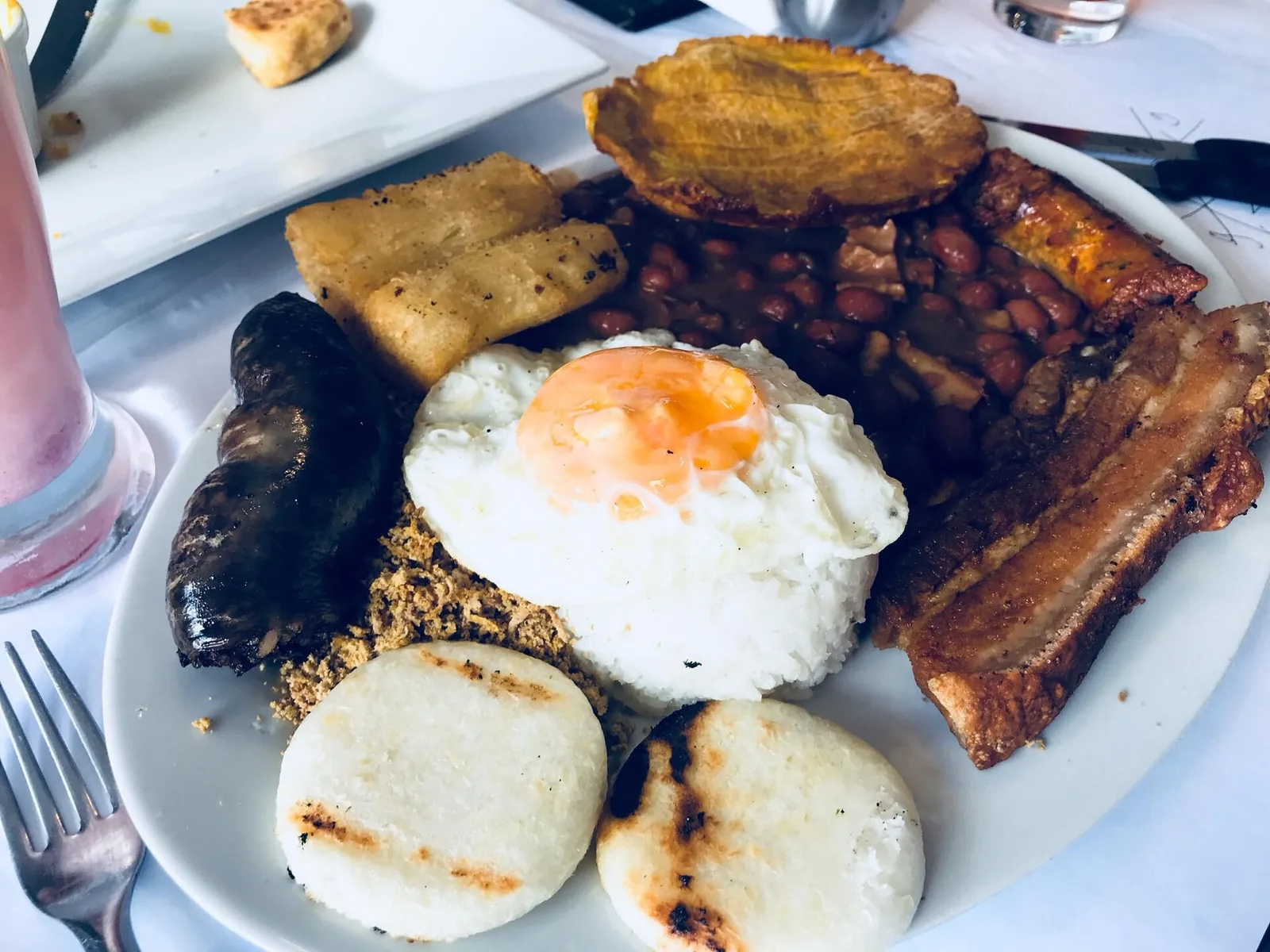
Bandeja paisa on a white plate with red beans, white rice, a fried egg, chicharrón, morcilla, chorizo, fried plantain and two small arepas Colombia flag Colombia 2h
Lunch •Antioquia Heritage

Bandeja Paisa

This bandeja paisa recipe builds the famous platter from Antioquia: red beans simmered with pork, white rice, crisp chicharrón, seasoned ground beef, chorizo and morcilla, a fried egg, sweet fried plantain, avocado, hogao sauce and a small grilled arepa. Every part is cooked separately, then piled onto one wide plate so each bite can mix a little of everything. One serving is about 894 g.

Hearty & Filling

A generous Antioquia platter of beans, rice, meats, egg, plantain and avocado, built to fuel a long working day.

Pairs Well With
A cold glass of panela lemonade or a light lager, with a small green salad on the side.
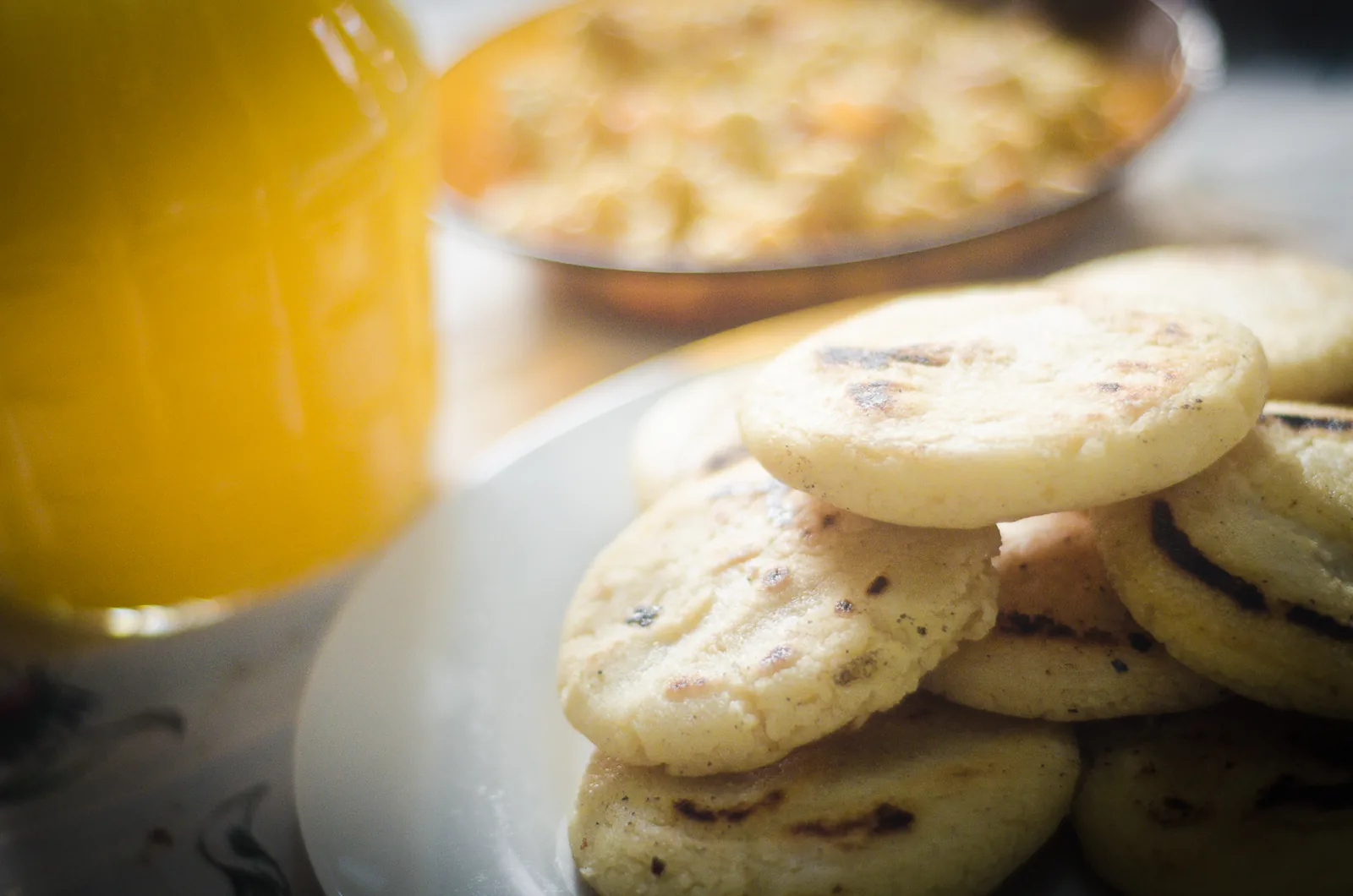
A stack of golden grilled Colombian arepas on a white plate, with a glass of orange juice beside them Colombia flag Colombia 35m
Breakfast •Andean Heritage

Colombian Arepas

This Colombian arepas recipe turns pre-cooked white cornmeal, warm water, butter and cheese into round corn cakes that are grilled until crisp outside and soft inside. The cheese is kneaded right into the dough, so every bite is savoury and gently melty. Colombian arepas are thinner and plainer than the stuffed Venezuelan kind: they are a breakfast bread, split open and filled at the table. One serving is about 220 g, two arepas.

Comfort & Warmth

Golden grilled corn cakes made from white masarepa, with melting cheese kneaded into the dough.

Pairs Well With
Hot chocolate or coffee, with butter and a slice of fresh cheese on the side.
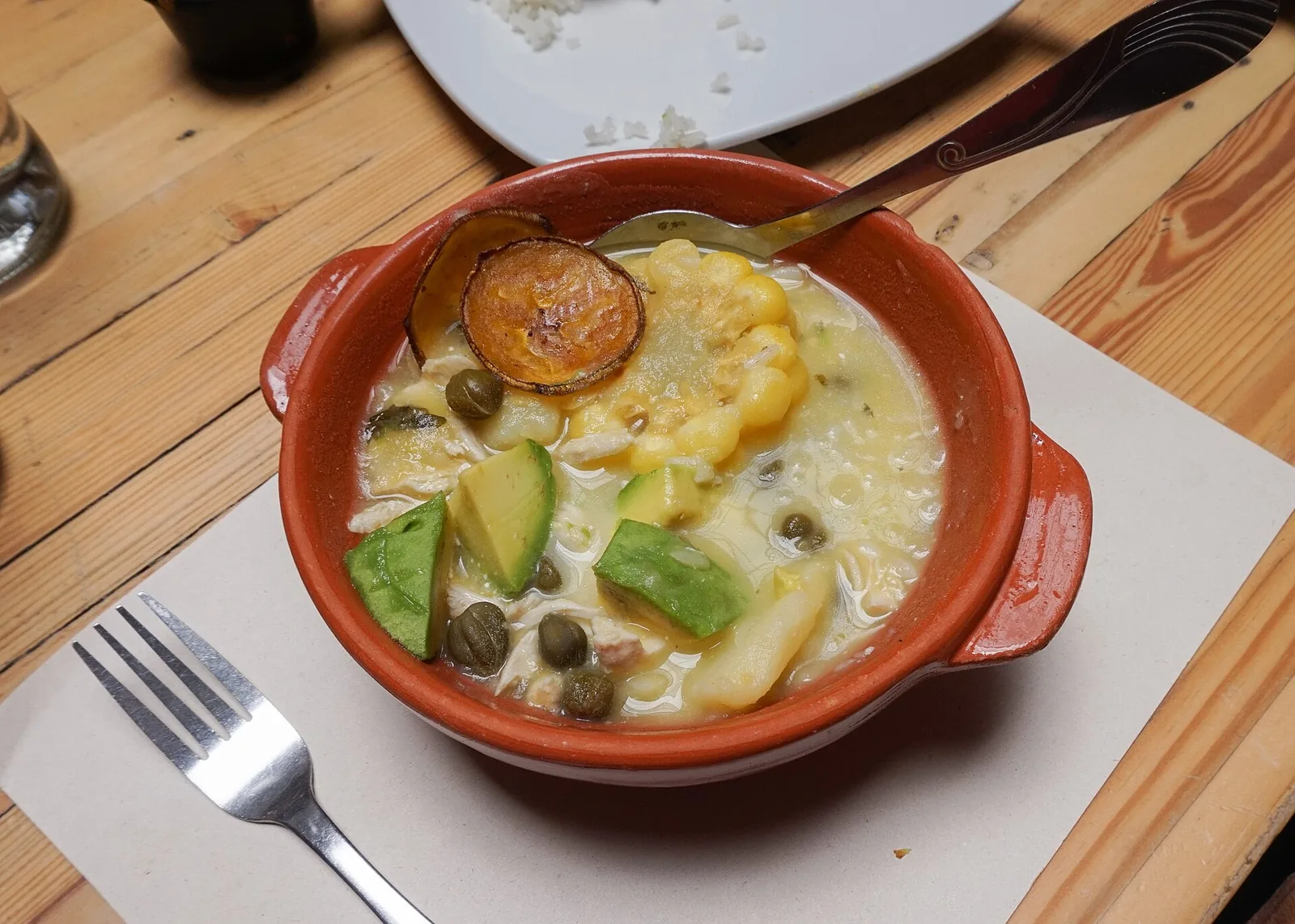
A bowl of ajiaco in a clay bowl, thick golden soup with corn, avocado, capers and shredded chicken Colombia flag Colombia 1h 30m
Lunch •Bogotá Heritage

Ajiaco

This ajiaco recipe is Bogotá's signature soup: chicken simmered with corn on the cob and three kinds of potato — pastusa, sabanera and criolla — until the criolla melts and thickens the broth golden. The herb guascas gives it its unmistakable earthy flavour, and every bowl is finished at the table with heavy cream, briny capers and sliced avocado. One serving is about 750 g, soup and toppings together.

Comfort & Warmth

Bogotá's thick chicken and potato soup, flavoured with guascas and served with cream, capers and avocado.

Pairs Well With
White rice and a small side salad, with the cream, capers and avocado passed around the table.
Soups & Broths
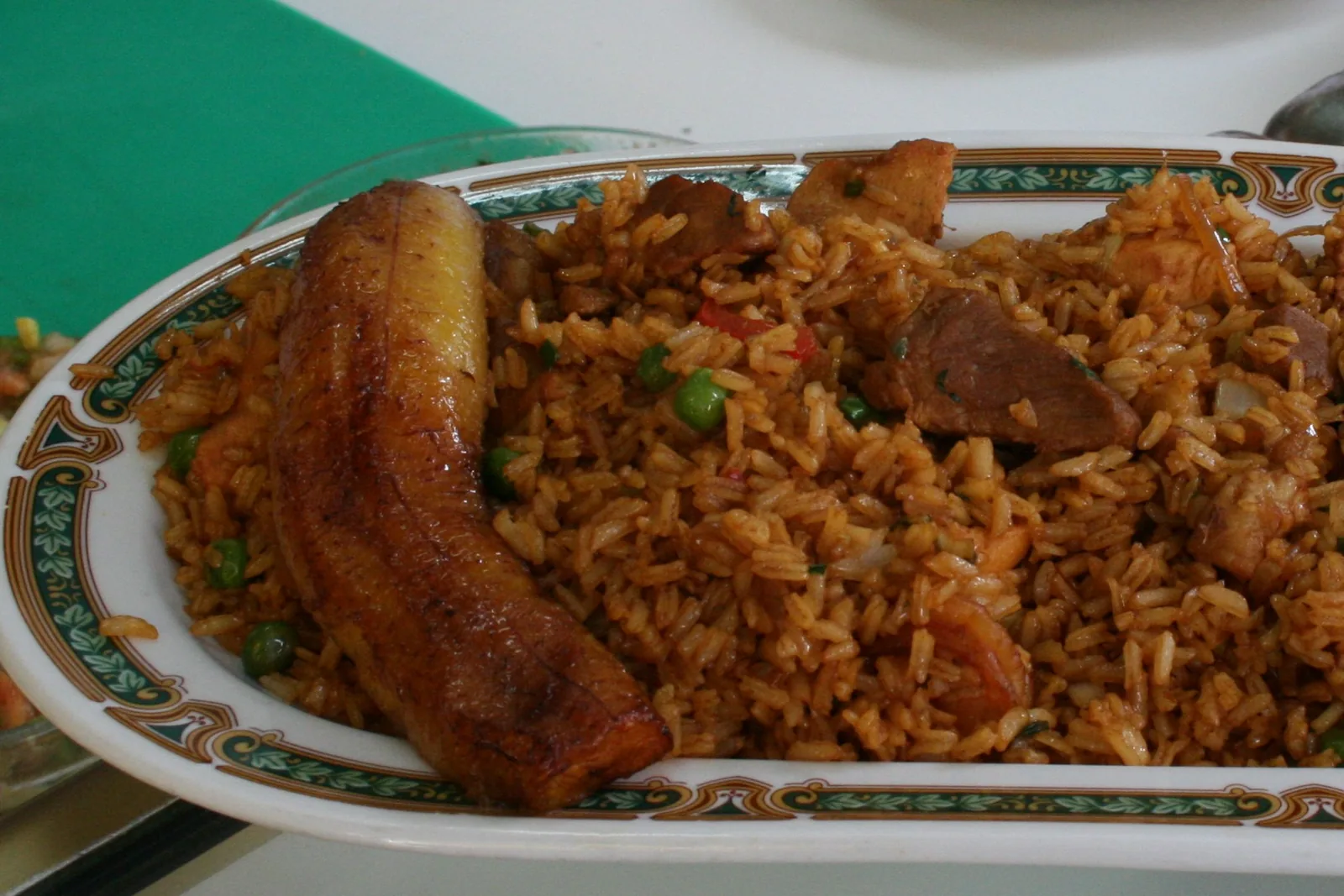
A platter of lechona with golden rice, roast pork pieces, green peas and a fried plantain Colombia flag Colombia 6h
Dinner •Tolima Heritage

Lechona

Lechona is Tolima's great festive roast: a deboned pig — here a pork shoulder with its skin — stuffed with rice and peas, sewn shut and roasted for hours until the meat is spoon-tender and the skin crackles. It is served chopped, a spoon of golden rice with every piece of pork, with arepas and fried plantain on the side. One serving is about 444 g.

Festive & Filling

Pork shoulder stuffed with rice and peas, roasted for hours until the meat is tender and the skin crackles.

Pairs Well With
White arepas, fried plantain and a cold beer
High Protein

The Dinner Gazette

Never wonder what’s for dinner again

One email a week with easy dinner ideas from around the world — ingredients, steps and nutrition, tested in our kitchen first.

Delivered every Thursday morning. Unsubscribe anytime.