
Curated recipes from 193 countries  •  New seasonal Mediterranean issue out now

Overview

Papa a la Huancaína

Papas a la Huancaína, Huancayo-Style Potatoes, Potatoes in Huancaína Sauce

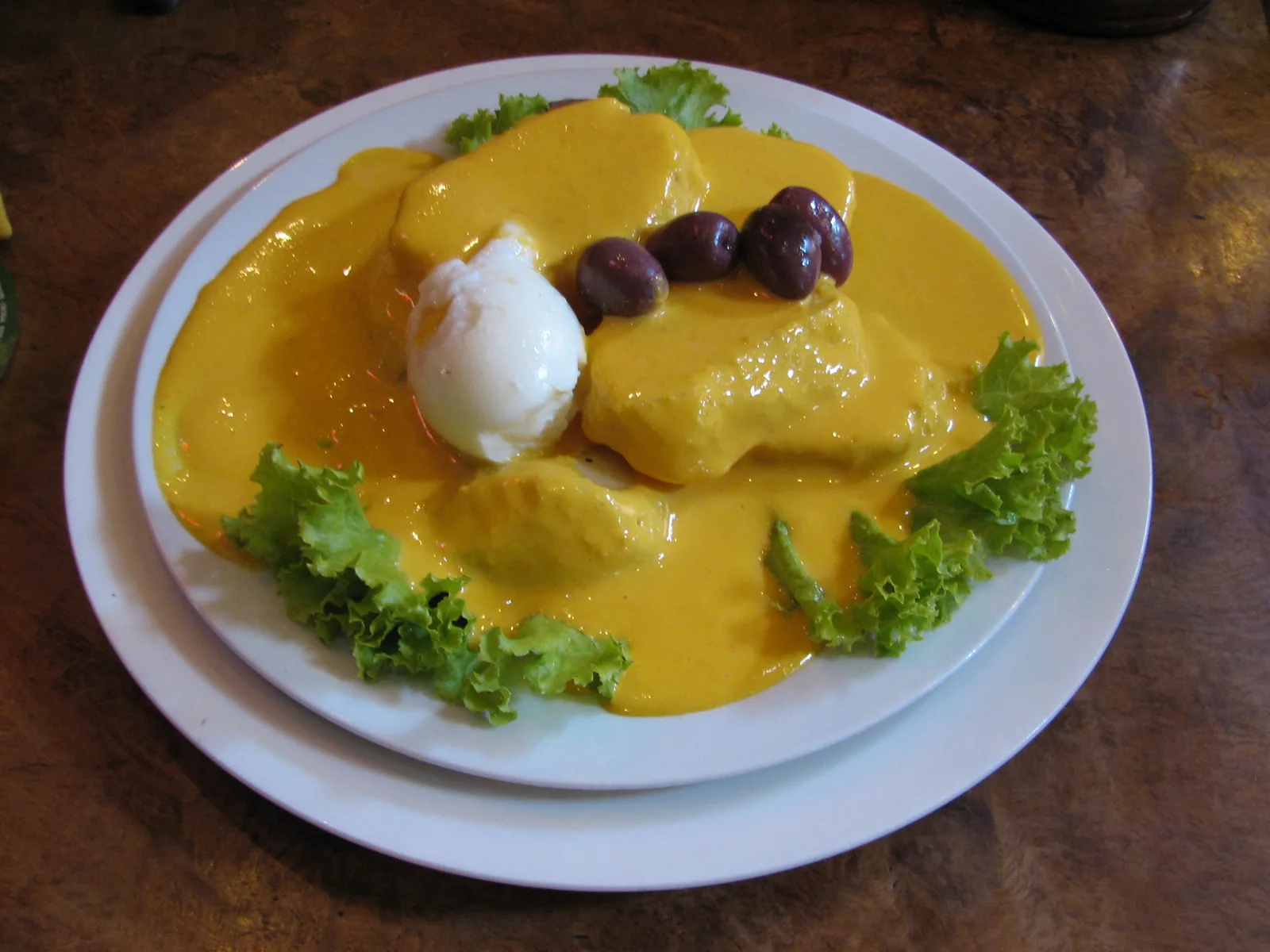
Papa a la huancaína is Peru's classic starter: thick slices of boiled potato laid on lettuce leaves and covered in a silky, golden sauce of ají amarillo, queso fresco, evaporated milk and crackers, finished with a boiled egg and black olives. It is creamy, gently spicy and served cool. One serving is about 382 g.

Papa a la huancaína is named after Huancayo, the city in Peru's central highlands, and the name means simply potatoes in the Huancayo style. The best-known story says it was sold to the workers building the Lima to Huancayo railway in the late 1800s: women from Huancayo served boiled potatoes with a sauce of cheese, peppers and milk, and the dish took the name of the city. The sauce itself is older in spirit, ground on a batán stone from ají amarillo, cheese and milk, and it is now one of the most recognised dishes in Peru.

Pairs well with: Lettuce leaves, boiled egg, black olives, and a cold chicha morada

Provenance

Peru flag Peru

Huancayo Heritage

Latin America & Caribbean

Time Dedication

45m

20m prep • 25m cook

Batch Yield

4 Servings

612 kcal per serving

1 serving ≈ 382 g

Technical Skill

Easy

Easy (Blender Sauce)

Meal Timing & Digestive Fit

Breakfast

Not Advised

Lunch

Prime Metabolic Fit

Dinner

Ideal Hearty Main

Snack & Tea

Inappropriate

Occasions: Family lunches, Sunday starters, festive meals, Peruvian restaurant menus Cost: Low — about $2–3 per serving at home
A plate of papa a la huancaína with potatoes covered in golden yellow sauce, a boiled egg and black olives

Huancayo Heritage

Photo: AgainErick, CC BY-SA 3.0, via Wikimedia Commons

The Heritage Formulary

Measured Ingredients

Estimated cost: Low — about $2–3 per serving at home (USD)

A good papa a la huancaína is silky and golden: the sauce thick enough to coat the potatoes but still flowing, the potatoes firm, the flavour fruity, cheesy and gently hot.

Execution Methodology & Culinary Technique

Step-by-Step Cooking Guide

Active 45m
P

Prep Stage: Boil, Cool & Blend

20 Mins • Boiling & Blending

Put the potatoes on to boil whole in salted water and the eggs on to boil at the same time. While they cook, crumble the queso fresco, break up the crackers and measure out the milk, ají paste, oil and garlic. Wash and dry the lettuce leaves.

Maestro Tip: Boil the potatoes whole in their skins: they stay firm and slice cleanly, while peeled potatoes go watery and fall apart.

  1. 1

    Boil the Potatoes and Eggs

    25 Mins Boiling water, 100°C (212°F)

    Put the potatoes in a pot, cover with cold salted water and boil for 20 to 25 minutes until a knife slides in easily. In a second pot, boil the eggs for 10 minutes. Cool the potatoes until you can handle them, then peel and slice into rounds about 1 cm (1/2 in) thick. Cool the eggs in cold water, peel and quarter them.

    Start testing the potatoes at 20 minutes: overcooked potatoes crumble when you slice them.

    Done when: Potatoes tender but firm, slicing into clean rounds; eggs firm and fully set.

  2. 2

    Blend the Huancaína Sauce

    10 Mins Room temperature; blend at full speed

    Put the queso fresco, evaporated milk, crackers, ají amarillo paste and garlic in a blender and blend until smooth. With the blender running, pour in the oil in a slow, thin stream until the sauce turns thick, glossy and pale gold. Season with salt to taste.

    Pour the oil slowly: a thin stream lets the sauce emulsify instead of splitting into an oily mess.

    Done when: Thick, glossy sauce that coats a spoon and falls in slow ribbons.

  3. 3

    Check the Sauce

    5 Mins Room temperature

    Taste the sauce and adjust it: more ají paste for heat, a splash of milk if it is too thick, a pinch of salt if the cheese was mild. The sauce should be the colour of pale gold and pour slowly off a spoon.

    The sauce thickens as it sits, so leave it a little looser than you think it needs to be.

    Done when: Golden, pourable sauce, balanced between spicy, salty and creamy.

  4. 4

    Plate the Potatoes

    5 Mins Serve cool, below 21°C (70°F)

    Lay the lettuce leaves on a serving plate or on four small plates. Arrange the potato rounds over the lettuce, slightly overlapping, and spoon the sauce generously over the top so every slice is covered.

    Cover every slice: a dry patch of potato with no sauce is the one thing this dish cannot afford.

    Done when: Potato rounds fully coated in golden sauce on a bed of green lettuce.

  5. 5

    Garnish and Serve

    5 Mins Serve cool, below 21°C (70°F)

    Top each serving with egg quarters and olives, and serve cool at once, with a cold drink on the side.

    Serve it cool, not fridge-cold: the sauce tastes best when it has lost the chill of the fridge.

    Done when: Cool plates, golden sauce, bright egg and olives on top.

Finishing Touches & Plating

Serve the papa a la huancaína cool, the sauce generous and glossy, with the egg and olives bright on top and a cold chicha morada beside it.

Nutritional Physiology & Benefits

Nutrition

Energy

612

kcal / serving

Protein

20g

Complete AA

Carbs

59g

Complex

Fats

34g

Healthy

Per serving (4 servings · 1 serving ≈ 382 g)
Energy612 kcal
Protein20 g
Carbohydrates59 g
Fat34 g
Fibre4.8 g
Sugar7.7 g
Sodium1118 mg
Per 100g
Energy160 kcal
Protein5.3 g
Carbohydrates15.3 g
Fat8.9 g
Fibre1.2 g
Sugar2 g
Sodium292 mg

Nutrition values are estimated — calculated from USDA FoodData Central values for the listed ingredients.

Vitamins & minerals: Potatoes and ají amarillo provide vitamin C, vitamin A and potassium; egg and cheese add vitamin B12 and calcium. All nutrition values are estimated.

Potatoes, Cheese and Egg

About 20 g of protein per serving from queso fresco and egg, with potatoes for potassium and vitamin C — a starter that actually fills you up.

Ají Amarillo, the Golden Chilli

The ají amarillo gives the sauce its colour and fruity heat, and adds vitamin A and vitamin C with almost no fat of its own.

No Cooking for the Sauce

The sauce comes together in a blender in ten minutes with no cooking at all, so the whole dish is on the table in 45 minutes.

Food Pairings

What to Eat With

To optimize nutrient absorption and elevate the sensory depth, pair with these authentic accompaniments:

Drinks

Chicha Morada

A cold, lightly sweet purple-corn drink cools the ají heat and keeps the plate refreshing against all that creaminess.

Crisp White Wine or Lager

A cold lager or a crisp white wine lifts the cream and cheese and keeps the starter from feeling heavy.

Vegetables

Green Salad

A simple salad with a sharp lime dressing adds crunch and acidity that cuts through the rich cheese sauce.

Full Menus

Ceviche as a First Course

Serve a small ceviche first, then the papa a la huancaína: cold and sharp first, then creamy and golden.

Full Menu: Huancaína, Then Ají de Gallina

Start with papa a la huancaína, follow with ají de gallina over rice, and finish with mazamorra morada for a classic Peruvian meal.

Complete menu

Papa a la huancaína to start, ají de gallina over white rice as the main, and a cold chicha morada to drink — a classic Peruvian lunch.

Digestive Guardrails

What NOT to Combine

To prevent digestive distress, sluggishness, or palate clash, avoid pairing the dish with these elements:

Pouring the Oil in All at Once

Dumping the oil into the blender in one go splits the sauce into an oily layer and a lumpy one. Pour it in a slow, thin stream with the blender running. This is general food information, not medical advice.

Using Overcooked Potatoes

Potatoes boiled until they fall apart cannot be sliced and turn to mush under the sauce. Test them at 20 minutes and take them out as soon as a knife slides in. This is general food information, not medical advice.

Serving It Piping Hot

This is a cool starter: hot potatoes thin the sauce and make it run off the plate. Let the potatoes cool to room temperature first. This is general food information, not medical advice.

General information only, not medical advice — consult a doctor for personal dietary decisions.

Who Should Eat It

Who Should Eat

  • General adultsA creamy, satisfying starter for most adults; one serving with a light main is a balanced lunch.
  • ChildrenKids usually love the golden sauce and the egg; use only 30 g of ají paste and leave the olives off their plates if they dislike them.
  • ElderlySoft potato and a smooth sauce are easy to eat; the dish is fairly rich and salty, so keep the portion as stated.
  • Pregnant womenThe potatoes and eggs are cooked through and the sauce is made from pasteurised milk and cheese; serve it freshly made and cool. Ask your clinician if unsure.
  • Breastfeeding womenA filling, energy-rich lunch for nursing mothers; keep the chilli as stated or use less if your baby seems sensitive to spicy food.
  • AthletesAbout 59 g of carbohydrate with 20 g of protein makes it a good pre-training lunch; add a chicken main for a full recovery meal.
  • Weight gainAn energy-rich plate at 612 calories; a second helping of sauce raises it further.
  • Weight lossA rich starter, so keep the portion as stated, go easy on the sauce, and pair it with a light salad main.

Health Conditions — Adjust or Avoid

Conditions

  • DiabetesAbout 59 g of carbohydrate per serving, mostly from potato and crackers; keep the potato portion as stated. Ask your clinician about portions.
  • High blood pressureSodium is about 1118 mg per serving, mostly from the cheese, crackers and olives; use fewer olives and low-salt crackers if you need to. Ask your clinician about portions.
  • Kidney diseaseQueso fresco, milk and potato are all high in potassium and phosphorus; keep the portion small and infrequent. Ask your clinician.
  • GoutCheese and egg are moderate in purines; a smaller portion now and then is usually better than a full plate. Ask your clinician.
  • Stomach issuesThe ají chilli and rich cheese sauce can irritate a sensitive stomach; use less ají paste and eat a small portion. Ask your clinician if unsure.
  • Cardiovascular diseaseThe sauce is rich in saturated fat from cheese and oil, so this is a sometimes dish rather than an everyday one. Ask your clinician about portions.
  • Fatty liverA rich, creamy plate; using low-fat milk and less cheese lightens it. Ask your clinician about portions.
  • Food allergiesContains milk, egg and gluten (crackers). Do not serve it to anyone with a milk allergy — the cheese and evaporated milk are the heart of the sauce.
  • Special therapeutic dietsVegetarian as written, but not gluten-free, dairy-free or egg-free. Gluten-free crackers work for the sauce, but the milk and cheese cannot be left out without changing the dish; ask your clinician.

If you have a medical condition, consult your doctor before changing your diet.

Storage & Use

Storage & Use

How to store
Store the sauce, potatoes, egg and olives in separate sealed containers in the fridge.
In the fridge
Up to 2 days at 4°C (40°F) or below; keep the sauce separate so the potatoes do not go soggy.
In the freezer
Do not freeze: the sauce splits and the potatoes turn grainy when thawed.
How to reheat
Do not reheat — this dish is served cool. If the sauce has thickened in the fridge, stir in a splash of milk.
Freezing recommended
No — freezing ruins the sauce and the potatoes.
Signs it has spoiled
Sour or off smell, slimy potatoes, or any mould — throw it away.

More recipes to explore

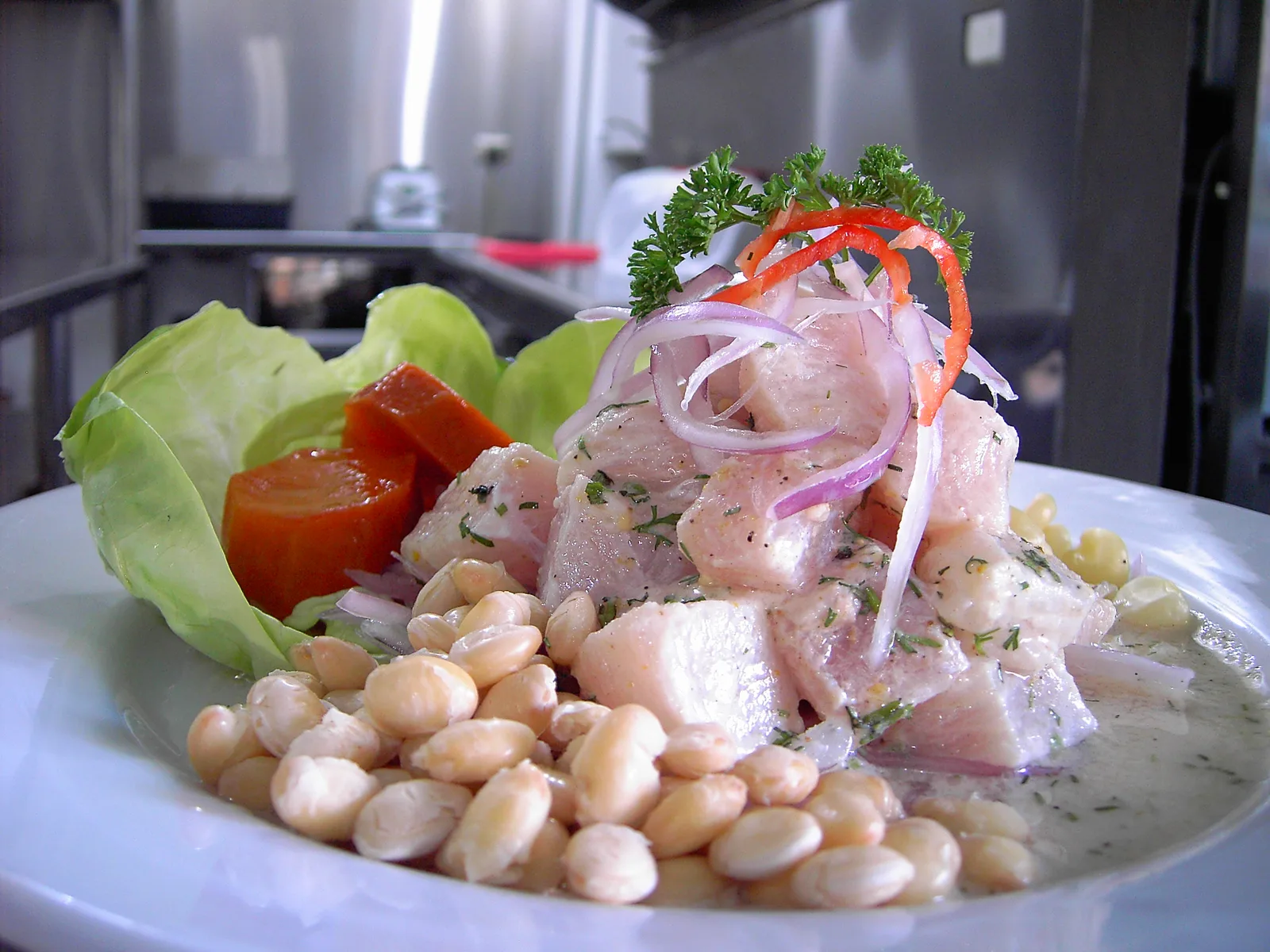
A plate of cebiche de corvina with lime-cured white fish cubes, red onion, ají strips, lettuce, sweet potato and choclo corn Peru flag Peru 35m
Lunch •Coastal Peru

Peruvian Ceviche

Peruvian ceviche is the national dish of Peru: cubes of very fresh sea bass cured in lime juice with red onion, ají limo and cilantro, with the milky, spicy marinade it leaves behind — leche de tigre — spooned over the top. It arrives with boiled sweet potato and big-kernel choclo corn, the sweet and starchy balance to all that citrus and heat. One serving is about 371 g.

Light & Fresh

Fresh sea bass cured in lime juice with red onion, ají limo and leche de tigre, served with sweet potato and choclo.

Pairs Well With
Boiled sweet potato, choclo corn and cancha
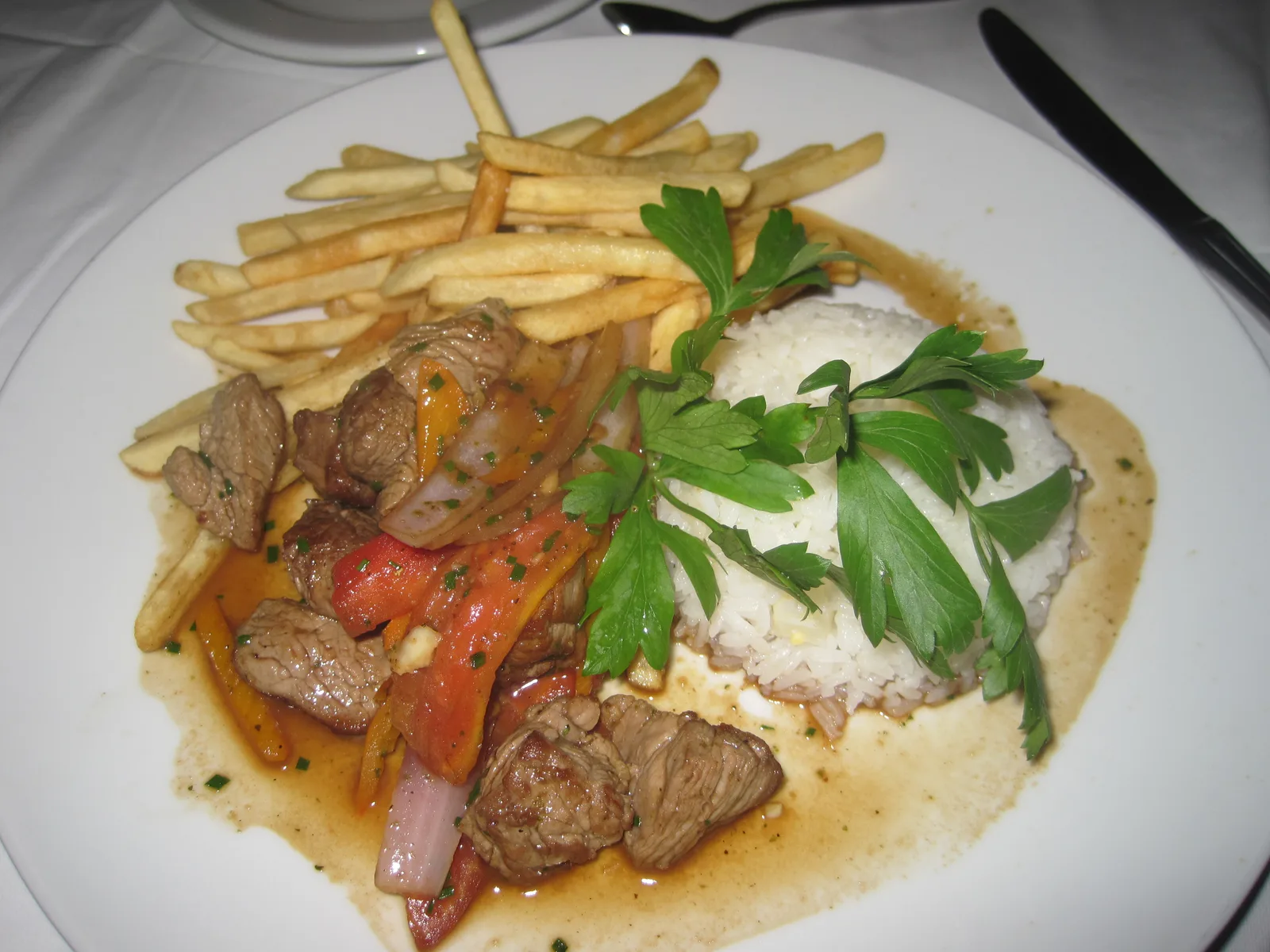
A plate of lomo saltado with seared beef strips, tomato and onion, French fries and a mound of white rice Peru flag Peru 40m
Dinner •Lima Heritage

Lomo Saltado

Lomo saltado is Peru's beloved Chifa stir-fry: strips of sirloin seared at screaming heat in a wok, tossed with red onion, tomato, soy sauce and red wine vinegar, then folded with crisp French fries and served beside white rice. It is the meeting of Cantonese wok cooking and Peruvian ingredients on one plate — smoky, salty, tangy and completely moreish. One serving is about 579 g.

Comfort & Energy

Sirloin seared at high heat with onion, tomato, soy and vinegar, tossed with fries and served with rice.

Pairs Well With
French fries, white rice and salsa criolla
Quick Prep (<30m)
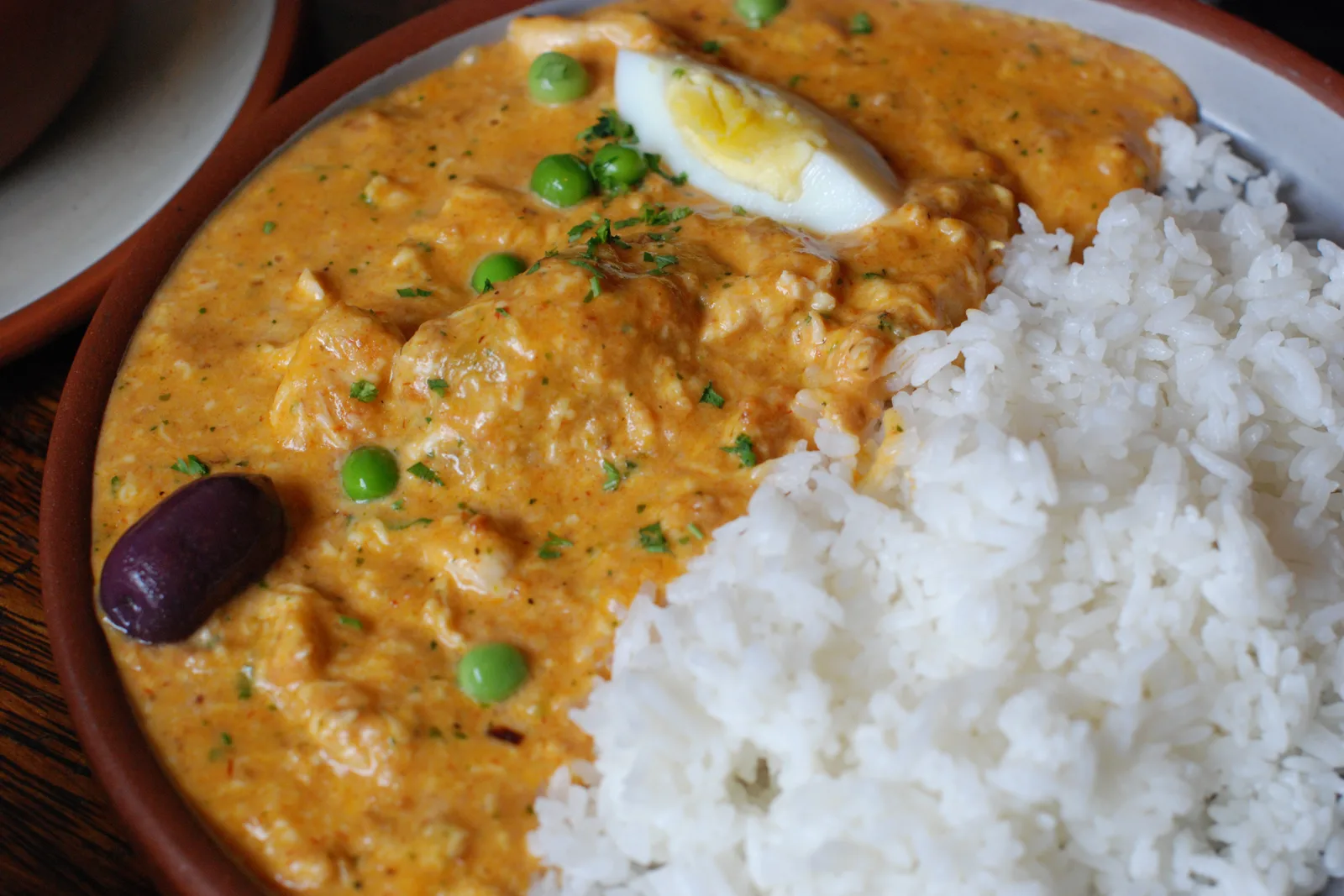
A bowl of ají de gallina with creamy golden chicken sauce, white rice, a boiled egg, peas and a black olive Peru flag Peru 1h
Dinner •Lima Heritage

Ají de Gallina

Ají de gallina is Lima's great comfort stew: poached chicken shredded into a velvety golden sauce of ají amarillo, bread soaked in evaporated milk, ground walnuts and Parmesan, served over white rice with a boiled egg, black olives and boiled potato. It is creamy, nutty, gently spicy and deeply filling — the dish Peruvians ask for when they come home. One serving is about 574 g.

Comfort & Warmth

Poached chicken in a creamy ají amarillo sauce thickened with bread, evaporated milk, walnuts and Parmesan.

Pairs Well With
White rice, boiled potato, boiled egg and black olives
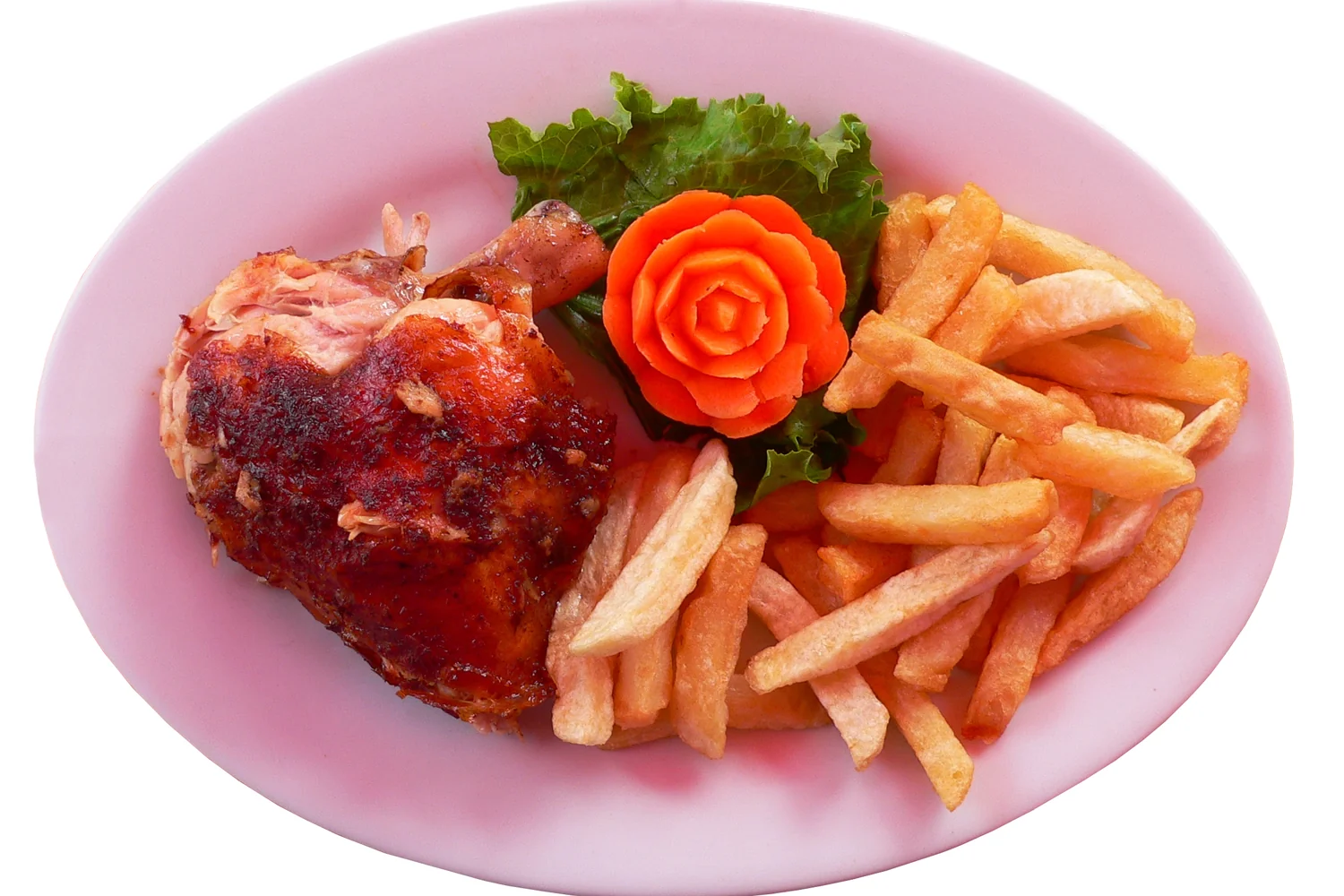
A glossy roasted chicken leg quarter with golden fries, lettuce and a carved carrot rose on a pink plate Peru flag Peru 1h 40m
Dinner •Lima Polleria Heritage

Pollo a la Brasa

This pollo a la brasa recipe marinates a whole chicken overnight in soy sauce, beer, lime, garlic, cumin and paprika, then roasts it slowly until the skin turns dark and crisp and the meat stays juicy. It is served the way every polleria in Lima serves it: a quarter chicken with thick-cut fries, a fresh salad and the two essential sauces, green aji verde and yellow aji amarillo. One serving is about 514 g.

High-Protein & Satisfying

Charcoal-roasted chicken with dark, crisp skin and juicy meat, served the polleria way with thick fries, salad and two aji sauces.

Pairs Well With
Aji verde, fries & salad
High Protein

The Dinner Gazette

Never wonder what’s for dinner again

One email a week with easy dinner ideas from around the world — ingredients, steps and nutrition, tested in our kitchen first.

Delivered every Thursday morning. Unsubscribe anytime.