Curated recipes from 193 countries  •  New seasonal Mediterranean issue out now

Overview

Papa Rellena

Papas Rellenas, Peruvian Stuffed Potatoes, Relleno de Papa

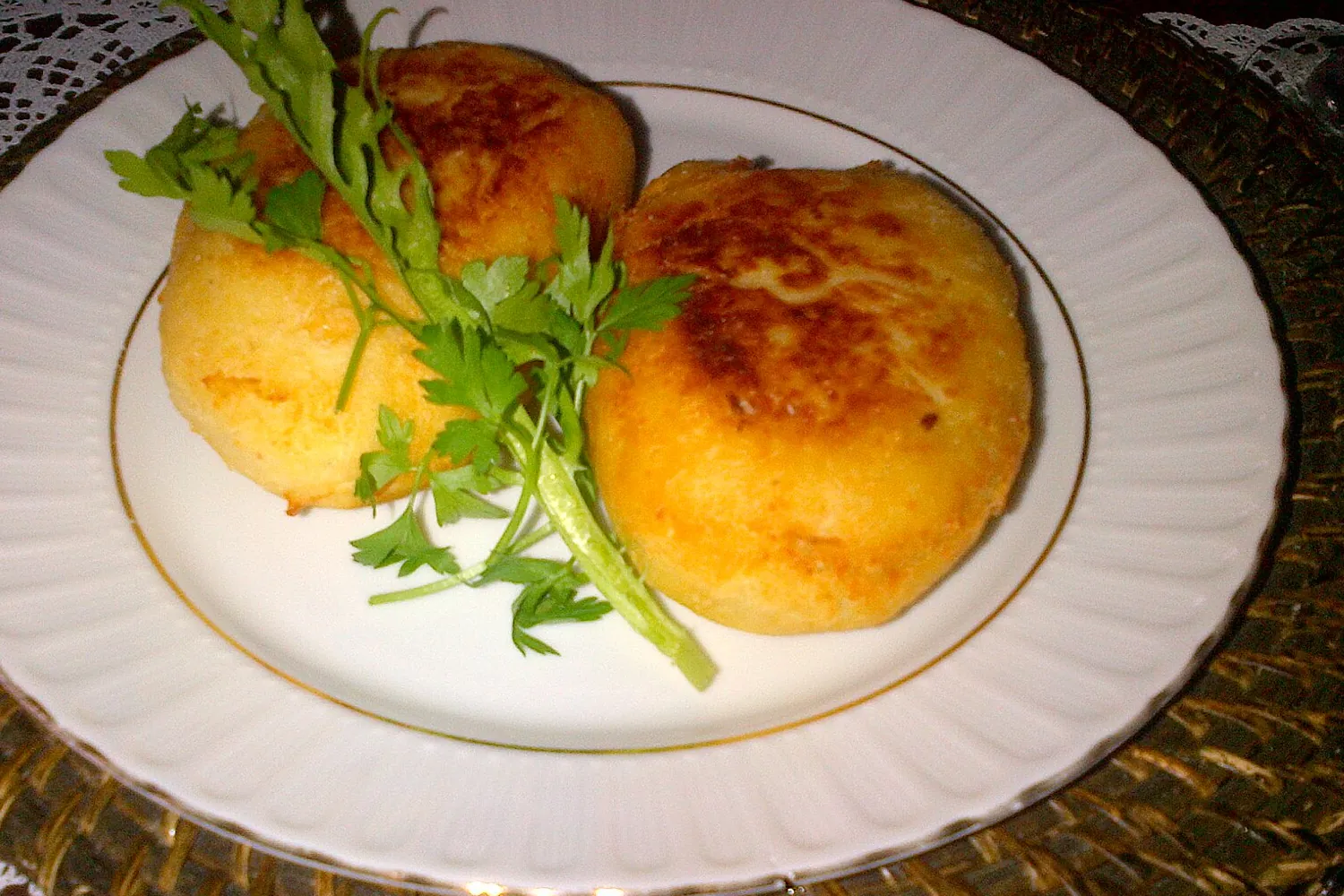
Papa rellena is Lima's great street-food croquette: a soft dough of mashed potato, bound with egg and a little potato starch, wrapped around a savoury filling of ground beef cooked with onion, ají panca, raisins, black olives and hard-boiled egg, then dusted in flour and fried until the outside turns crisp and golden. Break one open and the steam, the sweet raisins and the salty olives all arrive at once. One serving is about 337 g.

Papa rellena, literally stuffed potato, grew out of two Peruvian traditions: the potato, first domesticated in the Andes thousands of years ago, and the Spanish habit of stuffing dough and vegetables with seasoned minced meat. A popular story says Peruvian soldiers carried them on long marches during the War of the Pacific (1879–1884), wrapping seasoned meat in boiled potato so it would keep — a good tale, but with no solid record behind it. What is certain is that it became a fixture of Lima's comida criolla, sold at markets and family tables across Peru and the wider Latin world. Unlike tacu tacu, its Peruvian cousin, papa rellena is not a crisped cake of rice and beans: it is a soft mashed-potato dough wrapped around a beef filling and deep-fried.

Pairs well with: Salsa criolla (pickled red onion), ají sauce and white rice

Provenance

Peru flag Peru

Lima Heritage

Latin America & Caribbean

Time Dedication

1h 15m

35m prep • 40m cook

Batch Yield

6 Servings

416 kcal per serving

1 serving ≈ 337 g

Technical Skill

Advanced

Advanced (Stuffed & Fried)

Meal Timing & Digestive Fit

Breakfast

Not Advised

Lunch

Prime Metabolic Fit

Dinner

Ideal Hearty Main

Snack & Tea

Inappropriate

Occasions: Family lunches, street-food nights, party snacks, game-day food Cost: Low — about $2–3 per serving at home
Two golden fried papa rellena croquettes on a white plate, garnished with a sprig of fresh parsley

Lima Heritage

Photo: E4024, CC BY-SA 4.0, via Wikimedia Commons

The Heritage Formulary

Measured Ingredients

Estimated cost: Low — about $2–3 per serving at home (USD)

A good papa rellena is crisp and golden outside, soft and steamy inside, and holds together when you cut it — the filling stays inside, not in the oil.

Execution Methodology & Culinary Technique

Step-by-Step Cooking Guide

Active 1h 15m
P

Prep Stage: Boil, Mash & Cool

35 Mins • Boiling & Mashing

Boil the potatoes in salted water until tender, drain them very well and mash while hot, then spread the mash on a tray to cool and steam off. While it cools, boil the eggs, dice the onion and tomato, halve the olives and measure the spices.

Maestro Tip: Wet mash is the enemy: drain the potatoes well and let the steam escape, or the dough will be too soft to shape.

  1. 1

    Cook the beef filling

    12 Mins Medium-high heat, about 190°C (375°F); beef to 71°C (160°F)

    Heat a little of the frying oil in a pan over medium-high heat. Cook the onion and garlic for 3 minutes until soft, then add the beef and cook for 6 minutes, breaking it into small crumbs, until browned and the centre reads 71°C (160°F). Stir in the ají panca paste, tomato, cumin and oregano and cook 2 more minutes, then take off the heat and fold in the raisins and olives. Season and leave to cool.

    Let the filling cool completely: warm filling melts the potato dough and the croquettes burst open.

    Done when: Beef browned and crumbly, filling deep red and fragrant, cooled.

  2. 2

    Make the potato dough

    10 Mins Room temperature, about 20°C (68°F)

    Put the cooled mash in a bowl and knead in the beaten egg, the potato starch and half the salt until you have a soft, smooth dough that holds its shape. If it sticks to your hands, knead in a little more starch, a teaspoon at a time.

    Knead just until it comes together: overworking makes the dough gluey and heavy.

    Done when: Dough soft and smooth, holding a ball shape without sticking to your hands.

  3. 3

    Stuff and shape the croquettes

    15 Mins Room temperature, about 20°C (68°F)

    With floured hands, take a sixth of the dough, flatten it into a thick disc in your palm, and spoon a sixth of the filling into the centre with one wedge of hard-boiled egg. Fold the potato up and around the filling, pinch the seam shut, and roll it into a smooth oval the size of a small potato. Repeat for all six, then roll each one lightly in the dusting flour.

    Flour your hands, not the dough: too much flour on the outside makes a thick, pasty crust.

    Done when: Six smooth ovals, seams sealed, no filling showing through.

  4. 4

    Fry until golden

    8 Mins Oil at 180°C (350°F); filling reheated to 74°C (165°F)

    Heat the oil in a deep, heavy pot to 180°C (350°F). Lower in two or three croquettes at a time and fry for 3–4 minutes, turning once, until deep golden and crisp all over and the filling is steaming hot at 74°C (165°F). Lift out with a slotted spoon and drain on a rack, not on paper, so the crust stays crisp.

    Do not crowd the pot: too many croquettes at once drops the oil temperature and they soak up grease instead of crisping.

    Done when: Croquettes deep golden and crisp, draining cleanly on the rack.

  5. 5

    Rest and serve with salsa criolla

    5 Mins Room temperature, about 20°C (68°F)

    Rest the croquettes for 5 minutes so the filling sets and the crust stays crisp. Serve hot with salsa criolla and ají sauce on the side, with white rice if you want a full lunch.

    Cut one open before serving the rest: it should be steaming, with the egg wedge visible in the centre.

    Done when: Croquettes hot and crisp outside, steaming and savoury inside.

Finishing Touches & Plating

Serve the papa rellena hot, one or two per person, with a spoonful of salsa criolla on top — the sharp, pickled onion is what cuts through the rich fried potato.

Nutritional Physiology & Benefits

Nutrition

Energy

416

kcal / serving

Protein

26g

Complete AA

Carbs

47g

Complex

Fats

16g

Healthy

Per serving (6 servings · 1 serving ≈ 337 g)
Energy416 kcal
Protein26 g
Carbohydrates47 g
Fat16 g
Fibre5.3 g
Sugar6.3 g
Sodium502 mg
Per 100g
Energy123 kcal
Protein7.6 g
Carbohydrates14 g
Fat4.6 g
Fibre1.6 g
Sugar1.9 g
Sodium149 mg

Nutrition values are estimated — calculated from USDA FoodData Central values for the listed ingredients.

Vitamins & minerals: Potatoes provide vitamin C, potassium and vitamin B6; beef and egg add vitamin B12, iron and zinc. All nutrition values are estimated.

Good Protein, Real Potatoes

About 25 g of protein per serving from beef and egg, wrapped in real potato — a plate that keeps you full for hours.

Raisins, Olives and Egg Inside

The filling hides sweet raisins, salty olives and egg in every bite — the classic Lima combination of sweet, salty and savoury.

Freezer-Friendly Street Food

Shape a double batch, freeze the uncooked croquettes, and fry them straight from frozen whenever you want a quick lunch.

Food Pairings

What to Eat With

To optimize nutrient absorption and elevate the sensory depth, pair with these authentic accompaniments:

Sides

Salsa Criolla

Pickled red onion with lime and chilli is the essential partner: its sharp acidity cuts the fried richness and wakes up the beef.

White Rice

A scoop of plain white rice turns a snack into a full Lima lunch and soaks up any juices from the filling.

Drinks

Chicha Morada

The cold, sweet purple-corn drink cools the ají heat and is the classic drink with fried Lima food.

Full Menus

Full Menu: Ceviche, Then Papa Rellena

Start cold and sharp with ceviche, then bring out the hot, crisp papa rellena — the contrast is what makes a Lima lunch feel complete.

Complete menu

Papa rellena with salsa criolla and white rice, a small green salad on the side, and a cold glass of chicha morada — a classic Lima lunch.

Digestive Guardrails

What NOT to Combine

To prevent digestive distress, sluggishness, or palate clash, avoid pairing the dish with these elements:

Frying with a Warm Filling

If the beef filling is still warm when you shape the croquettes, it softens the potato dough and the croquettes burst open in the oil. Cool the filling completely first. This is general food information, not medical advice.

Crowding the Frying Pot

Too many croquettes at once drops the oil below 180°C (350°F) and they come out greasy and pale instead of crisp. Fry two or three at a time. This is general food information, not medical advice.

Using Waxy Potatoes

Waxy potatoes mash gluey and the dough will not hold its shape. Use floury russets or Yukon Gold and drain them very well. This is general food information, not medical advice.

General information only, not medical advice — consult a doctor for personal dietary decisions.

Who Should Eat It

Who Should Eat

  • General adultsA hearty, satisfying lunch for most adults; one croquette with salad is a full meal, two is a feast.
  • ChildrenKids love the crisp outside and the surprise filling; leave the olives out of theirs if they dislike them, and cut the croquette open to cool it first.
  • ElderlySoft inside and easy to eat once cut open; the crust is crisp but thin, and the portion is rich, so one is usually enough.
  • Pregnant womenThe beef is cooked through to 71°C (160°F), the egg is boiled hard, and the croquette is fried hot, which is the safe way to eat it in pregnancy; serve it freshly made and hot. Ask your clinician if unsure.
  • Breastfeeding womenA filling, energy-rich lunch for nursing mothers; the spices are mild and the protein helps recovery.
  • AthletesAbout 25 g of protein with potato for carbohydrate makes it a strong post-training lunch; add salad for balance.
  • Weight gainAn energy-rich plate at 416 calories each; two croquettes with rice is a big meal.
  • Weight lossA rich fried lunch, so keep it to one croquette with salad and save the second for another day.

Health Conditions — Adjust or Avoid

Conditions

  • DiabetesOne croquette carries about 47 g of carbohydrate, mostly from the potato; keep it to one and skip the extra rice. Ask your clinician about portions.
  • High blood pressureSodium is about 502 mg per serving, mostly from the olives and salt; use fewer olives and less added salt if you need to. Ask your clinician about portions.
  • Kidney diseaseBeef and egg are high in protein and phosphorus; keep the portion to one croquette and eat it infrequently if you are on a restricted diet. Ask your clinician.
  • GoutBeef and egg can be high in purines; a single small croquette now and then is usually better than a large portion. Ask your clinician.
  • Stomach issuesThe fried crust and ají panca can irritate a sensitive stomach; use less ají paste and eat a small portion. Ask your clinician if unsure.
  • Cardiovascular diseaseThe croquette is fried and the filling is rich, so this is a sometimes lunch rather than an everyday one. Ask your clinician about portions.
  • Fatty liverA fried, energy-dense plate; baking the croquettes instead of frying lightens it considerably. Ask your clinician about portions.
  • Food allergiesContains egg, gluten (flour) and beef. Do not serve it to anyone with an egg or gluten allergy.
  • Special therapeutic dietsNot gluten-free, dairy-free or low-fat as written. Rice flour works for dusting, but the egg and beef cannot be left out. Ask your clinician about any therapeutic diet.

If you have a medical condition, consult your doctor before changing your diet.

Storage & Use

Storage & Use

How to store
Store cooked croquettes in a sealed container in the fridge; store uncooked shaped croquettes on a tray, covered.
In the fridge
Up to 2 days at 4°C (40°F) or below.
In the freezer
Freeze uncooked shaped croquettes for up to 2 months at -18°C (0°F); fry straight from frozen, adding 2 minutes.
How to reheat
Reheat in a hot oven at 200°C (400°F) for 10 minutes until crisp and 74°C (165°F) throughout; do not microwave, or the crust goes soft.
Freezing recommended
Yes — freeze them uncooked, before frying, for the best texture.
Signs it has spoiled
Sour smell, slimy filling, or any mould — throw it away.

More recipes to explore

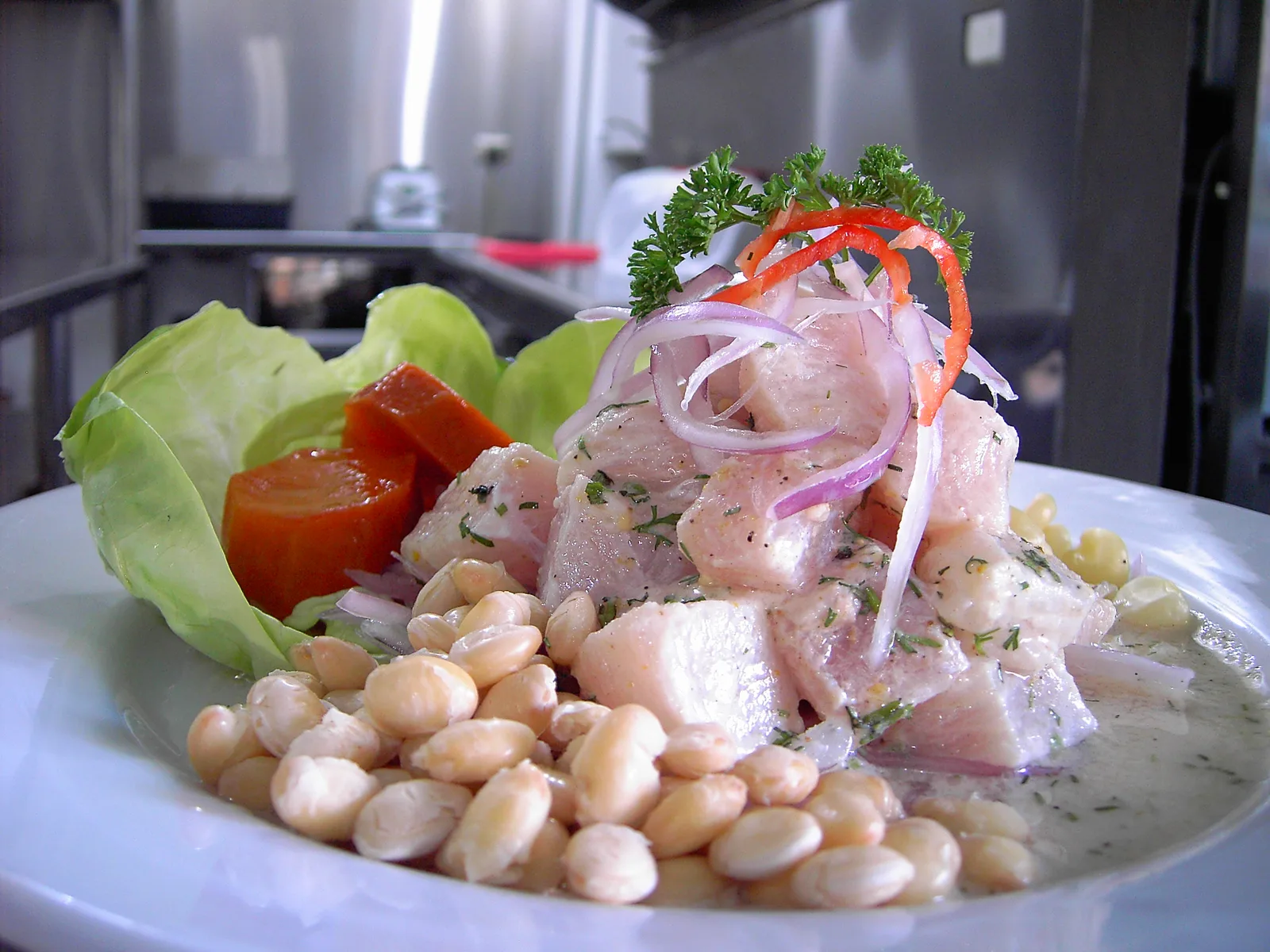
A plate of cebiche de corvina with lime-cured white fish cubes, red onion, ají strips, lettuce, sweet potato and choclo corn Peru flag Peru 35m
Lunch •Coastal Peru

Peruvian Ceviche

Peruvian ceviche is the national dish of Peru: cubes of very fresh sea bass cured in lime juice with red onion, ají limo and cilantro, with the milky, spicy marinade it leaves behind — leche de tigre — spooned over the top. It arrives with boiled sweet potato and big-kernel choclo corn, the sweet and starchy balance to all that citrus and heat. One serving is about 371 g.

Light & Fresh

Fresh sea bass cured in lime juice with red onion, ají limo and leche de tigre, served with sweet potato and choclo.

Pairs Well With
Boiled sweet potato, choclo corn and cancha
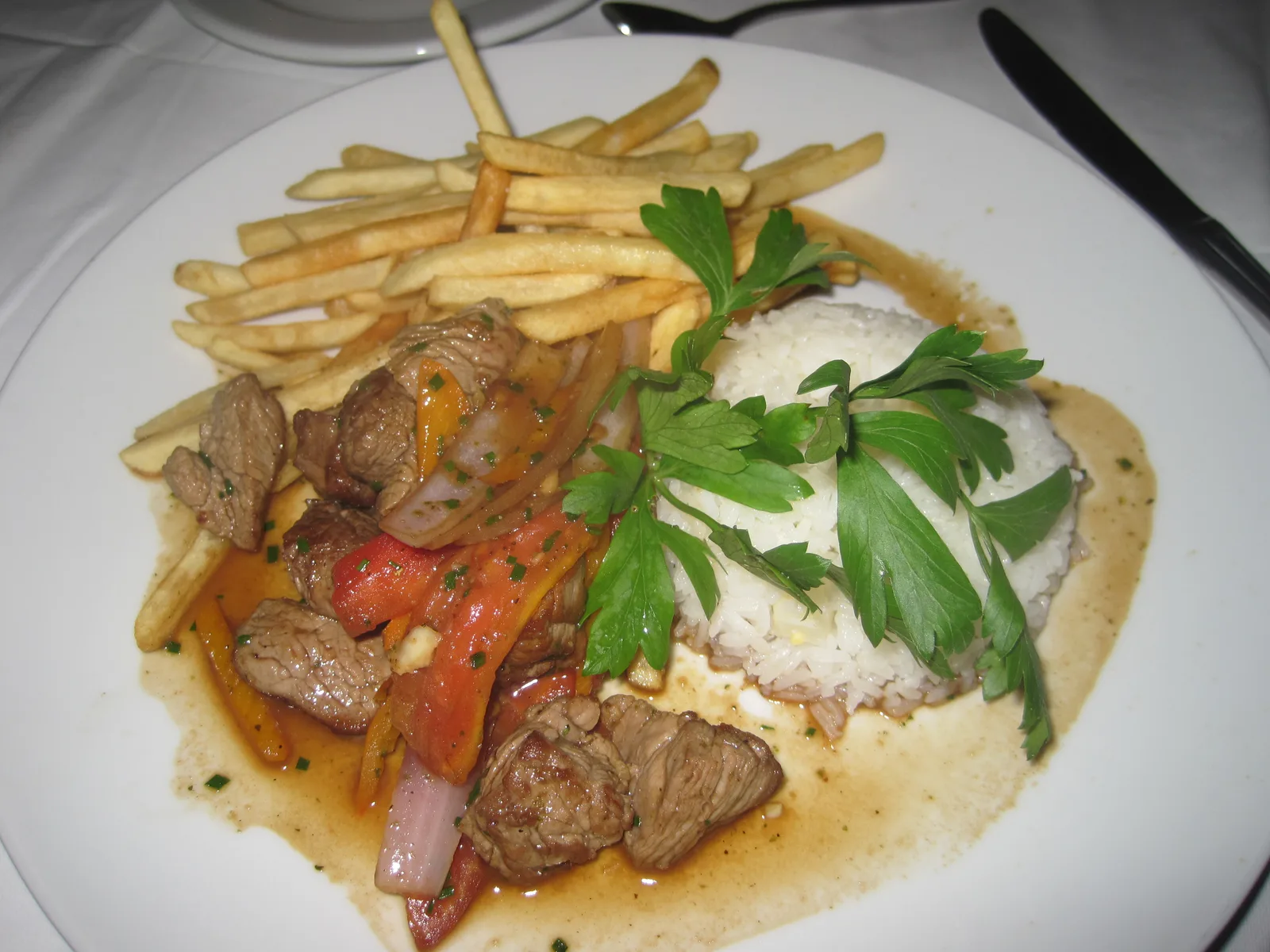
A plate of lomo saltado with seared beef strips, tomato and onion, French fries and a mound of white rice Peru flag Peru 40m
Dinner •Lima Heritage

Lomo Saltado

Lomo saltado is Peru's beloved Chifa stir-fry: strips of sirloin seared at screaming heat in a wok, tossed with red onion, tomato, soy sauce and red wine vinegar, then folded with crisp French fries and served beside white rice. It is the meeting of Cantonese wok cooking and Peruvian ingredients on one plate — smoky, salty, tangy and completely moreish. One serving is about 579 g.

Comfort & Energy

Sirloin seared at high heat with onion, tomato, soy and vinegar, tossed with fries and served with rice.

Pairs Well With
French fries, white rice and salsa criolla
Quick Prep (<30m)
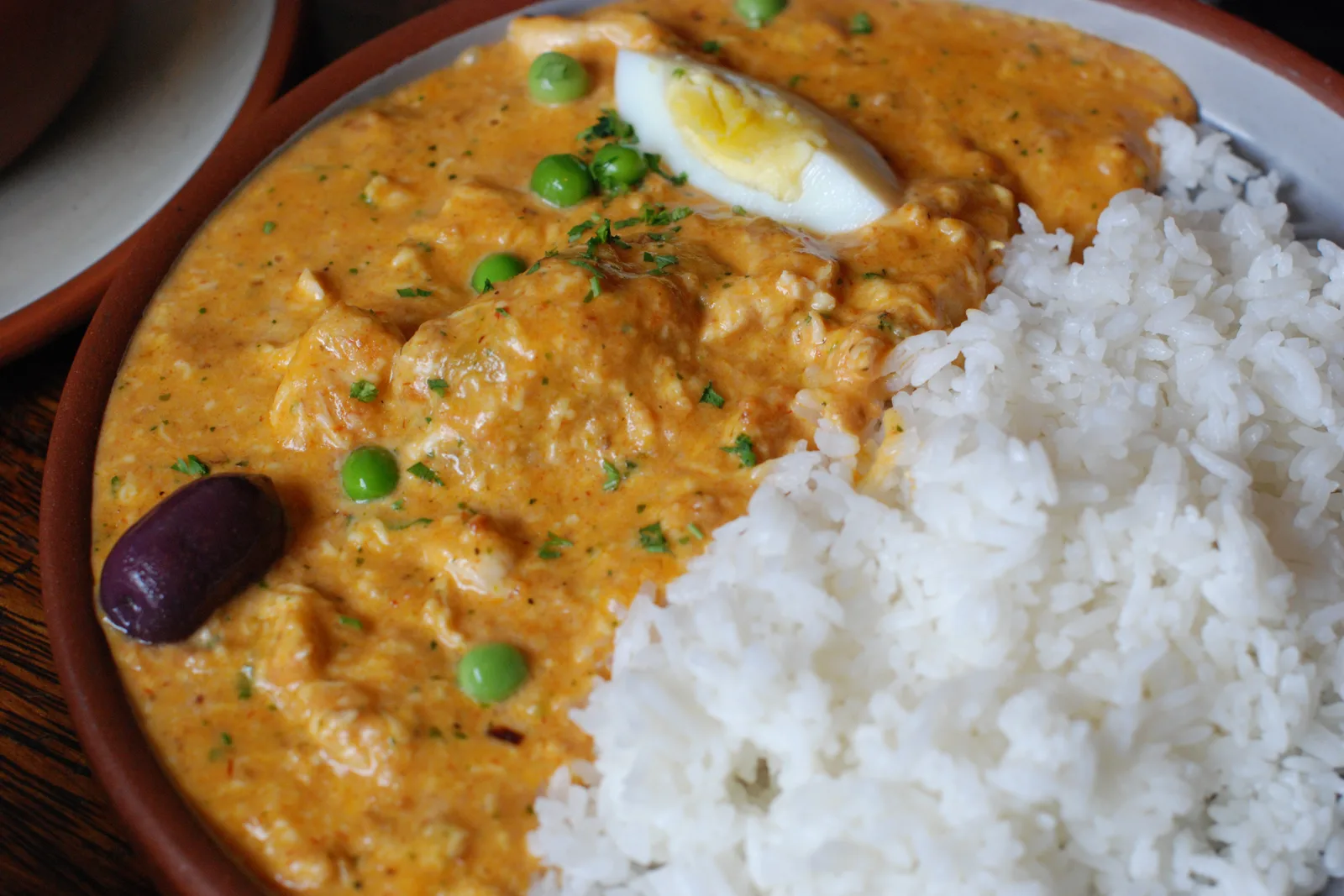
A bowl of ají de gallina with creamy golden chicken sauce, white rice, a boiled egg, peas and a black olive Peru flag Peru 1h
Dinner •Lima Heritage

Ají de Gallina

Ají de gallina is Lima's great comfort stew: poached chicken shredded into a velvety golden sauce of ají amarillo, bread soaked in evaporated milk, ground walnuts and Parmesan, served over white rice with a boiled egg, black olives and boiled potato. It is creamy, nutty, gently spicy and deeply filling — the dish Peruvians ask for when they come home. One serving is about 574 g.

Comfort & Warmth

Poached chicken in a creamy ají amarillo sauce thickened with bread, evaporated milk, walnuts and Parmesan.

Pairs Well With
White rice, boiled potato, boiled egg and black olives
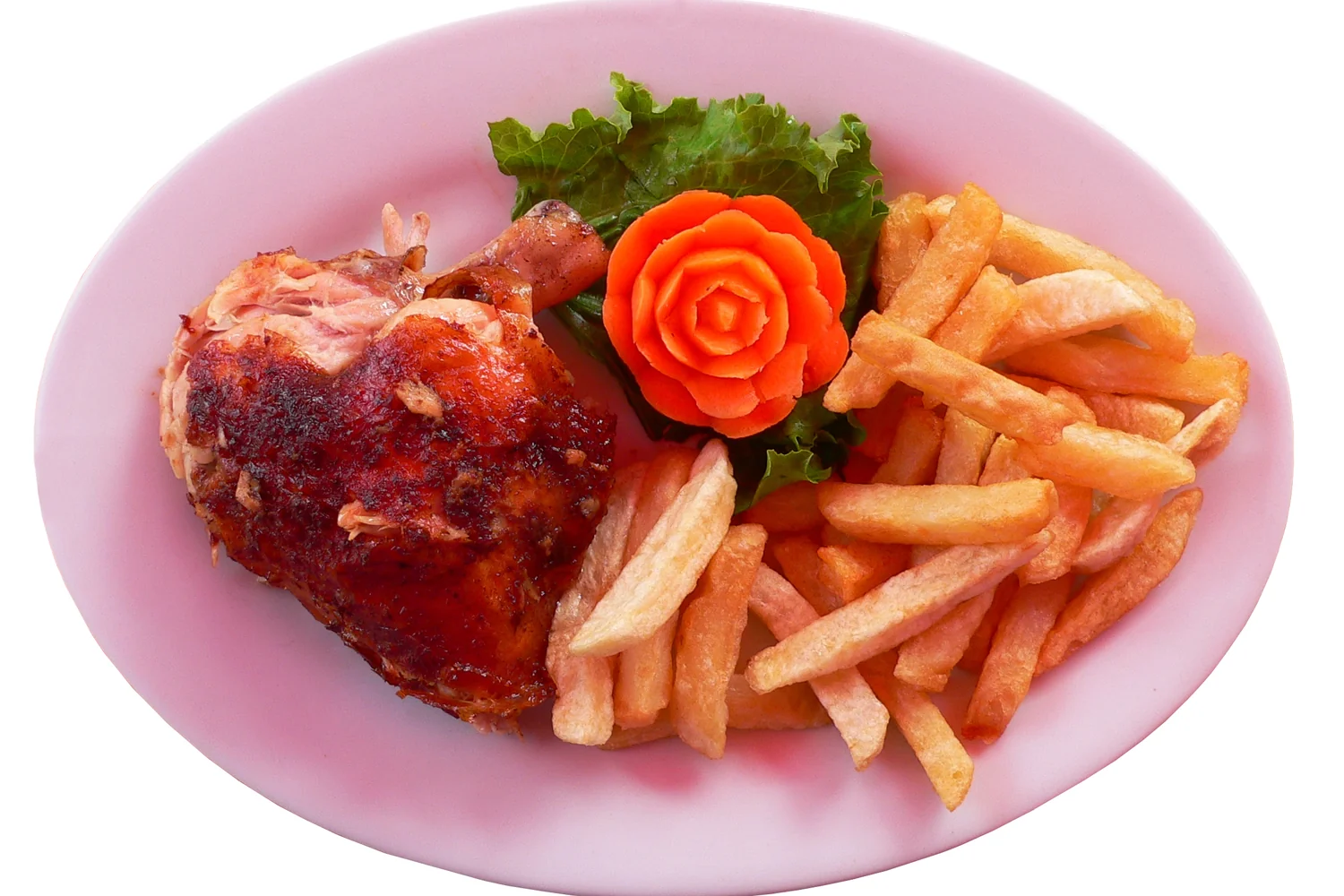
A glossy roasted chicken leg quarter with golden fries, lettuce and a carved carrot rose on a pink plate Peru flag Peru 1h 40m
Dinner •Lima Polleria Heritage

Pollo a la Brasa

This pollo a la brasa recipe marinates a whole chicken overnight in soy sauce, beer, lime, garlic, cumin and paprika, then roasts it slowly until the skin turns dark and crisp and the meat stays juicy. It is served the way every polleria in Lima serves it: a quarter chicken with thick-cut fries, a fresh salad and the two essential sauces, green aji verde and yellow aji amarillo. One serving is about 514 g.

High-Protein & Satisfying

Charcoal-roasted chicken with dark, crisp skin and juicy meat, served the polleria way with thick fries, salad and two aji sauces.

Pairs Well With
Aji verde, fries & salad
High Protein

The Dinner Gazette

Never wonder what’s for dinner again

One email a week with easy dinner ideas from around the world — ingredients, steps and nutrition, tested in our kitchen first.

Delivered every Thursday morning. Unsubscribe anytime.