
Curated recipes from 193 countries  •  New seasonal Mediterranean issue out now

Overview

Pecel Lele

Pecak Lele, Pecel Lele Lamongan, Indonesian Fried Catfish with Sambal

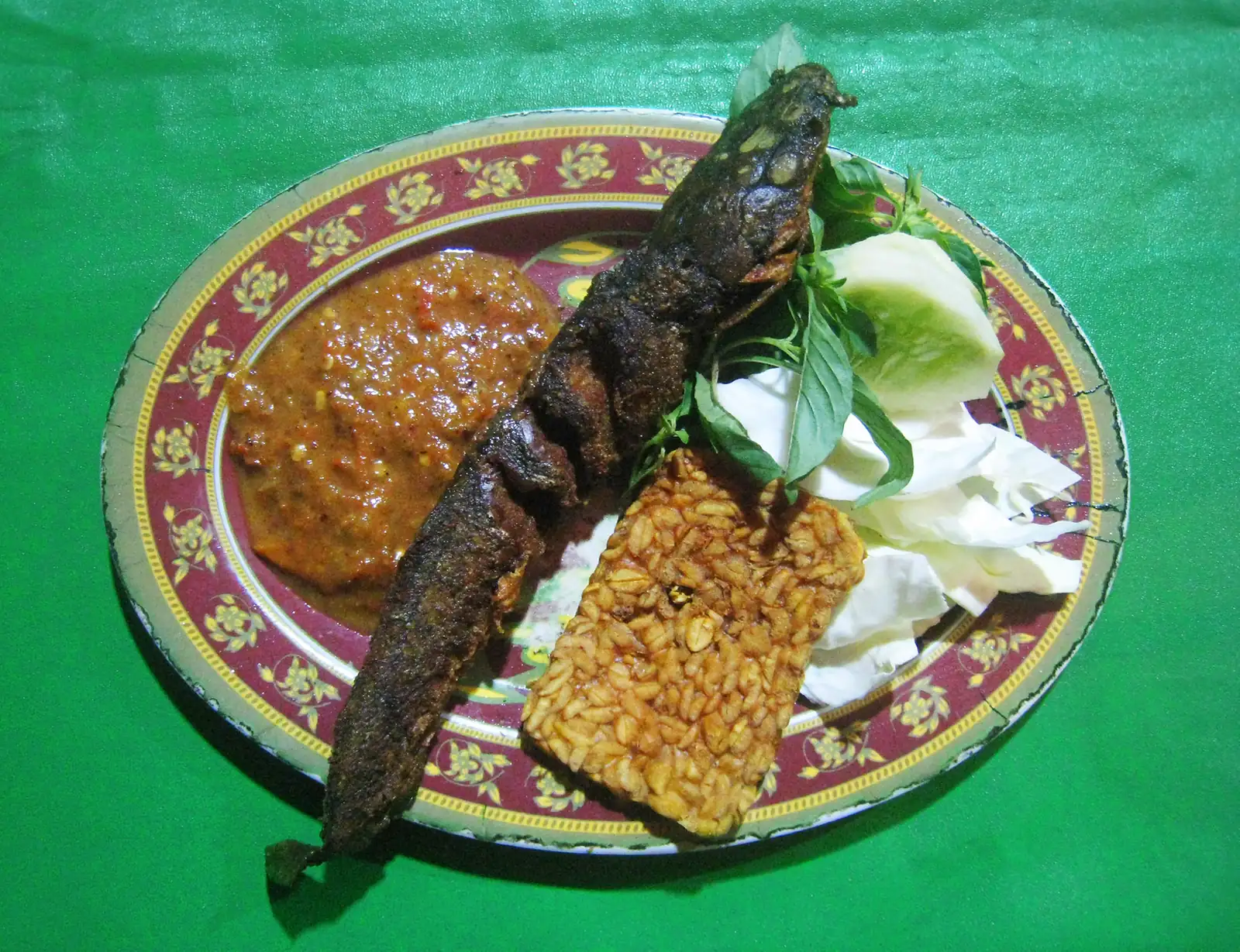
This pecel lele recipe starts with whole catfish rubbed in a turmeric, garlic and coriander marinade, then fried until the skin is dark, crisp and crackling. It is served with a pounded sambal terasi of chillies, shallots, tomato and shrimp paste, plus fried tempeh and a pile of fresh lalapan vegetables. One serving is about 300 g.

Pecel lele comes from Lamongan, a regency in East Java, where whole walking catfish are deep-fried and served with sambal terasi. In the 1970s Lamongan migrants carried the dish to Jakarta, and their hand-painted warung banners — white with bold coloured lettering and stylised catfish — became a recognisable symbol of Lamongan identity across Indonesian cities. Today pecel lele stalls are found all over Java and beyond, and the dish is a classic late-night meal.

Pairs well with: Steamed jasmine rice, fried tempeh, lalapan (cabbage, cucumber, basil, long beans) and sambal terasi.

Provenance

Indonesia flag Indonesia

Lamongan Heritage

East & South Asia

Time Dedication

55m

25m prep • 30m cook

Batch Yield

4 Servings

474 kcal per serving

1 serving ≈ 300 g

Technical Skill

Intermediate

Medium (Marinade & Fry)

Meal Timing & Digestive Fit

Breakfast

Not Advised

Lunch

Hearty Midday Main

Dinner

Ideal Hearty Main

Snack & Tea

Inappropriate

Occasions: Family dinner, Late-night meal, Street food night, Casual gatherings Cost: Low — about $2–3 per serving at home
Whole deep-fried catfish with red sambal, fried tempeh, cabbage, cucumber and basil on a patterned plate

Lamongan Heritage

Photo: Gunawan Kartapranata, CC BY-SA 4.0, via Wikimedia Commons

The Heritage Formulary

Measured Ingredients

Estimated cost: Low — about $2–3 per serving at home (USD)

Cooked the traditional way: whole catfish marinated in turmeric and garlic, deep-fried crisp, with a pounded sambal terasi and no batter.

Execution Methodology & Culinary Technique

Step-by-Step Cooking Guide

Active 55m
P

Prep Stage: Marinate the Catfish & Pound the Sambal

25 Mins • Marinade & Sambal

Rub the scored catfish with crushed garlic, turmeric, coriander, lime juice and salt, and leave it to marinate for 15 minutes. Meanwhile fry the chillies, shallots, garlic and tomato in a little oil, then pound them with the toasted shrimp paste and sugar into a coarse, fiery sambal terasi.

Maestro Tip: Pat the fish really dry before the marinade goes on: wet skin steams instead of crisping in the oil.

  1. 1

    Marinate the catfish

    15 Mins Room temperature, about 22°C (72°F)

    Crush 12 g of the garlic with the turmeric, coriander, half the lime juice and half the salt into a paste. Rub it all over the scored catfish, inside the cuts too, and leave for 15 minutes. This pecel lele recipe needs that short marinade: it seasons the flesh right through and helps the skin crisp.

    Do not marinate longer than 30 minutes: the lime juice will start to firm the flesh like ceviche.

    Done when: The fish is evenly coated in a golden paste and smells of garlic and turmeric.

  2. 2

    Make the sambal terasi

    10 Mins Medium heat, about 160°C (320°F)

    Heat the 10 ml of oil in a small pan and fry the chillies, shallots, 10 g garlic and tomato for 3 to 4 minutes until softened and fragrant. Tip into a mortar with the toasted shrimp paste, sugar and remaining salt, and pound to a coarse paste. Stir in the rest of the lime juice and taste: it should be hot, salty, a little sour and deeply savoury.

    Pound, do not blend smooth: a coarse sambal with visible chilli flecks tastes like a warung sambal, a smooth one tastes like a jar.

    Done when: A coarse, glossy red paste that smells of toasted shrimp paste and fresh chilli.

  3. 3

    Fry the tempeh

    5 Mins Oil at 175°C (350°F)

    Heat the frying oil in a deep, heavy pot to 175°C (350°F). Fry the tempeh slices for 2 to 3 minutes a side until deep golden and crisp at the edges. Lift out and drain on a rack.

    Fry the tempeh first, while the oil is clean: fish fried first leaves crumbs that darken the tempeh.

    Done when: Deep golden slices, crisp at the edges, nutty-smelling.

  4. 4

    Fry the catfish until crisp

    12 Mins Oil at 175°C (350°F); fish centre 63°C (145°F)

    Lower the catfish into the hot oil two at a time and fry for 5 to 6 minutes a side, until the skin is very dark golden and crackling and the flesh flakes easily. Check the thickest part: the centre must reach 63°C (145°F). Drain on a rack, not on paper, so the skin stays crisp.

    Do not move the fish for the first 2 minutes: the skin needs to set before it will release from the pot without tearing.

    Done when: Dark, crackling skin; white flesh that flakes cleanly; centre 63°C (145°F).

  5. 5

    Plate with sambal and lalapan

    3 Mins Serve hot

    Put a whole fried catfish on each plate with a spoonful of sambal terasi, a slice of fried tempeh and a pile of cabbage, cucumber, basil and long beans. Serve at once with steamed rice on the side.

    Serve within 5 minutes of frying: that is when the skin is at its crispiest.

    Done when: Hot, crisp fish with bright red sambal and fresh green lalapan on the plate.

Finishing Touches & Plating

Eat it hot and crisp, tearing off pieces of fish with rice, a dab of sambal and a bite of raw vegetable in between.

Nutritional Physiology & Benefits

Nutrition

Energy

474

kcal / serving

Protein

45g

Complete AA

Carbs

16g

Complex

Fats

26g

Healthy

Per serving (4 servings · 1 serving ≈ 300 g)
Energy474 kcal
Protein45 g
Carbohydrates16 g
Fat26 g
Fibre5.1 g
Sugar4.9 g
Sodium804 mg
Per 100g
Energy158 kcal
Protein15.2 g
Carbohydrates5.3 g
Fat8.7 g
Fibre1.7 g
Sugar1.6 g
Sodium268 mg

Nutrition values are estimated — calculated from USDA FoodData Central values for the listed ingredients.

Vitamins & minerals: Provides niacin, vitamin B12 and selenium from the catfish, vitamin C from the chillies and lime, plus iron and calcium from the tempeh.

High in Protein

About 45.4 g of protein a serving from the catfish and tempeh, which makes this pecel lele recipe a genuinely filling dinner.

Fresh Vegetables on the Plate

The lalapan of cabbage, cucumber, basil and long beans adds crunch, fibre and freshness against the rich fried fish.

Real Spices, No Packet Mix

Turmeric, coriander, garlic and fresh chillies are whole ingredients, so the flavour comes from the marinade and the pounded sambal, not from added flavourings.

Food Pairings

What to Eat With

To optimize nutrient absorption and elevate the sensory depth, pair with these authentic accompaniments:

Sides

Steamed Jasmine Rice

Plain rice soaks up the sambal and balances the rich fried fish without competing with it.

Vegetables

Lalapan Salad

Raw cabbage, cucumber, basil and long beans cool the palate and add crunch and freshness against the hot, spicy fish.

Drinks

Iced Tea with Lime

Cold, lightly sweet tea with lime cuts through the frying oil and the chilli heat and refreshes between bites.

Full Menus

Sayur Asem

A light sour vegetable soup on the side turns the plate into a full Javanese meal, with something tart and soupy next to the crisp fish.

Complete menu

Pecel lele with steamed jasmine rice, fried tempeh, lalapan salad, fresh sambal terasi and a glass of iced tea with lime.

Digestive Guardrails

What NOT to Combine

To prevent digestive distress, sluggishness, or palate clash, avoid pairing the dish with these elements:

Frying Wet Fish

Wet skin spits violently in hot oil and steams instead of crisping, so the fish turns soggy and the oil splatters. Pat the fish completely dry before frying. This is general food-safety information, not medical advice.

Reusing Old Frying Oil

Oil that has been used several times or heated past its smoke point gives the fish a stale, bitter taste and breaks down into compounds you do not want to eat. Use fresh oil for this fry. This is general food-safety information, not medical advice.

General information only, not medical advice — consult a doctor for personal dietary decisions.

Who Should Eat It

Who Should Eat

  • General adultsA rich, satisfying dinner — best as an occasional treat rather than an everyday meal, given the fat from frying and the salt in the sambal.
  • ChildrenChildren love the crispy fish; serve a mild batch with the chillies left out of the sambal and keep the fish pieces small and boneless for younger children.
  • ElderlySoft and easy to chew once the skin is removed, but the fish is fried and the sambal is salty — a small portion with plenty of lalapan is enough.
  • Pregnant womenGenerally suitable if the fish is cooked right through to 63°C (145°F); keep the portion modest and skip very spicy sambal — ask your clinician.
  • Breastfeeding womenGenerally suitable; the protein is useful, but the fat is high — a modest portion is wise.
  • AthletesAbout 45.4 g of protein a serving makes it a strong post-training meal — just watch the 474 kcal if you are counting energy.
  • Weight gainA good choice — the protein and energy are high, and rice on the side adds easy calories.
  • Weight lossAt 474 kcal a serving with 26.2 g of fat, this is a treat meal: take one fish, remove the skin, and fill the plate with lalapan and a small portion of rice.

Health Conditions — Adjust or Avoid

Conditions

  • DiabetesAbout 15.9 g of carbohydrate a serving, so the fish itself is low in carbs — watch the rice portion instead; ask your clinician.
  • High blood pressureAt about 804 mg of sodium a serving, this is salty — use less salt and shrimp paste in the sambal; ask your clinician if you are on a sodium limit.
  • Kidney diseaseFried, salty and high in protein — eat rarely and in small portions; ask your clinician.
  • GoutEat occasionally and in small portions — fish and shrimp paste are both rich in purines; ask your clinician.
  • Stomach issuesFried food and chilli can trigger reflux — eat a small portion, skip the sambal and avoid eating late at night; ask your clinician if symptoms persist.
  • Cardiovascular diseaseHigh in fat and sodium, so this is an occasional dish — remove the skin and balance it with raw vegetables; ask your clinician.
  • Fatty liverHigh in fat, which is the opposite of a liver-friendly pattern — keep it rare and the portion small; ask your clinician.
  • Food allergiesContains fish, soy (tempeh) and shellfish (shrimp paste). May contain traces of peanut if the oil was processed near peanuts — check labels. Gluten-free as written.
  • Special therapeutic dietsHigh in fat and sodium, so it fits very few therapeutic diets — ask your clinician or dietitian before eating it regularly.

If you have a medical condition, consult your doctor before changing your diet.

Storage & Use

Storage & Use

How to store
Cool quickly and store the fish, sambal and lalapan in separate airtight containers.
In the fridge
Cooked fish 2 days; sambal 3 days; lalapan 1 day.
In the freezer
Cooked fish 1 month; the skin will soften on thawing.
How to reheat
Reheat in a hot oven at 200°C (400°F) for 10 minutes until the centre reaches 74°C (165°F); never microwave it or the skin turns rubbery.
Freezing recommended
Only the fish, for up to 1 month; freeze the sambal separately for up to 2 weeks.
Signs it has spoiled
Sour or off smell, slimy skin, or a grey colour on the flesh.

More recipes to explore

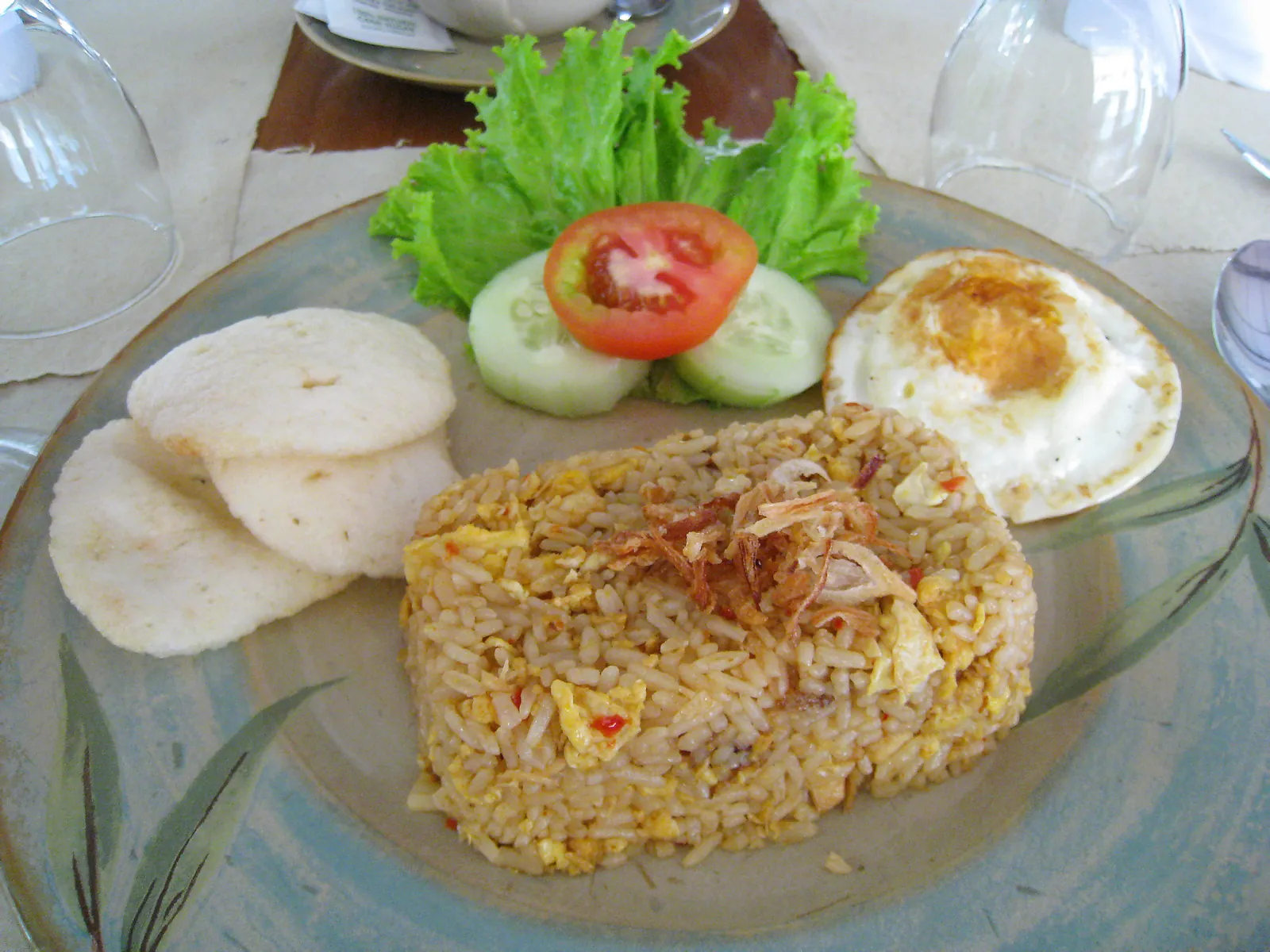
Indonesian nasi goreng — a mound of fried rice with egg and fried shallots, a fried egg, prawn crackers, cucumber, tomato and lettuce Indonesia flag Indonesia 35m
Dinner •Jakarta Street Classic

Indonesian Nasi Goreng

This Indonesian nasi goreng recipe turns a bowl of day-old rice into something far better than the sum of its parts: smoky, sweet-savoury grains coated in kecap manis, tossed with chicken, carrot and peas, and crowned with a fried egg and crunchy prawn crackers. It is the kind of dinner that comes together in one wok in about half an hour, and it tastes like a Jakarta street stall at its best. One serving is about 470 g.

Comfort & Satisfying

A one-wok dinner of sweet-savoury fried rice, chicken and a fried egg, served the Indonesian way with cucumber, tomato and prawn crackers.

Pairs Well With
A fried egg on top, cool cucumber and tomato, and a handful of prawn crackers, with iced tea to drink.
Quick Prep (<30m)
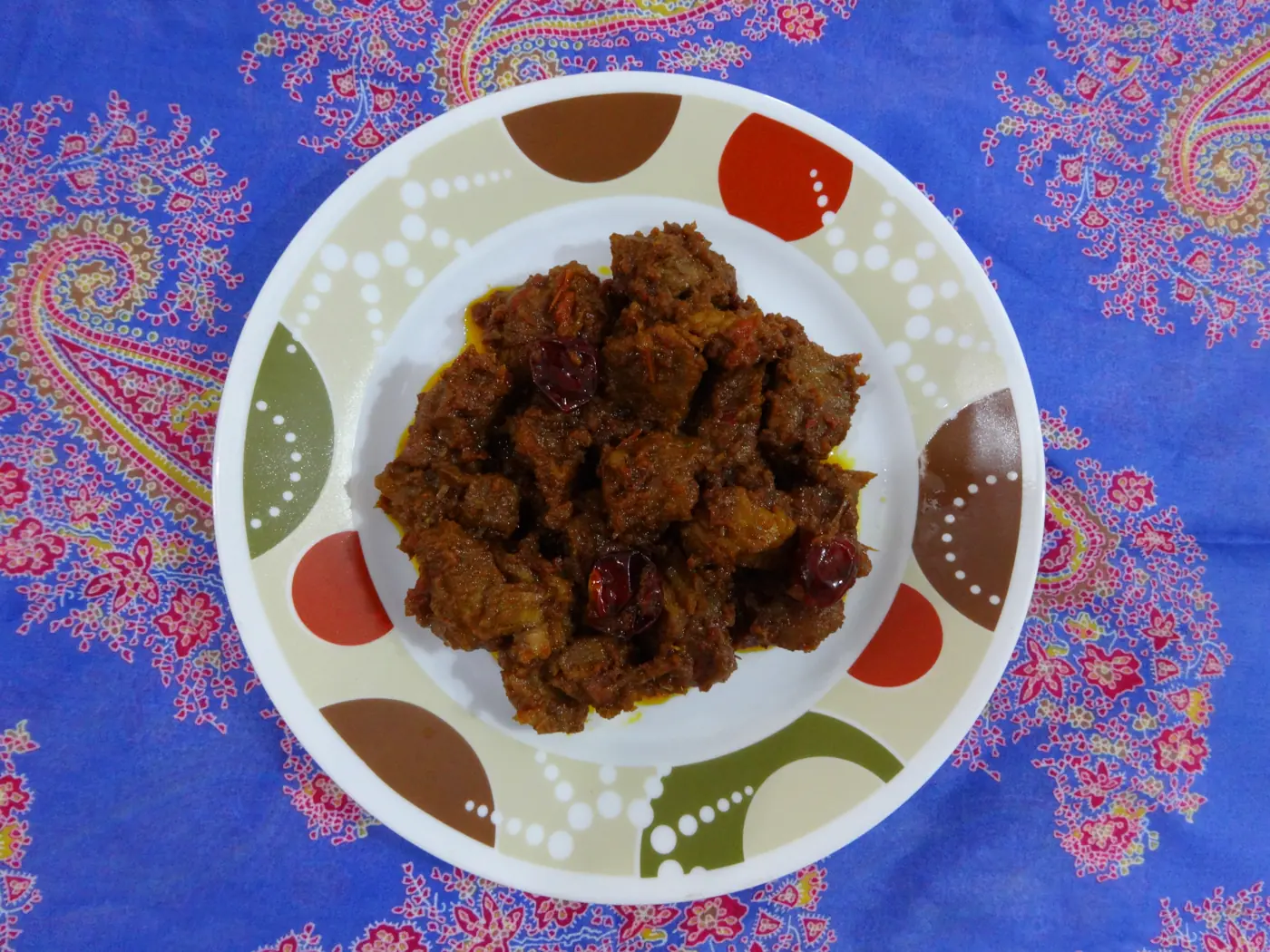
A plate of beef rendang — dark brown beef chunks coated in a dry, caramelised spice paste Indonesia flag Indonesia 4h
Dinner •West Sumatra Heritage

Beef Rendang

This beef rendang recipe slow-braises beef chuck in coconut milk with lemongrass, galangal, chillies and warm spices for about four hours, until the sauce has almost disappeared and the meat is coated in a dark, dry, caramelised spice paste. It is the Minangkabau dish from West Sumatra that sits at the heart of Padang cooking: deeply savoury, gently hot, and rich without being saucy. One serving is about 380 g.

Rich & Satisfying

Slow-braised beef in spiced coconut milk, reduced until the meat is coated in a dark, caramelised spice paste.

Pairs Well With
Steamed jasmine rice & pickled cucumber (acar timun)
High Protein
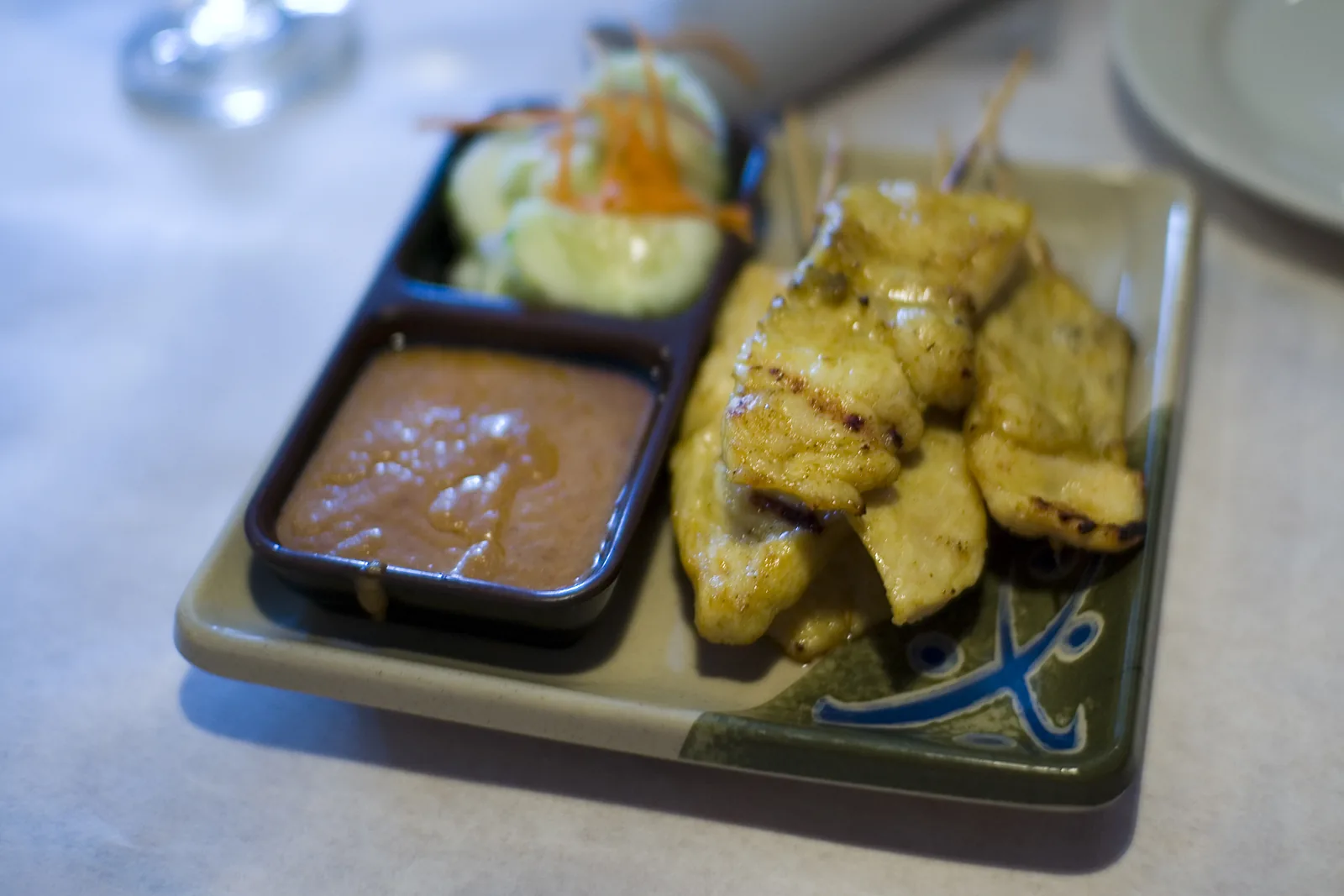
Grilled chicken satay skewers with peanut sauce and cucumber salad on a plate Indonesia flag Indonesia 45m
Dinner •Java Street Food

Chicken Satay

This chicken satay recipe turns chicken breast into golden, char-edged skewers marinated in turmeric, coconut milk, garlic and sweet soy sauce, then grilled and served with a warm, creamy peanut sauce. One serving is about 290 g: three skewers, a generous spoonful of peanut sauce and a cool cucumber-shallot salad. It is the Indonesian street-food classic — sate ayam — made for a weeknight grill.

High-Protein Grilling

Grilled chicken skewers in a turmeric-coconut marinade, served with a homemade peanut sauce — high in protein and cooked fast over high heat.

Pairs Well With
Lontong rice cakes and a cool cucumber-shallot salad balance the rich peanut sauce.
High Protein • Quick Prep (<30m)
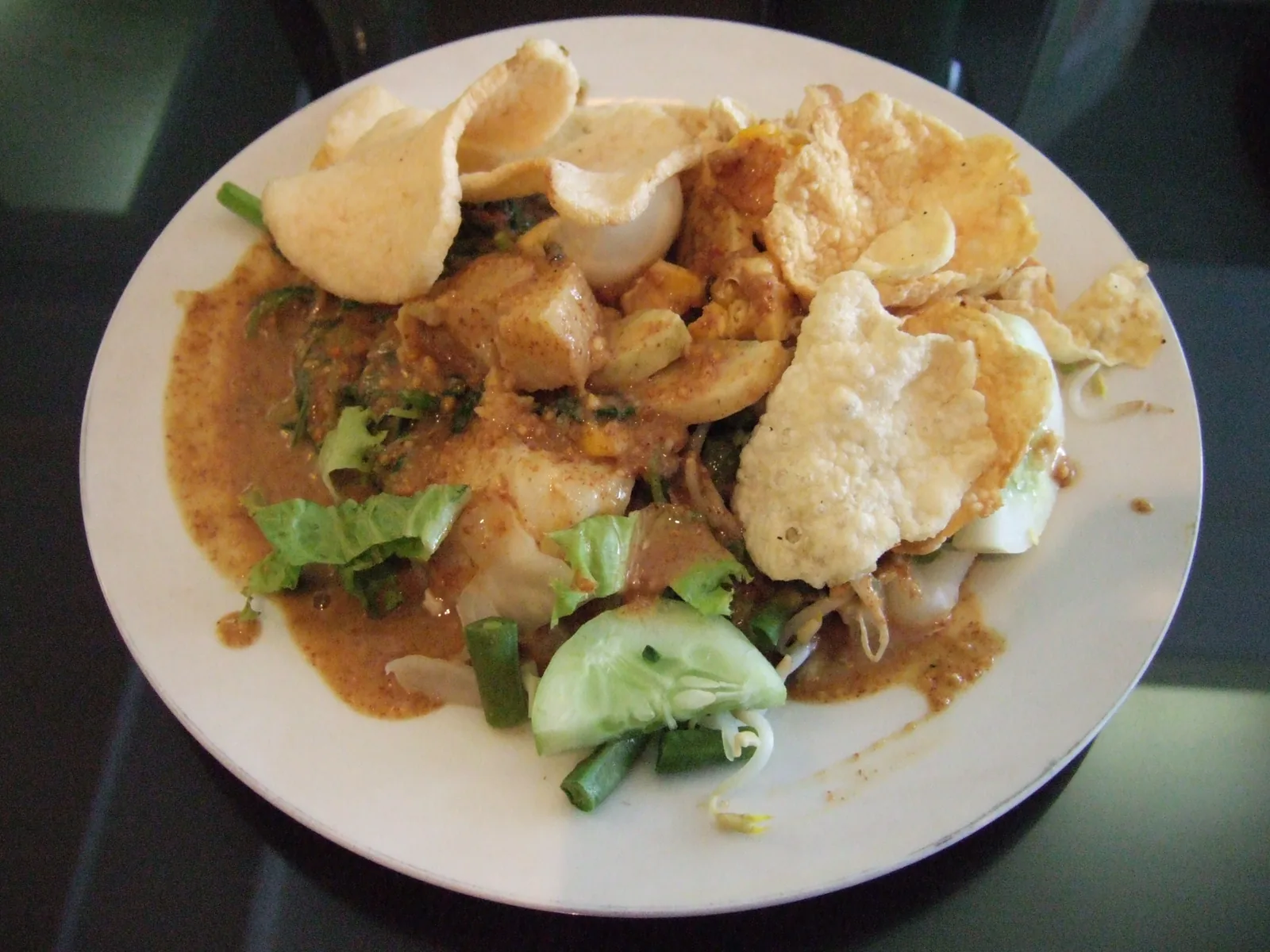
A plate of gado-gado: mixed vegetables, tofu and boiled egg coated in peanut sauce, topped with prawn crackers and cucumber slices. Indonesia flag Indonesia 45m
Lunch •Jakarta Street Food Classic

Gado-Gado

Gado-gado is Indonesia's best-loved salad: warm potatoes, green beans, cabbage, bean sprouts, cucumber and carrot, with fried tofu, boiled egg and crunchy prawn crackers, all coated in a thick, sweet-savoury peanut sauce. One serving is about 584 g.

Fresh & Filling

Warm vegetables, tofu and egg under a rich peanut sauce — a complete meat-free lunch.

Pairs Well With
Serve warm with prawn crackers on the side and a glass of iced tea.

The Dinner Gazette

Never wonder what’s for dinner again

One email a week with easy dinner ideas from around the world — ingredients, steps and nutrition, tested in our kitchen first.

Delivered every Thursday morning. Unsubscribe anytime.