Curated recipes from 193 countries  •  New seasonal Mediterranean issue out now

Overview

Pisca Andina

Pisca, Pizca Andina, Andean Milk Soup, Venezuelan Breakfast Soup

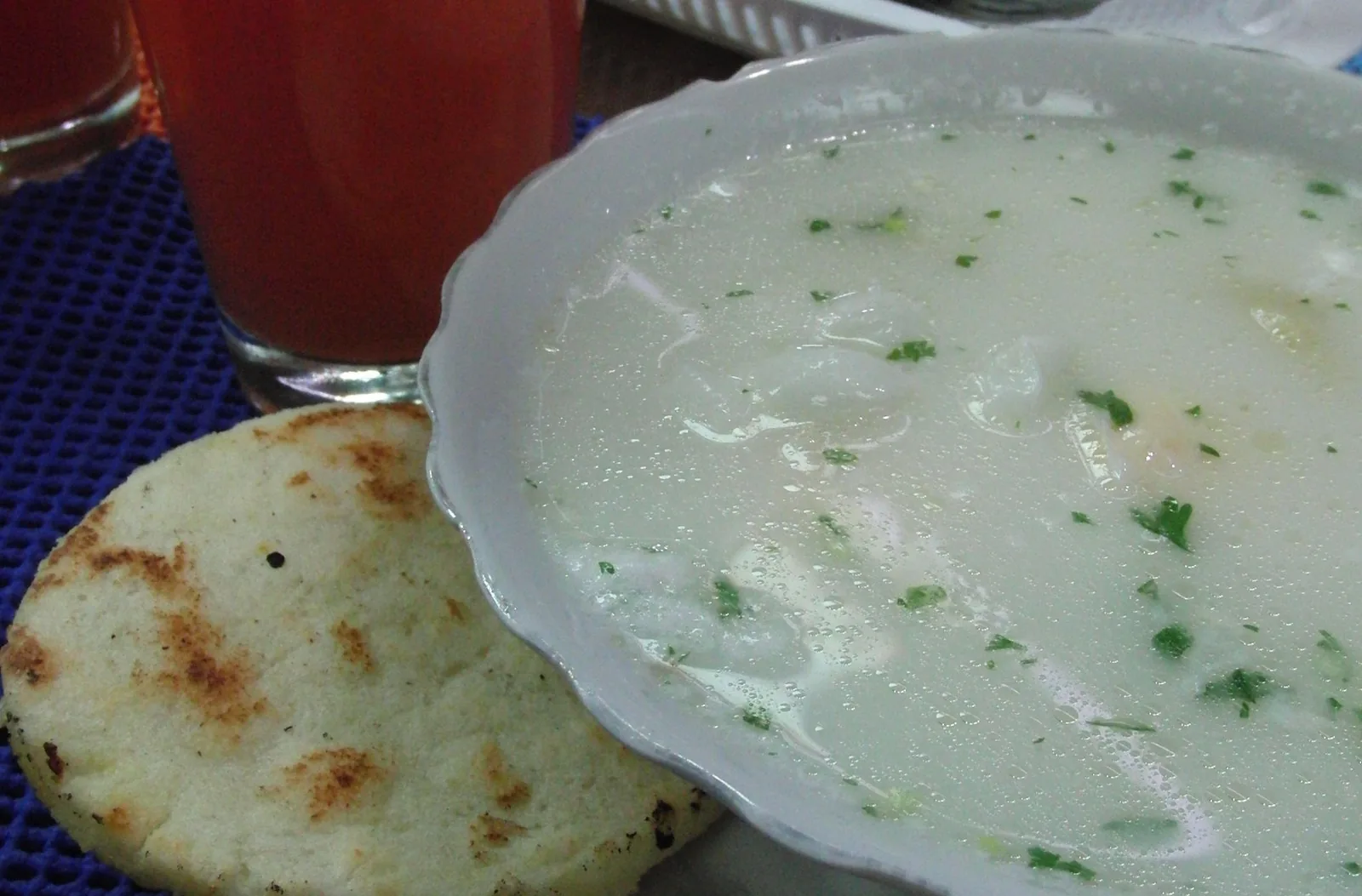
This pisca andina recipe is Venezuela's Andean breakfast soup: tender potatoes simmered in water, finished with milk and cubes of queso fresco, and crowned with a poached egg that melts its yolk into the broth. It is gentle, warming and made for cold highland mornings, with arepas on the side. One serving is about 500 g.

Pisca andina belongs to the farming villages of the Venezuelan Andes, in Merida, Tachira and Trujillo, where mornings are cold all year round. Families simmered the potatoes they grew with milk from their own cows, cheese from the local dairy and eggs from the yard, and ate it with the wheat arepas that set Andean bread apart from the corn arepas of the lowlands. It is still the breakfast of the highlands — a bowl eaten before work in the fields, when the mist is still on the mountains.

Pairs well with: Warm arepas and a cup of hot chocolate or coffee

Provenance

Venezuela flag Venezuela

Merida Andean Breakfast

Latin America & Caribbean

Time Dedication

45m

15m prep • 30m cook

Batch Yield

4 Servings

424 kcal per serving

1 serving ≈ 500 g

Technical Skill

Easy

Easy (One Pot)

Meal Timing & Digestive Fit

Breakfast

Prime Morning Fit

Lunch

Inappropriate

Dinner

Inappropriate

Snack & Tea

Inappropriate

Soups & Broths Occasions: Cold morning breakfast, weekend brunch, light supper, comfort food Cost: Low — about $2–3 per serving at home
A bowl of milky pisca andina soup with fresh herbs, served with a golden arepa and a glass of orange juice

Merida Andean Breakfast

Photo: Olga Berrios, CC BY 2.0, via Wikimedia Commons

The Heritage Formulary

Measured Ingredients

Estimated cost: Low — about $2–3 per serving at home (USD)

Made with potato, whole milk, queso fresco and a poached egg per bowl, with water (not meat broth) so it stays vegetarian; nutrition is estimated from USDA values.

Execution Methodology & Culinary Technique

Step-by-Step Cooking Guide

Active 45m
P

Prep Stage: Cube, Chop and Crack

15 Mins • Cube, Chop & Crack

Peel and cube the potatoes, slice the spring onions (white and green parts separate), mince the garlic, cube the cheese and chop the coriander. Crack each egg into its own small cup — eggs slide into the soup cleanly from a cup, and a broken yolk in the shell is caught before it reaches the pot.

Maestro Tip: Keep the cheese cubes in the fridge until the last minute; warm cheese softens too fast and melts away.

  1. 1

    Soften the Onion and Garlic

    5 Mins Medium heat, about 175°C (350°F)

    Melt the butter in a large pot over medium heat. Add the white parts of the spring onions and the garlic with the cumin, and cook for 4 to 5 minutes, stirring, until soft and fragrant but not browned.

    If the garlic starts to colour, turn the heat down at once — browned garlic turns the whole soup bitter.

    Done when: The onion is soft and translucent and the kitchen smells of garlic.

  2. 2

    Simmer the Potatoes

    15 Mins Medium heat, about 100°C (212°F) — a gentle boil

    Add the potatoes, water and salt, bring to a gentle boil, then lower the heat and simmer for 12 to 15 minutes, until the potato cubes are completely tender and a few are starting to break at the edges — those broken edges thicken the soup.

    A gentle simmer, not a rolling boil: hard boiling knocks the cubes to mush.

    Done when: A cube crushes easily against the side of the pot with a spoon.

  3. 3

    Add the Milk and Cheese

    5 Mins Low heat, about 85°C (185°F) — never boiling

    Take the pot off the boil and turn the heat to low. Pour in the milk and add the cheese cubes, then warm through for 3 to 4 minutes, stirring gently, until the cheese has softened. Do not let the soup boil from this point on — boiling splits the milk.

    If the milk looks like it might catch, lift the pot off the heat for a few seconds.

    Done when: The broth is milky and hot, the cheese cubes soft but still holding their shape.

  4. 4

    Poach the Eggs

    5 Mins Low heat, about 90°C (195°F) — a bare simmer

    Slide each egg gently into the soup from its cup, spacing them apart, and cover the pot. Poach at a bare simmer for 4 to 5 minutes without stirring, until the whites are fully set and the yolks are still soft. The yolks should reach at least 63°C (145°F).

    Do not stir once the eggs are in — stirring tears the whites into ribbons.

    Done when: The whites are opaque and set, the yolks soft and trembling.

  5. 5

    Finish and Serve

    3 Mins Off the heat, about 70°C (160°F)

    Stir in the coriander and the green spring onion tops. Ladle into deep bowls, making sure each bowl gets one whole poached egg and a fair share of cheese, and serve at once with warm arepas.

    Ladle from the bottom of the pot so each bowl gets potato, cheese and broth — not just broth.

    Done when: Each bowl has one intact poached egg, cheese cubes and tender potato in milky broth.

Finishing Touches & Plating

Serve the soup steaming hot in deep bowls, one poached egg per person, with arepas on the side for dunking — break the yolk into the broth at the table and let it turn the soup golden.

Nutritional Physiology & Benefits

Nutrition

Energy

424

kcal / serving

Protein

21g

Complete AA

Carbs

36g

Complex

Fats

22g

Healthy

Per serving (4 servings · 1 serving ≈ 500 g)
Energy424 kcal
Protein21 g
Carbohydrates36 g
Fat22 g
Fibre3.9 g
Sugar8.9 g
Sodium655 mg
Per 100g
Energy85 kcal
Protein4.2 g
Carbohydrates7.3 g
Fat4.5 g
Fibre0.8 g
Sugar1.8 g
Sodium131 mg

Nutrition values are estimated — calculated from USDA FoodData Central values for the listed ingredients.

Vitamins & minerals: Provides vitamin B12 and calcium from the milk, cheese and egg, vitamin C and potassium from the potato, and vitamin A from the egg yolk. Nutrition is estimated.

Gentle and Warming

A mild, milky soup that is easy on the stomach first thing in the morning, with no chilli heat at all.

Protein from Egg and Cheese

About 20.9 g of protein per bowl from the poached egg, queso fresco and milk — enough to carry a mountain morning.

Calcium and B12

Milk, cheese and egg bring calcium and vitamin B12, and the potato adds potassium and vitamin C.

Food Pairings

What to Eat With

To optimize nutrient absorption and elevate the sensory depth, pair with these authentic accompaniments:

Sides

Arepas Andinas

The wheat arepas of the Venezuelan Andes are the traditional partner — torn and dunked into the milky broth.

Drinks

Hot Chocolate

A cup of hot chocolate is the classic cold-morning drink in Merida, and its sweetness suits the gentle soup.

Black Coffee

Strong black coffee wakes the palate up after the mild, milky soup, and it is how the morning starts in the Andes.

Vegetables

Avocado Slices

Creamy avocado on the side adds richness and freshness, and it is always on an Andean breakfast table.

Complete menu

Serve the pisca andina with warm arepas andinas, avocado slices and a cup of hot chocolate or black coffee for a complete Venezuelan Andean breakfast.

Digestive Guardrails

What NOT to Combine

To prevent digestive distress, sluggishness, or palate clash, avoid pairing the dish with these elements:

Boiling After the Milk Goes In

A hard boil once the milk is added splits it into curds and whey and ruins the silky broth — keep it at a bare simmer. This is general food information, not medical advice.

A Spicy Sauce on Top

Hot sauce drowns the gentle milk, potato and coriander flavours that make this soup what it is. Save the chilli for another meal. This is general food information, not medical advice.

Undercooked Eggs

Poach until the whites are fully set — runny whites are a food-safety risk, while a soft yolk is fine once the white is set. This is general food information, not medical advice.

General information only, not medical advice — consult a doctor for personal dietary decisions.

Who Should Eat It

Who Should Eat

  • General adultsA light but satisfying breakfast — one bowl with an arepa is a full morning meal.
  • ChildrenChildren love the mild, milky soup; make sure the egg is fully set and the soup is not too hot.
  • ElderlySoft, warm and easy to eat — an excellent choice for older diners, with protein in every bowl.
  • Pregnant womenFine when the eggs are poached until the whites are fully set; skip it if the eggs are runny.
  • Breastfeeding womenWarm, comforting and rich in calcium — a gentle start to the day.
  • AthletesAbout 20.9 g of protein and 424 kcal per bowl; add an arepa and avocado for a fuller recovery breakfast.
  • Weight gainEasy to enrich: a second egg or extra cheese in the bowl.
  • Weight lossAt about 424 kcal a bowl this is a moderate breakfast; keep the arepa to one and skip the hot chocolate.

Health Conditions — Adjust or Avoid

Conditions

  • DiabetesThe potato and milk add up to about 36.4 g of carbohydrate per serving. Keep the arepa to one and the portion as written. Ask your clinician about portion size.
  • High blood pressureThe soup carries about 655 mg of sodium per serving, mostly from the cheese and salt. Use less salt and a lighter hand with the cheese. Ask your clinician about your sodium target.
  • Kidney diseaseMilk, cheese and potato are all high in potassium, so this soup may not suit a restricted diet. Ask your clinician before making it a regular meal.
  • GoutThe dish has no meat or seafood, so purines are low. Ask your clinician if flare-ups are frequent.
  • Stomach issuesA mild, milky soup is usually gentle, but the onion and garlic can bother some sensitive stomachs — use less onion if needed. Ask your clinician if symptoms persist.
  • Cardiovascular diseaseWhole milk, butter and cheese bring saturated fat, so this is a breakfast to enjoy in moderation. Keep the portion to one bowl. Ask your clinician about fitting it into your eating plan.
  • Fatty liverA creamy soup is rich for breakfast; keep portions modest and balance the day with lighter meals. Ask your clinician for personal guidance.
  • Food allergiesContains milk, cheese and egg. Milk and egg are key allergens — there is no simple swap that keeps this dish.
  • Special therapeutic dietsSuitable for vegetarian diets and naturally gluten-free. Not suitable for vegan or dairy-free diets. Ask your clinician or dietitian about your specific plan.

If you have a medical condition, consult your doctor before changing your diet.

Storage & Use

Storage & Use

How to store
Cool quickly and store the soup without the eggs in an airtight container; poach fresh eggs when serving.
In the fridge
2 days for the soup base; poached eggs do not keep well.
In the freezer
The milk base does not freeze well — it splits on thawing. Do not freeze.
How to reheat
Reheat gently over low heat until steaming hot at 74°C (165°F), without boiling.
Freezing recommended
No — the milky broth splits when frozen and thawed.
Signs it has spoiled
Sour smell, curdled appearance, or a slimy surface.

More recipes to explore

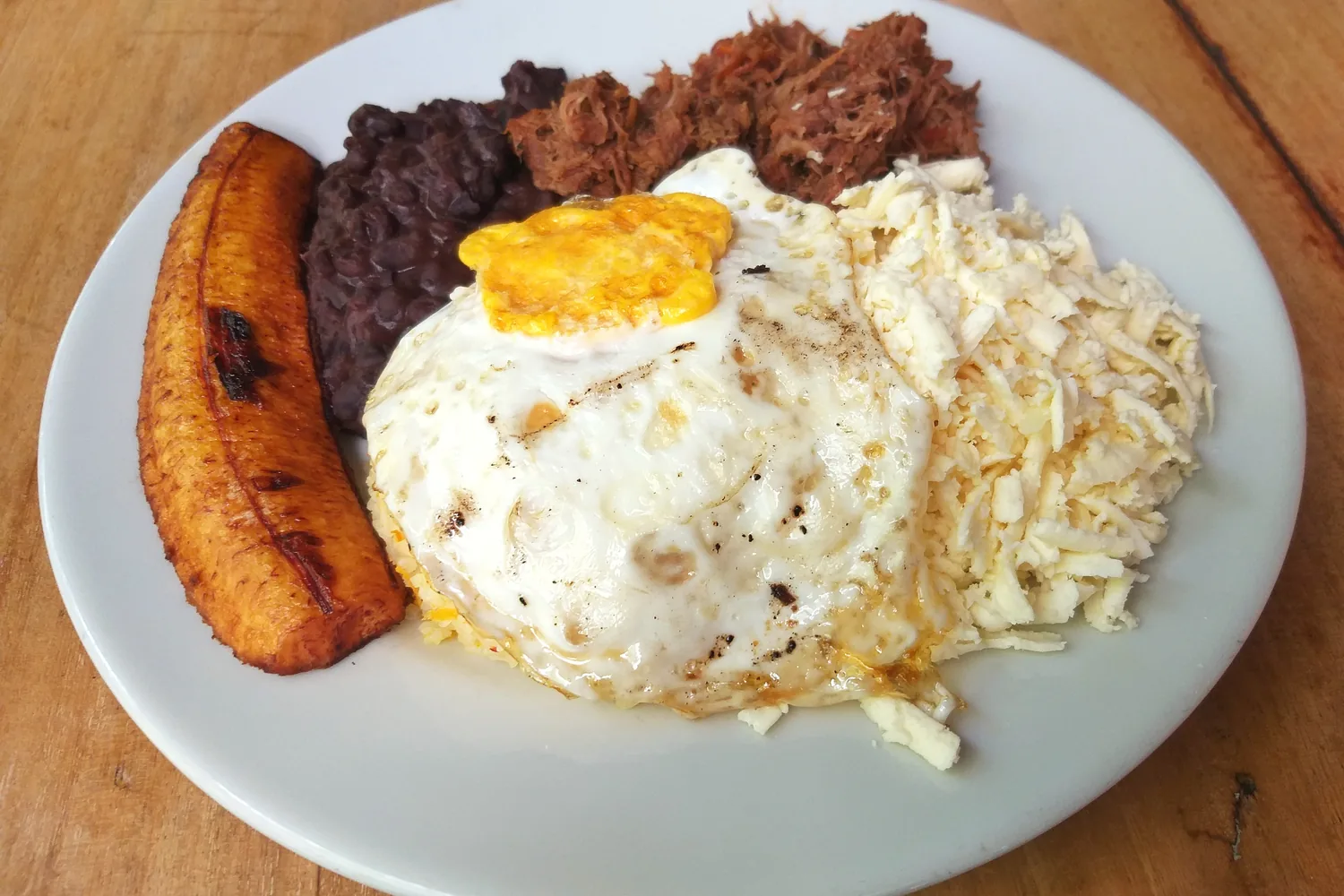
Pabellón Criollo plate with shredded beef, black beans, fried plantain, a fried egg and grated white cheese over white rice Venezuela flag Venezuela 3h
Lunch •Venezuelan National Dish

Pabellón Criollo

This pabellon criollo recipe is Venezuela's national plate: slow-braised shredded beef in a pepper and tomato sofrito, creamy black beans, fluffy white rice, sweet fried plantains and a fried egg, finished with grated white cheese. One serving is about 680 g.

Hearty & Satisfying

A complete plate of beef, beans, rice, plantain and egg that keeps you full for hours.

Pairs Well With
Serve with a cold papelón con limón or a light beer, and a simple avocado salad on the side.
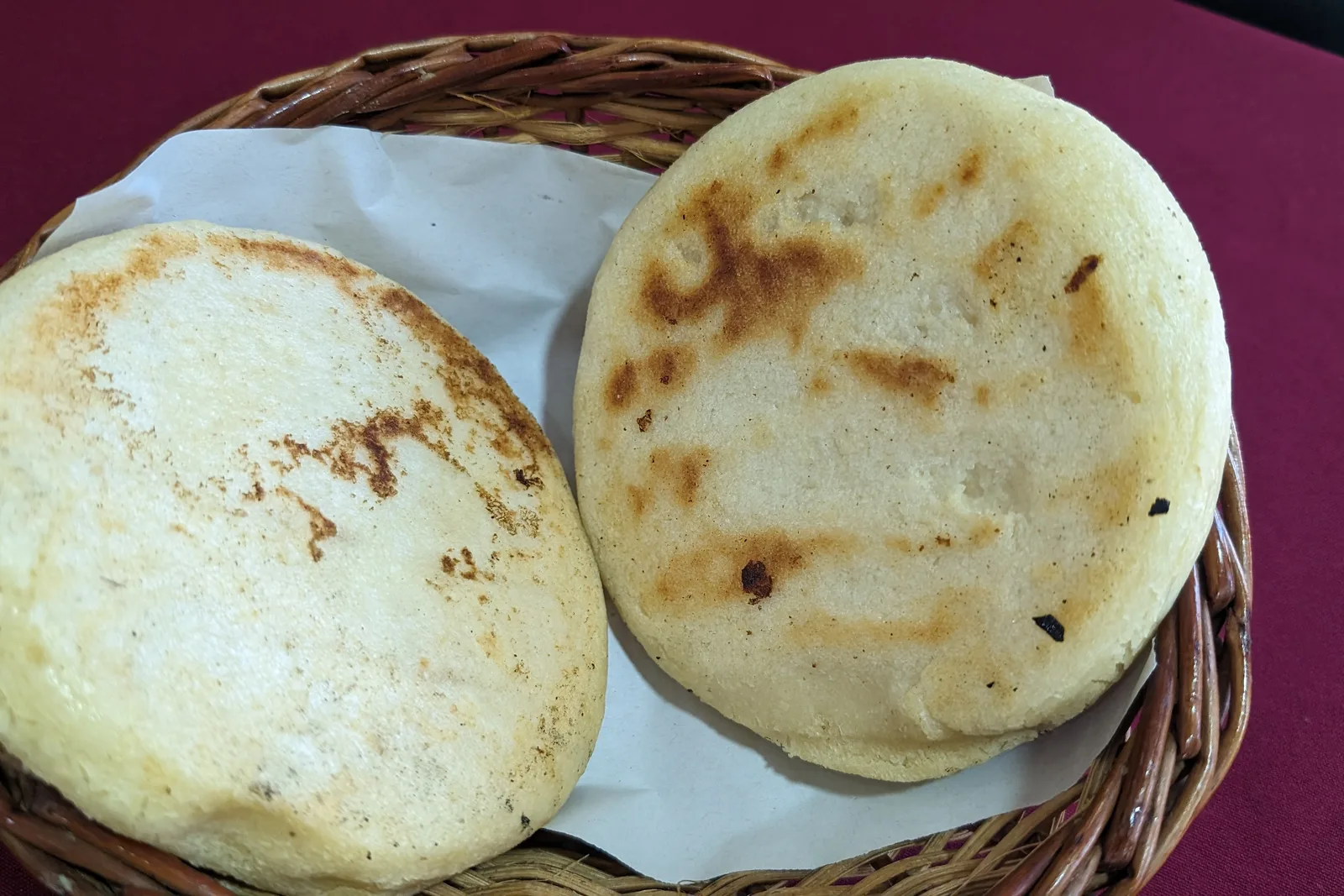
Two golden grilled Venezuelan arepas in a wicker basket lined with white paper Venezuela flag Venezuela 40m
Breakfast •Caracas Heritage

Venezuelan Arepas

This Venezuelan arepas recipe starts with just pre-cooked white cornmeal, warm water and salt, kneaded into a soft dough and shaped into thick cakes. They grill until crisp and golden outside and soft inside, finish in a hot oven so they puff, then get split open and stuffed with melted mozzarella, crumbled queso fresco, creamy avocado and tomato. Venezuelan arepas are the thick, stuffed kind: a whole breakfast you can hold in one hand. One serving is about 275 g, one stuffed arepa.

Comfort & Warmth

Thick grilled corn cakes made from white masarepa, split open like a pocket and stuffed with melting cheese, avocado and tomato.

Pairs Well With
Fresh orange juice or coffee, with a bowl of black beans or scrambled eggs on the side.
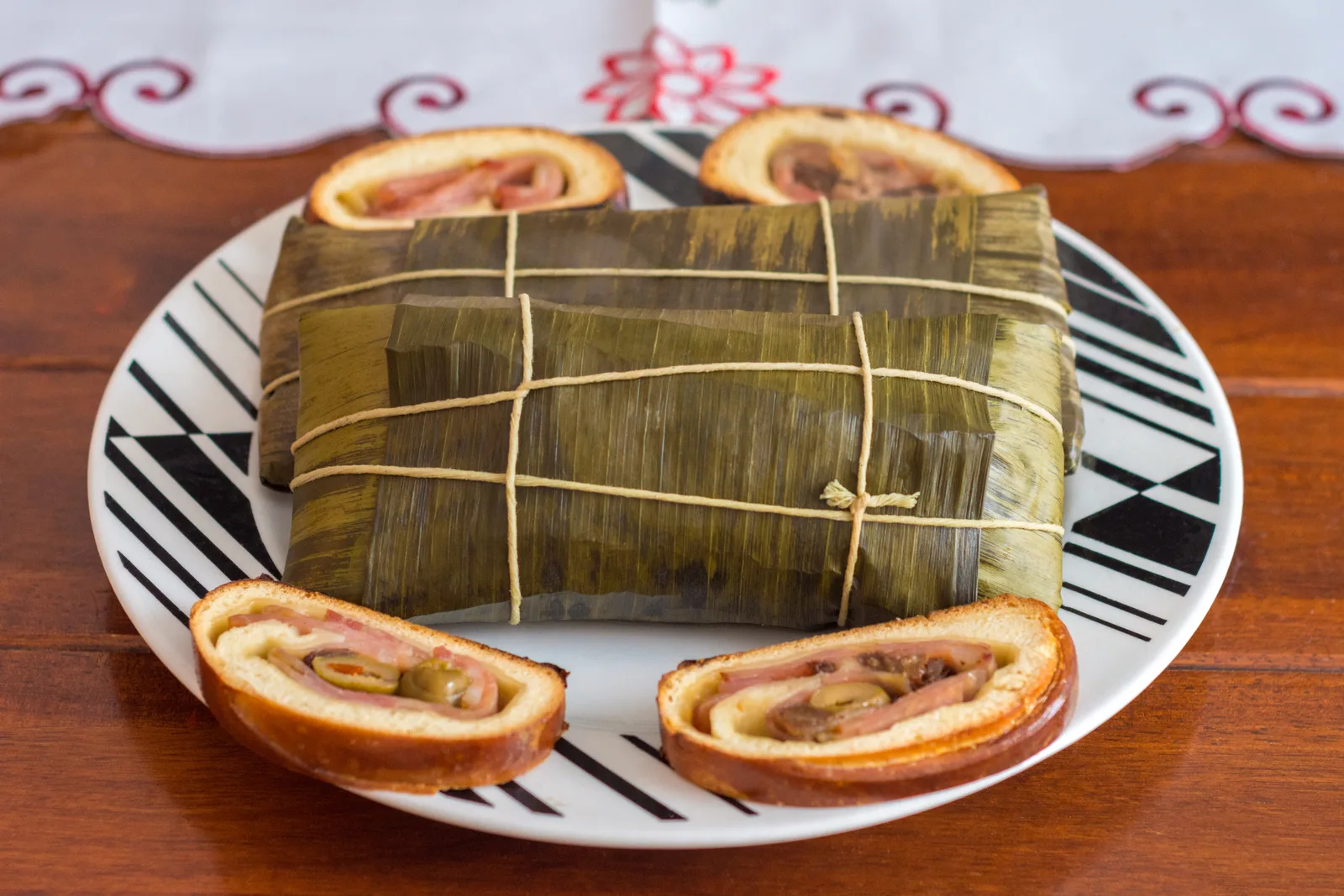
Two hallacas wrapped in banana leaves and tied with string, served on a plate with slices of pan de jamón Venezuela flag Venezuela 5h
Dinner •Venezuela's Christmas Dish

Hallacas

This hallacas recipe makes 12 golden parcels of annatto-coloured corn dough filled with a rich three-meat guiso, garnished with pepper, onion, olives, capers and raisins, then folded in banana leaves and boiled. One hallaca is about 300 g, a full festive dinner on its own. Hallacas are Venezuela's Christmas dish, made in big family batches and served with pan de jamón.

Festive & Filling

Golden annatto corn dough wrapped around a slow-cooked stew of beef, pork and chicken, folded in banana leaves — the parcel Venezuelan families gather to make every December.

Pairs Well With
Pan de jamón and ensalada de gallina, with a glass of ponche crema
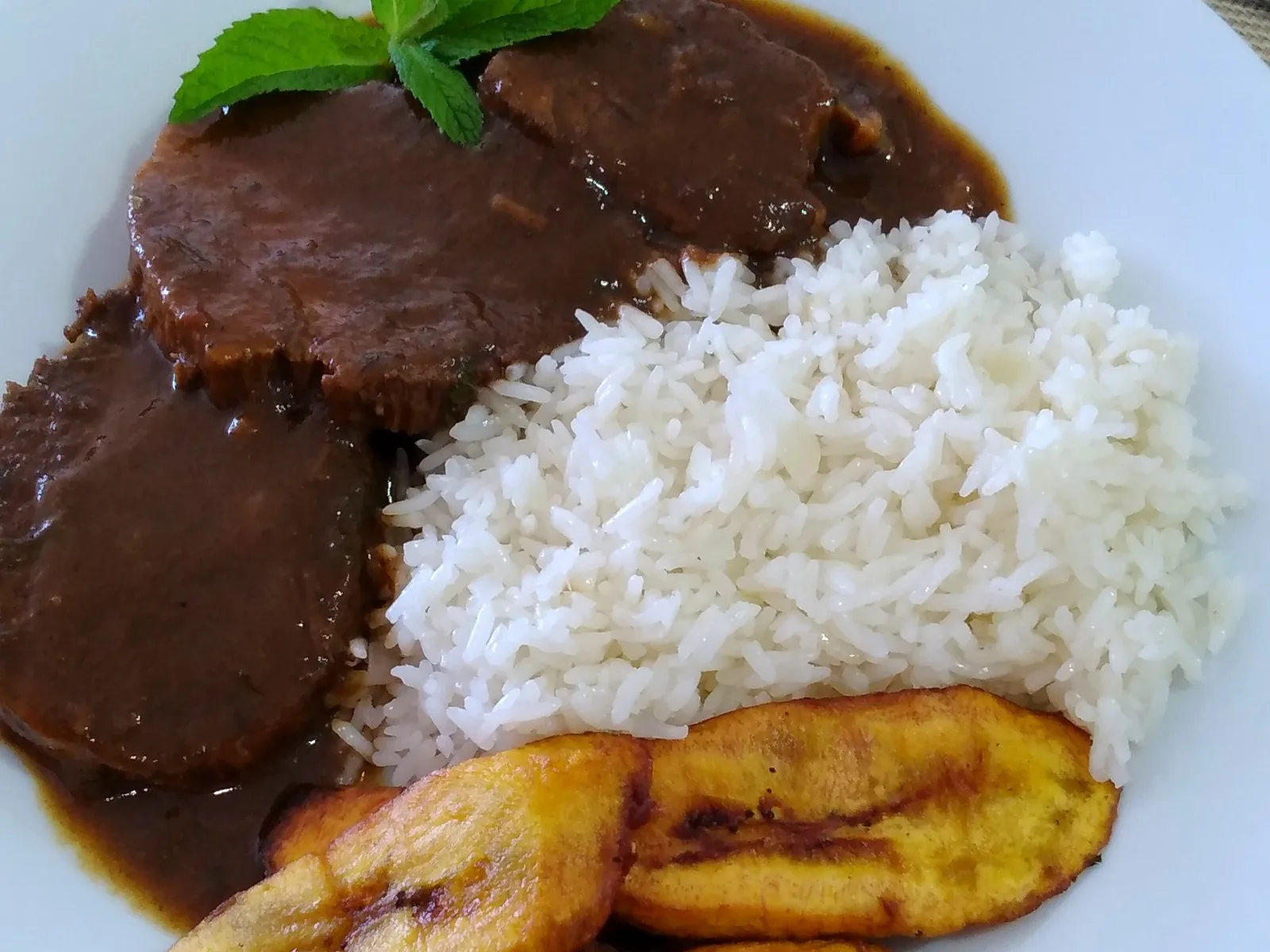
Slices of asado negro in a dark glossy sauce with white rice and golden fried plantains, garnished with mint Venezuela flag Venezuela 3h 30m
Dinner •Caracas Heritage

Asado Negro

Asado negro is Venezuela's dark, glossy beef roast: eye of round seared in caramelized panela, then braised low and slow in red wine, beef stock and soft vegetables until it slices like butter. The sauce is sweet, savoury and almost black, and it belongs over white rice with fried plantains. One serving is about 591 g.

Comfort & Warmth

Beef eye of round seared in caramelized panela, then braised in red wine and stock until tender.

Pairs Well With
White rice, fried plantains and a glass of red wine
High Protein

The Dinner Gazette

Never wonder what’s for dinner again

One email a week with easy dinner ideas from around the world — ingredients, steps and nutrition, tested in our kitchen first.

Delivered every Thursday morning. Unsubscribe anytime.