Curated recipes from 193 countries  •  New seasonal Mediterranean issue out now

Overview

Piure en Salsa Verde

Ceviche de Piure, Raw Sea Squirt in Green Sauce, Piure Crudo con Limon

Piure en salsa verde is Chile's boldest raw seafood: bright red piure, a sea squirt pulled from the rocks of the Chilean Pacific, cut into bite-size pieces and dressed with a fresh salsa verde of white onion, cilantro, lemon juice and green chili. The flavour is pure concentrated seawater — salty, iodine-rich and a little metallic — so the sharp lemon and onion are not decoration, they are what make it edible. One serving is about 171 g.

Piure (Pyura chilensis) is a sea squirt that clings to the rocks of the Chilean and Peruvian Pacific, and its name comes from Mapudungun, the language of the Mapuche people, who have eaten it for centuries. Its flesh is famously intense — salty, iodine-rich and a little metallic, thanks in part to the vanadium its blood concentrates — and Chilean coastal cooks eat it raw, with lemon, onion and cilantro, or folded into empanadas and chupe. The Slow Food Foundation lists piure in its Ark of Taste as a food at risk of disappearing from the table.

Pairs well with: Crusty marraqueta bread, a cold lager and a tomato pebre on the side

Provenance

Chile flag Chile

Chilean Heritage

Latin America & Caribbean

Time Dedication

25m

25m prep • 0m cook

Batch Yield

4 Servings

150 kcal per serving

1 serving ≈ 171 g

Technical Skill

Intermediate

Moderate (Raw Seafood)

Meal Timing & Digestive Fit

Breakfast

Not Advised

Lunch

Prime Metabolic Fit

Dinner

Ideal Hearty Main

Snack & Tea

Inappropriate

Occasions: Coastal lunches, seafood starters, Chilean summer tables, festive seaside meals Cost: Medium — about $4–5 per serving at home

Bright red piure sea squirt pieces on a white plate with finely chopped onion and cilantro salsa verde, lemon halves and a small dish of tomato pebre behind

Chilean Heritage

Photo: Stéphane Batigne, CC BY 3.0, via Wikimedia Commons

The Heritage Formulary

Measured Ingredients

Estimated cost: Medium — about $4–5 per serving at home (USD)
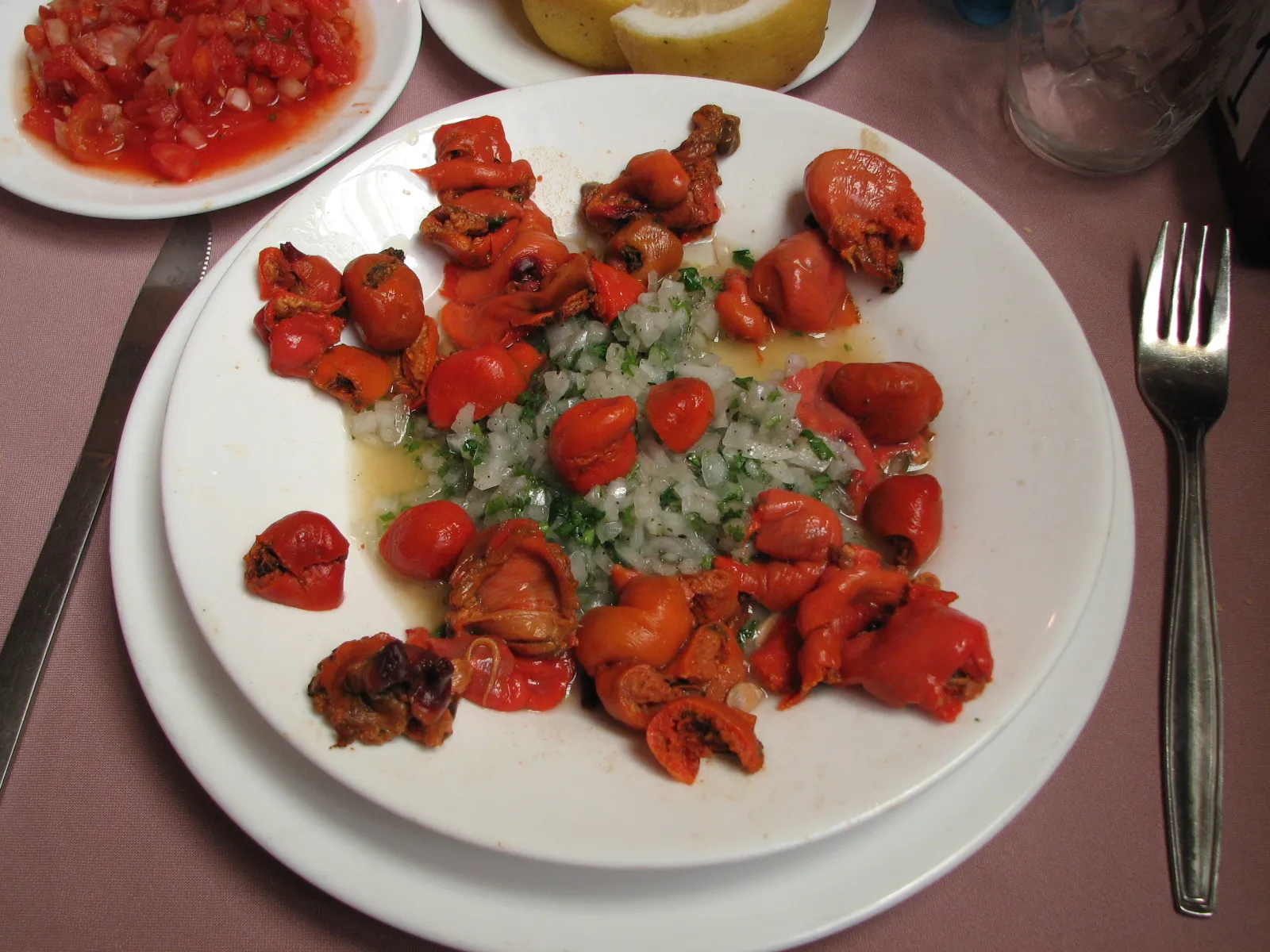
A true piure en salsa verde is only bright red flesh, dressed cold with lemon, onion and cilantro and eaten within minutes — never warm, never kept overnight.

Execution Methodology & Culinary Technique

Step-by-Step Cooking Guide

Active 25m
P

Prep Stage: Piure Cleaned, Onion Diced, Salsa Verde Ready

25 Mins • Knife Work Only

Clean the piure first — rinse it, trim the dark and fibrous parts, and cut the bright red flesh into bite-size pieces. Dice the onion finely and rinse it, chop the cilantro and chili, and squeeze the lemons. Everything is mixed cold, so have all of it ready before the piure meets the lemon juice.

Maestro Tip: Keep the piure on ice or in the coldest part of the fridge until the moment you dress it — raw shellfish must stay cold.

  1. 1

    Clean the Piure

    10 Mins Chilled, ~4°C (39°F)

    Rinse the piure meat in a bowl of cold salted water, swishing it gently to wash away any sand. Pick through it and cut away any dark, brown or fibrous pieces — only the bright red-orange flesh is eaten. Cut the flesh into bite-size pieces about 2 cm across and set it in a clean bowl over ice.

    If your piure comes whole in its rock-like tunic, cut the tunic open and scoop out the red flesh, discarding the shell and any dark gut.

    Done when: Only bright red-orange flesh remains, cut into even pieces.

  2. 2

    Soak the Onion

    5 Mins Cold water, ~10°C (50°F)

    Put the finely diced onion in a bowl of cold water and leave it for 5 minutes. This takes the harsh raw bite out while keeping the crunch. Drain it well and pat it dry — wet onion would water down the salsa verde.

    Do not soak longer than 10 minutes or the onion goes limp and loses its bite entirely.

    Done when: Onion is crisp, mild and dry to the touch.

  3. 3

    Make the Salsa Verde

    5 Mins Room temperature, ~21°C (70°F)

    In a small bowl, stir together the drained onion, chopped cilantro, diced green chili, lemon juice, olive oil and salt. Taste it: it should be sharp, salty and fresh, with the lemon leading. Remember the piure itself is salty, so go light on the salt here.

    Make the salsa verde just before serving so the cilantro stays bright green.

    Done when: A sharp, bright green-flecked dressing with the onion evenly coated.

  4. 4

    Dress and Rest

    5 Mins Chilled, ~4°C (39°F)

    Spoon the piure pieces onto a cold serving plate and pour the salsa verde over the top, turning the pieces once so they are coated. Leave it for 5 minutes — the lemon juice just starts to firm the surface of the piure, the way it does in ceviche. Serve at once, straight from the fridge, with lemon wedges and bread.

    Do not rest it longer than 10 minutes: the acid will toughen the piure and turn it rubbery.

    Done when: Piure glistening with salsa verde, cold to the touch, served immediately.

Finishing Touches & Plating

Serve the piure en salsa verde ice-cold, with extra lemon wedges and crusty bread to mop up the lemony juices. It is a starter, not a main — a small, bracing plate to wake up the table.

Nutritional Physiology & Benefits

Nutrition

Energy

150

kcal / serving

Protein

13g

Complete AA

Carbs

8g

Complex

Fats

8g

Healthy

Per serving (4 servings · 1 serving ≈ 171 g)
Energy150 kcal
Protein13 g
Carbohydrates8 g
Fat8 g
Fibre1.0 g
Sugar2.2 g
Sodium646 mg
Per 100g
Energy87 kcal
Protein7.4 g
Carbohydrates4.7 g
Fat4.6 g
Fibre0.6 g
Sugar1.3 g
Sodium377 mg

Nutrition values are estimated — calculated from USDA FoodData Central values for the listed ingredients.

Vitamins & minerals: Iron (about 5 mg per 100 g of piure), iodine, vitamin C (lemon and cilantro), vitamin B12 and zinc (piure).

High in Protein, Low in Calories

At about 150 calories and 12.7 g of protein a serving, piure is a lean, protein-rich seafood.

Iron and Iodine

Piure is notably rich in iron (about 5 mg per 100 g) and iodine, two minerals the Chilean coastal diet has long relied on seafood for.

Fresh and Unprocessed

Nothing is fried, sweetened or heavily processed — just raw seafood, onion, herbs and lemon.

Food Pairings

What to Eat With

To optimize nutrient absorption and elevate the sensory depth, pair with these authentic accompaniments:

Sides

Marraqueta Bread

Chile's crusty everyday roll is made for this plate — it soaks up the lemon and onion juices and gives the soft piure something to chew against.

Tomato Pebre

A spoonful of pebre on the side adds tomato sweetness and a second kind of chili heat that rounds out the piure's metallic edge.

Drinks

Cold Lager or White Wine

A cold, crisp lager or a dry Chilean white wine cuts the salt and iodine the way lemon does — this is a seaside dish and it wants a cold drink.

Vegetables

Ensalada Chilena

Tomato and onion salad on the same table doubles the fresh, sharp flavours and gives guests who find piure too intense something familiar to eat.

Complete menu

Start with piure en salsa verde and marraqueta bread, follow with paila marina or grilled congrio, and finish with mote con huesillo — a full Chilean coastal lunch.

Digestive Guardrails

What NOT to Combine

To prevent digestive distress, sluggishness, or palate clash, avoid pairing the dish with these elements:

Eating It Warm or Stale

Raw piure is highly perishable — it must be kept chilled at about 2–4°C (36–39°F) and eaten the same day. Warm or day-old piure spoils fast and can carry bacteria. Buy it fresh, keep it cold, eat it at once. This is general food information, not medical advice.

Heavy Sauces and Strong Spices

Creamy sauces, soy sauce or heavy spice blends would bury the piure's flavour entirely — the whole point of the dish is the clean, briny taste with lemon and onion. Keep the dressing to the salsa verde. This is general food information, not medical advice.

General information only, not medical advice — consult a doctor for personal dietary decisions.

Who Should Eat It

Who Should Eat

  • General adultsA bold, briny starter for adults who enjoy raw seafood — small portions are the right way to try it first.
  • ChildrenNot suitable for young children — raw shellfish carries a food-safety risk and the flavour is very intense.
  • ElderlyNot recommended — raw shellfish is harder to digest and carries a higher risk of foodborne illness for older adults.
  • Pregnant womenAvoid — raw shellfish is not recommended during pregnancy because of the risk of foodborne illness.
  • Breastfeeding womenAvoid while breastfeeding unless your clinician advises otherwise — raw shellfish carries a foodborne-illness risk.
  • AthletesA lean, high-protein starter that fits a training diet, but eat it fresh and cold, never as a large main.
  • Weight gainA poor choice on its own — at 150 calories a serving, add bread and a heartier main to add energy.
  • Weight lossA good choice — low in calories, high in protein and very filling for its size; watch the salty dressing.

Health Conditions — Adjust or Avoid

Conditions

  • DiabetesLow in carbohydrate at about 8.1 g a serving, mostly from onion and lemon; check with your clinician about your overall meal plan.
  • High blood pressureSodium is about 646 mg a serving, mostly from the piure itself and the added salt — use less salt if you follow a low-sodium diet, and check with your clinician.
  • Kidney diseasePiure is naturally high in sodium and iodine, so check your portion with your clinician if you follow a restricted diet.
  • GoutLow in purines compared with most shellfish, but piure is still seafood — check with your clinician about your overall intake.
  • Stomach issuesThe raw onion and chili can bother sensitive stomachs, and raw shellfish is not for everyone — eat a small portion first and check with your clinician if unsure.
  • Cardiovascular diseaseLow in saturated fat and rich in minerals, but the sodium is high — go easy on the added salt and check with your clinician about your overall meal plan.
  • Fatty liverVery low in calories and fat, so it is a good choice in a small portion — the olive oil is the main source of fat, and check with your clinician about your overall meal plan.
  • Food allergiesContains shellfish (sea squirt) — a serious allergen for people with shellfish allergy. Do not eat this dish if you are allergic to shellfish; check with your clinician if you have any other allergy.
  • Special therapeutic dietsIf you follow a prescribed low-sodium or low-iodine diet, check your portion with your clinician before eating piure.

If you have a medical condition, consult your doctor before changing your diet.

Storage & Use

Storage & Use

How to store
Keep the dressed piure covered in the coldest part of the fridge and eat it the same day.
In the fridge
Same day only, covered and chilled at 2–4°C (36–39°F) — do not keep overnight.
In the freezer
Not suitable — freezing ruins the texture of raw piure.
How to reheat
Do not reheat — this is a raw dish, served cold.
Freezing recommended
No — piure en salsa verde is a same-day dish.
Signs it has spoiled
Sour or ammonia smell, slimy texture, or flesh that has turned dull brown instead of bright red.

More recipes to explore

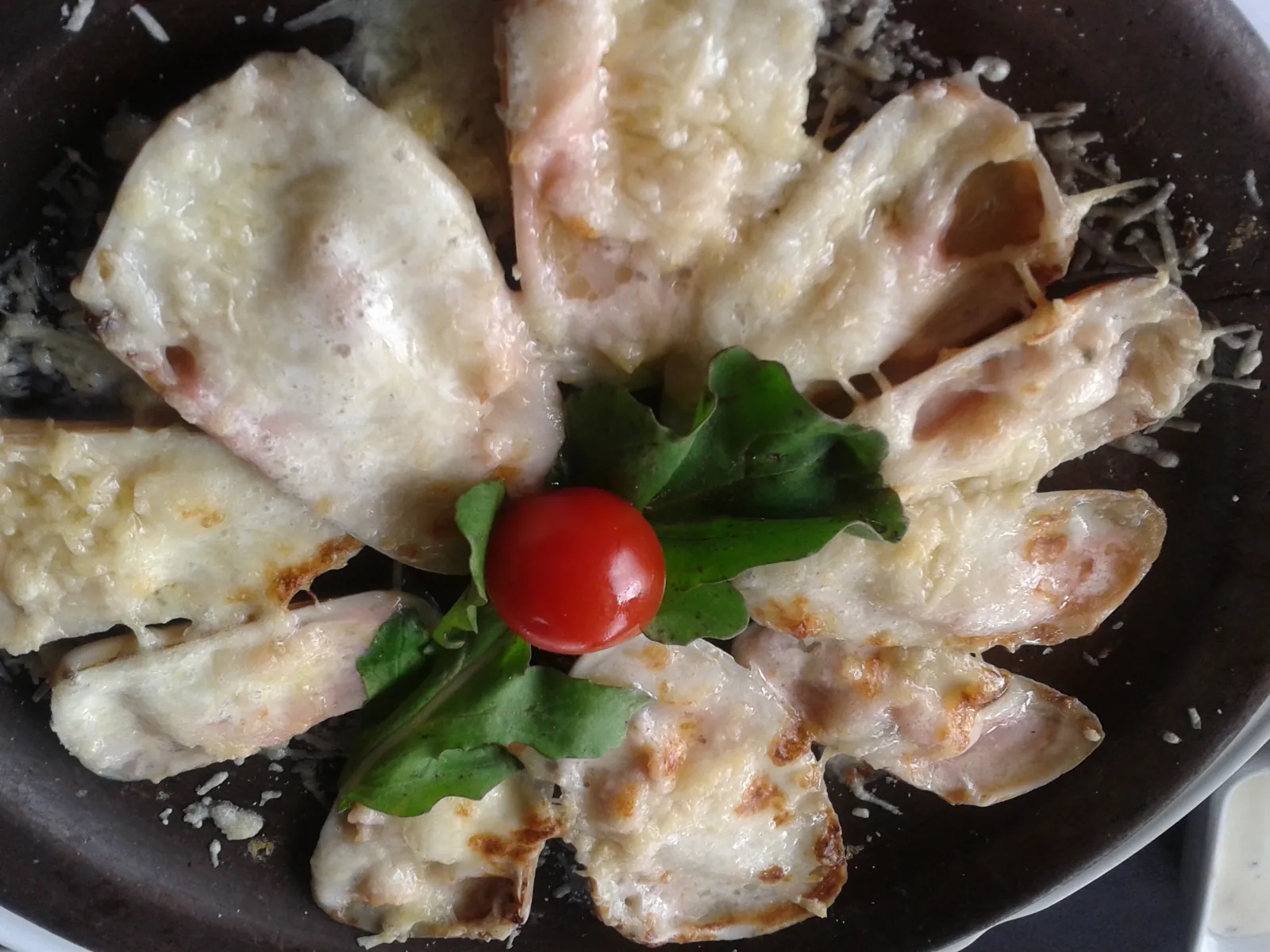
Machas a la parmesana — razor clams in their shells topped with melted golden Parmesan, garnished with greens and a cherry tomato Chile flag Chile 35m
Lunch •Valparaíso Coast Heritage

Machas a la Parmesana

This machas a la parmesana recipe bakes sweet Chilean razor clams in their own shells with garlic butter, a splash of dry white wine and a blanket of grated Parmesan that turns golden under the grill. It is the classic starter of the Valparaíso coast: briny, buttery and ready in minutes. One serving is about 200 g, six shells per person.

Coastal & Savory

Sweet razor clams baked in their shells with garlic butter, white wine and a golden Parmesan crust.

Pairs Well With
Crusty bread and lemon wedges, with a glass of dry white wine.
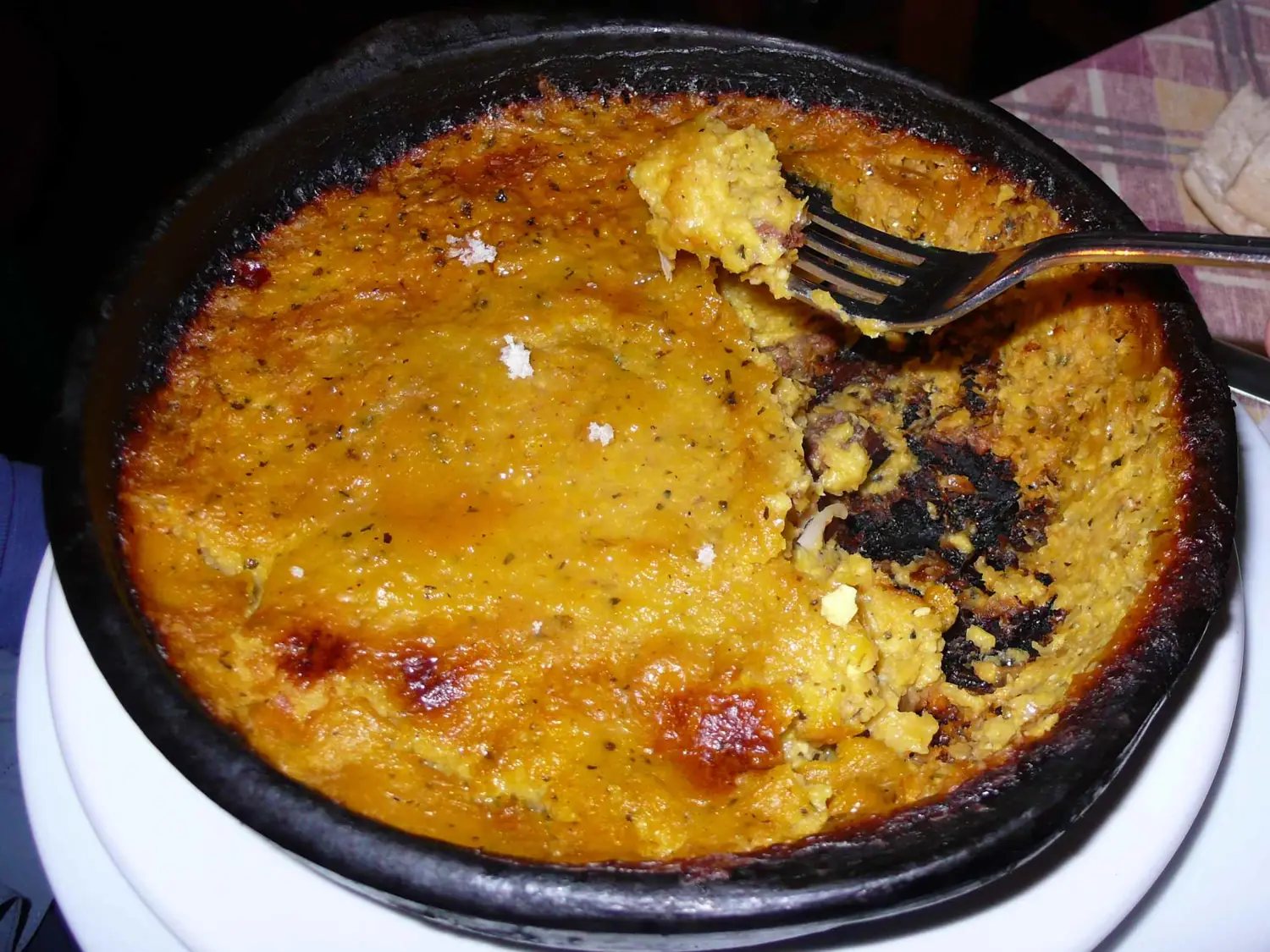
Pastel de choclo in a black clay dish, golden corn topping with a fork lifting a bite of the meat filling Chile flag Chile 1h 25m
Dinner •Chilean Countryside Heritage

Pastel de Choclo

This pastel de choclo recipe is Chile's beloved baked corn pie: a savoury filling of seasoned ground beef, chicken, hard-boiled egg, black olives and raisins, covered with a sweet, basil-flecked corn topping and baked until golden. Sweet meets savoury in every spoonful, and the clay dish it bakes in keeps it hot to the table. One serving is about 340 g.

Hearty & Satisfying

Sweet corn and basil topping over a savoury beef and chicken filling with egg, olives and raisins.

Pairs Well With
A fresh tomato salad and a glass of Chilean red wine.
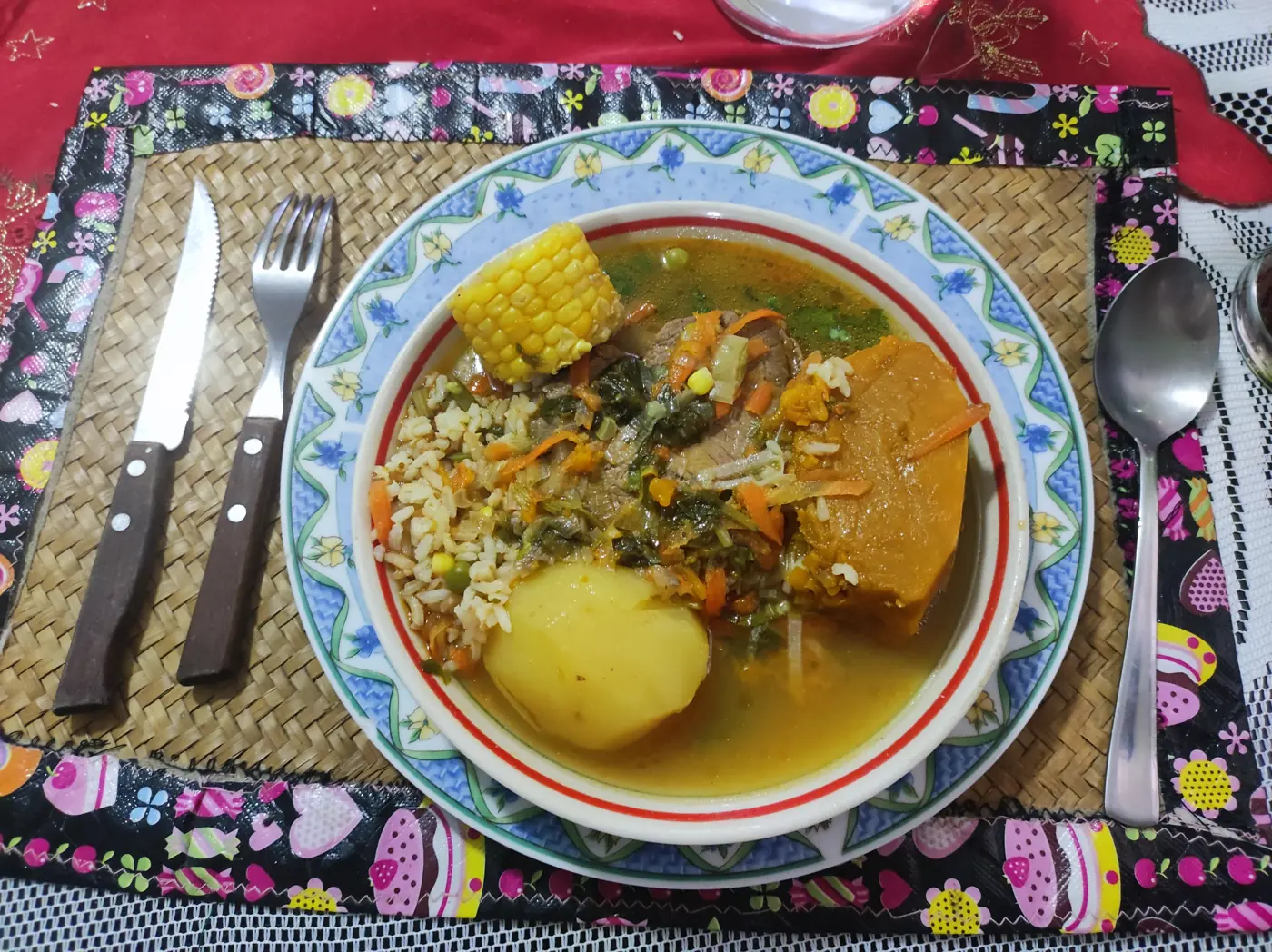
Cazuela chilena — a bowl of chicken soup with a whole potato, a piece of pumpkin, corn on the cob and rice in a golden broth Chile flag Chile 1h 20m
Lunch •Chilean Home Kitchen Heritage

Cazuela Chilena

This cazuela chilena recipe is Chile's home-cooked comfort soup, and its identity is unmistakable: a big piece of orange pumpkin, a chunk of corn on the cob, a potato and a scoop of rice, all simmered with chicken in a clear, savoury broth. The pumpkin sweetens the broth as it cooks, the corn stays sweet and firm, and the rice turns the soup into a full lunch. One serving is about 750 g, broth and all.

Comfort & Warmth

Chicken simmered with pumpkin, corn, potato and rice in a light, cilantro-scented broth.

Pairs Well With
Crusty bread and pebre salsa, with the rice spooned into the bowl.
Soups & Broths
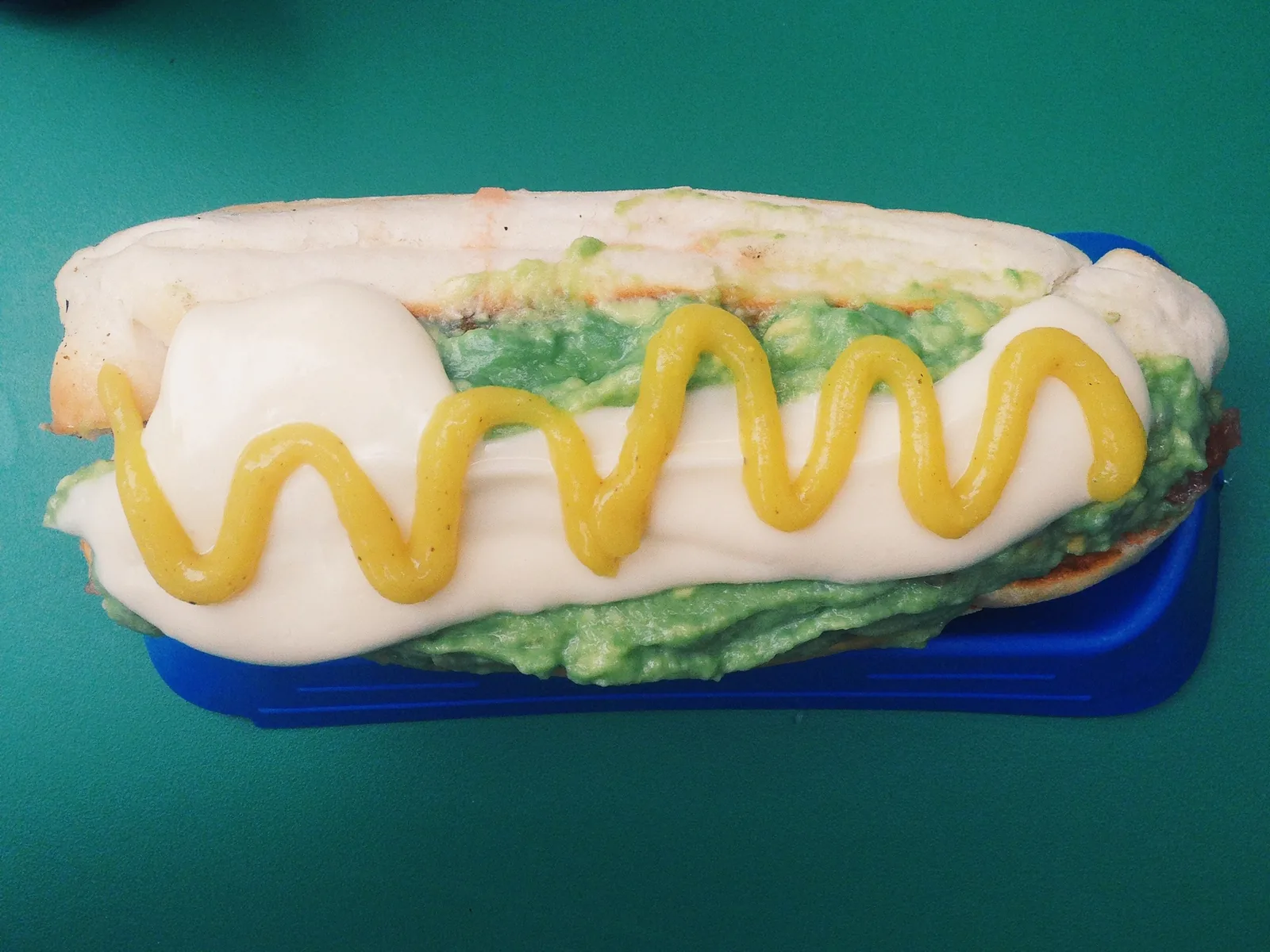
A completo chileno in a soft bun loaded with mashed avocado, mayonnaise and a mustard zigzag, with tomato peeking out at one end Chile flag Chile 25m
Snack & Tea •Chilean Street Food

Completo Chileno

A completo chileno is Chile's answer to the hot dog: a pork frankfurter in a soft bun, buried under diced tomato, a thick layer of mashed avocado and a generous ribbon of mayonnaise. It is salty, creamy and gloriously messy, and it is eaten standing up, with both hands and no cutlery. One serving is about 229 g.

Quick & Satisfying

A pork frankfurter in a soft bun, loaded with tomato, mashed avocado and mayonnaise.

Pairs Well With
Crispy fries, a cold lemonade or a lager

The Dinner Gazette

Never wonder what’s for dinner again

One email a week with easy dinner ideas from around the world — ingredients, steps and nutrition, tested in our kitchen first.

Delivered every Thursday morning. Unsubscribe anytime.