
Curated recipes from 193 countries  •  New seasonal Mediterranean issue out now

Overview

Plokkfiskur

Icelandic Fish Mash, Plokkfiskur with Rye Bread

This plokkfiskur recipe flakes poached cod into buttery mashed potato with onion, milk and a golden cheese top, the way Icelandic home cooks have stretched a good catch for generations. One serving is about 438 g, served hot with dark rye bread and melted butter.

Plokkfiskur grew out of Iceland’s fishing economy, where a good catch had to feed a household more than once. Leftover boiled fish and potatoes were folded together with milk and onion, then baked under cheese — a thrifty, warming dish that used every scrap. It remains a beloved home-cooked supper across Iceland, often served with dark rye bread and melted butter, and it is one of the first dishes Icelandic cooks learn.

Pairs well with: Dark rye bread, melted butter & pickled beets

Provenance

Iceland flag Iceland

Icelandic Heritage

Nordic & European

Time Dedication

55m

20m prep • 35m cook

Batch Yield

4 Servings

453 kcal per serving

1 serving ≈ 438 g

Technical Skill

Intermediate

Easy (One Pot, One Dish)

Meal Timing & Digestive Fit

Breakfast

Not Advised

Lunch

Hearty Midday Main

Dinner

Ideal Hearty Main

Snack & Tea

Inappropriate

High Protein Occasions: Family dinners, cold-weather suppers, fish suppers, weekend comfort food Cost: Low — about $3–4 per serving at home
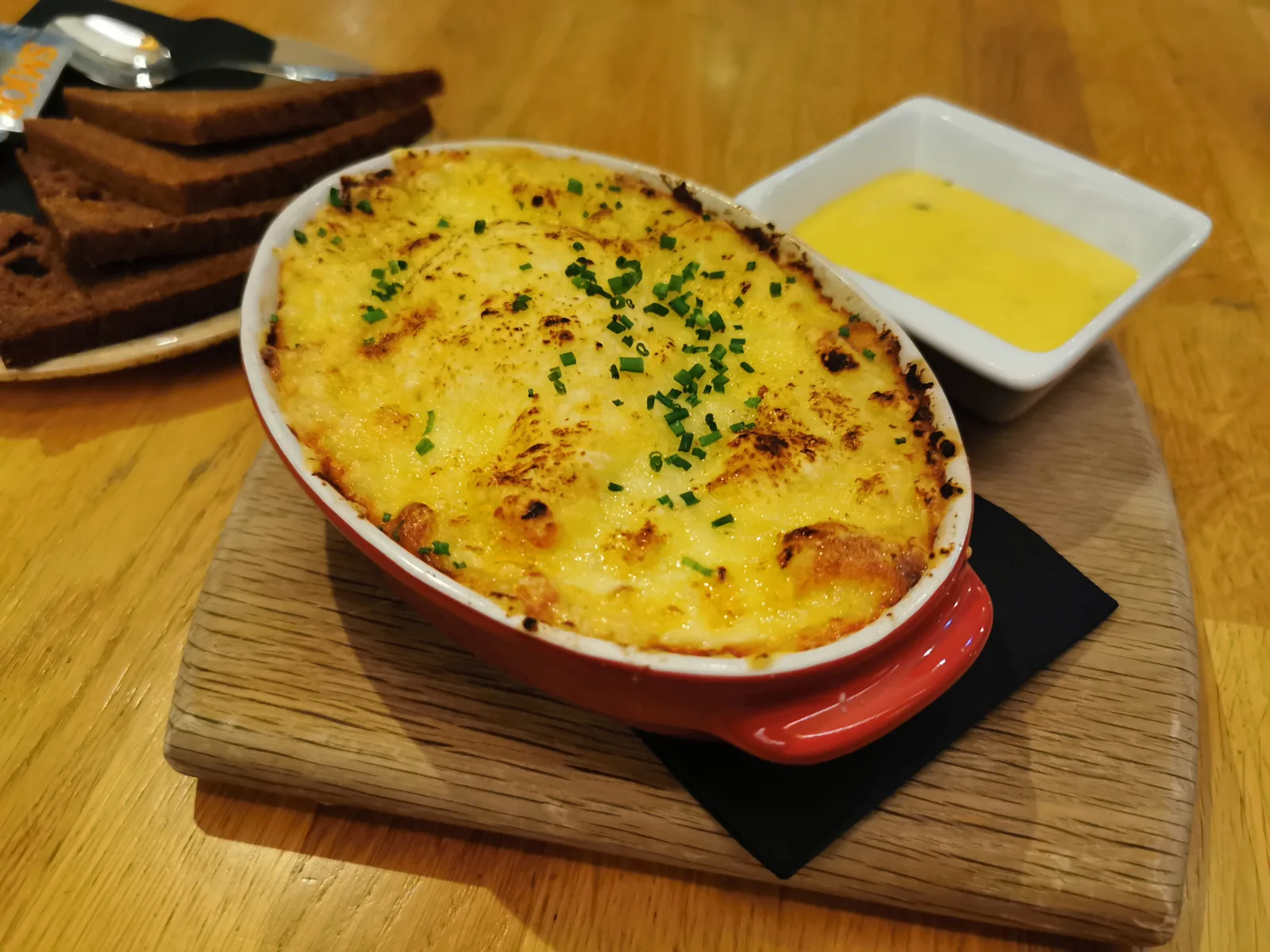
Golden baked plokkfiskur in a red oval dish topped with melted cheese and chives, served with slices of dark Icelandic rye bread and a dish of melted butter

Icelandic Heritage

Photo: Jasnaah, CC BY-SA 4.0, via Wikimedia Commons

The Heritage Formulary

Measured Ingredients

Estimated cost: Low — about $3–4 per serving at home (USD)

Cooked the traditional way: gently poached fish folded, never beaten, into buttery mashed potato and baked until golden.

Execution Methodology & Culinary Technique

Step-by-Step Cooking Guide

Active 55m
P

Prep Stage: Poach the Fish & Mash the Potato

20 Mins • Poaching & Mashing

Boil the potatoes in salted water until tender, then drain and mash with the warm milk and half the butter until smooth. Meanwhile poach the cod gently in a little of the milk for 4 to 5 minutes until it flakes, then lift it out and break it into large flakes. Soften the onion in the remaining butter until sweet and translucent.

Maestro Tip: Keep the mash a little looser than usual — the fish and the oven will firm it up, and a stiff mash turns dry in the bake.

  1. 1

    Boil & Mash the Potatoes

    15 Mins Boiling water, 100°C (212°F)

    Put the potato chunks in a large pan, cover with cold salted water and bring to the boil. Simmer for 12 to 15 minutes until a knife slides through easily, then drain well and return the pan to the low heat for a minute to steam off the water. Mash with the warm milk and half the butter until smooth, then season with salt and pepper.

    Dry potatoes make fluffy mash: a minute back on the heat after draining drives off the steam that would make the plokkfiskur wet.

    Done when: Potatoes fall apart at the touch of a knife and mash without lumps.

  2. 2

    Poach the Cod Gently

    5 Mins Gentle simmer, ~85°C (185°F)

    While the potatoes cook, put the cod chunks in a wide pan with 100 ml of the milk and just enough water to cover. Heat until the liquid barely trembles — never a rolling boil — and poach for 4 to 5 minutes until the fish turns opaque and flakes at a touch. Lift out with a slotted spoon and break into large flakes, picking out any stray bones.

    Cod overcooks in a minute, so pull it the moment it flakes; it finishes in the oven. The fish is done well above the 63°C (145°F) safe minimum for fish.

    Done when: Opaque white flakes that separate easily with a fork.

  3. 3

    Soften the Onion

    5 Mins Medium heat, ~175°C (350°F)

    Melt the remaining butter in a frying pan and cook the chopped onion over medium heat for 4 to 5 minutes, stirring now and then, until soft, sweet and translucent but not browned.

    A pinch of salt in the pan helps the onion soften without colouring.

    Done when: Soft, pale-gold onion that smells sweet.

  4. 4

    Fold, Top & Bake

    20 Mins 200°C (400°F)

    Heat the oven to 200°C (400°F) and butter a shallow baking dish. Fold the flaked cod and the softened onion gently through the mashed potato — keep the flakes whole, do not stir it into a paste. Spoon into the dish, scatter the grated cheddar over the top and bake for 18 to 20 minutes until the cheese is melted, golden in patches, and the edges bubble. Rest for 5 minutes before serving.

    Fold, don’t beat: the charm of plokkfiskur is the separate flakes of fish inside the creamy potato.

    Done when: Golden, bubbling cheese top; the centre is steaming hot, at least 74°C (165°F).

Finishing Touches & Plating

Scatter the snipped chives over the top and serve straight from the dish with dark rye bread and a small jug of melted butter for pouring over each portion.

Nutritional Physiology & Benefits

Nutrition

Energy

453

kcal / serving

Protein

37g

Complete AA

Carbs

38g

Complex

Fats

17g

Healthy

Per serving (4 servings · 1 serving ≈ 438 g)
Energy453 kcal
Protein37 g
Carbohydrates38 g
Fat17 g
Fibre4.5 g
Sugar6.9 g
Sodium772 mg
Per 100g
Energy103 kcal
Protein8.5 g
Carbohydrates8.7 g
Fat3.9 g
Fibre1 g
Sugar1.6 g
Sodium176 mg

Nutrition values are estimated — calculated from USDA FoodData Central values for the listed ingredients.

Vitamins & minerals: Cod supplies vitamin B12, selenium and iodine, potatoes add vitamin C, vitamin B6 and potassium, and milk and cheese add calcium. All nutrition values are estimated.

Lean Protein from Cod

One serving gives about 37.0 g of protein from cod, a lean fish that keeps you full without a heavy, fatty meal.

Potassium & Vitamin C

Potatoes are a useful source of potassium and vitamin C, and the onion and chives add small amounts of folate and vitamin K.

Iodine & B12

White fish is one of the best everyday sources of iodine and vitamin B12, both of which support normal thyroid function and red blood cell formation.

Food Pairings

What to Eat With

To optimize nutrient absorption and elevate the sensory depth, pair with these authentic accompaniments:

Sides

Dark Rye Bread

Dense, slightly sweet rúgbrauð is the classic partner — it soaks up the creamy mash and the melted butter, and the contrast of dark bread against pale fish is the whole Icelandic table.

Vegetables

Pickled Beets

Sharp, sweet-sour beets cut through the rich, buttery mash and reset the palate between spoonfuls.

Cucumber Salad

Cold, crisp cucumber in a light vinegar dressing adds crunch and acidity next to the soft, warm plokkfiskur.

Sauces

Melted Butter

A little jug of melted butter poured over each serving is the traditional finish — it enriches the mash and carries the flavour of the fish.

Drinks

Cold Lager or Water

A cold, light lager or a glass of icy water suits a salty, buttery fish dish far better than anything heavy or sweet.

Complete menu

Start with pickled beets and cucumber salad, serve the plokkfiskur hot from the dish with dark rye bread and melted butter, and finish with skyr and berries.

Digestive Guardrails

What NOT to Combine

To prevent digestive distress, sluggishness, or palate clash, avoid pairing the dish with these elements:

Very Salty Sides

The dish already carries about 772 mg sodium per serving from the salt, cheese and butter, so pairing it with other very salty foods such as cured fish or salty cheese can push one meal far above a comfortable sodium level. This is general food information, not medical advice.

Extra Cream on Top

The mash is already rich with milk, butter and cheese, so pouring on extra cream adds a lot of saturated fat without improving the flavour. This is general food information, not medical advice.

General information only, not medical advice — consult a doctor for personal dietary decisions.

Who Should Eat It

Who Should Eat

  • General adultsA balanced, satisfying dinner — about 37.0 g protein and 453 kcal per serving, best eaten hot in a sensible portion.
  • ChildrenChildren usually love the mild fish and creamy potato; check carefully for small bones and let the dish cool a little before serving.
  • ElderlySoft, easy to chew and rich in protein, but the cheese and butter make it fairly salty — serve a modest portion with pickled vegetables.
  • Pregnant womenFine as an occasional dinner; cod is a low-mercury fish, but make sure it is cooked right through to 63°C (145°F) in the centre.
  • Breastfeeding womenA comforting, protein-rich dinner; the fish, milk and potato supply iodine, B12 and energy, but one serving is enough.
  • AthletesExcellent post-training food for the lean protein, with potato carbohydrate for recovery — pair with a big salad rather than extra butter.
  • Weight gainEnergy-rich and easy to eat, so it suits weight gain when served with rye bread, butter and cheese.
  • Weight lossFilling and high in protein at 453 kcal a serving; keep to one portion, go light on the butter, and fill half the plate with cucumber salad.

Health Conditions — Adjust or Avoid

Conditions

  • DiabetesPotato is starchy, so keep the serving to the stated 438 g and skip extra bread; the cheese adds a little more fat. Ask your clinician about portions.
  • High blood pressureOne serving carries about 772 mg sodium from the salt, cheese and butter, so keep other salty foods out of the same meal and do not add extra salt at the table. Ask your clinician about portions.
  • Kidney diseasePotato is high in potassium, which matters for some kidney diets; portions should stay modest. Ask your clinician about portions.
  • GoutCod is a moderate-purine fish, so the fish content is the main thing to watch; keep to one modest serving. Ask your clinician about portions.
  • Stomach issuesA buttery, cheesy mash can be heavy on a sensitive stomach; eat slowly, take a smaller portion, and skip the extra melted butter if dairy bothers you. Ask your clinician about portions.
  • Cardiovascular diseaseThe butter and cheese add saturated fat, so one modest serving with a big plate of pickled vegetables is a better balance than a second helping. Ask your clinician about portions.
  • Fatty liverThe dish is rich in fat and energy-dense, so keep portions modest and avoid eating it late at night. Ask your clinician about portions.
  • Food allergiesContains fish (cod), milk, butter and cheese. People with fish or milk allergy should not eat it unless a safe substitute is used. Ask your clinician about safe alternatives.
  • Special therapeutic dietsNot suitable for a low-fat therapeutic diet as written; a version without the cheese and with less butter changes the dish and should be discussed with a clinician.

If you have a medical condition, consult your doctor before changing your diet.

Storage & Use

Storage & Use

How to store
Cool quickly and store in an airtight container.
In the fridge
Plokkfiskur keeps 2 days in the fridge at 4°C (40°F) or below.
In the freezer
Up to 1 month; the potato can turn grainy, so freeze only if needed.
How to reheat
Reheat in the oven at 180°C (350°F) for 20 minutes until steaming hot throughout, to 74°C (165°F); stir halfway so the fish heats evenly.
Freezing recommended
No — best eaten fresh; freezing makes the mash watery.
Signs it has spoiled
Sour or fishy smell, grey discolouration, or a slimy surface.

More recipes to explore

A white cup of Icelandic lamb soup with pieces of carrot and potato in a golden broth, with a white spoon, on a wooden table Iceland flag Iceland 2h 15m
Dinner •Icelandic Heritage

Icelandic Lamb Soup

This icelandic lamb soup recipe simmers bone-in lamb shoulder in a clear broth with potato, carrot, rutabaga, cabbage and pearl barley until the meat falls tender. One serving is about 600 g, a big brothy bowl served with rye bread.

Comfort & Warmth

A clear, brothy lamb soup with root vegetables, cabbage and barley — Iceland’s oldest bowl, thin and nourishing rather than thick and heavy.

Pairs Well With
Rye bread, flatbread & butter
Soups & Broths • High Protein
Slices of dark Icelandic rúgbrauð rye bread served on a plate with flatbread Iceland flag Iceland 4h 15m
Breakfast •Icelandic Heritage

Icelandic Rye Bread

This icelandic rye bread recipe bakes dark rye flour, buttermilk, molasses and honey into a dense, moist loaf that cooks for four hours at low heat, the home version of the geothermal bread baked in Iceland’s hot ground. One serving is about 92 g, one thick slice.

Comfort & Warmth

A dense, dark, faintly sweet rye loaf baked low and slow in a covered pot — the bread Iceland once baked in the hot earth itself.

Pairs Well With
Butter, smoked salmon & pickled herring
Bœuf bourguignon — French beef braised in red wine France flag France 4h
Dinner •Burgundy Terroir

Bœuf Bourguignon

Beef braised gently in red wine until the connective tissue melts into a velvet, gelatin-rich sauce — the classic Burgundy Sunday dinner.

Cellular Repair

Beef braised in red wine until spoon-tender, with mushrooms and pearl onions.

Pairs Well With
Parsnip Purée & Steamed French Haricots Verts
High Protein
Vietnamese braised pork belly with golden eggs in caramel sauce Vietnam flag Vietnam 1h 45m
Dinner •One Pot

Vietnamese Braised Pork and Eggs

Pork belly slowly braised in coconut water and caramel until meltingly tender, with golden eggs that soak up the sweet-savoury sauce — the Vietnamese family dish that tastes better the next day.

Comfort & Sustained Energy

Slow-braised pork belly and eggs in coconut water and caramel.

Pairs Well With
Steamed rice & pickled mustard greens
High Protein

The Dinner Gazette

Never wonder what’s for dinner again

One email a week with easy dinner ideas from around the world — ingredients, steps and nutrition, tested in our kitchen first.

Delivered every Thursday morning. Unsubscribe anytime.



