
Curated recipes from 193 countries  •  New seasonal Mediterranean issue out now

Overview

Papua New Guinea Nangu

Nangu, PNG Sago Jelly

This nangu recipe is Papua New Guinea's soft sago dish: white sago starch stirred with hot water until it turns into a smooth, translucent jelly, spooned into a bowl and served with warm coconut milk, wilted leafy greens and carrot. It is mild, soft and comforting — the opposite of the crisp sago pancake — and in the sago-palm lowlands it is an everyday dinner, often with a piece of cooked fish laid at the side of the bowl. The recipe as written is plant-based; the fish is an optional accompaniment. One serving is about 440 g.

Sago is the staple food of Papua New Guinea's lowland and river communities, above all along the Sepik River, where the sago palm (Metroxylon sagu) grows in swamps. Families wash the starch from the palm's pith and dry it for storage, then cook it in many forms — and the soft jelly is one of the oldest: starch stirred with hot water until it turns clear. It is eaten with whatever the garden and the river provide, most often coconut milk, aibika or other leafy greens, and fish. The spelling here is nangu, although the photograph's file name on Wikimedia Commons spells it 'Nagy'.

Pairs well with: Warm coconut milk with greens, and — as in Papua New Guinea — a piece of grilled or boiled fish at the side

Provenance

Papua New Guinea flag Papua New Guinea

PNG Sago Jelly Bowl

Oceania & Pacific

Time Dedication

35m

15m prep • 20m cook

Batch Yield

4 Servings

472 kcal per serving

1 serving ≈ 440 g

Technical Skill

Easy

Easy (One Pot)

Meal Timing & Digestive Fit

Breakfast

Not Advised

Lunch

Hearty Midday Main

Dinner

Ideal Hearty Main

Snack & Tea

Inappropriate

Occasions: Family dinner, village meals, light evening meal, gentle meal when appetite is low Cost: Low — about $2–3 per serving at home
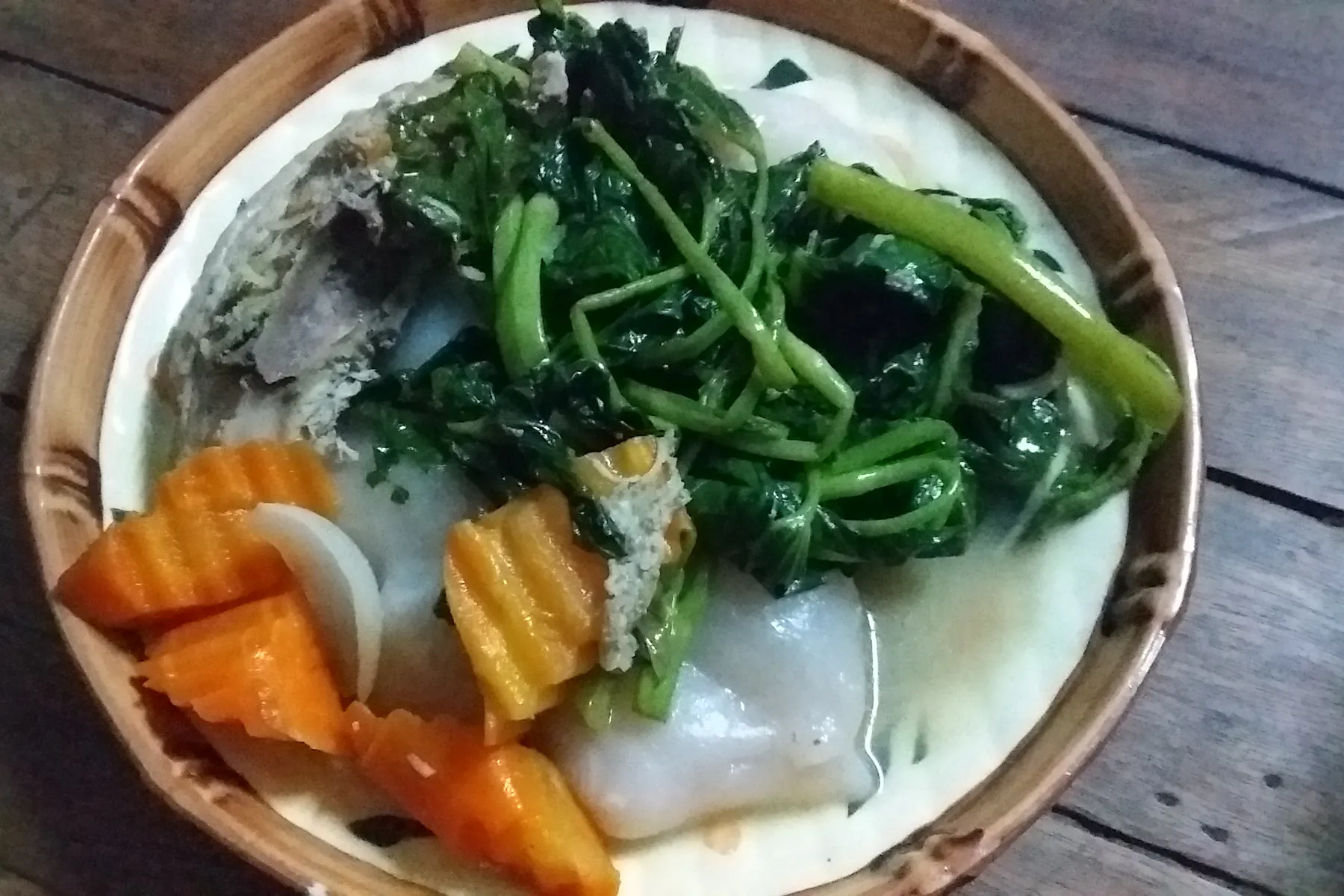
A bowl of translucent sago jelly (nangu) in coconut milk topped with cooked leafy greens and carrot, with a piece of what appears to be cooked fish at the side

PNG Sago Jelly Bowl

Photo: Fiona opal, CC BY-SA 4.0, via Wikimedia Commons

The Heritage Formulary

Measured Ingredients

Estimated cost: Low — about $2–3 per serving at home (USD)

A good nangu is judged by the jelly: it should be soft, smooth and clear right through, with no chalky white lumps, and the coconut milk should coat it without drowning it.

Execution Methodology & Culinary Technique

Step-by-Step Cooking Guide

Active 35m
P

Prep Stage: Greens, Carrot & Boiling Water

15 Mins • Knife Work & Boiling Water

Strip the spinach from its tough stems, wash it well and chop roughly. Peel the carrots and cut them into thick chunks about 3 cm across; slice the onion into thin rings. Put the 600 ml of water on to boil — it must be at a full rolling boil when the sago meets it. Shake the coconut milk until smooth and set the measured sago starch beside the stove, dry, ready to use.

Maestro Tip: Have everything ready before the water boils: once the sago hits the hot water it thickens in seconds, and there is no time to chop vegetables mid-step.

  1. 1

    Prepare the Greens, Carrot and Onion

    10 Mins Room temperature

    Strip the spinach leaves from their stems, wash them well and chop roughly. Peel the carrots and cut them into thick chunks about 3 cm across. Peel the onion and slice it into thin rings. Put the 600 ml of water on to boil.

    Cut the carrot chunks thick — thin slices overcook and fall apart in the coconut milk before the greens are done.

    Done when: Greens washed and chopped; carrot in even chunks; onion sliced; water on the heat.

  2. 2

    Simmer the Coconut Milk, Carrot and Greens

    10 Mins 90°C (194°F)

    Pour the 400 ml of coconut milk into a wide pot, add the sliced onion, the carrot chunks and the 4 g of salt, and bring it to a gentle simmer — about 90°C (194°F), with small bubbles breaking the surface, not a hard boil. Simmer for 8 minutes until the carrot is just tender. Stir in the spinach and cook for 2 minutes more until it has wilted completely. Take the pot off the heat and keep it warm with the lid on.

    Do not let the coconut milk boil hard — it can split and turn grainy. A gentle simmer keeps it smooth.

    Done when: Carrot is tender when pierced with a knife; spinach is fully wilted; coconut milk is hot but not boiling hard.

  3. 3

    Stir the Sago Into a Jelly

    3 Mins 100°C (212°F)

    While the greens cook, put the 240 g of sago starch in a large heatproof bowl. The moment the 600 ml of water reaches a full rolling boil at 100°C (212°F), pour it over the starch in a thin, steady stream while stirring hard and fast with a wooden spoon. Keep stirring for 2–3 minutes: the starch first goes cloudy, then turns thick, glossy and translucent. Stop when the whole bowl is clear and smooth with no white lumps — add a splash more boiling water if a few lumps remain.

    Stir hard and do not stop while the water goes in — pausing lets the starch set into lumps that are almost impossible to stir out.

    Done when: The jelly is smooth, glossy and translucent right through, with no chalky white lumps.

  4. 4

    Serve the Jelly With the Coconut Milk and Greens

    2 Mins Serving temperature

    Spoon the warm jelly into 4 wide bowls, about 110 g of jelly per bowl. Ladle the warm coconut milk, greens, carrot and onion over the top so the jelly sits in the sauce. Serve at once, while the jelly is soft and warm and the coconut milk is hot.

    Serve immediately — the jelly firms and the coconut milk cools fast, and the dish is at its best warm from the pot.

    Done when: Each bowl holds soft jelly under warm coconut milk with greens and carrot on top.

Finishing Touches & Plating

Serve the nangu in wide bowls, jelly first, then the warm coconut milk and greens ladled over the top. In Papua New Guinea a piece of grilled or boiled fish is often laid at the side of the bowl, as in the photograph — add it if you like, or keep the bowl plant-based as written.

Nutritional Physiology & Benefits

Nutrition

Energy

472

kcal / serving

Protein

5g

Complete AA

Carbs

64g

Complex

Fats

24g

Healthy

Per serving (4 servings · 1 serving ≈ 440 g)
Energy472 kcal
Protein5 g
Carbohydrates64 g
Fat24 g
Fibre5.6 g
Sugar6.4 g
Sodium489 mg
Per 100g
Energy107 kcal
Protein1.2 g
Carbohydrates14.5 g
Fat5.5 g
Fibre1.3 g
Sugar1.5 g
Sodium111 mg

Nutrition values are estimated — calculated from USDA FoodData Central values for the listed ingredients.

Vitamins & minerals: Vitamin A and folate (carrot, spinach), vitamin C (spinach), vitamin K (spinach), potassium (coconut milk, spinach).

Gentle on the Stomach

The soft jelly, warm coconut milk and wilted greens are bland, low in fat per bite and easy on the stomach — a meal people turn to when they want something gentle.

Fibre From the Greens

Spinach and carrot bring about 5.6 g of fibre per serving, which slows the meal down and keeps the soft sago satisfying for longer.

Greens Supply the Vitamins

Spinach, carrot and coconut milk together supply potassium, vitamin A, folate and vitamin K — nutrients the sago jelly itself does not have.

Food Pairings

What to Eat With

To optimize nutrient absorption and elevate the sensory depth, pair with these authentic accompaniments:

Vegetables

Leafy Greens in Coconut Milk

The greens are cooked in the same coconut milk, so they pick up its richness while adding fibre, colour and vitamins the jelly lacks.

Sides

Carrot Cooked in Coconut Milk

The carrot chunks simmer in the coconut milk until tender and add sweetness and a soft bite against the smooth jelly.

More Pairings

Grilled or Boiled Fish (Optional)

In Papua New Guinea the bowl is often served with a piece of grilled or boiled fish laid at the side, as in the photograph — the fish adds the protein the plant-based bowl lacks and its savoury flavour suits the mild jelly.

Drinks

Plain Tea or Water

Plain tea or water is the right match — the bowl is already rich from the coconut milk and needs nothing sweet or heavy alongside it.

Complete menu

Serve the nangu as the main bowl with a piece of grilled or boiled fish at the side and sliced cucumber or fresh fruit to finish — the mild jelly and coconut milk carry the meal, and the fish and fruit add protein and freshness.

Digestive Guardrails

What NOT to Combine

To prevent digestive distress, sluggishness, or palate clash, avoid pairing the dish with these elements:

Very Salty Sauces on Top

The bowl already carries about 489 mg of sodium per serving from the salt and coconut milk, so a salty sauce on top can push the meal well past what the recipe intends. Taste first. This is general information, not medical advice.

Reheating the Jelly Repeatedly

Reheated sago jelly turns gluey, then watery, and never comes back to its soft, smooth texture. Cook the jelly fresh for each meal and eat it the same day.

Serving Undercooked Sago Lumps

Sago starch must be fully cooked until the jelly is clear and translucent right through — chalky white lumps mean raw starch, which is hard to digest. Keep stirring and add a splash more boiling water if lumps remain.

General information only, not medical advice — consult a doctor for personal dietary decisions.

Who Should Eat It

Who Should Eat

  • General adultsA gentle, filling dinner — mild and soft, with greens and carrot for balance.
  • ChildrenSuitable from age 3+; the jelly is soft and easy to swallow, but serve it warm rather than hot and cut the carrot small.
  • ElderlyVery good — soft, warm and easy to eat, with no chewing difficulty.
  • Pregnant womenGenerally suitable; the dish is mild and low in risk, but keep the coconut milk portion moderate and make sure any fish served alongside is cooked through.
  • Breastfeeding womenGenerally suitable — the coconut milk and greens add energy and minerals; keep the salt moderate.
  • AthletesA good easy-to-digest evening meal after training, but add a protein such as fish or egg — the bowl as written has only about 5 g of protein.
  • Weight gainA good choice — eat the full serving with the coconut milk, and add a piece of fish for extra energy.
  • Weight lossUse light coconut milk and go easy on the jelly portion — fill more of the bowl with greens and carrot instead.

Health Conditions — Adjust or Avoid

Conditions

  • DiabetesSago jelly is a fast starch — keep the jelly to about a cup and fill the rest of the bowl with greens and carrot, and ask your clinician about portion size.
  • High blood pressureHalve the salt and use light coconut milk — most of the sodium sits in the seasoning and the coconut milk.
  • Kidney diseaseCoconut milk and spinach are both high in potassium; eat a smaller portion and ask your clinician whether this dish fits your plan.
  • GoutThe bowl as written is low in purines and usually fine; if you add fish, keep the piece modest, as some fish are high in purines.
  • Stomach issuesThe soft jelly and wilted greens are usually easy to digest — eat it warm and fresh, and skip extra fat if your stomach is sensitive.
  • Cardiovascular diseaseCoconut milk is high in saturated fat, so keep the portion moderate and use light coconut milk if you eat this often.
  • Fatty liverKeep the jelly portion modest and use light coconut milk — the dish is energy-dense from the sago and the coconut fat.
  • Food allergiesContains no gluten, egg, milk or nuts as written. Coconut is classed as a tree nut by some food authorities — check with your clinician if you have a tree-nut allergy. Any fish served alongside is a separate allergen.
  • Special therapeutic dietsIf you follow a prescribed low-potassium, low-sodium or low-carbohydrate diet, use a smaller portion, less salt and light coconut milk, and check with your clinician.

If you have a medical condition, consult your doctor before changing your diet.

Storage & Use

Storage & Use

How to store
Cool the coconut milk and greens quickly and refrigerate in a covered container. The sago jelly does not store well — make it fresh for each meal.
In the fridge
The coconut milk and greens keep up to 2 days in a covered container at 4°C (39°F) or below; make the jelly fresh each time.
In the freezer
Not recommended — frozen sago jelly turns watery and grainy when thawed.
How to reheat
Reheat the coconut milk and greens gently to 74°C (165°F) in a covered pan; do not reheat the jelly — make a fresh batch.
Freezing recommended
No.
Signs it has spoiled
Sour smell from the coconut milk, slimy or dark greens, or jelly that smells sour or has gone watery.

More recipes to explore

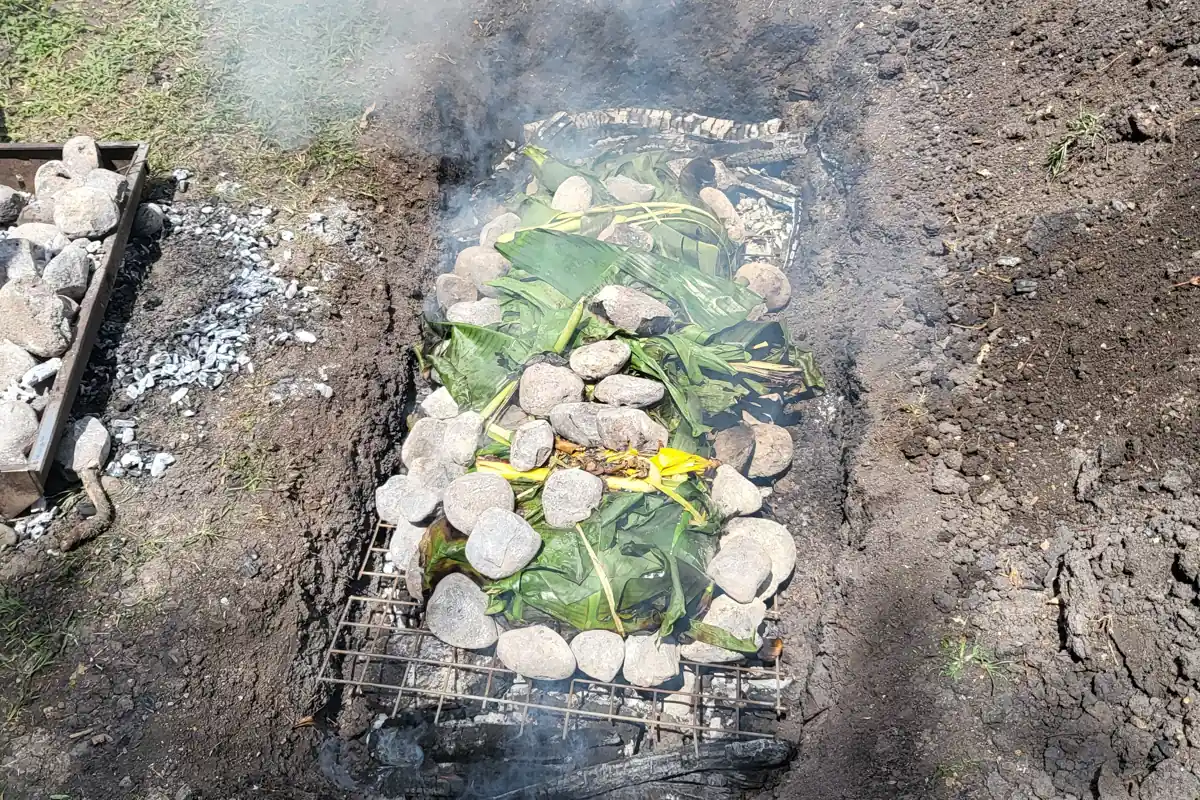
A traditional mumu earth oven in Papua New Guinea — banana-leaf parcels and hot stones steaming in a pit dug in the ground Papua New Guinea flag Papua New Guinea 3h 45m
Dinner •PNG Earth-Oven Feast

Papua New Guinea Mumu

This mumu recipe brings Papua New Guinea's earth-oven feast into a home kitchen: pork shoulder and chicken thighs rubbed with garlic, ginger and salt, layered with taro, sweet potato, green cooking banana and leafy greens in banana-leaf parcels, with coconut milk poured over the top, then slow-roasted until everything is tender and smoky. Traditionally the parcels go onto white-hot stones in a pit dug in the ground and are buried under leaves and earth; here a low oven and a covered Dutch oven do the same job, and the recipe says so plainly. One serving is about 595 g.

Hearty & Communal

Pork and chicken slow-cooked with taro, sweet potato and cooking banana in banana leaves, with coconut milk poured over the layers.

Pairs Well With
Steamed rice and lime wedges on the side, with the coconut cooking juices spooned over
High Protein
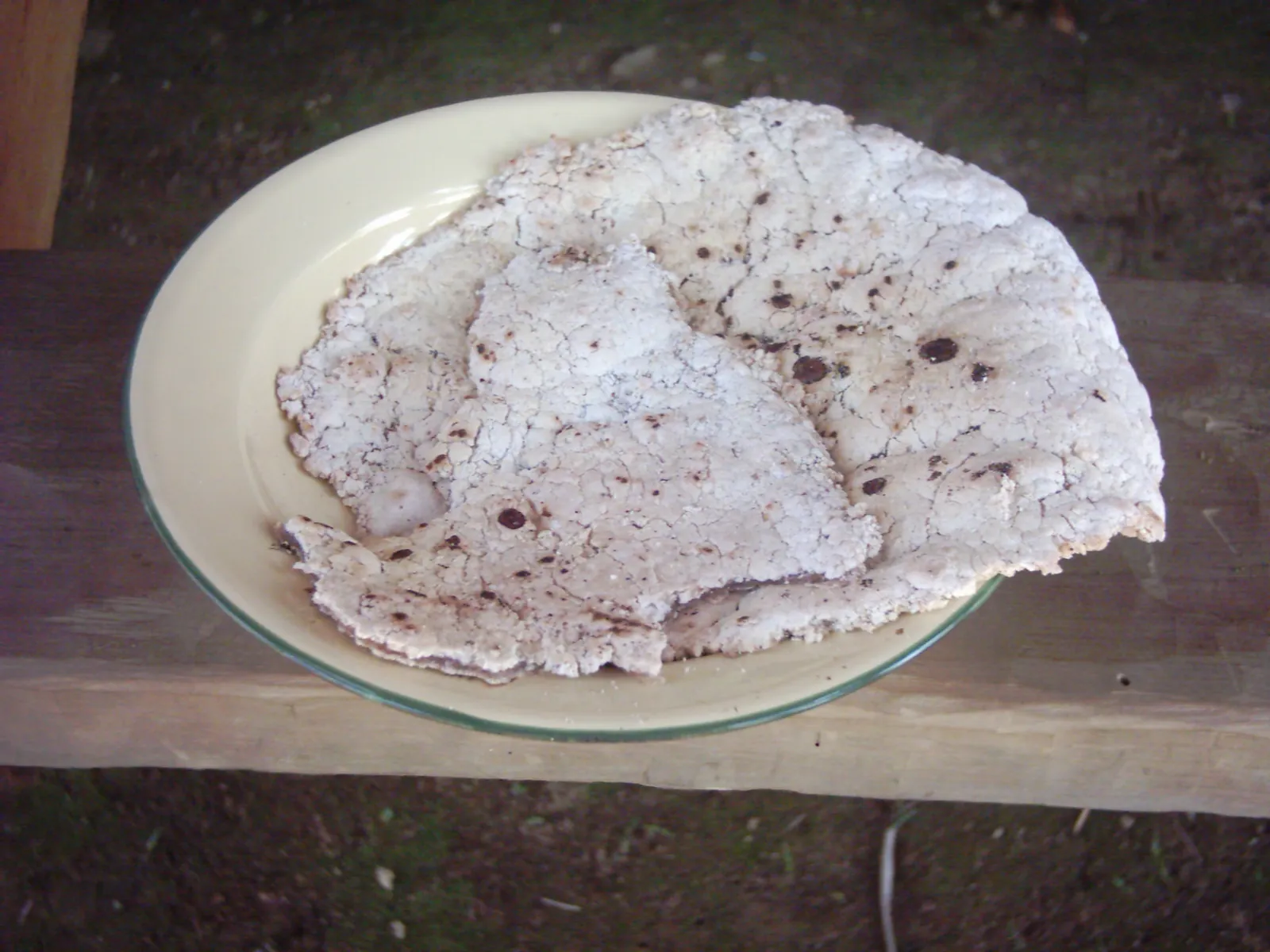
A plate of thin, crisp Papua New Guinea sago pancakes made from sago starch and water, lightly browned in spots, on a cream enamel plate Papua New Guinea flag Papua New Guinea 30m
Breakfast •East Sepik Flatbread

Papua New Guinea Sago Pancake

This sago pancake recipe is Papua New Guinea's simplest breakfast: white sago starch mixed with water into a thick batter, spread thin on a hot plate and cooked until dry, crisp and lightly speckled. It has no banana, no coconut milk and no filling — just the clean, mild taste of sago itself, with a crackle that softens as it cools. In the Sepik River lowlands, where the sago palm is the staple food, flatbreads like this are cooked fresh every morning. One serving is about 160 g.

Simple & Filling

Two ingredients — sago starch and water — griddle-cooked into a crisp, naturally gluten-free flatbread.

Pairs Well With
Hot tea and sliced tropical fruit, with the warm pancakes broken into pieces at the table
Bœuf bourguignon — French beef braised in red wine France flag France 4h
Dinner •Burgundy Terroir

Bœuf Bourguignon

Beef braised gently in red wine until the connective tissue melts into a velvet, gelatin-rich sauce — the classic Burgundy Sunday dinner.

Cellular Repair

Beef braised in red wine until spoon-tender, with mushrooms and pearl onions.

Pairs Well With
Parsnip Purée & Steamed French Haricots Verts
High Protein
Vietnamese braised pork belly with golden eggs in caramel sauce Vietnam flag Vietnam 1h 45m
Dinner •One Pot

Vietnamese Braised Pork and Eggs

Pork belly slowly braised in coconut water and caramel until meltingly tender, with golden eggs that soak up the sweet-savoury sauce — the Vietnamese family dish that tastes better the next day.

Comfort & Sustained Energy

Slow-braised pork belly and eggs in coconut water and caramel.

Pairs Well With
Steamed rice & pickled mustard greens
High Protein

The Dinner Gazette

Never wonder what’s for dinner again

One email a week with easy dinner ideas from around the world — ingredients, steps and nutrition, tested in our kitchen first.

Delivered every Thursday morning. Unsubscribe anytime.



