Curated recipes from 193 countries  •  New seasonal Mediterranean issue out now

Overview

Quipes

Dominican Kipes, Dominican Kibbeh, Kipe

This quipes recipe makes the Dominican version of Lebanese kibbeh: fine bulgur kneaded with lean ground beef into a smooth shell, wrapped around a sofrito-seasoned beef filling with green olives and raisins, shaped into torpedoes and fried until deep golden and crisp. Quipes are the star of the Dominican picadera platter, eaten hot with a shake of hot sauce. One serving is about 195 g.

Quipes came to the Dominican Republic with Lebanese immigrants who arrived at the end of the 19th century, bringing kibbeh with them. Dominicans made it their own: lamb gave way to beef, which was cheaper and easier to find, and the filling took on the island's own seasonings — sofrito, olives, raisins and Dominican oregano — while mint, cumin and pine nuts fell away. The dish took root in the east and south of the country and is now the must-have bite on every picadera platter, at street fairs and family parties alike.

Pairs well with: Crisp beef and bulgur croquettes with hot sauce and a cold drink

Provenance

Dominican Republic flag Dominican Republic

Dominican Street-Food Classic

Latin America & Caribbean

Time Dedication

1h 5m

40m prep • 25m cook

Batch Yield

6 Servings

380 kcal per serving

1 serving ≈ 195 g

Technical Skill

Advanced

Hard (Shaping & Deep-Frying)

Meal Timing & Digestive Fit

Breakfast

Not Advised

Lunch

Inappropriate

Dinner

Inappropriate

Snack & Tea

Ideal Light Bite

Occasions: Street fairs, picadera platters, family parties, Christmas gatherings, game day Cost: Low — about $2–3 per serving at home
Tags: Beef Savory Fried
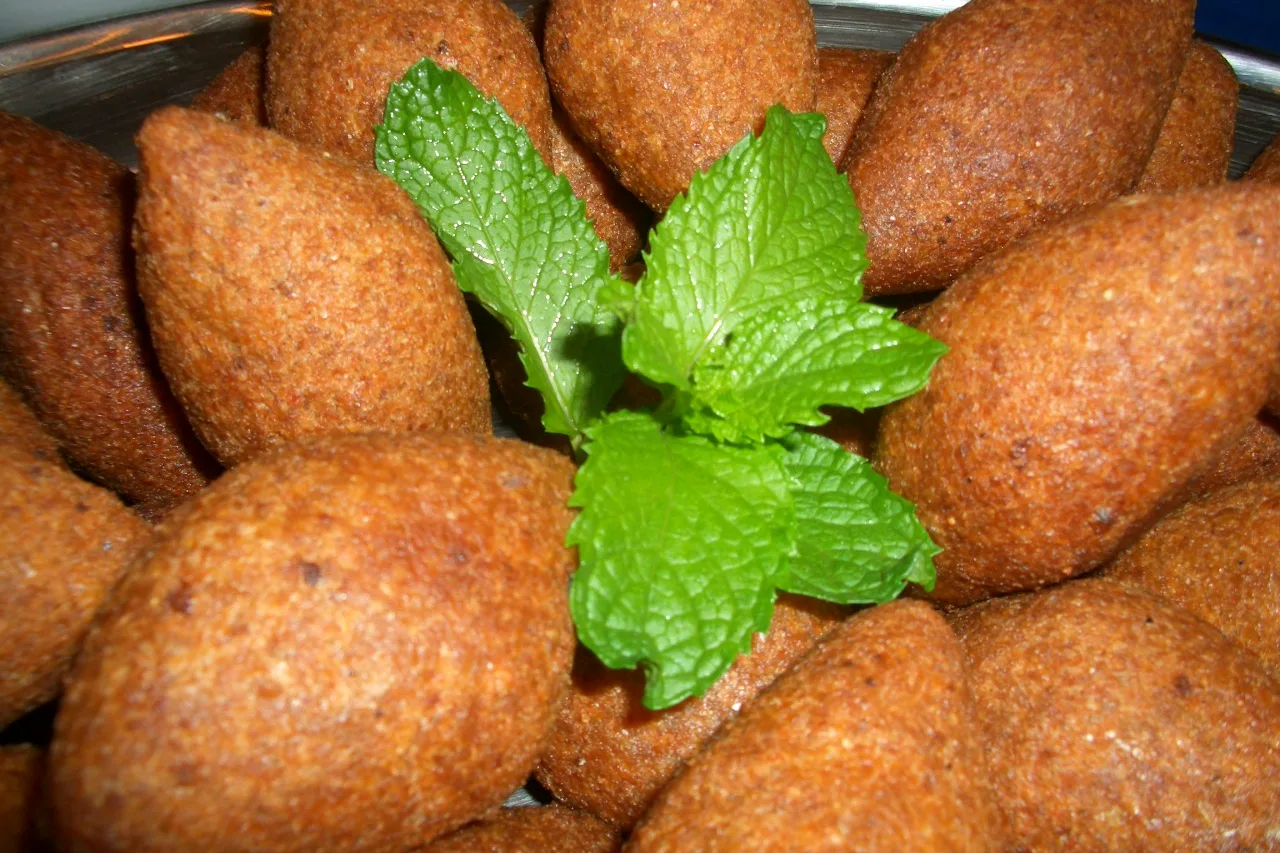
Golden fried quipes — Dominican bulgur and beef torpedo croquettes piled on a silver tray with fresh mint leaves

Dominican Street-Food Classic

Photo: Bazel, CC BY-SA 3.0, via Wikimedia Commons

The Heritage Formulary

Measured Ingredients

Estimated cost: Low — about $2–3 per serving at home (USD)

A good quipe is deep golden and crisp outside, smooth and tender inside, with a savoury-sweet filling and no grease on the fingers.

Execution Methodology & Culinary Technique

Step-by-Step Cooking Guide

Active 1h 5m
P

Prep Stage: Bulgur Soaking, Filling Cooling

40 Mins • Soaking & Shaping

Quipes are a two-part job: the bulgur soaks while you cook the filling, then the shell is kneaded and the croquettes are shaped. Soak the bulgur first, cook the filling while it soaks, and let the filling cool completely before shaping — warm filling tears the shell. Have a bowl of water nearby for wetting your hands.

Maestro Tip: Squeeze the soaked bulgur really dry — wet bulgur makes a sticky shell that will not hold its shape in the oil.

  1. 1

    Soak the Bulgur

    20 Mins Cold water, about 20°C (68°F)

    Rinse the bulgur in a sieve, then put it in a bowl and cover with cold water. Leave for 20 minutes until the grains are tender and swollen, then drain and squeeze the bulgur dry in small handfuls — it should feel damp, not wet.

    Squeeze each handful over the bowl until no more water drips out; dry bulgur kneads into a smooth shell.

    Done when: The grains are soft enough to crush between your fingers, and the squeezed bulgur holds together when pressed.

  2. 2

    Cook the Beef Filling

    12 Mins Medium heat, about 160°C (320°F)

    Heat 1 tablespoon of the oil in a pan. Fry the diced onion and green pepper for 4 minutes until soft, add the garlic and fry for 1 minute more, then add the 300g of filling beef and break it into small pieces. Stir in the tomato paste, olives, raisins, oregano, half the salt and the pepper and cook for 6 minutes until the beef is browned all through and reads 71°C (160°F). Tip into a bowl and leave to cool completely.

    Cool the filling right down — even warm filling softens the shell and the quipes burst in the oil.

    Done when: The beef is browned with no pink left, the pan is nearly dry, and the filling is cool to the touch.

  3. 3

    Knead the Bulgur Shell

    10 Mins No heat

    Put the squeezed bulgur in a large bowl with the 250g of shell beef, the grated onion, the remaining salt and a pinch of pepper. Knead with your hands for 5 minutes, pressing and folding, until the mixture turns into a smooth, even paste that holds together when squeezed — like soft dough. If it feels crumbly, wet your hands and knead a little more.

    Five full minutes of kneading is what makes the shell smooth instead of gritty; do not rush it.

    Done when: The mixture is smooth, uniform in colour and holds its shape when you squeeze a lump.

  4. 4

    Shape the Quipes

    15 Mins No heat

    Wet your hands. Take a golf-ball-sized lump of shell (about 65g), roll it into a ball, then press your thumb into the centre and work the shell into a thin cup. Spoon in about 1 tablespoon of cooled filling, pinch the cup closed, and roll it between your palms into a torpedo with tapered ends. Repeat until you have 12 quipes, keeping your hands wet so the shell does not stick.

    Keep the shell thin and even — a thick shell stays doughy inside, and a thin spot bursts in the oil.

    Done when: Twelve smooth torpedoes with no cracks and no filling showing through.

  5. 5

    Fry Until Deep Golden

    12 Mins Hot oil, about 175°C (350°F)

    Heat the remaining oil in a deep pan to 175°C (350°F). Fry the quipes in two batches, 4 to 5 minutes a batch, turning once, until they are deep golden brown and crisp all over. The centres must reach 71°C (160°F). Do not crowd the pan — crowded quipes cool the oil and turn greasy.

    If a quipe cracks, the oil is too hot or the shell was too thin; lower the heat a touch for the next batch.

    Done when: Deep golden and crisp all over, with no pale patches; the centre reads 71°C (160°F).

  6. 6

    Drain and Serve

    5 Mins No heat

    Lift the quipes out with a slotted spoon and drain on a wire rack or paper towels for 3 minutes so the crust stays crisp. Pile them on a platter, tuck the mint leaves between them and serve hot with hot sauce on the side.

    A wire rack beats paper towels — the quipes stay crisp underneath instead of steaming soft.

    Done when: The crust is crisp and dry to the touch, the mint is bright green, and the quipes are hot inside.

Finishing Touches & Plating

Serve the quipes hot, straight from the fryer, with hot sauce and lime wedges on the side. They are finger food — no cutlery needed — and they are at their best in the first twenty minutes, while the crust is still crisp.

Nutritional Physiology & Benefits

Nutrition

Energy

380

kcal / serving

Protein

24g

Complete AA

Carbs

34g

Complex

Fats

17g

Healthy

Per serving (6 servings · 1 serving ≈ 195 g)
Energy380 kcal
Protein24 g
Carbohydrates34 g
Fat17 g
Fibre7.6 g
Sugar5.0 g
Sodium563 mg
Per 100g
Energy195 kcal
Protein12 g
Carbohydrates17.6 g
Fat8.9 g
Fibre3.9 g
Sugar2.6 g
Sodium289 mg

Nutrition values are estimated — calculated from USDA FoodData Central values for the listed ingredients.

Vitamins & minerals: Beef provides iron, zinc and vitamin B12; bulgur and raisins add fiber and potassium; bell pepper and tomato paste add vitamin C. All nutrition values are estimated.

High-Protein Snack

With about 23.5 g of protein per serving, two quipes make a genuinely filling snack that keeps you full between meals.

Fiber From Bulgur

Bulgur is a whole grain, and each serving carries about 7.6 g of fiber — good for steady digestion and for staying full.

Iron and B12 From Beef

Lean beef brings iron and vitamin B12, the nutrients that help carry oxygen in the blood and keep energy steady.

Food Pairings

What to Eat With

To optimize nutrient absorption and elevate the sensory depth, pair with these authentic accompaniments:

Sauces

Dominican Hot Sauce

A shake of hot sauce is the classic partner because the vinegar heat cuts through the rich fried crust and wakes up the beef filling.

Vegetables

Avocado and Tomato Salad

Cool avocado and tomato with lime and salt balance the hot, crisp quipes — the creamy, fresh salad against the crunchy croquette is the Dominican way to serve them.

Sides

Tostones (Fried Green Plantain)

Crisp tostones belong on the same picadera platter because they share the same golden, salty crunch and turn a snack into a spread.

Drinks

Passion Fruit Juice or a Cold Beer

A cold, tart passion fruit juice cools the fried heat between bites; a cold beer does the same job for adults at a party.

More Pairings

Lime Wedges

A squeeze of lime over the hot quipes brightens the beef and cuts the richness — the simplest garnish and the one Dominicans reach for first.

Complete menu

Serve quipes hot with hot sauce, avocado and tomato salad and tostones, with passion fruit juice or a cold beer to drink.

Digestive Guardrails

What NOT to Combine

To prevent digestive distress, sluggishness, or palate clash, avoid pairing the dish with these elements:

Undercooked Ground Beef

Ground beef must reach 71°C (160°F) all the way through; undercooked mince can carry harmful bacteria. Do not serve a quipe that is pink in the centre, and do not leave fried quipes at room temperature for more than two hours. This is general information, not medical advice.

Frying Oil That Is Too Cool

Oil below about 170°C (340°F) soaks into the shell instead of crisping it, leaving greasy, heavy quipes that fall apart. Heat the oil to 175°C (350°F) and fry in small batches so the temperature holds. This is general information, not medical advice.

General information only, not medical advice — consult a doctor for personal dietary decisions.

Who Should Eat It

Who Should Eat

  • General adultsA rich, crisp street snack — two quipes with hot sauce and a salad make a satisfying light meal on their own.
  • ChildrenChildren love the crunchy torpedo shape; serve them a mild one with the olives picked out and no hot sauce, cut in half to cool.
  • ElderlySoft inside and easy to chew once the crust is bitten through; serve warm, not piping hot, and cut in half for smaller bites.
  • Pregnant womenThe beef must be cooked through to 71°C (160°F) and served hot; the fried crust is fine in moderation. Ask your clinician about any concerns.
  • Breastfeeding womenA protein-rich snack that fits well between meals; eat to your own comfort and keep the hot sauce mild if it bothers you.
  • AthletesAbout 23.5 g of protein and 34.3 g of carbohydrate per serving — a solid post-training snack with bulgur for energy.
  • Weight gainEnergy-dense from the beef, bulgur and frying oil, and easy to eat in quantity; add tostones and an extra quipe.
  • Weight lossFilling for 380 kcal thanks to the protein and fiber, but fried food adds up — keep to one serving of two quipes and fill the plate with salad.

Health Conditions — Adjust or Avoid

Conditions

  • DiabetesBulgur is a whole grain with fiber, which is kinder to blood sugar than white flour, but a serving still carries carbohydrate — keep to two quipes and load up on salad. Ask your clinician about portion sizes.
  • High blood pressureThe olives and salt make this a salty snack; do not add extra salt at the table and go easy on salty sides. Ask your clinician about sodium limits.
  • Kidney diseaseA salty, protein-rich fried snack — smaller servings and lighter sides are kinder to the kidneys. Ask your clinician about protein and sodium limits.
  • GoutBeef and organ-free mince are moderate in purines, but this is a rich meat portion; keep the serving modest and skip second helpings. Ask your clinician about purine limits.
  • Stomach issuesFried food and olives can sit heavily and trigger heartburn — eat a small portion, chew well, and avoid eating quipes late at night. Ask your clinician if symptoms persist.
  • Cardiovascular diseaseDeep-frying adds fat; eat the quipes hot and crisp rather than reheated and greasy, and keep portions moderate. Ask your clinician about fat intake.
  • Fatty liverThe frying oil and beef fat add up; keep to one serving and balance the plate with salad. Ask your clinician about fat intake.
  • Food allergiesContains wheat (bulgur) and beef — anyone with a wheat or gluten allergy must not eat quipes. The filling contains olives and raisins; check for fruit allergies. This is general information, not medical advice.
  • Special therapeutic dietsA home-cooked snack whose salt and frying can be adjusted — discuss the right portion with your clinician or dietitian.

If you have a medical condition, consult your doctor before changing your diet.

Storage & Use

Storage & Use

How to store
Cool the quipes completely, then store in an airtight container lined with paper towels; keep uncooked shaped quipes in a single layer.
In the fridge
3 days at 4°C (40°F) or below.
In the freezer
2 months for uncooked shaped quipes (fry from frozen, adding 2 minutes); 1 month for fried quipes.
How to reheat
Warm in an oven at 180°C (350°F) for 8 to 10 minutes until the centre reaches 74°C (165°F) and the crust is crisp again; do not microwave.
Freezing recommended
Yes for uncooked shaped quipes; fried quipes freeze acceptably but lose some crispness.
Signs it has spoiled
Sour smell, slimy surface, or mould on the crust.

More recipes to explore

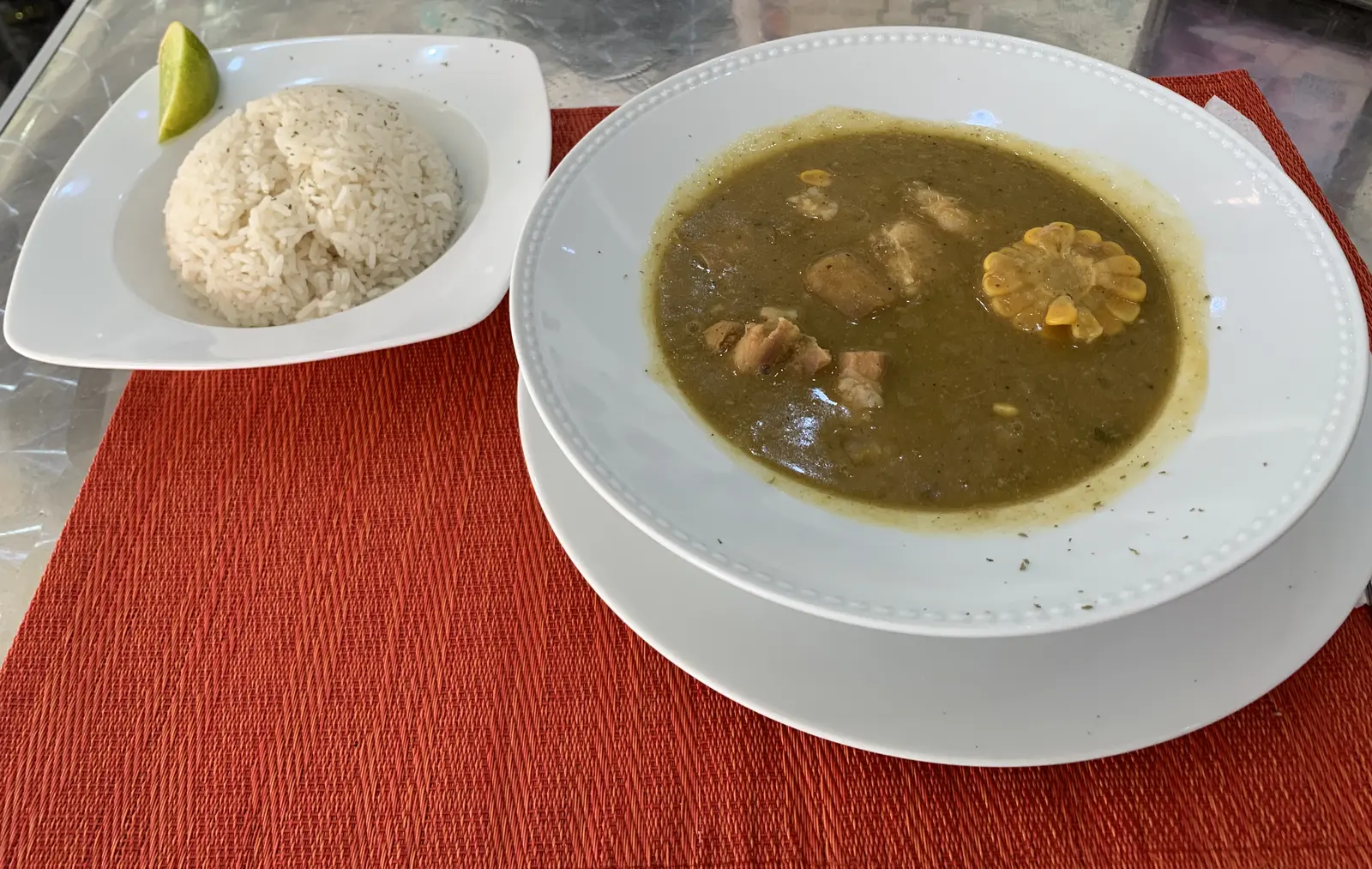
A bowl of Dominican sancocho stew with meat and a round of corn, served with white rice and a lime wedge Dominican Republic flag Dominican Republic 3h 15m
Dinner •Dominican Heritage

Sancocho Dominicano

This sancocho dominicano recipe simmers beef, pork ribs, chicken and longaniza sausage together with yuca, yautía, ñame, green plantain, pumpkin and corn until the broth turns thick and golden. The yautía slowly melts into the pot and gives the soup its signature body, while a squeeze of lime at the table brightens every spoonful. One serving is about 560 g.

Comfort & Warmth

A thick, slow-simmered celebration stew of mixed meats and starchy root vegetables, served hot in deep bowls with white rice on the side.

Pairs Well With
White rice, ripe avocado & lime wedges
Soups & Broths
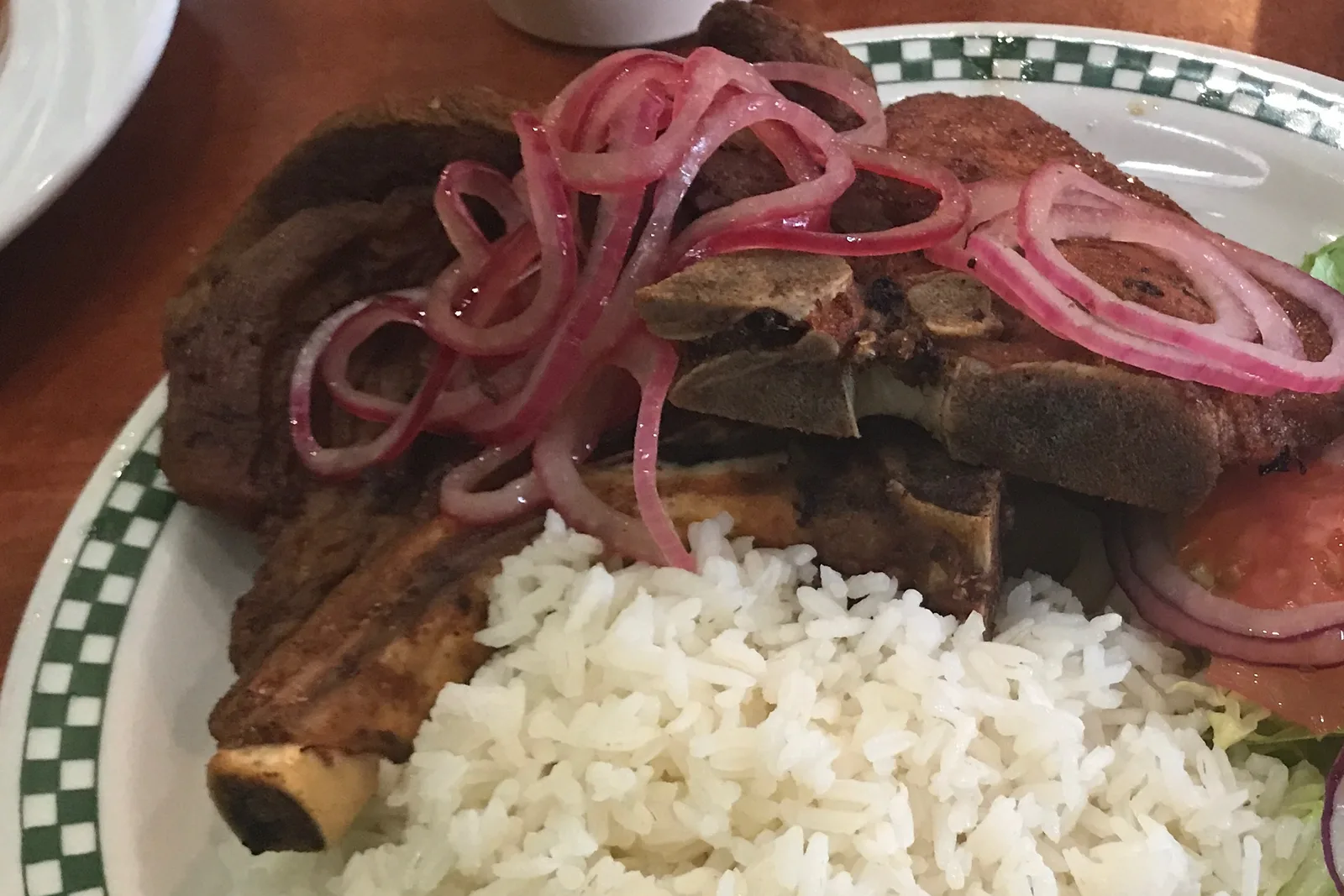
A La Bandera Dominicana plate with white rice, braised meat topped with pickled red onions, tomato and lettuce salad, with a cup of bean stew and tostones beside it Dominican Republic flag Dominican Republic 1h 30m
Lunch •Dominican Republic's National Lunch Plate

La Bandera Dominicana

This la bandera dominicana recipe makes the Dominican Republic's national lunch: a mound of white rice (arroz blanco) next to red beans stewed with squash (habichuelas guisadas) and chicken braised in sofrito and tomato (pollo guisado), with crisp twice-fried green plantains (tostones) and a fresh tomato and lettuce salad. The name means 'the flag', because the white rice, red beans and meat echo the colours of the Dominican flag. One serving is about 695 g.

Hearty & Satisfying

White rice, stewed red beans, braised chicken, tostones and salad on one plate — the lunch the Dominican Republic eats every day.

Pairs Well With
A tall glass of morir soñando, the Dominican orange-and-milk drink
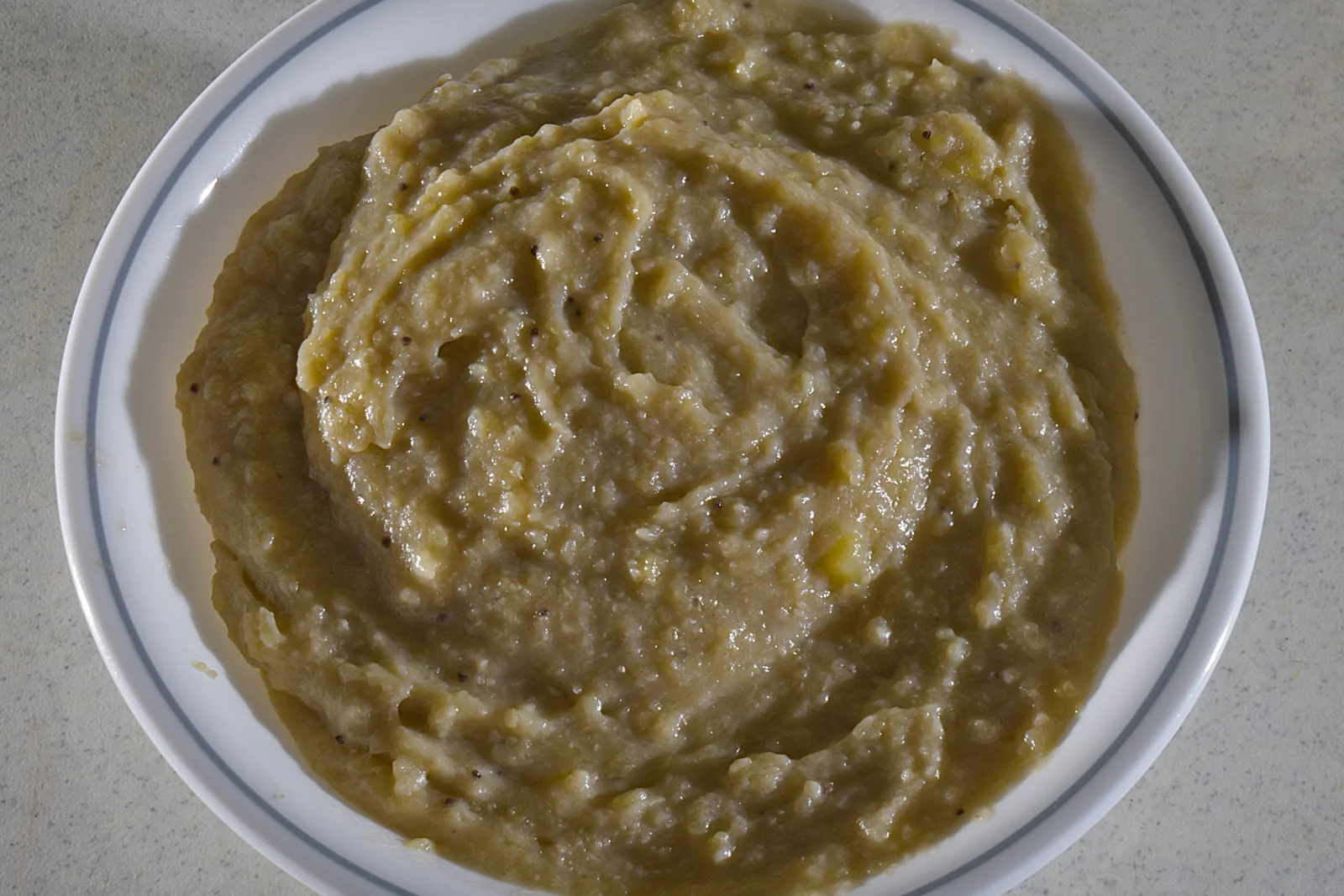
A bowl of smooth mashed green plantain (mangú) in a white bowl Dominican Republic flag Dominican Republic 40m
Breakfast •Dominican Breakfast Classic

Mangú Dominicano

Green plantains are boiled until tender, then mashed silky-smooth with butter and a little of their own cooking water, and finished with a tangle of red onions softened in vinegar and oil. It is the Dominican Republic's national breakfast dish, mild, starchy and comforting, with the sharp onions doing all the talking. One serving is about 280 g.

Hearty Breakfast Energy

Boiled green plantains mashed with butter and topped with tangy sautéed onions for a filling, slow-burning start to the day.

Pairs Well With
Sautéed red onions, fried eggs, fried cheese and fried Dominican salami (Los Tres Golpes)
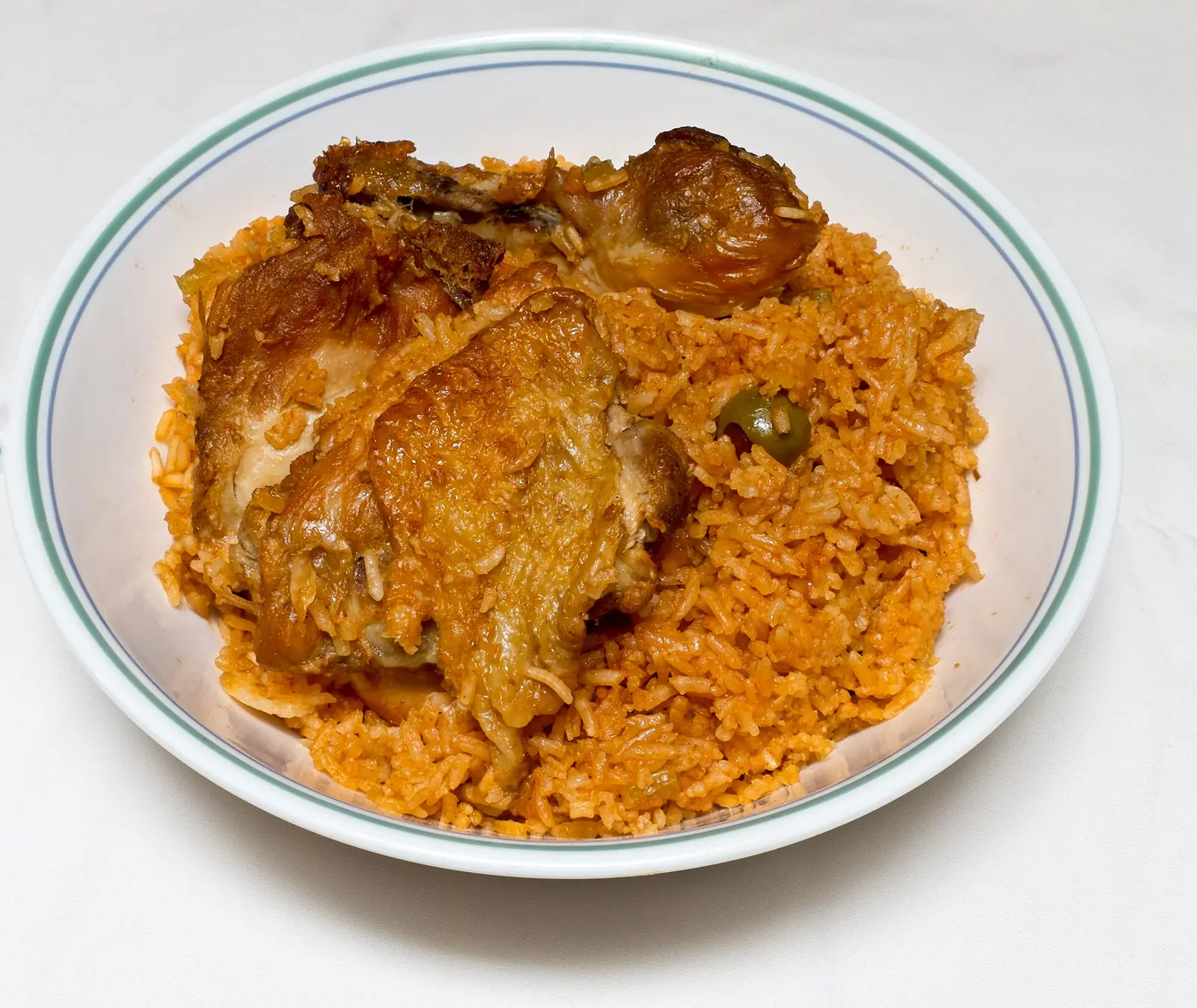
A white bowl of orange-red locrio de pollo with browned chicken pieces and a green olive on a white tablecloth Dominican Republic flag Dominican Republic 1h 20m
Dinner •Dominican One-Pot Classic

Locrio de Pollo

This locrio de pollo recipe starts with bone-in chicken thighs browned in a dark caramel — the quemado that gives the dish its deep colour — then simmers long-grain rice in the same pot with sofrito, tomato paste, pumpkin and green olives until every grain is orange-red and fragrant. It is a true one-pot dinner, and the crispy toasted rice at the bottom, the concón, is the prize everyone fights over. One serving is about 400 g.

Family Comfort

Bone-in chicken browned in caramelised sugar, then simmered with rice, sofrito, tomato, pumpkin and olives in one pot — the Dominican family dinner.

Pairs Well With
Fried plantains, avocado & green salad
High Protein

The Dinner Gazette

Never wonder what’s for dinner again

One email a week with easy dinner ideas from around the world — ingredients, steps and nutrition, tested in our kitchen first.

Delivered every Thursday morning. Unsubscribe anytime.