-
1
Blanch the Rocotos Twice
20 Mins
Rolling boil, 100°C (212°F)
Bring a large pot of water to a rolling boil with the vinegar, sugar and a pinch of salt. Drop in the cleaned rocotos and boil for 5 minutes, then drain and repeat with fresh water, vinegar and sugar for a second 5-minute blanch. This double blanch tames the fiercest heat while keeping the pepper's flavour and bite.
Two short blanches beat one long one: the heat drops a lot, but the pepper stays firm enough to stuff and bake.
Done when: Peppers are slightly softened and pliable, still holding their shape; the blanching water is discarded.
-
2
Make the Beef Picadillo
15 Mins
Medium-high heat, ~190°C (375°F)
Heat the olive oil in a pan over medium-high heat and brown the ground beef, breaking it up, for 6 minutes until no pink remains and the beef reads at least 71°C (160°F). Add the onion and cook 4 minutes, then the garlic, cumin, paprika and oregano for 1 minute. Stir in the tomato and cook 4 minutes more, then fold in the raisins, peanuts, olives and chopped egg. Taste and season with salt.
The filling should be moist, not wet — if it looks soupy, cook 2 minutes longer so the peppers do not leak in the oven.
Done when: Beef is browned throughout and reads at least 71°C (160°F); the filling is moist, fragrant and holds together.
-
3
Cook the Pastel de Papa Base
15 Mins
Boiling water, 100°C (212°F)
Boil the potato chunks in salted water for 15 minutes until they break apart easily. Drain well, return to the hot pot for 1 minute to dry, then mash with the warm milk and butter until smooth. Beat in the egg and half the grated queso fresco and season lightly. The mash should be soft enough to spread but firm enough to hold a slice.
Dry the potatoes in the hot pot before mashing — wet potatoes make a gluey pastel that never slices cleanly.
Done when: Potatoes mash completely smooth with no lumps; the mash holds a spoon upright.
-
4
Stuff the Peppers and Assemble
10 Mins
Oven 190°C (375°F)
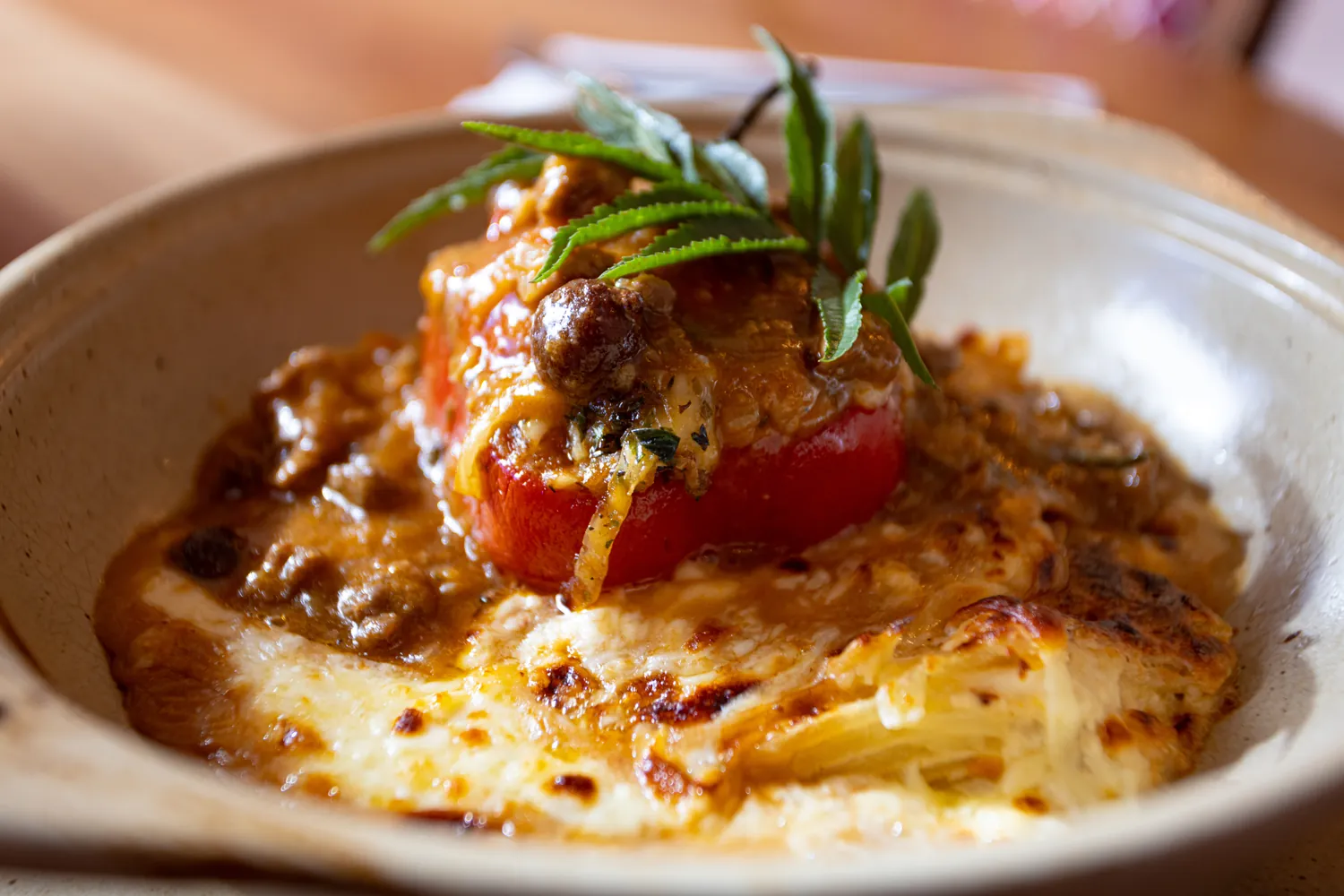
Heat the oven to 190°C (375°F). Stand the blanched rocotos upright in an oiled baking dish and spoon the hot picadillo into each one, pressing it down gently and mounding it slightly above the rim. Lay a slice of queso fresco over the top of each pepper like a lid. Spread the potato mash in a second small oiled dish, scatter the rest of the grated cheese over it, and set both dishes in the oven.
If a pepper wobbles, trim a thin slice off its base so it stands straight — a tipped pepper spills its filling.
Done when: Peppers are full to the brim with the cheese slice sitting flat on top; the pastel is spread level with cheese on top.
-
5
Bake Until Golden
30 Mins
Oven 190°C (375°F)
Bake for 30 minutes until the cheese on the peppers is melted and golden at the edges, the pepper skins are blistered and tender, and the pastel de papa is puffed and browned on top. The filling inside should be steaming and read at least 74°C (165°F) right through.
If the cheese browns too fast, tent the dish loosely with foil for the last 10 minutes — the peppers still need the full time to soften.
Done when: Cheese is melted and golden; pepper skins blister and yield to a knife; pastel top is browned and set.
-
6
Rest and Serve
5 Mins
Serve hot, ~75°C (167°F)
Rest both dishes for 5 minutes so the cheese sets and the pastel slices cleanly. Plate one stuffed rocoto per person with a thick slice of pastel de papa beside it, and serve at once while the cheese is still soft and stretchy.
Warn your guests before the first bite: even blanched, a rocoto is far hotter than a jalapeño — the cheese and potato are there to cool it down.
Done when: The pastel cuts in clean slices; the rocoto holds its shape on the plate with melted cheese on top.

 Peru
35m