
Curated recipes from 193 countries  •  New seasonal Mediterranean issue out now

Overview

Romesco Sauce

Salsa Romesco, Catalan Nut and Pepper Sauce

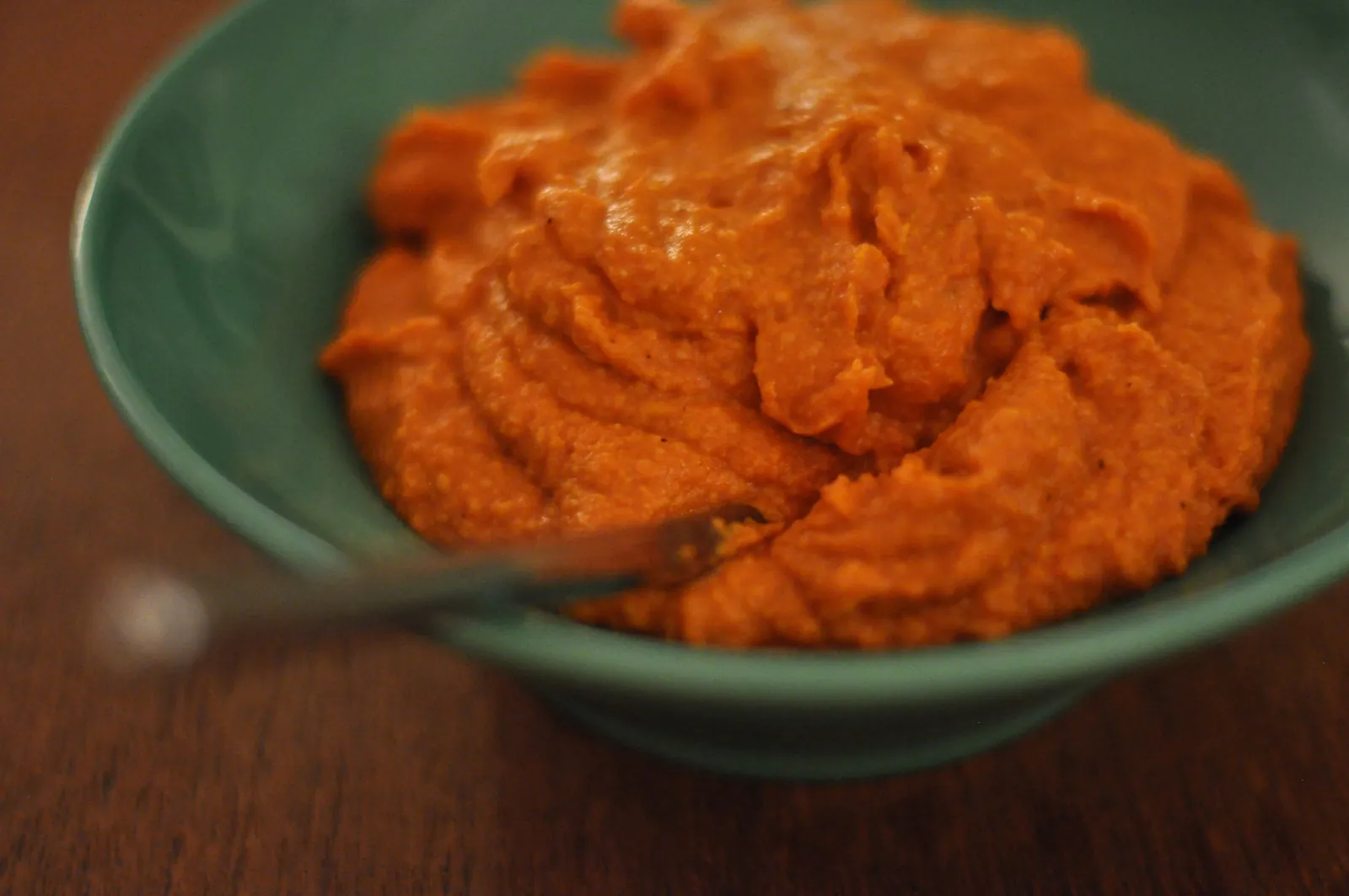
This romesco sauce recipe blends roasted red peppers with toasted almonds and hazelnuts, garlic, sherry vinegar and smoked paprika into a thick, rust-red Catalan sauce. One serving is about 80 g.

Romesco comes from the fishermen of El Serrallo, the harbour quarter of Tarragona in Catalonia, who pounded it up to dress the catch of the day — first the fish, then the sauce, both grilled over the same fire. The recipe is built on what the land gave: almonds and hazelnuts from the hills, ñora peppers dried in the sun, tomatoes, garlic and olive oil. It travelled from the boats to the calçotada, the Catalan spring onion feast, where grilled calçots are dipped in romesco by the handful, and it is now one of Spain's most loved sauces.

Pairs well with: Grilled calçots, crusty bread and a glass of Cava

Provenance

Spain flag Spain

Catalan Fishermen's Sauce

Mediterranean & Italy

Time Dedication

25m

15m prep • 10m cook

Batch Yield

8 Servings

161 kcal per serving

1 serving ≈ 80 g

Technical Skill

Easy

Easy (Blender)

Meal Timing & Digestive Fit

Breakfast

Not Advised

Lunch

Inappropriate

Dinner

Inappropriate

Snack & Tea

Ideal Light Bite

Occasions: Grilled vegetable suppers, tapas nights, barbecue sides, bread-and-dip snacks Cost: Low — about $1–2 per serving at home
Romesco Sauce — a bowl of thick orange-red sauce with a spoon

Catalan Fishermen's Sauce

Photo: cyclonebill, CC BY-SA 2.0, via Wikimedia Commons

The Heritage Formulary

Measured Ingredients

Estimated cost: Low — about $1–2 per serving at home (USD)

A real romesco is thick and a little coarse, never a smooth purée — if it pours like soup, add more nuts. Nutrition is estimated from USDA values.

Execution Methodology & Culinary Technique

Step-by-Step Cooking Guide

Active 25m
P

Prep Stage: Toast the Nuts, Roast the Tomato

15 Mins • Toasting and Roasting

Drain and pat the peppers dry, halve and roast the tomatoes (or drain the tinned ones), and tear the bread into pieces. Toast the almonds, hazelnuts and garlic in a dry pan until golden and fragrant, then rub the hazelnut skins off in a tea towel. Soak the ñora chilli in warm water for 10 minutes if using.

Maestro Tip: Toast the nuts gently — a minute too long and they turn bitter, and the whole sauce tastes of it.

  1. 1

    Toast the Nuts and Garlic

    4 Mins Medium heat, about 175°C (350°F)

    Put the almonds, hazelnuts and garlic in a dry pan over medium heat and toast for 3–4 minutes, shaking the pan, until golden and fragrant. Tip the hazelnuts into a tea towel and rub off the loose skins.

    Keep the nuts moving — they go from golden to burnt in seconds.

    Done when: Nuts golden and fragrant, skins mostly off the hazelnuts.

  2. 2

    Pulse the Sauce

    3 Mins No heat

    Put the peppers, roasted tomatoes, toasted nuts, garlic, bread, smoked paprika and soaked ñora (if using) in a blender or food processor. Pulse in short bursts until the mixture is thick and coarse, not smooth.

    Pulse, never blend on high — a food processor gives the rustic texture romesco is known for.

    Done when: Thick, coarse and spoonable, with visible flecks of nut.

  3. 3

    Emulsify with Oil and Vinegar

    2 Mins No heat

    With the motor running on low, pour in the olive oil and sherry vinegar in a thin stream until the sauce turns glossy and holds its shape on a spoon.

    Pour the oil slowly — it is what turns a nut paste into a sauce.

    Done when: Glossy, thick enough to mound on a spoon.

  4. 4

    Season and Rest

    10 Mins Room temperature

    Taste and season with the salt, adding a little more vinegar if the sauce needs sharpening. Let it stand for 10 minutes so the flavours settle.

    Romesco improves as it stands — the nuts soften and the flavours marry.

    Done when: Balanced — sweet peppers, smoky paprika, sharp vinegar, no single note shouting.

  5. 5

    Serve

    1 Min Room temperature

    Spoon the sauce over grilled vegetables or fish, or serve it in a bowl with bread for dipping.

    Serve at room temperature — cold romesco tastes muted and the oil firms up.

    Done when: Thick, rust-red and glossy, ready to spoon.

Finishing Touches & Plating

Taste for salt and vinegar, then spoon the romesco over grilled vegetables or fish, or serve it in a bowl with bread for dipping.

Nutritional Physiology & Benefits

Nutrition

Energy

161

kcal / serving

Protein

3g

Complete AA

Carbs

7g

Complex

Fats

14g

Healthy

Per serving (8 servings · 1 serving ≈ 80 g)
Energy161 kcal
Protein3 g
Carbohydrates7 g
Fat14 g
Fibre2.4 g
Sugar2.1 g
Sodium191 mg
Per 100g
Energy201 kcal
Protein4 g
Carbohydrates9.3 g
Fat17.5 g
Fibre3 g
Sugar2.6 g
Sodium239 mg

Nutrition values are estimated — calculated from USDA FoodData Central values for the listed ingredients.

Vitamins & minerals: Provides vitamin C from the roasted peppers, vitamin E from the almonds and hazelnuts, and vitamin A from the paprika. Nutrition is estimated.

Fibre and Vitamin C

About 3 g of fibre per serving from the peppers, nuts and bread, and vitamin C from the roasted peppers.

Vitamin E from the Nuts

Almonds and hazelnuts are a natural source of vitamin E and monounsaturated fats.

Healthy Fats from Nuts and Oil

Olive oil and nuts make this a genuinely energy-dense sauce — a little goes a long way on grilled food.

Food Pairings

What to Eat With

To optimize nutrient absorption and elevate the sensory depth, pair with these authentic accompaniments:

Sides

Crusty Bread

Crusty bread is made for scooping — the sauce is thick enough to pile onto a slice without running off.

Vegetables

Grilled Calçots

Charred calçots or asparagus love romesco — the smoky sauce and the sweet grilled onion are a Catalan classic.

Drinks

Cava

Cold Cava has the bubbles and acidity to cut through the nutty, oily sauce.

Full Menus

A Catalan Table

Serve romesco with grilled calçots, bread and Cava, and finish with crema catalana — a full Catalan table.

Complete menu

Serve romesco sauce with grilled calçots or asparagus, a loaf of bread and a glass of Cava, and finish with crema catalana for a Catalan table.

Digestive Guardrails

What NOT to Combine

To prevent digestive distress, sluggishness, or palate clash, avoid pairing the dish with these elements:

Blending Until Completely Smooth

Over-blending turns the nuts into a smooth paste and the sauce loses its rustic, spoonable texture, so pulse in short bursts. This is general food information, not medical advice.

Using Raw Garlic Without Toasting

Raw garlic overwhelms the sauce with a sharp bite; toasting it gently first rounds the flavour out. This is general food information, not medical advice.

General information only, not medical advice — consult a doctor for personal dietary decisions.

Who Should Eat It

Who Should Eat

  • General adultsA rich, nutty sauce — a couple of spoonfuls lift grilled vegetables or fish.
  • ChildrenMild and sweet from the peppers, but keep the chilli out and serve a small spoonful.
  • ElderlySoft and easy to eat; serve at room temperature with grilled vegetables.
  • Pregnant womenFine when made with pasteurised jarred peppers and served fresh.
  • Breastfeeding womenA nourishing, flavourful sauce; the nuts add healthy fats and protein.
  • AthletesGood energy-dense sauce — about 14 g of fat and 7 g of carbohydrate per serving to top a lean protein.
  • Weight gainEasy to enrich: the sauce adds about 161 kcal per serving to grilled fish or chicken.
  • Weight lossAt 161 kcal a serving this is a rich sauce — enjoy a single spoonful with plenty of grilled vegetables.

Health Conditions — Adjust or Avoid

Conditions

  • DiabetesThe sauce is low in carbohydrate — about 7 g per serving — so it suits a low-carb plate. Ask your clinician about portion size.
  • High blood pressureThe sauce carries about 191 mg of sodium per serving. Use low-sodium jarred peppers and less salt; ask your clinician about your sodium target.
  • Kidney diseaseNuts are high in potassium and phosphorus, so this sauce may not suit a restricted diet. Ask your clinician before making it a regular meal.
  • GoutNuts are low in purines, so the sauce is usually fine in a small portion; ask your clinician if flare-ups are frequent.
  • Stomach issuesRaw onion and vinegar can bother reflux or a sensitive stomach; use less vinegar and serve a small spoonful. Ask your clinician if symptoms persist.
  • Cardiovascular diseaseThe nuts and olive oil bring mostly unsaturated fats, so a small portion fits well with grilled fish. Ask your clinician about fitting it into your eating plan.
  • Fatty liverA rich sauce — enjoy it occasionally and in a small portion with plenty of vegetables. Ask your clinician for personal guidance.
  • Food allergiesContains tree nuts (almonds, hazelnuts) and wheat (bread). A gluten-free version can use gluten-free bread.
  • Special therapeutic dietsNot suitable for nut-free diets. It is naturally vegan, vegetarian and dairy-free as written.

If you have a medical condition, consult your doctor before changing your diet.

Storage & Use

Storage & Use

How to store
Spoon into a clean jar, smooth the surface and pour a thin layer of olive oil on top to seal it.
In the fridge
5 days at 4°C (40°F) or below, in a sealed jar with a thin layer of oil on top.
In the freezer
Freezes well for up to 3 months; thaw in the fridge overnight and stir before serving.
How to reheat
Serve at room temperature — no reheating needed. If chilled, let it stand for 20 minutes before serving.
Freezing recommended
Yes — up to 3 months; the oil may separate slightly, just stir it back.
Signs it has spoiled
Sour or off smell, mould on the surface, or a rancid nut smell.

More recipes to explore

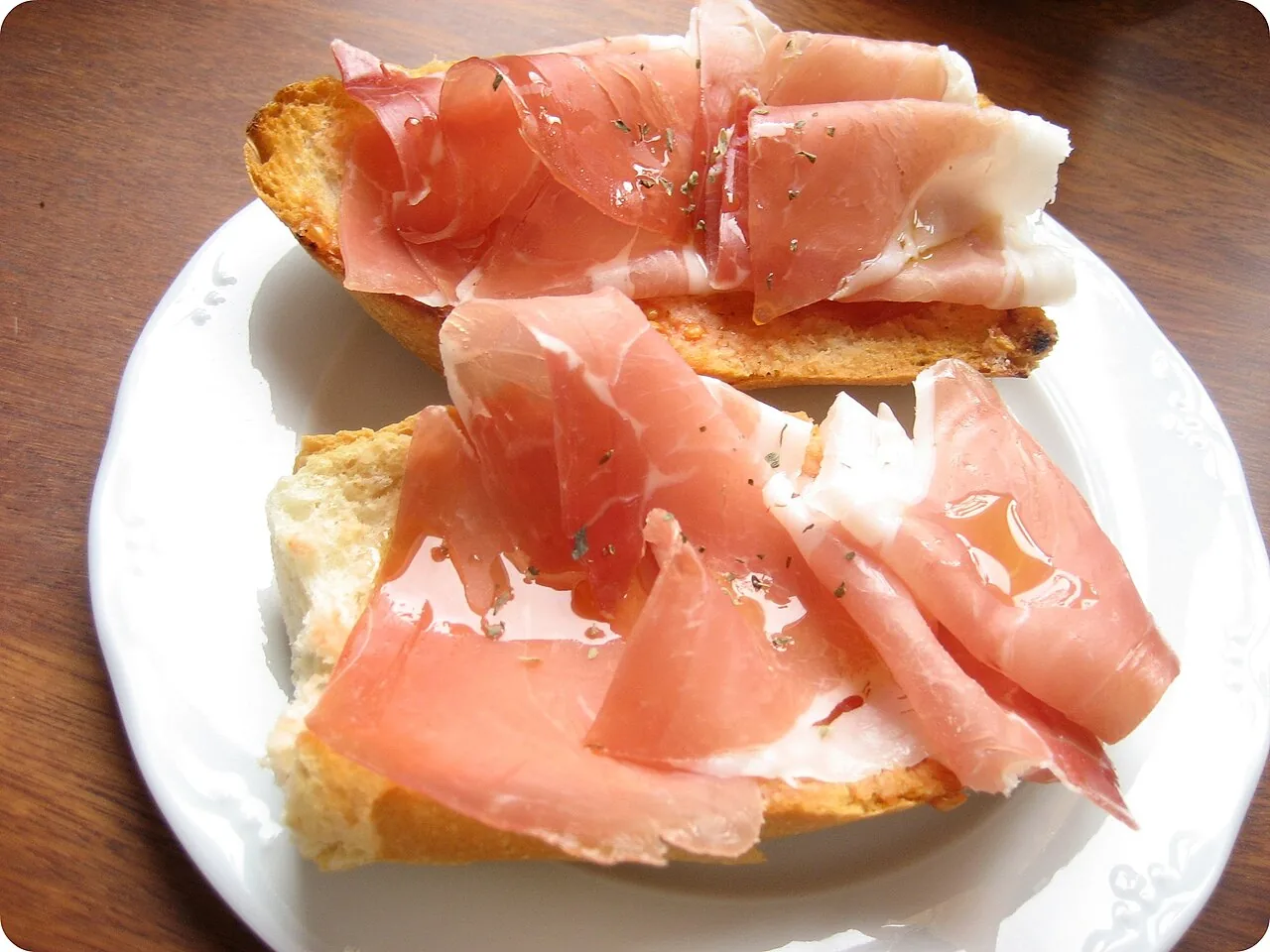
Pan con tomate with jamón ibérico on toasted bread Spain flag Spain 15m
Snack & Tea •Catalan Aperitivo

Pan con Tomate & Jamón Ibérico

Country bread rubbed with ripe Ramallet tomato, drizzled with cold-pressed Arbequina olive oil and topped with jamón ibérico.

Vascular Health

Toasted tomato bread with jamón ibérico, olive oil and olives.

Pairs Well With
Castelvetrano Olives & Sparkling Mineral Water
Quick Prep (<30m)
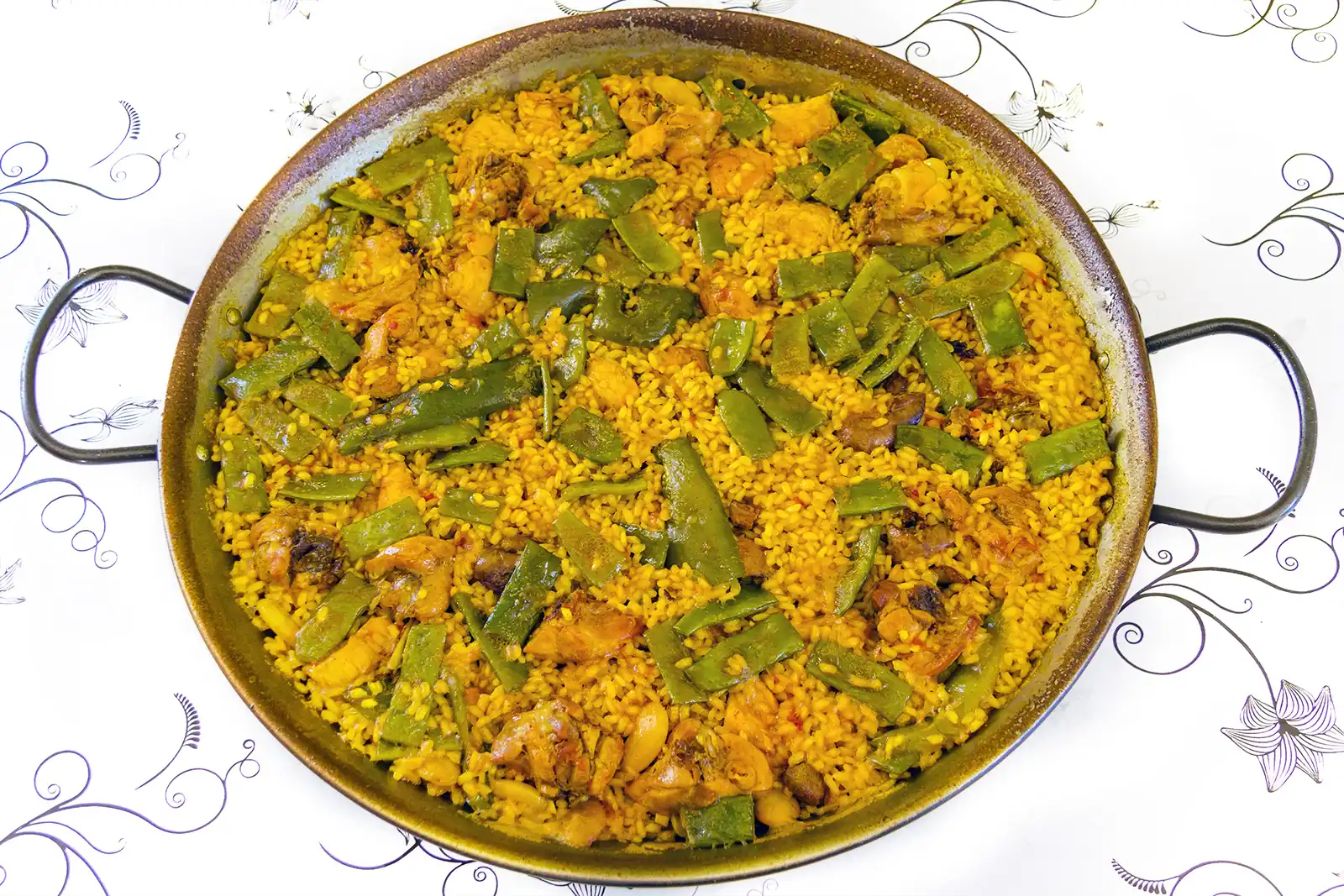
A wide paella pan of paella valenciana with saffron rice, green beans and chicken Spain flag Spain 1h 10m
Dinner •Valencia Rice Fields

Paella Valenciana

This paella valenciana recipe cooks Bomba rice in a wide, shallow pan with chicken, rabbit, green beans and garrofó beans, scented with saffron and rosemary. One serving is about 470 g.

Comfort & Warmth

Saffron rice cooked in a wide pan with chicken, rabbit and green beans.

Pairs Well With
A green salad and a glass of white wine
High Protein
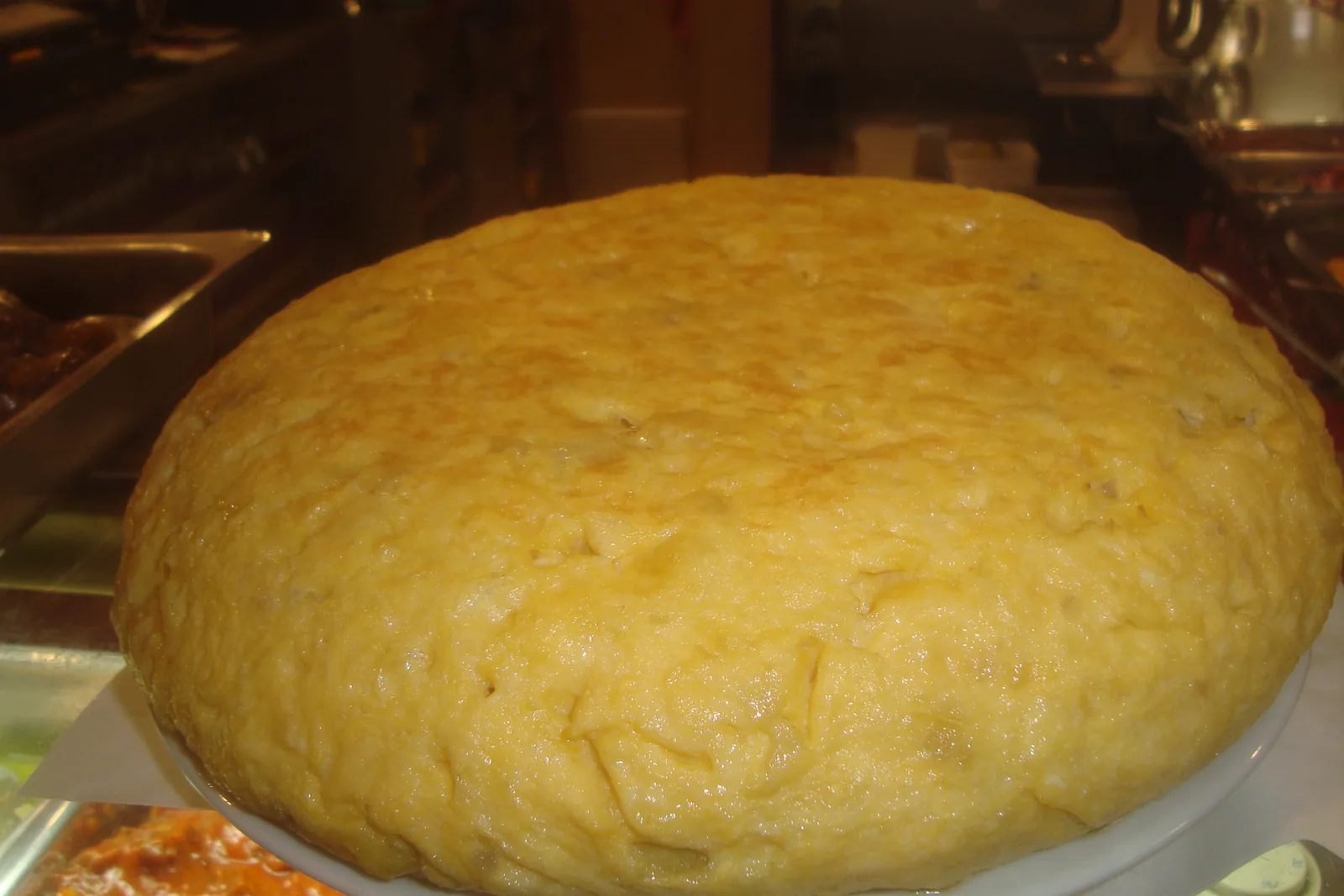
A whole golden tortilla española, a thick Spanish potato omelette, on a plate Spain flag Spain 55m
Snack & Tea •Navarre Bar Classic

Tortilla Española

This spanish tortilla recipe slowly cooks potatoes and onion in olive oil, folds them into beaten eggs, and turns out a thick, golden cake that is soft in the middle. One serving is about 220 g.

Comfort & Warmth

A thick, golden omelette of slow-cooked potatoes, onion and egg.

Pairs Well With
Pan con tomate and a glass of red wine
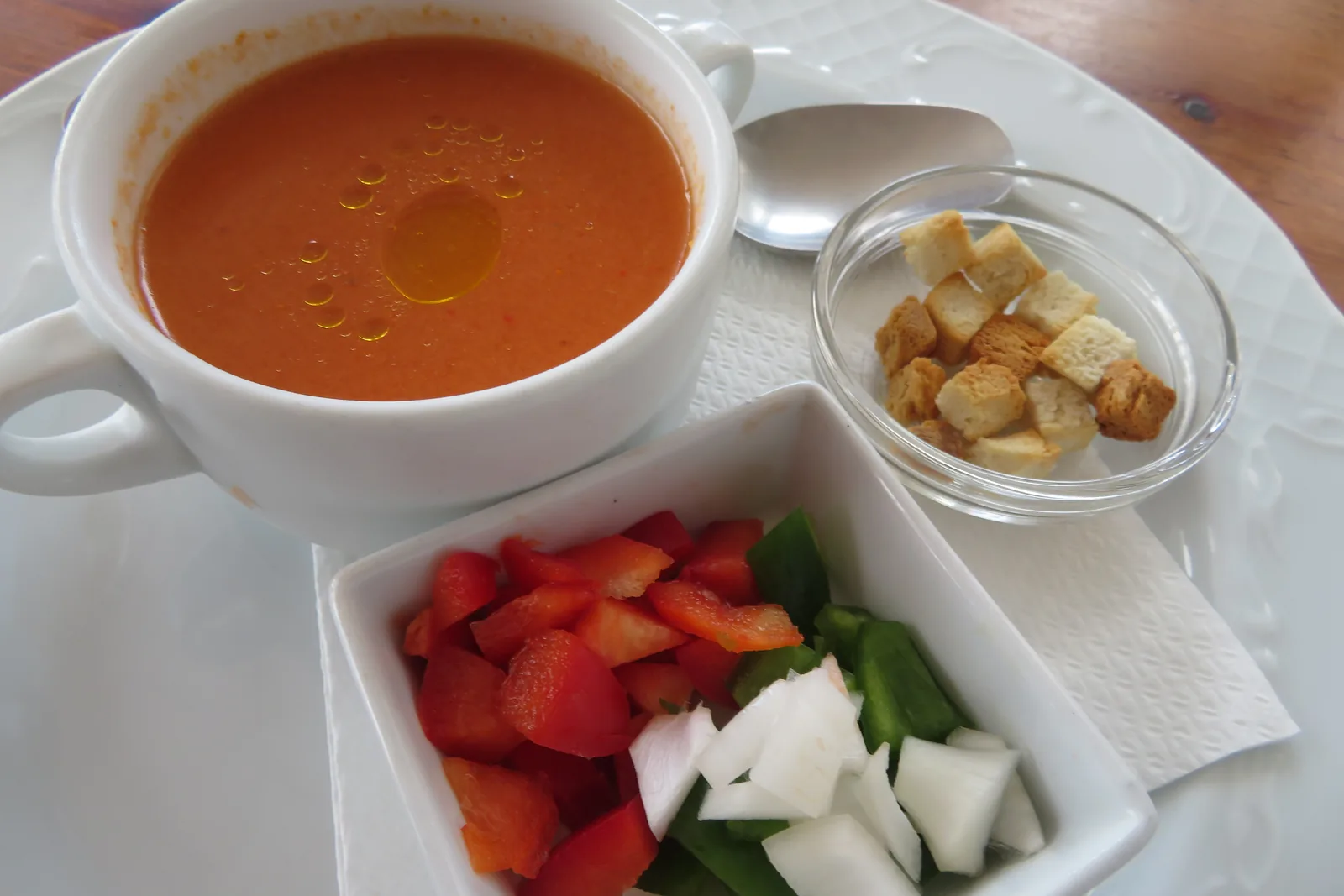
A cup of chilled orange-red gazpacho with olive oil, served with diced peppers and onion and a bowl of croutons Spain flag Spain 20m
Lunch •Andalusian Classic

Gazpacho

This gazpacho recipe is the Andalusian classic: ripe tomatoes, cucumber, green pepper, onion and garlic blended raw with bread, sherry vinegar and olive oil, then chilled until ice cold. One serving is about 395 g. It takes 20 minutes plus chilling, and there is no cooking at all.

Light & Refreshing

Chilled raw tomato soup blended with cucumber, pepper and olive oil, served cold with diced vegetables and croutons.

Pairs Well With
Croutons, diced vegetables & crusty bread
Soups & Broths • Quick Prep (<30m)

The Dinner Gazette

Never wonder what’s for dinner again

One email a week with easy dinner ideas from around the world — ingredients, steps and nutrition, tested in our kitchen first.

Delivered every Thursday morning. Unsubscribe anytime.