
Curated recipes from 193 countries  •  New seasonal Mediterranean issue out now

Overview

Rozijnenbrood

Belgian Raisin Bread, Raisin Loaf, Cramique

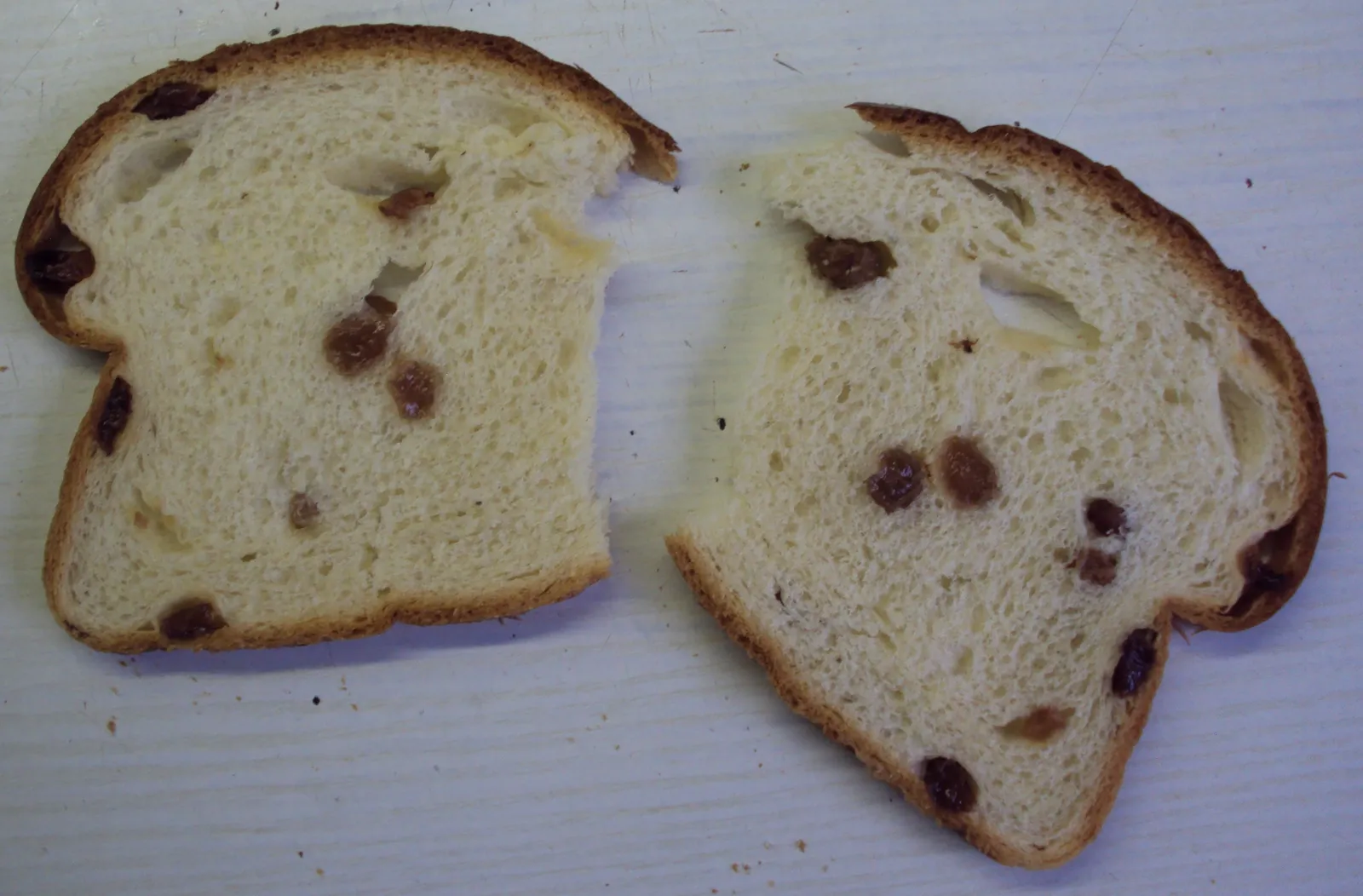
This rozijnenbrood recipe makes the Belgian raisin bread you find in every bakery: a soft, lightly sweetened yeast dough with a hint of cinnamon, packed with plump raisins and currants, baked golden in a loaf tin. One serving is about 90 g and carries 259 calories. Slice it thick, toast it lightly, and eat it warm with butter while the crumb is still soft.

Rozijnenbrood is the raisin loaf of the Low Countries, and in Belgium it is close kin to the cramique, the lightly sweetened raisin brioche that Brussels pastry shops such as Wittamer have sold for breakfast for generations. It is a lean form of brioche — a dough enriched with just a little butter, sugar and egg — filled with raisins, sometimes with currants and a pinch of cinnamon. Belgians eat it for breakfast or afternoon tea, sliced thick and buttered, and day-old slices are toasted or turned into bread pudding rather than thrown away. Cook test: rozijnenbrood is a yeasted raisin loaf baked in a tin — it is not a fruit cake, which is denser and richer, and not a cinnamon roll, which is shaped and glazed; no live recipe for a raisin bread exists on the site.

Pairs well with: Salted butter, and a slice of aged Gouda or a smear of jam if you like it sweeter.

Provenance

Belgium flag Belgium

Belgian Bakery Classic

Nordic & European

Time Dedication

3h 10m

150m prep • 40m cook

Batch Yield

12 Servings

259 kcal per serving

1 serving ≈ 90 g

Technical Skill

Intermediate

Intermediate (Yeast Bread)

Meal Timing & Digestive Fit

Breakfast

Prime Morning Fit

Lunch

Inappropriate

Dinner

Inappropriate

Snack & Tea

Inappropriate

Occasions: Breakfast, afternoon tea, weekend baking, festive breakfasts Cost: Low — about $1 per serving at home
Two slices of rozijnenbrood raisin bread showing plump raisins in the crumb

Belgian Bakery Classic

Photo: Dinosaur918, CC BY-SA 4.0, via Wikimedia Commons

The Heritage Formulary

Measured Ingredients

Estimated cost: Low — about $1 per serving at home (USD)

This version soaks the raisins before kneading so they stay plump in the oven, and bakes the loaf at 180°C (350°F) until the centre reaches 88°C (190°F).

Execution Methodology & Culinary Technique

Step-by-Step Cooking Guide

Active 3h 10m
P

Prep Stage: Dough, Fruit and Tin

150 Mins • Dough, Fruit and Tin

Bloom the yeast in the warm sugared water for 10 minutes until foamy. Soak the raisins and currants in lukewarm water for 10 minutes, drain and pat dry. Grease a 20 x 10 cm loaf tin. Knead the dough, then let it rise twice — 60 minutes after kneading, and 45 minutes after shaping.

Maestro Tip: Dry the soaked fruit well before kneading — wet fruit makes the dough sticky and the loaf heavy.

  1. 1

    Mix and knead the dough

    20 Mins Warm water, about 37°C (98°F)

    Stir the yeast into the warm sugared water and rest 10 minutes until foamy. Mix the flour, salt and cinnamon in a large bowl, pour in the yeasted water and the beaten egg, and mix into a shaggy dough. Knead in the softened butter a little at a time, then knead for 8 minutes until smooth and elastic. Knead in the drained raisins and currants last, until evenly spread.

    Add the fruit at the end, not the start — kneading fruit from the beginning tears it and stains the dough brown.

    Done when: A smooth dough with raisins dotted evenly through it.

  2. 2

    First rise

    60 Mins Warm place, about 28°C (82°F)

    Put the dough in an oiled bowl, turn it once to coat, cover with a damp cloth, and leave it in a warm place for 60 minutes until doubled in size.

    A cold kitchen slows the rise — set the bowl near, not on, a warm oven, or give it an extra 30 minutes.

    Done when: The dough is twice its original size and holds a dent when pressed.

  3. 3

    Shape and second rise

    60 Mins Warm place, about 28°C (82°F)

    Turn the dough onto a lightly floured surface, press it flat, roll it into a tight log, and place it seam-side down in the greased loaf tin. Cover and leave for 45 minutes until the dough crowns about 2 cm above the rim of the tin.

    Roll the log tightly — a loose roll leaves a hole under the crust.

    Done when: The dough has risen about 2 cm above the rim of the tin.

  4. 4

    Bake until golden

    40 Mins Hot oven, 180°C (350°F)

    Heat the oven to 180°C (350°F). Bake the loaf for 15 minutes, then lay a sheet of foil loosely over the top so the raisins do not burn, and bake for 25 minutes more, until deep gold. The centre should read 88°C (190°F) on a thermometer.

    The foil is not optional — the raisins on the surface scorch long before the middle is done.

    Done when: A deep-gold loaf that sounds hollow when tapped on the bottom, with a centre of 88°C (190°F).

  5. 5

    Cool and slice

    30 Mins Cool on a rack, about 20°C (68°F)

    Turn the loaf out of the tin and cool on a wire rack for at least 30 minutes before slicing. Cut into 12 thick slices and serve warm with butter.

    Slicing hot bread crushes the crumb — wait until the loaf is just warm, not hot.

    Done when: A cooled loaf that slices cleanly, with plump raisins in every slice.

Finishing Touches & Plating

Eat the bread warm and thickly sliced, with salted butter melting into the crumb — a day-old slice is even better, lightly toasted.

Nutritional Physiology & Benefits

Nutrition

Energy

259

kcal / serving

Protein

6g

Complete AA

Carbs

55g

Complex

Fats

4g

Healthy

Per serving (12 servings · 1 serving ≈ 90 g)
Energy259 kcal
Protein6 g
Carbohydrates55 g
Fat4 g
Fibre2.3 g
Sugar18.9 g
Sodium289 mg
Per 100g
Energy287 kcal
Protein6.4 g
Carbohydrates61.1 g
Fat4.1 g
Fibre2.6 g
Sugar21 g
Sodium321 mg

Nutrition values are estimated — calculated from USDA FoodData Central values for the listed ingredients.

Vitamins & minerals: B vitamins and iron (flour, yeast, raisins), potassium (raisins, currants), small amounts of calcium (egg, butter).

Slow Energy for the Morning

About 55 g of carbohydrate per slice, with fibre from the fruit, gives steady morning energy rather than a quick sugar spike.

Real Fruit, Not Flavouring

Raisins and currants bring potassium, iron and fibre to the loaf, and their sweetness means the dough needs little added sugar.

Simple, Honest Ingredients

Flour, water, yeast, egg, butter and dried fruit — no preservatives or flavourings, just a loaf baked at home.

Food Pairings

What to Eat With

To optimize nutrient absorption and elevate the sensory depth, pair with these authentic accompaniments:

Sides

Salted Butter

Salted butter melting into a warm slice is the classic pairing — the salt sharpens the sweetness of the raisins.

Aged Gouda

A thin slice of aged Gouda on raisin bread is the Dutch and Belgian way — salty, nutty cheese against sweet fruit.

Drinks

Black Coffee or Tea

Bitter coffee or strong tea balances the sweet bread and keeps breakfast from feeling heavy.

Full Menus

Jam and Fresh Fruit

A smear of apricot jam and a bowl of fresh fruit turn the bread into a fuller breakfast spread.

Complete menu

Serve toasted rozijnenbrood with butter and jam for breakfast, with coffee, followed by fresh fruit.

Digestive Guardrails

What NOT to Combine

To prevent digestive distress, sluggishness, or palate clash, avoid pairing the dish with these elements:

Storing It in a Sealed Bag While Warm

Warm bread sealed in a bag steams itself soft and goes leathery; cool it on a rack first. This is general food information, not medical advice.

Eating It as the Whole Breakfast Every Day

Raisin bread is sweet, with about 19 g of sugar per slice, so it suits a varied breakfast better than a daily habit. This is general nutrition information, not medical advice.

General information only, not medical advice — consult a doctor for personal dietary decisions.

Who Should Eat It

Who Should Eat

  • General adultsA filling breakfast — two slices with butter and coffee is a full meal.
  • ChildrenChildren love the sweet slices, but serve them with milk rather than jam, so the sugar stays reasonable.
  • ElderlySoft and easy to chew; toast it lightly and serve with butter.
  • Pregnant womenFine when freshly baked and eaten warm; the egg in the dough is fully cooked in the oven.
  • Breastfeeding womenA satisfying breakfast; keep to two slices and balance the day with lighter meals.
  • AthletesQuick carbohydrate with a little protein makes it a useful pre-training breakfast, eaten 1 to 2 hours before exercise.
  • Weight gainAdd a third slice and a slice of cheese to raise the energy of the meal.
  • Weight lossOne slice with a large mug of unsweetened tea keeps the portion lighter.

Health Conditions — Adjust or Avoid

Conditions

  • DiabetesAbout 55 g of carbohydrate per slice, mostly from the flour and fruit — take one slice and ask a clinician about portion size.
  • High blood pressureAbout 289 mg of sodium per slice; butter adds more, so use unsalted butter if sodium matters, and ask a clinician.
  • Kidney diseaseA moderate protein load; keep the portion to one or two slices and ask a clinician about what fits your plan.
  • GoutA sweet, refined-flour bread; keep it an occasional breakfast rather than a daily one, and ask a clinician.
  • Stomach issuesSoft and easy to digest; eat a small portion slowly and ask a clinician if symptoms flare.
  • Cardiovascular diseaseLow in fat but high in sugar from the fruit; one slice with unsweetened tea is the lighter way to eat it, and ask a clinician.
  • Fatty liverA sweet bread with about 19 g of sugar per slice; keep it occasional and ask a clinician about sugar intake.
  • Food allergiesContains wheat and egg; check the flour label for cross-contact. Ask a clinician about any allergy.
  • Special therapeutic dietsA soft, easy-to-chew food that suits many therapeutic diets; ask a clinician or dietitian before changing your diet.

If you have a medical condition, consult your doctor before changing your diet.

Storage & Use

Storage & Use

How to store
Cool completely on a wire rack, then keep in a paper bag or bread box at room temperature.
In the fridge
Not recommended — the fridge dries bread out; keep it at room temperature for 3 days.
In the freezer
Up to 2 months, sliced and wrapped in foil; thaw at room temperature.
How to reheat
Toast slices until hot and crisp at the edges, about 74°C (165°F) through; day-old slices toast best.
Freezing recommended
Yes — slice before freezing so you can toast one slice at a time.
Signs it has spoiled
Mould, sour smell, or a hard, dry crumb that does not soften when toasted — discard it.

More recipes to explore

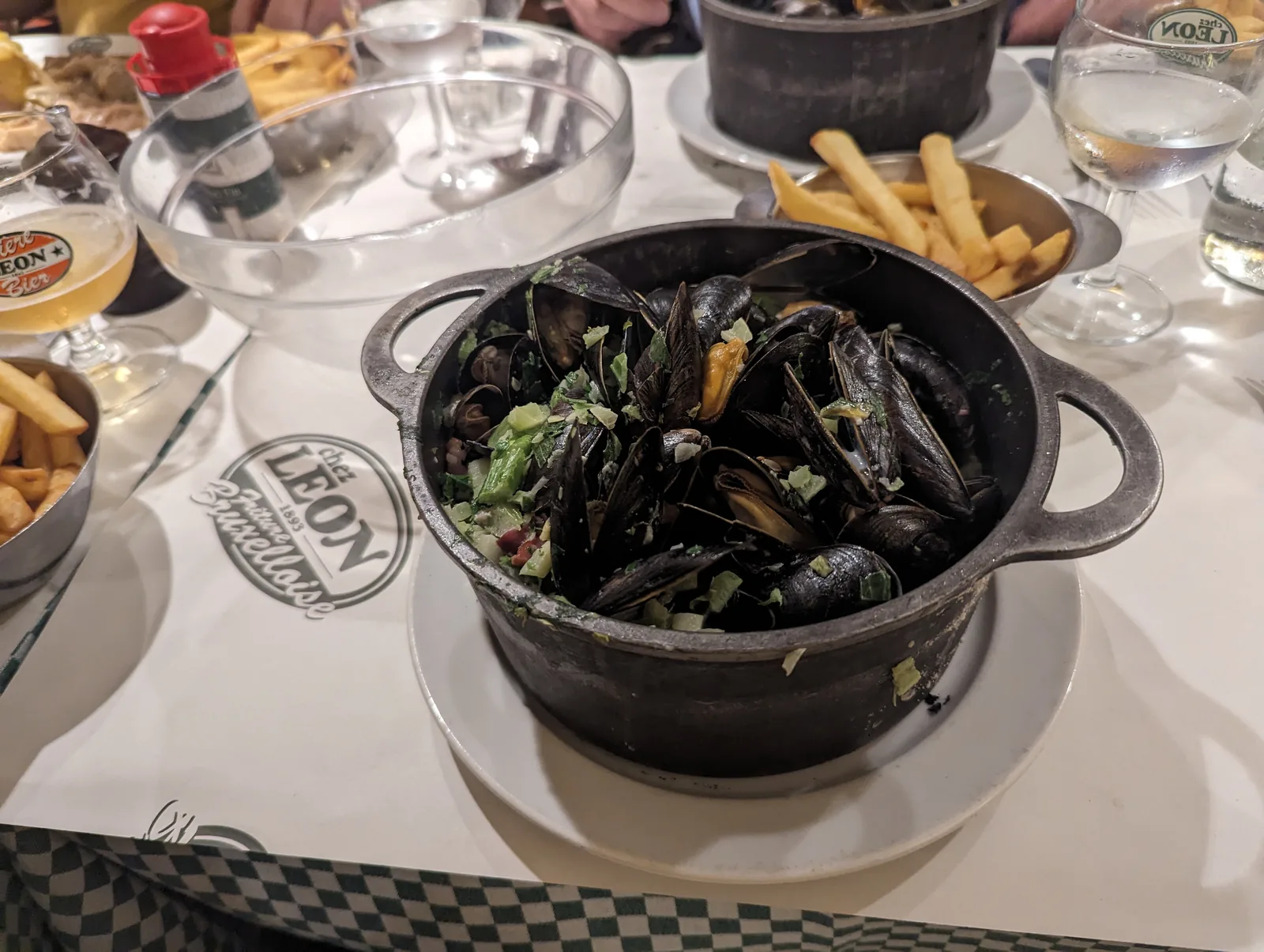
Moules-frites — a black pot of steamed mussels with herbs, served with golden fries at a Brussels brasserie Belgium flag Belgium 1h
Dinner •Brussels Brasserie Classic

Moules-Frites

This moules frites recipe makes the plate Belgium is proudest of: a black pot of mussels steamed open in white wine, shallots and cream, served with a heap of crisp, twice-cooked fries and a pot of mayonnaise. The mussels are sweet and briny, the broth is made for dipping, and the fries stay crisp if you keep them out of the pot. One serving is about 350 g.

Seaside Comfort

Sweet mussels steamed in white wine and cream, piled next to golden twice-cooked fries.

Pairs Well With
Crisp Belgian lager & mayonnaise
High Protein

Belgian waffles — a golden Brussels waffle topped with whipped cream and icing sugar on a white plate Belgium flag Belgium 1h 35m
Breakfast •Brussels Bakery Classic

Belgian Waffles

This Belgian waffles recipe makes the light, yeasted kind: a risen batter cooked in a hot iron until the outside is crisp and golden and the inside stays soft and airy. The deep pockets hold butter, syrup or berries, and a dusting of icing sugar is all they really need. This recipe makes 8 waffles; one serving is 2 waffles, about 210 g. Nutrition is for the plain waffles, before toppings.

Weekend Breakfast Treat

Light, yeasted Brussels waffles with deep pockets, crisp outside and soft inside.

Pairs Well With
Strong coffee & fresh berries
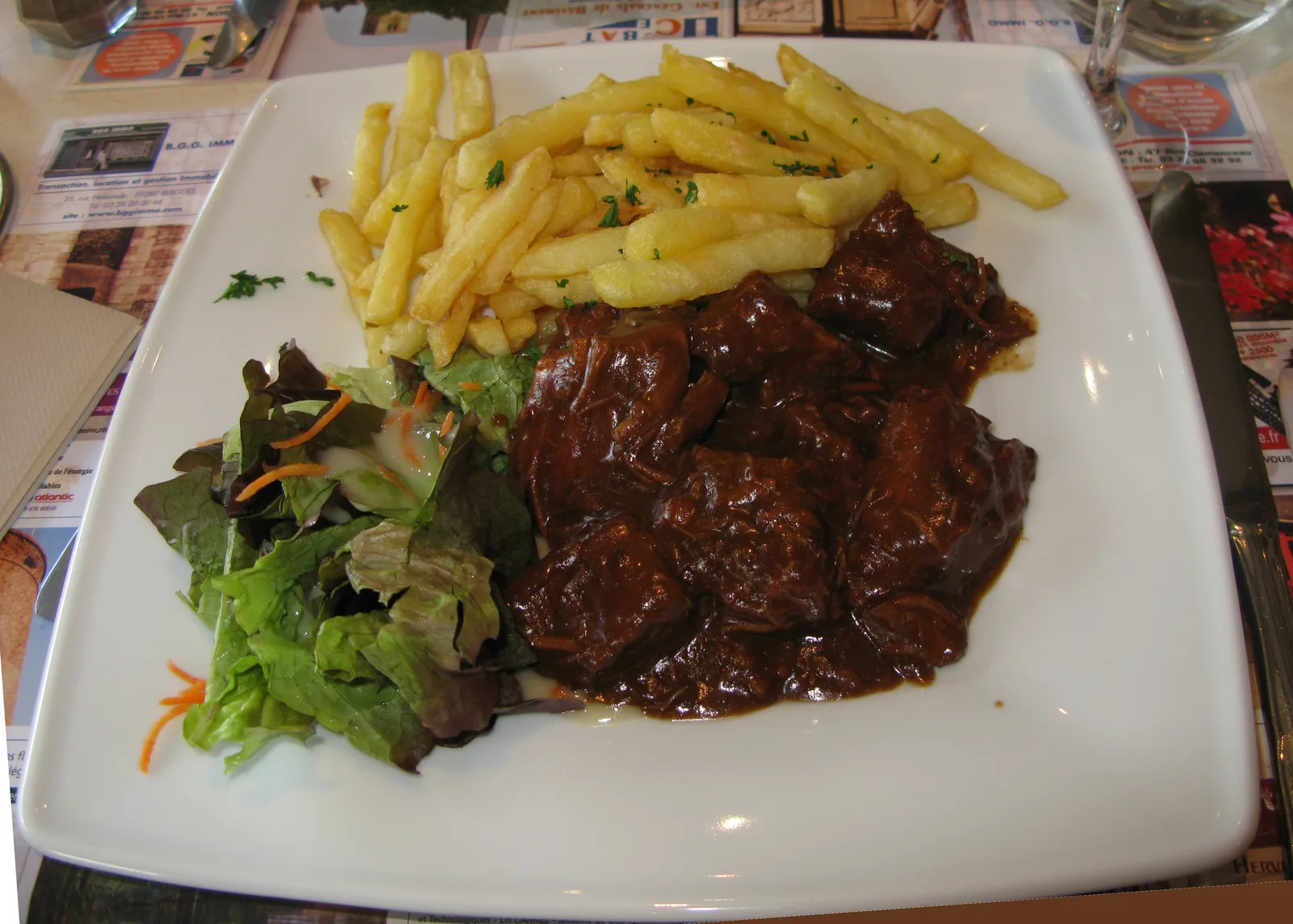
Carbonade flamande — dark beer-braised beef stew with fries and a small salad on a white plate Belgium flag Belgium 2h 55m
Dinner •Flemish Farmhouse Classic

Carbonade Flamande

This carbonade flamande recipe is Flanders' answer to the French beef stew: chunks of beef braised for hours in dark Belgian ale with sweet caramelised onions, thyme and bay, thickened the old way with slices of bread spread with mustard. The sauce turns dark, glossy and sweet-sour, and the beef goes spoon-tender. One serving is about 250 g, not counting the fries or potatoes served alongside.

Slow Sunday Comfort

Beef braised low and slow in dark Belgian ale with onions and mustard bread.

Pairs Well With
Dark Belgian ale & fries
High Protein
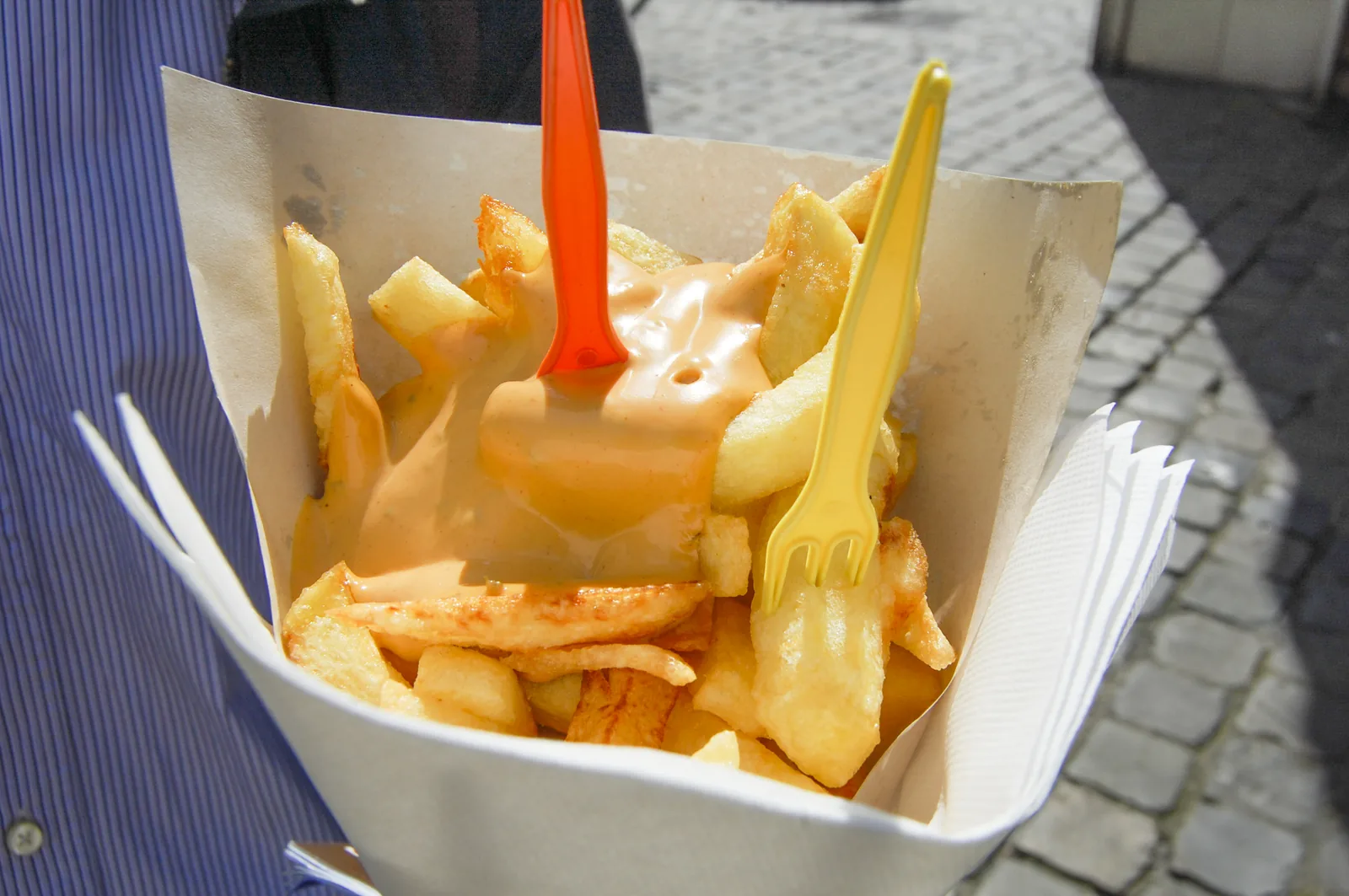
A paper cone of golden Belgian fries topped with andalouse sauce and two small plastic forks. Belgium flag Belgium 55m
Snack & Tea •Brussels Friterie Classic

Belgian Fries

Belgian fries are the real thing: thick batons of floury potato, fried twice — once gently to cook them through, once hot to shatter the outside — and served in a paper cone with andalouse sauce. One serving is about 253 g.

Crisp & Golden

Thick-cut potatoes fried twice in vegetable oil — crisp outside, fluffy inside, with andalouse sauce.

Pairs Well With
Serve hot in a paper cone with andalouse sauce and a cold lager.
Quick Prep (<30m)

The Dinner Gazette

Never wonder what’s for dinner again

One email a week with easy dinner ideas from around the world — ingredients, steps and nutrition, tested in our kitchen first.

Delivered every Thursday morning. Unsubscribe anytime.