Curated recipes from 193 countries  •  New seasonal Mediterranean issue out now

Overview

Sammarinese Passatelli

Passatelli in Brodo; Breadcrumb Pasta in Broth

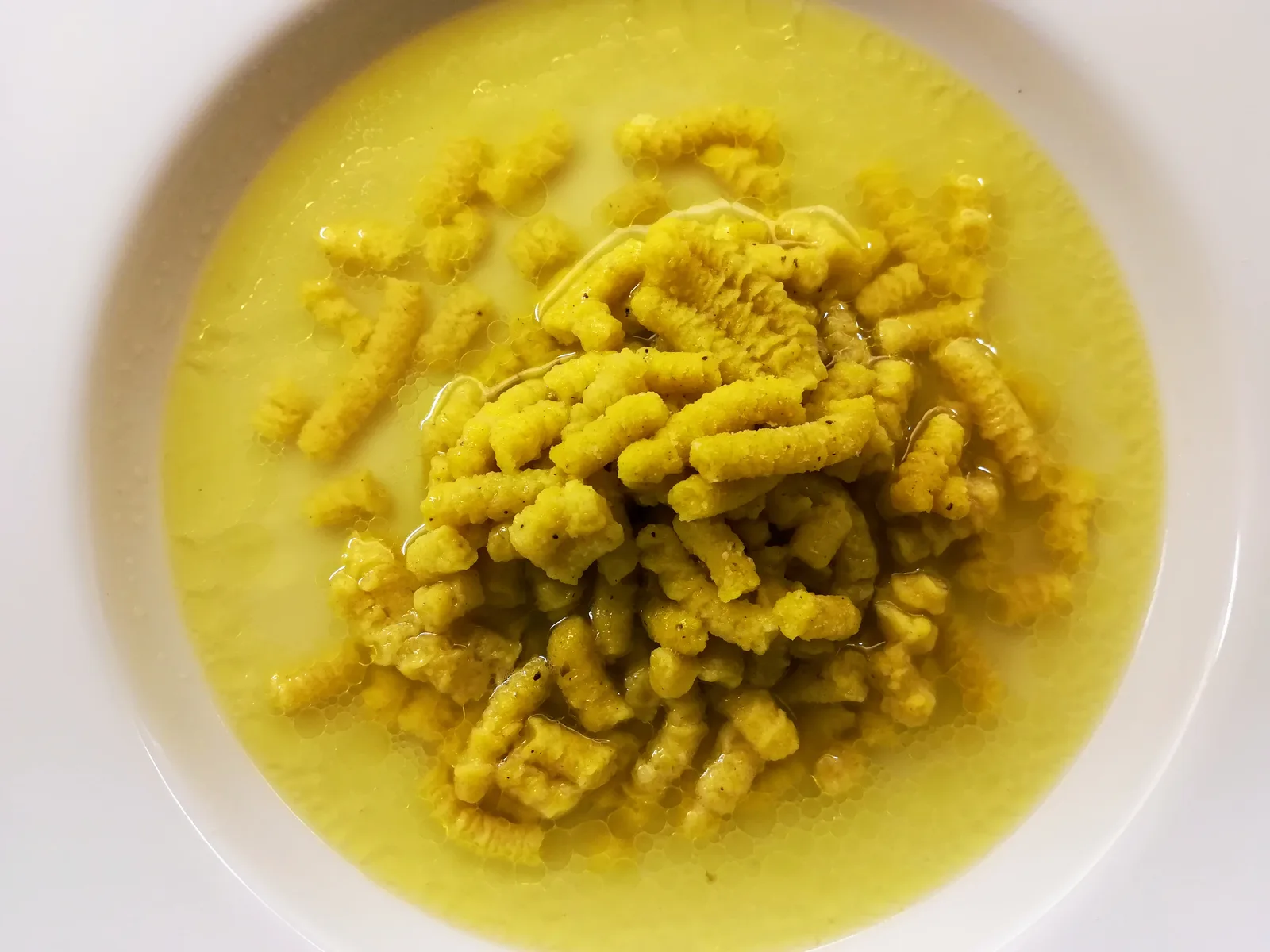
This passatelli recipe makes San Marino's beloved breadcrumb pasta: equal parts dry breadcrumbs and grated Parmesan, bound with egg and a whisper of nutmeg, pressed through a potato ricer into short golden strands and cooked for a few minutes in hot chicken broth. It is the taste of a Romagna Sunday — warm, savoury and gentle, with the strands turning light and tender the moment they float. One serving is about 500 g.

Passatelli come from Romagna and the neighbouring Marche, the hills and coast around San Marino, where they were the thrifty answer to stale bread: crumbs mixed with Parmesan and egg, pressed through a ricer into broth. Their name comes from the verb passare, to pass through, for the way the dough is passed through the press. In Romagna they are a Sunday and holiday dish, classically served at Christmas in homemade capon broth as a lighter alternative to tortellini in brodo, with the boiled bird served afterwards as the main course.

Pairs well with: Hot chicken broth & extra Parmesan, with bread on the side

Provenance

San Marino flag San Marino

Sammarinese Heritage

Mediterranean & Italy

Time Dedication

55m

20m prep • 35m cook

Batch Yield

4 Servings

445 kcal per serving

1 serving ≈ 500 g

Technical Skill

Intermediate

Intermediate (Press & Broth)

Meal Timing & Digestive Fit

Breakfast

Not Advised

Lunch

Hearty Midday Main

Dinner

Ideal Hearty Main

Snack & Tea

Inappropriate

Pasta & Noodles Occasions: Sunday dinners, holiday meals, cold evenings, light dinners Cost: Low — about $3–4 per serving at home
Sammarinese passatelli — golden breadcrumb pasta strands in a bowl of clear chicken broth

Sammarinese Heritage

Photo: Popo le Chien, CC0 1.0, via Wikimedia Commons

The Heritage Formulary

Measured Ingredients

Estimated cost: Low — about $3–4 per serving at home (USD)

A traditional Romagna dish of breadcrumb, Parmesan and egg pasta pressed into hot broth.

Execution Methodology & Culinary Technique

Step-by-Step Cooking Guide

Active 55m
P

Prep Stage: Cheese Grated, Broth Simmering

20 Mins • Grating & Measuring

Grate the Parmesan, beat the eggs, and measure the breadcrumbs before you touch the dough. Bring the broth to a gentle simmer in a wide pot while you work, and keep the potato ricer or passatelli press and a knife within reach — once the dough is mixed, it goes straight into the broth.

Maestro Tip: Grate the Parmesan finely. Coarse shreds make a crumbly dough that will not hold its shape in the broth.

  1. 1

    Make the Dough

    15 Mins • Mixing & Resting Room temperature, about 20°C (68°F)

    Put the 200 g breadcrumbs and 150 g grated Parmesan in a bowl with the 1 g nutmeg and the 5 g lemon zest. Add the 150 g beaten eggs and stir, then knead with your hands for 2–3 minutes until it comes together into a firm, smooth ball. If it feels dry and crumbly, add a teaspoon of water; if it is sticky, add a spoon of breadcrumbs. Wrap it and rest for 10 minutes.

    Test a walnut-sized piece first: press it through the ricer into a little simmering water. If it holds, the dough is right; if it falls apart, knead in a little more egg.

    Done when: A firm ball that holds its shape when squeezed and does not stick to your hands.

  2. 2

    Simmer the Broth

    10 Mins • Heating the Broth Gentle simmer, about 95°C (203°F)

    Bring the 1500 ml chicken broth to a gentle simmer in a wide pot — small bubbles breaking the surface, not a rolling boil. Taste and season lightly; remember the Parmesan in the pasta adds salt. Keep the broth at this gentle simmer for the whole pressing step.

    A rolling boil breaks the strands. If the broth starts boiling hard, turn the heat down before you press anything in.

    Done when: Steady gentle simmer, about 95°C (203°F), with small bubbles.

  3. 3

    Press the Passatelli into the Broth

    10 Mins • Pressing Simmering broth, about 95°C (203°F)

    Pack a handful of dough into a potato ricer fitted with the large-hole disc (or a passatelli press). Hold it over the simmering broth and squeeze, letting the strands fall in; when they are about 4 cm (1 1/2 inches) long, cut them off with a knife. Work in batches, pressing a handful at a time, and stir the broth gently once between batches so the strands do not clump.

    Do not overfill the ricer — a loose handful presses easily, a packed one needs force and makes uneven strands.

    Done when: Short golden strands, about 4 cm long, floating in the broth.

  4. 4

    Cook Until They Float

    5 Mins • Cooking Simmering broth, about 95°C (203°F)

    Cook the passatelli in the simmering broth for 3–4 minutes, stirring once or twice. They are done when they float to the surface, swell slightly and turn a lighter shade of yellow. Taste one: it should be tender all the way through with a gentle bite, not doughy in the middle. Turn off the heat and let the pot stand for 1 minute.

    Do not overcook them — past 5 minutes they soften too much and start to break apart.

    Done when: Strands float, look plump and pale yellow, and taste tender, not doughy.

  5. 5

    Serve with Parmesan

    2 Mins • Serving Hot, about 75°C (167°F)

    Ladle the passatelli and plenty of broth into warm deep bowls and shower each with grated Parmesan. Serve at once while the strands are hot and tender.

    Warm the bowls with hot water first — cold bowls cool a soup like this in a minute.

    Done when: Steaming bowls, strands tender and broth clear and hot.

Finishing Touches & Plating

Serve the passatelli in deep bowls with plenty of hot broth and an extra snowfall of Parmesan on top. Eat at once — the strands are at their best in the first few minutes.

Nutritional Physiology & Benefits

Nutrition

Energy

445

kcal / serving

Protein

30g

Complete AA

Carbs

40g

Complex

Fats

18g

Healthy

Per serving (4 servings · 1 serving ≈ 500 g)
Energy445 kcal
Protein30 g
Carbohydrates40 g
Fat18 g
Fibre2.1 g
Sugar2.4 g
Sodium1801 mg
Per 100g
Energy89 kcal
Protein5.9 g
Carbohydrates8 g
Fat3.6 g
Fibre0.4 g
Sugar0.5 g
Sodium360 mg

Nutrition values are estimated — calculated from USDA FoodData Central values for the listed ingredients.

Vitamins & minerals: Calcium (Parmesan), vitamin B12 and vitamin D (egg), B vitamins (breadcrumbs).

Surprisingly High in Protein

About 30 g of protein per serving from egg, Parmesan and broth — a small bowl that genuinely fills you up.

Cheese and Egg Nutrition

Parmesan brings calcium and the egg brings vitamin B12 and vitamin D to a dish built from stale-bread leftovers.

Clever Leftover Cooking

Stale breadcrumbs, eggs, cheese and broth — a traditional way to turn pantry leftovers into dinner with nothing wasted.

Food Pairings

What to Eat With

To optimize nutrient absorption and elevate the sensory depth, pair with these authentic accompaniments:

Sides

Crusty Bread

Crusty bread is the traditional tool for chasing the last of the broth around the bowl.

Vegetables

Simple Green Salad

A sharp green salad after a rich, cheesy bowl resets the palate and balances the meal.

Drinks

Light White Wine

A light, dry white wine has enough acidity to lift the rich broth without overpowering it.

Full Menus

Roast Chicken to Follow

Roast chicken with salad after the soup turns a light first course into a full Sunday dinner.

Complete menu

Serve the passatelli as a first course, followed by a simple roast chicken or grilled fish with salad, and finish with fresh fruit — the light broth opens the meal without filling you up.

Digestive Guardrails

What NOT to Combine

To prevent digestive distress, sluggishness, or palate clash, avoid pairing the dish with these elements:

Heavy Sauces Instead of Broth

A heavy tomato or cream sauce turns passatelli into a stodgy pile and hides their delicate nutmeg and Parmesan flavour. They belong in broth. This is a cooking note, not medical advice.

Fatty Breadcrumbs

Fatty breadcrumbs from buttered or oiled bread make the strands fall apart in the broth. Use plain, dry breadcrumbs from lean bread. This is general information, not medical advice.

General information only, not medical advice — consult a doctor for personal dietary decisions.

Who Should Eat It

Who Should Eat

  • General adultsA warming first course or light dinner — one generous bowl is enough with bread.
  • ChildrenSoft and mild; cut the strands short and go easy on the nutmeg.
  • ElderlySoft to chew and easy to digest; serve warm in a modest bowl.
  • Pregnant womenServe freshly cooked and piping hot; make sure the eggs in the pasta are fully cooked through. Ask your clinician about portion size.
  • Breastfeeding womenA warm, nourishing bowl; pair with bread and a salad for a fuller meal.
  • AthletesGood carbohydrate recovery food — about 40 g of carbs and 30 g of protein per serving.
  • Weight gainEnergy-giving and easy to eat more of; add bread and a second helping.
  • Weight lossLight at 445 kcal a serving — take one bowl, go easy on extra Parmesan, and skip the bread.

Health Conditions — Adjust or Avoid

Conditions

  • DiabetesAbout 40 g of carbohydrate per serving from breadcrumbs — keep to one bowl and skip the bread on the side. Ask your clinician about portion size.
  • High blood pressureParmesan and broth make this a salty dish (about 1801 mg sodium per serving) — use low-sodium broth and less extra cheese. Ask your clinician about portion size.
  • Kidney diseaseParmesan, egg and salty broth bring protein and salt — keep portions small. Ask your clinician about portion size.
  • GoutBroth and Parmesan add purines — enjoy occasionally and in a modest portion. Ask your clinician about portion size.
  • Stomach issuesLight and soft, but nutmeg and rich broth can be hard on sensitive stomachs — eat a small portion and chew well. Ask your clinician about portion size.
  • Cardiovascular diseaseParmesan brings saturated fat and the broth brings salt — treat this as an occasional dish and use low-sodium broth. Ask your clinician about portion size.
  • Fatty liverEgg yolk and cheese add fat — keep the portion modest and use a light, clear broth. Ask your clinician about portion size.
  • Food allergiesContains gluten (breadcrumbs), egg and milk (Parmesan). This is general information, not medical advice.
  • Special therapeutic dietsNot suitable for low-sodium, gluten-free or egg-free plans as written. Ask your clinician or dietitian before adapting it.

If you have a medical condition, consult your doctor before changing your diet.

Storage & Use

Storage & Use

How to store
Cool the soup quickly, then cover and refrigerate.
In the fridge
1 day in the broth in a covered container.
In the freezer
Do not freeze cooked passatelli — they turn mushy. The raw dough can be frozen for 1 month, wrapped tightly; thaw in the fridge.
How to reheat
Reheat gently in a pan over low heat until steaming and hot all the way through, to 74°C (165°F); do not boil. The strands soften a little on reheating.
Freezing recommended
No for the cooked dish; yes for the raw dough.
Signs it has spoiled
Sour smell, cloudy or slimy broth, or strands that fall apart when stirred.

More recipes to explore

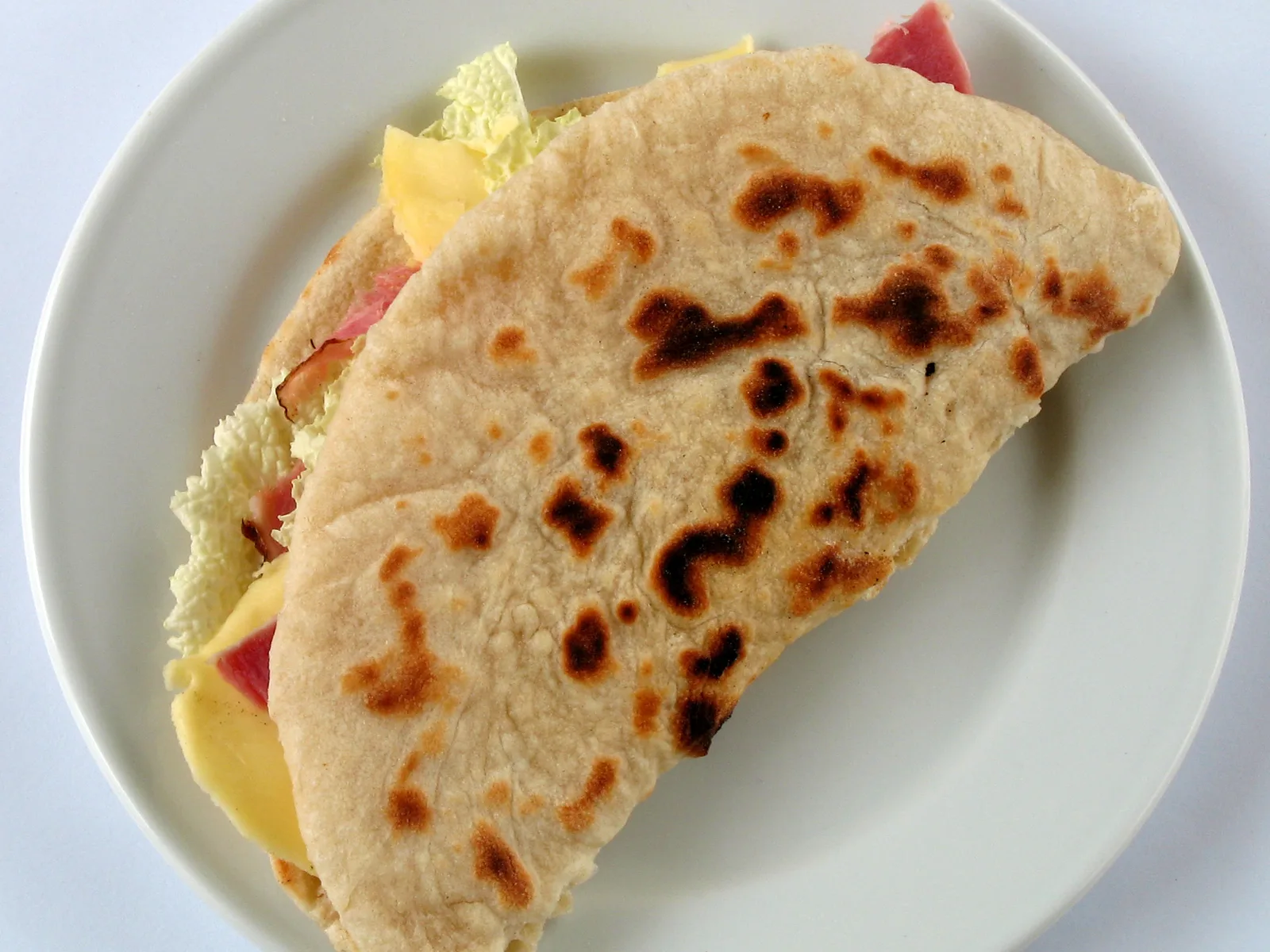
A folded Sammarinese piadina with cured ham, cheese and salad leaves on a white plate San Marino flag San Marino 50m
Lunch •Sammarinese Heritage

Sammarinese Piadina

This piadina recipe makes the thin griddle flatbread of Romagna and San Marino: a soft, spotted dough of flour, water, olive oil and salt, cooked in minutes on a hot pan and folded while still warm around creamy squacquerone, slices of cured ham and fresh rocket. It is street food and lunch in one — crisp at the edges, soft inside, and best eaten the moment it is filled. One serving is about 270 g.

Quick Griddle Lunch

A warm griddle flatbread folded around soft squacquerone cheese, cured ham and peppery rocket — ready in under an hour with no oven.

Pairs Well With
Squacquerone cheese, cured ham & rocket, with a crisp salad
Quick Prep (<30m)
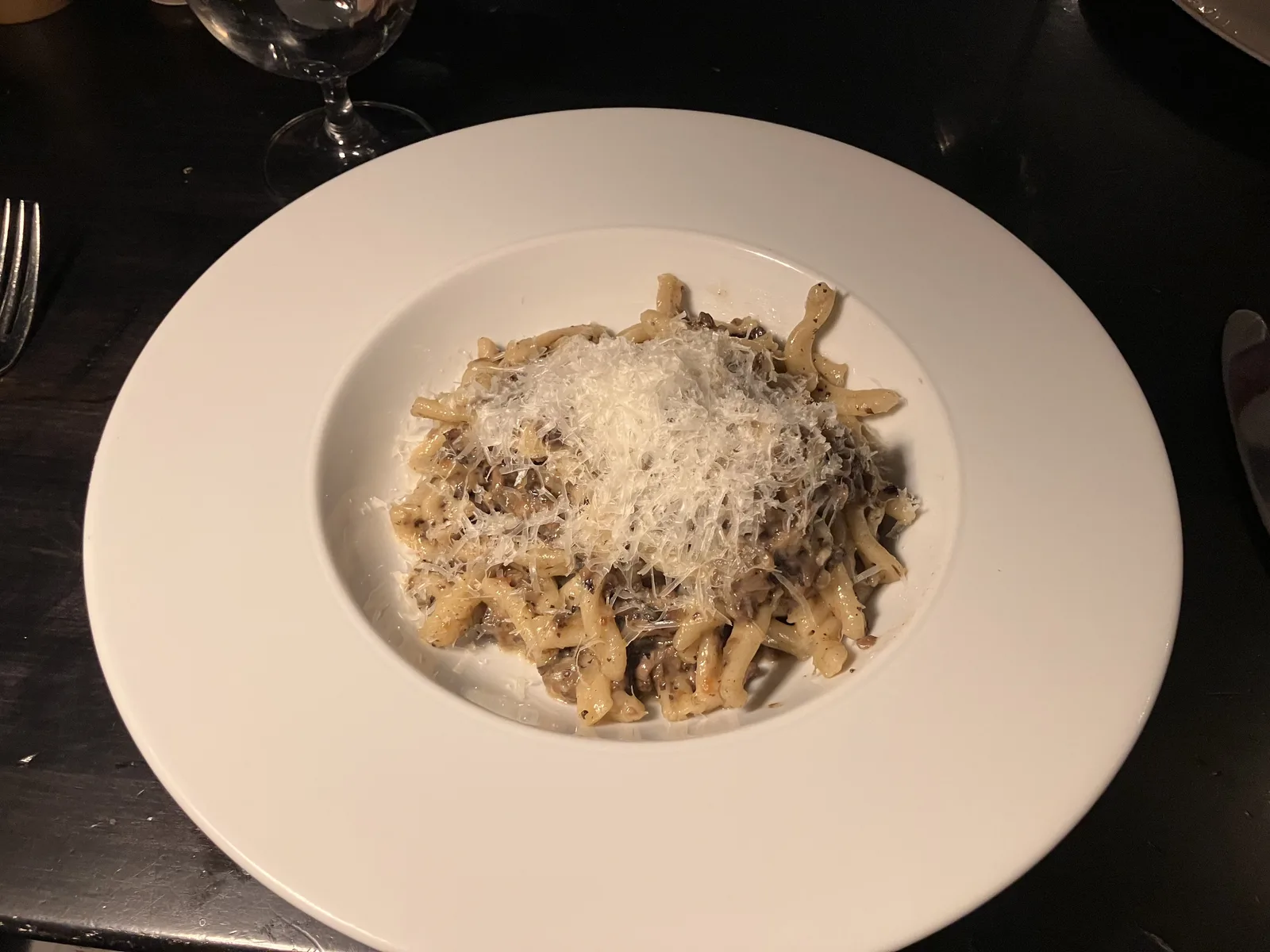
Sammarinese strozzapreti — hand-rolled twisted pasta in a creamy mushroom sauce topped with grated Parmesan San Marino flag San Marino 1h 30m
Dinner •Sammarinese Heritage

Sammarinese Strozzapreti

This strozzapreti recipe makes the hand-rolled pasta of Romagna and San Marino — short twisted cords of flour and water, rolled between the palms — and serves it the way the region loves it best: tossed in a creamy mushroom sauce with garlic, butter and Parmesan. The rough, twisted shape grabs the sauce, so every bite is rich, earthy and silky. One serving is about 350 g.

Rich Pasta Comfort

Hand-rolled twisted strozzapreti in a creamy garlic mushroom sauce with Parmesan — San Marino's most comforting pasta, made from scratch.

Pairs Well With
Creamy mushroom sauce & Parmesan, with a sharp salad
Pasta & Noodles
Bœuf bourguignon — French beef braised in red wine France flag France 4h
Dinner •Burgundy Terroir

Bœuf Bourguignon

Beef braised gently in red wine until the connective tissue melts into a velvet, gelatin-rich sauce — the classic Burgundy Sunday dinner.

Cellular Repair

Beef braised in red wine until spoon-tender, with mushrooms and pearl onions.

Pairs Well With
Parsnip Purée & Steamed French Haricots Verts
High Protein
Vietnamese braised pork belly with golden eggs in caramel sauce Vietnam flag Vietnam 1h 45m
Dinner •One Pot

Vietnamese Braised Pork and Eggs

Pork belly slowly braised in coconut water and caramel until meltingly tender, with golden eggs that soak up the sweet-savoury sauce — the Vietnamese family dish that tastes better the next day.

Comfort & Sustained Energy

Slow-braised pork belly and eggs in coconut water and caramel.

Pairs Well With
Steamed rice & pickled mustard greens
High Protein

The Dinner Gazette

Never wonder what’s for dinner again

One email a week with easy dinner ideas from around the world — ingredients, steps and nutrition, tested in our kitchen first.

Delivered every Thursday morning. Unsubscribe anytime.