
Curated recipes from 193 countries  •  New seasonal Mediterranean issue out now

Overview

Sammarinese Piadina

Piada; Piadina Romagnola; Pièda

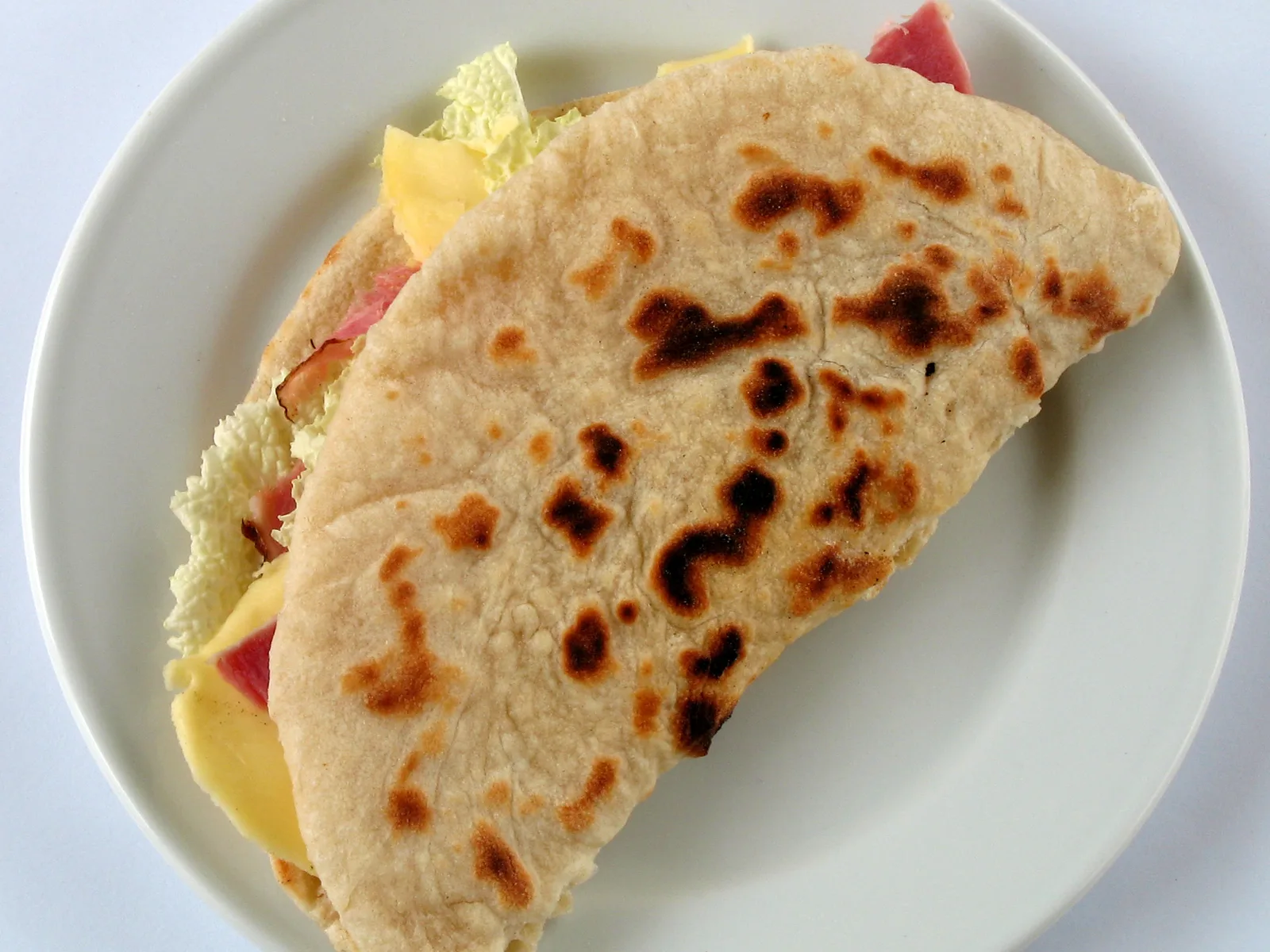
This piadina recipe makes the thin griddle flatbread of Romagna and San Marino: a soft, spotted dough of flour, water, olive oil and salt, cooked in minutes on a hot pan and folded while still warm around creamy squacquerone, slices of cured ham and fresh rocket. It is street food and lunch in one — crisp at the edges, soft inside, and best eaten the moment it is filled. One serving is about 270 g.

Piadina is the flatbread of Romagna, the region that wraps around San Marino, and it is one of the oldest foods of the area — its first written mention dates to 1317, when a papal legate described a bread of wheat, water and salt. For centuries it was the bread of farm households, cooked on a terracotta disc over the fire and filled with whatever the kitchen had. In 2014 the European Union gave Piadina Romagnola protected geographical indication status, and today piadinerie — little kiosks selling hot filled piadine — line the streets of Rimini and San Marino.

Pairs well with: Squacquerone cheese, cured ham & rocket, with a crisp salad

Provenance

San Marino flag San Marino

Sammarinese Heritage

Mediterranean & Italy

Time Dedication

50m

30m prep • 20m cook

Batch Yield

4 Servings

706 kcal per serving

1 serving ≈ 270 g

Technical Skill

Easy

Easy (Griddle)

Meal Timing & Digestive Fit

Breakfast

Not Advised

Lunch

Prime Metabolic Fit

Dinner

Ideal Hearty Main

Snack & Tea

Inappropriate

Quick Prep (<30m) Occasions: Quick lunches, picnics, street-food nights, casual suppers Cost: Low — about $3–4 per serving at home
A folded Sammarinese piadina with cured ham, cheese and salad leaves on a white plate

Sammarinese Heritage

Photo: Kobako, CC BY-SA 2.5, via Wikimedia Commons

The Heritage Formulary

Measured Ingredients

Estimated cost: Low — about $3–4 per serving at home (USD)

A traditional Romagna flatbread of flour, water, olive oil and salt, griddle-cooked and filled with squacquerone and cured ham.

Execution Methodology & Culinary Technique

Step-by-Step Cooking Guide

Active 50m
P

Prep Stage: Dough Mixed and Rested, Fillings Ready

30 Mins • Mixing & Resting

Mix the flour, salt water and olive oil into a soft dough, knead it briefly, and let it rest covered for 20 minutes while you lay out the squacquerone, ham and rocket. The rest relaxes the dough so it rolls out thin without springing back.

Maestro Tip: Weigh the flour — a piadina dough that is too dry cracks when you fold it, and one that is too wet sticks to the pan.

  1. 1

    Mix and Knead the Dough

    10 Mins • Mixing & Kneading Room temperature, about 20°C (68°F)

    Put the 400 g flour in a wide bowl. Dissolve the 6 g salt in the 200 ml warm water, then pour it in with the 30 ml olive oil. Stir with a fork until shaggy, then knead on a lightly floured surface for about 5 minutes until smooth, soft and no longer sticky. It should feel like a soft earlobe, not firm like bread dough.

    If the dough sticks to your hands, dust them with flour rather than adding more water — wet dough tears when rolled.

    Done when: Smooth, soft dough that holds a fingerprint for a second.

  2. 2

    Rest the Dough

    20 Mins • Resting Room temperature, about 20°C (68°F)

    Cover the dough with a clean cloth or an upturned bowl and leave it for 20 minutes. Do not skip this rest: the gluten relaxes, so the rounds roll out thin and stay thin instead of shrinking back.

    While the dough rests, set the squacquerone, ham and rocket on the counter so filling takes seconds once the breads are cooked.

    Done when: Dough feels relaxed and rolls out without resistance.

  3. 3

    Roll Out the Rounds

    5 Mins • Rolling Room temperature, about 20°C (68°F)

    Divide the dough into 4 equal pieces, about 160 g each. Roll each piece on a lightly floured surface into a round about 25 cm (10 inches) across and 3–4 mm thick, turning it a quarter-turn between rolls so it stays round. Shake off loose flour — too much flour on the surface burns in the pan.

    Aim for even thickness rather than a perfect circle; thin spots brown too fast and thick spots stay doughy.

    Done when: Thin, even rounds you can almost see the counter through at the edges.

  4. 4

    Griddle the Piadine

    12 Mins • Griddle Cooking Medium-high heat, about 200°C (400°F)

    Heat a large dry cast-iron pan or flat griddle over medium-high heat until a drop of water sizzles and vanishes. Lay in one round and cook for 2–3 minutes until the underside is pale gold with brown spots and the top bubbles. Flip and cook 2 minutes more until spotted on both sides. Keep the cooked piadine stacked under a cloth while you cook the rest — the steam keeps them soft and foldable.

    No oil in the pan: the dough fries in its own fat and the dry heat is what makes the brown spots. If the pan smokes, turn it down a notch.

    Done when: Both sides pale gold with scattered brown spots; the bread bends without cracking.

  5. 5

    Fill and Fold

    3 Mins • Filling Hot piadina, about 70°C (158°F)

    Working with one hot piadina at a time, spread 60 g squacquerone over one half, lay on 2 slices of cured ham and a small handful of rocket, then fold the empty half over and press gently. The heat softens the cheese so it melts into the bread. Cut in half if you like and serve at once.

    Fill and eat immediately — a filled piadina left standing goes soft and the rocket wilts.

    Done when: Cheese softened and starting to melt; the fold holds its shape.

Finishing Touches & Plating

Serve the piadine hot, folded in half, with the cut side showing the cheese, ham and rocket. A wedge of lemon or a small salad on the side is all they need.

Nutritional Physiology & Benefits

Nutrition

Energy

706

kcal / serving

Protein

29g

Complete AA

Carbs

78g

Complex

Fats

30g

Healthy

Per serving (4 servings · 1 serving ≈ 270 g)
Energy706 kcal
Protein29 g
Carbohydrates78 g
Fat30 g
Fibre3.0 g
Sugar0.6 g
Sodium1478 mg
Per 100g
Energy261 kcal
Protein10.7 g
Carbohydrates29 g
Fat11 g
Fibre1.1 g
Sugar0.2 g
Sodium547 mg

Nutrition values are estimated — calculated from USDA FoodData Central values for the listed ingredients.

Vitamins & minerals: Calcium and vitamin B12 (squacquerone and ham), vitamin K and folate (rocket), B vitamins (flour).

Filling, Steady Lunch

About 78 g of carbohydrate and 29 g of protein per serving make one piadina a proper lunch that keeps you going through the afternoon.

Fresh Rocket on Top

Rocket adds vitamin K, folate and a peppery freshness that balances the rich cheese and salty ham without any extra cooking.

Simple Pantry Dough

Flour, water, oil and salt — four everyday ingredients, no yeast, no oven, and no waiting for a rise.

Food Pairings

What to Eat With

To optimize nutrient absorption and elevate the sensory depth, pair with these authentic accompaniments:

Vegetables

Rocket and Tomato Salad

A sharp, lemon-dressed salad cuts through the creamy squacquerone and salty ham and keeps the plate from feeling heavy.

Sides

Grilled Vegetables

Courgette and aubergine cooked on the same hot griddle echo the smoky spots on the bread and add a soft, sweet contrast.

Drinks

Sparkling Water or Light White Wine

Bubbles and acidity cleanse the palate between rich, cheesy bites — the way piadinerie in Romagna serve it.

Full Menus

Fresh Fruit to Finish

A peach, pear or a few grapes after a salty, cheesy lunch resets the palate with something cool and sweet.

Complete menu

Serve each folded piadina with a small rocket and tomato salad and a glass of sparkling water or light white wine, followed by fresh fruit — the salad's sharpness balances the rich cheese and salty ham.

Digestive Guardrails

What NOT to Combine

To prevent digestive distress, sluggishness, or palate clash, avoid pairing the dish with these elements:

Heavy Sweet Sauces

Sweet sauces and ketchup bury the mild cheese and clash with the salty ham. If you want a spread, a little mustard or a spoon of soft cheese is enough. This is a cooking note, not medical advice.

Overfilling the Piadina

Too much filling makes the fold split and the bread soggy, and it piles on extra salt and fat. Keep to about 60 g of cheese and 2 slices of ham per piadina. This is general information, not medical advice.

General information only, not medical advice — consult a doctor for personal dietary decisions.

Who Should Eat It

Who Should Eat

  • General adultsA satisfying lunch — one piadina with salad is a full plate.
  • ChildrenMild and soft; use cooked ham instead of cured ham and go light on the rocket if they find it peppery.
  • ElderlySoft and easy to chew when freshly made; serve warm in a modest portion.
  • Pregnant womenEat freshly cooked and piping hot; cured ham should be heated through or swapped for cooked ham. Ask your clinician about portion size.
  • Breastfeeding womenAn energy-giving lunch; pair with salad and fruit for balance.
  • AthletesGood carbohydrate recovery food — about 78 g of carbs and 29 g of protein per serving.
  • Weight gainEnergy-dense and easy to eat more of; add a second half or a side of grilled vegetables.
  • Weight lossRich at 706 kcal a serving — take one piadina, load the plate with salad, and keep the cheese to one thin layer.

Health Conditions — Adjust or Avoid

Conditions

  • DiabetesAbout 78 g of carbohydrate per serving from the flatbread — keep to one piadina and fill the plate with salad. Ask your clinician about portion size.
  • High blood pressureCured ham and added salt make this a salty dish (about 1478 mg sodium per serving) — use less ham and skip extra salt. Ask your clinician about portion size.
  • Kidney diseaseThe cheese and ham bring salt and potassium — keep portions small. Ask your clinician about portion size.
  • GoutCured ham adds purines — enjoy occasionally and in a modest portion. Ask your clinician about portion size.
  • Stomach issuesRich cheese and cured meat can be hard on sensitive stomachs — eat a small portion and chew well. Ask your clinician about portion size.
  • Cardiovascular diseaseCheese and cured ham bring saturated fat and salt — treat this as an occasional lunch and balance it with salad. Ask your clinician about portion size.
  • Fatty liverCheese and ham add fat — keep the portion modest and load the plate with salad. Ask your clinician about portion size.
  • Food allergiesContains gluten (wheat), milk (squacquerone) and pork (cured ham). A gluten-free flour blend can be used, but the texture will be softer. This is general information, not medical advice.
  • Special therapeutic dietsNot suitable for low-sodium or dairy-free plans as written — a version with grilled vegetables and no ham is lighter. Ask your clinician or dietitian before adapting it.

If you have a medical condition, consult your doctor before changing your diet.

Storage & Use

Storage & Use

How to store
Cool the unfilled piadine completely, then stack with baking paper between them and wrap tightly.
In the fridge
2 days in a sealed bag; reheat before filling.
In the freezer
1 month, stacked with paper between layers in a freezer bag; thaw in the fridge.
How to reheat
Reheat in a dry hot pan for 1 minute per side until soft and hot all the way through, to 74°C (165°F); fill only after reheating.
Freezing recommended
Yes for the plain breads — filled piadine do not freeze well.
Signs it has spoiled
Sour smell, stiff dry texture that will not soften, or mould spots.

More recipes to explore

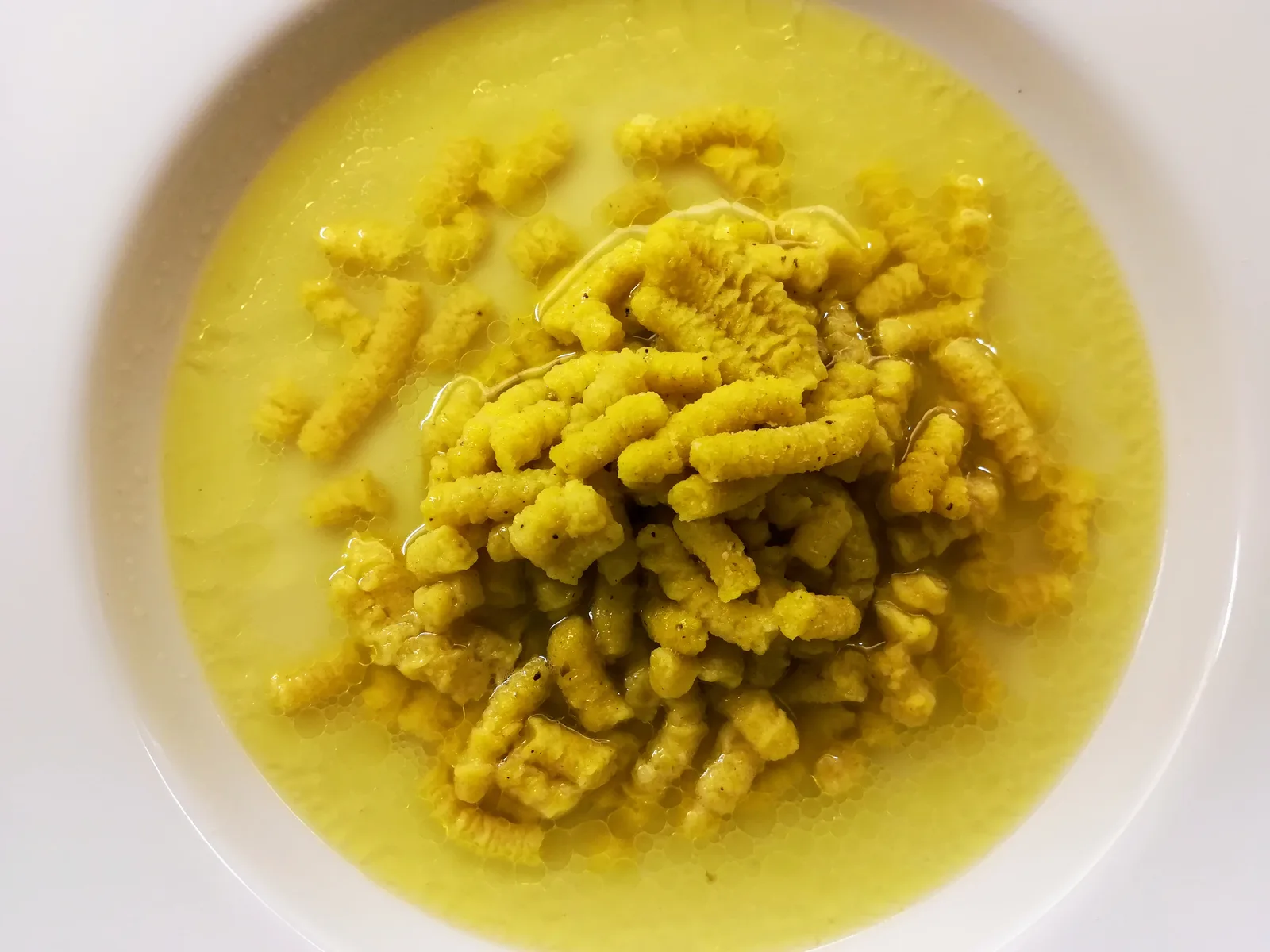
Sammarinese passatelli — golden breadcrumb pasta strands in a bowl of clear chicken broth San Marino flag San Marino 55m
Dinner •Sammarinese Heritage

Sammarinese Passatelli

This passatelli recipe makes San Marino's beloved breadcrumb pasta: equal parts dry breadcrumbs and grated Parmesan, bound with egg and a whisper of nutmeg, pressed through a potato ricer into short golden strands and cooked for a few minutes in hot chicken broth. It is the taste of a Romagna Sunday — warm, savoury and gentle, with the strands turning light and tender the moment they float. One serving is about 500 g.

Comfort & Warmth

Golden breadcrumb and Parmesan strands pressed into hot chicken broth — San Marino's traditional comfort soup, ready in under an hour.

Pairs Well With
Hot chicken broth & extra Parmesan, with bread on the side
Pasta & Noodles
Sammarinese strozzapreti — hand-rolled twisted pasta in a creamy mushroom sauce topped with grated Parmesan San Marino flag San Marino 1h 30m
Dinner •Sammarinese Heritage

Sammarinese Strozzapreti

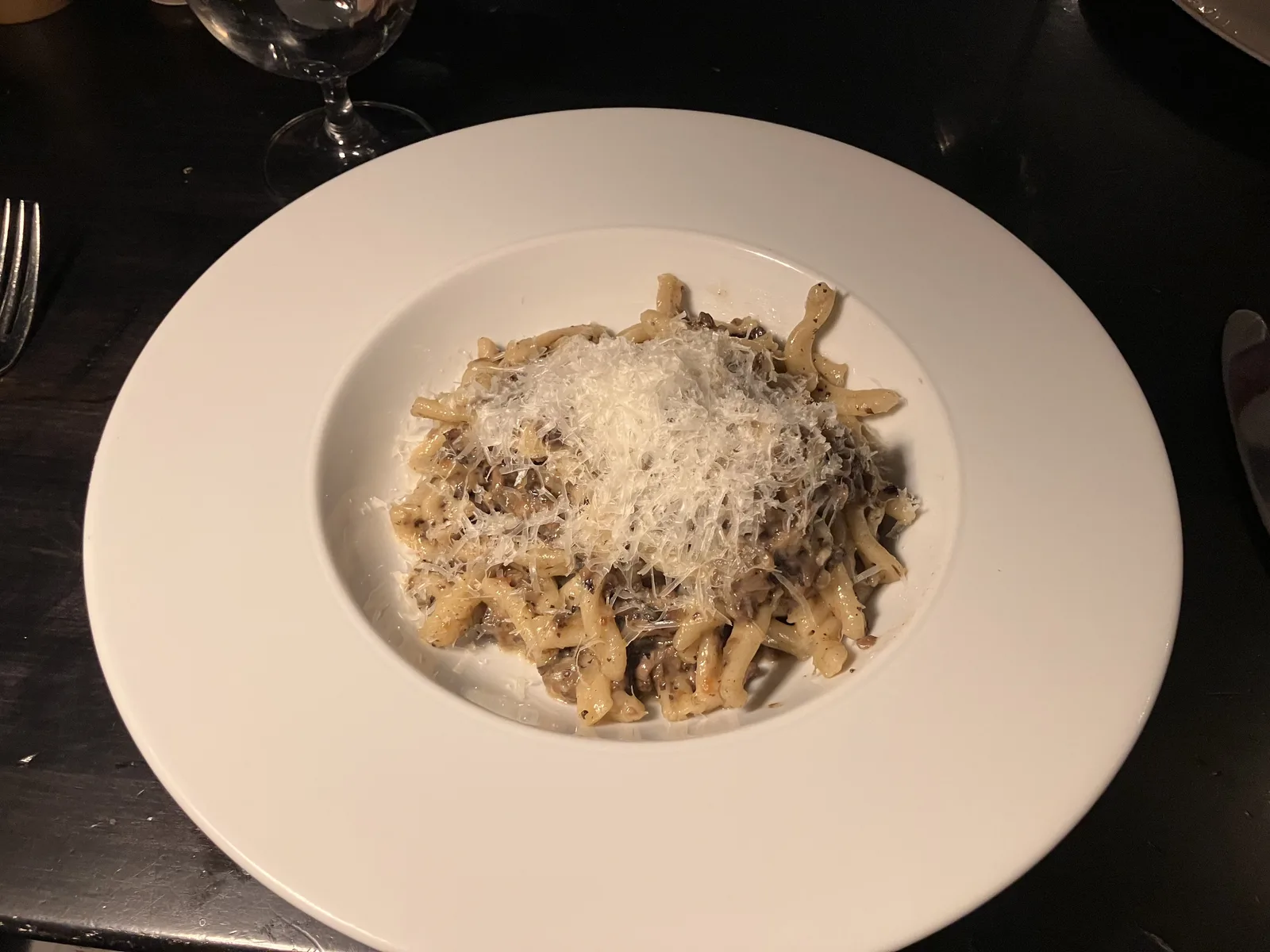
This strozzapreti recipe makes the hand-rolled pasta of Romagna and San Marino — short twisted cords of flour and water, rolled between the palms — and serves it the way the region loves it best: tossed in a creamy mushroom sauce with garlic, butter and Parmesan. The rough, twisted shape grabs the sauce, so every bite is rich, earthy and silky. One serving is about 350 g.

Rich Pasta Comfort

Hand-rolled twisted strozzapreti in a creamy garlic mushroom sauce with Parmesan — San Marino's most comforting pasta, made from scratch.

Pairs Well With
Creamy mushroom sauce & Parmesan, with a sharp salad
Pasta & Noodles
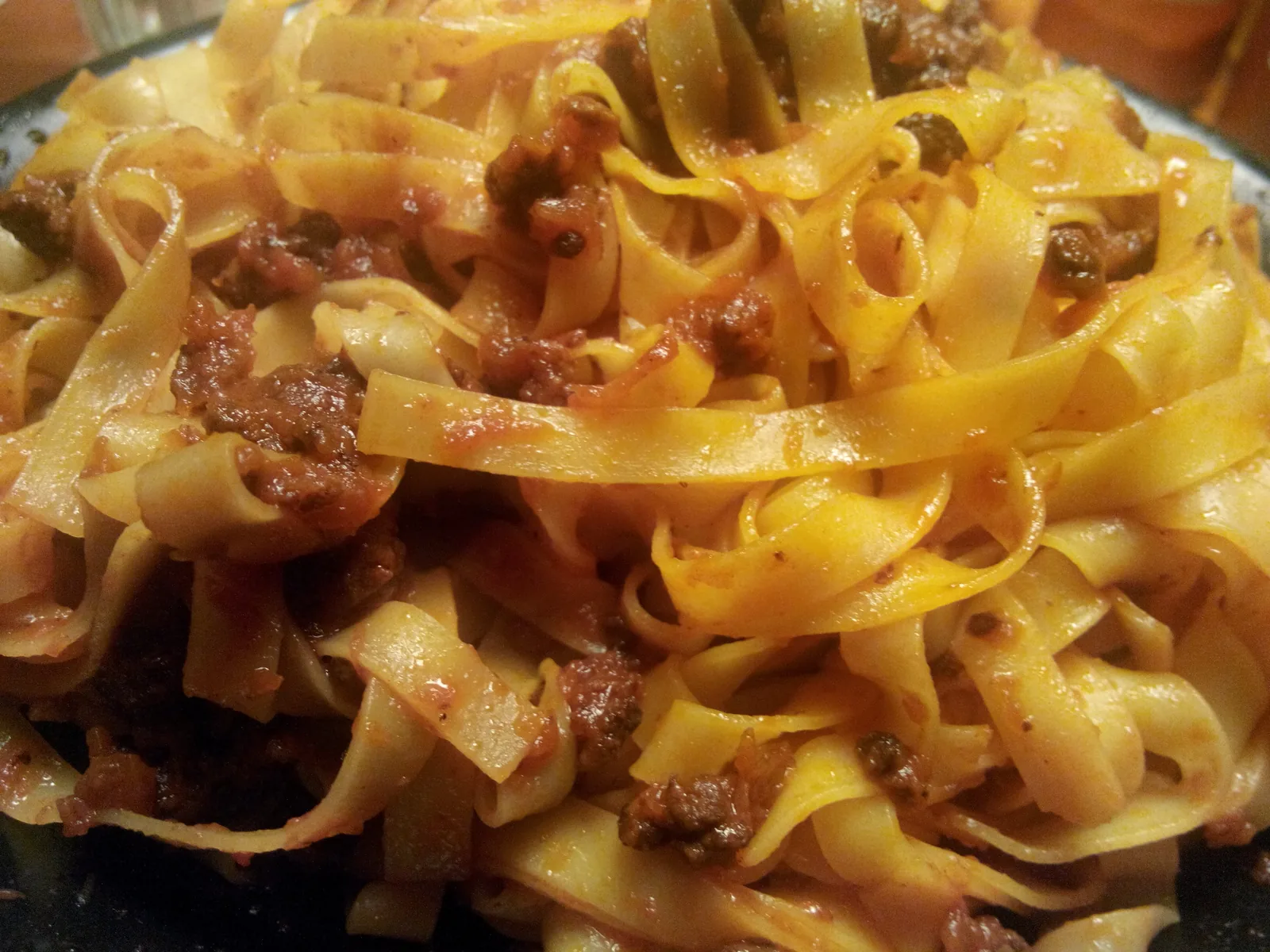
Tagliatelle al ragù Bolognese in a bowl with Parmigiano-Reggiano Italy flag Italy 4h 25m
Lunch •Emilia-Romagna

Tagliatelle al Ragù Bolognese

Slow-braised soffritto and coarse ground heritage meats layered over handmade egg yolk dough for mid-day stamina.

Lean Protein

Slow-simmered beef ragù tossed through fresh egg tagliatelle.

Pairs Well With
Bitter Radicchio & Aged Balsamico di Modena
Pasta & Noodles • High Protein
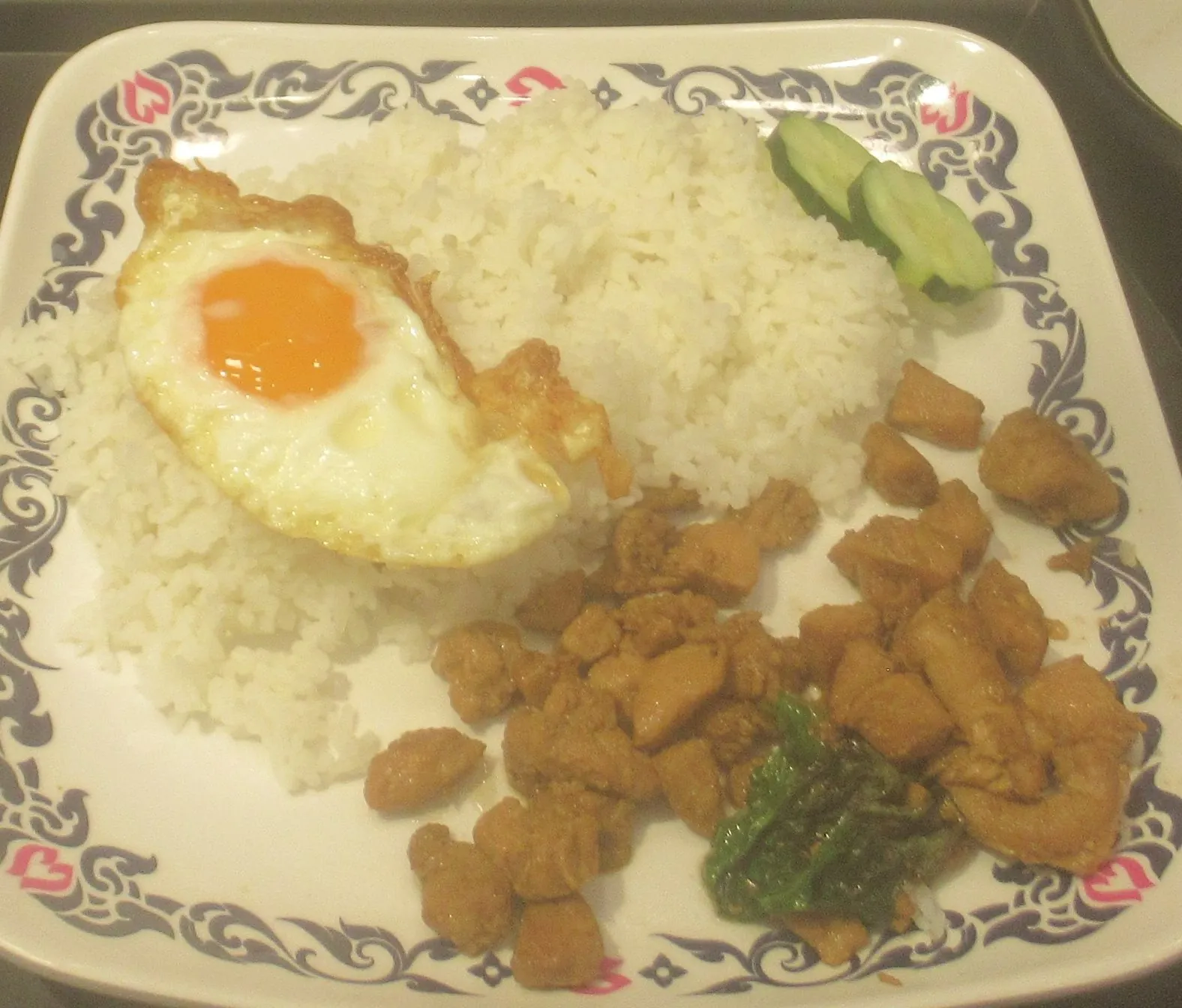
Pad kra pao gai — Thai holy basil chicken with fried egg and rice Thailand flag Thailand 30m
Lunch •Bangkok Street Flame

Pad Kra Pao Gai

High-heat wok flash of holy basil and crushed chillies over minced chicken, served over jasmine rice with a crispy-edged fried egg.

High Energy

Capsaicin brings the heat; holy basil adds a peppery, clove-like aroma.

Pairs Well With
Chilled Cucumber Salad & Fish Sauce Lime Dip
High Protein • Quick Prep (<30m)

The Dinner Gazette

Never wonder what’s for dinner again

One email a week with easy dinner ideas from around the world — ingredients, steps and nutrition, tested in our kitchen first.

Delivered every Thursday morning. Unsubscribe anytime.