
Curated recipes from 193 countries  •  New seasonal Mediterranean issue out now

Overview

Saucisse aux Choux

Saucisse aux Choux Vaudoise, Vaud Cabbage Sausage, Cabbage Sausage of Vaud

This saucisse aux choux recipe is the cabbage sausage of Vaud, in French-speaking Switzerland: a smoked pork sausage made with white cabbage, braised gently in white wine with more cabbage and onion until it is juicy and tender. It is served sliced, with boiled potatoes and mustard. One serving is 1 sausage with cabbage and potatoes, about 469 g.

Legend says the saucisse aux choux was born in Orbe in 879, when Emperor Charles the Fat stayed too long and the town ran short of meat — so the townspeople stretched the pork with cabbage. Legend aside, the sausage is a real, protected product of Vaud: it carries a Swiss protected geographical indication (IGP), is made of pork and blanched white cabbage, and is cold-smoked for at least 24 hours. It is simmered for 35–40 minutes and traditionally served on papet vaudois, the leek and potato stew of the canton.

Pairs well with: Boiled potatoes, Dijon mustard and a glass of Chasselas

Provenance

Switzerland flag Switzerland

Vaud Heritage

Nordic & European

Time Dedication

1h 5m

20m prep • 45m cook

Batch Yield

4 Servings

624 kcal per serving

1 serving ≈ 469 g

Technical Skill

Intermediate

Intermediate (Braising)

Meal Timing & Digestive Fit

Breakfast

Not Advised

Lunch

Hearty Midday Main

Dinner

Ideal Hearty Main

Snack & Tea

Inappropriate

Occasions: Winter family dinners, Swiss festive tables, hearty weekend suppers, cold-weather gatherings Cost: Moderate — about $5–6 per serving at home
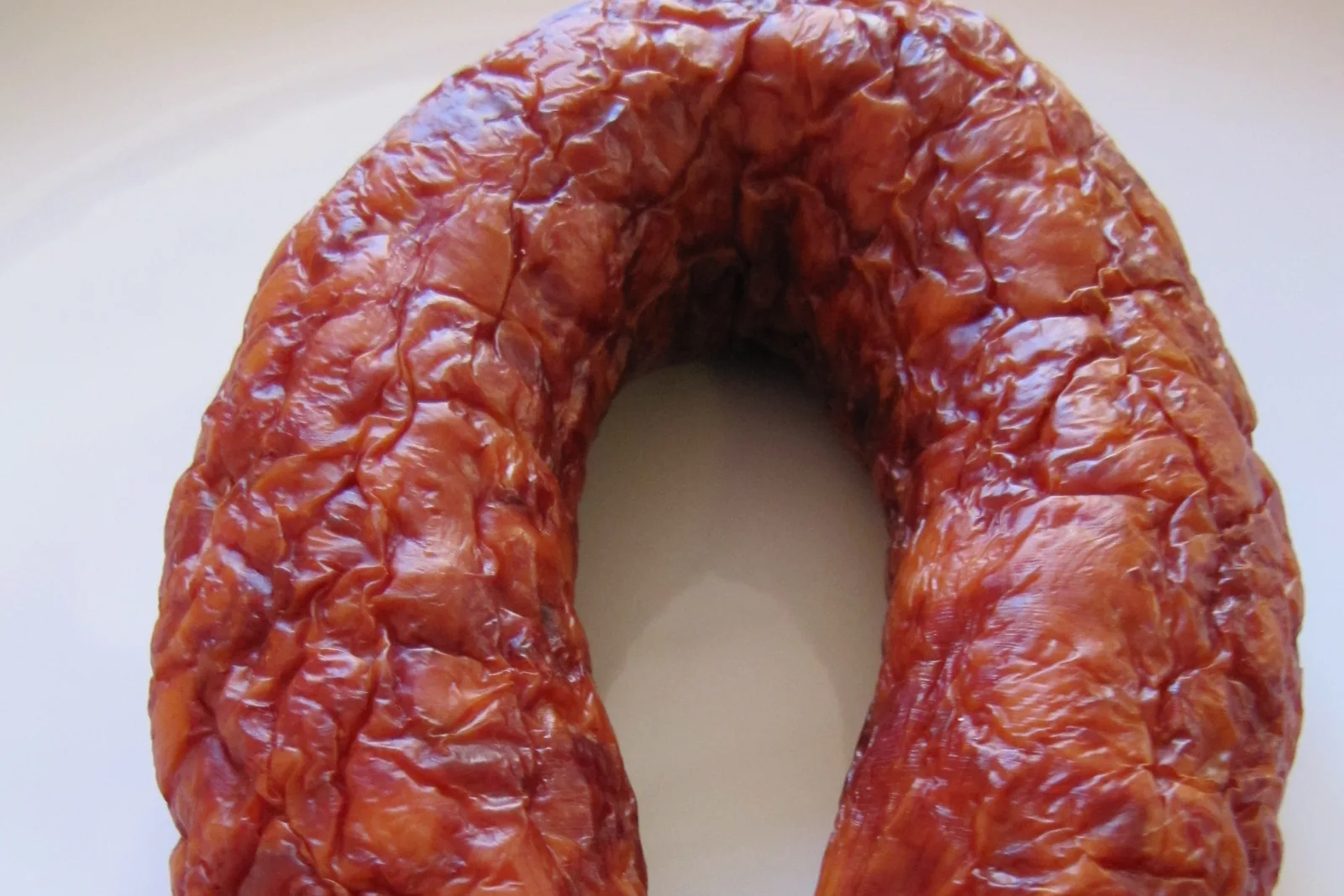
A glossy saucisse aux choux, the Vaud cabbage sausage, curled on a plain white plate

Vaud Heritage

Photo: Popo le Chien, CC0, via Wikimedia Commons

The Heritage Formulary

Measured Ingredients

Estimated cost: Moderate — about $5–6 per serving at home (USD)

A good saucisse aux choux is firm and glossy, juicy inside, with the cabbage soft and sweet from the wine braise.

Execution Methodology & Culinary Technique

Step-by-Step Cooking Guide

Active 1h 5m
P

Prep Stage: Shred, Slice and Prick

20 Mins • Chopping & Peeling

Shred the cabbage, slice the onion, peel and chunk the potatoes, and prick the sausages at each end. Measure the wine so everything is ready before the pot goes on the heat.

Maestro Tip: Prick the sausages only once at each end — more holes let the juices run out into the pot.

  1. 1

    Start the potatoes

    5 Mins Boiling water, about 100°C (212°F)

    Put the 600 g of potatoes in a saucepan, cover with cold salted water, and bring to the boil. They will finish cooking while the sausages braise, so set the pan on a low heat once it boils.

    Start the potatoes with cold water so they cook evenly to the centre.

    Done when: Water at a rolling boil, potatoes in the pan.

  2. 2

    Build the cabbage braise

    10 Mins Medium heat, about 175°C (350°F)

    Melt the 20 g of butter in a wide, heavy pot over medium heat. Add the 100 g of onion and cook for 3 minutes until soft, then add the 400 g of cabbage and cook for 5 minutes, stirring, until it wilts. Pour in the 150 ml of white wine and let it bubble for 2 minutes.

    Let the wine bubble before the sausages go in — raw wine tastes sharp, cooked wine tastes mellow.

    Done when: Cabbage wilted and glossy, wine bubbling gently.

  3. 3

    Braise the sausages

    40 Mins Low simmer, about 80°C (175°F); sausages to 71°C (160°F) at the centre

    Lay the 4 saucisses aux choux on the cabbage, add the 3 g of salt and 2 g of pepper, and pour in just enough water to come halfway up the sausages. Cover with a lid and cook on the lowest heat for 35–40 minutes, turning the sausages once halfway through. The sausages cook in the steam while their juices flavour the cabbage.

    Keep the heat low and the lid on — a hard boil splits the skins and dries the sausages out.

    Done when: Cabbage soft and sweet, sausages firm and glossy, 71°C (160°F) at the centre.

  4. 4

    Drain, rest and serve

    10 Mins Serving hot, about 70°C (158°F)

    Drain the potatoes. Lift the sausages out and rest them for 5 minutes, then slice each one into thick rounds. Spoon the cabbage and potatoes onto warm plates and lay the sliced sausage over the top, with mustard on the side.

    Resting the sausages keeps their juices inside when you slice them.

    Done when: Plates hot, sausage sliced and glossy, cabbage steaming.

Finishing Touches & Plating

Serve the saucisse aux choux hot, sliced over braised cabbage and boiled potatoes, with a spoonful of Dijon mustard on the side — the sharp mustard is the traditional cut against the rich, smoky sausage.

Nutritional Physiology & Benefits

Nutrition

Energy

624

kcal / serving

Protein

26g

Complete AA

Carbs

38g

Complex

Fats

37g

Healthy

Per serving (4 servings · 1 serving ≈ 469 g)
Energy624 kcal
Protein26 g
Carbohydrates38 g
Fat37 g
Fibre7.5 g
Sugar6.4 g
Sodium1553 mg
Per 100g
Energy133 kcal
Protein5.5 g
Carbohydrates8.1 g
Fat8 g
Fibre1.6 g
Sugar1.4 g
Sodium331 mg

Nutrition values are estimated — calculated from USDA FoodData Central values for the listed ingredients.

Vitamins & minerals: Cabbage and potatoes provide vitamin C, vitamin K, vitamin B6 and potassium; the pork sausage adds vitamin B12, iron and zinc. All nutrition values are estimated.

Cabbage, Inside and Out

White cabbage is in the sausage and under it, so the plate carries about 7.5 g of fibre a serving.

One Pot, Little Washing Up

The sausages braise on the cabbage while the potatoes boil alongside — two pans, one dinner.

Slow Food That Looks After Itself

Once the lid is on, the pot needs almost no attention for 40 minutes — just one turn of the sausages.

Food Pairings

What to Eat With

To optimize nutrient absorption and elevate the sensory depth, pair with these authentic accompaniments:

Drinks

Chasselas White Wine

A glass of Chasselas, the wine of Vaud, is the classic drink — it is the same wine that goes into the pot.

Sides

Dijon Mustard

A spoonful of Dijon mustard on the side is the traditional accompaniment — its sharpness lifts the smoky sausage.

Crusty Bread

Crusty bread is for mopping up the winey juices left on the plate.

Vegetables

Green Salad

A sharp green salad with a mustard vinaigrette cuts the richness of the sausage and potatoes.

Full Menus

Full Menu: Saucisse, Cabbage, Potatoes, Chasselas

Saucisse aux choux with braised cabbage, boiled potatoes, mustard and a glass of Chasselas is the Vaudois table at its simplest.

Complete menu

Saucisse aux choux with braised cabbage, boiled potatoes, Dijon mustard and a glass of Chasselas — the Vaudois table.

Digestive Guardrails

What NOT to Combine

To prevent digestive distress, sluggishness, or palate clash, avoid pairing the dish with these elements:

Boiling the Pot Hard

A hard boil splits the sausage skins and dries the meat out. Keep the lowest simmer and the lid on. This is general food information, not medical advice.

Salting Before Tasting

The sausages are salty, and their salt leaks into the cabbage as they braise. Taste at the end and add salt only if it truly needs it. This is general food information, not medical advice.

Slicing the Sausages Hot

Cutting the sausages the second they leave the pot lets the juices run out onto the board. Rest them for 5 minutes first. This is general food information, not medical advice.

General information only, not medical advice — consult a doctor for personal dietary decisions.

Who Should Eat It

Who Should Eat

  • General adultsA hearty, filling dinner for most adults; one sausage with cabbage and potatoes is a full plate.
  • ChildrenChildren usually like the soft cabbage and potatoes; cut the sausage into small rounds and check it is not too hot.
  • ElderlySoft cabbage and potatoes with sliced sausage are easy to eat; serve a smaller plate if preferred.
  • Pregnant womenThe sausage is cooked through to 71°C (160°F), which is the safe way to eat pork sausage in pregnancy; serve it freshly cooked and hot. Ask your clinician if unsure.
  • Breastfeeding womenA filling, energy-rich dinner for nursing mothers; the sausage is salty, so drink water with the meal.
  • AthletesAbout 26 g of protein and 38 g of carbohydrate a serving — a solid recovery dinner after a long day.
  • Weight gainAt 624 calories a serving, it is an easy way to add energy on a cold evening.
  • Weight lossA 624-calorie plate that is rich in sausage fat; keep it to one serving and fill half the plate with salad.

Health Conditions — Adjust or Avoid

Conditions

  • DiabetesAbout 38 g of carbohydrate per serving, mostly from the potatoes; keep the potato portion as stated and add salad. Ask your clinician about portions.
  • High blood pressureSodium is about 1,553 mg per serving, mostly from the smoked sausage; this is a high-sodium dish, so eat it occasionally and skip extra salt. Ask your clinician about portions.
  • Kidney diseaseThe sausage adds protein, phosphorus and a lot of salt; keep the portion as stated and eat it infrequently if you are on a restricted diet. Ask your clinician.
  • GoutPork sausage is moderate in purines; a normal portion now and then is usually better than a large one. Ask your clinician.
  • Stomach issuesRich, fatty sausage with wine-braised cabbage can be heavy on a sensitive stomach; eat a small portion and skip the mustard. Ask your clinician if unsure.
  • Cardiovascular diseaseThe smoked sausage is high in saturated fat and salt, so this is a sometimes dinner rather than an everyday one. Ask your clinician about portions.
  • Fatty liverHigh in saturated fat from the sausage; keep it occasional and pair it with salad rather than bread. Ask your clinician about portions.
  • Food allergiesContains milk (butter) and sulphites from the wine; the sausage may contain mustard or celery depending on the brand — check the label. Do not serve it to anyone with a milk allergy without swapping the butter for oil.
  • Special therapeutic dietsNot low-sodium, low-fat or dairy-free as written. It is naturally gluten-free. Ask your clinician about any therapeutic diet.

If you have a medical condition, consult your doctor before changing your diet.

Storage & Use

Storage & Use

How to store
Cool quickly, then store the cabbage, potatoes and sausages in separate sealed containers in the fridge.
In the fridge
Up to 3 days at 4°C (40°F) or below.
In the freezer
Freeze the braised cabbage alone for up to 2 months at -18°C (0°F); the sausages freeze separately for up to 2 months.
How to reheat
Reheat in a covered pan over low heat until steaming and 74°C (165°F) throughout; add a splash of water if it has thickened.
Freezing recommended
Yes — the cabbage freezes well; cook fresh sausages when you reheat.
Signs it has spoiled
Sour smell, slimy cabbage, or any mould — throw it away.

More recipes to explore

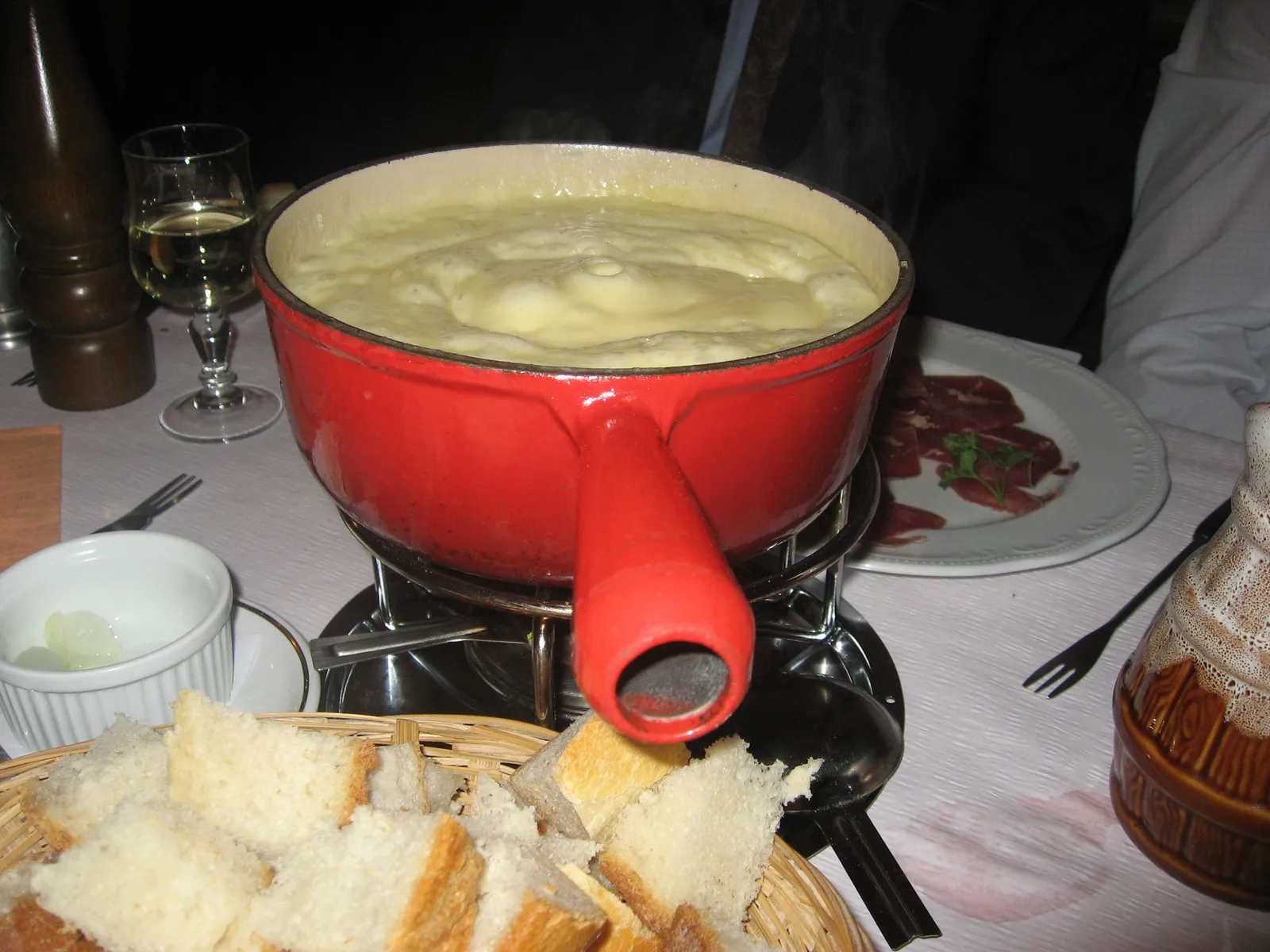
A red fondue pot of melted cheese with bread cubes and a glass of white wine Switzerland flag Switzerland 40m
Dinner •Swiss Alpine Classic

Swiss Cheese Fondue

Swiss cheese fondue is the Alps in a pot: Gruyere and Emmental melted slowly into dry white wine with garlic and a splash of kirsch, kept warm at the table while everyone dips cubes of bread into the bubbling cheese. One serving is about 310 g.

Comfort & Togetherness

Gruyere and Emmental melted in white wine, shared from one pot.

Pairs Well With
Cubes of crusty bread, boiled potatoes and cornichons on the side
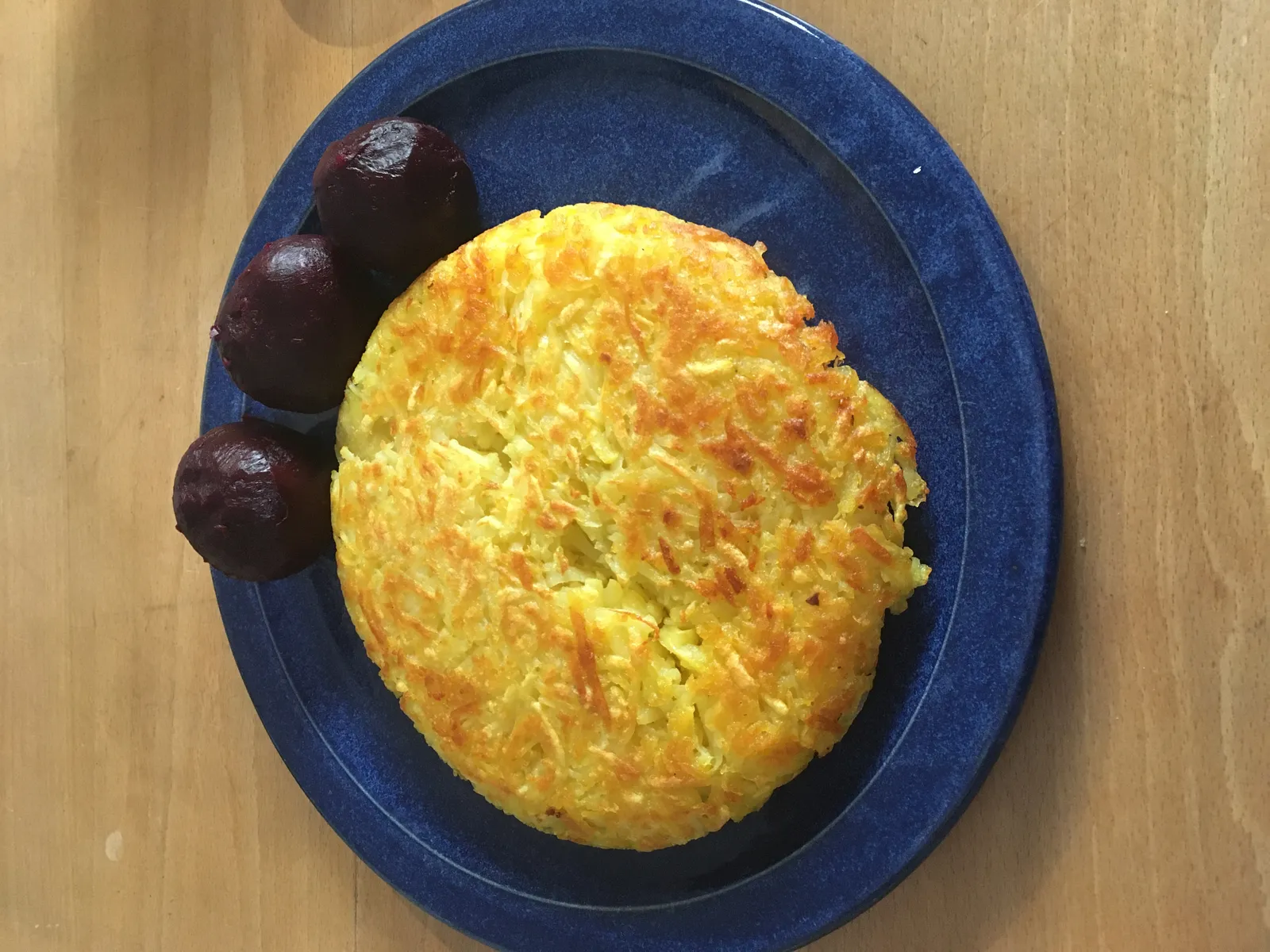
A large golden rosti potato cake on a blue plate Switzerland flag Switzerland 40m
Lunch •Bernese Farmhouse Classic

Rösti

Rösti is Switzerland's crisp potato cake: grated potato pressed into one large golden disc and fried in butter until the outside shatters and the inside stays soft, then topped with a fried egg. One serving is about 240 g.

Simple & Satisfying

One large crisp cake of grated potato, pan-fried in butter and topped with a fried egg.

Pairs Well With
A fried egg on top and a simple green salad with sharp vinaigrette
Quick Prep (<30m)
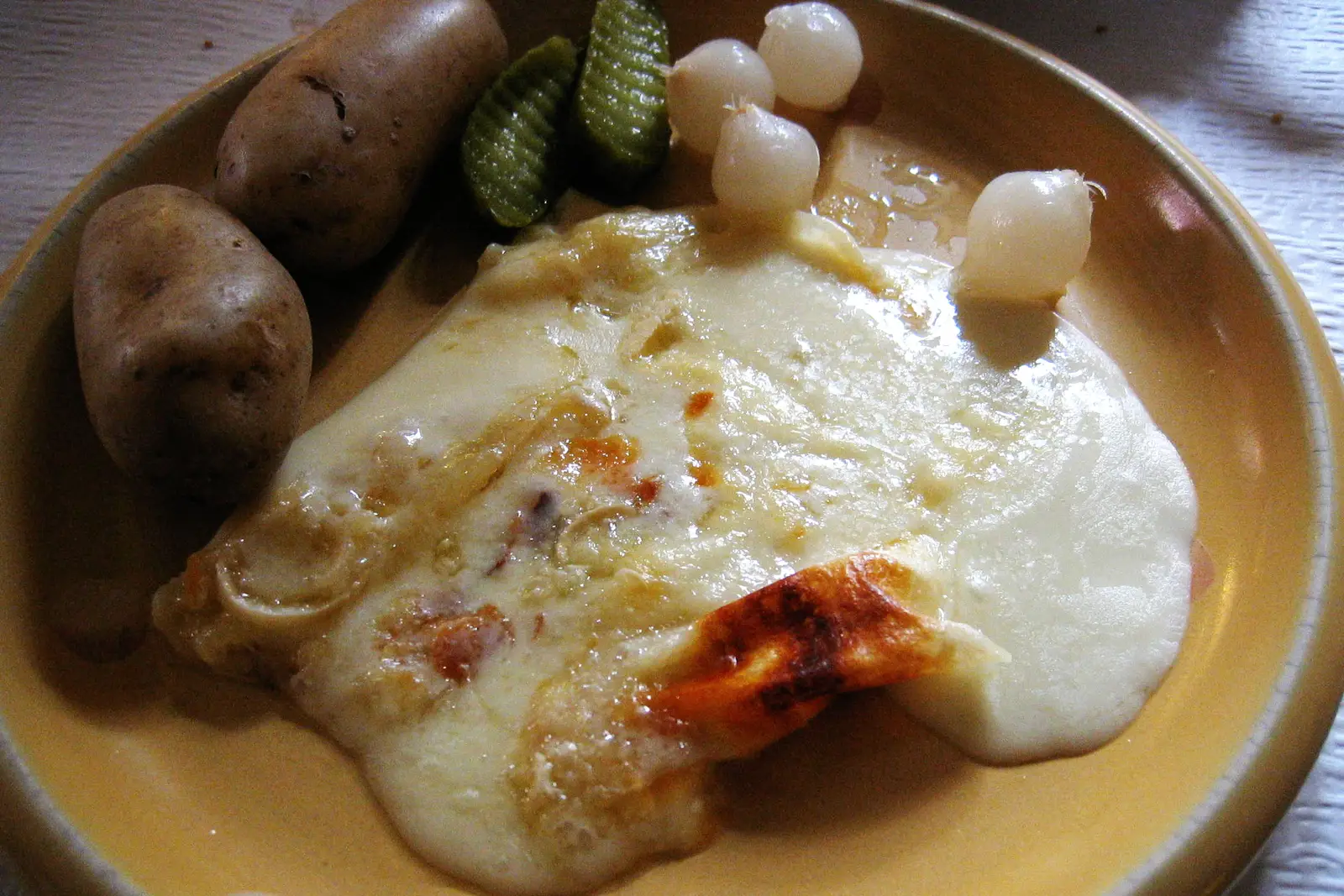
Melted raclette cheese scraped over a plate with boiled potatoes and pickles Switzerland flag Switzerland 40m
Dinner •Valais Alpine Classic

Raclette

Raclette is the Swiss Alps' other great melted-cheese meal: a half-wheel of raclette cheese is warmed until the cut face bubbles, then scraped in ribbons over boiled potatoes, with cornichons and pickled onions to cut the richness. One serving is about 365 g.

Comfort & Togetherness

Melted raclette cheese scraped over boiled potatoes with pickles.

Pairs Well With
Boiled potatoes, cornichons, pickled onions and a green salad
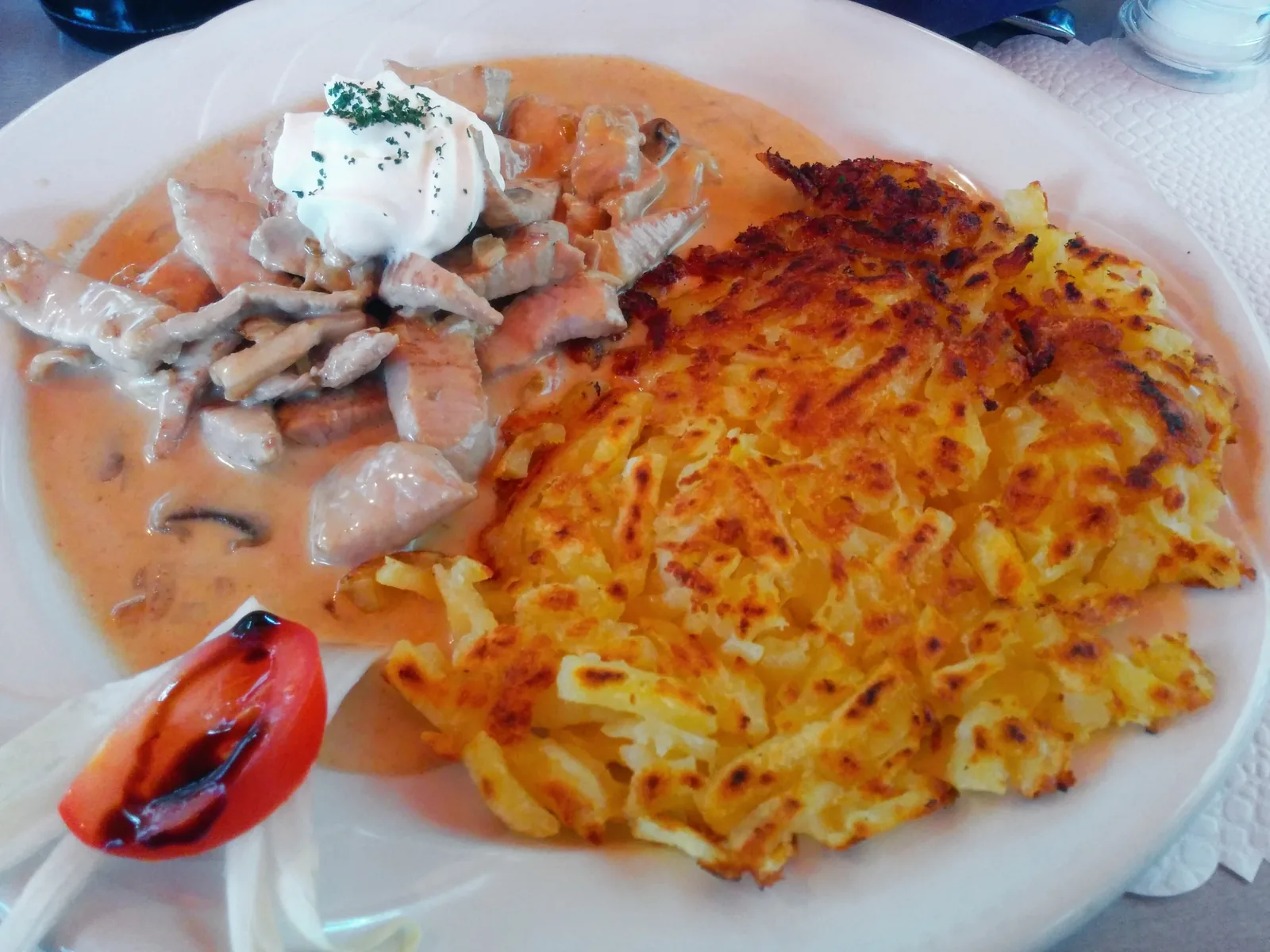
A plate of Zürcher Geschnetzeltes — veal strips in cream sauce with a dollop of cream — beside golden rösti. Switzerland flag Switzerland 40m
Dinner •Zurich Classic

Zürcher Geschnetzeltes

Zürcher Geschnetzeltes is Zurich's signature dish: thin strips of veal quickly seared, then finished in a white-wine and cream sauce with mushrooms and onion. One serving is about 335 g, before the rösti it is traditionally served with.

Rich & Comforting

Tender strips of veal in a white-wine cream sauce with mushrooms — Zurich's classic, with rösti.

Pairs Well With
Serve with golden rösti and a glass of dry Swiss white wine.
High Protein

The Dinner Gazette

Never wonder what’s for dinner again

One email a week with easy dinner ideas from around the world — ingredients, steps and nutrition, tested in our kitchen first.

Delivered every Thursday morning. Unsubscribe anytime.