Curated recipes from 193 countries  •  New seasonal Mediterranean issue out now

Overview

Solomon Islands Baked Whole Reef Fish

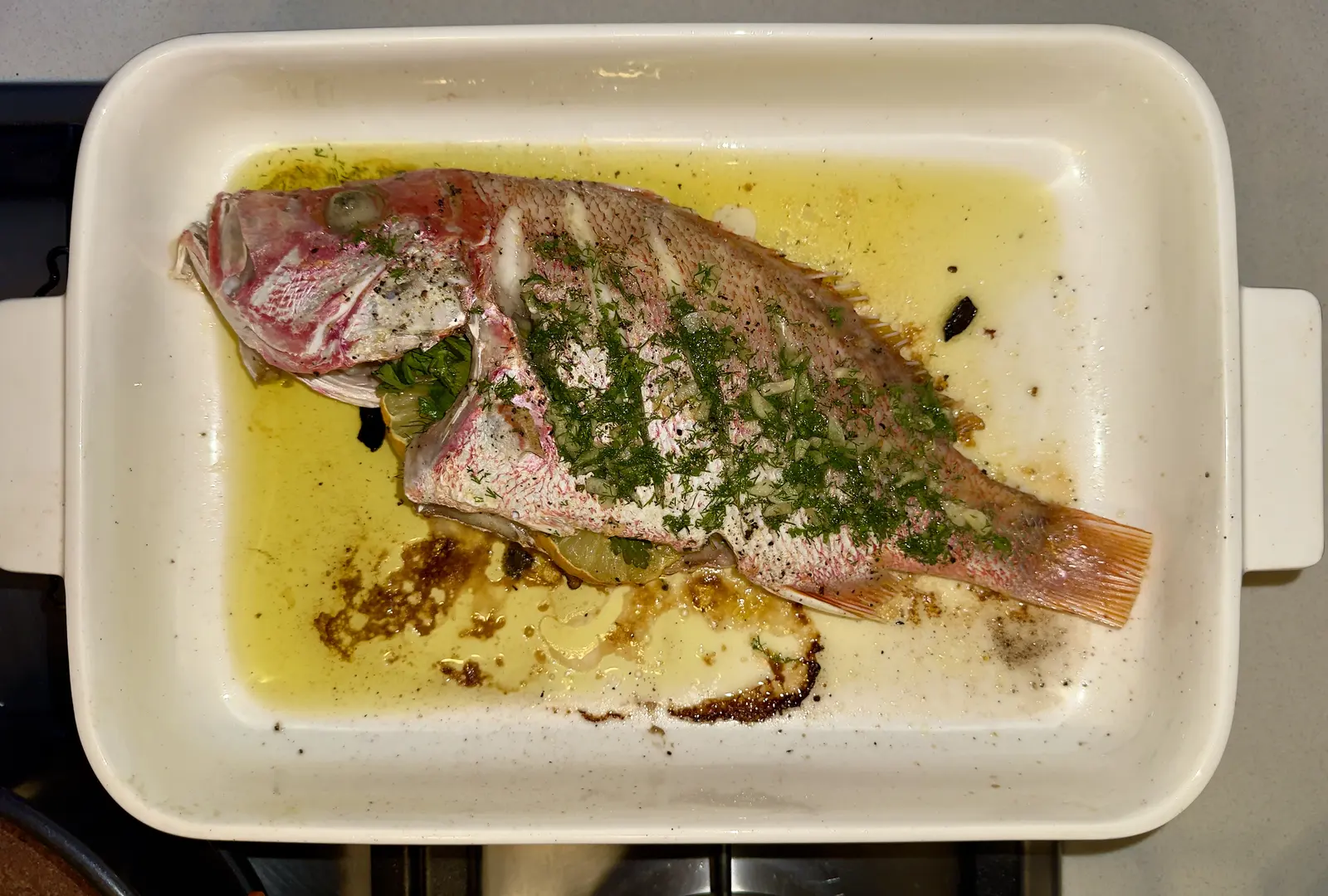
Baked reef fish; baked whole snapper

This solomon islands baked fish recipe takes a whole reef fish — red snapper, coral trout or sweetlips — scores it, stuffs the cavity with tomato, onion, ginger, lime and chilli, and bakes it uncovered until the flesh flakes cleanly. A drizzle of fresh coconut cream finishes the dish, and it is served with cassava pudding on the side. One serving is about 264 g.

In the Solomon Islands, fish is the heart of the table — reef fish such as red snapper, coral trout and sweetlips are caught from the lagoon and cooked the same day. The traditional way is the motu, an outdoor oven of scorching hot stones under banana leaves, where food bakes for hours; this home version uses an ordinary oven, keeping the same idea — a whole fish, stuffed with the garden flavours of tomato, ginger and lime, baked uncovered, with coconut cream to finish. Cassava pudding is the usual companion, served in squares beside the fish.

Pairs well with: Cassava pudding, steamed greens and lime wedges

Provenance

Solomon Islands flag Solomon Islands

Solomon Islands Heritage

Oceania & Pacific

Time Dedication

1h

25m prep • 35m cook

Batch Yield

4 Servings

285 kcal per serving

1 serving ≈ 264 g

Technical Skill

Intermediate

Intermediate (Whole Fish)

Meal Timing & Digestive Fit

Breakfast

Not Advised

Lunch

Hearty Midday Main

Dinner

Ideal Hearty Main

Snack & Tea

Inappropriate

High Protein Occasions: Family dinners, weekend meals, festive gatherings, coastal cooking Cost: Moderate — about $4–5 per serving at home
A whole baked red snapper in a white baking dish, scored and topped with chopped herbs, in golden cooking juices

Solomon Islands Heritage

Photo: Chris Olszewski, CC BY-SA 4.0, via Wikimedia Commons

The Heritage Formulary

Measured Ingredients

Estimated cost: Moderate — about $4–5 per serving at home (USD)

A good baked reef fish has crisp skin, moist flesh that flakes cleanly off the bone, and a stuffing that is sharp and fragrant, not watery.

Execution Methodology & Culinary Technique

Step-by-Step Cooking Guide

Active 1h
P

Prep Stage: Score, Season & Stuff

25 Mins • Knife Work

Score the fish with three deep slashes on each side so the heat reaches the thick flesh and the stuffing flavours it from the inside. Season the fish inside and out with the salt and half the lime juice, then mix the tomato, onion, ginger, chilli and the rest of the lime juice into a stuffing and pack it into the cavity and the slashes. Brush the outside with oil and set the fish in a baking dish — uncovered, so the skin can crisp.

Maestro Tip: Dry the fish well before oiling it: a wet skin steams instead of crisping.

  1. 1

    Score and Season the Fish

    10 Mins Room temperature, 20°C (68°F)

    Rinse the fish inside and out and pat it completely dry. With a sharp knife, cut three deep diagonal slashes on each side, down to the bone — this is what lets the heat reach the thickest flesh. Rub the salt all over the fish and inside the cavity, then squeeze half the lime juice over it and rub it in. Leave the fish to sit while you make the stuffing.

    Cut the slashes on a slant, from the back towards the belly, so the stuffing sits in them and does not fall out.

    Done when: The fish is scored on both sides, salted and glossy with lime juice.

  2. 2

    Make the Stuffing

    10 Mins Room temperature, 20°C (68°F)

    In a bowl, mix the diced tomato, chopped onion, grated ginger and chopped chilli with the remaining lime juice. Stir well and taste a little: it should be sharp and fragrant, with the ginger and chilli coming through. Do not add soy sauce or any soy-based marinade — the flavour here comes from the tomato, ginger and lime, not from soy.

    Drain the tomato well first: a watery stuffing makes the cavity steam instead of bake.

    Done when: A colourful, sharp-smelling stuffing that holds together when spooned.

  3. 3

    Stuff and Oil the Fish

    5 Mins Room temperature, 20°C (68°F)

    Pack the stuffing firmly into the fish's cavity and press a little into each slash. Brush the outside of the fish all over with the olive oil. Set the fish in a large baking dish, on its side, and leave it uncovered — do not wrap it in banana leaf or foil, and do not pour any liquid over it. The fish bakes in its own juices. Heat the oven to 200°C (400°F) while you work.

    Pack the cavity full: stuffing that falls out in the dish dries out, while stuffing inside the fish stays juicy.

    Done when: The fish lies in the dish, stuffed, oiled and uncovered, with the oven heating.

  4. 4

    Bake Uncovered Until Flaky

    30–35 Mins Oven 200°C (400°F)

    Slide the dish into the hot oven and bake uncovered for 30–35 minutes. Do not cover it and do not baste it — the open heat crisps the skin and lets the stuffing cook through. The fish is done when the flesh at the thickest part, just behind the head, flakes easily with a fork and reads at least 63°C (145°F) on a thermometer. If the skin is browning too fast, move the dish one shelf lower; if the flesh is not flaking yet, give it 5 more minutes.

    Check at 30 minutes: a 1.2 kg fish is usually done by then, and an extra 10 minutes dries it out.

    Done when: The flesh flakes cleanly off the bone, the skin is crisp and golden, and the thickest part reads 63°C (145°F) or more.

  5. 5

    Rest and Finish With Coconut Cream

    5 Mins Resting, about 60°C (140°F)

    Lift the dish out of the oven and rest the fish for 5 minutes — the flesh relaxes and the juices settle, so it carves cleanly. Drizzle the coconut cream over the top of the fish, just before serving, so it warms through without cooking. Serve the whole fish at the table, with lime wedges and cassava pudding on the side, and let everyone help themselves.

    Drizzle, do not pour: 60 ml is enough to gloss the fish — more would drown the crisp skin.

    Done when: The fish rests glossy with coconut cream, the skin still crisp underneath.

Finishing Touches & Plating

Serve the whole fish at the table with lime wedges and cassava pudding. This solomon islands baked fish recipe should taste bright and clean — ginger and lime first, tomato and chilli behind, and a soft coconut finish — with crisp skin and moist, flaky flesh.

Nutritional Physiology & Benefits

Nutrition

Energy

285

kcal / serving

Protein

41g

Complete AA

Carbs

7g

Complex

Fats

10g

Healthy

Per serving (4 servings · 1 serving ≈ 264 g)
Energy285 kcal
Protein41 g
Carbohydrates7 g
Fat10 g
Fibre1.6 g
Sugar3.4 g
Sodium411 mg
Per 100g
Energy108 kcal
Protein15.4 g
Carbohydrates2.8 g
Fat3.7 g
Fibre0.6 g
Sugar1.3 g
Sodium155 mg

Nutrition values are estimated — calculated from USDA FoodData Central values for the listed ingredients.

Vitamins & minerals: Vitamin D and B12 (fish), vitamin C (lime, tomato, chilli), potassium (fish, tomato), selenium (fish), vitamin A (tomato).

High in Lean Protein

Each serving carries about 40.8 g of protein from the reef fish, which supports muscle maintenance and keeps you full for hours.

Omega-3 Fats From Real Fish

Reef fish supplies omega-3 fats, which are part of a heart-healthy eating pattern when eaten as part of a varied diet.

Light, Fresh and Low in Sugar

With only about 7.3 g of carbohydrate and 3.4 g of sugar per serving, this is a light dinner that does not rely on sweet sauces or heavy coatings.

Food Pairings

What to Eat With

To optimize nutrient absorption and elevate the sensory depth, pair with these authentic accompaniments:

Sides

Cassava Pudding

The classic Solomon Islands partner: the dense, mild pudding soaks up the fish juices and the coconut cream, and its gentle sweetness balances the lime and chilli.

Vegetables

Steamed Island Greens

Steamed greens such as slippery cabbage or spinach add colour, fibre and a soft, earthy note that cools the chilli in the stuffing.

Lime Wedges

A final squeeze of lime over the fish brightens the flavour and its vitamin C helps the body absorb the iron from the fish.

Drinks

Iced Coconut Water

Cold coconut water is refreshing with hot, spicy fish, and it echoes the coconut cream finish without adding heaviness.

Full Menus

Coconut Pudding to Finish

End the meal with a chilled coconut pudding in its shell — light, sweet and cool after the warm, savoury fish.

Complete menu

Serve the whole baked reef fish at the centre of the table with cassava pudding and steamed greens, lime wedges on the side, and finish with a chilled coconut pudding in its shell.

Digestive Guardrails

What NOT to Combine

To prevent digestive distress, sluggishness, or palate clash, avoid pairing the dish with these elements:

Fish and Dairy Cream Sauces

Dairy cream and fish are a poor match in flavour and in digestion for many people — the rich dairy coats the palate and dulls the clean taste of the fish. The coconut cream drizzle already gives the richness this dish needs. This is general food information, not medical advice.

Leaving Cooked Fish Out for Hours

Cooked fish is a high-risk food for bacterial growth: once it has cooled to room temperature it should be refrigerated within 2 hours, not left on the table all afternoon. This is general food-safety information, not medical advice.

General information only, not medical advice — consult a doctor for personal dietary decisions.

Who Should Eat It

Who Should Eat

  • General adultsA complete, satisfying dinner — lean fish, vegetables and a little coconut cream in one dish.
  • ChildrenSuitable from age 2+; serve the flesh from the thickest part, check carefully for bones, and leave the chilli out of a child's portion.
  • ElderlyA good choice — soft, flaky fish that is easy to chew; check for small bones and serve with soft cassava pudding.
  • Pregnant womenGenerally suitable; the fish must be cooked right through to 63°C (145°F) and eaten fresh — avoid keeping leftovers more than a day.
  • Breastfeeding womenGenerally suitable; the lean protein and omega-3 fats support recovery — keep the chilli mild if your baby is sensitive to spicy food.
  • AthletesA strong post-training dinner: about 40.8 g of protein per serving with light carbohydrate from the vegetables and the cassava pudding on the side.
  • Weight gainA good choice — eat the full serving with cassava pudding and an extra spoonful of coconut cream for more energy.
  • Weight lossAn excellent choice — high in protein and low in energy for its size; skip the extra coconut cream and load up on vegetables.

Health Conditions — Adjust or Avoid

Conditions

  • DiabetesVery low in carbohydrate — about 7.3 g per serving — so it fits easily; pair it with cassava pudding only in a small portion. Ask your clinician about your carbohydrate target.
  • High blood pressureKeep the added salt to the half teaspoon given, and do not add extra salt at the table — the fish itself is low in sodium. Ask your clinician about your sodium limit.
  • Kidney diseaseFish is a source of protein and potassium; keep the portion as written and ask your clinician about portion size.
  • GoutReef fish contains purines, so eat it occasionally and in a moderate portion rather than every day. Ask your clinician if you have frequent flares.
  • Stomach issuesUsually gentle — baked fish with ginger and lime is easy on the stomach — but skip the fresh chilli if your stomach is sensitive.
  • Cardiovascular diseaseA lean fish with a small amount of unsaturated fat from the olive oil; the coconut cream drizzle is the saturated-fat part, so keep it to the spoonful given. Ask your clinician about saturated fat in your diet.
  • Fatty liverLean and low in sugar, so it fits well; keep the coconut cream drizzle light. Ask your clinician about your diet.
  • Food allergiesContains fish. Coconut is classed as a tree nut for labelling purposes in some countries — check if you have a tree-nut allergy. Naturally gluten-free.
  • Special therapeutic dietsIf you follow a prescribed low-sodium or low-purine diet, use less salt and a smaller fish portion, and check with your clinician.

If you have a medical condition, consult your doctor before changing your diet.

Storage & Use

Storage & Use

How to store
Cool the fish quickly and store the flesh, picked off the bone, in an airtight container with the stuffing.
In the fridge
Cooked fish flesh 1–2 days.
In the freezer
Cooked fish flesh 1 month, wrapped tightly.
How to reheat
Warm gently in a covered dish in a 160°C (320°F) oven for 10 minutes, or in a pan with a splash of water, until steaming hot throughout, reaching 74°C (165°F).
Freezing recommended
Only if needed — the fish is at its best fresh from the oven, and freezing softens the skin.
Signs it has spoiled
Sour or ammonia smell, slimy flesh, or a grey, dull colour.

More recipes to explore

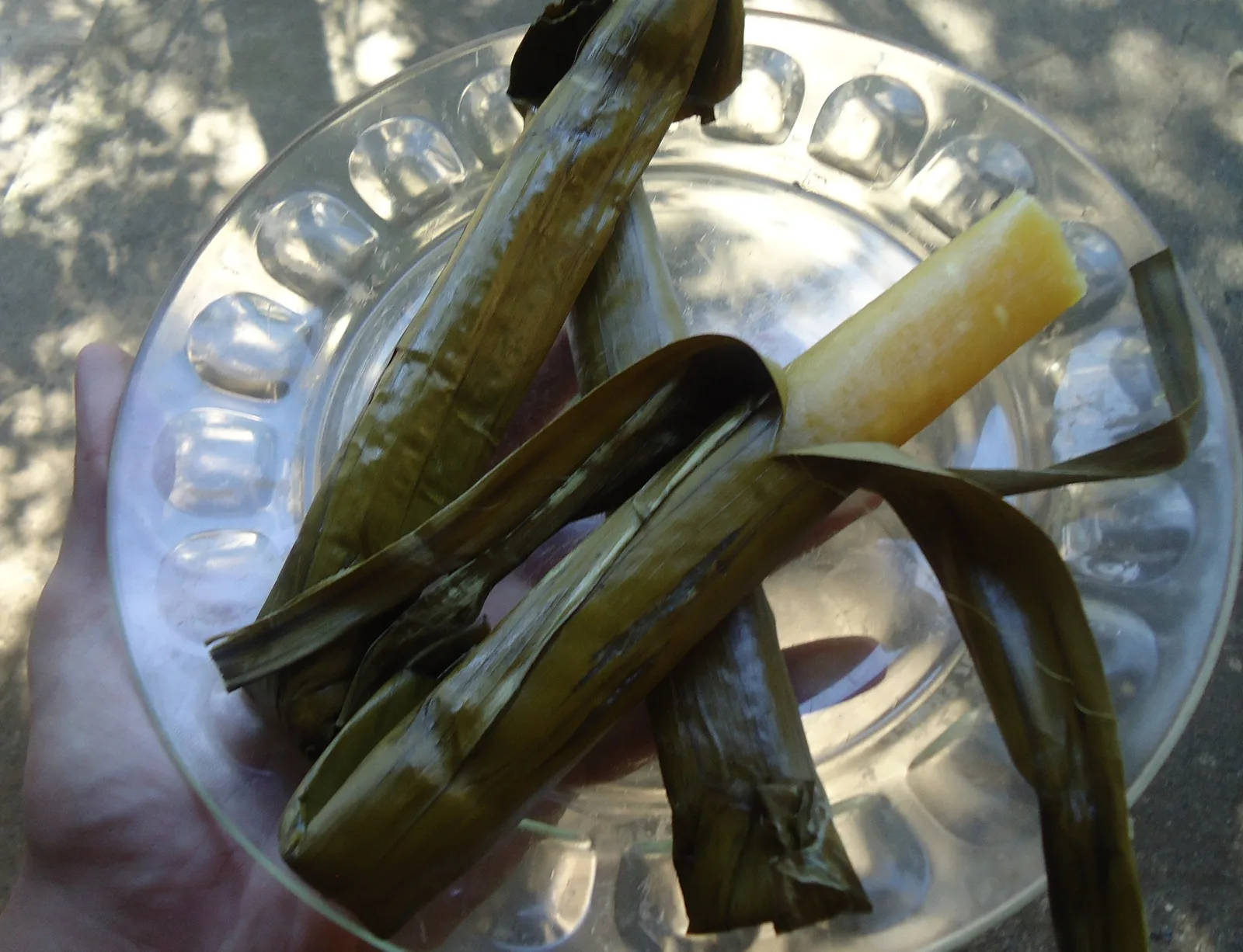
Steamed cassava and coconut parcels wrapped in banana leaves on a glass plate, one parcel unwrapped to show the pale yellow cassava Solomon Islands flag Solomon Islands 1h 20m
Snack & Tea •Solomon Islands Heritage

Solomon Islands Cassava Pudding

This solomon islands cassava pudding recipe grates fresh cassava and white sweet potato, mixes them with coconut cream, brown sugar and grated coconut, then wraps the mixture in banana leaves and steams it into soft, dense parcels. It is the sweet version of the Solomon Islands pudding — the plain version is served with reef fish, while this sugared one is eaten as a snack or dessert. One parcel is about 204 g.

Sweet Comfort

Grated cassava and sweet potato mixed with coconut cream and brown sugar, wrapped in banana leaves and steamed until dense, moist and sweet.

Pairs Well With
Extra coconut cream for drizzling and fresh tropical fruit
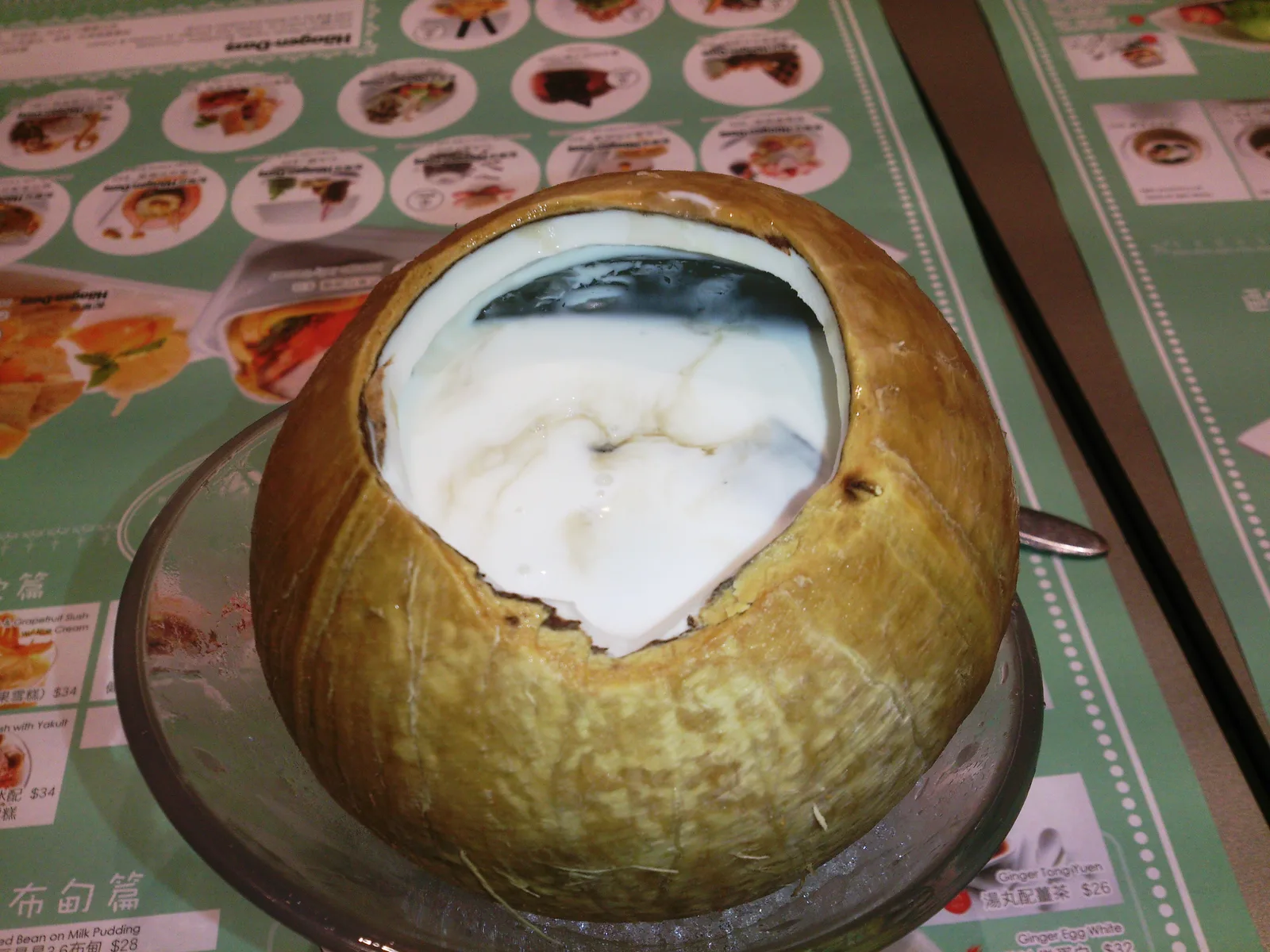
A white coconut milk pudding set inside a young coconut shell on a glass plate, photographed in a dessert shop — the pudding is the same dish as the Solomon Islands preparation Solomon Islands flag Solomon Islands 25m
Snack & Tea •Solomon Islands Heritage

Solomon Islands Coconut Pudding

This solomon islands coconut pudding recipe stirs coconut milk with cornstarch, sugar and a pinch of salt, cooks it gently until thick and glossy, then pours it into coconut shells and chills it until set. There is no baking, no banana and no cassava — just a cool, smooth, coconut-white pudding, finished with toasted coconut flakes. One serving is about 187 g.

Sweet Comfort

Coconut milk and cornstarch set into a smooth, chilled pudding and served in a coconut shell.

Pairs Well With
Toasted coconut flakes, fresh tropical fruit and hot black tea
Bœuf bourguignon — French beef braised in red wine France flag France 4h
Dinner •Burgundy Terroir

Bœuf Bourguignon

Beef braised gently in red wine until the connective tissue melts into a velvet, gelatin-rich sauce — the classic Burgundy Sunday dinner.

Cellular Repair

Beef braised in red wine until spoon-tender, with mushrooms and pearl onions.

Pairs Well With
Parsnip Purée & Steamed French Haricots Verts
High Protein
Vietnamese braised pork belly with golden eggs in caramel sauce Vietnam flag Vietnam 1h 45m
Dinner •One Pot

Vietnamese Braised Pork and Eggs

Pork belly slowly braised in coconut water and caramel until meltingly tender, with golden eggs that soak up the sweet-savoury sauce — the Vietnamese family dish that tastes better the next day.

Comfort & Sustained Energy

Slow-braised pork belly and eggs in coconut water and caramel.

Pairs Well With
Steamed rice & pickled mustard greens
High Protein

The Dinner Gazette

Never wonder what’s for dinner again

One email a week with easy dinner ideas from around the world — ingredients, steps and nutrition, tested in our kitchen first.

Delivered every Thursday morning. Unsubscribe anytime.