
Curated recipes from 193 countries  •  New seasonal Mediterranean issue out now

Overview

Solyanka

Russian Sour Soup, Meat Solyanka

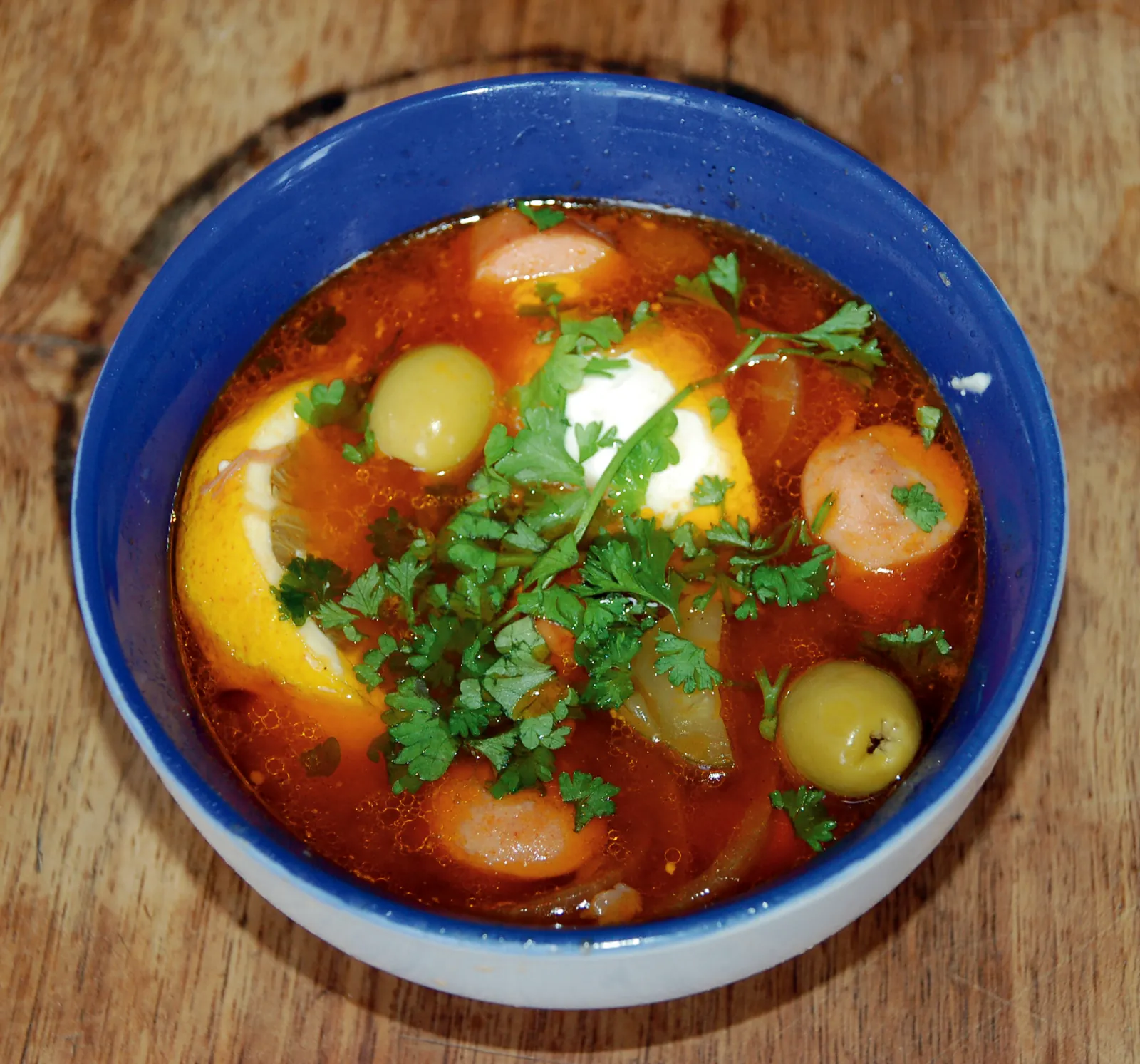
Solyanka is a thick Russian soup built on beef stock, with stewed beef, smoked sausage and ham, sour pickles, olives, capers and a wedge of lemon in every bowl. A spoonful of sour cream and fresh dill finish it. One serving is about 550 g.

Solyanka grew out of Russian village cooking, where a sour, salty soup was the way to use up mixed leftover meats with brined cucumbers, a staple of the Russian pantry. By the 19th century it was served in taverns and restaurants across Russia, always with lemon, olives and sour cream, and it remains a classic of Russian home cooking.

Pairs well with: Dark rye bread, sour cream & fresh dill

Provenance

Russia flag Russia

Russian Classic

Nordic & European

Time Dedication

1h 40m

25m prep • 75m cook

Batch Yield

4 Servings

497 kcal per serving

1 serving ≈ 550 g

Technical Skill

Intermediate

Intermediate (One Pot)

Meal Timing & Digestive Fit

Breakfast

Not Advised

Lunch

Prime Metabolic Fit

Dinner

Ideal Hearty Main

Snack & Tea

Inappropriate

Soups & Broths Occasions: Winter lunches, cold days, family meals, using up leftover meats Cost: Low — about $3–4 per serving at home
A blue bowl of Russian solyanka with sausage, green olives, a lemon slice, sour cream and parsley

Russian Classic

Photo: Roland Geider (Ogre), Public domain, via Wikimedia Commons

The Heritage Formulary

Measured Ingredients

Estimated cost: Low — about $3–4 per serving at home (USD)

A good solyanka is thick, sour and smoky all at once — the lemon wedge in the bowl is not a garnish, it is part of the recipe.

Execution Methodology & Culinary Technique

Step-by-Step Cooking Guide

Active 1h 40m
P

Prep Stage: Dice the Meats and Pickles

25 Mins • Knife Work

Cube the beef, slice the sausage, dice the ham and pickles, and finely dice the onion. Measure out the tomato paste, olives, capers and pickle brine so everything is ready to go into the pot in order.

Maestro Tip: Cut everything small and even — solyanka is eaten with a spoon, so every piece should fit on it.

  1. 1

    Brown the Beef

    15 Mins Medium-high heat, about 190°C / 375°F

    Heat half the oil in a large pot and brown the beef cubes in one layer, turning once, until well coloured on two sides. Lift out and set aside.

    Do not crowd the pot — brown in two batches if needed so the meat sears instead of steaming.

    Done when: Beef is browned outside and still pink inside.

  2. 2

    Soften the Onion and Tomato

    10 Mins Medium heat, about 160°C / 320°F

    Add the rest of the oil, the onion and a pinch of salt. Cook until soft and golden, about 7 minutes, then stir in the tomato paste and cook 2 more minutes until it darkens and smells sweet.

    Cooking the paste until it darkens removes its raw, tinny edge.

    Done when: Onion is soft and golden; paste is brick-red and fragrant.

  3. 3

    Simmer the Soup

    45 Mins Gentle simmer, about 95°C / 203°F

    Return the beef to the pot with the stock, bay leaves and peppercorns. Bring to a gentle simmer, skim any foam, cover loosely and simmer 40 minutes until the beef is tender.

    A bare simmer keeps the stock clear and the meat tender; a hard boil toughens it.

    Done when: Beef yields easily to a fork.

  4. 4

    Add the Pickles and Meats

    15 Mins Gentle simmer, about 95°C / 203°F

    Stir in the sausage, ham, pickles, pickle brine, olives, olive brine, capers and sugar. Simmer 10 more minutes so the flavours marry. Fish out the bay leaves and peppercorns.

    The brine is the seasoning — taste before adding any extra salt.

    Done when: Sausage is heated through; the broth tastes sour, smoky and savoury at once.

  5. 5

    Serve with Lemon and Sour Cream

    5 Mins Serving temperature, about 75°C / 167°F

    Ladle into deep bowls. Top each with a lemon wedge, a spoonful of sour cream and a shower of dill. Serve at once with dark rye bread.

    Squeeze the lemon into the soup at the table — the fresh sourness is the point of solyanka.

    Done when: Soup is steaming, lemon is bright, sour cream is melting into the broth.

Finishing Touches & Plating

Let each person squeeze their lemon wedge into the bowl and stir the sour cream through — the soup should finish bright and sour, not flat. Serve with thick slices of dark rye bread for dunking.

Nutritional Physiology & Benefits

Nutrition

Energy

497

kcal / serving

Protein

29g

Complete AA

Carbs

13g

Complex

Fats

36g

Healthy

Per serving (4 servings · 1 serving ≈ 550 g)
Energy497 kcal
Protein29 g
Carbohydrates13 g
Fat36 g
Fibre2.6 g
Sugar6.2 g
Sodium1598 mg
Per 100g
Energy90 kcal
Protein5.2 g
Carbohydrates2.4 g
Fat6.5 g
Fibre0.5 g
Sugar1.1 g
Sodium291 mg

Nutrition values are estimated — calculated from USDA FoodData Central values for the listed ingredients.

Vitamins & minerals: Vitamin C (lemon, pickles), B12 and iron (beef), vitamin K (dill), calcium (sour cream).

Hearty, Filling Lunch

About 29 g of protein per bowl from beef, sausage and ham keeps you full for hours.

Iron and B12

Beef is a natural source of iron and vitamin B12, which support normal red blood cell formation.

Warming and Satisfying

A hot, sour, savoury soup is easy to eat and deeply warming on a cold day.

Food Pairings

What to Eat With

To optimize nutrient absorption and elevate the sensory depth, pair with these authentic accompaniments:

Sides

Dark Rye Bread

Dense, malty rye stands up to the sour broth and is made for dunking.

Vegetables

Cucumber and Dill Salad

Cool, crisp cucumber with dill echoes the pickles and freshens the rich soup.

Drinks

Unsweetened Black Tea

Hot, plain tea cleanses the palate between spoonfuls of the salty, sour soup.

Kvass

Lightly sour, lightly sparkling kvass matches the soup's own sourness without competing.

Complete menu

Start with the solyanka as the main bowl, with dark rye bread and a cucumber-dill salad on the side; finish with unsweetened black tea.

Digestive Guardrails

What NOT to Combine

To prevent digestive distress, sluggishness, or palate clash, avoid pairing the dish with these elements:

Extra Salt at the Table

Solyanka is already very salty from the pickles, olives, capers and cured meats — adding more salt pushes sodium far beyond a single meal's needs. Taste first. This is general information, not medical advice.

Sweet Pickles or Sweet Relish

Sweet pickles turn the soup sugary and blur the sharp sourness that defines solyanka; use sour brined pickles only. This is general information, not medical advice.

General information only, not medical advice — consult a doctor for personal dietary decisions.

Who Should Eat It

Who Should Eat

  • General adultsA complete, hearty lunch — protein, vegetables and broth in one bowl.
  • ChildrenSuitable from age 5+ with less pickle brine and no extra salt; cut the meats small.
  • ElderlyWarm and easy to eat; keep the portion modest and skip extra salt.
  • Pregnant womenGenerally suitable in a small bowl; the meats should be cooked through and the salt kept in check.
  • Breastfeeding womenGenerally suitable; the iron and protein support recovery — keep portions moderate.
  • AthletesA strong post-training meal: about 29 g of protein per bowl with salty broth that replaces sweat losses.
  • Weight gainA good choice — eat the full bowl with rye bread and a second helping of meat.
  • Weight lossChoose a smaller bowl, load up on the pickles and olives, and go easy on the sausage and bread.

Health Conditions — Adjust or Avoid

Conditions

  • DiabetesThe soup is low in carbohydrate, but watch the bread portion and keep the sugar pinch small; ask your clinician about the overall meal.
  • High blood pressureVery high in sodium from pickles, olives, capers and cured meats — eat a small portion, drink less of the broth, and ask your clinician before eating it regularly.
  • Kidney diseaseHigh in sodium and potassium from the broth and pickles; limit the liquid and ask your clinician about portion size.
  • GoutEat occasionally and in a small portion — beef, sausage and rich broth are high in purines; ask your clinician.
  • Stomach issuesThe sour pickles and lemon can irritate a sensitive stomach; eat a small bowl and skip the lemon if it bothers you.
  • Cardiovascular diseaseFavour lean beef and less sausage, and keep the portion modest; ask your clinician about the sodium.
  • Fatty liverKeep the portion small and favour the lean beef and pickles over the fatty sausage; ask your clinician.
  • Food allergiesContains pork, beef, milk (sour cream) and celery-free pickles; capers and olives are brined — check labels for sulphites if you are sensitive.
  • Special therapeutic dietsIf you follow a prescribed low-sodium or low-purine diet, use a smaller portion and less brine, and check with your clinician.

If you have a medical condition, consult your doctor before changing your diet.

Storage & Use

Storage & Use

How to store
Cool quickly and store in an airtight container in the fridge.
In the fridge
4 days; the flavour improves on day 2.
In the freezer
3 months without the sour cream and lemon.
How to reheat
Reheat gently to a simmer, 74°C (165°F), and add fresh sour cream and dill at serving.
Freezing recommended
Yes — the soup base freezes well; add lemon and sour cream fresh.
Signs it has spoiled
Sour or off smell beyond its normal tang, slimy meat, or mould on the surface.

More recipes to explore

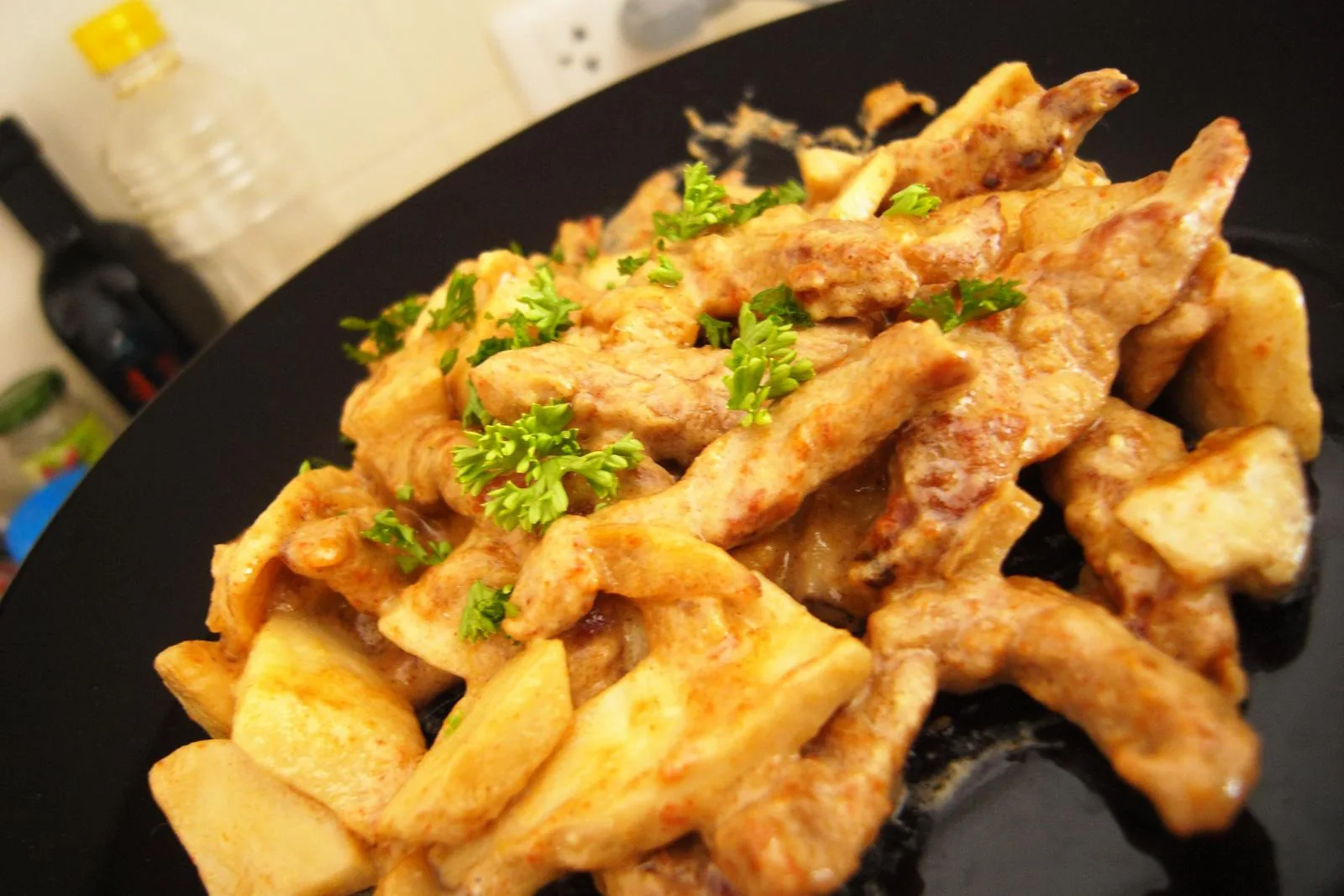
Beef stroganoff, strips of beef in a creamy mushroom sauce with parsley, on a black plate Russia flag Russia 50m
Dinner •Russian Heritage

Beef Stroganoff

This beef stroganoff recipe sears strips of beef tenderloin until browned, simmers them with mushrooms and onion in a rich stock, and finishes the sauce with sour cream and mustard. It is the Russian classic that travelled the world, and it is best served over buttered egg noodles. One serving is about 370 g, sauce and noodles together.

Comfort & Warmth

Tender beef strips in a creamy mushroom sauce, served over egg noodles.

Pairs Well With
Buttered egg noodles and a crisp cucumber salad.
High Protein
A red plate of cooked Russian pelmeni dumplings with sour cream and chopped green onion, with radishes beside it Russia flag Russia 1h 25m
Dinner •Russian Heritage

Pelmeni

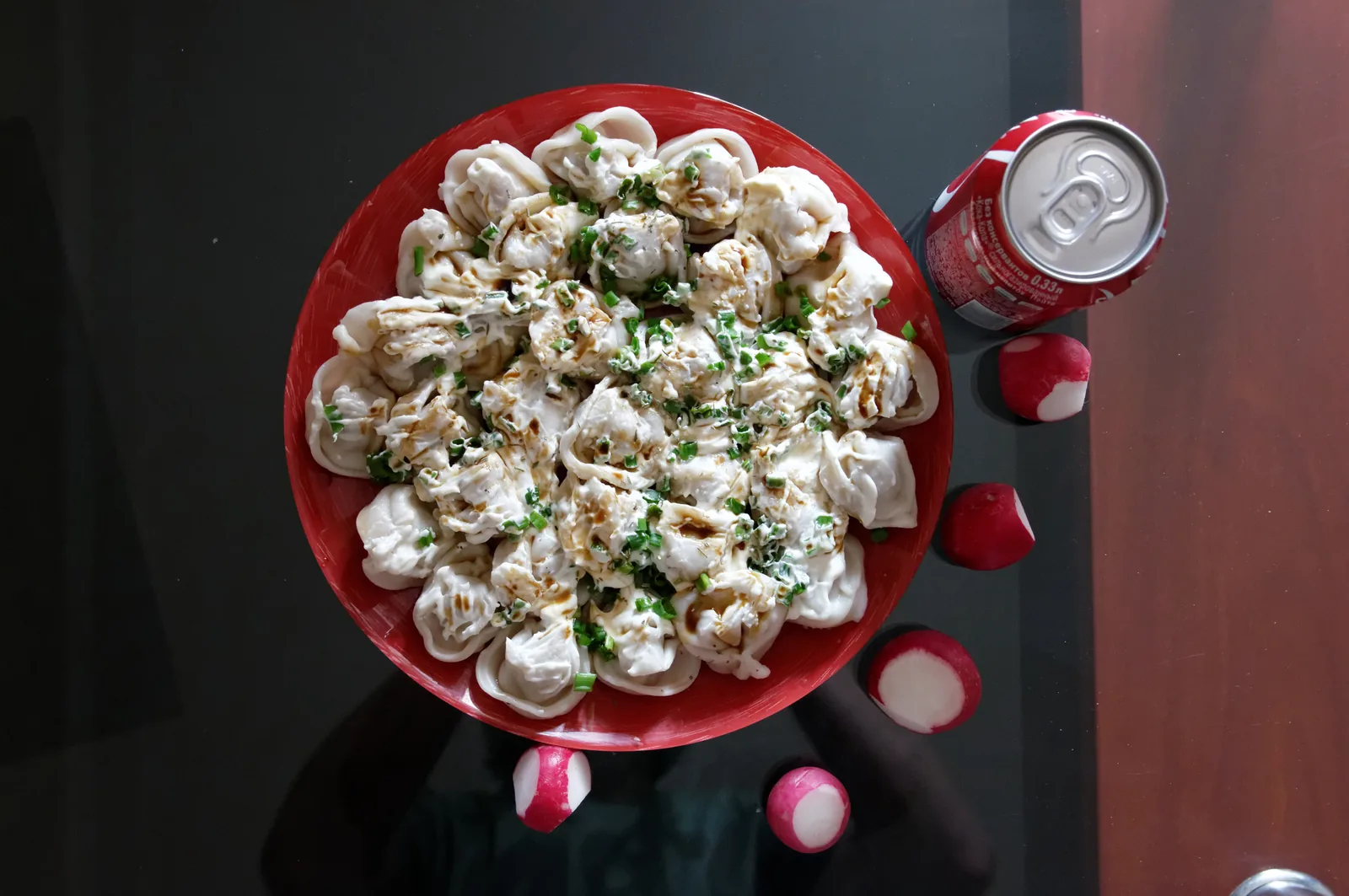
This pelmeni recipe wraps a juicy filling of minced beef and pork in thin wheat dough, pinched into little ear shapes, and boils the dumplings in a light beef broth. Unlike pierogi, which are filled with potato and cheese and fried in butter, pelmeni are meat dumplings served in their hot cooking broth with sour cream and dill. One serving is about 450 g, dumplings, broth and sour cream together.

Comfort & Warmth

Small meat dumplings in thin dough, boiled and served in hot broth with sour cream.

Pairs Well With
Sour cream and fresh dill, with a spoonful of the hot broth.
High Protein
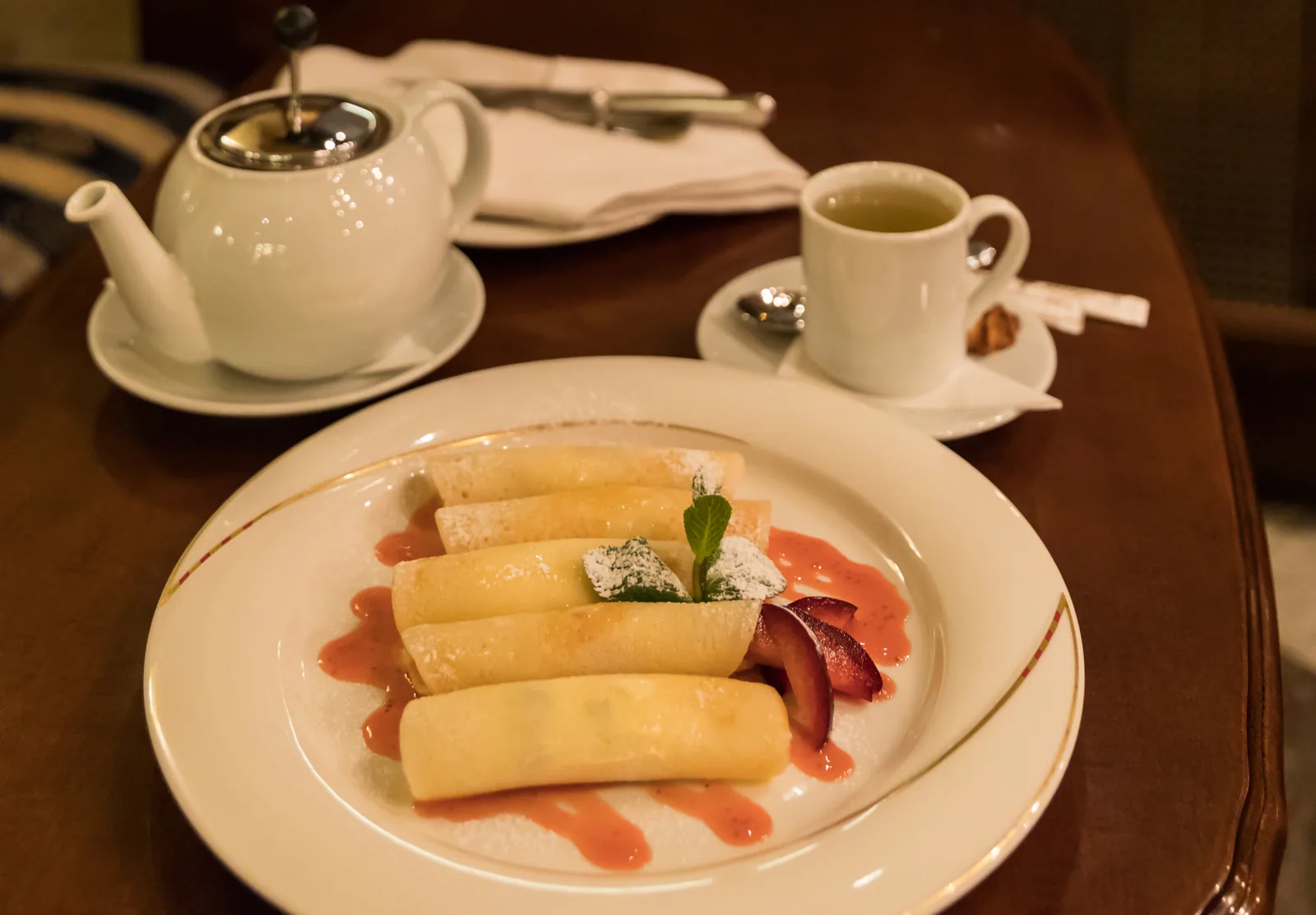
Rolled Russian blini pancakes with berry sauce, icing sugar and mint on a white plate, with a teapot and cup Russia flag Russia 1h 40m
Breakfast •Russian Heritage

Blini

This blini recipe makes thin, golden pancakes from a yeasted batter, fried one by one in butter until lacy at the edges. Blini are Russia's celebration pancake, eaten at breakfast with sour cream, jam and honey, or rolled up with sweet fillings. One serving is about 300 g, six blini with toppings.

Comfort & Warmth

Golden yeasted pancakes, thin and lacy, served with sour cream, jam and honey.

Pairs Well With
Sour cream, strawberry jam and honey, with hot tea.
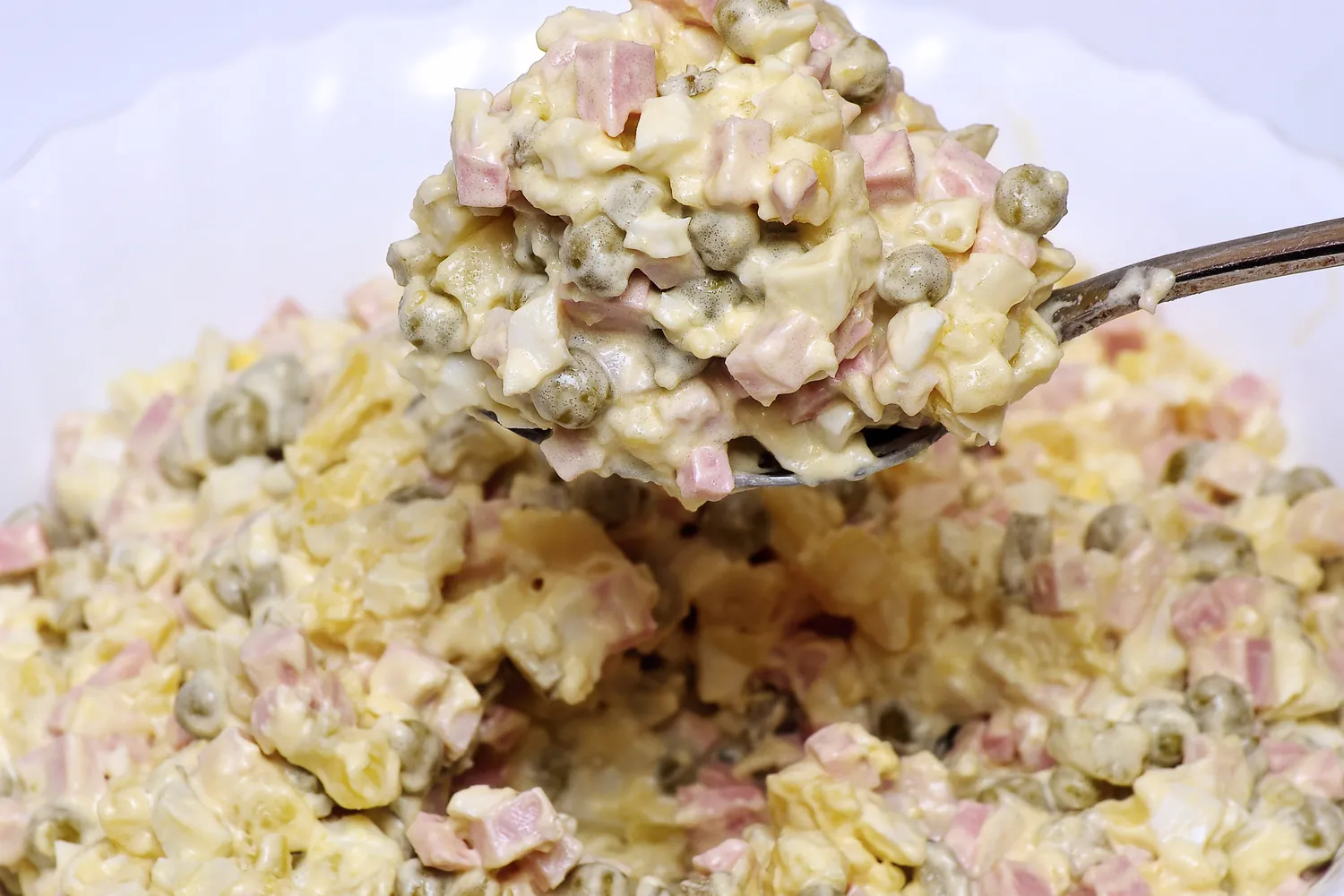
A spoonful of Olivier salad with diced ham, green peas, potato and egg in creamy mayonnaise over a white bowl Russia flag Russia 1h
Lunch •Russian Heritage

Olivier Salad

This olivier salad recipe dices waxy potatoes, carrots, peas, dill pickles, hard-boiled eggs and cooked ham into small even cubes, then folds them through creamy mayonnaise with a little mustard and fresh dill. It is the cold, make-ahead salad at the centre of Russian holiday tables. One serving is about 306 g.

Festive & Comforting

A creamy diced salad of potatoes, carrots, peas, pickles, egg and ham, dressed with mayonnaise.

Pairs Well With
Diced ham, pickles & creamy mayonnaise

The Dinner Gazette

Never wonder what’s for dinner again

One email a week with easy dinner ideas from around the world — ingredients, steps and nutrition, tested in our kitchen first.

Delivered every Thursday morning. Unsubscribe anytime.