Curated recipes from 193 countries  •  New seasonal Mediterranean issue out now

Overview

Stifado

Greek beef stifado, stifado with pearl onions

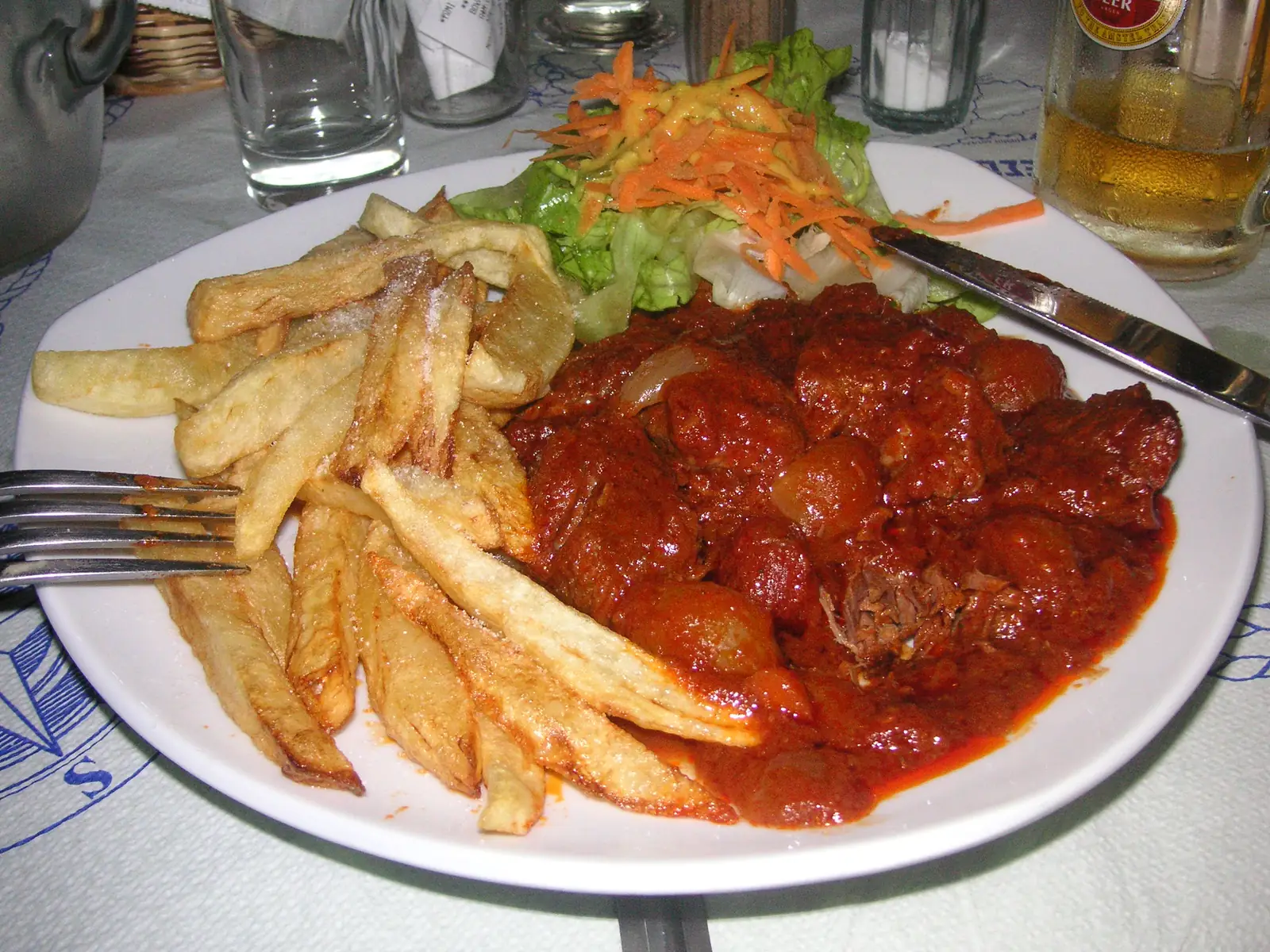
Stifado is Greece's great onion stew: chunks of beef simmered for hours with a mountain of whole pearl onions, red wine, tomato and a whisper of cinnamon until the meat falls apart and the onions melt sweet. Unlike moussaka or pastitsio, there is no béchamel and no pasta layer — just beef, onions and sauce in one pot. It is a Sunday dish, served hot with bread to catch the sauce. One serving is about 425 g.

Stifado's name comes from the Italian 'stufato', a stew, and the dish travelled to Greece with Venetian traders who ruled the Ionian islands. The defining touch is the mass of whole small onions, cooked until sweet, with cinnamon and wine — a combination that marks it out from every other Greek stew, and one that Greek cooks still reserve for Sundays and feast days.

Pairs well with: Crusty bread and a Greek salad

Provenance

Greece flag Greece

Greek Sunday Stew

Mediterranean & Italy

Time Dedication

3h

30m prep • 150m cook

Batch Yield

4 Servings

641 kcal per serving

1 serving ≈ 425 g

Technical Skill

Intermediate

Medium (Long Braise)

Meal Timing & Digestive Fit

Breakfast

Not Advised

Lunch

Hearty Midday Main

Dinner

Ideal Hearty Main

Snack & Tea

Inappropriate

Occasions: Sunday dinners, family gatherings, winter evenings, festive meals Cost: Medium — about $6–7 per serving at home
Greek stifado beef stew with whole onions in red sauce, served with fries and salad

Greek Sunday Stew

Photo: KF, Public domain, via Wikimedia Commons

The Heritage Formulary

Measured Ingredients

Estimated cost: Medium — about $6–7 per serving at home (USD)

Cooked the classic way: beef braised with whole pearl onions, red wine, tomato and cinnamon until the onions turn sweet.

Execution Methodology & Culinary Technique

Step-by-Step Cooking Guide

Active 3h
P

Prep Stage: Beef Cubed, Onions Peeled

30 Mins • Heavy Pot & Knife

Cube the beef and pat it dry, peel the pearl onions and keep them whole, slice the garlic and chop the tomatoes, and measure out the wine, paste and spices so the pot can go from browning to braising without a pause.

Maestro Tip: Peeling pearl onions is the slow job — blanch them for 1 minute first and the skins slip off.

  1. 1

    Brown the beef

    15 Mins Medium-high heat, about 200°C (400°F)

    Heat half the oil in a heavy pot and brown the beef in batches, turning until deep brown on all sides, about 3 minutes a batch. Season with half the salt and pepper as you go, then lift out and set aside.

    Brown in batches — crowded beef steams grey instead of browning, and browned beef is where the flavour lives.

    Done when: Cubes are deep brown on the outside, still pink inside.

  2. 2

    Soften the pearl onions

    10 Mins Medium heat, about 175°C (350°F)

    Add the remaining oil and the whole pearl onions. Cook, shaking the pan often, until the onions are golden at the edges, about 8 minutes. Add the garlic and cook for 1 minute more.

    Keep the onions whole and moving — you want golden edges, not broken rings.

    Done when: Onions are golden at the edges and still round and firm.

  3. 3

    Deglaze with wine and build the sauce

    10 Mins High heat to the boil, 100°C (212°F)

    Pour in the wine and vinegar and scrape the bottom of the pot to lift up the browned bits. Stir in the tomatoes, tomato paste, cinnamon, bay leaves, allspice and sugar, and bring to a boil.

    Scraping the pot is not optional — those browned bits are the sauce's flavour.

    Done when: Sauce is bubbling, dark red, and smells of wine and cinnamon.

  4. 4

    Braise low and slow

    120 Mins Low heat, gentle simmer about 95°C (200°F)

    Return the beef to the pot, cover tightly and braise on the lowest heat for 2 hours, stirring gently every 30 minutes so the onions stay whole. The sauce should barely bubble.

    Resist turning the heat up — a fast boil shreds the beef and breaks the onions apart.

    Done when: Beef yields to a fork, onions are soft and sweet, and the sauce has darkened.

  5. 5

    Reduce and rest

    15 Mins Low heat, about 95°C (200°F)

    Take the lid off, taste and adjust the salt, and simmer for 10 minutes more until the sauce coats a spoon. Lift out the bay leaves, then rest the pot off the heat for 10 minutes before serving.

    Resting lets the sauce settle and the flavours come together.

    Done when: Sauce is thick enough to coat a spoon; beef and onions hold their shape on the plate.

Finishing Touches & Plating

Rest the pot for 10 minutes, then spoon the stew into warm bowls with the onions on top and plenty of bread for the sauce.

Nutritional Physiology & Benefits

Nutrition

Energy

641

kcal / serving

Protein

42g

Complete AA

Carbs

23g

Complex

Fats

41g

Healthy

Per serving (4 servings · 1 serving ≈ 425 g)
Energy641 kcal
Protein42 g
Carbohydrates23 g
Fat41 g
Fibre4.5 g
Sugar10.8 g
Sodium628 mg
Per 100g
Energy151 kcal
Protein9.9 g
Carbohydrates5.4 g
Fat9.5 g
Fibre1.1 g
Sugar2.5 g
Sodium148 mg

Nutrition values are estimated — calculated from USDA FoodData Central values for the listed ingredients.

Vitamins & minerals: Provides iron and zinc from the beef, vitamin C from the tomato and onions, and B vitamins from the meat.

High in Protein

Beef gives this stew a large amount of protein, which helps the meal keep you full for hours.

Iron-Rich

Beef is a useful source of iron, a mineral the body uses to carry oxygen in the blood.

Slow-Cooked Vegetables

Half a kilo of onions and tomatoes cook down into the sauce, so every spoonful carries vegetables with it.

Food Pairings

What to Eat With

To optimize nutrient absorption and elevate the sensory depth, pair with these authentic accompaniments:

Sides

Crusty Bread

Bread is essential — the dark, wine-rich sauce is too good to leave in the bowl.

Hilopites or Orzo

Small Greek pasta soaks up the sauce and turns the stew into a complete Sunday plate.

Vegetables

Greek Salad

Crisp cucumber, tomato and feta cut through the richness of the braised beef.

Drinks

Red Wine

A glass of the same full-bodied red used in the pot matches the sauce's depth.

Full Menus

Sunday Dinner Menu

Serve stifado as the centre of a Sunday table with bread, Greek salad and pasta, the way Greek families do.

Complete menu

Serve stifado as the centre of a Sunday dinner with crusty bread, Greek salad and hilopites, with a glass of red wine.

Digestive Guardrails

What NOT to Combine

To prevent digestive distress, sluggishness, or palate clash, avoid pairing the dish with these elements:

Red Wine and Alcohol

Most of the alcohol cooks off in a two-hour braise, but a small amount can remain — avoid serving it to children or anyone avoiding alcohol. This is general food guidance, not medical advice.

Very Rich Portions

Beef chuck is a fatty cut and the sauce is rich — keep the portion to one bowl and load the side of the plate with salad.

General information only, not medical advice — consult a doctor for personal dietary decisions.

Who Should Eat It

Who Should Eat

  • General adultsA rich, satisfying dinner — one bowl with bread and salad is a complete meal.
  • ChildrenThe beef is soft and the sauce is mild, but the dish contains wine, so serve children a portion from a wine-free batch if preferred.
  • ElderlyThe beef is very tender and easy to chew; serve a modest portion with soft bread.
  • Pregnant womenBeef and wine are fine in moderation; make sure the meat is cooked right through and check with your clinician.
  • Breastfeeding womenA nourishing, iron-rich meal; the onions may cause gas in some people.
  • AthletesAn excellent protein base after training — add pasta or bread for carbohydrate recovery.
  • Weight gainA very good choice — beef, pasta and bread add energy easily.
  • Weight lossKeep the portion to one small bowl, favour the salad, and skip second helpings of bread.

Health Conditions — Adjust or Avoid

Conditions

  • DiabetesThe sauce carries carbohydrate from the onions and tomato — keep the bread and pasta portions modest and ask your clinician.
  • High blood pressureGo easy on the added salt and taste the sauce before seasoning.
  • Kidney diseaseBeef is high in protein and the sauce is salty — keep portions modest and ask your clinician.
  • GoutBeef and rich meat are high in purines; enjoy occasionally in a modest portion and ask your clinician.
  • Stomach issuesOnions can cause gas and bloating; eat a smaller portion if sensitive.
  • Cardiovascular diseaseBeef chuck is high in saturated fat — enjoy as an occasional Sunday dish and balance the plate with salad.
  • Fatty liverThe stew is energy-dense — keep the portion to one bowl and fill up on salad.
  • Food allergiesContains beef and sulphites from the wine; check the wine label if you have a sulphite sensitivity.
  • Special therapeutic dietsNot suitable for low-fat or low-purine therapeutic diets without changes; ask your clinician or dietitian about fitting it to a prescribed diet.

If you have a medical condition, consult your doctor before changing your diet.

Storage & Use

Storage & Use

How to store
Cool quickly and store in a covered container in the fridge.
In the fridge
Keeps 3 days in the fridge at 4°C (40°F) or below.
In the freezer
Freezes well for up to 3 months in portion containers.
How to reheat
Reheat gently in a covered pan until steaming hot throughout, to 74°C (165°F).
Freezing recommended
Yes — it freezes very well, up to 3 months.
Signs it has spoiled
Sour smell, slimy texture, or visible mould.

More recipes to explore

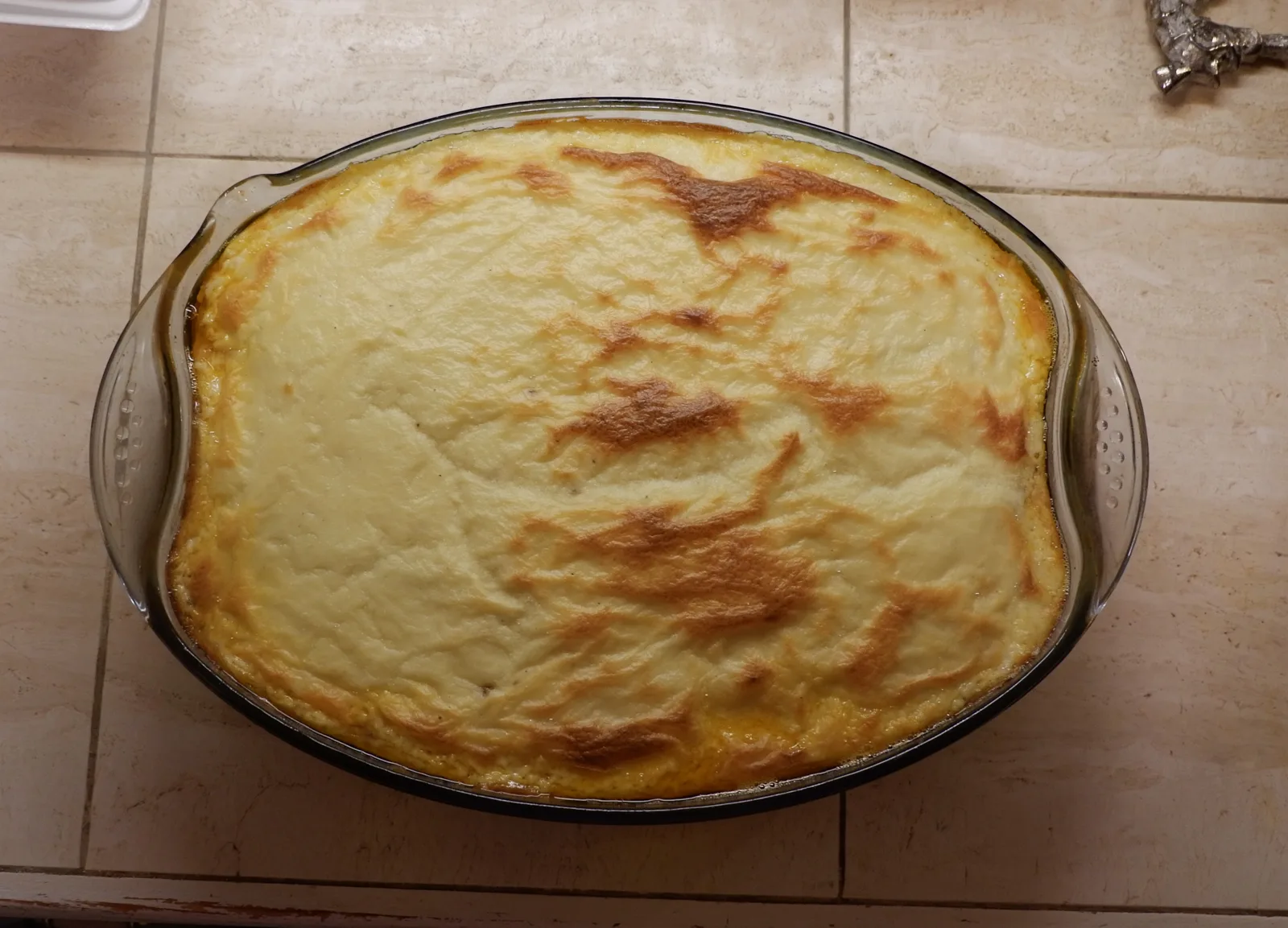
A whole Greek moussaka in a glass baking dish, its bechamel top baked golden brown with darker patches Greece flag Greece 2h
Dinner •Greek Classic

Greek Moussaka

Greek moussaka is a layered bake of fried aubergine and potato, a cinnamon-spiced beef sauce, and a thick bechamel that turns deep gold in the oven. It is the dish most Greek tavernas are judged by, and it is made for sharing at a slow family dinner. One serving is about 412 g.

Comfort & Warmth

A hearty layered bake built around aubergine, potatoes and a spiced meat sauce under a creamy bechamel topping.

Pairs Well With
Serve with a crisp Greek salad, warm bread and a glass of red wine.
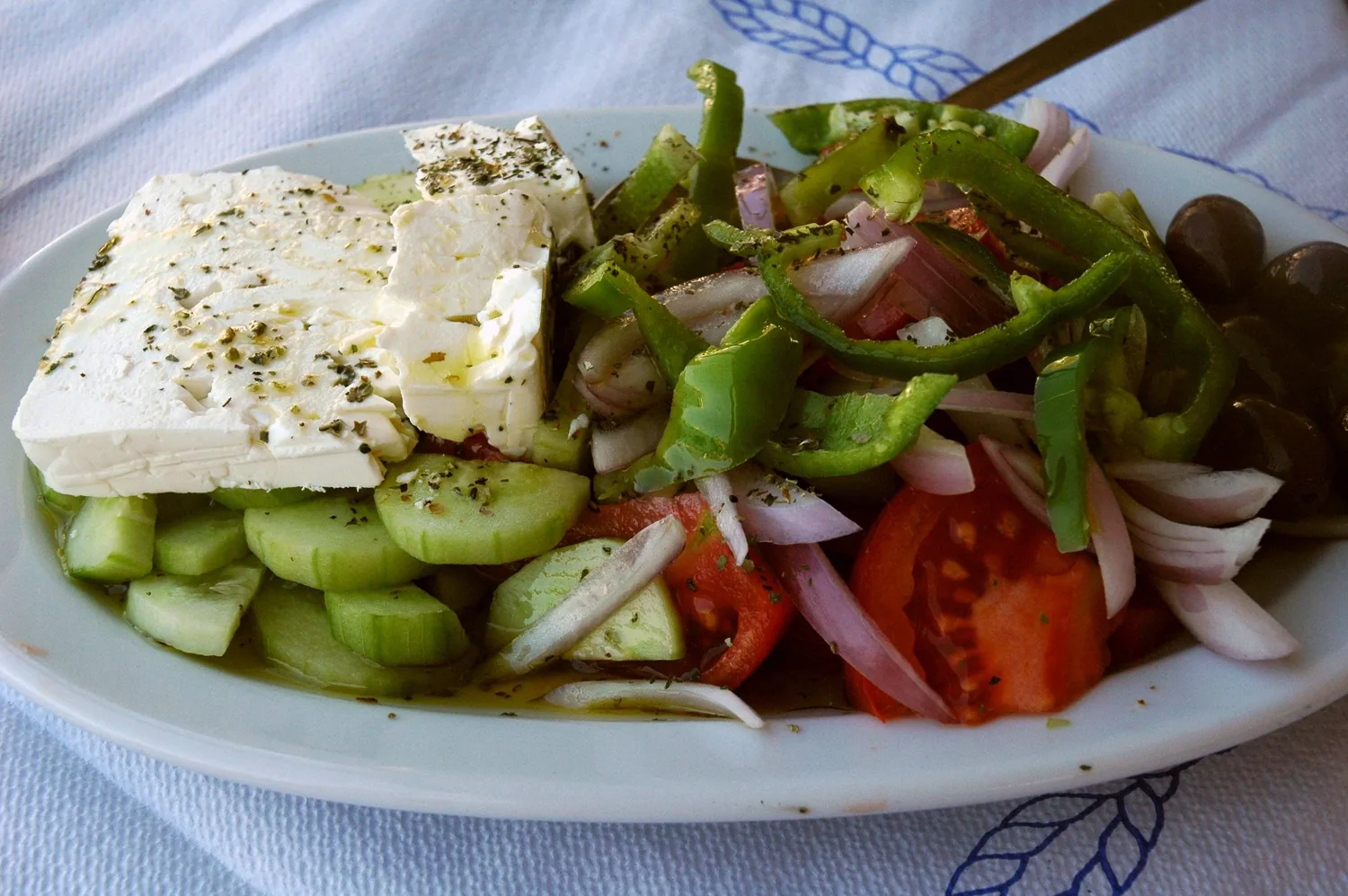
Greek salad (horiatiki) with a slab of feta sprinkled with oregano, Kalamata olives, tomato wedges, cucumber and red onion on a white plate Greece flag Greece 20m
Lunch •Aegean Table Classic

Greek Salad

This Greek salad recipe is the real horiatiki: chunky ripe tomatoes, peeled cucumber, red onion and green pepper, with Kalamata olives and a whole slab of feta on top, dressed with extra-virgin olive oil and dried Greek oregano. There is no lettuce and no heavy dressing — just summer vegetables at their best, ready in twenty minutes. One serving is about 411 g.

Fresh Summer Lunch

Crisp garden vegetables, salty feta and Kalamata olives under good olive oil — a bright, satisfying lunch with no cooking at all.

Pairs Well With
Crusty bread & grilled fish
Quick Prep (<30m)
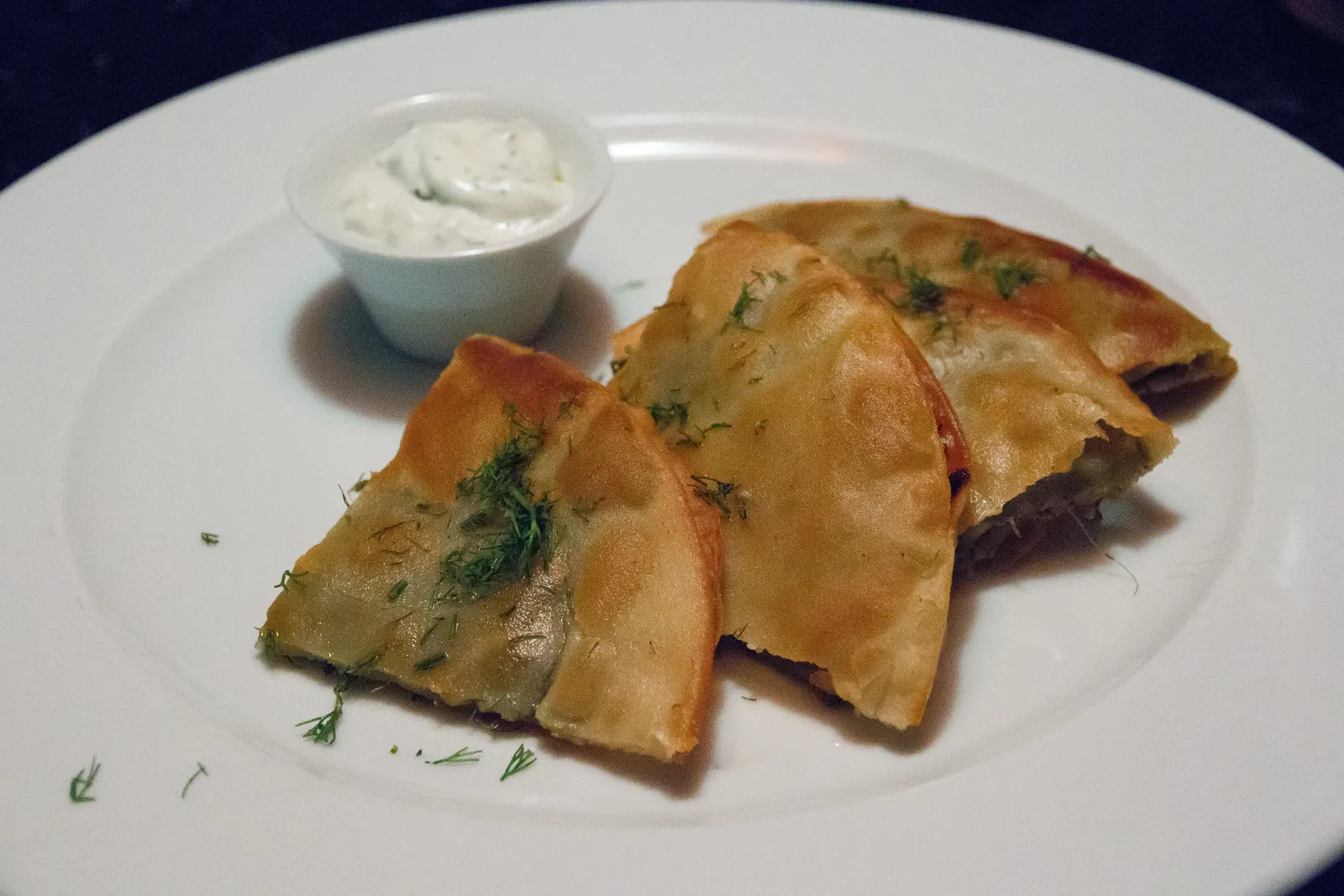
Golden spanakopita triangles sprinkled with fresh dill, served on a white plate with a small bowl of tzatziki Greece flag Greece 1h 20m
Lunch •Greek Bakery Classic

Spanakopita

This spanakopita recipe is the Greek spinach pie found in every bakery in Greece: paper-thin filo brushed with olive oil, layered over a filling of wilted spinach, salty feta, ricotta, leeks and a generous handful of fresh dill, then baked until the top shatters and the inside stays soft and savoury. It is the pie Greeks eat for lunch, take on picnics and set out on a mezze table. One serving is about 220 g.

Crisp Filo, Spinach & Feta

Layers of olive-oil-brushed filo wrapped around a spinach, feta, dill and leek filling, baked until golden and crisp.

Pairs Well With
Greek salad, tzatziki & lemon wedges
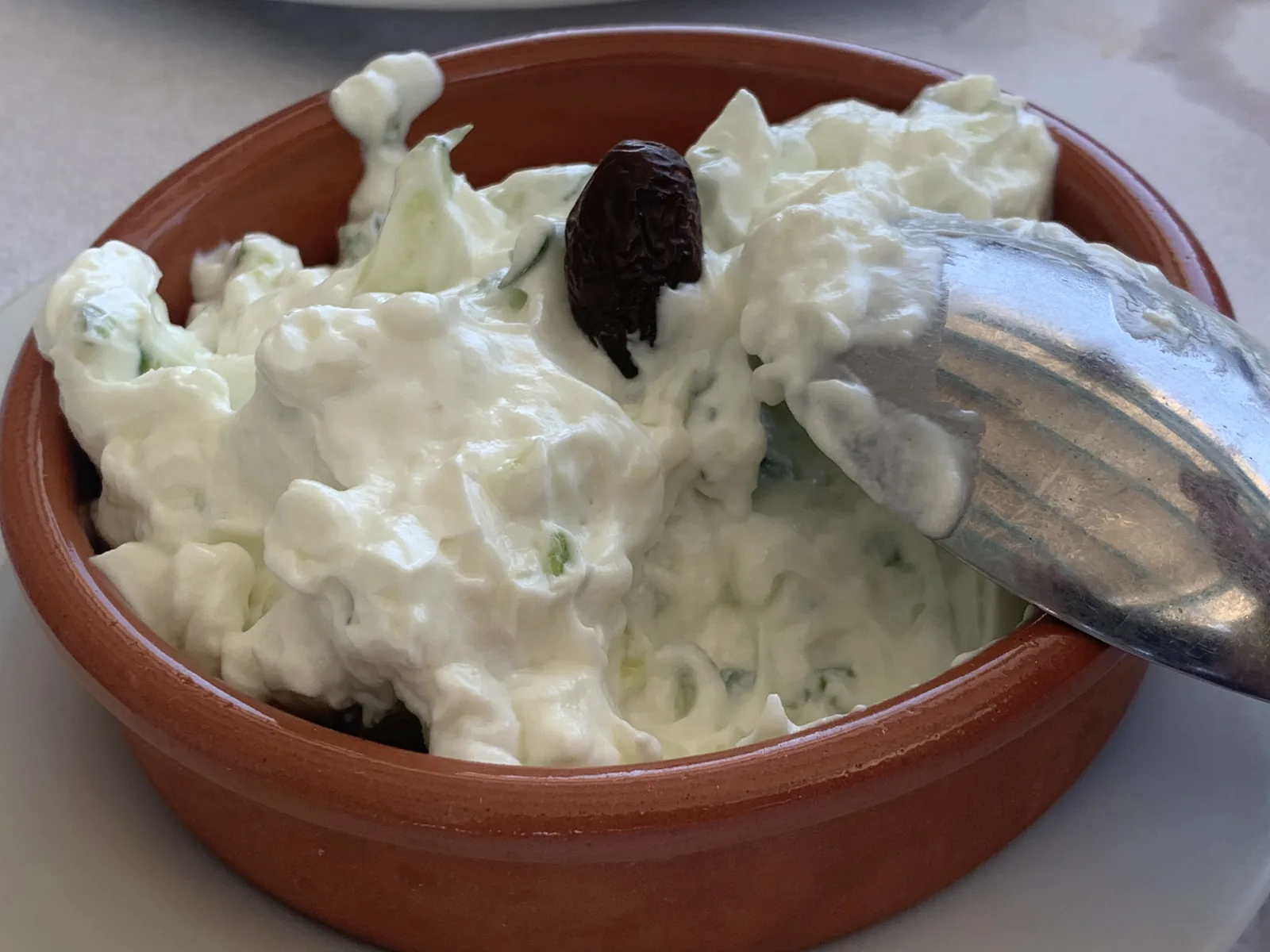
A terracotta bowl of thick white tzatziki with cucumber and a black olive, with a spoon Greece flag Greece 25m
Snack & Tea •Greek Meze Classic

Tzatziki

This tzatziki recipe is the real Greek version: thick strained yogurt, cucumber grated and squeezed bone dry, raw garlic, a thread of olive oil and a handful of dill. No cooking at all — just grating, squeezing and stirring — and the result is cool, creamy and sharp enough to cut through grilled meat. One serving is about 120 g.

Cool & Creamy

Thick Greek yogurt folded with grated cucumber, garlic and dill — the cool white dip at the heart of every Greek meze.

Pairs Well With
Spoon over grilled meat, or serve as a dip with warm pitta and raw vegetables.

The Dinner Gazette

Never wonder what’s for dinner again

One email a week with easy dinner ideas from around the world — ingredients, steps and nutrition, tested in our kitchen first.

Delivered every Thursday morning. Unsubscribe anytime.